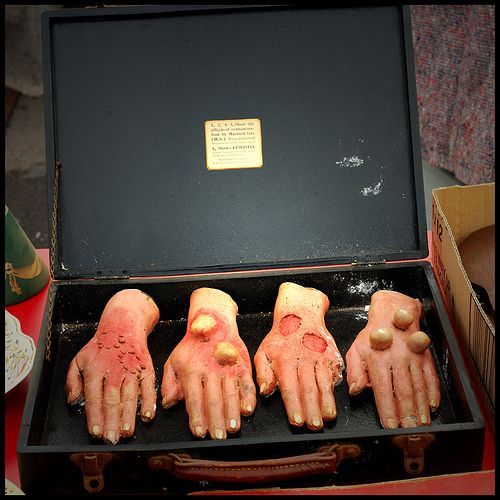
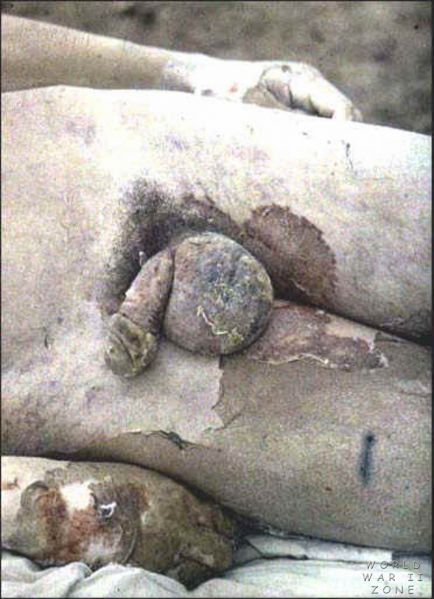
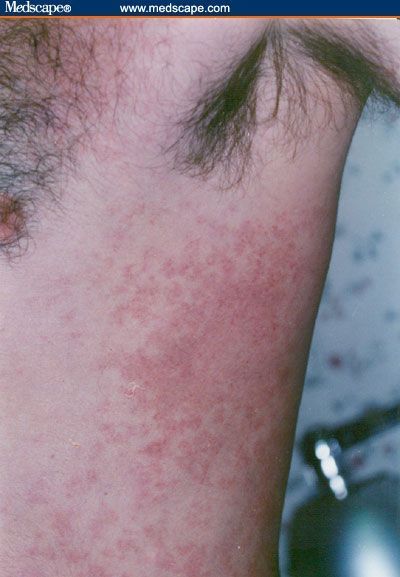
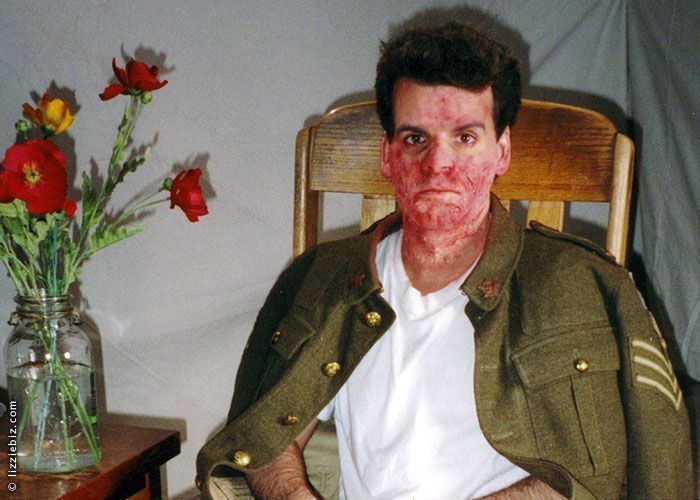
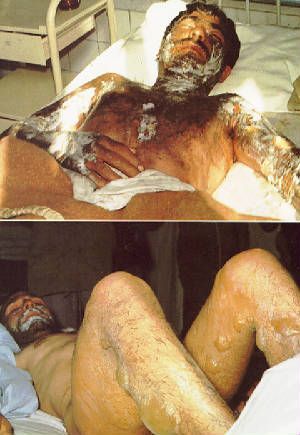
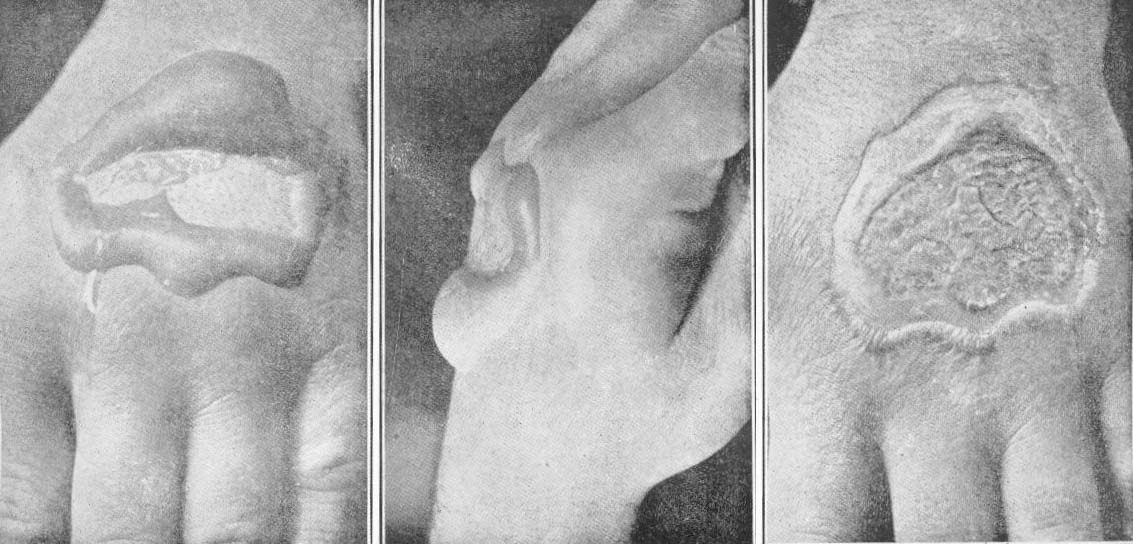
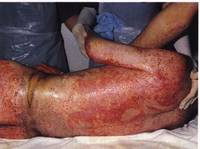
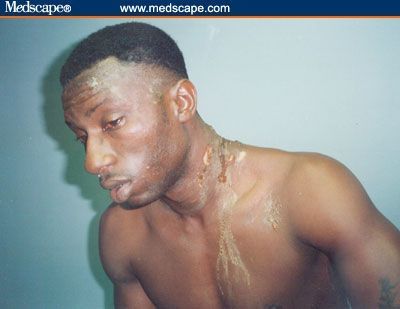
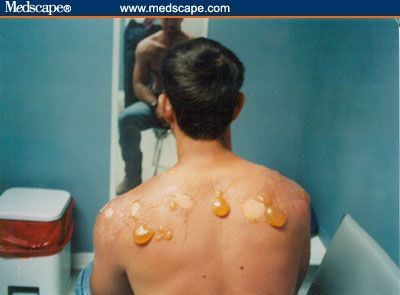
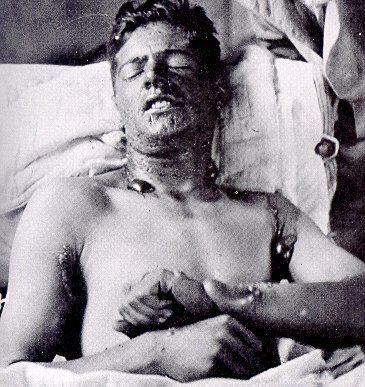
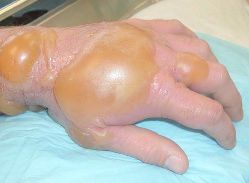
Mustard gas can cause skin burns and blisters, especially around sweaty parts of the body. It is more harmful to the skin on hot, humid days, or in tropical climates. Mustard gas makes your eyes burn, your eyelids swell, and causes you to blink a lot. If you breathe mustard gas, it can cause coughing, bronchitis, and long-term respiratory disease. Exposure to a large amount of mustard gas can cause death. Some men exposed to mustard gas during war have experienced lower sperm counts.
Mustard gas was first used effectively in World War I by the German army against British soldiers near Ypres in July 1915 and later also against the French Second Army. The name Yperite comes from its usage by the German army near the city of Ypres. The Allies did not use the gas until November 1917 at Cambrai, after they captured a large stock of German mustard-filled shells. It took the British over a year to develop their own mustard gas weapon (their only option was the Despretz–Niemann–Guthrie process), first using it in September 1918 during the breaking of the Hindenburg Line.
Mustard gas was dispersed as an aerosol in a mixture with other chemicals, giving it a yellow-brown colour and a distinctive odor. Mustard gas has also been dispersed in such munitions as aerial bombs, land mines, mortar rounds, artillery shells, and rockets[1]. Mustard gas was lethal in only about 1% of cases; its effectiveness was as an incapacitating agent. Countermeasures against the gas were relatively ineffective, since a soldier wearing a gas mask was not protected against absorbing it through the skin.
Furthermore, mustard gas was a persistent agent which would remain in the environment for days and continue to cause sickness. If mustard gas contaminated a soldier's clothing and equipment, then other soldiers he came into contact with would also be poisoned. Towards the end of the war it was even used in high concentrations as an area-denial weapon, which often forced soldiers to abandon heavily contaminated positions.
Since then, mustard gas has also been reportedly used in several wars, often where those it is used against cannot retaliate
From 1915 to wars end, gas masks, gas warning systems and medical treatment for victims continued to improve.
Still, estimates of the number of gas casualties from World War One are staggering:
Russia, 56,000 wounded-419,340 killed
Germany, 9,000 wounded-200,000 killed
France, 8,000 wounded-190,000 killed
British Empire (includes Canada), 8,109 wounded-188,706 killed
Austria-Hungary, 3,000 wounded-100,000 killed
United States, 1,462 wounded-72,807 killed
Italy, 4,627 wounded-60,000 killed
Total-88,498 wounded-1,240,853 killed