|
#1
●
05-17-2024, 05:22 PM
| ||||||||
 These are the rooms Poster Rank:24 of ruin. Join Date: Sep 2014 Posts: 54,011 Mentioned: 145 Post(s) Quoted: 30403 Post(s)
| ||||||||
|
Ductal Carcinoma
>>We present the case of a 52-year-old female with morbid obesity (body mass index of 40.8), noninsulin dependent diabetes mellitus and tobacco abuse who presented with Stage IIIA (T3, N2, Mo) infiltrating ductal carcinoma. The patient received neoadjuvant chemotherapy prior to bilateral skin-sparing total mastectomies with right axillary sentinel lymphadenectomy and staged reconstruction with temporary breast implants. Two months after chest wall and regional nodal radiation therapy, she developed a marked soft tissue reaction to radiation. She underwent a radical debridement of her right chest wall open wound resulting in a tissue defect of 25 cm in length, by 20 cm in width and by 10 cm in depth. >>Despite two rounds of surgical debridement, intravenous antibiotics, hyperbaric oxygen therapy, one year of wound care by a wound care specialists, the infection failed to resolve and wound failed to heal leaving her with a large, open defect. She required chronic medication for her pain management. The patient later was found to have developed a multidrug-resistant Pseudomonas wound infection (Figure 1). >>Lack of other treatment modalities led the surgeon to experimentally place a product composed of a porcine urinary bladder matrix. Three days after the application of the product, the patient reported that her pain was now manageable without opioid medication (Figure 2). Her wound care regiment consistent of weekly painless applications of UBM powder matrix and sheet epithelial basement membrane on top of powder on the wound. The wound was then covered with lubricating jelly and vaseline gauze. On top of the vaseline gauze, plain gauze was placed and the wound was secured with tape. The patient then wore the same dressing without changing it for days. The patient was instructed to come back for dressing every week to the clinic. >>After two weekly applications, her infection had completely resolved and she was beginning to grow islands of new epidermis over her chronically open mastectomy wound (Figure 4). By three months, her wound had begun contracting. Four months after placement of UBM, her wound has decreased in size to approximately 3 cm in length by 2 cm in depth and 2 cm in width (Figure 3). Her pain has completely resolved, and the wound is growing epithelial islands which will eventually cover the entirety of the granulation tissue that is in her wound (Figure 5). 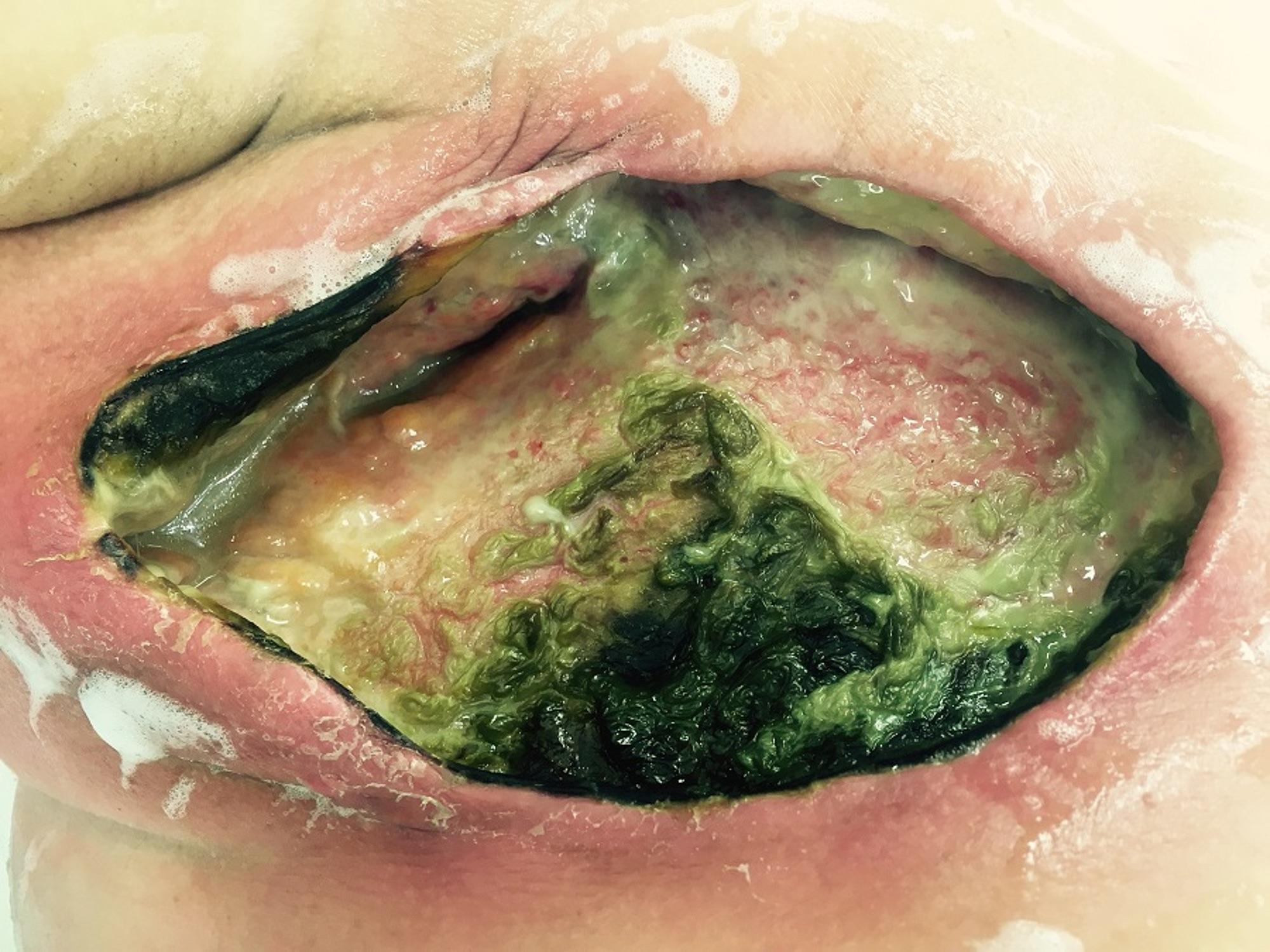 · 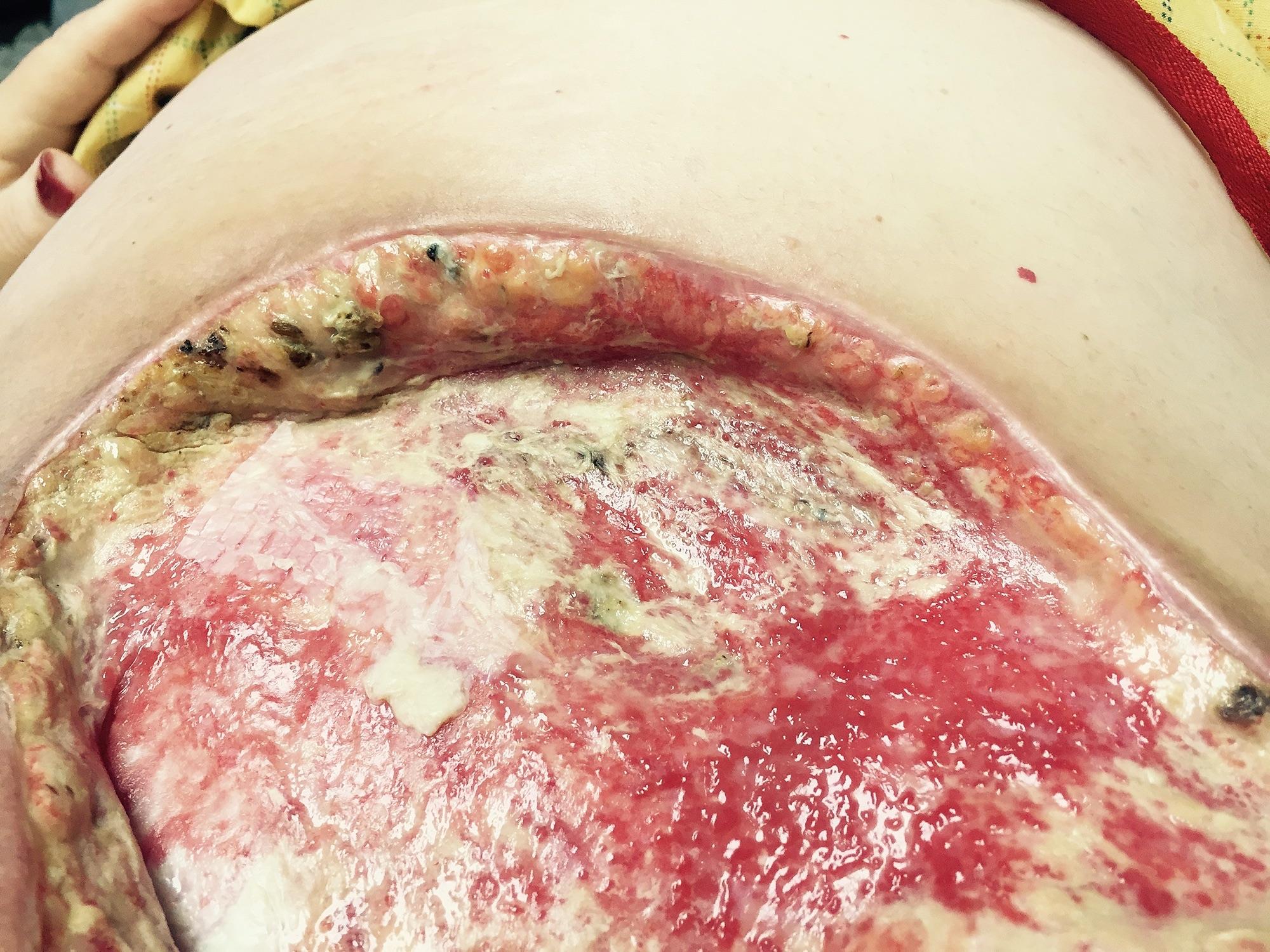 · 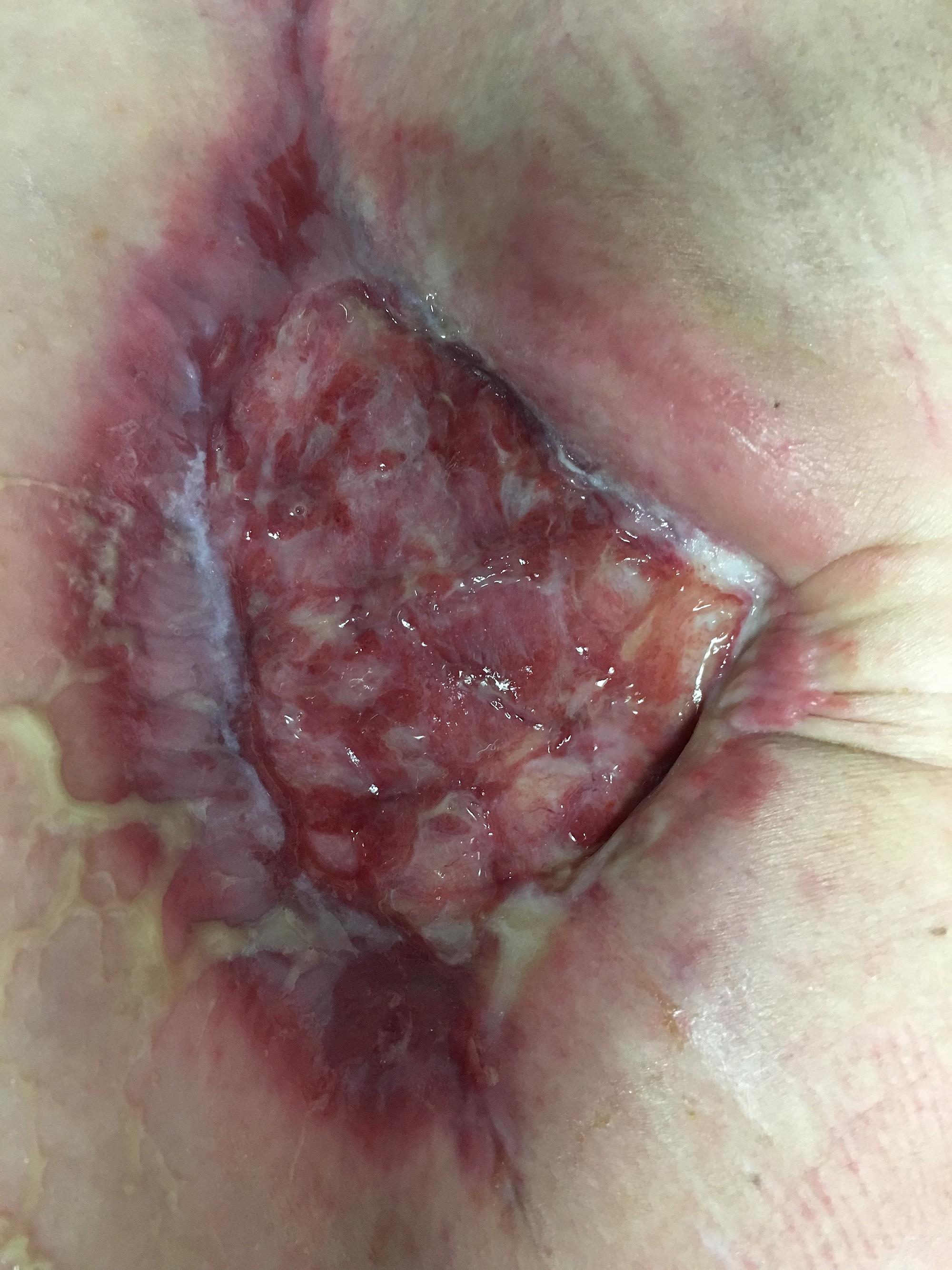 · 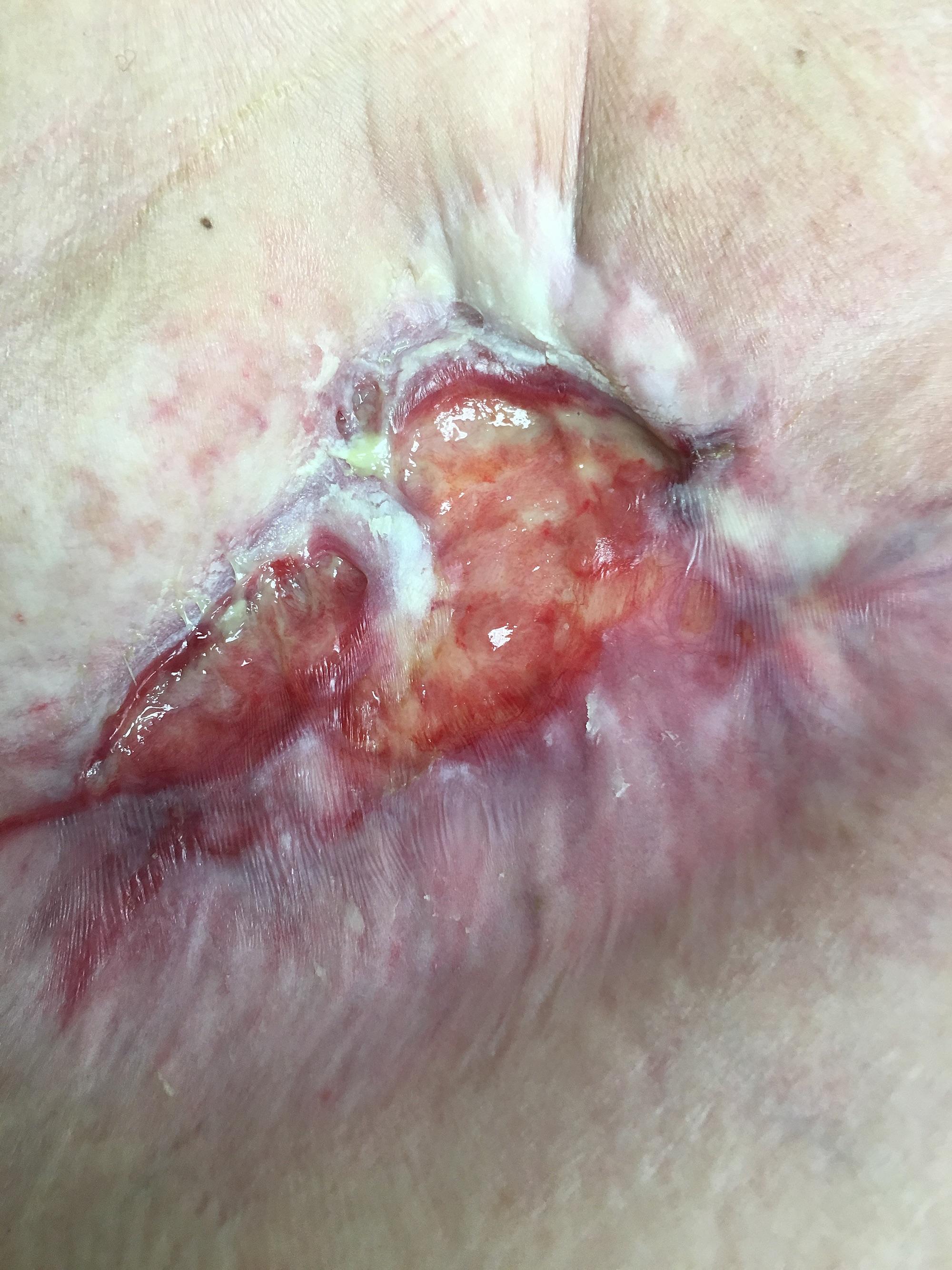 · 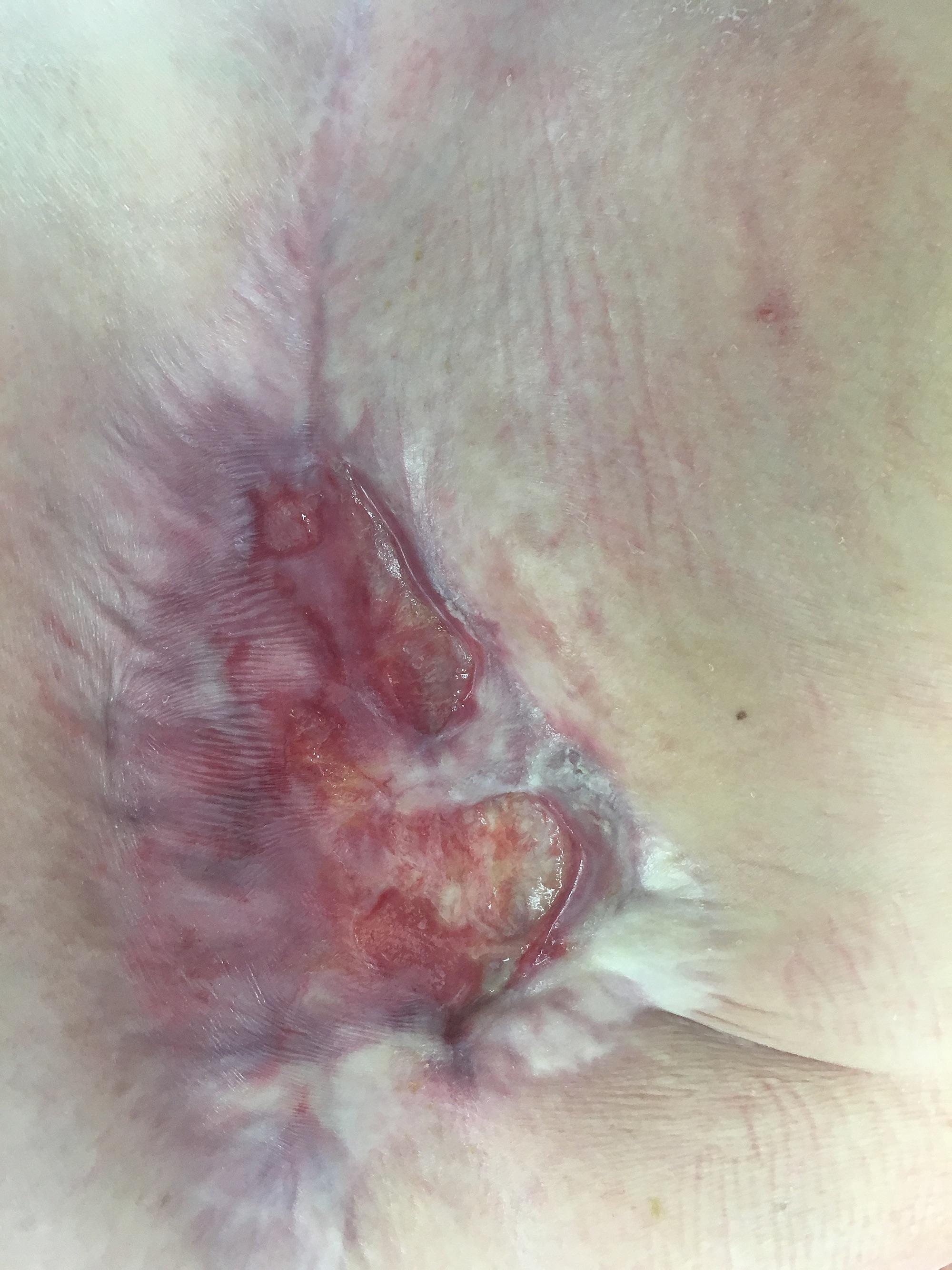 · |
|
#2
●
05-17-2024, 06:59 PM
| ||||||||
 ★ Legacy Member ★ Poster Rank:248 So many choices now Join Date: Jul 2015 Posts: 5,548 Mentioned: 15 Post(s) Quoted: 2120 Post(s)
| ||||||||
|
Re: Ductal Carcinoma
I knew a woman who, back in the 1960's, had an obsession with a certain late-night talk show host. She used to massage her nipples which she watched his show. She soon grew hard nodules next to each nipple. She went to her doctor, who diagnosed her with Johnny Carsonoma.    |
|
#5
●
05-18-2024, 12:42 AM
| ||||||||
 ♚ Legacy Gold Member ♚ Poster Rank:265 ꓕSIꓤIꓕ∀S ϽINOᗡꓤ∀S Join Date: Feb 2010 Posts: 5,156
Contributions: 6
Mentioned: 42 Post(s) Quoted: 1435 Post(s)
| ||||||||
|
Re: Ductal Carcinoma
That's some interesting powdered piggy technology... I wonder if it smells like bacon?
|