JavaScript and Cookies are required to view this site. Please enable both in your browser settings.
Detachment of the Retina

Detachment of the Retina 

Current Rating:

Unlimited Views No Ads No Algorithms Lifetime Account

Documenting Reality

Community Forum · Est. 2006

Join Now
Thread Tools
  #1  
01-11-2013, 01:42 PM
Faline's Avatar
Faline
Offline:
My Rank: MAJOR
Poster Rank:12
Join Date: Jun 2009
Posts: 93,130
Contributions: 226
 
Mentioned: 91 Post(s)
Quoted: 2009 Post(s)
Activity Longevity
0/20 18/20
Today Posts
0/11 ssss93130
Detachment of the Retina

What is the retina?

The retina is an extremely thin tissue that lines the inside of the back of the eye. When we look around, light from the objects we are trying to see enters the eye. The light image is focused onto the retina by both the cornea and the lens. This light striking the retina causes a complex biochemical change within layers of the retina and this, in turn, stimulates an electrical response in other layers of the retina. Nerve endings within the retina transmit these electrical signals to the brain through the optic nerve. Within specific areas of the brain, this electrical energy is processed to allow us both to see and to understand what we are seeing. The retina has been compared to the film of a camera. However, film, once used, has a permanent image on it. The retina continually renews itself chemically and electrically, allowing us to see millions of different images every day without them being superimposed.

The retina is about the size of a postage stamp. It consists of a central area called the macula and a much larger peripheral area of the retina. The light receptor cells within the retina are of two types, called the rods and the cones. Rods allow us to see in conditions of reduced illumination. Cones provide us with sharpness of vision and color vision. The peripheral retina allows us to see objects on either side (peripheral vision) and, therefore, provides the vision needed for a person to move about safely. However, because this part of the retina contains a lesser concentration of cones, it does not allow for perception of visual detail. Its larger concentration of rods provides better vision during conditions of darkness.

In contrast, the macula is a smaller, central area of the retina that contains a high concentration of cones. Accordingly, it enables clear central vision to see fine details for such activities as reading or threading a needle. The macula is particularly sensitive to circulatory changes, especially those that occur with aging, such as decreased blood flow. The retina contains a network of branching arteries, which supplies blood that carries the needed oxygen and nutrients to the retina, and a network of accompanying veins, which then carry the blood away together with the waste products of retinal metabolism.

What is a retinal detachment?

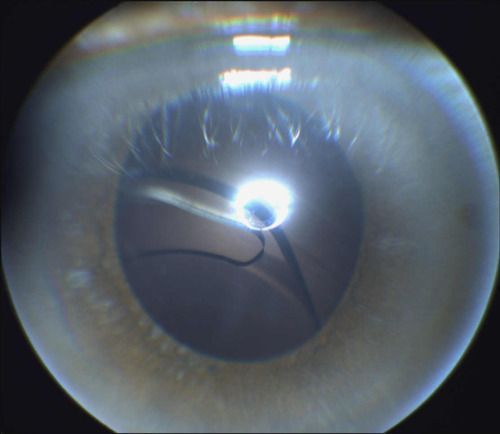
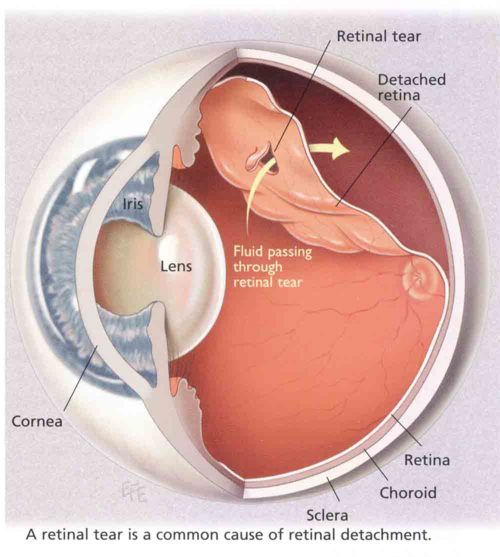
A retinal detachment is a separation of the retina from its attachments to the underlying tissue within the eye. Most retinal detachments are a result of a retinal break, hole, or tear. These retinal breaks may occur when the vitreous gel pulls loose or separates from its attachment to the retina, usually in the peripheral parts of the retina. The vitreous is a clear gel that fills two-thirds of the inside of the eye and occupies the space in front of the retina. As the vitreous gel pulls loose, it will sometimes exert traction on the retina, and if the retina is weak, the retina will tear. Most retinal breaks are not a result of injury. Retinal tears are sometimes accompanied by bleeding if a retinal blood vessel is included in the tear. Many people develop separation of the vitreous from the retina as they get older. However, only a small percentage of these vitreous separations result in retinal tears.

Once the retina has torn, liquid from the vitreous gel can then pass through the tear and accumulate behind the retina. The buildup of fluid behind the retina is what separates (detaches) the retina from the back of the eye. As more of the liquid vitreous collects behind the retina, the extent of the retinal detachment can progress and involve the entire retina, leading to a total retinal detachment. A retinal detachment almost always affects only one eye at a time. The second eye, however, must be checked thoroughly for any signs of predisposing factors that may lead to detachment in the future.

What are retinal detachment symptoms and signs?
Flashing lights and floaters may be the initial symptoms of a retinal detachment or of a retinal tear that precedes the detachment itself. Anyone who is beginning to experience these symptoms should see an eye doctor (ophthalmologist) for a retinal exam. In the exam, drops are used to dilate the patient’s pupils to make a more detailed exam easier. The symptoms of flashing lights and floaters may often be unassociated with a tear or detachment and can merely result from a separation of the vitreous gel from the retina. This condition is called a posterior vitreous detachment (PVD). Although a PVD occurs commonly, there are no tears associated with the condition most of the time.

The flashing lights are caused by the vitreous gel pulling on the retina or a looseness of the vitreous, which allows the vitreous gel to bump against the retina. The lights are often described as resembling brief lightning streaks in the outside edges (periphery) of the eye. The floaters are caused by condensations (small solidifications) in the vitreous gel and frequently are described by patients as spots, strands, or little flies. Some patients even want to use a flyswatter to eliminate these pesky floaters. There is no safe treatment to make the floaters disappear. Floaters are usually not associated with tears of the retina.

If the patient experiences a shadow or curtain that affects any part of the vision, this can indicate that a retinal tear has progressed to a detached retina. In this situation, one should immediately consult an eye doctor since time can be critical. The goal for the ophthalmologist is to make the diagnosis and treat the retinal tear or detachment before the central macular area of the retina detaches.

What are retinal detachment causes and risk factors?
Studies have shown that the incidence of retinal detachments caused by tears in the retina is fairly low, affecting approximately one in 10,000 people each year. Many retinal tears do not progress to retinal detachment. Nevertheless, many risk factors for developing retinal detachments are recognized, including certain diseases of the eyes (discussed below), cataract surgery, and trauma to the eye. Retinal detachments can occur at any age. They occur most commonly in younger adults (25-50 years of age) who are highly nearsighted (myopic) and in older people following cataract surgery.
retina.jpg
44.2 KB ·77 views
retina1.jpg
73.0 KB ·87 views
2 Users Say Thank You For This Post:
Beloved, Sharon
▼ PROMO FROM DOCUMENTING REALITY
Want to escape?
Join Now
Hidden for upgraded members.
  #2  
01-11-2013, 01:50 PM
Sharon's Avatar
Sharon
Offline:
♚ Legacy Gold Member ♚
Poster Rank:34
Female
Join Date: Nov 2008
Posts: 43,403
Contributions: 204
 
Mentioned: 95 Post(s)
Quoted: 2281 Post(s)
Activity Longevity
0/20 18/20
Today Posts
0/11 ssss43403
Re: Detachment of the Retina

That was a good education
  #3  
01-11-2013, 02:13 PM
Catsratz's Avatar
Catsratz
Offline:
My Rank: LANCE CORPORAL
Poster Rank:3042
Join Date: Feb 2010
Posts: 128
 
Mentioned: 0 Post(s)
Quoted: 10 Post(s)
Activity Longevity
0/20 17/20
Today Posts
0/11 ssssss128
Re: Detachment of the Retina

Very interesting read for me, because this happened first in my left eye at around age 57 (I'm 62 now). Thank "god" for the Internet; I was afraid I was going blind or something really bad. But no pain, no problem whatever.

About three years' ago, after the right eye experienced flashing in the dark for about a year, it happened to the left eye, same exact thing. I still get a little now and then.

Here's the weird part: I'd been wearing reading glasses at night for 14 years. Around the time the left retina began detaching I came back to my book at night and realized with a shock I was reading without assist from my dime-store reading glasses.

According to all I found on the Internet, it's impossible to get your sight back after it goes unless you lost it due to a hit on the head and then got conked again and it brings it back. Not my case. But I know what I see, which is now as good as ever, about 20/30. Maybe a little dry eye, which is probably due to the bad road they put in a few feet from my front door a few years ago, along with the bitchface neighbor who lived behind me burning plastic in her trash several times a week.

Maybe having parents who wore glasses/reading by dim light bulbs/watching those 50's solar eclipses without special eye cover all came together to work for me in a really weird but fantastic way. Something did.

:


Powered by vBulletin Copyright 2000-2010 Jelsoft Enterprises Limited.

Search Engine Friendly URLs by vBSEO