|
#1
●
07-11-2024, 05:02 PM
|
 These are the rooms Poster Rank:26 of ruin. Join Date: Sep 2014 Posts: 54,008 54,008Posts 87,658Thanked 30,403Quoted 145Mentioned 0Contrib. |
|
Degloved Hand
A 23-year-old male arrived at the emergency department of Sungai Buloh Hospital, a tertiary hospital and the state's trauma center, with a crushed and degloved wound on the right hand. His right hand got caught inside heavy machinery, resulting in an avulsion injury to his dominant hand. He is a non-smoker, has no comorbidities, and works as a heavy machinery operator. The degloved skin was placed in a bag of ice, and he was rushed to the hospital. Total ischemic time was three hours. On clinical assessment, the patient had a circumferential degloving injury involving the skin and subcutaneous plane up to the proximal right wrist. Muscles, tendons, and fascia of the right hand were exposed with total amputation of the thumb, index, middle, and ring fingers at the level of the proximal phalanx and total amputation of the little finger at the level of the middle phalanx (Figure 1a-d). He was able to perform active flexion and extension movements at the metacarpophalangeal joint. Replanting was not possible due to the crushing of the avulsed blood vessels with extensive intimal injury and loss of vessel length. He was covered with broad-spectrum antibiotics and given adequate analgesics. Bleeding from the wound was secured with compression dressing in the Emergency Room, and the patient underwent emergency surgery. The degloved tissue was preserved by wrapping it in sterile saline-soaked gauze, placing it in a sealed plastic bag, and refrigerating it at 4°C while waiting for surgery. The tissue was prepared by rinsing with povidone-iodine solution and irrigating with 0.9% saline. The non-viable middle and distal phalanges were amputated, and the remaining degloved skin was refashioned; subcutaneous fat was removed completely, transforming it into a full-thickness skin graft consisting of only dermis and epidermis (Figure 2a,b). The skin was used as a biological dressing. Wound inspection on day four showed partial epidermolysis, but the dermis remained intact (Figure 2c,d). Epithelialization occurred, and his wound healed by the third week post-procedure with complete soft tissue coverage. He started strengthening and functional exercises with the physiotherapist in the fourth week and had regular outpatient follow-ups. He was also managed by an occupational therapist with task-oriented training such as holding, grasping, moving, and placing objects. Unfortunately, the patient defaulted on a few follow-ups and gradually developed contracture. He refused the soft tissue reconstruction option to preserve tendon functions. He underwent three more surgeries for contracture release of web spaces with full-thickness skin grafting to regain some hand function (Figure 3a-c). Throughout his follow-up period, he used a resting hand-wrist orthosis with adjustments after every surgery to prevent further contracture. During his last follow-up, 18 months post initial injury, he was able to use a pen for signatures, but had difficulty gripping a ball. He was able to return to his previous job and was somewhat satisfied with his hand functionality. Further evaluation with the Disabilities of the Arm, Shoulder, and Hand Questionnaire and the Michigan Hand Outcomes Questionnaire (MHQ) scores were 23 and 45, respectively. The MHQ score was broken down by component: (1) Overall hand function: 55; (2) Activities of daily living: 50; (3) Work performance: 35; (4) Pain: 25; (5) Aesthetics: 43; and (6) Satisfaction with hand function: 67. 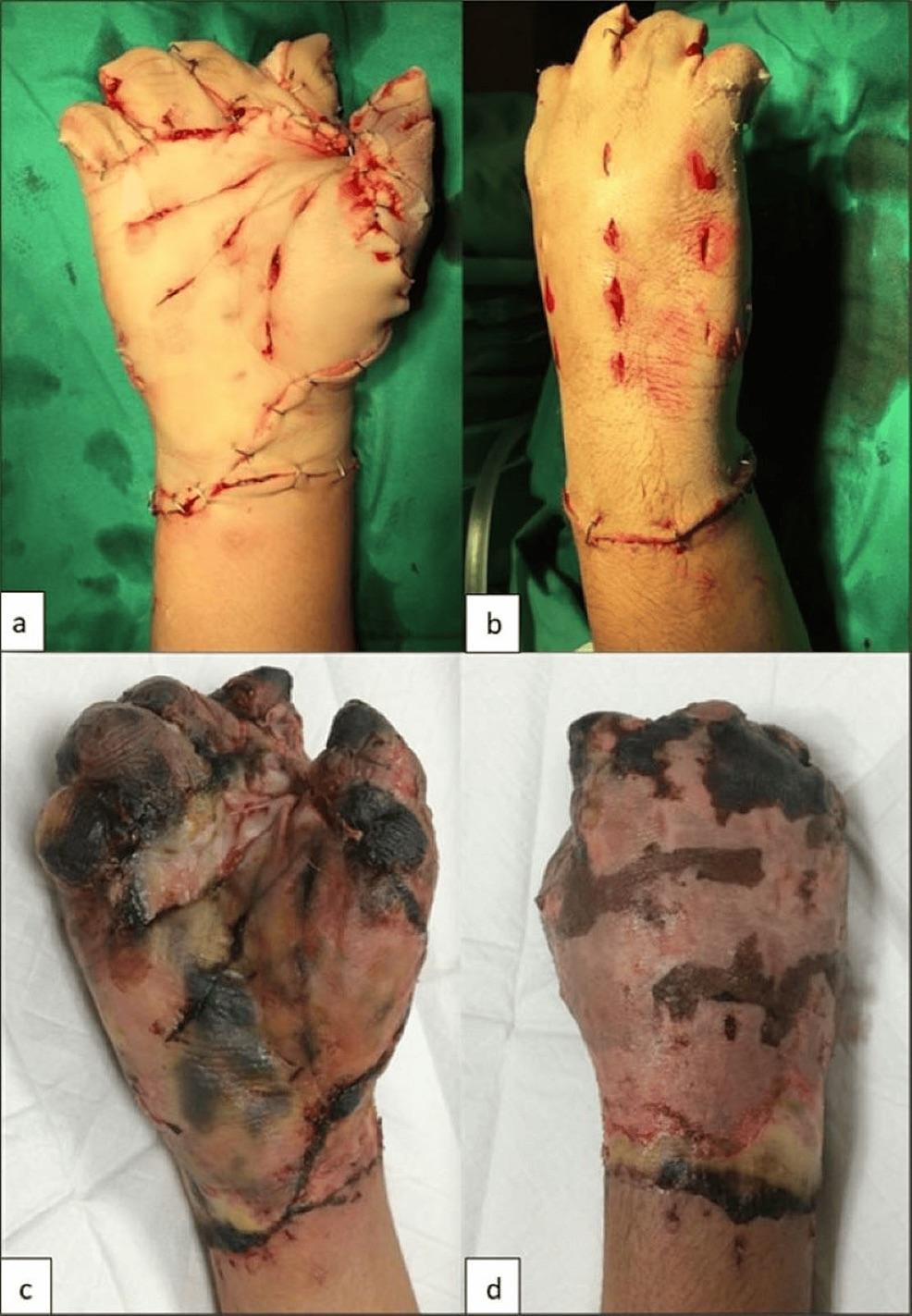 · 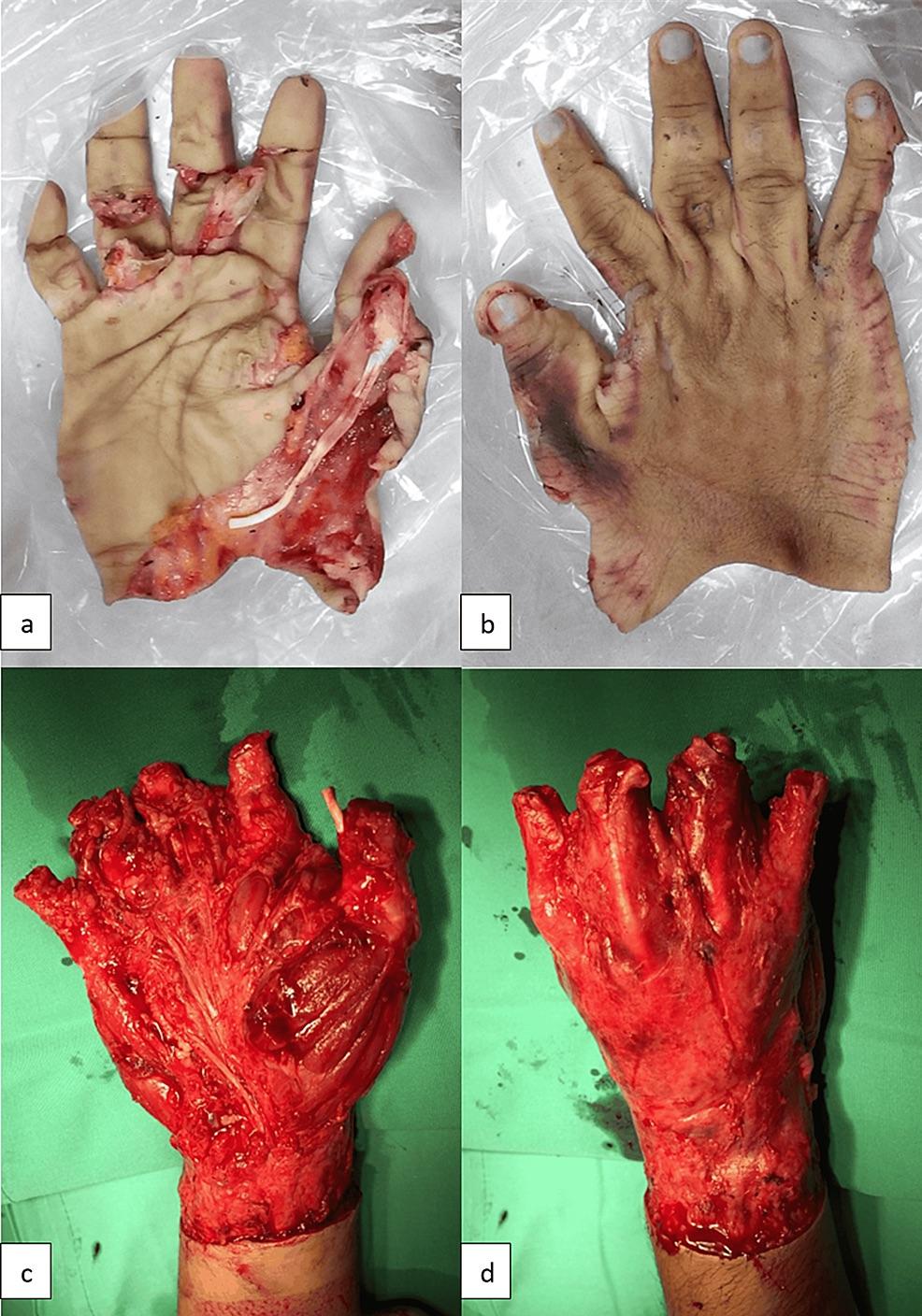 · 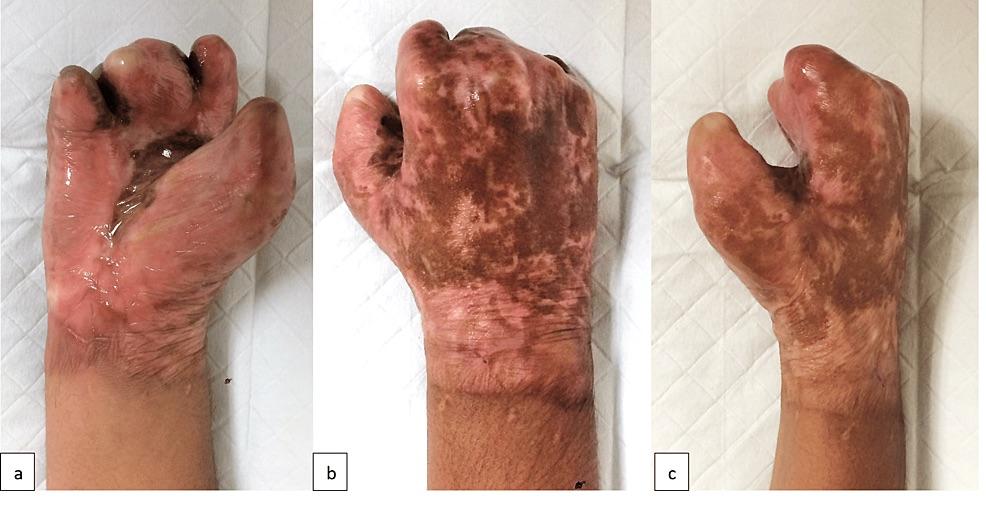 · |
|
#4
●
07-15-2024, 01:40 AM
|
 ♚ Legacy Gold Member ♚ Poster Rank:537 your supreme lord & master Join Date: Apr 2017 Posts: 1,901 1,901Posts 3,393Thanked 376Quoted 2Mentioned 0Contrib. |
|
Re: Degloved Hand
I’m impressed he got the whole hand off in one piece. Like when I clean the lint trap on my drier.
|