|
#1
●
03-21-2013, 08:57 AM
| ||||||||
 My Rank: MAJOR Poster Rank:12 Join Date: Jun 2009 Posts: 93,128
Contributions: 226
Mentioned: 91 Post(s) Quoted: 2009 Post(s)
| ||||||||
|
Crazy Facial Surgical Resections
*Protective sunglasses/ sunscreen can dramatically reduce your risk of having an enucleation (eyeball removal) or total eye and socket resection (as seen below). This surgery consists of removal of the eyeball itself with attached optic nerve, surrounding eye musculature, upper and lower eyelid skin with underlying musculature and soft tissue. Cancer of the eye can occur in 2 ways, intraocular (inside the eyeball) or extraocular (outside the eyeball). Intraocular melanoma is the most common type of cancer that develops within the eyeball in adults, but it is still fairly rare. Melanomas develop from pigment-making cells called melanocytes. When melanoma develops in the eyeball, it is usually in the uvea, which is why these cancers are also called uveal melanomas. About 9 out of 10 intraocular melanomas develop in the choroid (which is part of the uvea). Choroid cells make the same kind of pigment as melanocytes in the skin. Primary intraocular lymphoma can also occur. It is always a non-Hodgkin lymphoma. Most people with primary intraocular lymphoma are elderly or have immune system problems such as the acquired immunodeficiency syndrome (AIDS). Primary intraocular lymphoma is often seen along with lymphoma of the brain, known as primary central nervous system (CNS) lymphoma. Extraocular cancers develop from tissues such as muscle, nerve, and skin around the eyeball. Common cancers we see in our lab are melanoma, basal cell carcinoma and squamous cell carcinoma. Rhabdomyosarcoma (muscle cancer) can also occur in the surrounding musculature. 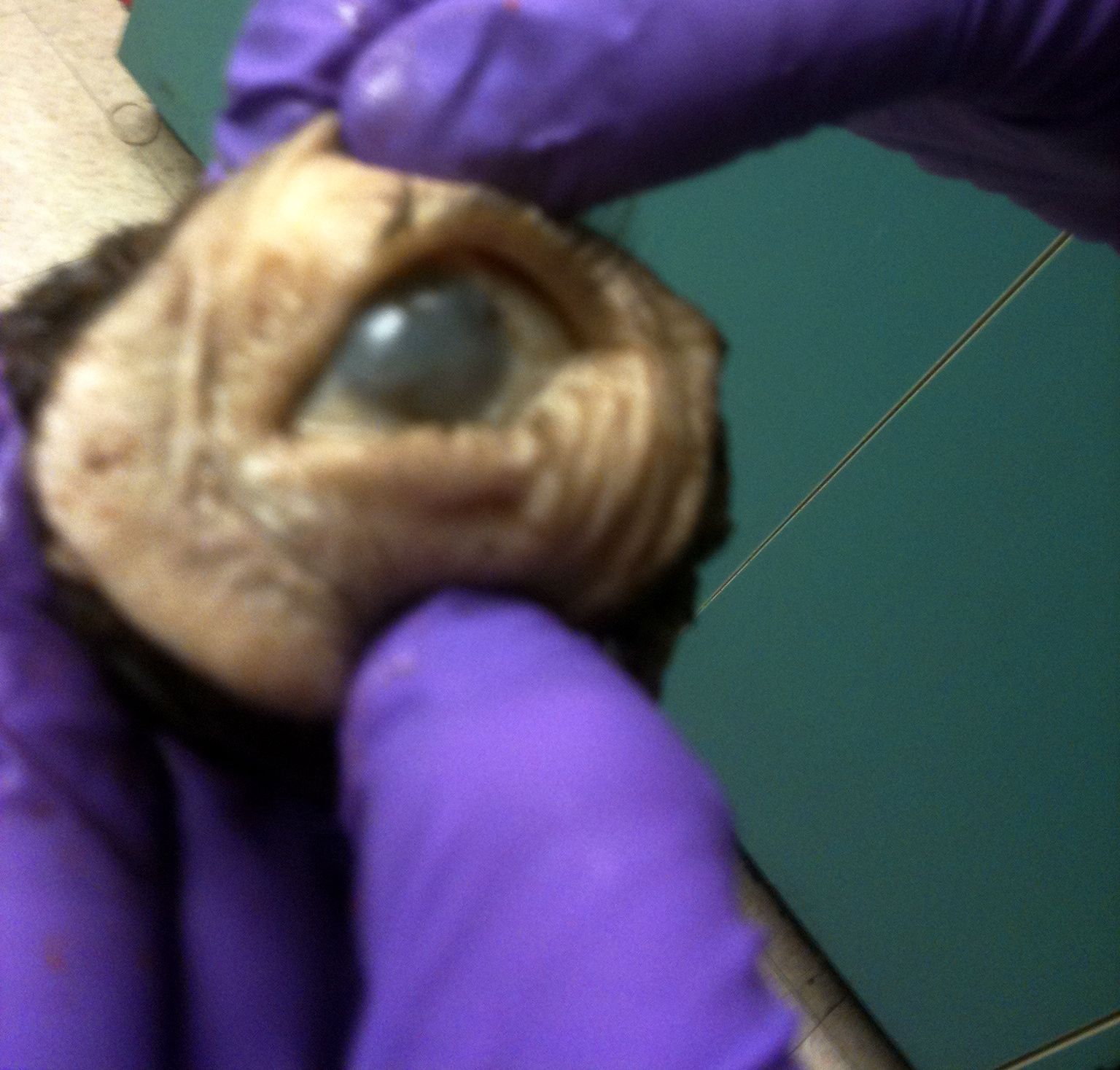 *Sunscreen, smoking, work place chemicals and HPV (human papiloma virus) are all associated with different types of nasal cancer. Nasal cancer can occur in 3 locations, the exteranl surface of the nose (skin), the internal (superfical) surface of the nose (nostrils and septum) or the deep internal surface (paranasal sinuses). Nasal cancer can often lead to a complete rhinectomy as seen below. A complete rhinectomy is a removal of the entire nose, nostrils and septum. The most common cancer seen in the nostrils and paranasal sinuses is squamous cell carcinoma. 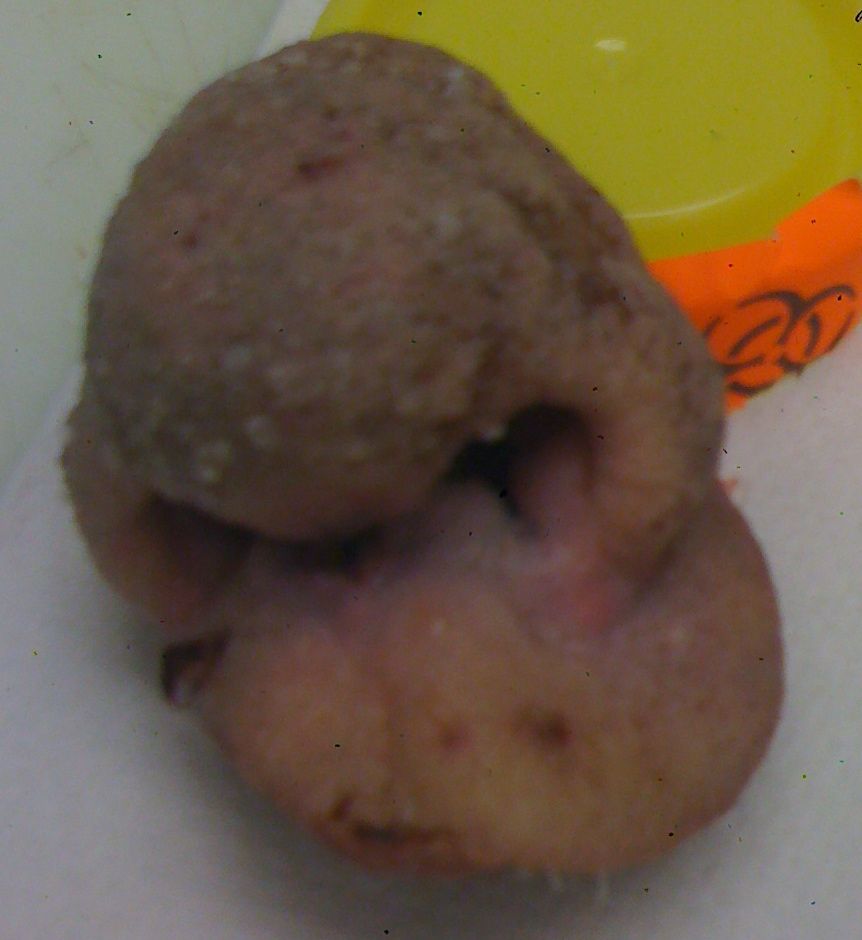 *Tobacco (e.g. smoking, chewing tobacco, cigars), alcohol and HPV are associated with most oral cancers. This is an example of a surgery done for oral cancer. This complete composite resection was taken out for base of tongue cancer (squamous cell carcinoma). This resection is usually just a portion of the mandible bone with some surrounding soft tissue, but this particular resection included the base of tounge, the entire mandible and essentially the entire chin because the cancer actually eroded through the soft tissue and bone to the skin surface! Cancer that arises in the jawbones is termed primary jaw cancer. Examples of primary jaw cancer include malignant giant cell tumors, Ewing’s sarcoma, ameloblastoma and osteosarcoma. From time to time we see resections for primary jaw cancer, but most commonly they are from secondary jaw cancer. Primary jaw cancer does not have the same risk factors as oral cancers. Secondary jaw cancers arise in the surrounding soft tissues (even salivary glands) of the bone and spread into the jaw causing bone destruction as seen below. 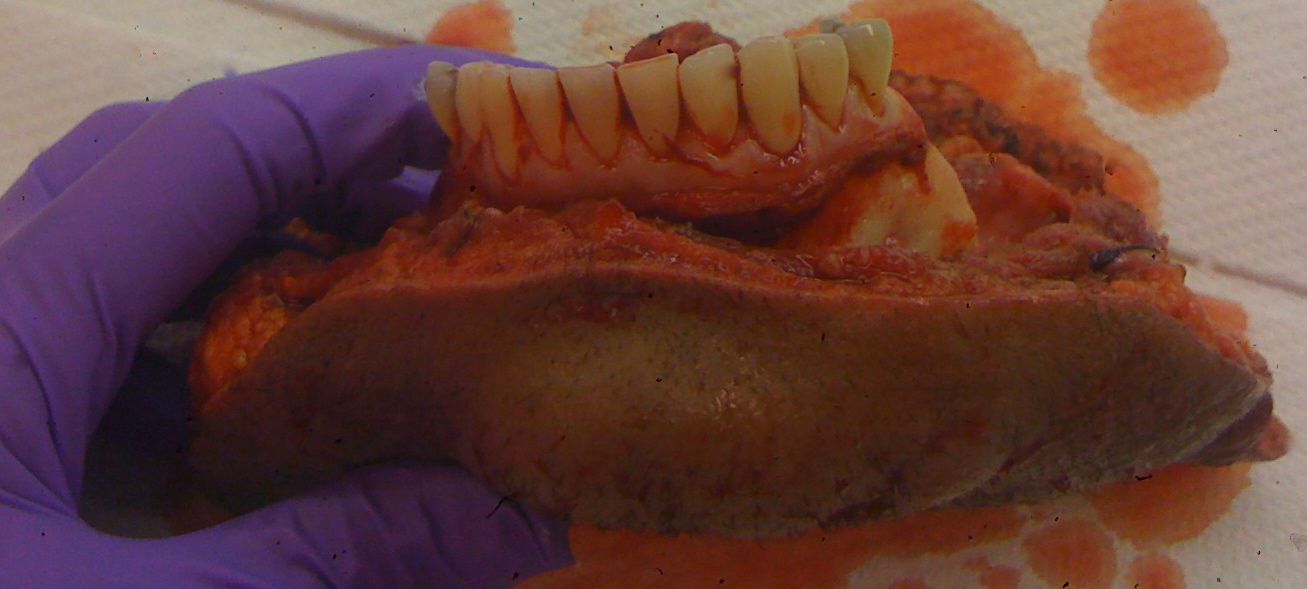 *Again sunscreen can prevent a majority of external ear cancers which are usually skin cancers. An auriculectomy (as seen below) usually consists of removal of the entire external ear, or a large portion of it. Malignant tumors in the middle ear and mastoid are very uncommon. Of these very uncommon tumors, squamous cell carcinoma is the most common . These cancers are usually found in individuals who have neglected chronic or long-term drainage and infection in the mastoid or middle ear. The formation of cancer is related to chronic inflammation. 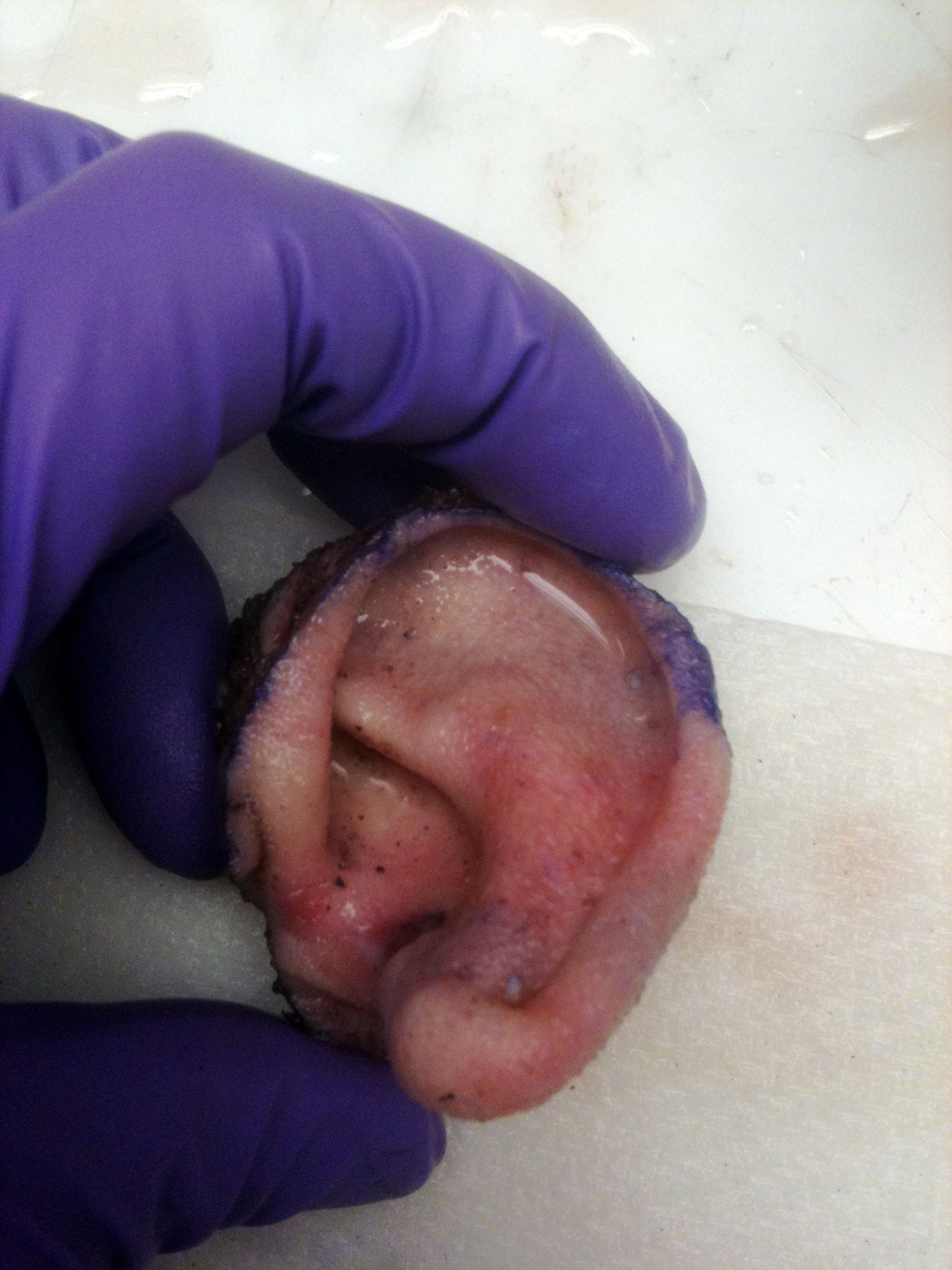 |
|
#4
●
03-21-2013, 11:53 AM
| ||||||||
 My Rank: CORPORAL Poster Rank:1351 girl Join Date: Nov 2010 Posts: 449 Mentioned: 0 Post(s) Quoted: 4 Post(s)
| ||||||||
|
Re: Crazy Facial Surgical Resections
what the fuck seeing the whole eye taken off and not just the eyeball is so fuckin weird it's really grossing me out tbh
|
|
#6
●
03-22-2013, 01:28 PM
| ||||||||
 ♚ Legacy Gold Member ♚ Poster Rank:35 Female Join Date: Nov 2008 Posts: 43,394
Contributions: 204
Mentioned: 95 Post(s) Quoted: 2282 Post(s)
| ||||||||
|
Re: Crazy Facial Surgical Resections
Those resections are so cool  Shame about the reasons behind them. Shame about the reasons behind them.
|
|
#7
●
03-22-2013, 03:21 PM
| ||||||||
 ★ Legacy Member ★ Poster Rank:197 All woman Join Date: Jun 2012 Posts: 7,773 Mentioned: 22 Post(s) Quoted: 1420 Post(s)
| ||||||||
|
Re: Crazy Facial Surgical Resections
Almost reminds me of the "parts" collection Seth Brundle kept as he became less human and more Fly
|
|
#8
●
03-23-2013, 03:53 AM
| ||||||||
 My Rank: FIRST SERGEANT Poster Rank:410 Male Join Date: Nov 2009 Posts: 2,968 Mentioned: 18 Post(s) Quoted: 448 Post(s)
| ||||||||
|
Re: Crazy Facial Surgical Resections
I'd like to see the mandible surgery post-op...and maybe when fully healed.. It's awesome....hunk of flesh with jawbone and teeth...  Anything with the eye. period. no thanks..  Can't stand even looking at pointy objects..walking through stores and they got the pegboards ..walking down an aisle,just walk past..barely glance at the peg boards with pegs sticking out holding stuff for sale..ARRRGGGHHHH....... (yes..strange phobia here..) Can't stand even looking at pointy objects..walking through stores and they got the pegboards ..walking down an aisle,just walk past..barely glance at the peg boards with pegs sticking out holding stuff for sale..ARRRGGGHHHH....... (yes..strange phobia here..)
|