JavaScript and Cookies are required to view this site. Please enable both in your browser settings.
Chigoe Flea

Chigoe Flea 

Current Rating:

Unlimited Views No Ads No Algorithms Lifetime Account

Documenting Reality

Community Forum · Est. 2006

Join Now
Thread Tools
  #1  
11-28-2010, 08:54 AM
Faline's Avatar
Faline
Offline:
My Rank: MAJOR
Poster Rank:11
Join Date: Jun 2009
Posts: 93,130
Contributions: 226
 
Mentioned: 91 Post(s)
Quoted: 2009 Post(s)
Activity Longevity
0/20 18/20
Today Posts
0/11 ssss93130
Chigoe Flea

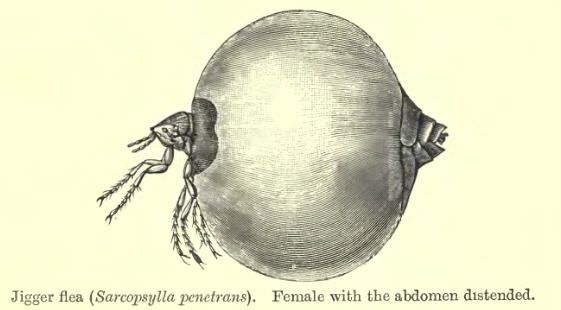
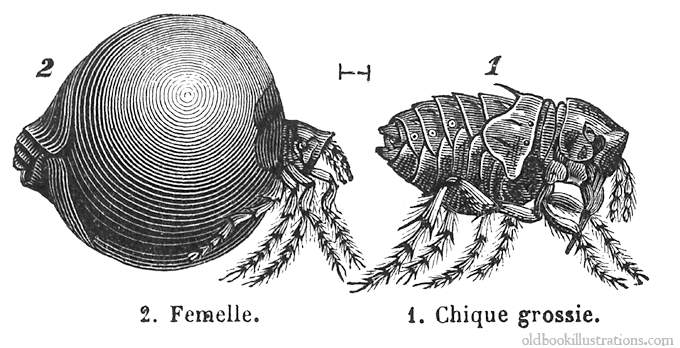
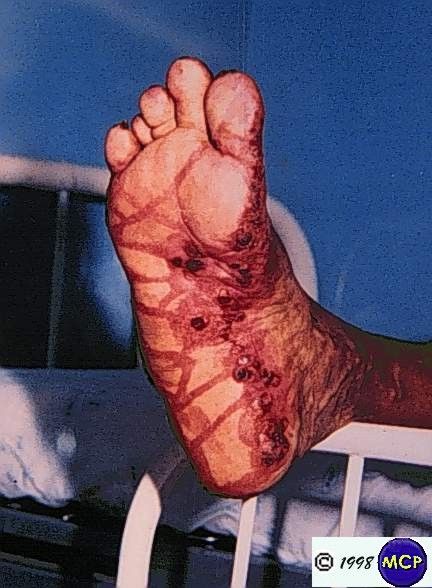
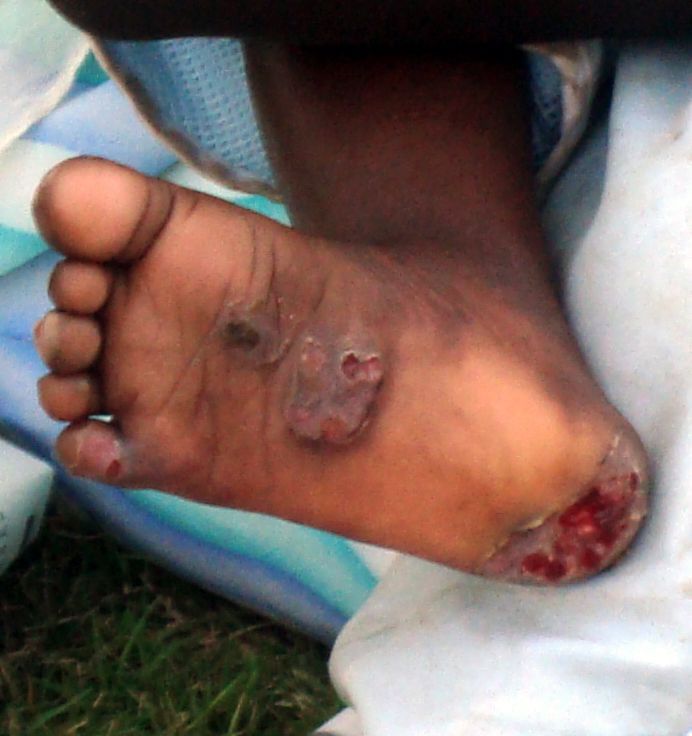
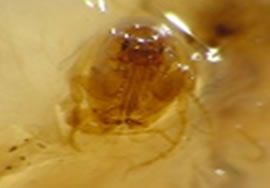
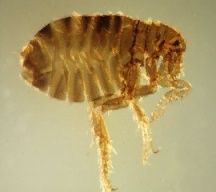
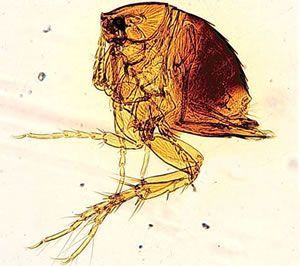
The chigoe flea or jigger (Tunga penetrans) is a parasitic arthropod found in tropical climates, especially South and Central America and the West Indies, not to be confused with the larval form of Trombiculidae (called chiggers) found in more temperate climates.

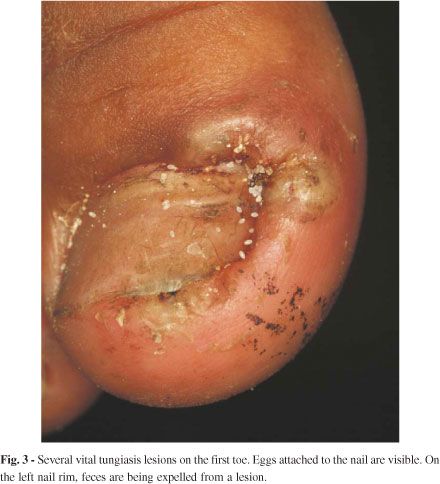
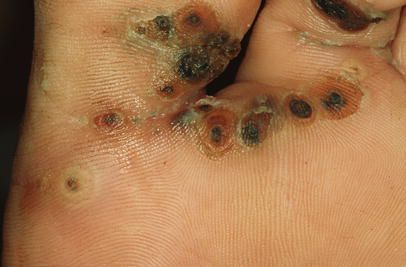
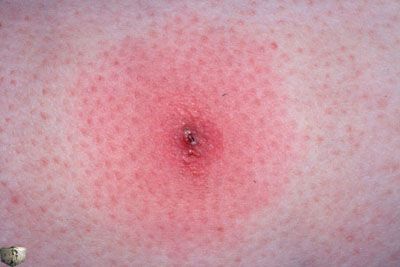
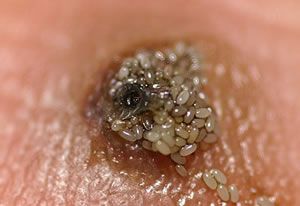
In Brazil, the parasite is referred to as bicho de pé. At 1 mm long, the chigoe flea is the smallest known flea. Breeding female chigoes burrow into exposed skin on the feet of mammals and remain there for two weeks while developing eggs, sometimes causing intense irritation. After this point, the skin lesion looks like a 5 to 10 mm blister with a central black dot, which are the flea's exposed hind legs, respiratory spiracles and reproductive organs.
If the flea is left within the skin, infection and/or other dangerous complications can occur, although they are relatively rare.

The parasitic flea lives in soil and sand, and feeds intermittently on warm-blooded hosts such as humans, cattle, sheep, dogs, mice, and other animals. In order to reproduce, the female flea burrows head-first into the hosts' skin, often leaving the caudal tip of its abdomen visible through an orifice in a skin lesion. This orifice allows the chigoe flea to breathe and defecate while feeding on blood vessels in the cutaneous and subcutaneous dermal layer. In the next two weeks, its abdomen swells with up to several dozen eggs which it releases through the caudal orifice to fall to the ground when ready to hatch. The flea then dies and is sloughed off with the host's skin. Within the next three to four days, the eggs hatch and mature into adult fleas within three to four weeks.
Infections are almost always on the foot of the host. During the first day or two of infection the host may feel an itching or irritation which then passes as the area around the flea calluses and becomes insensitive. As the flea's abdomen swells with eggs later in the cycle, the pressure from the swelling may press neighbouring nerves or blood vessels. Depending on the exact site, this can cause sensations ranging from mild irritation to serious discomfort.

It has been written that the explanation for the preponderance of tungiasis lesions on the toes is because chigoe flea is a poor jumper, attaining only a high of 20 cm. But this idea is not correct for many reasons. First of all, while chigoe flea can jump up only 20 cm, its infamous and bigger cousin which is the vector of bubonic plague and well known for its jumping ability, can jump up only 18 cm; the chigoe flea should be considered a champion jumper, not a poor one. And the jumping ability cannot explain why hands are the second most affected body part. The occurrence of tungiasis lesions on the toes, between them, on the soles can easily explained by the fact that most of the victims are poor and walk barefoot (or wear cheap floppies as seen in some photos of the condition)). Because the front part of the feet, which are the toes hit the ground first, the fleas have more opportunity to latch on there. They also get trapped between the toes, or under the soles when the victims stand still. More lesions on the hands are seen in children because they play in the sand or dusty ground. Other common ectopic sites of infestation are the elbows, buttocks and the genital area (gluteal area in scientific publications) and this can be explained by the habit of sitting on bare ground while leaning back on the elbows.
jigger-foot2.jpg
1.58 MB ·8518 views
27186f3.jpg
37.5 KB ·4611 views
adult.jpg
308.8 KB ·2001 views
b0051932_47b3283b87e91.jpg
17.9 KB ·12196 views
ChiggerBMNH.jpg
24.6 KB ·674 views
chigoe-flea (1).jpg
47.7 KB ·3539 views
chigoe-flea.jpg
66.0 KB ·2202 views
jigger-foot.jpg
326.0 KB ·2625 views
tungra_penetrans.jpg
132.0 KB ·1702 views
Fcloseup.jpg
26.9 KB ·4356 views
flea4.jpg
6.7 KB ·3886 views
human_flea.jpg
12.5 KB ·3848 views
jigger-tunga-penetrans.jpg
23.3 KB ·2627 views
tunga-eggs.jpg
13.4 KB ·3504 views
This User Says Thank You For This Post:
wally teeter
▼ PROMO FROM DOCUMENTING REALITY
Not everything online is real. We are
Join Now
Hidden for upgraded members.
  #2  
11-28-2010, 09:15 AM
Adora
Offline:
So Fucking Banned
Poster Rank:1336
feline
Join Date: May 2009
Posts: 450
 
Mentioned: 0 Post(s)
Quoted: 31 Post(s)
Activity Longevity
0/20 18/20
Today Posts
0/11 ssssss450
Re: Chigoe Flea

The eggs are so disgusting to look at ._.
  #3  
11-28-2010, 10:20 AM
sassieroses's Avatar
sassieroses
Offline:
Halo or Horns today?
Poster Rank:415
Ladybug
Join Date: Sep 2010
Posts: 2,788
 
Mentioned: 0 Post(s)
Quoted: 49 Post(s)
Activity Longevity
0/20 16/20
Today Posts
0/11 sssss2788
Re: Chigoe Flea

How would you NOT know it was in your foot with it looking like that??? And WHY would you let it get that BAD???
  #4  
11-28-2010, 10:26 AM
mart_knip's Avatar
mart_knip
Offline:
My Rank: SERGEANT
Poster Rank:1033
Male
Join Date: Feb 2010
Posts: 661
 
Mentioned: 0 Post(s)
Quoted: 14 Post(s)
Activity Longevity
0/20 17/20
Today Posts
0/11 ssssss661
Re: Chigoe Flea

Nasty very very nasty!
  #5  
11-28-2010, 12:01 PM
Viking64's Avatar
Viking64
Offline:
★Wizard Of Gore★
Poster Rank:1
Join Date: Aug 2009
Posts: 126,124
Contributions: 1
 
Mentioned: 443 Post(s)
Quoted: 30201 Post(s)
Activity Longevity
20/20 17/20
Today Posts
0/11 sss126124
Re: Chigoe Flea

I went to Brazil last month and I have had these symptoms ever since. I don't think they are fleas, though. I think I'll just wait and hope it goes away.
  #6  
11-28-2010, 12:20 PM
Sharon's Avatar
Sharon
Offline:
♚ Legacy Gold Member ♚
Poster Rank:34
Female
Join Date: Nov 2008
Posts: 43,403
Contributions: 204
 
Mentioned: 95 Post(s)
Quoted: 2281 Post(s)
Activity Longevity
0/20 18/20
Today Posts
0/11 ssss43403
Re: Chigoe Flea

Those cursed arthropods

Great post
  #7  
11-28-2010, 01:03 PM
Faline's Avatar
Faline
Offline:
My Rank: MAJOR
Poster Rank:11
Join Date: Jun 2009
Posts: 93,130
Contributions: 226
 
Mentioned: 91 Post(s)
Quoted: 2009 Post(s)
Activity Longevity
0/20 18/20
Today Posts
0/11 ssss93130
Re: Chigoe Flea

I went to Brazil last month and I have had these symptoms ever since. I don't think they are fleas, though. I think I'll just wait and hope it goes away.
  #8  
11-28-2010, 01:08 PM
Viking64's Avatar
Viking64
Offline:
★Wizard Of Gore★
Poster Rank:1
Join Date: Aug 2009
Posts: 126,124
Contributions: 1
 
Mentioned: 443 Post(s)
Quoted: 30201 Post(s)
Activity Longevity
20/20 17/20
Today Posts
0/11 sss126124
Re: Chigoe Flea

Those cursed arthropods

Great post
This comment is racist and has been reported!!!!

Wait......what's an arthropod again??
  #9  
11-28-2010, 02:49 PM
Wildrice's Avatar
Wildrice
Offline:
My Rank: CORPORAL
Poster Rank:1269
girl
Join Date: Feb 2010
Posts: 483
 
Mentioned: 0 Post(s)
Quoted: 45 Post(s)
Activity Longevity
0/20 17/20
Today Posts
0/11 ssssss483
Re: Chigoe Flea

Next time I go to the beach I'm wearing work boots.
  #10  
11-28-2010, 05:25 PM
Rusty666's Avatar
Rusty666
Offline:
My Rank: FIRST SERGEANT
Poster Rank:396
Join Date: Jan 2010
Posts: 3,035
 
Mentioned: 0 Post(s)
Quoted: 2 Post(s)
Activity Longevity
0/20 17/20
Today Posts
0/11 sssss3035
Re: Chigoe Flea

gross


Powered by vBulletin Copyright 2000-2010 Jelsoft Enterprises Limited.

Search Engine Friendly URLs by vBSEO