|
#1
●
04-05-2023, 05:54 PM
| ||||||||
 These are the rooms Poster Rank:26 of ruin. Join Date: Sep 2014 Posts: 54,011 Mentioned: 145 Post(s) Quoted: 30403 Post(s)
| ||||||||
|
Boiling Tea Leads to Amputation
Presenting a case of a 64-year-old male with diabetes who developed a limb-threatening infection after dropping boiling tea on his left foot, this author shares insights on the aggressive treatment regimen and multidisciplinary care that enabled the patient to return to normal activities in four months. It is a commonly perception that many necrotizing deep infections lead to limb loss and can even lead to death if one does not address these infections quickly. In this day and age, when there are multiple surgical specialties involved and rapid intervention along with antibiotic therapy, it is very possible to save not only the life but the limb as well. The next challenge is focusing on making that limb as functional as possible to allow the patient to get back to a more normal way of life. A 64-year-old male dropped boiling tea on top of the left foot on June 11, 2019. He developed a large blister the next day and then experienced fever and chills over the next two days. The patient and his wife decided to go to urgent care on June 14 due to the fever and chills as well as substantial redness and pus with the left foot. The patient had a medical history of insulin-controlled type 2 diabetes with neuropathy along with controlled hypertension and hyperlipidemia. The patient was using an insulin pump and taking a diuretic as well as a statin drug. He was not used to pain in the foot so he considered this pain very concerning. After evaluation, the urgent care physician recommended transfer to a traditional emergency department. When the patient got to the ER, his blood glucose was 184 mg/dL with a white blood cell count of 25,000 cells/mm3. His C-reactive protein (CRP) was greater than 9 mg/dL, the erythrocyte sedimentation rate was (ESR) 24 mm/h and creatinine was 2.4 mg/dL. The patient had no previous history of kidney issues. Emergency room physicians initiated broad-spectrum antibiotics after blood and wound cultures, and immediately admitted the patient to the hospital. A small bedside incision and drainage showed purulence with malodor and necrotizing soft tissue. Same-day operative incision and drainage showed substantial necrotic tissue and further liquefactive necrosis. Wound cultures revealed Streptococcus pyogenes and methicillin-sensitive Staphyloccus aureus (MSSA). Blood cultures also showed Streptococcus. A postoperative white blood cell count came back at 28,000 cells/mm3 and we took the patient back to the OR on June 16 for further debridement and amputation of the fifth toe by disarticulation to remove further demarcated necrotic and infected tissue. A third operative debridement took place on June 17. On June 18, while still on intravenous antibiotics, the patient had a white blood cell count of 22,700 cells/mm3 along with further necrosis of the dorsal and plantar foot as well as the medial ankle and leg. I subsequently performed further debridement as well as amputation of the third and fourth toes, and a partial resection of the fifth metatarsal. At this point, the medial leg wound area spanned 13 cm up the medial leg. .... There's more but this is enough. 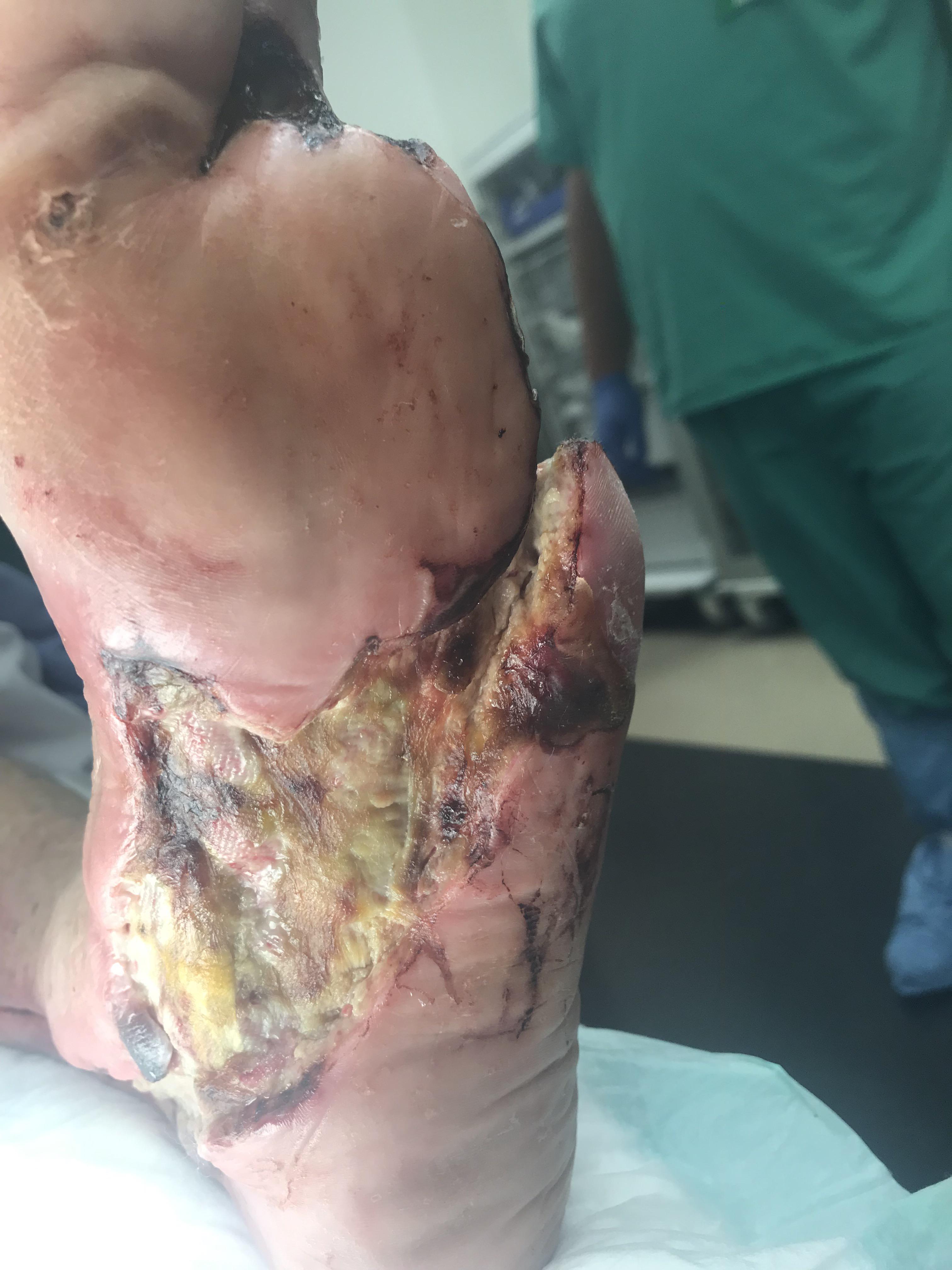 · 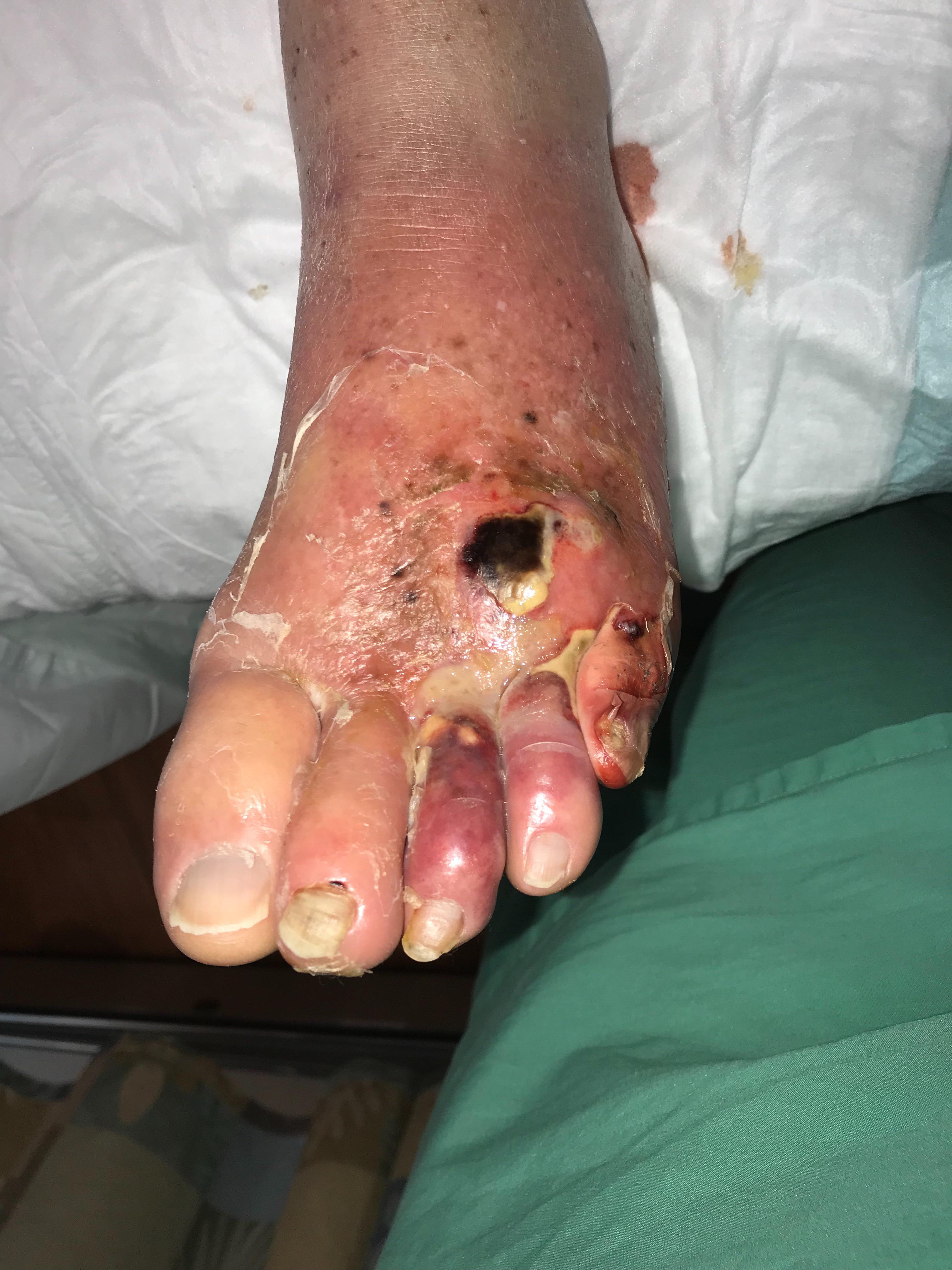 · 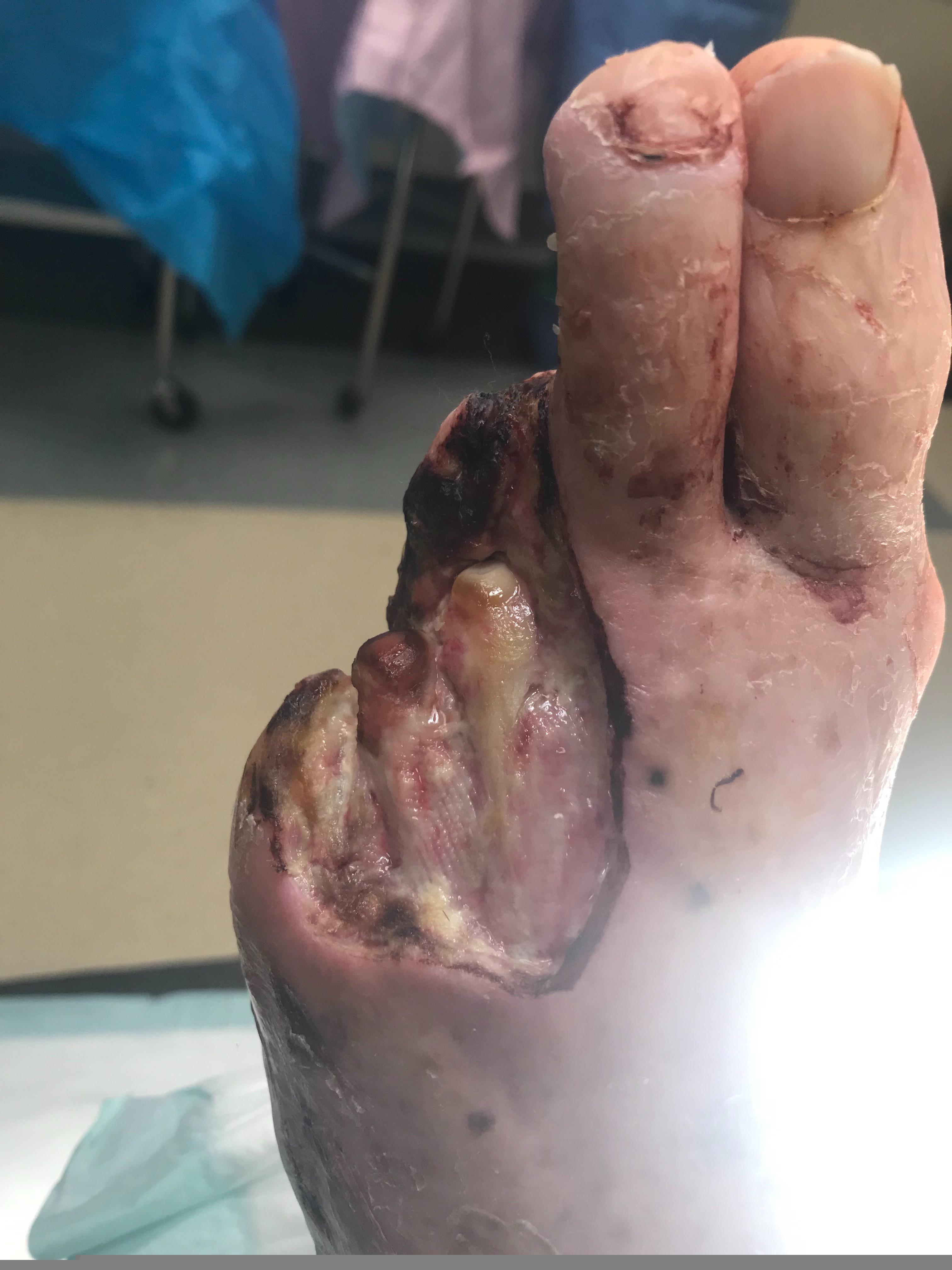 · 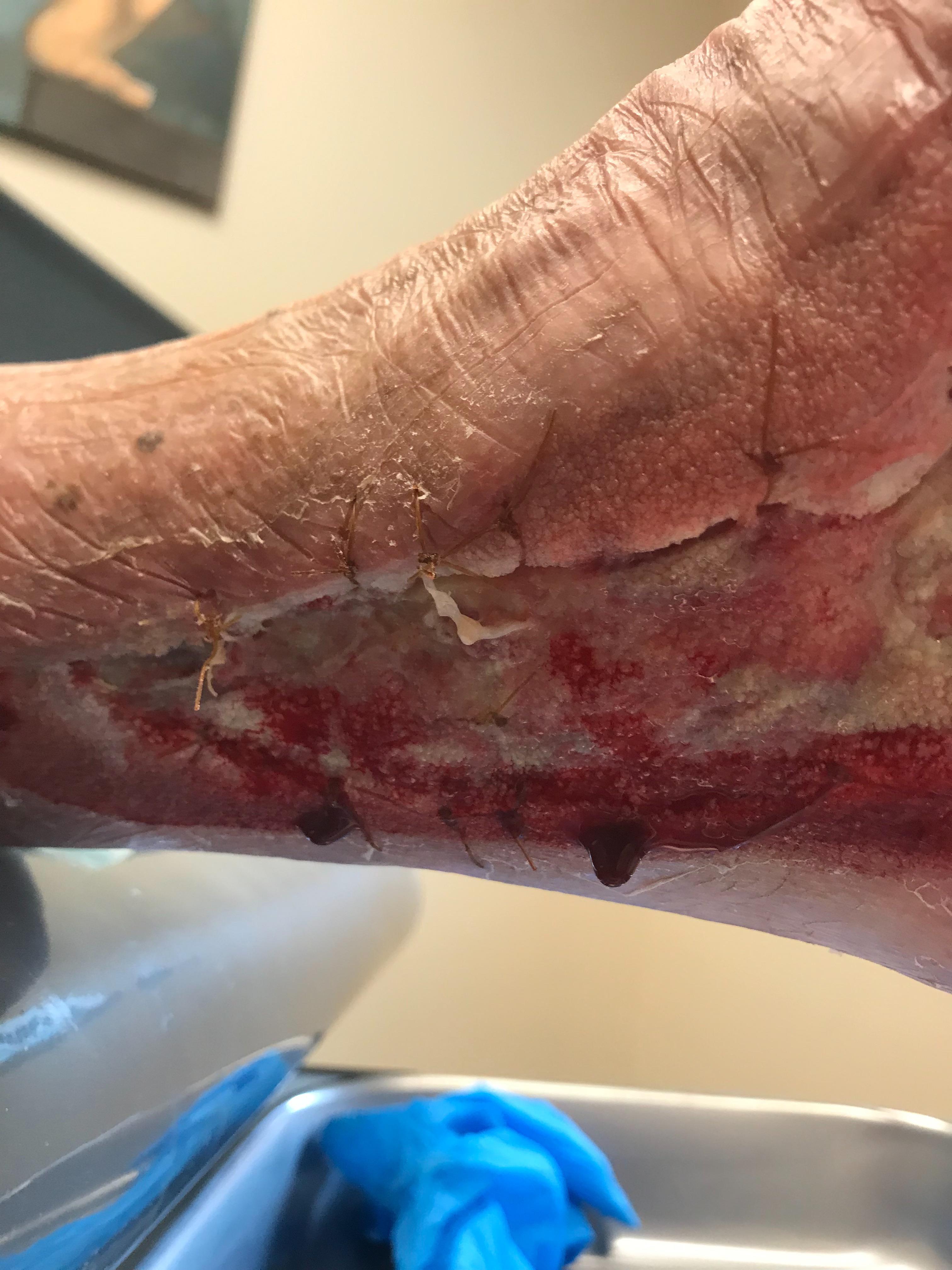 · 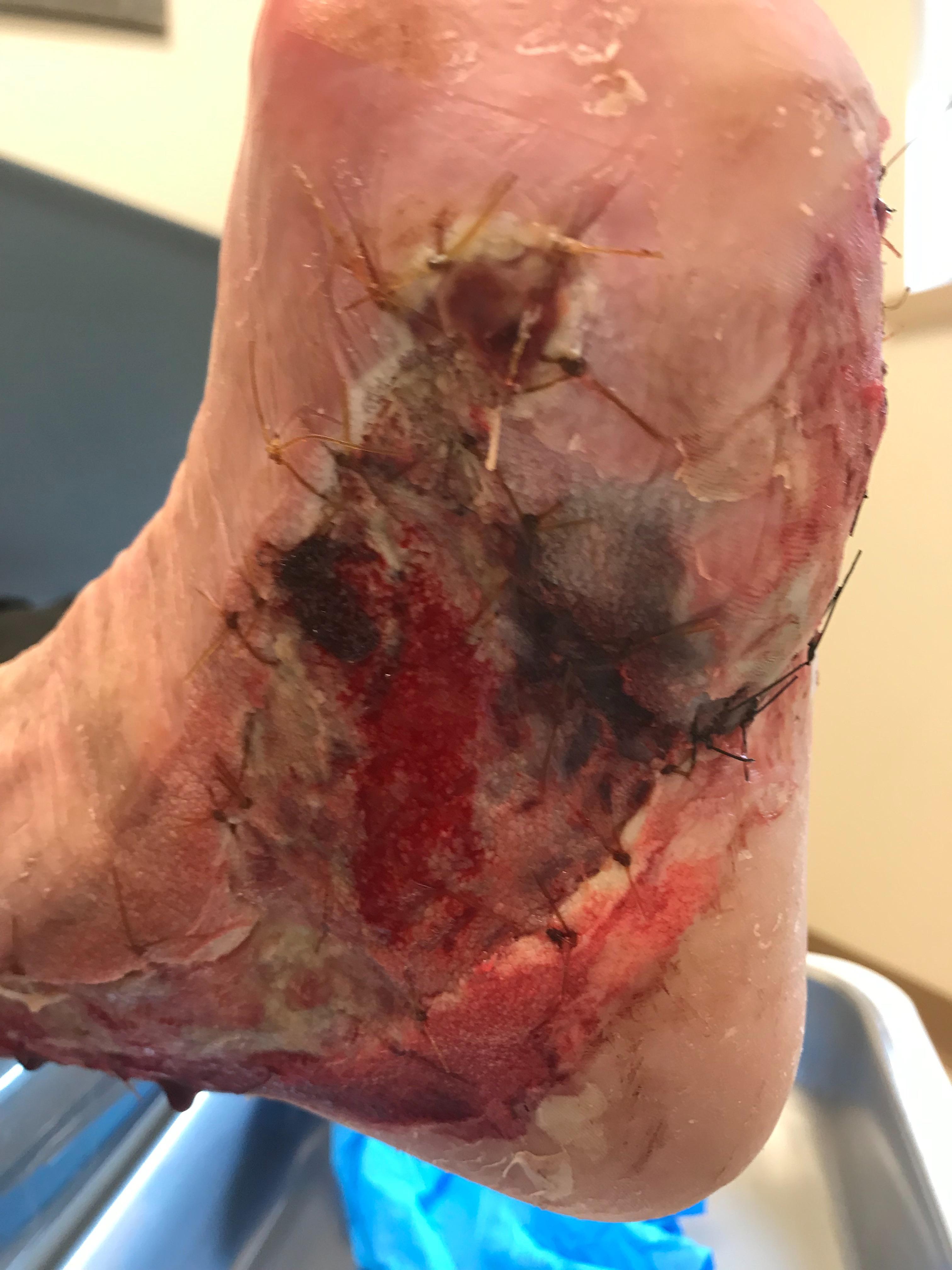 · 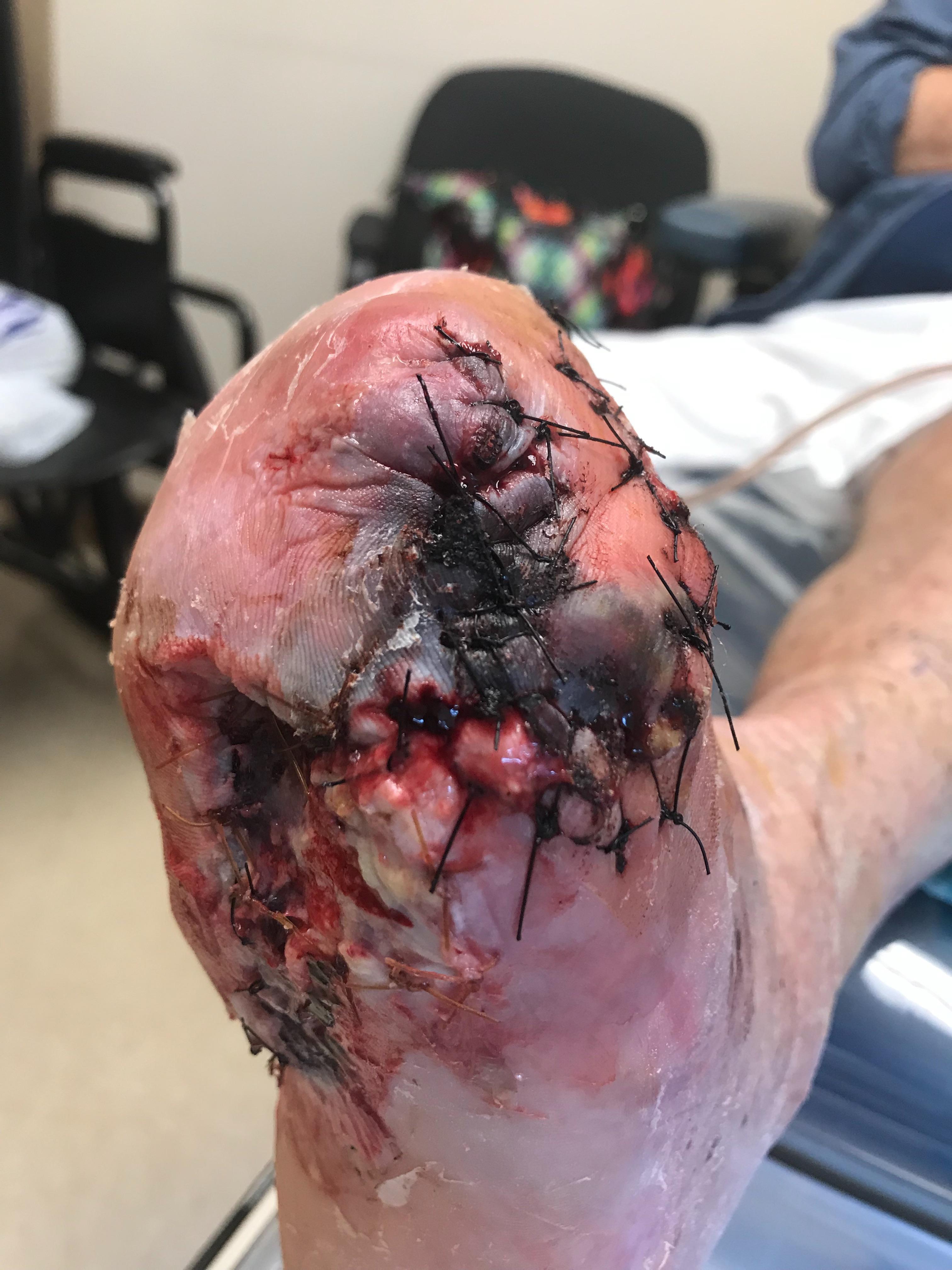 · 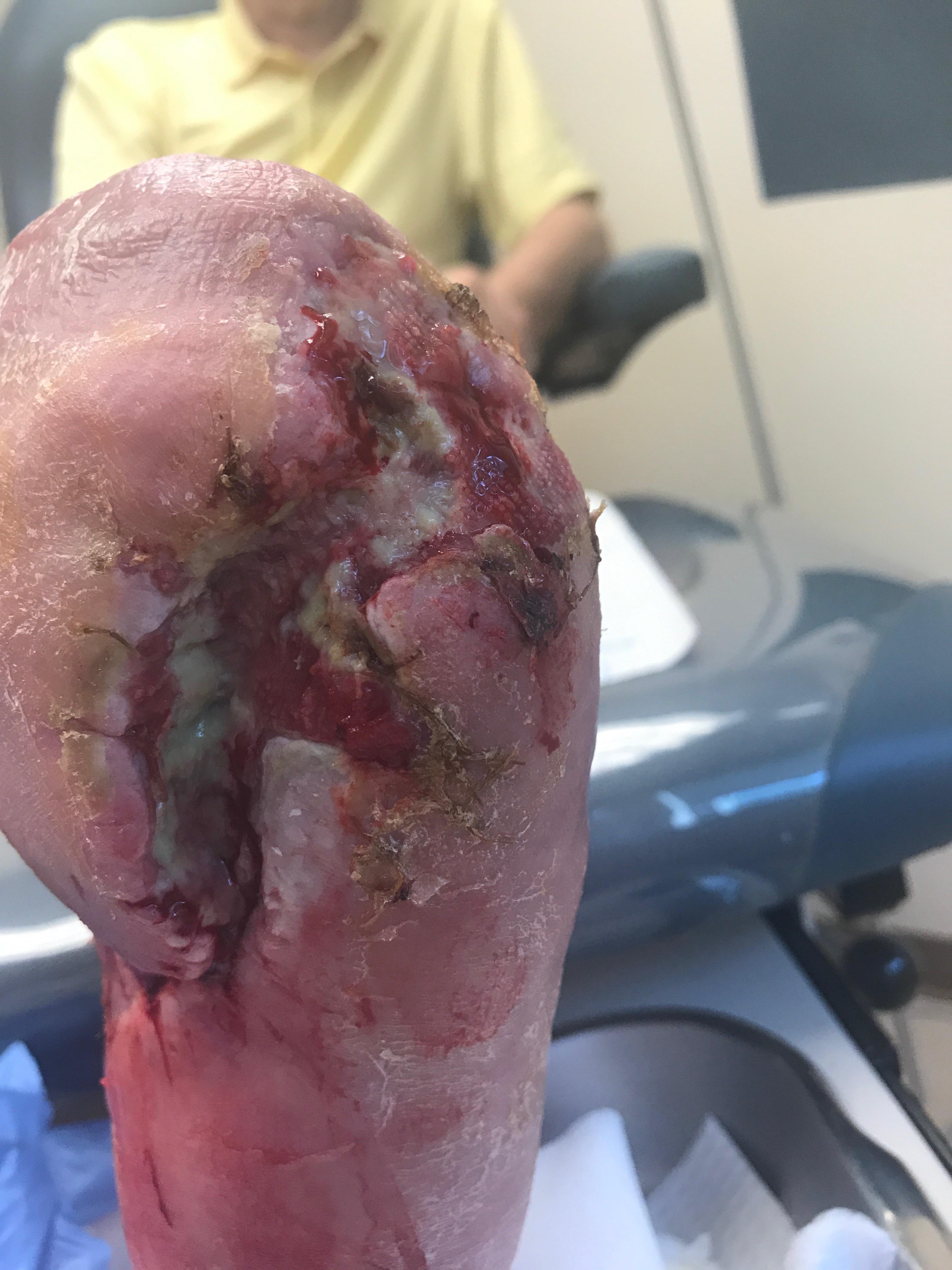 · 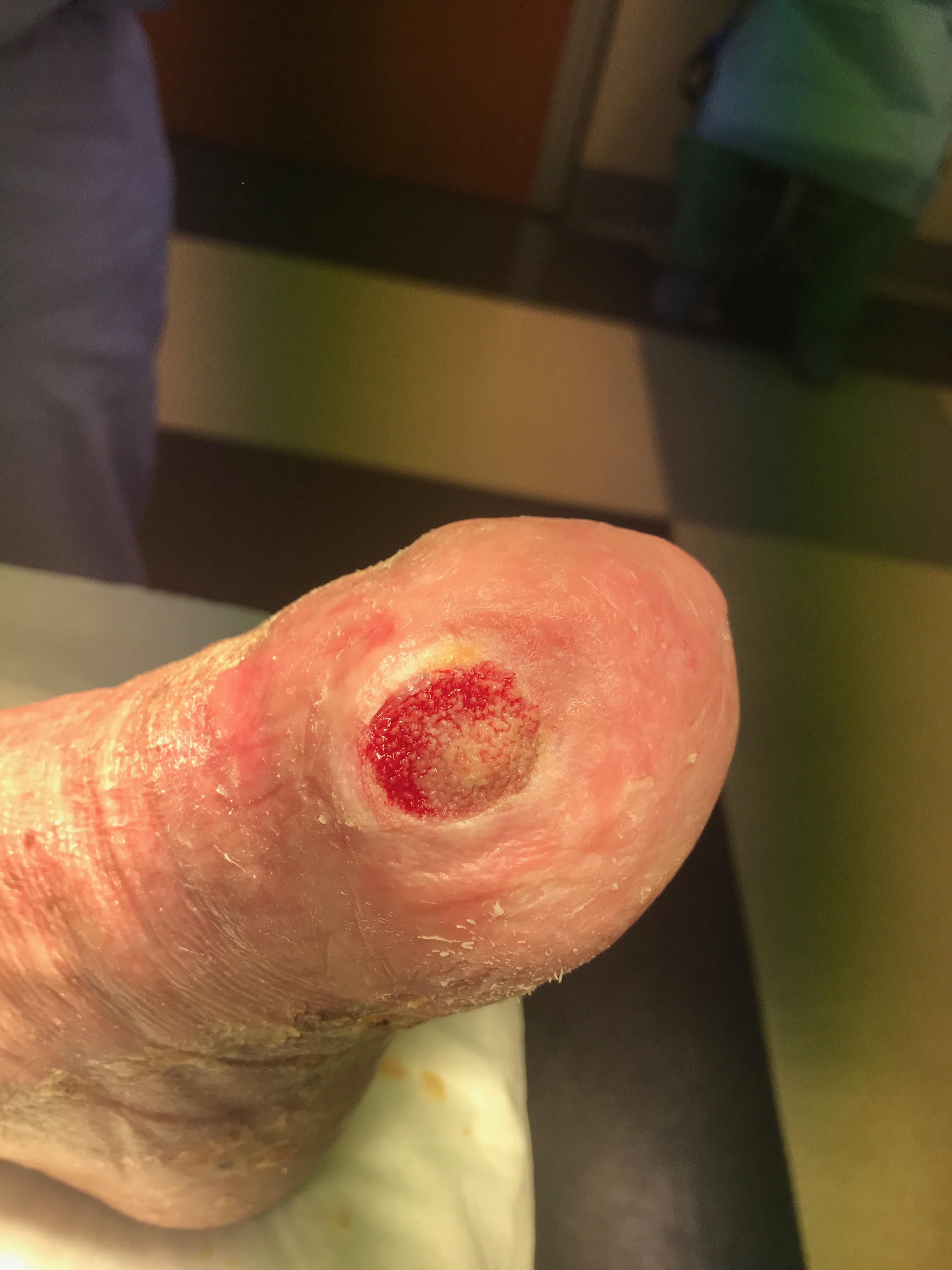 · 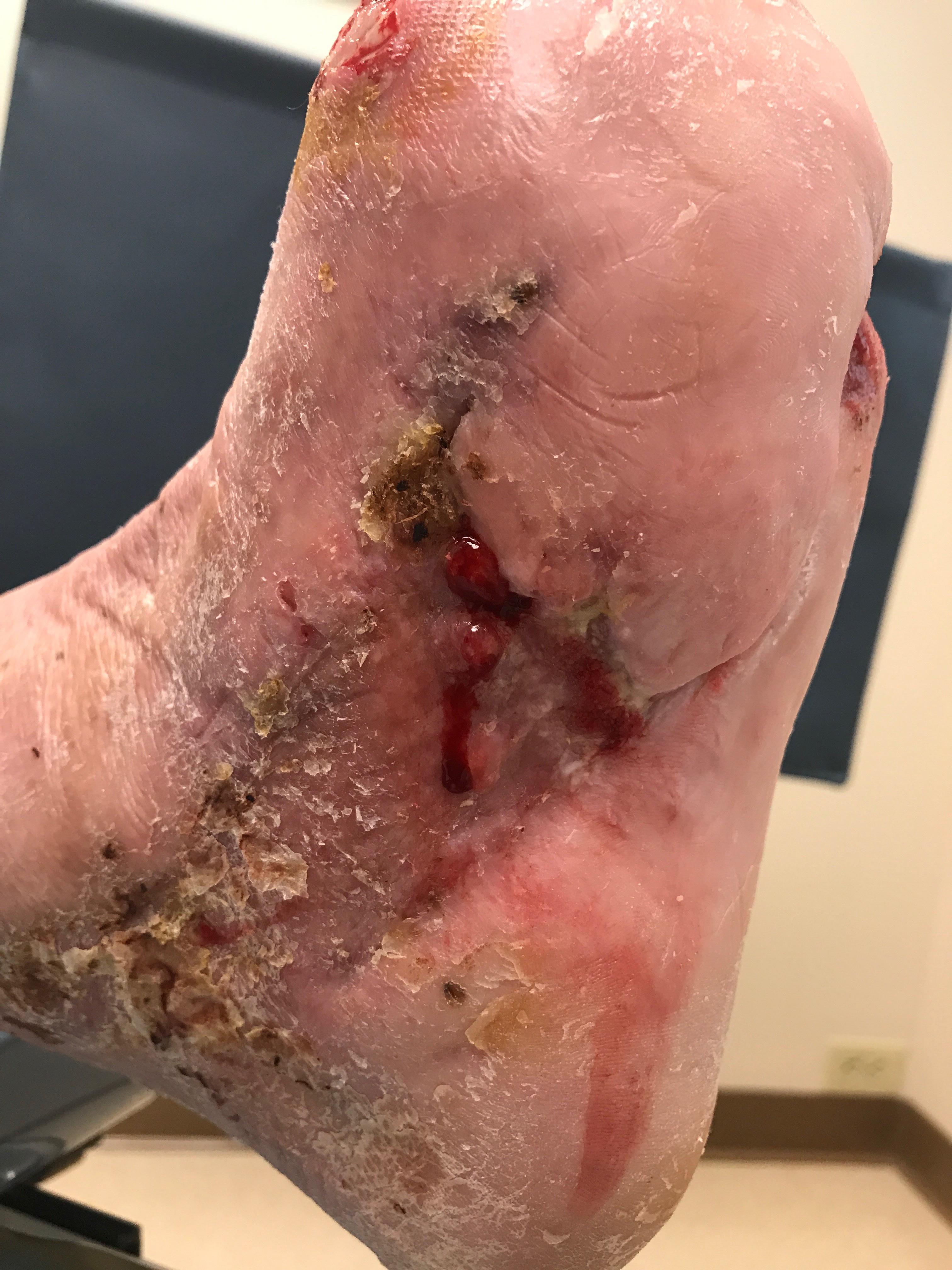 · 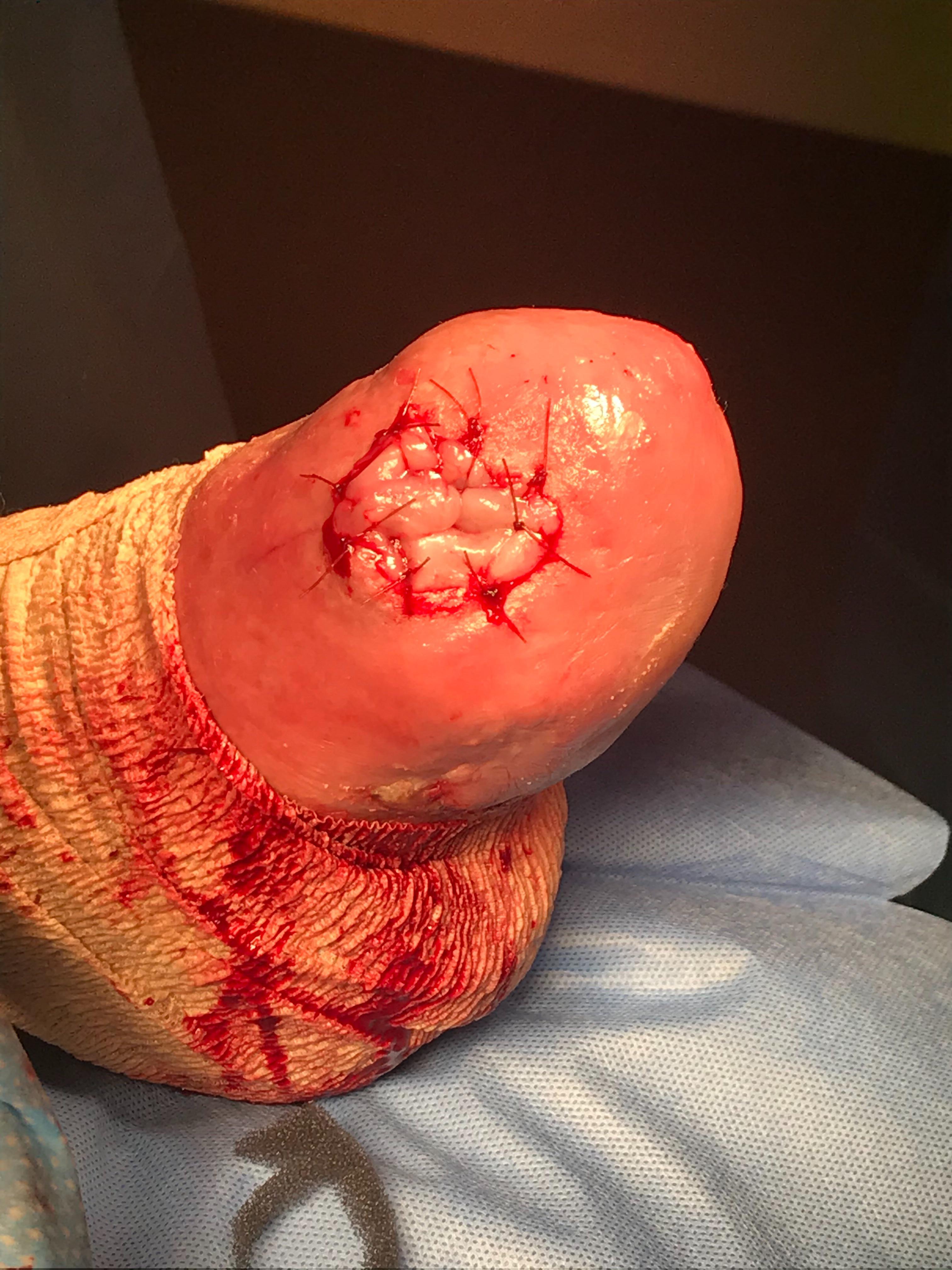 · |
|
#3
●
04-05-2023, 09:16 PM
| ||||||||
 ★ Legacy Member ★ Poster Rank:252 So many choices now Join Date: Jul 2015 Posts: 5,548 Mentioned: 15 Post(s) Quoted: 2120 Post(s)
| ||||||||
|
Re: Boiling Tea Leads to Amputation
Now it just looks like a giant thumb with the nail removed.
|
|
#7
●
04-06-2023, 01:02 AM
| ||||||||
 My Rank: FIRST SERGEANT Poster Rank:399 Join Date: Apr 2011 Posts: 3,054 Mentioned: 2 Post(s) Quoted: 276 Post(s)
| ||||||||
|
Re: Boiling Tea Leads to Amputation
Nas-tea  But four months and back to normal life doesn't sound bad at all. Judging by the extension of his injuries, the result could've been far more severe than that. But four months and back to normal life doesn't sound bad at all. Judging by the extension of his injuries, the result could've been far more severe than that.
|