
|
#1
●
05-25-2010, 11:37 PM
| ||||||||
 My Rank: FIRST SERGEANT Poster Rank:427 Female Join Date: Nov 2009 Posts: 2,738 Mentioned: 1 Post(s) Quoted: 5 Post(s)
| ||||||||
|
Bladder Stone
I got this from a medical site, so there's a lot o' doctor lingo: A 62-year-old male presented with complaints of difficulty and burning sensation while passing urine for the last 8 years associated with pain over the hypogastric area for 2 years. He had a history of recurrent urinary tract infections for the last 6-7 years for which he took medical treatment many times. There was history of passage of blood and pus flakes in urine on different occasions. On examination, a non-tender, firm lump was palpable in the hypogastric region. Per rectal examination revealed a hard and mobile mass in the urinary bladder. Per urethral catheterization was tried but the patient could not be catheterized. Routine examination of urine detected multiple RBCs and WBCs and the urine culture grew E. coli. Plain radiograph of the KUB region (Fig. 1) showed a large radio-opaque shadow in the pelvis and another very small shadow near the neck of the bladder (marked by arrow). Ultrasound of abdomen and urethra confirmed the presence of a vesical calculus of 11x8x8cm and a prostatic urethral calculus of 1x1cm. Serum calcium and PTH level was normal. Suprapubic extraperitoneal cystolithotomy was done and a yellowish brown hard stone weighing 380g, with fine spicules on its surface, was removed. There was no bladder diverticulum. A urethral dilator was passed through the urethra and the stone impacted near the bladder neck was pushed into the bladder and extracted. The patient was catheterized and the bladder closed in two layers. The catheter was removed on the fourteenth day and the patient passed urine comfortably with good stream. Biochemical examination showed a calcium oxalate stone. More can be read here: http://www.ispub.com/journal/the_int..._calculus.html I thought this was so crazy.. I mean, that doesn't look like a very pleasant thing to have in your bladder.. I wonder if he got to keep it afterward.. 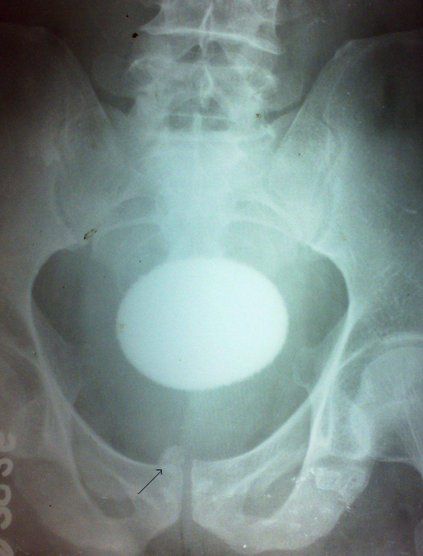 · 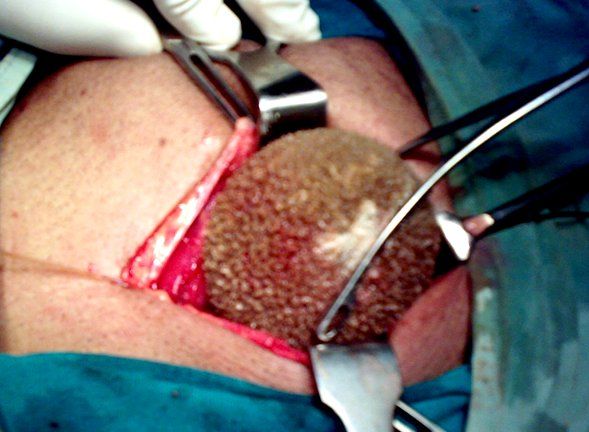 · 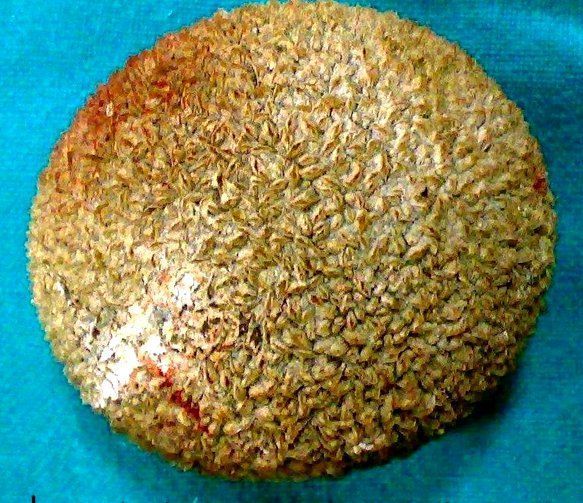 · |
|
#2
●
05-25-2010, 11:44 PM
| ||||||||
 My Rank: LANCE CORPORAL Poster Rank:2165 Join Date: Jan 2010 Posts: 220 Mentioned: 1 Post(s) Quoted: 9 Post(s)
| ||||||||
|
Re: Bladder Stone
It's really pretty. I am compelled to touch it. Sort of like a pearl from an oyster, eh? Who wants to make it into jewelry for me?
|
|
#3
●
05-26-2010, 12:37 AM
| ||||||||
 My Rank: STAFF SERGEANT Poster Rank:885 Female Join Date: Apr 2010 Posts: 852 Mentioned: 0 Post(s) Quoted: 8 Post(s)
| ||||||||
|
Re: Bladder Stone
It looks like one of those spikey balls that grow on trees that siblings like to throw at each other cuz they're hard.  |
|
#5
●
05-26-2010, 05:27 AM
| ||||||||
 My Rank: CORPORAL Poster Rank:1430 female Join Date: Dec 2008 Posts: 411 Mentioned: 0 Post(s) Quoted: 5 Post(s)
| ||||||||
|
Re: Bladder Stone
thats awful.. i bet that shit huuurrrtt  it looks like a christmas ornament  |
|
#9
●
05-26-2010, 09:41 AM
| ||||||||
 My Rank: FIRST LIEUTENANT Poster Rank:250 dry stab Join Date: Mar 2010 Posts: 5,590 Mentioned: 3 Post(s) Quoted: 137 Post(s)
| ||||||||
|
Re: Bladder Stone
That thing is fucking huge! I wonder how long it takes to grow one that big and pokey |





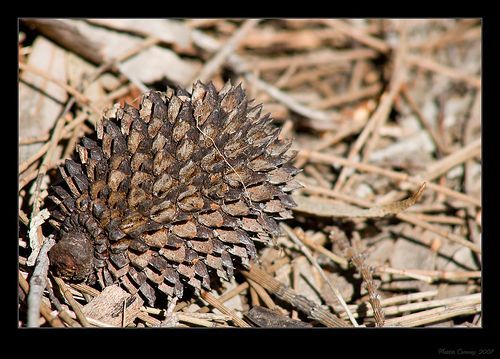


 that is pretty neat looking, wouldn't be neat to have in your body though.