|
#1
●
03-06-2023, 05:41 PM
| ||||||||
 These are the rooms Poster Rank:26 of ruin. Join Date: Sep 2014 Posts: 54,011 Mentioned: 145 Post(s) Quoted: 30403 Post(s)
| ||||||||
|
Avulsion Amputation
Source. This case is out of Oman: A 23-year-old male presented to us with avulsion amputation of his left hand through the wrist with circumferential degloving of the skin through the upper arm. Part of the upper arm skin sustained closed degloving and a small part of the mid-arm skin, though degloved, was retained by a small posterior attachment. It was a worksite injury in which the patient's wrist got trapped under the conveyer belt of a machine. Forward pull by the machine and the patient trying to pull his hand out resulted in amputation of the hand and avulsion of the soft tissue and skin. The patient presented to us around 4.5h after the injury. At the time of presentation, his vitals were stable, there was no ongoing blood loss, and he did not have associated injuries. After a brief history, radiographs were obtained of the upper limb and relatively well-preserved amputated part. The radiographs revealed amputation of the hand through the intercarpal level [Figure 1]. The amputated part was examined and was found to contain most of the flexor tendons avulsed from musculotendinous junctions, along with the nerves and vessels [Figure 2]. The patient was rushed to the emergency operation theater. Under anesthesia and high arm tourniquet control, the limb was prepared. Examination revealed that the limb had sustained extensive crush injury in multiple planes; there was severe contamination and the vessels and nerves avulsed from the area just distalto the bifurcation of the brachial artery. The muscles were partly damaged due to the avulsion injury [Figure 2]a. The anterior interosseous vessels were preserved up to the mid-forearm. On the extensor aspect, the muscles and tendons were exposed, and the long extensors to the fingers were also avulsed as on the flexor side [Figure 2]b. Severe avulsion of tissues in different planes with crushing and contamination of the underlying tissues precluded the possibility of replantation. All the contaminated devitalized muscles and exposed tendons were sharply debrided. The skin over the upper arm, though degloved, showed satisfactory circulation [Figure 3]a. The skin over the middle third had some posterior attachment and was retained after debriding the underlying contaminated fascia [Figure 3]a. Split-thickness skin graft was harvested from the avulsed part for possible further use to cover the stump. The postoperative period was uneventful. The patient was taken up for a relook debridement after 48 h. The retained muscles appeared viable except for part of the mid-arm skin [Figure 3]b and the harvested skin graft was applied over the lower arm and around the elbow [Figure 3]c and [Figure 3]d. The patient was managed with regular dressings and after adequate counseling regarding the need of shortening of the extremity for fixation of appropriate prosthesis. he was taken up for revision amputation and coverage of the stump with a pedicle or a free flap. On exploration, the vessels in the area appeared inflamed and the possibility of the anastomosis being within the zone of injury, precluded the option of free flap. While looking for possible options for reconstruction, the available local tissue appeared to be promising. The periosteum was viable and was bleeding till the end of the stump. With lateral incisions over the periosteum of the radius and the ulna, periosteal flaps were raised circumferentially distal to the intended level of revision of the stump [Figure 4]a. Attachment of these flaps with the interosseous membrane was left intact [Figure 4]b. The proximal parts of this flap had some viable muscle on the extensor aspect. After raising the flaps adequately, the ostectomies of the radius and ulna were performed [Figure 4]c. The flap thus obtained was substantial and had dimensions of 14×6 × 1.5 cm [Figure 4]d. The flap was used to cover the amputation stump all around [Figure 5]. In the proximal forearm and around the elbow, sufficient muscle bulk was present to support the skin graft. The raw areas were dressed and further managed with regular dressings. The initial graft take (of the graft harvested from avulsed skin) was around 50–60%. The residual raw areas and the flap were subsequently covered with skin graft from the thigh. The patient was in the hospital as an inpatient for 18 days and was subsequently followed up in the clinic. Complete wound healing was achieved in 30 days from the date of injury. Athermoplastic splint was applied subsequently for positioning the elbow in 90° flexion and the patient was advised to remove the splint and do a range of motion exercises [Figure 6]a. The patient has completed 6 months of follow-up and has recovered the full range of elbow movements [Figure 6]b,[Figure 6]c,[Figure 6]d. The stump is well-covered with soft tissues and the patient is due to get prosthesis fashioned and applied. He has been re-employed in the same company with a change in his job profile. 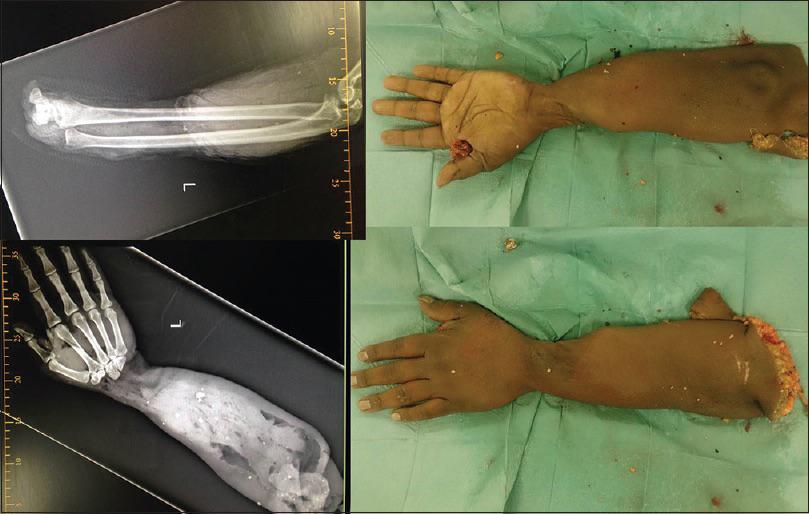 · 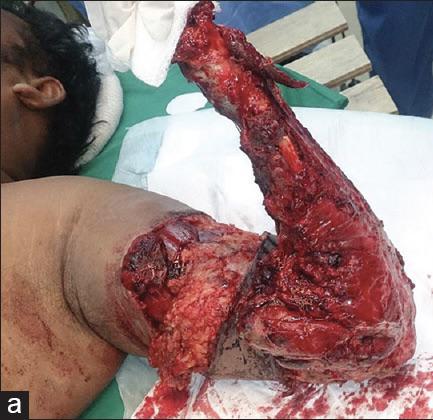 · 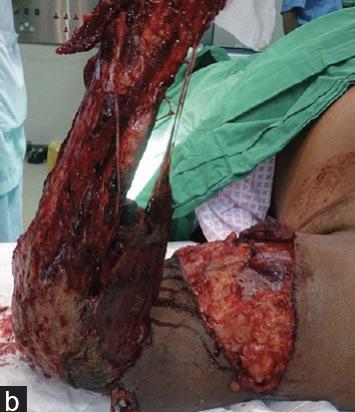 · 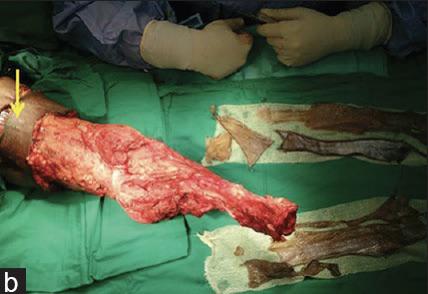 · 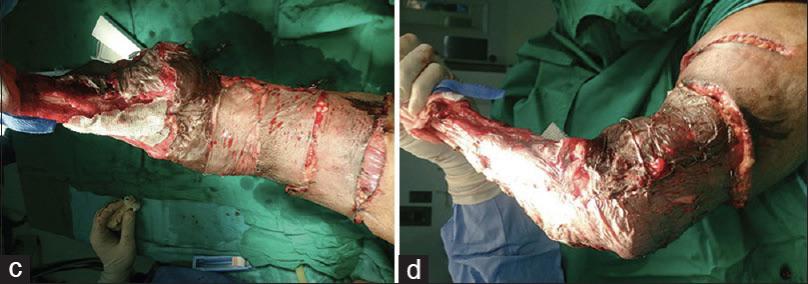 · 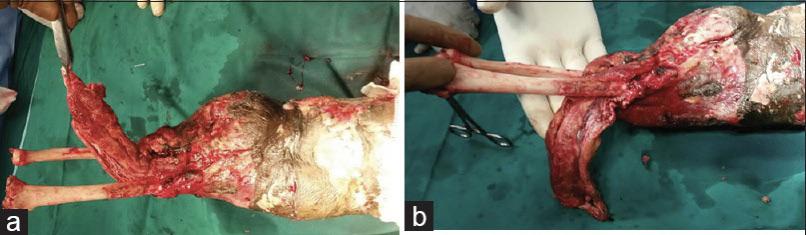 · 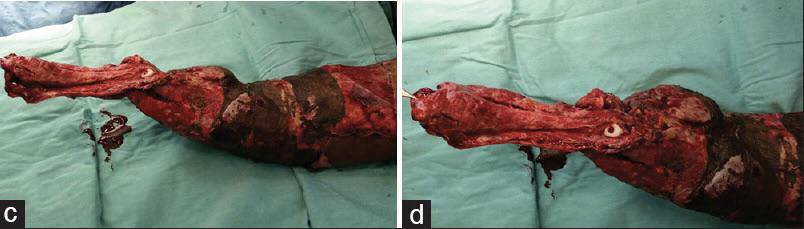 · 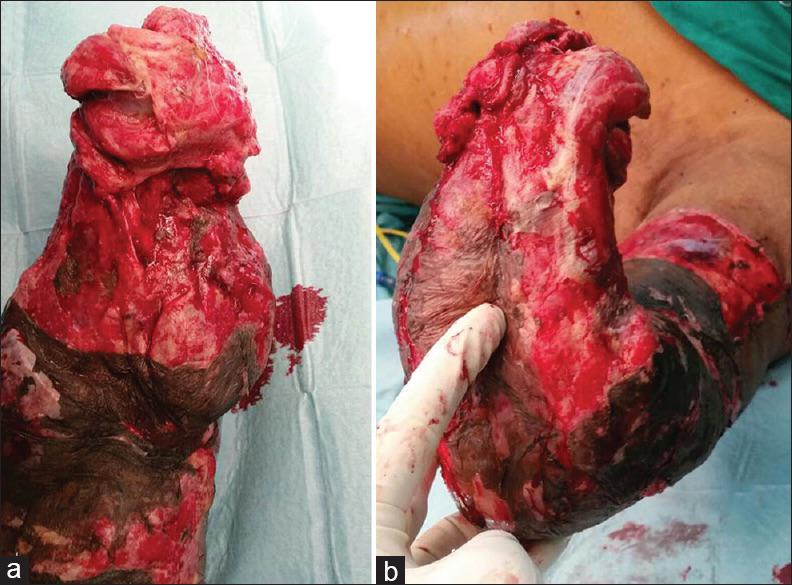 · 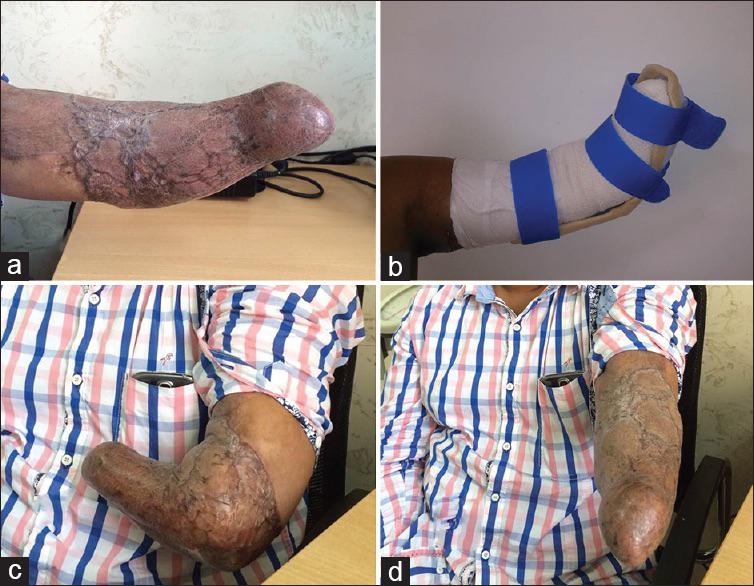 · |
|
#2
●
03-06-2023, 10:55 PM
| ||||||||
 ★ Legacy Member ★ Poster Rank:252 So many choices now Join Date: Jul 2015 Posts: 5,548 Mentioned: 15 Post(s) Quoted: 2120 Post(s)
| ||||||||
|
Re: Avulsion Amputation
There is a fetish site for fans of 'ol Stumpy, I'm pretty sure.  |