|
#1
●
03-19-2013, 09:20 AM
| ||||||||
 My Rank: MAJOR Poster Rank:12 Join Date: Jun 2009 Posts: 93,128
Contributions: 226
Mentioned: 91 Post(s) Quoted: 2009 Post(s)
| ||||||||
|
Ameloblastoma - Jaw Tumor
Here are a few clinical photos of patients that have ameloblastoma. As you can see these tumors can really distort a patients face:    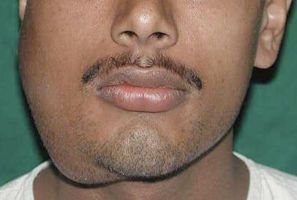 These tumors are the second most common tumor of the jaw. They are slow growing and tend to be present in men and woman in between 30-50, although the can be present in children/ young adults. Ameloblastomas typically occur as hard painless lesions near the angle of the mandible in the region of the 3rd molar tooth although they can occur anywhere along the alveolus of the mandible. Approximately 20 % of these tumors can occur in the maxilla (upper jaw). On imaging you can see how destructive a tumor like this is to the mandible. Some of these tumors have a multiloculated, cystic destruction of the bone: 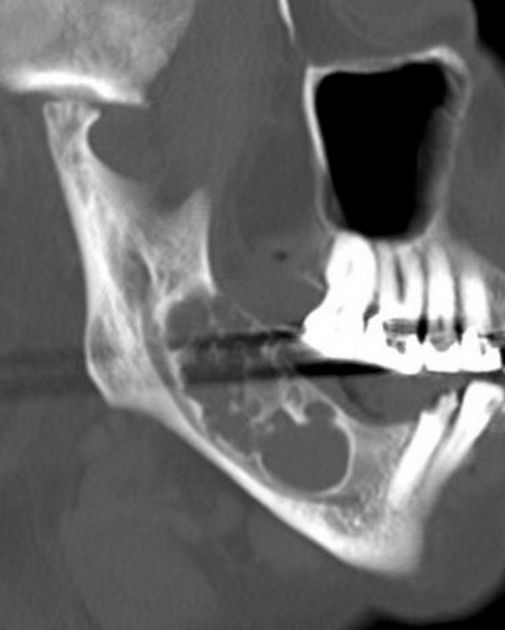 Surgical resection of this tumor is the first step, but these tumors can have a high rate of recurrence. If possible, the surgeon will try to resect the entire tumor to minimize this. Below is a photo of total mandible resection for ameloblastoma surgical resection. The jaw is large and nodular distorting the teeth: Click to enlarge 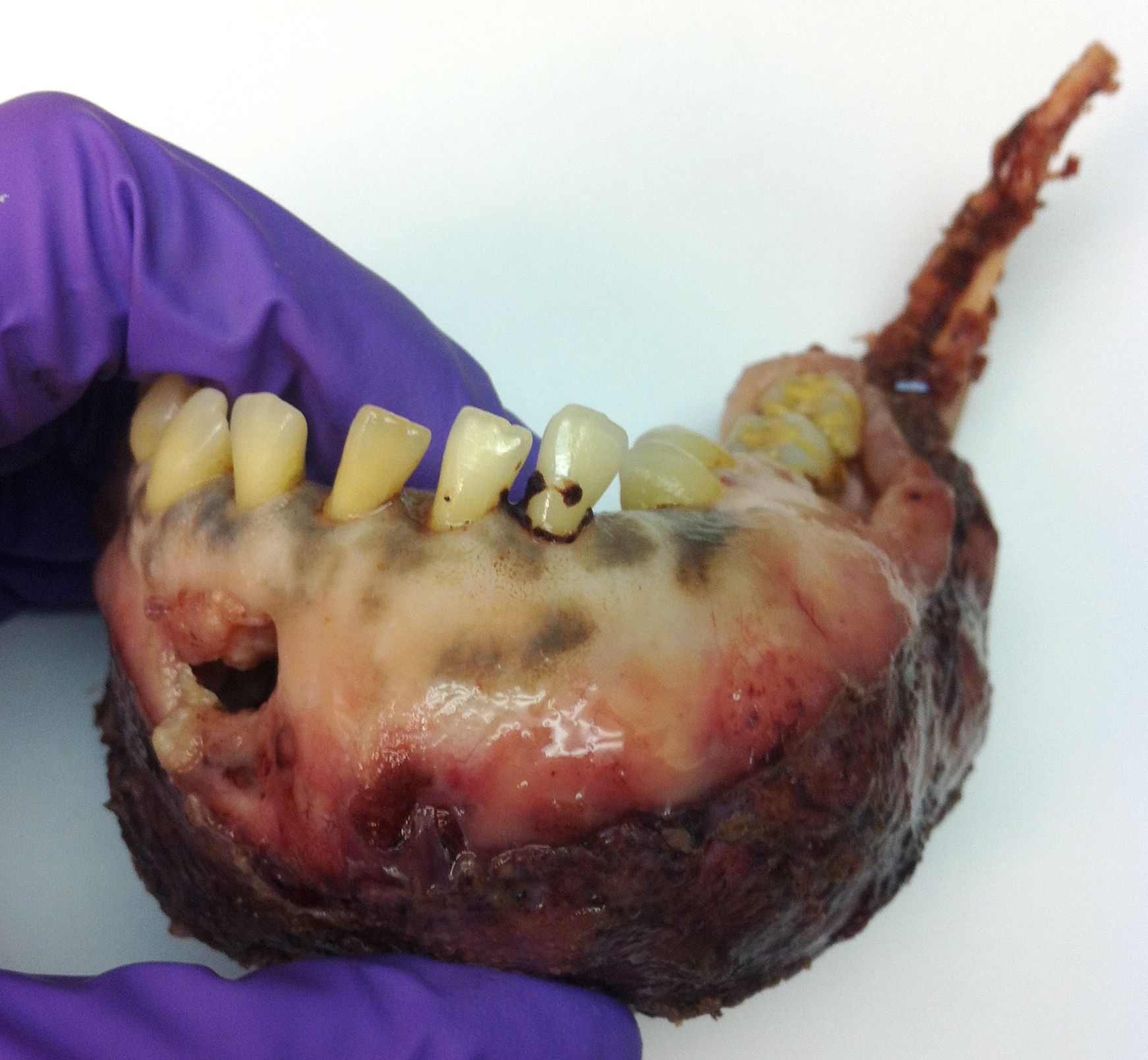 This is a close view of the surgical resection margin. You can clearly see where the tumor stops and the small (aprox 1cm) free margin of “normal” appearing mandibular bone. Because this tumor appears to have been completely excised, the rate of recurrence is less likely: Click to enlarge  The most striking appearance of this tumor is on the cut sections. Here you can appreciate how desructive this tumor is to the normal solid bone of the mandible. It corresponds to the cystic destruction of the bone seen on imaging: Click to enlarge 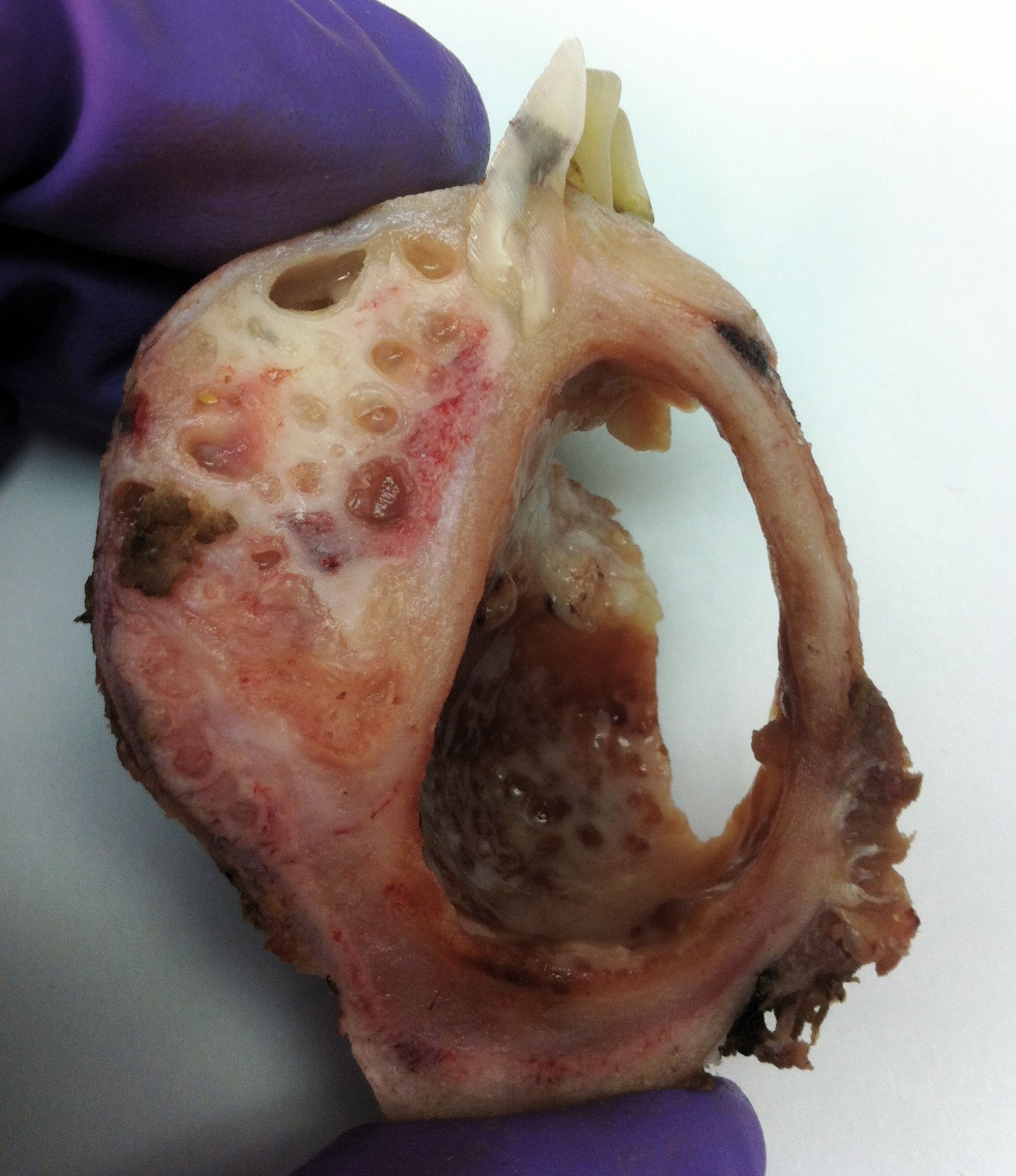 Reconstruction Seeing such a gruesome surgical resection like this make you think the patient may be left severely deformed. Not true. The surgical reconstruction of these types of tumors is absolutely amazing! Often an “autograft” with a titanium plate is used which means it is the patients own bone. The bone is usually grafted from the patients own fibula (small lower leg bone) or rib: Click to enlarge 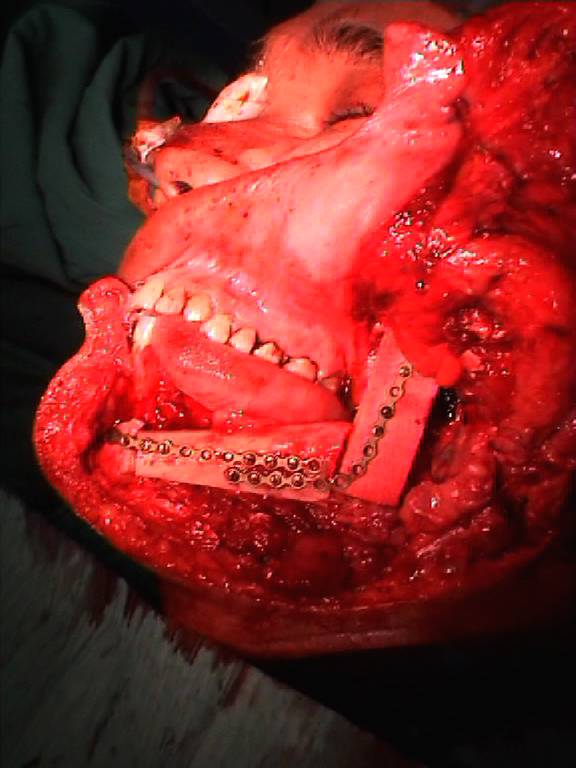 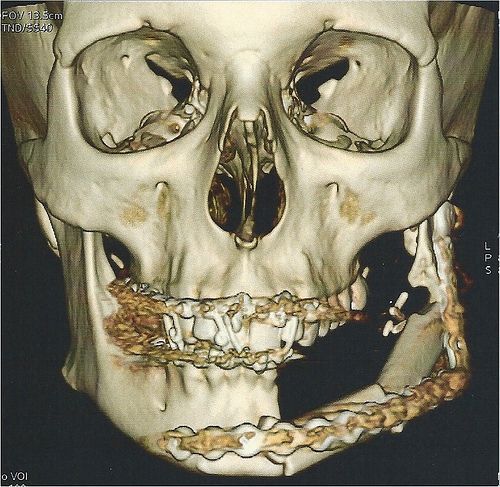 |