
|
#1
●
12-05-2024, 12:27 AM
|
 These are the rooms Poster Rank:26 of ruin. Join Date: Sep 2014 Posts: 54,008 54,008Posts 87,658Thanked 30,403Quoted 145Mentioned 0Contrib. |
|
Advanced Dermatillomania
Case Presentation A 45-year-old male patient presented to the emergency department with a long-standing history of a non-healing posterior neck ulcer and recent paresthesia in the left arm. His medical history was notable for bipolar 1 disorder, anxiety disorder, and polysubstance abuse. He worked as a pig farmer. The wound had been present for nearly nine years, originating from a cyst on the posterior neck, which was surgically removed but later resulted in a methicillin-resistant Staphylococcus aureus (MRSA) infection. Despite treatment at a wound clinic, noncompliance with prescribed medications led to the development of a 1 × 2 cm ulcer on the left superior side of the nape of the neck, characterized by edema, granulation at the edges, and worsening pain. The patient underwent debridement and subsequent skin graft placement, with recommendations to continue wound care management at the clinic. Due to his nonadherence to the prescribed treatment plan, the wound deteriorated due to recurrent infections, necessitating multiple debridements and skin grafts over several years. Recently, the patient reported paresthesia in the left arm and hand, affecting the fourth and fifth fingers, accompanied by weakness. Clinical examination revealed a large necrotic wound with foul-smelling, purulent discharge and noticeable blood oozing . Informed consent was obtained from the patient himself. Bacterial cultures confirmed the presence of MRSA in the tissue sample. Computed tomography (CT) scans and magnetic resonance imaging (MRI) of the patient's head and cervical spine were performed to evaluate the extent and severity of the wound and its deep-seated involvement. The CT scan revealed erosion of the mastoid processes, indicating chronic calvarial osteomyelitis and mastoiditis. Additionally, minimal cortical exposure was observed in the left occipital calvarium and mastoid region . MRI images displayed edema in the left suboccipital, retromastoid, and posterior paraspinal soft tissues, consistent with inflammation and infection. Phlegmonous changes and myositis were extensive, involving the left suboccipital paraspinal musculature down to the C5-C6 level; however, no evidence of osteomyelitis or discitis was noted at this level. The patient was subsequently hospitalized, receiving multidisciplinary care involving neurosurgery, plastic surgery, infectious diseases, and general surgery, alongside meticulous monitoring. A comprehensive review of the patient's medical records revealed multiple emergency department admissions for blood transfusions due to severe anemia resulting from bleeding induced by razor blades. Additionally, drug-seeking behavior was frequently reported. During hospitalization, the patient was observed engaging in secretive removal of wound dressings and compulsive wound picking, expressing a need to eliminate perceived "bumps." Periodically, the wound was found to be intensely red and actively bleeding onto the patient's neck and shoulders, likely due to abrasion from utensils. Collaborating with the psychology team, the patient was educated about the vital importance of maintaining intact wound dressings before scheduled wound debridement and skin graft placement. Following surgical debridement, vacuum-assisted wound closure was employed, facilitating the patient's discharge home a few days later. At a subsequent examination, the patient presented with foul-smelling discharge and impaired wound healing. He complained of persistent neck pain and worsening weakness in the left upper extremity. Cervical MRI revealed heterogeneous enhancement in the soft tissue posterior to the neck spanning from C2 to C4. Signal abnormalities affecting the spinous processes of C2-C5 were indicative of spinal osteomyelitis. Furthermore, T2 and T1 contrast-enhanced images exhibited a collection in the posterior epidural space from C2 to T1, suggesting the presence of a posterior epidural abscess/phlegmon . To assess disease extension, an MRI of the thoracic and lumbar regions was obtained, but it showed no evidence of epidural abscess or inflammation in these regions. 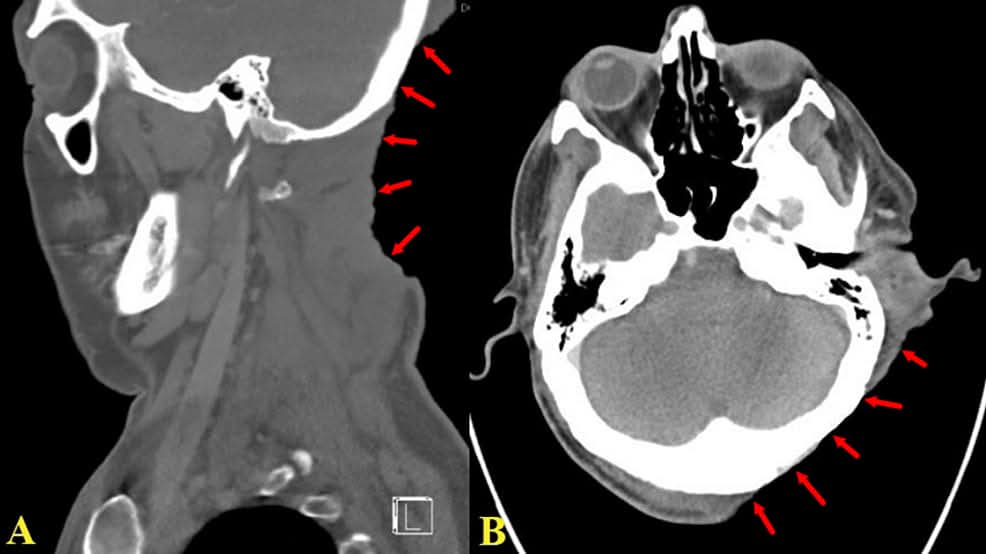 · 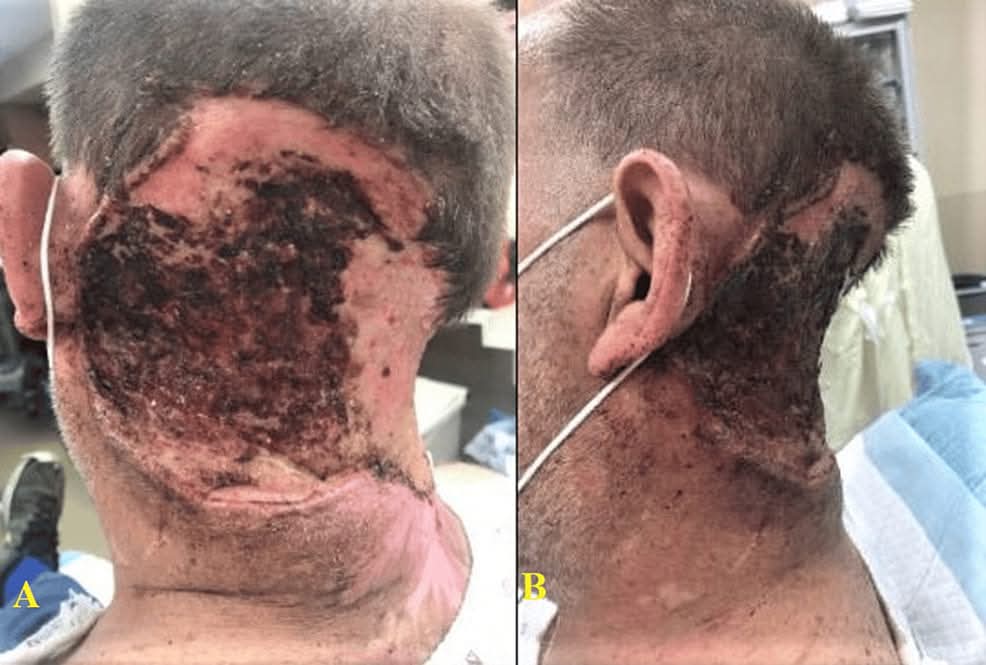 · 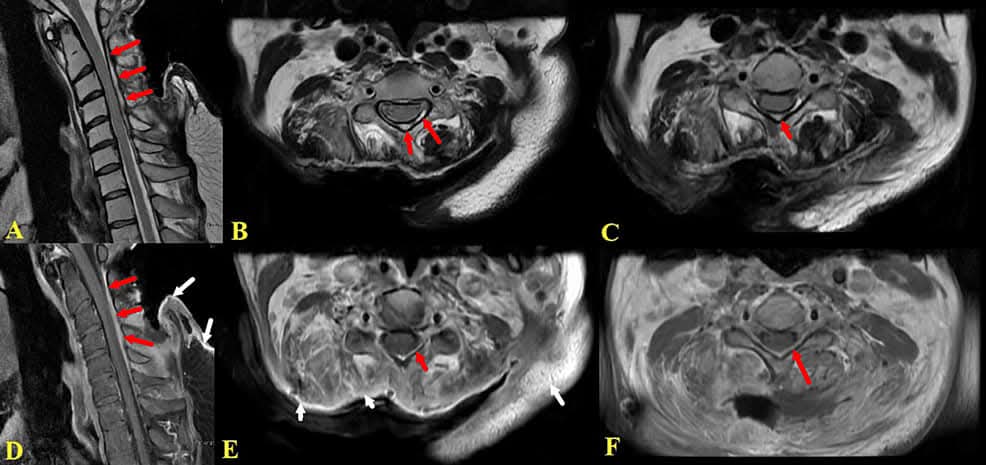 · 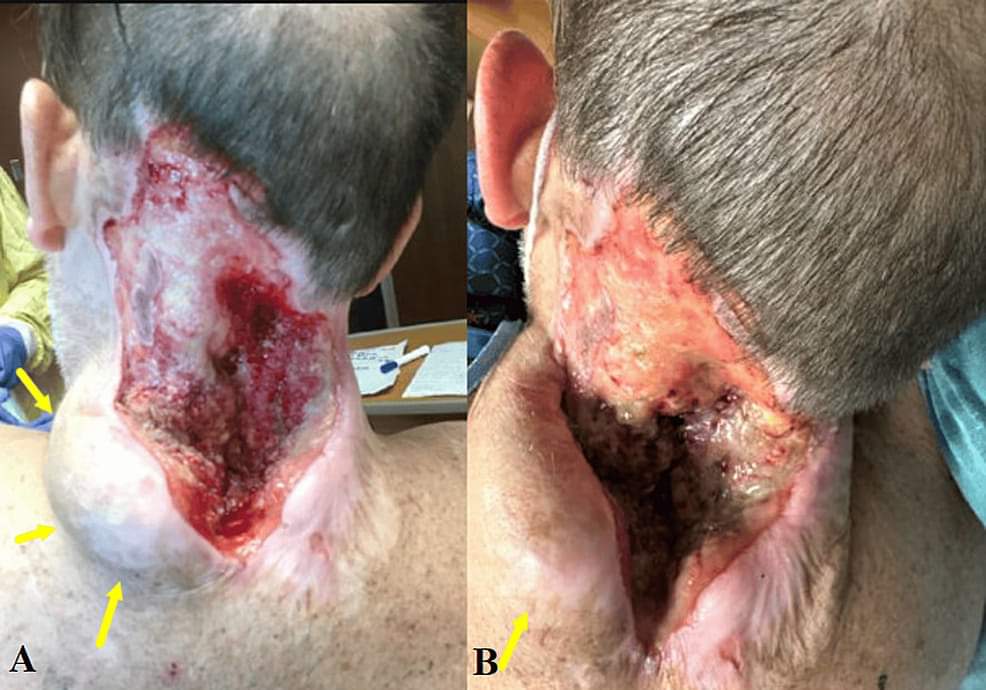 · |
|
#2
●
12-05-2024, 02:26 AM
|
 ✝Mudderator from Hell✝ Poster Rank:10 e-mail Join Date: Oct 2006 Posts: 96,632
Contributions: 901
96,632Posts 543,023Thanked 10,365Quoted 479Mentioned 901Contrib. |
|
Re: Advanced Dermatillomania
noncompliance with prescribed medications and bipolar 1 disorder, anxiety disorder, and polysubstance abuse don't mix well.  |
|
#4
●
12-05-2024, 10:51 PM
|
 ♚ Legacy Gold Member ♚ Poster Rank:206 Iceman Join Date: Aug 2017 Posts: 7,503 7,503Posts 12,801Thanked 3,630Quoted 19Mentioned 0Contrib. |
|
Re: Advanced Dermatillomania
Clearly they mix quite well with extraordinary results.
|
|
#5
●
12-07-2024, 02:37 PM
|
 ♚ Legacy Gold Member ♚ Poster Rank:268 ꓕSIꓤIꓕ∀S ϽINOᗡꓤ∀S Join Date: Feb 2010 Posts: 5,176
Contributions: 8
5,176Posts 31,148Thanked 1,440Quoted 45Mentioned 8Contrib. |
|
Re: Advanced Dermatillomania
Just an observation, but it seems historically like a lot of psychos are pig farmers... or, vice versa.
__________________  200+ Additional Smilies Custom DR Search Engine 200+ Additional Smilies Custom DR Search Engine ✦ Live life to it's fullest and leave a sexy corpse ✦ |
|
#6
●
12-08-2024, 10:29 PM
|
 My Rank: CORPORAL Poster Rank:1731 Join Date: Feb 2017 Posts: 309 309Posts 1,034Thanked 70Quoted 0Mentioned 0Contrib. |
|
Re: Advanced Dermatillomania
maybe there is some yet to be discovered disease vector with pigs that causes psychosis like toxoplasmosis from cat poop
|
|
#7
●
02-22-2025, 11:43 AM
|
| My Rank: PRIVATE FIRST CLASS Poster Rank:4843 Join Date: Nov 2016 Posts: 57 57Posts 77Thanked 5Quoted 0Mentioned 0Contrib. |
|
Re: Advanced Dermatillomania
I have dermatillomania, I've picked the skin around my nails since I was a kid. But suddenly I don't feel so bad about it!
|



 What a mess to have to live with.

