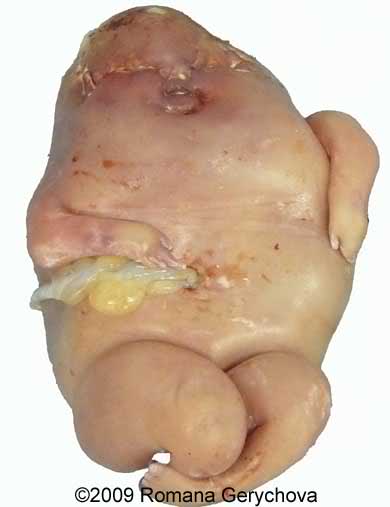
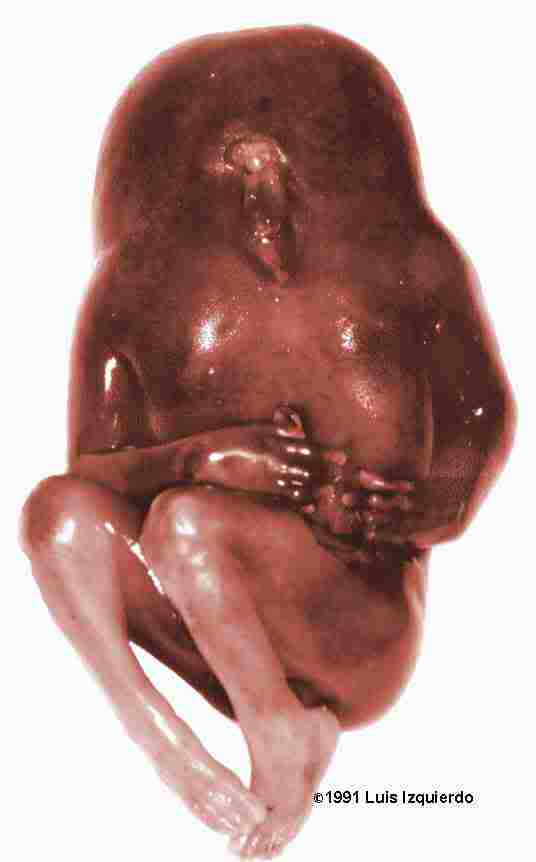
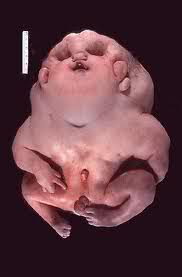
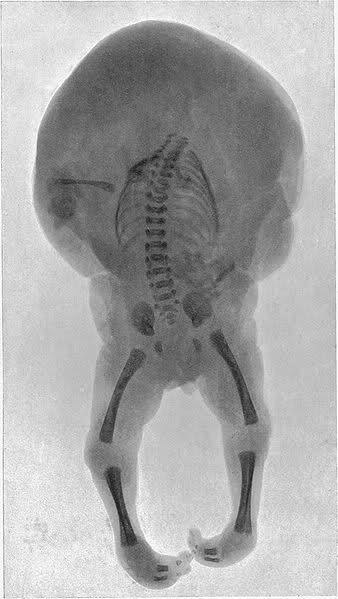
Acardiac twins, otherwise known as twin reversed-arterial perfusion (TRAP) sequence, are a rare and serious complication of monochorionic twins. Although the cause for the syndrome is not completely understood, it has been hypothesized that large vessels on the surface of the common placenta are responsible. Blood is perfused from one twin (“pump” twin) to the other twin (“acardiac” twin) by retrograde (backward) flow. Thus, the acardiac twin receives deoxygenated (oxygen depleted) arterial blood from the pump twin in the wrong direction. The inadequate perfusion of the acardiac twin is responsible for a spectrum of lethal anomalies, including acardia (absent heart), acephalus (absent skull), severe maldevelopment of the upper body, and a relative excess of edematous connective tissue.
Although the pump twin is structurally normal, there is an increased risk of death (up to 50-75%) for that twin. This is due to two important factors. First, the pump twin’s heart has to work to support the perfusion of both the pump twin and the acardiac twin. Eventually, the strain to the pump twin’s heart may be too great, resulting in high-output heart failure. Second, premature delivery or miscarriage may occur due to the polyhydramnios (excess amniotic fluid volume) and/or rapid growth of the acardiac twin. Risk factors associated with pregnancy loss include polyhydramnios (defined as a maximum vertical pocket of amniotic fluid greater than or equal to 8.0 centimeters), large TRAP twin (estimated fetal weight of the acardiac twin is 50% or greater than that of the pump twin), evidence of heart failure in the pump twin (hydrops), or critically abnormal blood flow patterns identified on Doppler ultrasound. Because of the high risk of pregnancy loss in pregnancies complicated by Acardiac/TRAP sequence in the setting of these risk factors, surgical treatment in the womb to separate the circulatory systems of the twins have been proposed.
http://www.maternal-fetalhealth.com/...cardiac-twins/