|
#1
●
09-10-2013, 04:56 AM
| ||||||||
 NOT THE BOSS Poster Rank:32 ᴀᴅᴍɪɴɪᴤᴛʀᴀᴛᴏʀ Join Date: May 2013 Posts: 47,739
Contributions: 79
Mentioned: 19 Post(s) Quoted: 4195 Post(s)
| ||||||||
|
Acardiac Fetus
From NCBI: Abstract Acardiac fetus is a rare lethal fetopathy usually encountered in monozygous pregnancies. Ultrasound prenatal diagnosis has enabled an increasing number of observations and raised the need for an adequate therapeutic approach since the spontaneous prognosis for the healthy twin is unfavorable in half of the cases. An acardiac fetus was identified at 12 weeks gestation in a 36-year-old woman. Growth of the healthy fetus was carefully monitored and progressed normally to delivery by cesarean section of a 2.900 kg boy at 36 weeks. At delivery, the acardiac fetus was found to be totally free of any attachment, floating in the remaining fluids. Pathology examination showed a 16 g macerated fetus with a cephalic extremity, a ventral pedicle and a syrenomelic caudal extremity. The caryotype was not significative. Acardiac fetus occurs in less than 1% of multiple pregnancies and can develop in single pregnancies. Twin reversed arterial perfusion has been recognized as necessary for development of the perfused fetus. Genetic and immunologic theories have been proposed to explain the pathogenesis which remains unknown. Clinical management depends on the spontaneous development of the acardiac fetus and the deleterious consequences for the healthy twin resulting from heart failure, anasarca or prematurity. Medical management with digoxin, or selective extraction by hysterotomy may improve prognosis but results have been variable. Echoguided umbilical cord ligation has also been proposed to improve maternal mortality. Therapeutic abstention is no longer indicated at prenatal diagnosis of an acardiac fetus and a healthy twin despite the risk of invasive treatment  ·  ·  ·  ·  · 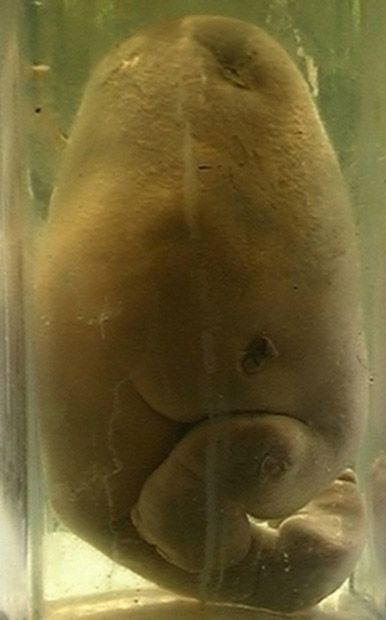 ·  · 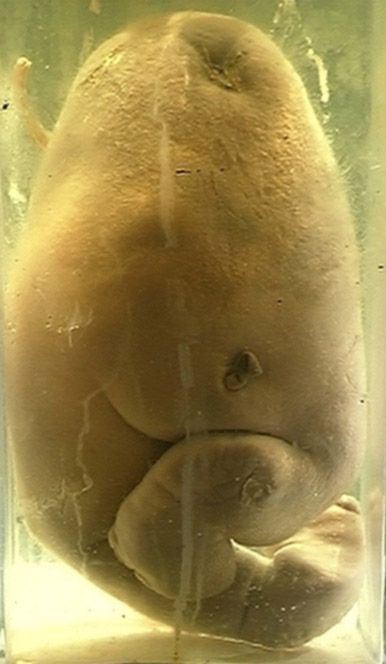 ·  ·  · |
|
#4
●
09-10-2013, 03:33 PM
| ||||||||
 ★ Legacy Member ★ Poster Rank:197 All woman Join Date: Jun 2012 Posts: 7,773 Mentioned: 22 Post(s) Quoted: 1420 Post(s)
| ||||||||
|
Re: Acardiac Fetus
Things like this make me scared to have kids, even though I don't know if I can even have them  |
|
#9
●
09-13-2013, 07:27 PM
| ||||||||
 My Rank: PRIVATE Poster Rank:5858 Join Date: Apr 2013 Posts: 41 Mentioned: 0 Post(s) Quoted: 16 Post(s)
| ||||||||
|
Re: Acardiac Fetus
Abstract Acardiac fetus (no heart) is a rare lethal fetopathy (fatally malformed fetus) usually encountered in monozygous (one egg, when it splits, that's identical twins) pregnancies. Ultrasound prenatal diagnosis has enabled an increasing number of observations and raised the need for an adequate therapeutic approach since the spontaneous prognosis for the healthy twin is unfavorable in half of the cases (the healthy twin is harmed by being in the womb with the malformed twin about half the time. Since it can be identified with ultrasound, then medicine needs to come up with more viable treatments in order to save the healthy kid). An acardiac fetus was identified at 12 weeks gestation in a 36-year-old woman. Growth of the healthy fetus was carefully monitored and progressed normally to delivery by cesarean section of a 2.900 kg boy at 36 weeks. At delivery, the acardiac fetus was found to be totally free of any attachment, floating in the remaining fluids (potato was just hanging out in the womb and it's brother was fine). Pathology examination showed a 16 g macerated (wrinkled up, nasty) fetus with a cephalic (head-like) extremity, a ventral pedicle (single, front, foot-like structure) and a syrenomelic caudal extremity (fused legs coming out of base of the spine). The caryotype was not significative (doesn't happen because of chromosomes, unlike, say, Down's syndrome). Acardiac fetus occurs in less than 1% of multiple pregnancies and can develop in single pregnancies. Twin reversed arterial perfusion has been recognized as necessary for development of the perfused fetus (the one that looks like a potato is stealing the blood from the healthy kid). Genetic and immunologic theories have been proposed to explain the pathogenesis which remains unknown (a nice way of saying they haven't a clue why this happens). Clinical management depends on the spontaneous development of the acardiac fetus (how this is treated depends on how much the weird one grows) and the deleterious (shitty) consequences for the healthy twin resulting in (accidently erased this. anyway, the potato is bad news) or prematurity. Medical management with digoxin (medicine for heart failure), or selective extraction (take out the bum babe) by hysterotomy may improve prognosis but results have been variable (no guarantees). Echoguided umbilical cord ligation has also been proposed to improve maternal mortality (snip the cord, save the mom...using ultrasound). Therapeutic abstention is no longer indicated at prenatal diagnosis of an acardiac fetus and a healthy twin despite the risk of invasive treatment (doing nothing ain't goin' to help.) hope that clears up the weird potato mystery  |