High res so please click and enjoy 
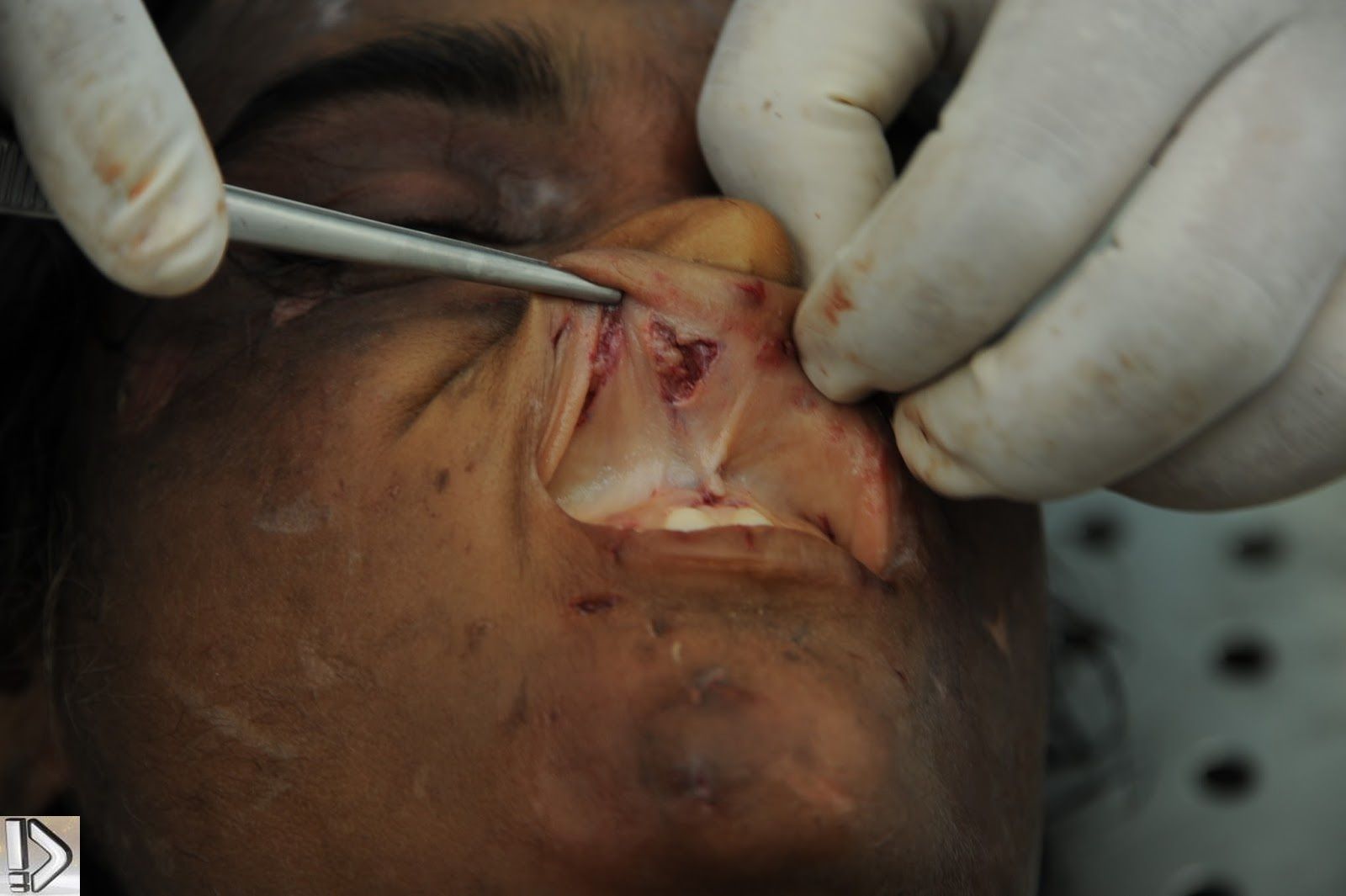
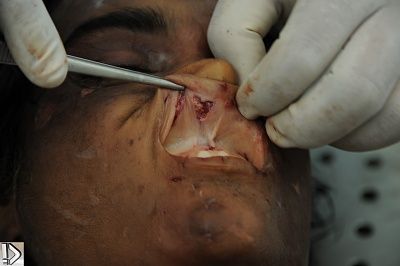
Lacerations of the inner side of the upper lip due to a fist blow:
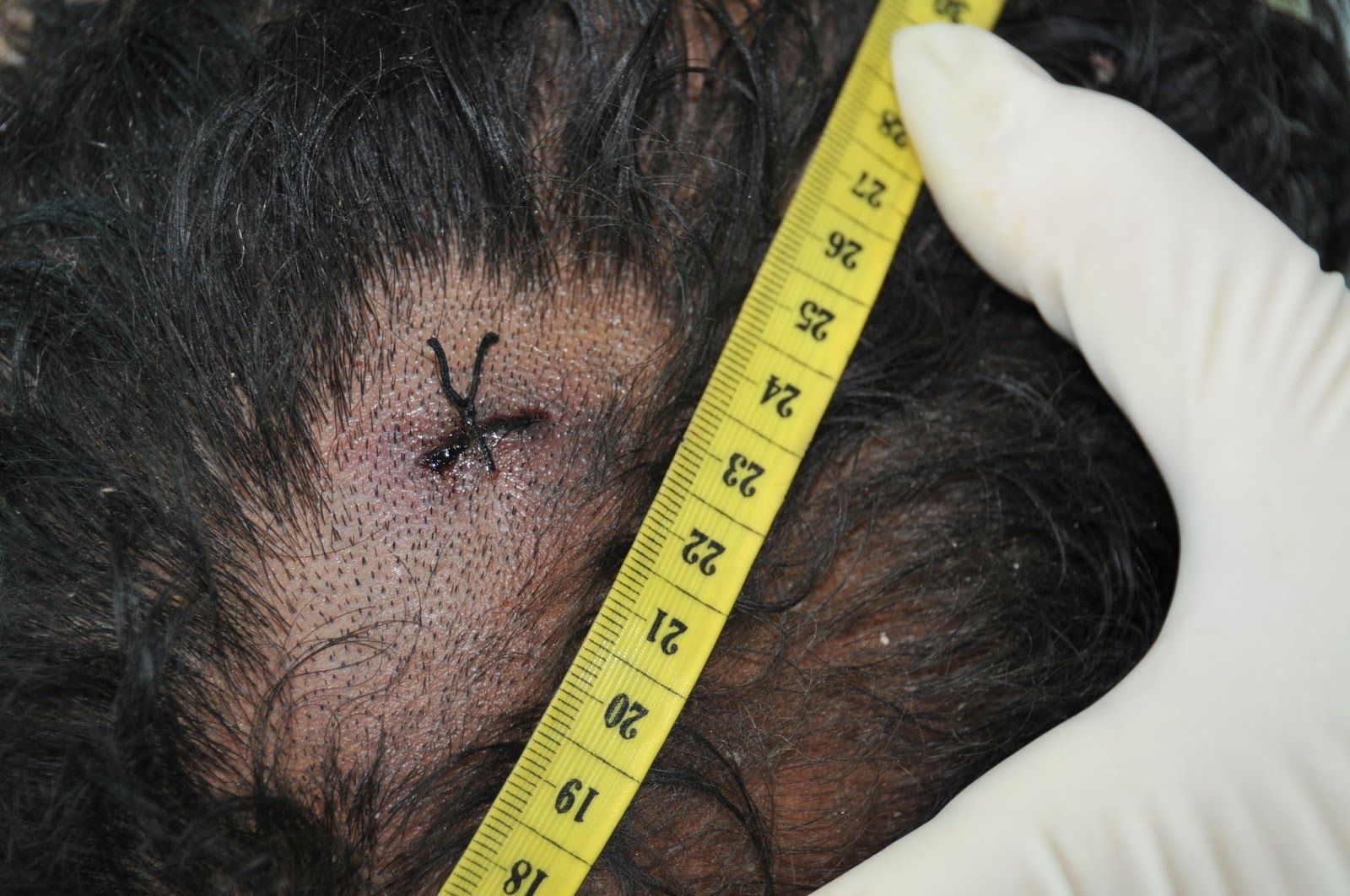
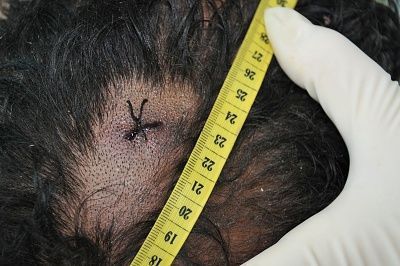
Sutured lacerated wound of the scalp:
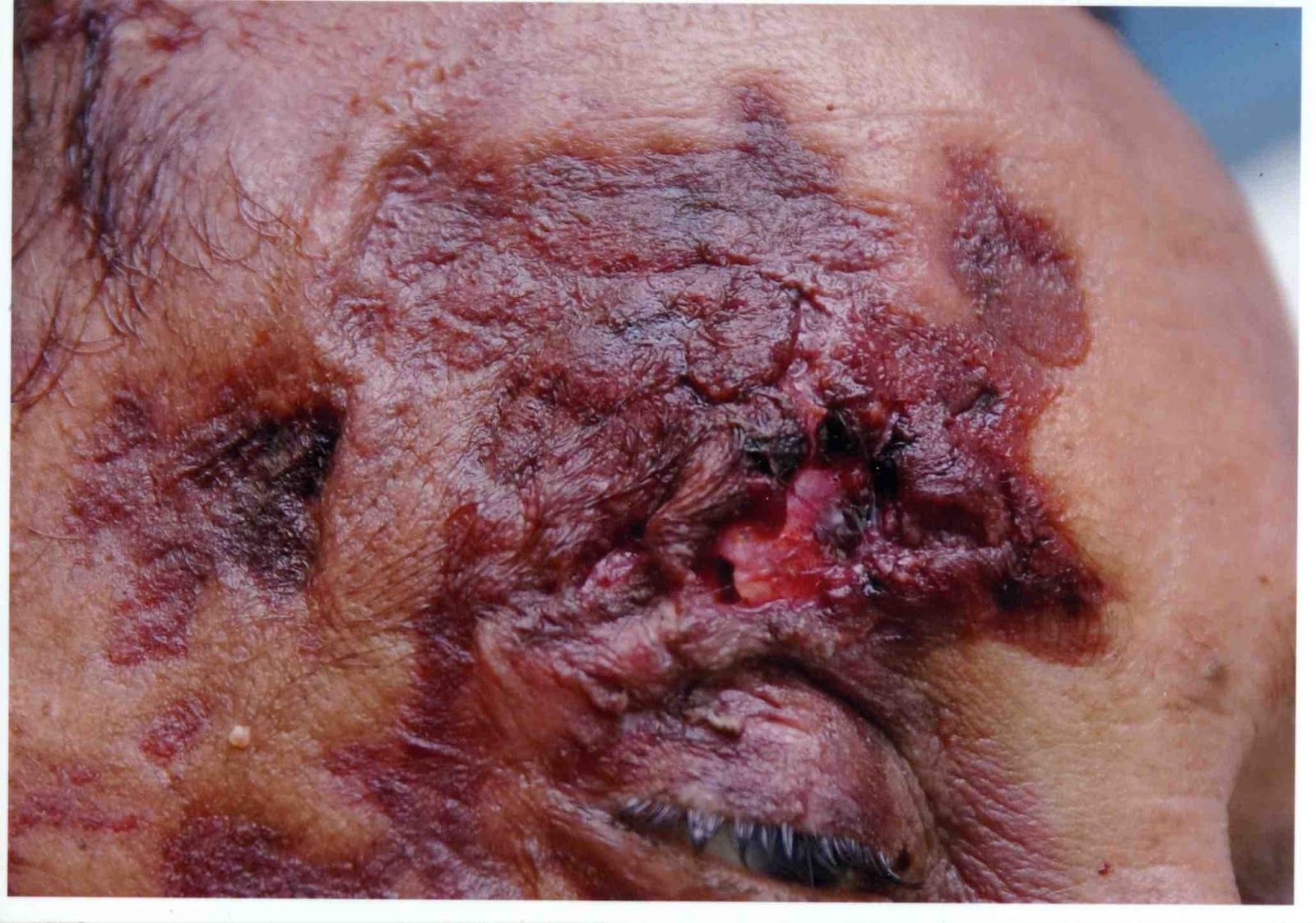
Lacerated wound of the face caused by being beaten with a stone:
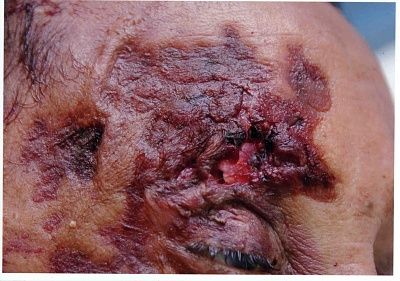
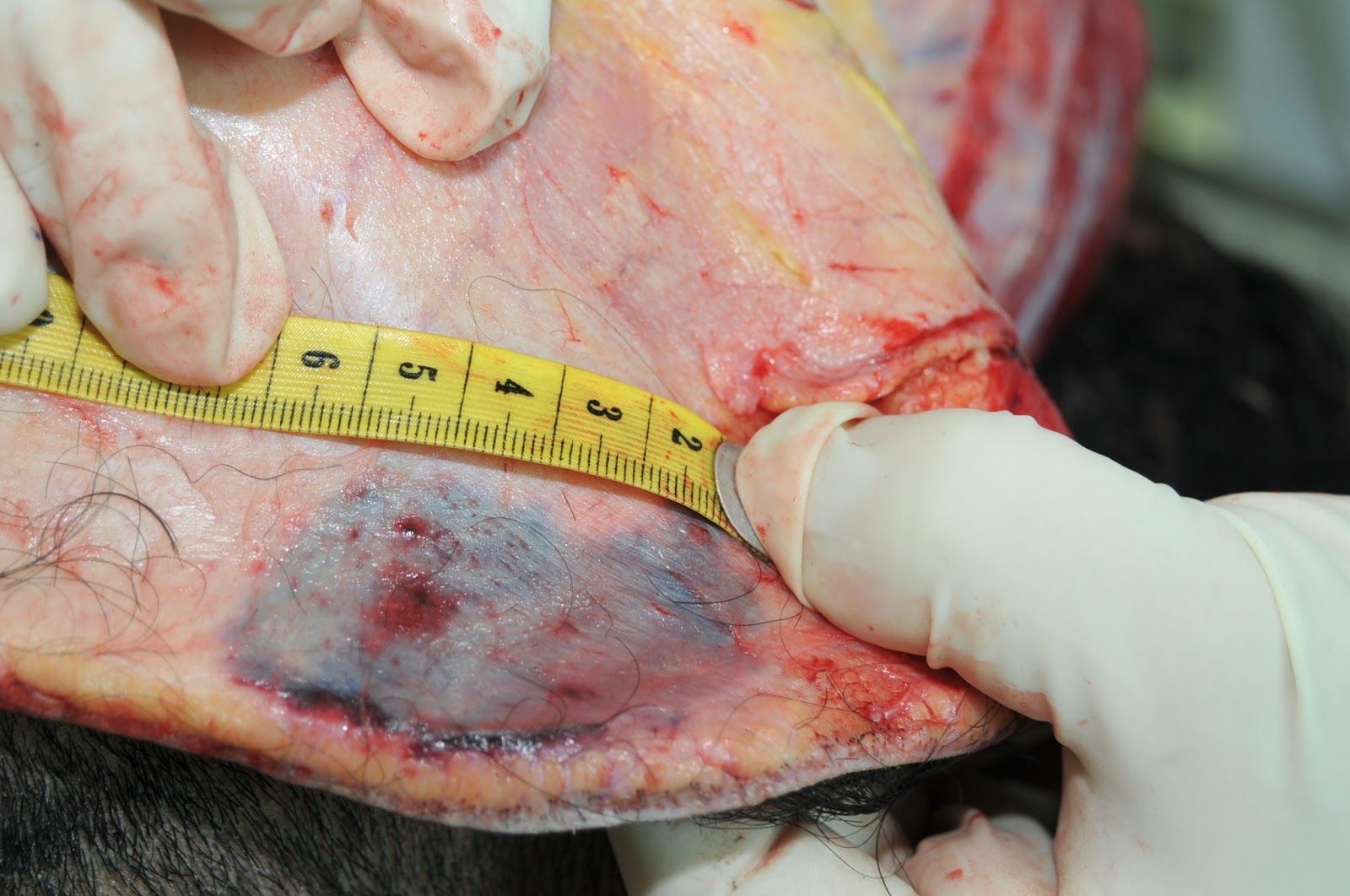
Lacerations are commonly associated with bruising of underlying tissues:
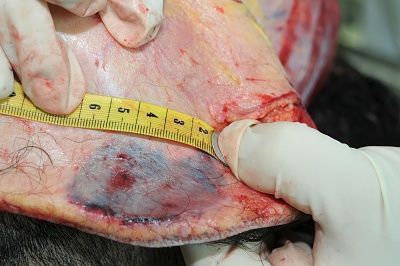
Lacerations of the liver result from heavy blunt impact to the abdominal wall as in falls from a high,such impacts may cause no or minimal injury to the abdominal wall:
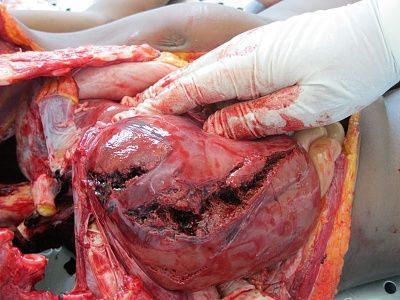
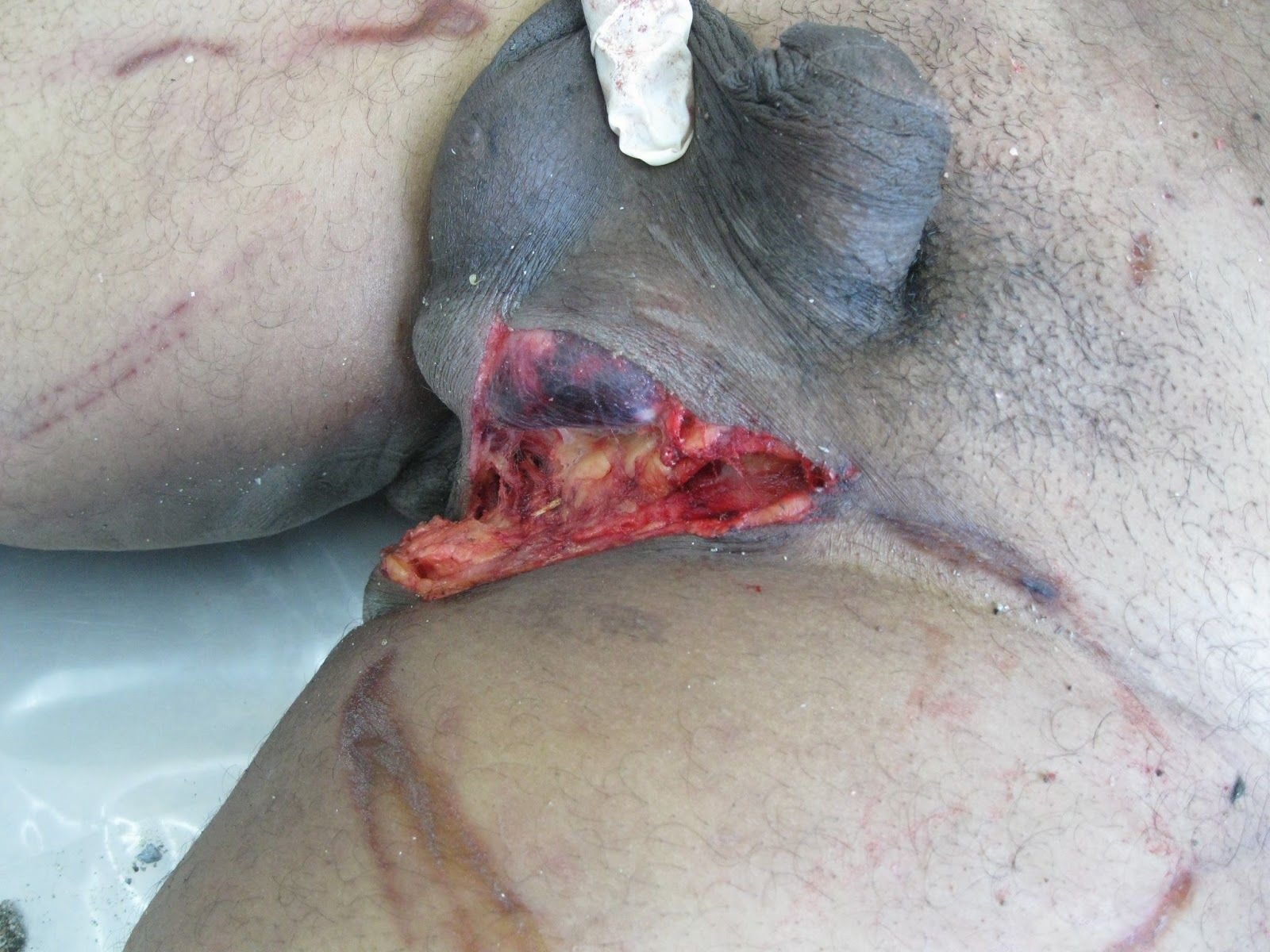
Lacerated wound of the scrotal sac due to fall from up high:
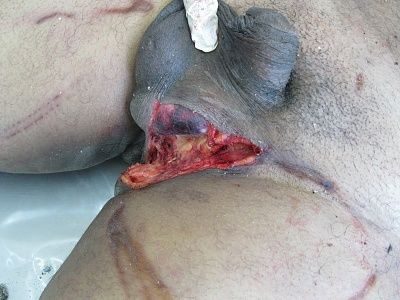
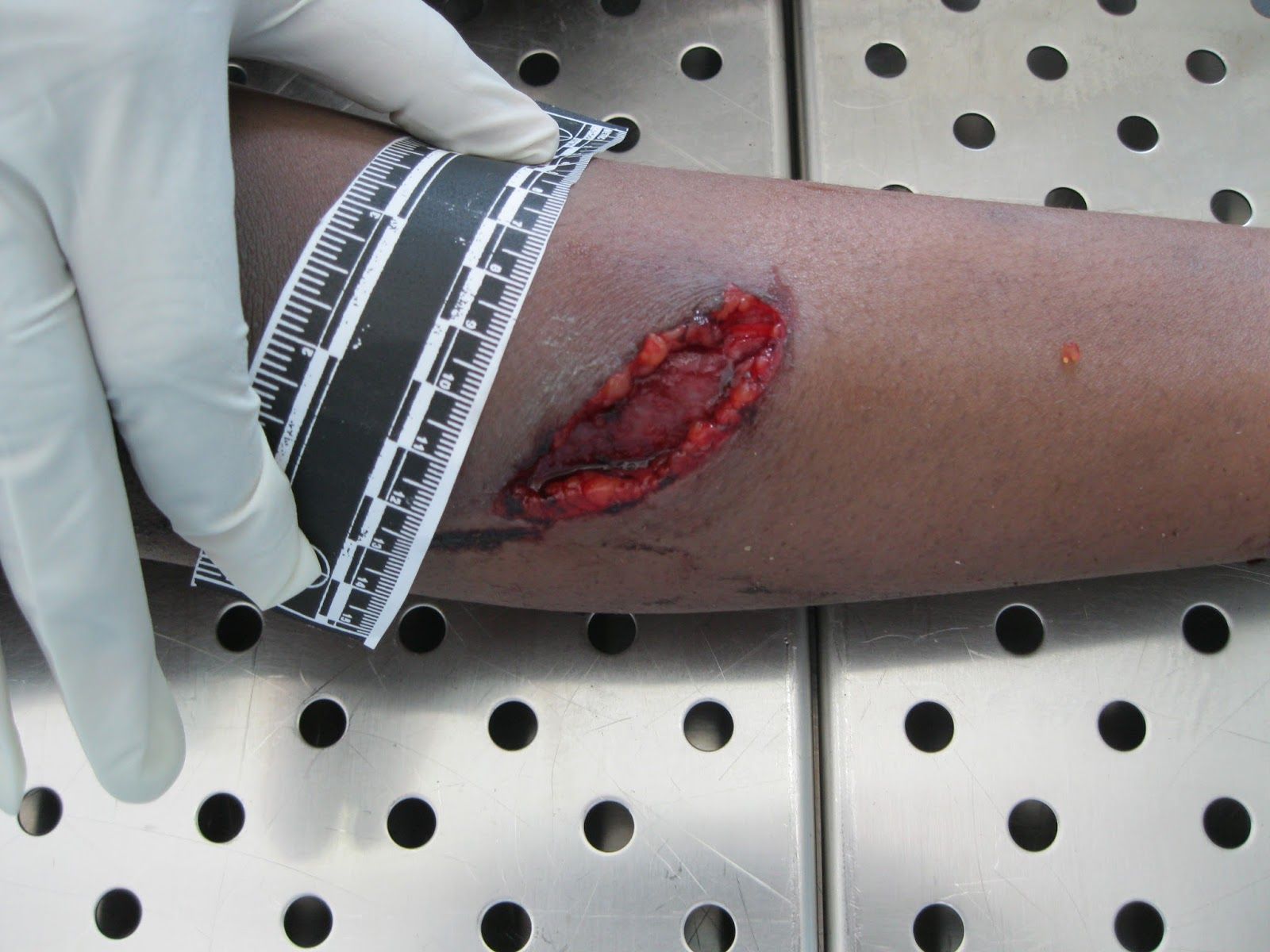
Classic lacerated wounds over bony structures may have a linear edges to be mistaken for incised wounds,careful examination shows association with bruising and abrasions: 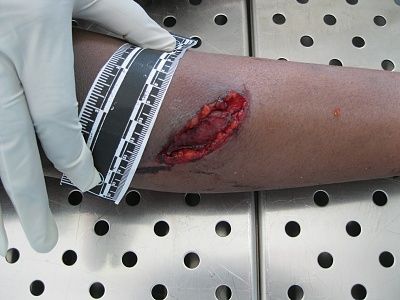
A lacerated wound is splitting or tearing of whole skin,mucosa,visceral surface or paranchyma caused by heavy blunt impact. Lacerated wounds are commonly associated with surface abrasions and deep bruises. Such abrasions and bruises indicate the exact point of impact.
Circumstances. Lacerated wounds are commonly seen in cases of assaults and/or murder by heavy blunt objects,traffic accidents,falls from a high whether accidental or suicidal and industrial accidents by running belts of machines.
Self inflicted laceration are uncommon due to sever pain associated with it.
Shape and size.The shape and size of a lacerated wound have no correlation to the shape and size of the causative agent. However,blows by objects having a small localized striking surface,eg. hammer, may give rise to semicircular lacerated wounds.
Lacerated wounds of the skin over bony prominences eg, skull,cheek,nose,elbow,knees,iliac crest,shin of tibia,the wound is usually linear and may look like an incised wound. This is a very common mistake among house officers in emergency room.
Grinding movements,as in case of run over by a vehicle or accidents caused by machine belts or blunt force delivered at an acute angle may lead to detachment of the skin from its attachment producing a flap like laceration or a avulsion injury. The attached base of the flap points to the direction of the causative force. This is very helpful in differentiating between blows coming from above or below.
Characters of lacerated wounds.
1- Edges are usually ragged and may have multiple angles.
2- Edges are abraded and associated with bruising of deeper tissues.
3- Bridges of tissues may be seen running from one side of the wound to the other side.
4- Hair follicles and fat cells are crushed.
5- Tough tissues,eg. nerves,blood vessels and tendons are seen either avulsed or intact in the depth of the wound.
6- External bleeding is minimal due to crushing of blood vessels and enhancement of clotting mechanisms.
7- More liable to sepsis due to extensive tissue destruction and external contamination.
8- Foreign bodies like soil,grit etc..may be present in the depth of the wound indicating a fall and excluding a blow as a cause of injury. Also debris from the causative agent may be present in the wound.
9- Lacerated wounds heal leaving a thick scar.
Ante or postmortem laceration. Postmortem lacerations are usually produced by dogs attacking a cadaver. Also bodies recovered from water may show postmortem lacerations due to contact with rocks,parts of ships or its propeller.
The differentiation between ante or postmortem laceration depends on the presence or absence of vital tissue reaction.