|
#16
●
02-10-2011, 03:15 PM
|
|
Re: Would You Like Peas with Your Head ?
the pic with the two heads in the freezer is totally unrelated.. 1. it doesnt match the story which said it was a man and woman who were killed 2. one of the bodies in the freezer has a head 3. the quality of the pic looks both staged and like a movie shot... 4. then it would be 2 separate freezers..and the one the heads are in looks like the top freezer part of a fridge... need i say more? ^^ But still...awesome post Love how they are skinned in the last pic ^^ |
|
#19
●
02-11-2011, 06:55 AM
|
|
Re: Would You Like Peas with Your Head ?
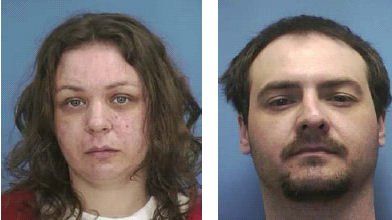
STORY IS TRUE, pictures are real but the heads don't go with the story. can't tell about the freezer picks, THEY MIGHT. READ BELOW. VERNON HULET WAS THE killer Gillett's COUSIN, so obviously wasn't one of those HEADS because Gillett is WHITE. It took the woman 2 days to die and she was severely tortured and raped with an OBJECT. THE killers motive was MONEY !! that's it. v v v Bottom line, for a few dollars -- enough, Chamberlin and Gillett had hoped, to let them run to Mexico to escape drug charges in Russell County -- they beat Gillett's cousin Vernon Hulett to death with a hammer, caving in his skull after hitting him so hard the metal handle on the hammer bent. Linda Heintzelman wasn't quite so lucky. It took her two days to die. She was beaten, stabbed, raped with an inanimate object; her throat was slit and a plastic bag pulled over her head to suffocate her. After all that, she died as a result of being suffocated with a pillow. Heintzelman was considered a person of special needs, Barrett said, somewhat learning disabled and simply couldn't remember the combination to a lockbox that Hulett had in the house. Hulett simply had refused to give them the combination. After killing them both, Gillett and Chamberlin hacked up the bodies, stuffed them in a chest freezer that had been loaded into Hulett's truck and drove 15 hours -- almost 1,000 miles, bringing along seven bags of evidence they disposed of in the Russell County landfill. When Gillett and Chamberlin made it to the Waldo farm owned by Gillett's family, they pulled the truck into a shed. That's when they plugged in the freezer, sealed with a roll of grey duct tape, the cardboard center itself found among the trash dumped at the landfill, according to court documents. All this took place in March 2004. Chamberlin and Gillett were both convicted in connection with the murders and sentenced to death. The Mississippi Supreme Court recently upheld Chamberlin's conviction and ruled her sentence of death was reasonable. A similar appeal -- automatic in death-penalty cases -- is pending for Gillett. Barrett, undersheriff of the Russell County sheriff's office, has been watching the case with great interest since March 29, 2004, when he and others in the sheriff's office started pursing drug-related cases against Chamberlin and Gillett in Russell County. Barrett, as it turned out, was the officer in charge of evidence found in Russell County in connection with the murder investigation. He also was among those identified by the Mississippi court for interviews authorities had with Chamberlin. By the time the case was complete, there was plenty of evidence, all of which since has been loaded onto a U-Haul trailer and driven back to Mississippi by authorities there. It was in Russell where local law enforcement officers and the Kansas Bureau of Investigation executed a search warrant on a house where Gillett and Chamberlin had been staying. Authorities were looking for drugs, specifically involving the manufacture of methamphetamine. A second warrant was issued for a farm near Luray. That's where the freezer was found, its lid taped shut with gray duct tape. "We assumed that was part of the drug lab," Barrett said, "that they were making their own anhydrous." Anhydrous ammonia is but one ingredient in the manufacture of meth, and it generally is obtained through theft of a farm fertilizer or can be made. After the discovery of the freezer, Barrett said he was donning his meth lab gear just as additional KBI agents arrived on the scene and offered to go in his stead. Given how hot those protective suits can be, Barrett said he gladly relented. KBI special agents, however, were in for perhaps the shock of a lifetime. When they opened the freezer, it didn't contain anything to do with drugs. Inside was a decapitated body. It wasn't until authorities pulled out a body, later identified as Hullet, that they learned another body -- that of Heintzelman -- was underneath. In the end, it took more than three days for the bodies to thaw enough so autopsies could be performed. When the discovery was made, Russell County Sheriff John Fletcher radioed Barrett to return to the farm, detailing that bodies had been found inside. Barrett didn't believe him at first, thinking it was just a joke. He soon learned it was no joke. As the investigation continued, Barrett was involved in several interviews with Chamberlin, including one where she told him she and Gillett had dumped seven bags of trash at the Russell County landfill north of Russell. "Luck was on our side," Barrett said, "definitely to obtain all that evidence." After going to the landfill with Chamberlin, a KBI agent and a dog, they found all seven bags of trash Gillett and Chamberlin had brought along with them from Mississippi. The first bag, ripped open by the loader being used, contained many items that were a direct link to Hulett. "We had all the clothing, knives and saws," Barrett said. "We found everything they used during the commission of the crime. I was dumbfounded that they didn't dispose of it along the way." But, he said, "they were in a panic because they weren't familiar with the area." Ironically, Hulett and Heintzleman lived only about a mile from the Hattiesburg courthouse, where Gillett and Chamberlin were convicted. Yet not far behind the Hulett residence, the terrain was overgrown and likely would have hidden either bodies or evidence. Gillett and Chamberlin ended up in Mississippi, fleeing there in hopes of escaping prosecution on the drug charges in Russell County. "They were scared to death that we were onto them," Barrett said. Once in Hattiesberg, they planned to rob Hulett and Heintzleman, but never were able to get inside the lock box where a small amount of money had been hidden away. For Barrett, this is the type of case that many officers never have seen, or ever will. In fact, Barrett hopes he never sees one like it again. "I've been doing this almost 21 years," he said of his law enforcement career. "I've seen a fair share of stuff. This is definitely one you read about happening someplace else. It was a shock to be involved in." So heinous was the crime, he said, that it fits the category of deserving the death penalty. "If they invite me down," he said of the time when either Chamberlin or Gillett are put to death, "I would probably go down and witness it. I would go represent the departmen |