|
#1
●
03-18-2014, 04:59 PM
| ||||||||
 ♚ Legacy Gold Member ♚ Poster Rank:34 Female Join Date: Nov 2008 Posts: 43,397
Contributions: 204
Mentioned: 95 Post(s) Quoted: 2281 Post(s)
| ||||||||
|
Wildlife Forensics Lab - Basic Overview
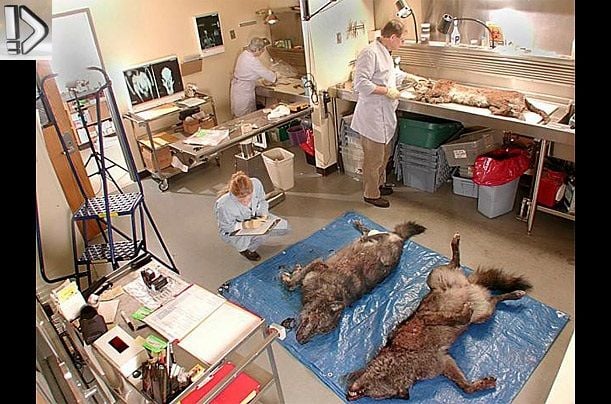 Wolves wait to undergo a necropsy at the US Fish and Wildlife Service forensics laboratory Pathology Unit In order to combat the trafficking of illegal animal products, the U.S. Fish and Wildlife Service created a Wildlife Forensics Laboratory in 1989. Staffed by specially trained veterinary pathologists, the laboratories collect data that not only helps identify animal traffickers, but creates the secure chains of custody for the evidence that prosecutors need to pursue the cases in court. 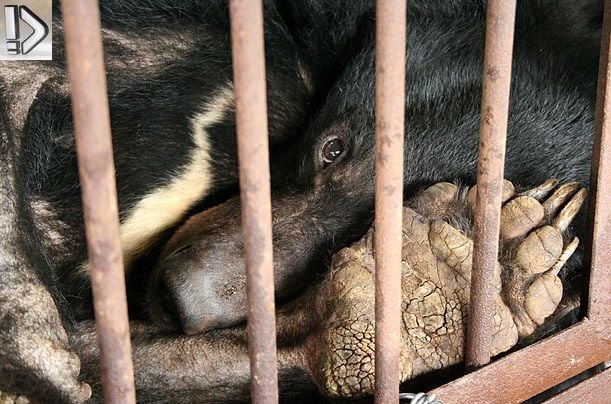 Victim The team examines cases of trafficking in many species, including macaws, walruses, jaguars and bears, whose gall bladders are sought for their bile, which is used in traditional Chinese medicine. The demand for the organs has created a high black market demand for Asiatic black bears, whose numbers have dwindled to 25,000 in the wild. This bear, named Chengdu Truth, was rescued from a bear bile farm in China, but died shortly after this photo was taken, succumbing to liver cancer, a common affliction among rescued bears. 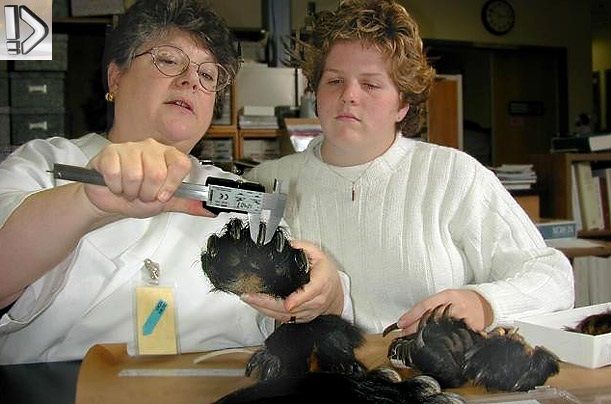 Examination Forensic mammalogists measure a bear paw. The laboratory typically examines fur, hides, feathers, claws, and teeth, both visually and microscopically, to determine what species a body part came from. Evidence also arrives in difficult-to-identify forms like a carved statuette, a belt, or a small vial of medicinal powder. 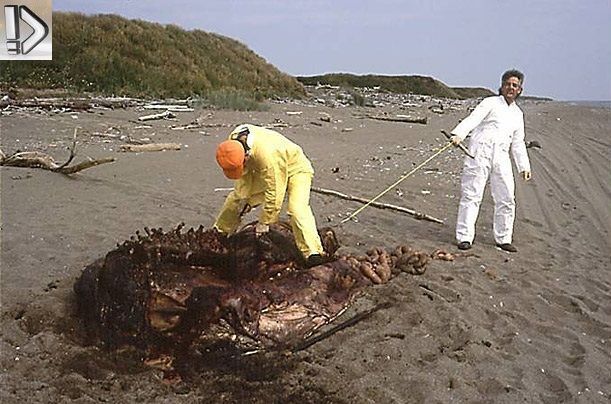 In the Field Traditionally, almost every part of a walrus is used by Native Alaskans: the meat is for food, the intestines for raincoats, the skin for boats, and the ivory for tools and a means of money or exchange. It was therefore quite distressing when, in the late 1980s and 1990s, hundreds of headless walrus began to wash up ashore in Alaska. The Fish and Wildlife Service Forensics Lab was called in to help determine whether the walrus were being illegally killed for their tusks. They discovered that though some of the animals were killed wastefully, others were not. 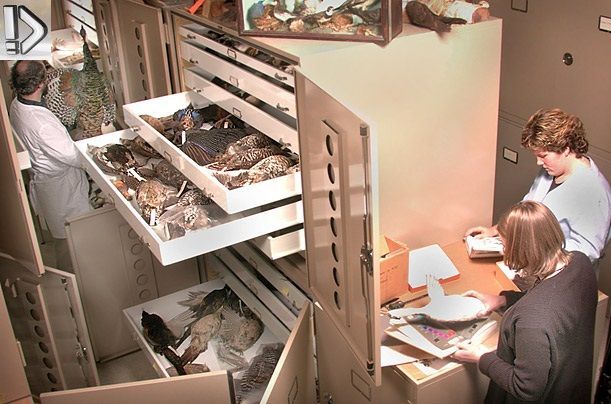 Reference Specimens Because some species are protected and others are not, it is essential that wildlife crime investigators determined the exact species of their victims. For this purpose, the laboratory compares its evidence to samples maintained in archives. Neme observes that wildlife forensic scientists must be familiar with over 30,000 species, while human forensic scientists deal with just one. 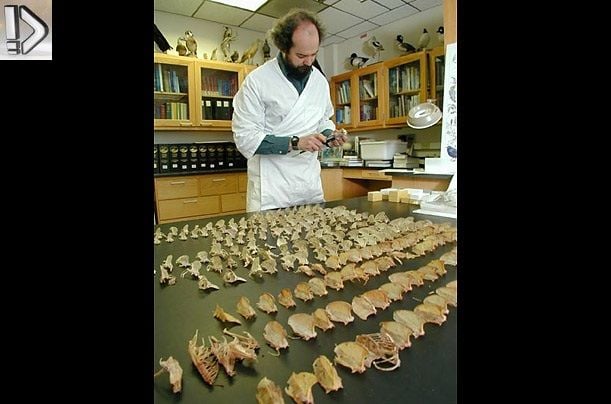 Specialist Forensic ornithologist examines bird skeletons. Because evidence sent to the lab rarely contains easily recognizable parts, much less a whole animal, the scientists must work to identify species from limited fragments. Complicating their task is the fact that many characteristics of a given species vary from male to female or adults to juveniles. 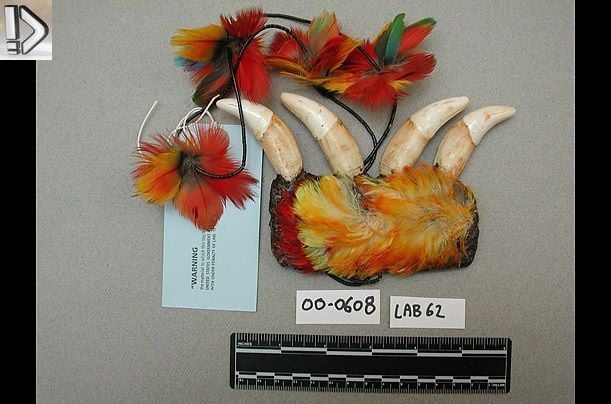 Colorful Contraband The elaborate necklaces, armbands and earrings used by shamans of various Amazon tribes, like this one, belonging to the Bororo tribe, have become a popular kind of primitive art sought by collectors in Europe and the United States. The demand has created a large underground industry in which these animals are killed specifically to supply parts for such "authentic" artifacts, thereby further threatening the populations of the jaguar and toucans whose teeth and feathers, respectively, are used to make the pieces. 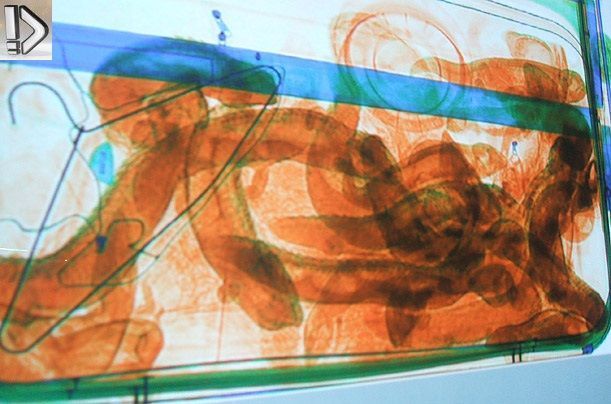 Snakes on a Plane This image, culled from the Australian Customs and Border Protection Service, shows an x-ray of protected snakes seized from a passenger. Neme writes, "The high payoffs and low risks of wildlife trafficking attract a wide variety of criminals, ranging from petty lawbreakers to organized crime networks and sophisticated international terrorists. The officers see a range of smuggling techniques, like the simple non-declaration of animals and animal parts, hidden compartments in shipping containers, or, in more than one case, a specially-made vest carrying dozens of protected bird eggs." 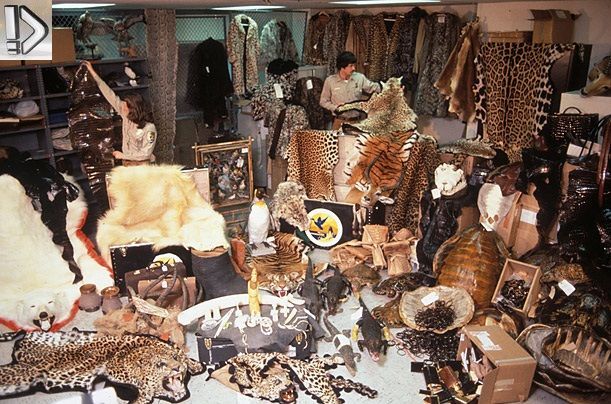 Seized US Customs officers display some of the many wildlife products confiscated at New York's John F. Kennedy Airport. The Fish and Wildlife Service stations a mere 115 officers at seventeen ports in the United States. The service must therefore rely on the assistance of the border patrol and customs officers to help them detect contraband. The task can be overwhelming: Of the 20,000 containers that come into major ports like Los Angeles and New York each day, generally less than twenty are inspected for illegal wildlife. |
|
#2
●
03-18-2014, 05:27 PM
| ||||||||
 ♚ Legacy Gold Member ♚ Poster Rank:195 Female Join Date: Nov 2009 Posts: 7,762 Mentioned: 5 Post(s) Quoted: 709 Post(s)
| ||||||||
|
Re: Wildlife Forensics Lab - Basic Overview
I hate those people who try and smuggle in wildlife to sell or whatever they do with them. We need to protect our wildlife from our scum life!
|
|
#3
●
03-18-2014, 05:36 PM
| ||||||||
 So Fucking Banned Poster Rank:60 Join Date: Jan 2014 Posts: 25,164 Mentioned: 152 Post(s) Quoted: 13263 Post(s)
| ||||||||
|
Re: Wildlife Forensics Lab - Basic Overview
Kill 'em. Kill 'em all. Yep. All the dirty lowdown disgusting animal poachers!!  :2gunsfi ring_v1: :2gunsfi ring_v1:
|