|
#1
●
08-29-2012, 02:46 PM
|
 ♚ Legacy Gold Member ♚ Poster Rank:35 Female Join Date: Nov 2008 Posts: 43,321
Contributions: 233
43,321Posts 76,137Thanked 2,282Quoted 95Mentioned 233Contrib. |
|
What Happens When We Die?
Consider it morbid, but most people wonder what happens to them when they die. Life and death is a sad and beautiful thing. What happens to us when we die? Body stain left on carpet (days later) 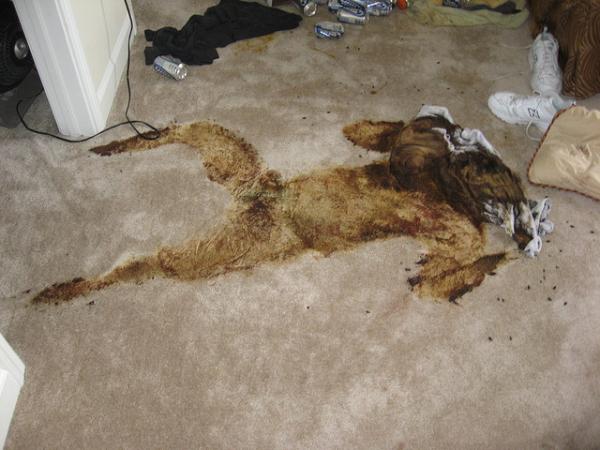 1. Pallor Mortis is something that is more noticeable in light skinned people. The loss of blood in the capillaries happens rapidly, within minutes of death. 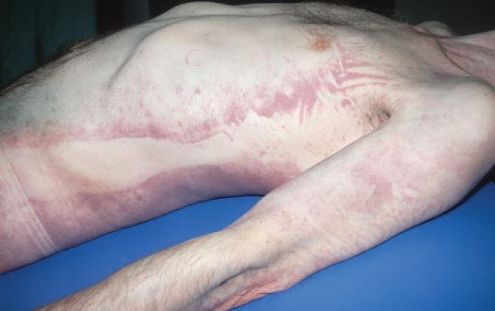 2. Algor mortis is when the body begins to cool. Within the first hour, the body will lose two degrees in temperature. Then, every hour afterward, it will lose one more degree of temperature until it is the temperature of the environment it is in. 3. Rigor mortis is the stage most people are familiar with. It is when a dead person becomes stiff. It begins after three hours of death, reaching full stiffness after 12 hours. Then, three days after death, the body becomes soft again as it slowly decomposes. This can be a bad thing when it comes to processing meat, so the animal’s carcass is injected with an “alternating current” to prevent this from happening, thus preserving the quality of the meat. 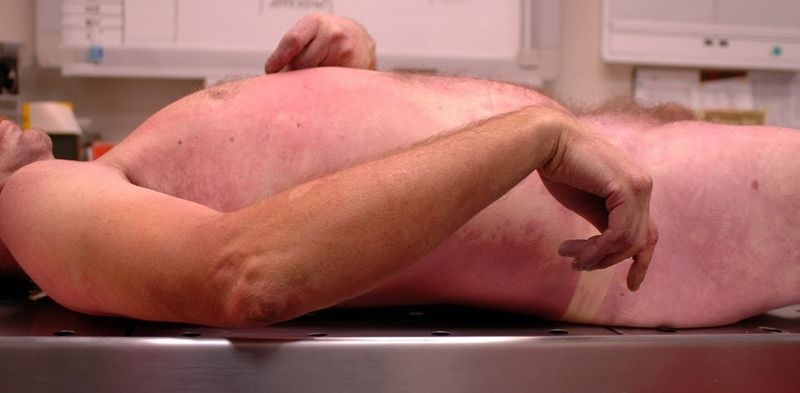 4. Livor mortis is the next stage, when the blood begins to pool to the lowest part of the body. Since the body no longer combats gravity by pushing the blood around, the blood just resorts to falling down to the lowest level. Livor mortis happens within six to twelve hours. The pattern of lividity can help medical professionals know the initial position of the body when the person died, and if the body had been moved around afterward (differing pooling of blood patterns). 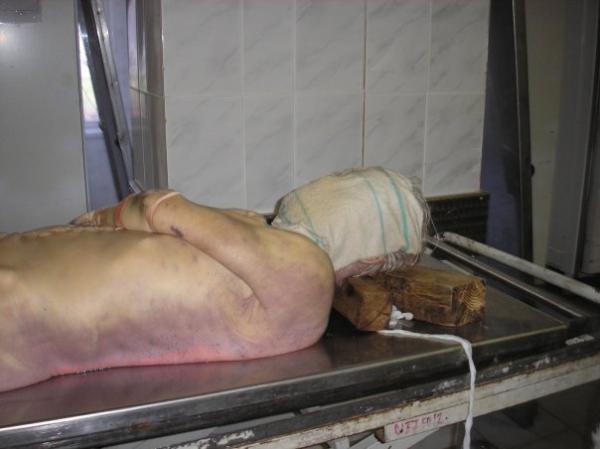 5. Decomposition is the next stage — even more unsettling to look at than the prior stage. I have seen this stage first hand. The smell is unforgettable. Then, bloat—or putrefaction occurs, marked by the production of vapors. The body’s cells are rupturing and breaking apart. The intestines push out and fall prey to distension. You will note a greenish color in the skin because of the sulfhaemoglobin forming in the blood. The skin breaks apart often and the insides purge out. Insect activity begins to take shape. Putrefaction in a pig: 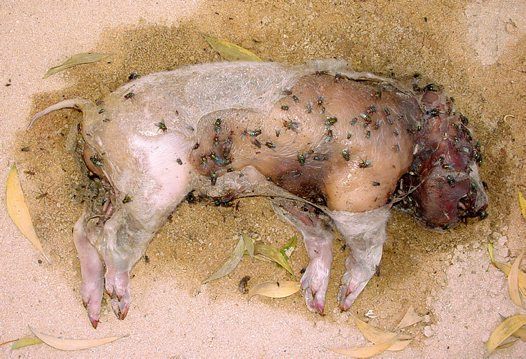 A fresh decomposition is called autolysis. It is the formation of liquids. That doesn’t even happen until the dead body is four days old. Autolysis of a sheep's liver: 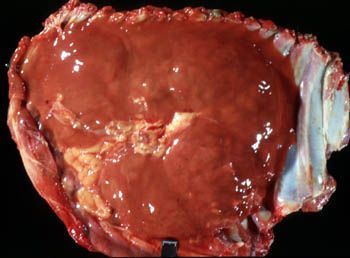 6. Decay is marked by the breaking down of the body. Bacteria, fungi, and protozoa begin to move in, as insect and possibly animal activity begins to become more rampant. The darker the color of the body, the longer the person has been dead. Also evident are blisters or skin slippage. Decaying seal corpse showing skin slippage: 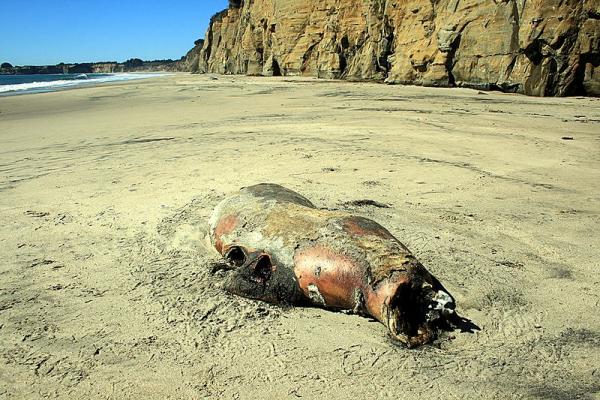 Human hand showing slippage and blistering: 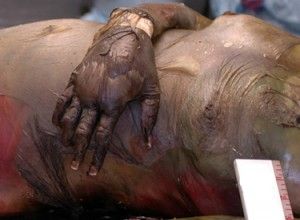 7. Skeletonization or diagenesis is the final stage. The moisture in the body is lost. The bones are visually evident. Two years is typical in moderate temperature, whereas in hot climates like Africa, skeletonization may occur as quickly as in two weeks. Cat: 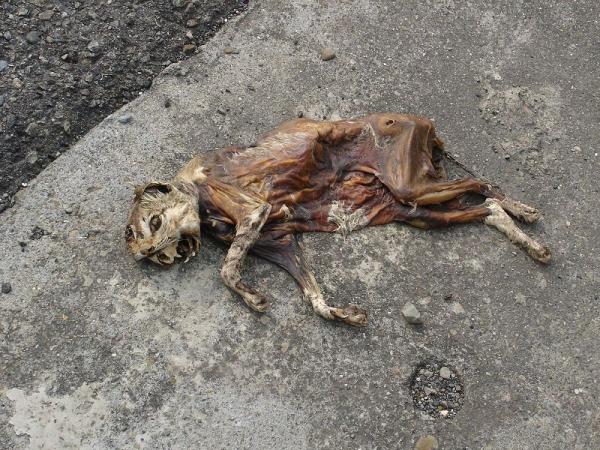 Human: 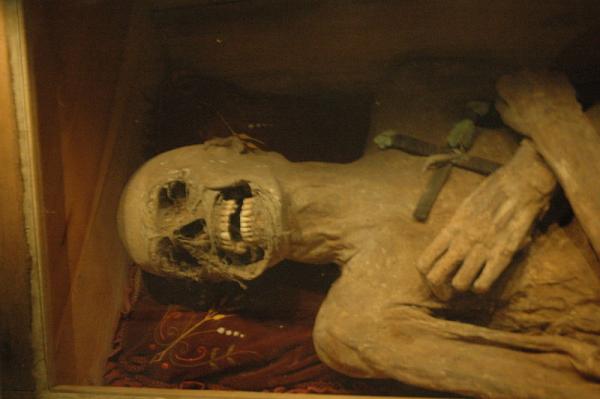 Bones, in the first year of death begin to bleach and moss or algae may grow on them. After a decade, big cracks will form. According to this source, roots from nearby vegetation may grow into the bone mass, significant rodent gnawing will be present and the appearance of annual leaf falls may be evident. 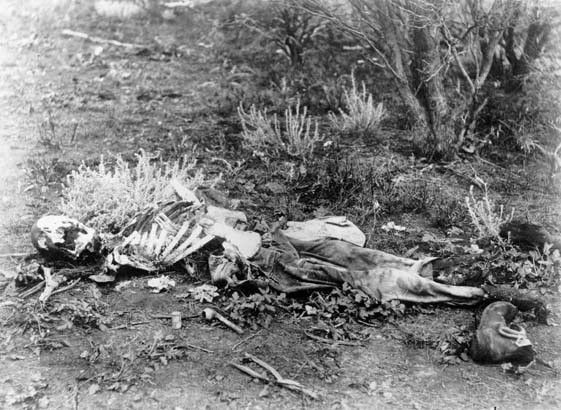 *In a case study a crime investigator found a body that had been undisturbed for four months, hardly touched by insects, and which looked rather fresh. Upon closer inspection, the body was discovered to have been doused with insect repellent and other chemicals so as to mask the smell of decomposition so it wouldn’t be discovered so easily. "Coffin fly" Though proper burial by coffin reduces insect activity, the “coffin fly” can dig at least six feet into the ground. This sick, twisted freak of nature has jerky, short bursts of running as it tunnels itself underground. There are 370 types of these coffin flies in North America alone! They can’t drown — as they have adapted to the presence of flooding. Coffin fly damage to human skull: 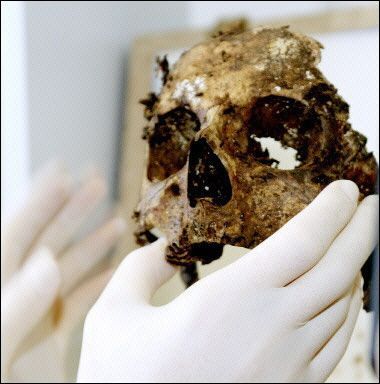 Though gruesome, the decomposition of the body serves a purpose for the continuum of the life cycle, as well as the preservation of other creatures. It teaches us that nothing is permanent and nothing stays lovely in appearance forever. The take away message is to appreciate every moment we have while alive and spent with others we love  · · · · · · · · · · · · |
|
#2
●
08-29-2012, 02:50 PM
|
 ★ Legacy Member ★ Poster Rank:543 Male Join Date: Dec 2009 Posts: 1,879
Contributions: 1
1,879Posts 2,266Thanked 69Quoted 0Mentioned 1Contrib. |
|
Re: What Happens When We Die?
The first thing that happens when you die is you life insurance company starts looking for ways to get out of paying your death benefit  . .
|
|
#4
●
08-29-2012, 03:03 PM
|
| ♚ Legacy Gold Member ♚ Poster Rank:35 Female Join Date: Nov 2008 Posts: 43,321
Contributions: 233
43,321Posts 76,137Thanked 2,282Quoted 95Mentioned 233Contrib. |
|
Re: What Happens When We Die?
That's for the relatives to care about   |