|
#1
●
04-25-2012, 08:44 PM
|
 My Rank: LANCE CORPORAL Poster Rank:1799 female Join Date: Feb 2010 Posts: 290 290Posts 268Thanked 0Quoted 0Mentioned 0Contrib. |
|
Varanasi Ghats, A Macabre Tradition
The smoke is thick around the public funeral ground. Eyes are stinging, and the air is heavy with the smells of burning wood, incense, and – somewhat disturbingly – an aroma described as being like barbecuing meat. Piles of wood smoulder and burn along the riverbanks, occasionally poked by men or boys with sticks in order to keep them alight. Here and there, jutting from the stacked lots, you can make out a human limb or head of one of the departed – their soul believed to be on its way to heaven. This is not a place for the squeamish. Varanasi’s ghats are large stone steps constructed along the banks of India’s holy river, the Ganges. For centuries, people have been coming here to pray, meditate, bathe and, famously, cremate their dead. Despite the ancient and sacred character of the place, however, visitors to these steps should expect more of a jostling market atmosphere than a place for quiet contemplation. The larger of the burning ghats, Manikarnika (where these photographs were taken), is believed to host around 200 cremations in a single day.The funeral ghats of Varanasi are well known – which some might say is fortunate, given that stumbling unexpectedly across a human body burning on top of a pile of logs would come as rather a shock to the unsuspecting! Most visitors are not only aware of what goes on here; many come especially to observe this ancient ritual – whether out of cultural curiosity or mere morbid fascination.Manikarnika Ghat and Harishchandra Ghat are the two ghats used for funeral fires in Varanasi. Legend says that an ancient Hindu king Harishchandra once worked at the cremation ground (later named after him) after he had been sold into slavery. These days, the grounds are worked by members of the ‘untouchable’ Dom caste. It is said that the work is so despicable that Doms cry when their children are born and rejoice when one of their number dies – death representing a final liberation from their unpleasant duties.With impressive business acumen, the Doms have managed to make the best of their seemingly undesirable circumstances. In Varanasi they control the funeral business, and no one can be cremated without paying the Doms for their services. It is thought the Doms have become rich from their traditional responsibilities, with the current 'Dom Raja', or leader, being described as a multimillionaire.The pyres are kept burning until only ashes remain – but only if the mourners can afford enough wood.The popularity of Varanasi’s cremation ghats stems from the Hindu belief that those whose remains are submerged in the holy Ganges river after death are guaranteed a good afterlife. Even Western celebrities such as George Harrison wanted their ashes scattered here. It is also considered a particularly auspicious place to die, as those who are bathed in or even sprinkled with Ganges water at the time of their death will be released from the cycle of death and rebirth and will instead reside in paradise forever. A decent funeral generally costs anywhere from US $12 to US $71, but the costs can vary widely. Poor families may only be able to buy a sprinkle of sacred sandalwood powder, while the wealthy may pay for an entire pyre of the expensive wood.Crying at funerals is discouraged – partly because it is not simply (if at all) viewed as a sad occasion and partly because bodily fluids, like tears, are considered ‘pollutants’ at religious rites. For this reason, women have traditionally been barred from funeral grounds, the reasoning being that they are more likely to weep than men.Before laying the body on the funeral pyre (now in a white shroud), the relatives plunge it quickly into the Ganges and then rub it with ghee – the latter for religious reasons, and possibly to help it burn better. Men are usually placed face up on the pyre while women are cremated face down. The eldest son or male relative (the chief mourner) typically sets the wood alight, starting near the mouth, with a sacred flame taken from a nearby temple. It is then the attending Doms' job to see that the fire burns evenly by adding straw and ghee and prodding it with poles when necessary.A body burned in this way normally takes about three-and-half hours to reduce to ashes. If the mourners are lucky, the skull will explode in the heat  This, according to Hindu belief, releases the soul to heaven. If this does not happen, it is up to the chief mourner to crack it open himself when the fire has died down. Quite a responsibility.Sometimes poorer people cannot afford enough wood to completely burn a body. In this case charred body parts are simply flung into the river with the ashes. Certain people, such as small children, pregnant women and holy men, are not cremated at all, but instead simply have their bodies weighted down with stones and are dropped into the Ganges. Not too pleasant for the many bathers around the ghats. This, according to Hindu belief, releases the soul to heaven. If this does not happen, it is up to the chief mourner to crack it open himself when the fire has died down. Quite a responsibility.Sometimes poorer people cannot afford enough wood to completely burn a body. In this case charred body parts are simply flung into the river with the ashes. Certain people, such as small children, pregnant women and holy men, are not cremated at all, but instead simply have their bodies weighted down with stones and are dropped into the Ganges. Not too pleasant for the many bathers around the ghats.As a solution to the problem of human remains clogging up the Ganges, snapping turtles were bred and released into the river specifically to eat the corpses and bones. A good idea, maybe, but since bodies and body parts are still seen floating around the river today, perhaps not as effective as originally hoped.. After the cremation, any remaining bones (for some reason usually a hip bone for women and a chest bone for men) are thrown with the ashes into the river. 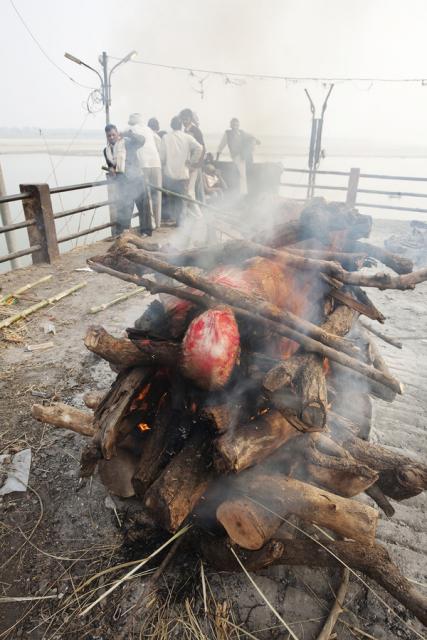 · 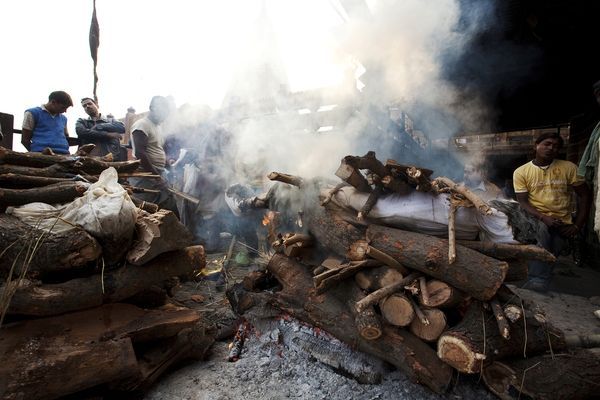 · 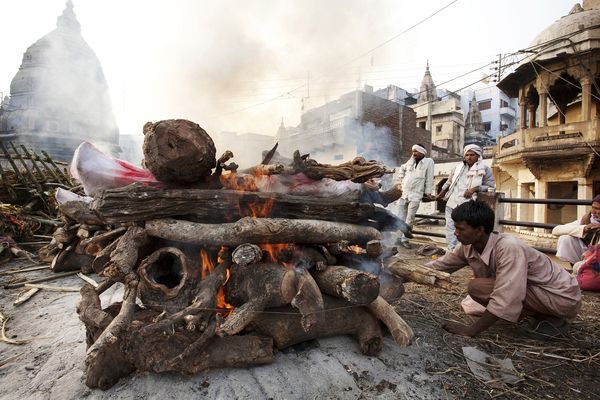 · 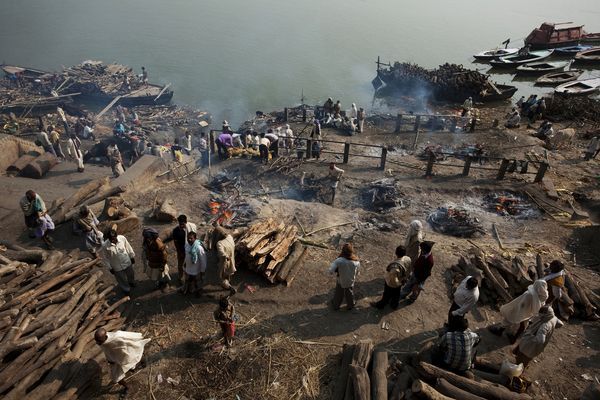 · 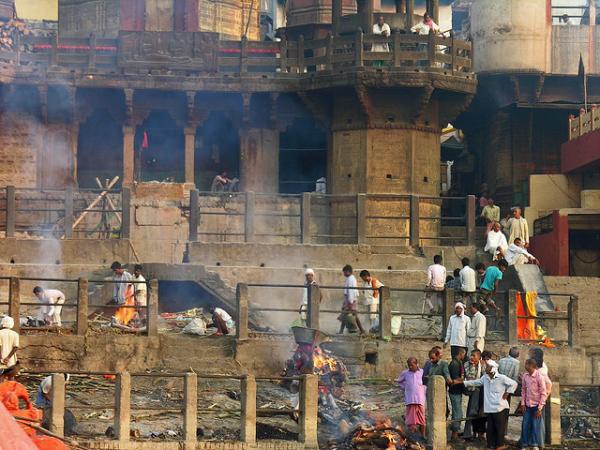 · |
|
#2
●
04-25-2012, 08:55 PM
|
 Benevolent dictator Poster Rank:58 Arse fucker Join Date: May 2009 Posts: 25,615 25,615Posts 11,066Thanked 1,450Quoted 17Mentioned 0Contrib. |
|
Re: Varanasi Ghats, A Macabre Tradition
Ah the Ganges. A radioactive river where the locals dump their piss, shit, and dead bodies into yet they bathe and drink it too. Dirty fucks!
|
|
#3
●
04-27-2012, 07:46 PM
|
 My Rank: MAJOR Poster Rank:152 Male Join Date: Feb 2010 Posts: 11,117 11,117Posts 4,365Thanked 205Quoted 6Mentioned 0Contrib. |
|
Re: Varanasi Ghats, A Macabre Tradition
This should be on the Death pics section  anyway good post! I've been reading about this before, very interesting and disgusting! |