|
#1
●
01-09-2021, 12:25 PM
| ||||||||
 ♚ Legacy Gold Member ♚ Poster Rank:907 Join Date: Jul 2020 Posts: 820
Contributions: 10
Mentioned: 13 Post(s) Quoted: 173 Post(s)
| ||||||||
|
Suicide by Head Explosion
Germany, ~2009 - At 10:30 a.m. in a military scientific institute, a 57-year-old employee was found acephalous(not having a head) in a supine position in a bunker. The complete destruction of the head down to the cervical spine suggested that an explosive charge (RDX) detonated in his mouth (Fig. 1). The hands were virtually uninjured. He was clothed normally in a thick pullover and blue jeans. On the walls was abundant spattering of blood and tissue, concentrated above shoulder height. A mobile ignition device stood on the control desk (Fig. 2). The complete destruction of the head was immediately explicable by the use of ten blasting caps containing, overall, 100g Hexogen (RDX, T4, cyclotrimethylenetrinitramine). This is a powerful military explosive. 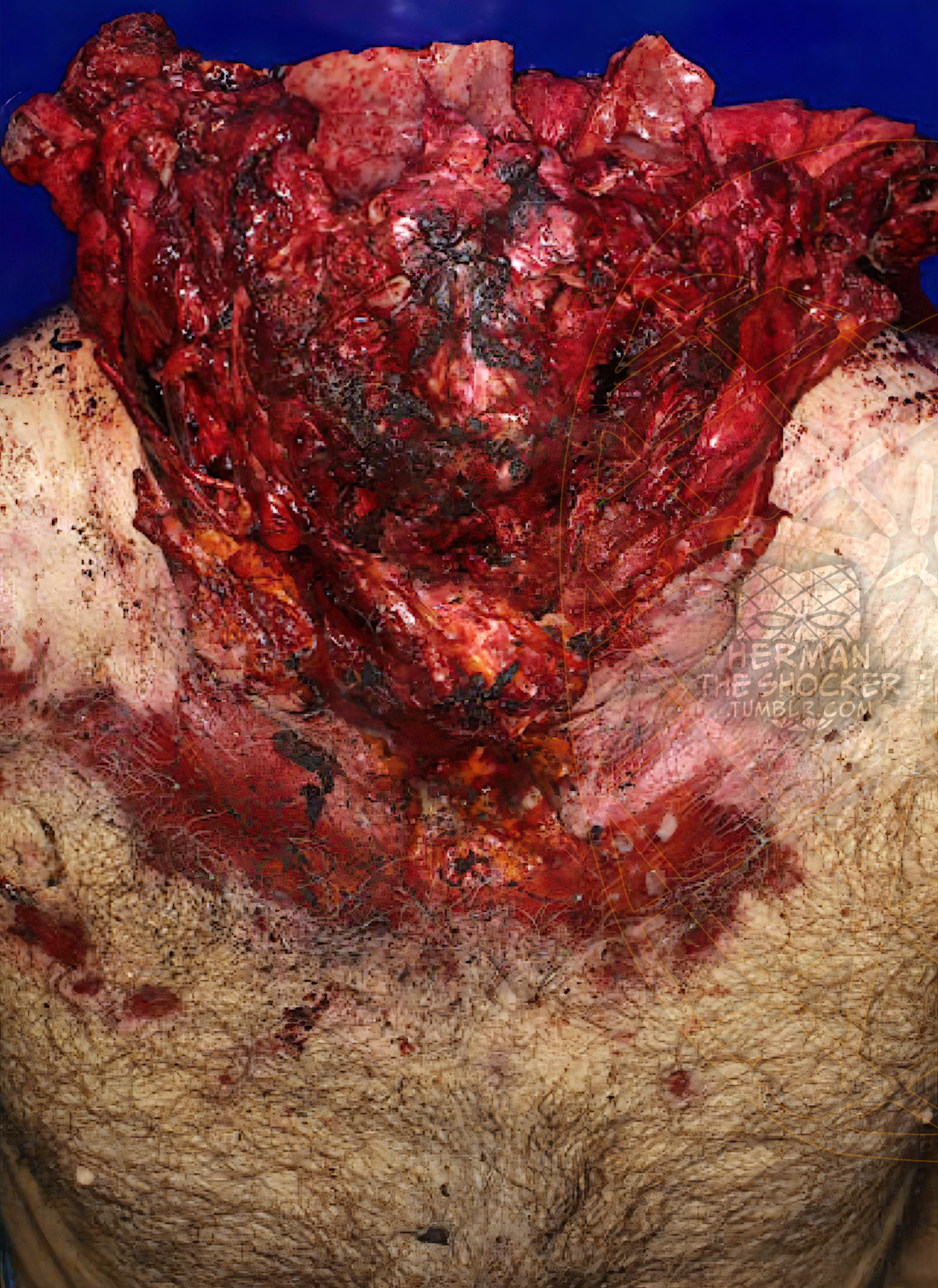 Fig 1. Complete decapitation without open thoracic injury. The symmetric forward directed destruction of the head above the larynx suggested that the explosive charge (RDX) was lit in the mouth. This hypothesis was sustained by the nearly symmetrical placement of the ears torn off in the room. Symmetry is typical of suicidal explosive injuries. The pressure effect in vessels caused numerous tears to the wall of the carotid arteries and the left vertebral artery, a tear-off of the left carotid artery of the aortic arch, and a 2.5-cm long crack of the thoracic aorta with 540-ml blood in the pericardial sac and a shredded window-like disruption of the left aortic valve cusp. The autopsy also showed an infraction of the sternum from the inside, and a contusion of the superior lobes of both lungs. The trace pattern on the right arm suggested suicide. A bone fragment of the mandible penetrated the right biceps muscle as a secondary projectile. Shattered skull fragments were found throughout the room. The ears had been torn off the head and were found to the right and left sides of the corpse at similar distances to the feet. A mobile electrical ignition device stood on the control desk; the wires lay unrolled and disrupted on the desk. According to the control of the explosive inventory 10 blasting caps at 10g Hexogen were missing. 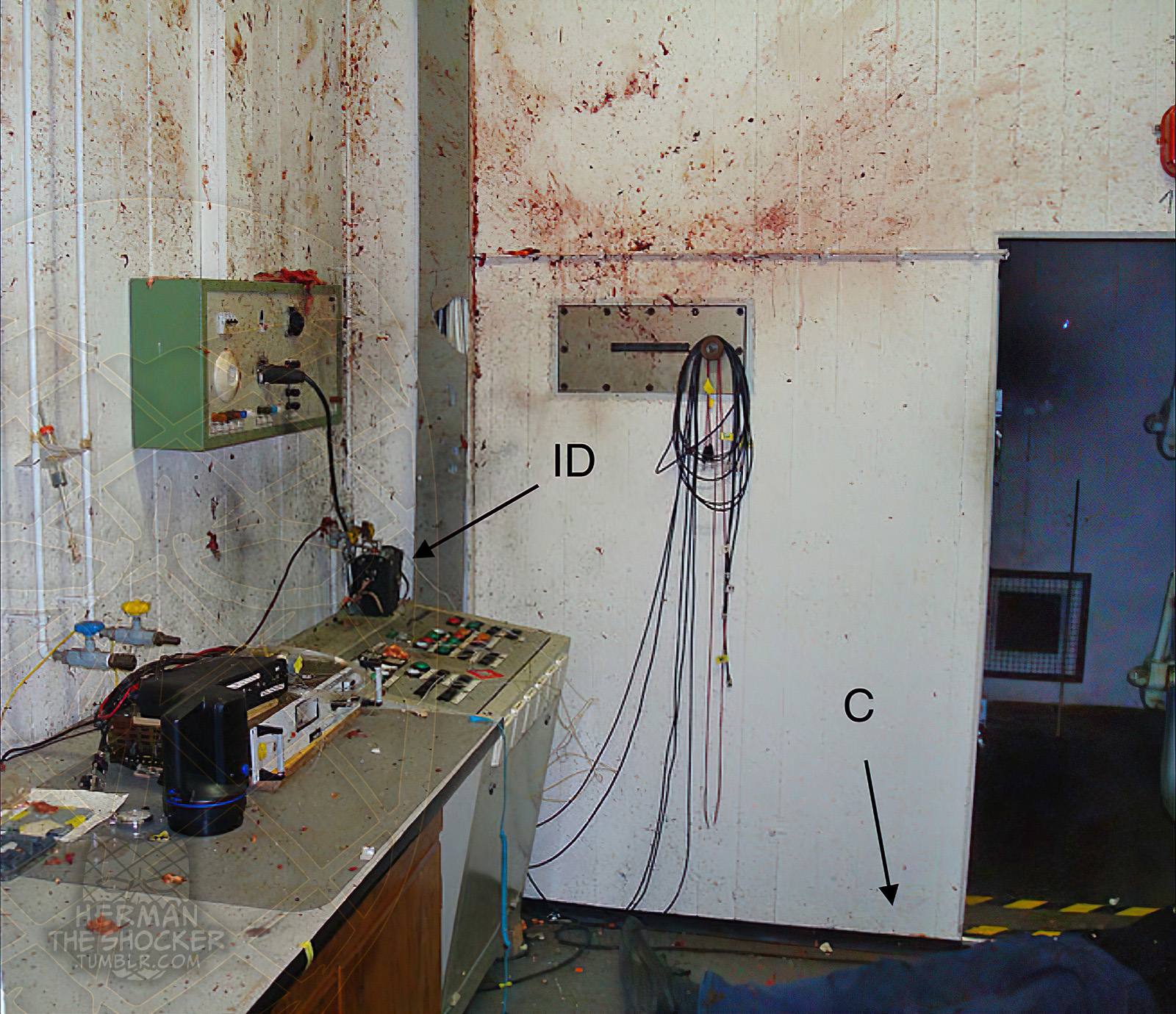 Fig 2. Control desk with the electric ignition device (ID). C indicates the legs of the corpse. A pattern of high-speed spatter was visible on the walls. The man was an electrician by profession and had worked in that laboratory for 15 years, in which tests of blasting caps were performed. He was reputed to be very careful. No tests had been planned that morning. His last telephone calls, 1 hour before his death, were about an imminent shift of his workplace, but did not suggest a critical state of mind. No farewell letter was found, so that the suicide might have been decided on the spot. He was not known to have any mental or somatic diseases. Among the autopsy report findings were; a complete destruction of the skull, crushing of the superior cervical spine and the larynx; extended undermining soft tissue damage down to the suprasternal notch. Loss of the carotid bifurcation on both sides. Numerous tears in the wall of the carotid arteries and the left vertebral artery; tear-off of the left carotid artery of the aortic arch (Fig. 3a). A 2.5-cm long crack of the thoracic aorta (Fig. 3b) with 540-ml blood in the pericardial sac, and shredded window-like disruption of the left aortic valve cusp (Fig. 4). 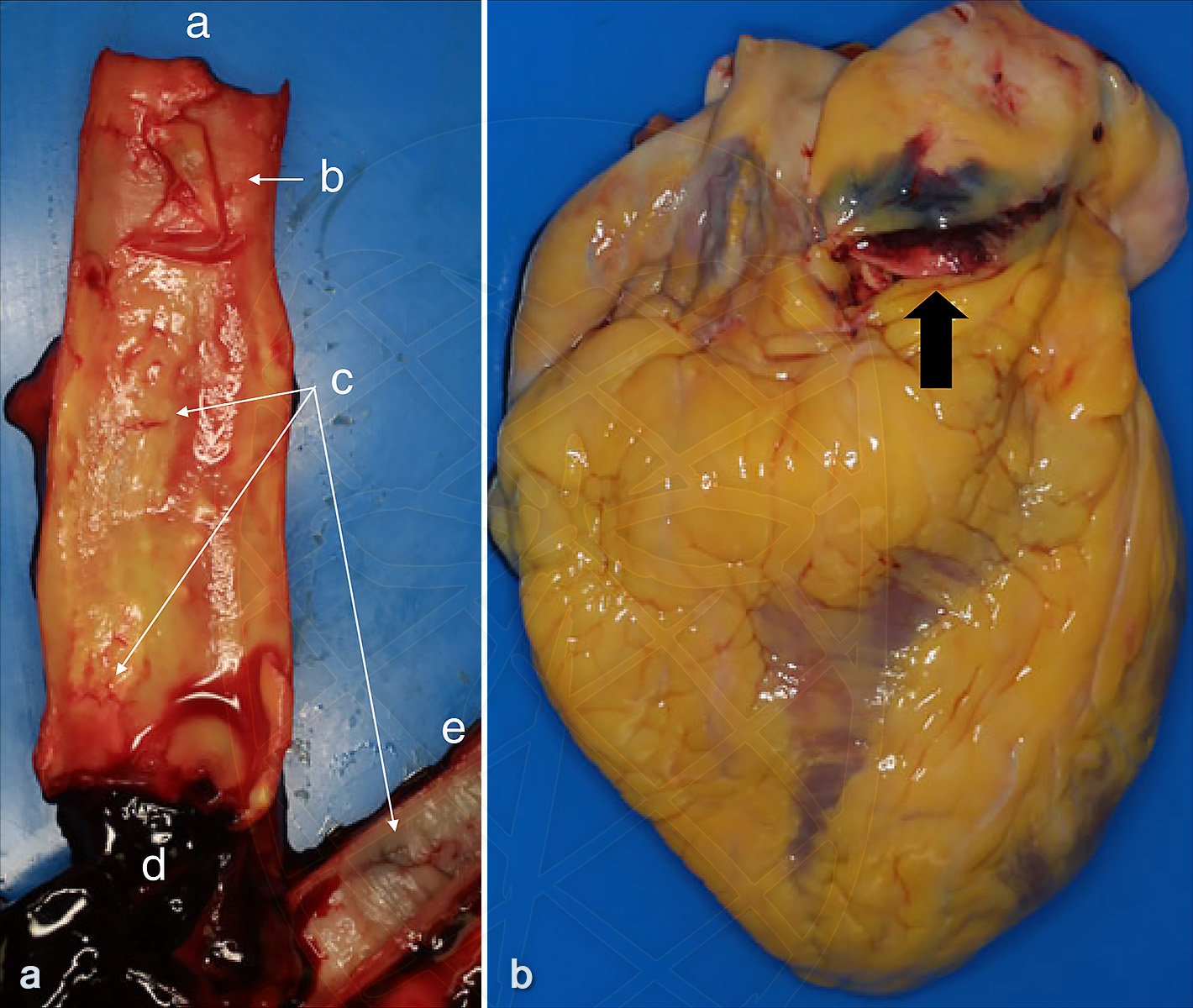 Fig 3a. Multiple injuries to the left carotid artery. a) Destruction of the upper part, b) dissection of the wall, c) tears in the inner wall, d) tear-off from the aortic arch, e) left vertebral artery (anomalous origin). Fig 3b. Rupture of the aortic root (arrow). The pericardial sac was not injured. 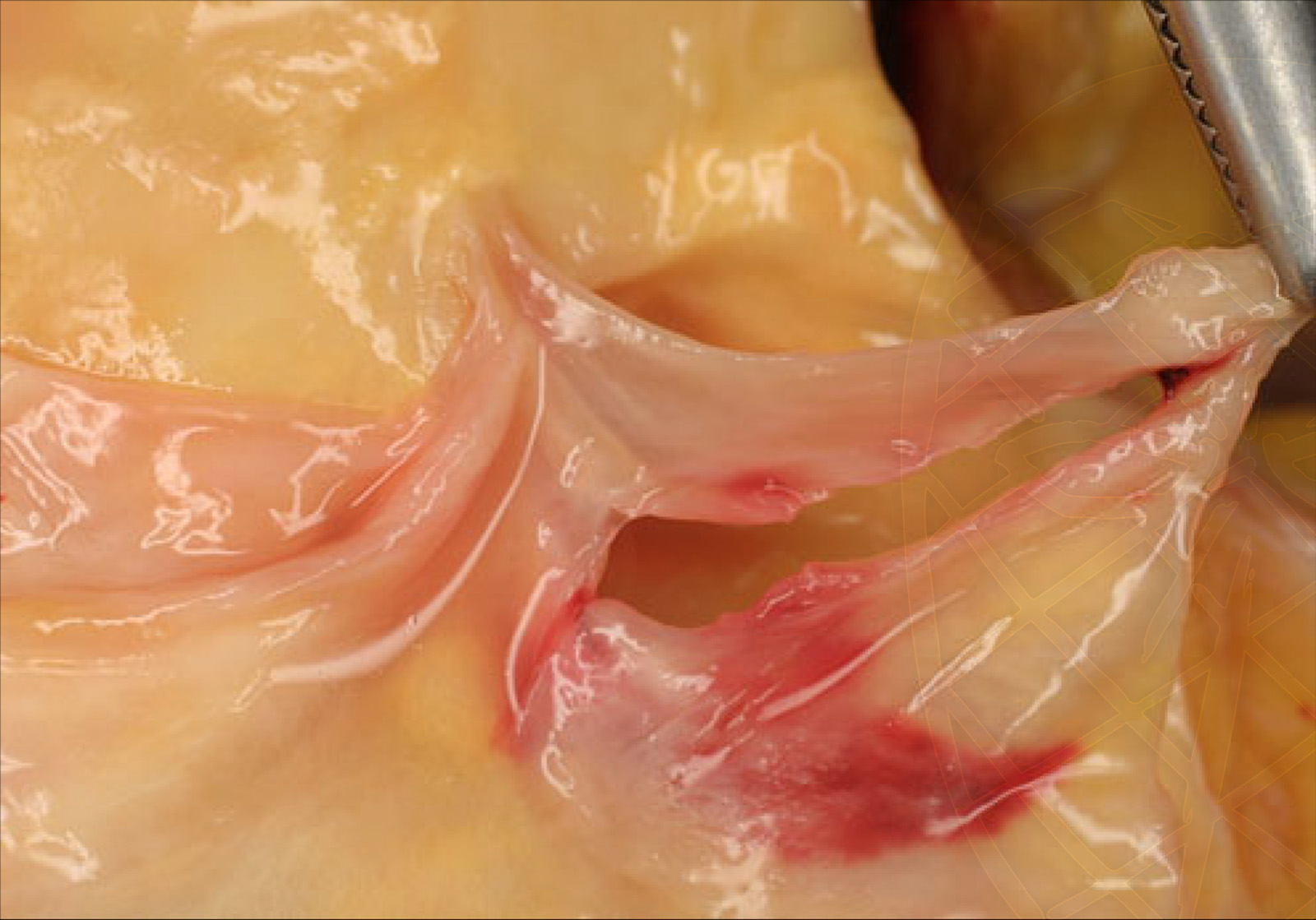 Fig 4. Disruption of the left aortic valve cusp. A tear of the aortic arch between the brachiocephalic artery and left common artery. Seventy percent tear-off the left subclavian artery (Fig. 5a). Two hundred milliliters of blood in the left pleural cavity, vast mediastinal bleeding, contusion of the superior lobes of both lungs (Fig. 5b), and infraction of the sternum from the inside. No bone or other fragments in the mediastinum or thoracic cavities. Great overpressure was observed inside the body, following the route of the vessels from the head down to the heart. All vessels showed multiple tears and disruption. Most astonishing was a complete hemopericardium caused by a rupture of the aortic root, which indicates that the heart continued beating for some time. The superior parts of the lungs were contused and the sternum broken from inside, due presumably to a blast wave through the soft tissues of the neck. 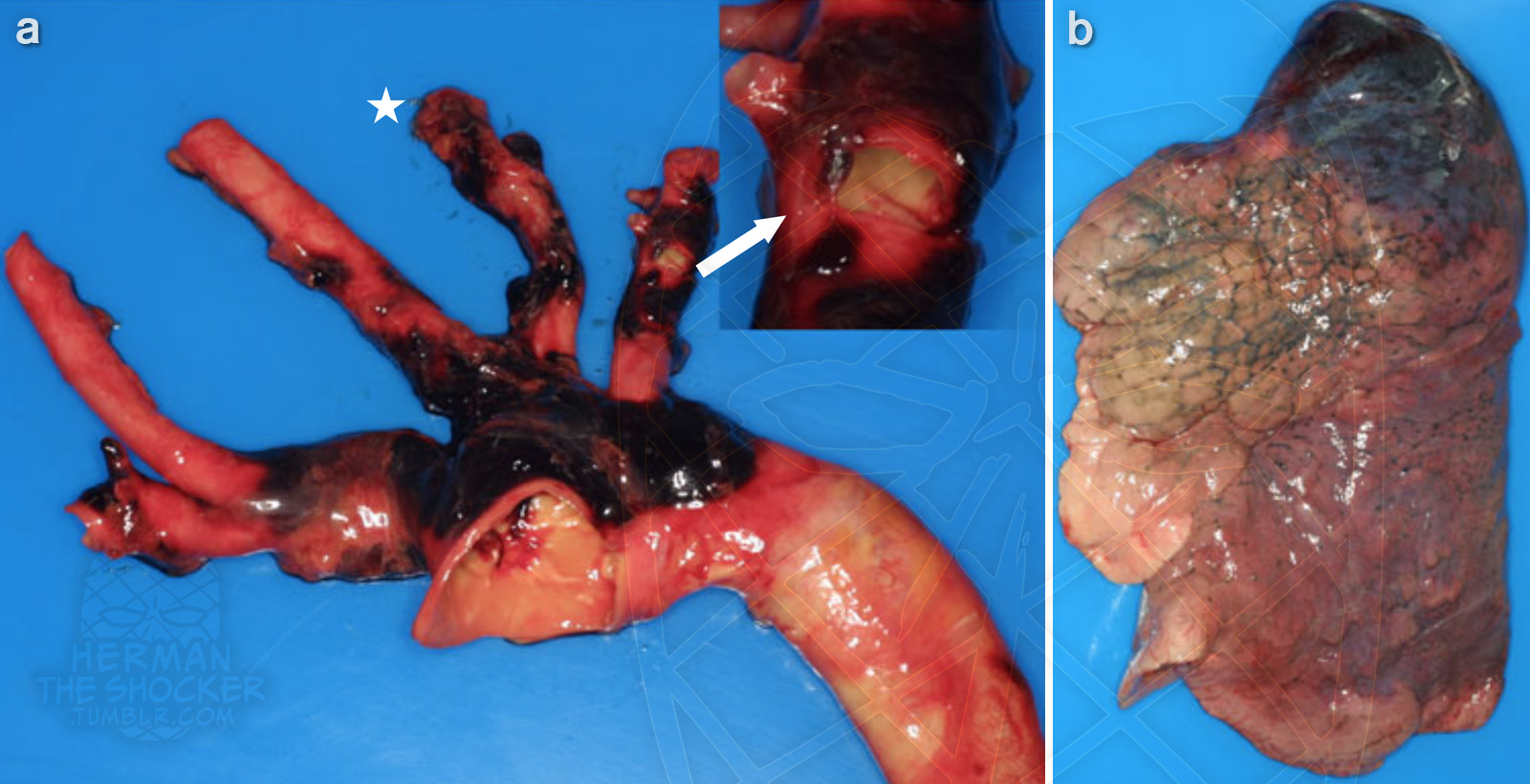 Fig 5. a) Arch of the aorta with mediastinal bleeding. Disruption of the left subclavian artery (see magnification). Left vertebral artery (star) with large caliber and anomalous origin from the aortic arch. b) Left lung with apical contusion. As well as the blast injuries to neck and intrathoracic vessels, the most curious finding was a penetrating injury on the right upper arm (Fig. 6a). A bone fragment of 1 cm length, with a 7-cm long stripe of skin from the upper bearded neck was found in the biceps muscle (Fig. 6b). Morphologically, it was identified as a fragment of mandible which had penetrated deeply, passing through the thick pullover, the skin, and subcutis. This “secondary missile” was further inhibited by the long “flag” of soft tissue. This observation relates to discussions of the wounding capacity of bones as secondary missiles. The burns and tissue impacts on the right shoulder and arm indicated that the head was slightly directed to the right hand while triggering the ignition device. 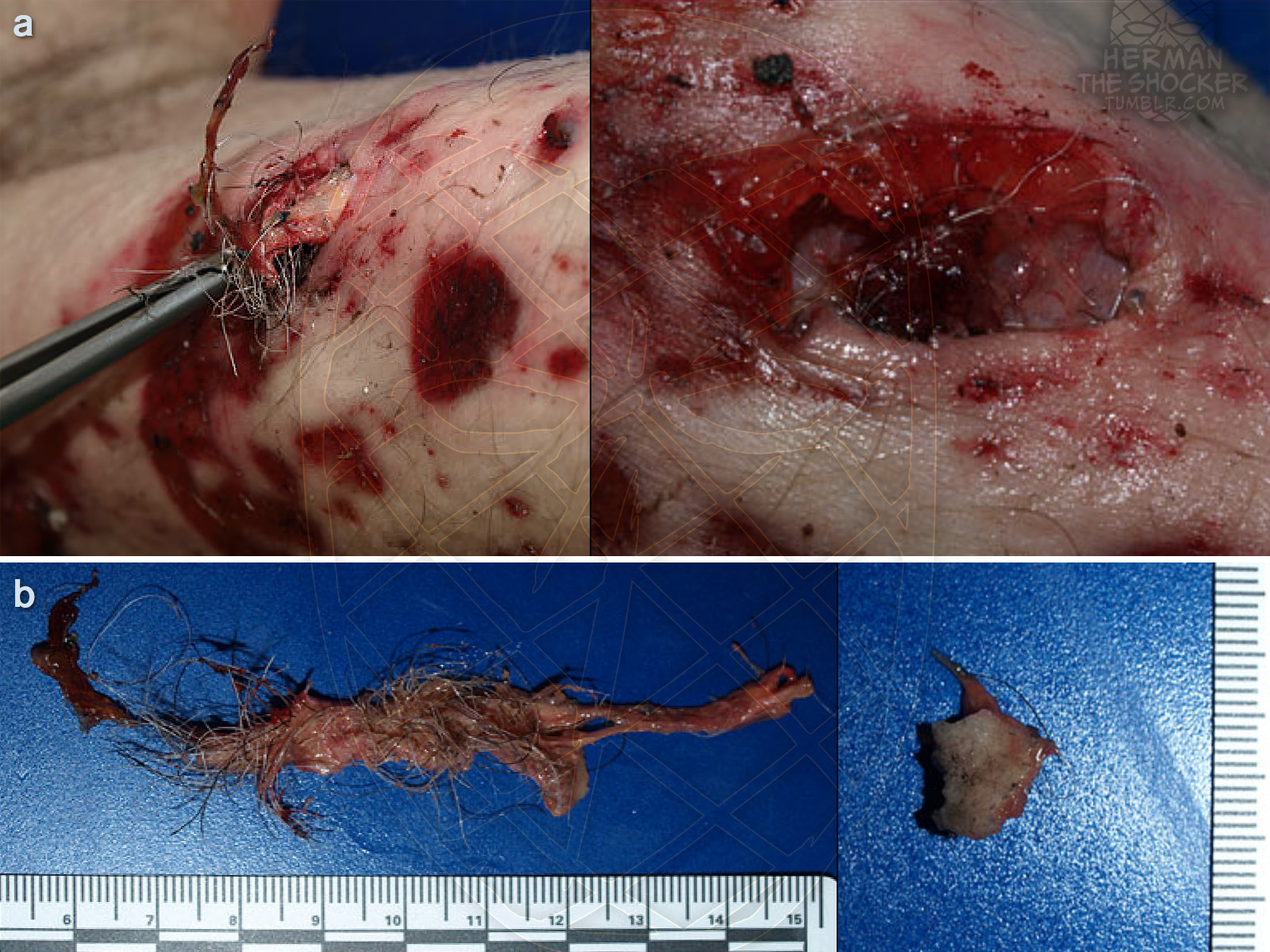 Fig 6. a) Penetrating wound on the upper arm with bearded skin inside. b) Removed “flag” of soft tissue and bone fragment (scales in centimeters). The hands were virtually uninjured. Under autopsy no foreign bodies were found in the body, but tissue debris collected from the scene contained a few pieces of aluminum smaller than 1 cm. Histological examination of lung tissue revealed bleeding, acute emphysema, and alveolar septal tears. Toxicological analysis for alcohol and drugs in the venous femoral blood was negative. RDX is also known, but less commonly, as cyclonite, hexogen (particularly in Russian, French, German and German-influenced languages). It is often used in mixtures with other explosives and plasticizers or phlegmatizers (desensitizers); it is the explosive agent in C-4 plastic explosive. RDX is stable in storage and is considered one of the most energetic and brisant of the military high explosives, with a relative effectiveness factor of 1.60. The Relative effectiveness factor, or R.E. factor, relates an explosive's demolition power to that of TNT, in units of the TNT equivalent/kg (TNTe/kg). The R.E. factor is the amount of TNT to which 1 kg of an explosive is equivalent; the higher the R.E., the more powerful the explosive. |
|
#2
●
01-09-2021, 05:39 PM
| ||||||||
 ♚ Legacy Gold Member ♚ Poster Rank:904 Join Date: Oct 2020 Posts: 822 Mentioned: 0 Post(s) Quoted: 119 Post(s)
| ||||||||
|
Re: Suicide by Head Explosion
Excellent post Mr. Shocker
|
|
#3
●
01-09-2021, 07:47 PM
| ||||||||
 My Rank: LANCE CORPORAL Poster Rank:3226 Join Date: Feb 2013 Posts: 116 Mentioned: 0 Post(s) Quoted: 20 Post(s)
| ||||||||
|
Re: Suicide by Head Explosion
He could've saved someone a lot of gruesome cleanup if he had just put a garbage bag over his head
|
|
#4
●
01-10-2021, 04:32 AM
| ||||||||
 My Rank: SECOND LIEUTENANT Poster Rank:250 Join Date: Sep 2015 Posts: 5,527 Mentioned: 2 Post(s) Quoted: 994 Post(s)
| ||||||||
|
Re: Suicide by Head Explosion
Lots of fatty tissue around the heart  |
|
#5
●
01-10-2021, 06:16 AM
| ||||||||
 ★ Legacy Member ★ Poster Rank:862 male Join Date: Mar 2010 Posts: 876
Contributions: 1
Mentioned: 0 Post(s) Quoted: 106 Post(s)
| ||||||||
|
Re: Suicide by Head Explosion
Fascinating and really good information about explosives not easy to get these days
|
|
#10
●
01-12-2021, 10:03 AM
| ||||||||
 My Rank: LANCE CORPORAL Poster Rank:2902 Female Join Date: Sep 2009 Posts: 137 Mentioned: 0 Post(s) Quoted: 19 Post(s)
| ||||||||
|
Re: Suicide by Head Explosion
I admire the commitment. This was a man totally devoted to avoiding therapy.
|