
|
#1
●
07-18-2009, 07:40 PM
| ||||||||
| So Fucking Banned Poster Rank:9633 Join Date: Apr 2009 Posts: 15 Mentioned: 0 Post(s) Quoted: 1 Post(s)
| ||||||||
|
Snake Bite Really Nasty!!
this bite is from a fer-de-lance snake. it is a pic of an 11 yr olds leg a few weeks after the bite. heres a cool story about these snakes: 1. The St. Pierre Snake Invasion Volcanic activity on the ‘bald mountain’ towering over St Pierre, Martinique, was usually so inconsequential that no one took seriously the fresh steaming vent-holes and earth tremors during April, 1902. By early May, however, ash began to rain down continuously, and the nauseating stench of sulphur filled the air. Their homes on the mountainside made uninhabitable, more than 100 fer-de-lance snakes slithered down and invaded the mulatto quarter of St Pierre. The 6-ft long serpents killed 50 people and innumerable animals before they were finally destroyed by the town’s giant street cats. But the annihilation had only begun. On May 5, a landslide of boiling mud spilled into the sea, followed by a tsunami that killed hundreds and, three days later, May 8, Mt Pelee finally exploded, sending a murderous avalanche of white-hot lava straight toward the town. Within three minutes St Pierre was completely obliterated. Of its 30,000 population, there were only two survivors. 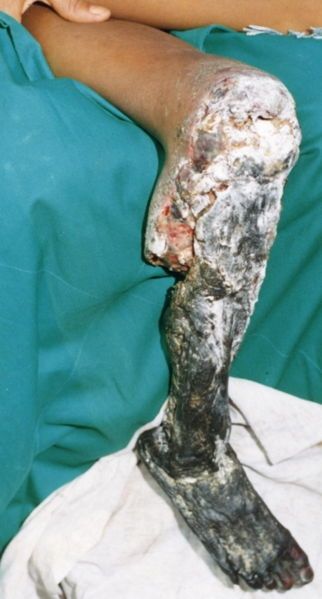 · |
|
#4
●
07-18-2009, 08:29 PM
| ||||||||
 ★ ★ GENERAL ★ ★ Poster Rank:37 male Join Date: Oct 2006 Posts: 42,046
Contributions: 35
Mentioned: 2257 Post(s) Quoted: 21186 Post(s)
| ||||||||
|
Re: Snake Bite Really Nasty!!
Holy shit, .. amputate that fucker...
__________________ Support the site and our continued existance by upgrading to a Green Name |
|
#6
●
07-18-2009, 08:41 PM
| ||||||||
| ★ Legacy Member ★ Poster Rank:1 Join Date: Jun 2009 Posts: 133,772 Mentioned: 282 Post(s) Quoted: 32532 Post(s)
| ||||||||
|
Re: Snake Bite Really Nasty!!
That must have taken weeks to cause the flesh to denude so badly. The poison must have still been active in his/her body when the picture was taken.  |
|
#9
●
07-18-2009, 11:40 PM
| ||||||||
 My Rank: CORPORAL Poster Rank:1388 Male Join Date: Jun 2009 Posts: 430 Mentioned: 0 Post(s) Quoted: 18 Post(s)
| ||||||||
|
Re: Snake Bite Really Nasty!!
That is the cause of no medical care. The flesh is dead and gangrene is acute. I am surprised the person is still alive. Amputation is now the only option. Way above the knee about mid thigh. Without some serious anti-botics and advanced medical care this person is doomed to die. Damm, wicked as venom! It must have killed the flesh in that calf muscle with in hours. |





 that snake has a nasty bite.


