|
#1
●
08-24-2021, 05:14 PM
|
 ♚ Legacy Gold Member ♚ Poster Rank:914 Join Date: Jul 2020 Posts: 820
Contributions: 13
820Posts 27,645Thanked 173Quoted 13Mentioned 13Contrib. |
|
The Shocker's Mix 7
Some of the stuff I work on doesn't make the cut so I thought about gathering them up in a single post. So basically it's images I have little or no info about or I've decided that they don't get their own thread, for example, because of low image/content quality, lack of backstory or additional info/knowledge, possibly uninteresting, only one image but not very special. I still do the usual image work including upscaling and color correction as needed, as I prefer to have my content high quality and educational. - - - Case 1 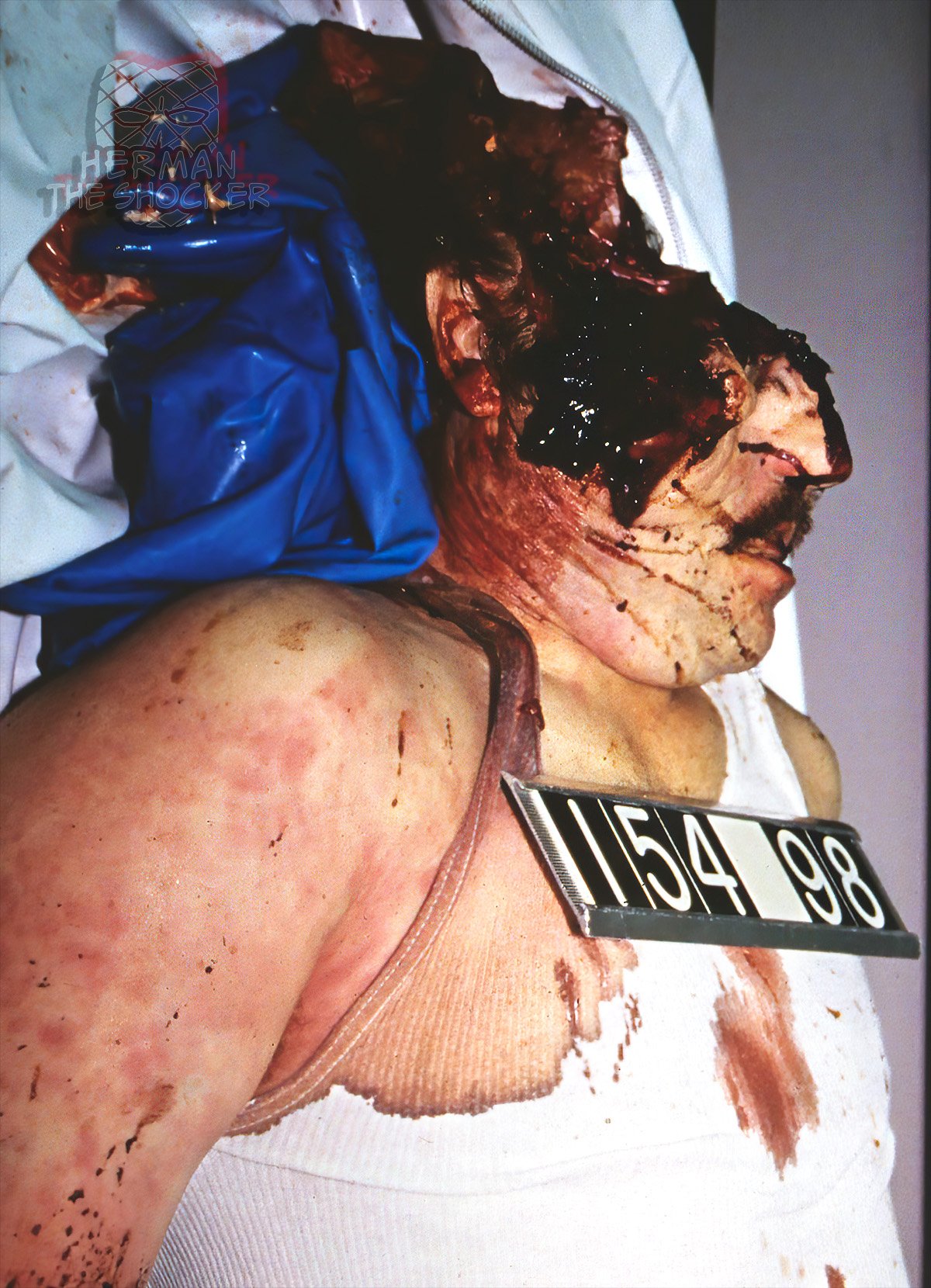 Fig1.1 Extensive destruction of man's head. This individual has an extensive destruction of the head, I don't have the details of what happened, I would guess gunshot to the head or crush injury in some accident. What do you guys think? Crushing head trauma Head trauma from a crushing brain injury is typically the most damaging and life-threatening variety of traumatic brain injury. Head trauma from a crushing brain injury, as the name implies, occurs when the brain and skull are crushed—usually between two hard objects. The more forceful the crushing is, the more severe damage will be, but damage also depends on factors such as the location of the injury and overall brain health. For example, people who have vascular issues may suffer blood clots or strokes after a crushing brain injury. Gunshot head injuries Head injuries from shotguns and high-powered rifles are typically quite devastating, often with extensive soft tissue destruction, skull fractures, and pulpifaction of the brain. Occasionally, the brain is largely expelled from the cranial vault and may be found near the body. Centerfire rifles, whether military or hunting, frequently cause a strong ‘explosive’ effect with comminution of bones and laceration of brain tissue up to a so-called Kröhnlein shot (exenteratio cranii). Shotgun injuries differ substantially depending on the range of fire. Close-range shots have a tremendous effect similar to centerfire rifles by literally riddling brain tissue and blasting the skull. The high internal cranial pressure often leads to long skin tears, also detached from the bullet opening, as well as extensive bone fracture systems and brain tissue destruction. - Case 2 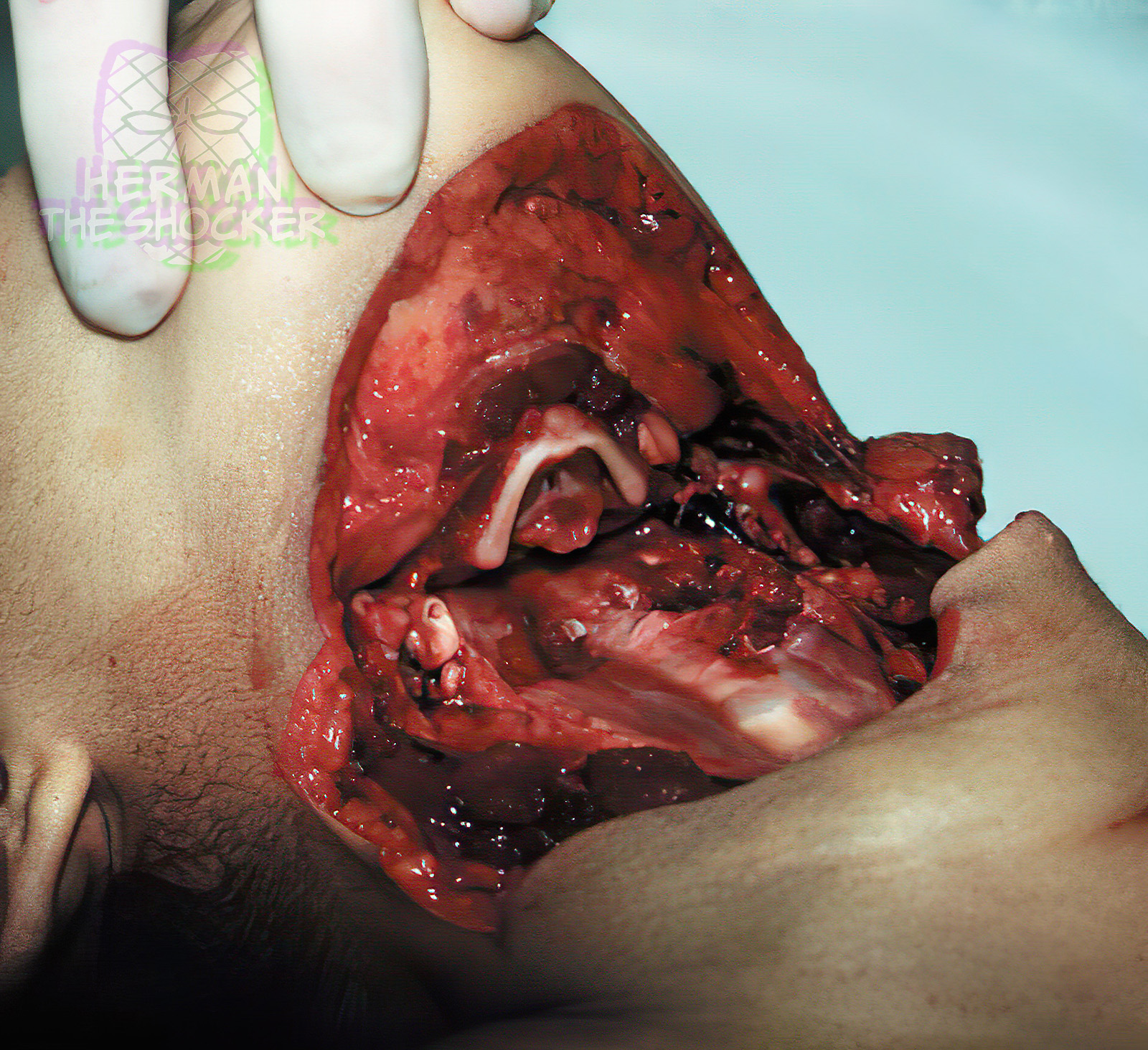 Fig2.1 Homicidal cut throat, showing single slash with no tentative cuts. Homicidal cut throat, showing single slash with no tentative cuts. Clean-cut edges with no sign of repetitive strokes, severing muscles, larynx, and some large vessels. No further info about this case. When an incised wound is longer than it is deep, it may be referred to as a ‘cut’ or ‘slash’, though a ‘cut’ may also be used by laypersons to describe a laceration. Such slashes when inflicted by a knife, sword, razor, cleaver, parang, machete, panga, broken glass, or bottle, are typical of a fight, when the assailant strikes out with a swiping action, rather than the thrust of a stabbing attack. They are common in gang fights and bar-room brawls and the weapon may be swung at arm’s length in a horizontal arc so that if it contacts a body it will slice the skin and tissues as it passes by. They are also seen in suicidal injuries, usually on the wrist or throat. The characteristics of any given wound are a matter of chance and relative positions. The slash may be deeper at the entry end or the exit point, though it seems true that many such injuries tend to dig in near the point of first contact and become progressively more shallow as the wound approaches the distal end. There may be a superficial ‘tail’, a shallow scratch, running out of the termination of the slash, as the weapon rises out of the wound and is drawn across the skin surface before leaving the body altogether. There is a tendency among advocates to visualize a fight as a static confrontation and to attempt to reconstruct events as if the two participants were standing still, the assailant merely moving his arm. This is an unrealistic interpretation, as all fights are dynamic, with constant relative movement of the bodies and limbs of both parties. Therefore any relative angles and depths of contact between the victim and the weapon can occur and overinterpretation and simplification should be avoided. - Case 3 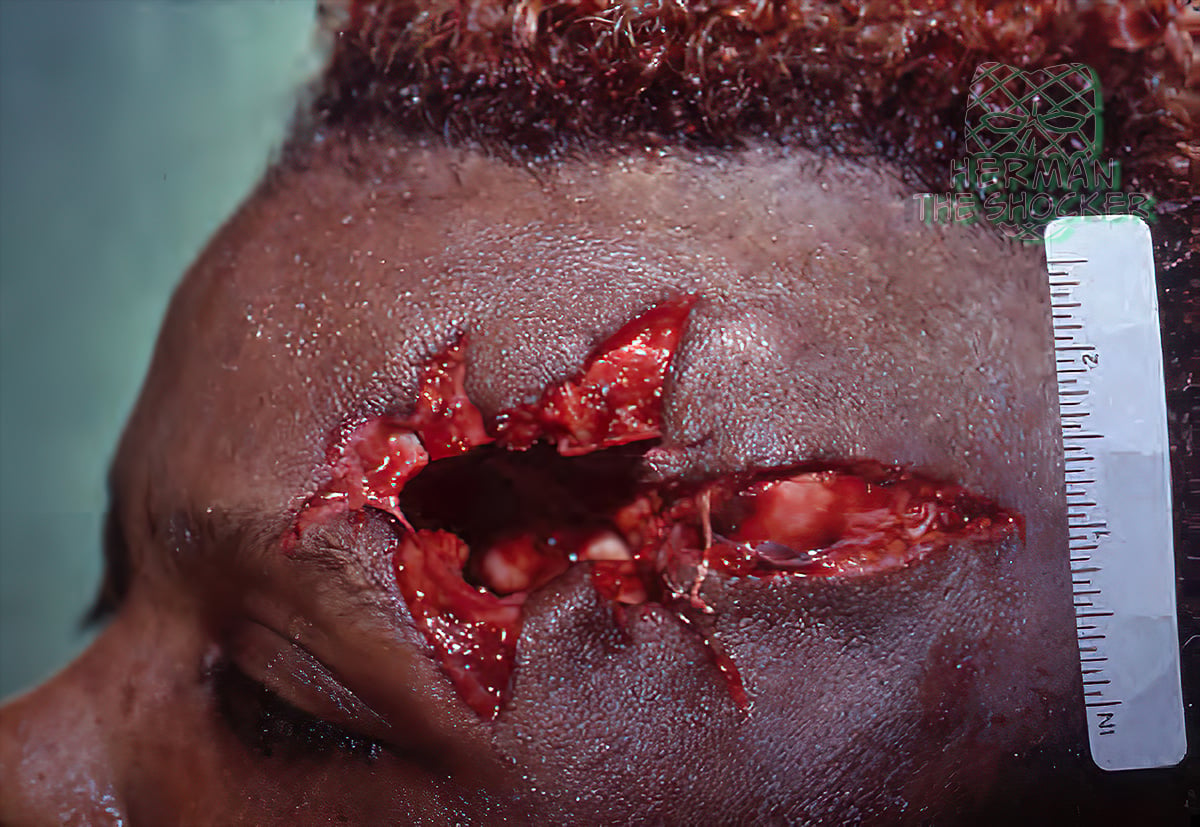 Fig3.1 Tangential distant gunshot wound produced by mag-safe ammunition. The individual in the picture has a tangential distant gunshot wound produced by mag-safe ammunition (prefragmented). I don't have any further info about this case. MagSafe Ammo is faster, recoils less, and stops attackers faster than any other ammunition in the world. Elite forces are outfitted with MagSafe, from Navy SEALS to the Royal Hong Kong Police anti-gang units, from big-city undercover narcs to guards at some of America's meanest prisons. - Case 4 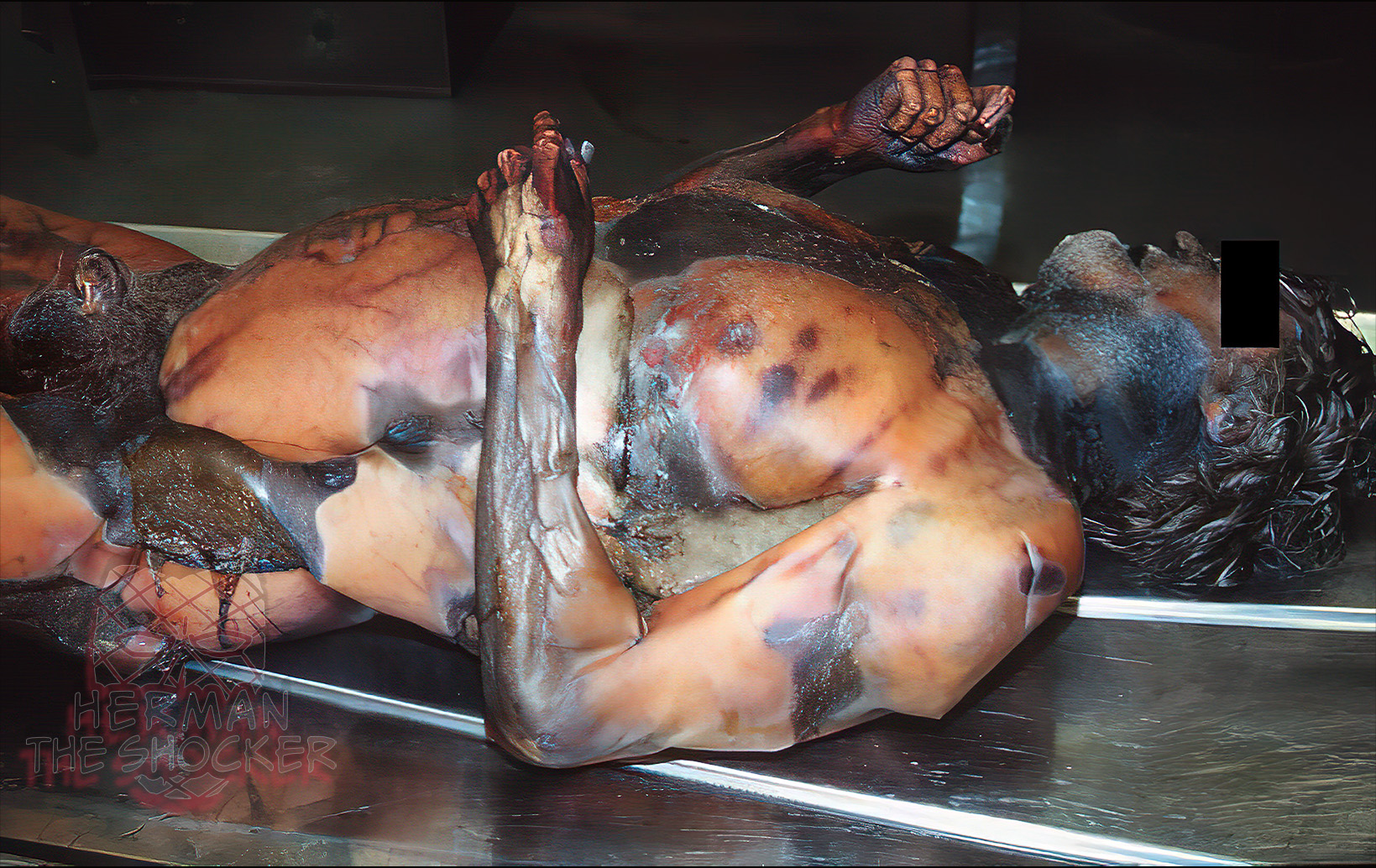 Fig4.1 Mummification in a man dead in a locked room for 10 weeks. This individual was found mummified in a locked room 10 weeks after death. The corpse is dry and leathery, with very little moist putrefaction. No further info. Mummification is drying of the tissues in place of liquefying putrefaction. Like the other modes of decomposition, this can be partial and can coexist with them in different areas of the same body. It is, however, more likely than the others to extend over the whole corpse. Mummification can only occur in a dry environment, which is usually, but not exclusively, also a warm place. Mummification can occur in freezing conditions, partly because of the dryness of the air and partly because of the inhibition of bacterial growth. The most widely known forms of mummification are those in hot, desert zones. The process of artificial mummification practiced for millennia in Egypt was an imitative process founded on the natural mummification of bodies in predynastic times. The essential requirement for mummification is a dry environment, preferably with a moving air current. If sterility of the tissues can be attained, as in a newborn baby, then putrefaction is held at bay whilst drying occurs. The appearances of mummification display desiccation and brittleness of the skin, which is stretched tightly across anatomical prominences such as the cheekbones, chin, costal margin and hips. The skin is discolored (usually being brown), though secondary colonization by moulds may add patches of white, green or black. The skin and underlying tissues are hard, making autopsy dissection difficult. The condition of the internal organs is variable, depending partly on the length of time since death. They may be partly dried, partly putrefied – and adipocere is not uncommon. In fact, slight adipocere formation is common in mummification, and perhaps the two are related in that the utilization of body water to hydrolyse fat in turn helps to dehydrate the tissues. The major factor, however, is evaporation from the surface in dry conditions. - Case 5 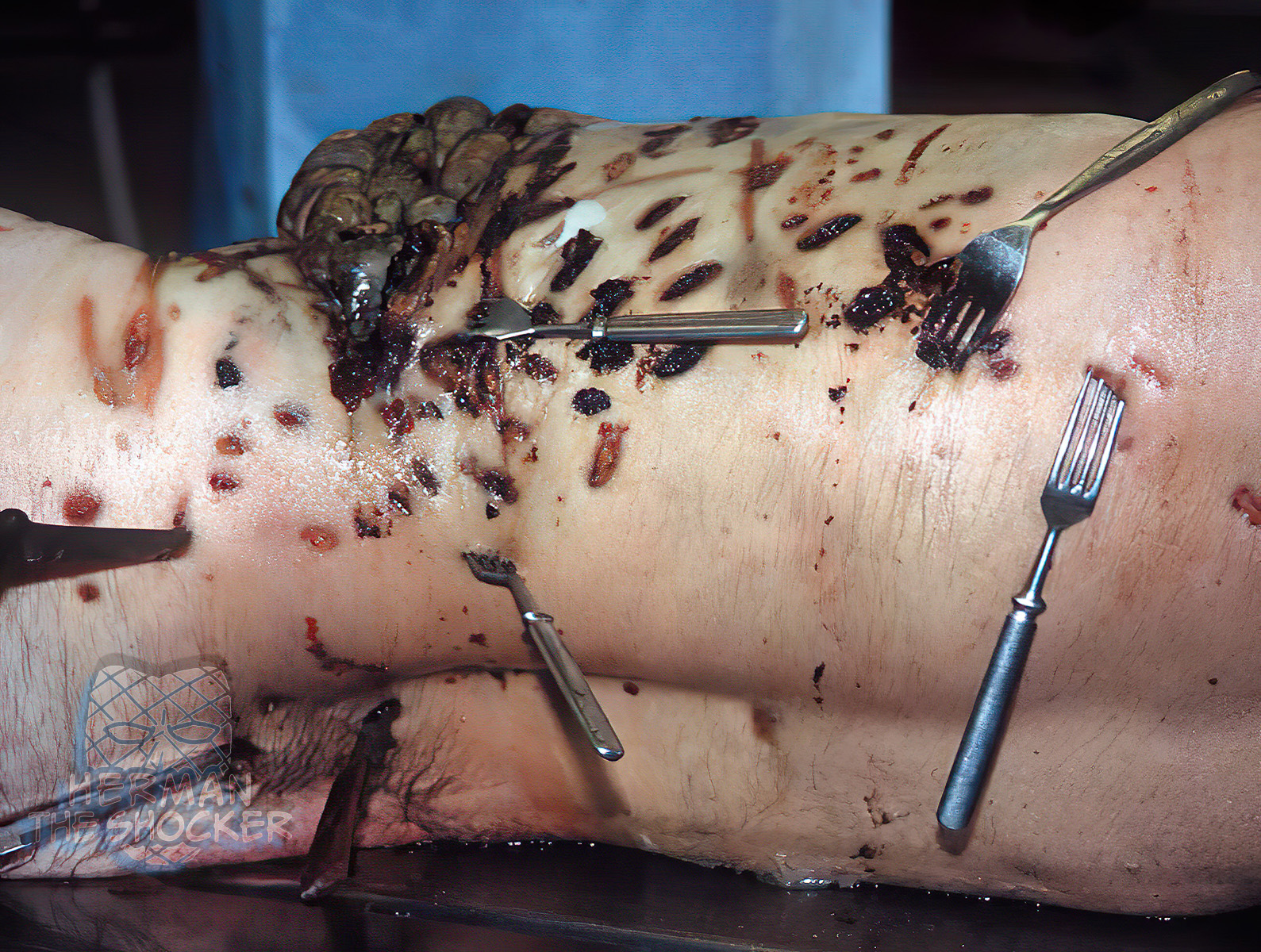 Fig5.1 Multiple homicidal stab and incised wounds inflicted with various kitchen utensils. This individual was murdered and stabbed with various kitchen utensils, no further info about this case. The general features of injuries from knives apply equally to other sharp objects that cause incised and stab wounds. Razors and broken glass have extremely sharp edges so that, when applied tangentially or at a small angle to the skin, undercutting may be a marked feature. The wound may appear as a shallow slice which bleeds profusely and, in a hairy area such as the scalp, it will reveal cut hair bulbs on the shelved surface. Deliberate wounds with razors or sharp knives may exhibit patterns or even words; these may occur in gang fights or sadistic homicides. Glass can be employed as a cutting weapon, again typically in bar fights or gang vendettas, where a broken bottle may be held by the neck or a smashed beer tankard by the handle. Though these formidable weapons are usually used for slashing, long slivers of glass can act – sometimes inadvertently – as stabbing agents. The sliver may break off and remain in a deep wound, which may be overlooked if the entry is small. As many casualty surgeons have learned to their cost – or to the cost of their medical protection society or medical insurers – glass is almost invariably radio-opaque, even though this is either unknown or even denied by the doctor. Numerous civil actions for negligence have occurred – though usually in non-fatal circumstances – but, on occasion, the first person to find a deep fragment of glass in a vital position has been a forensic pathologist. - Case 6 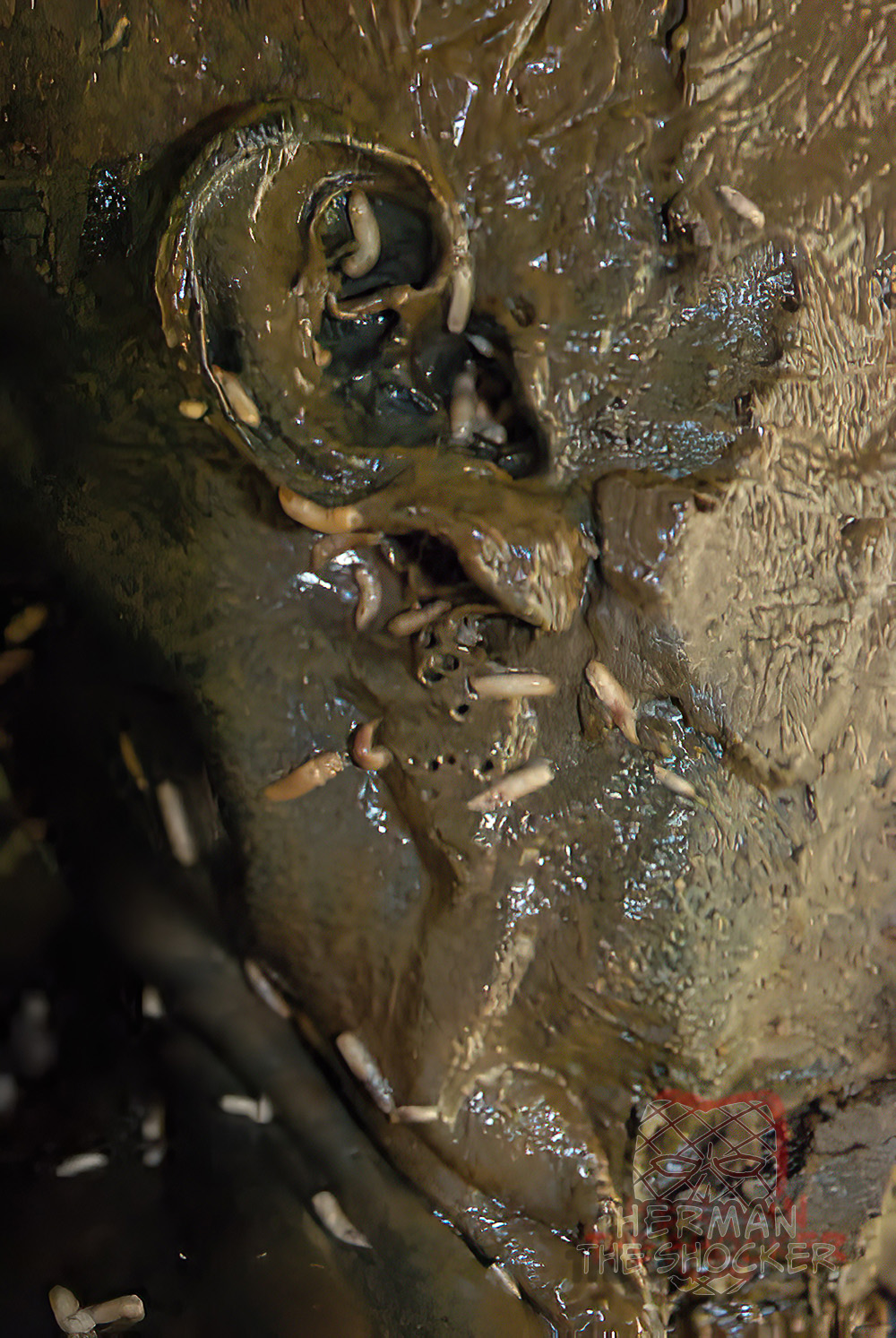 Fig6.1 Note the small circular perforations caused by maggots tunneling through skin and soft tissue. 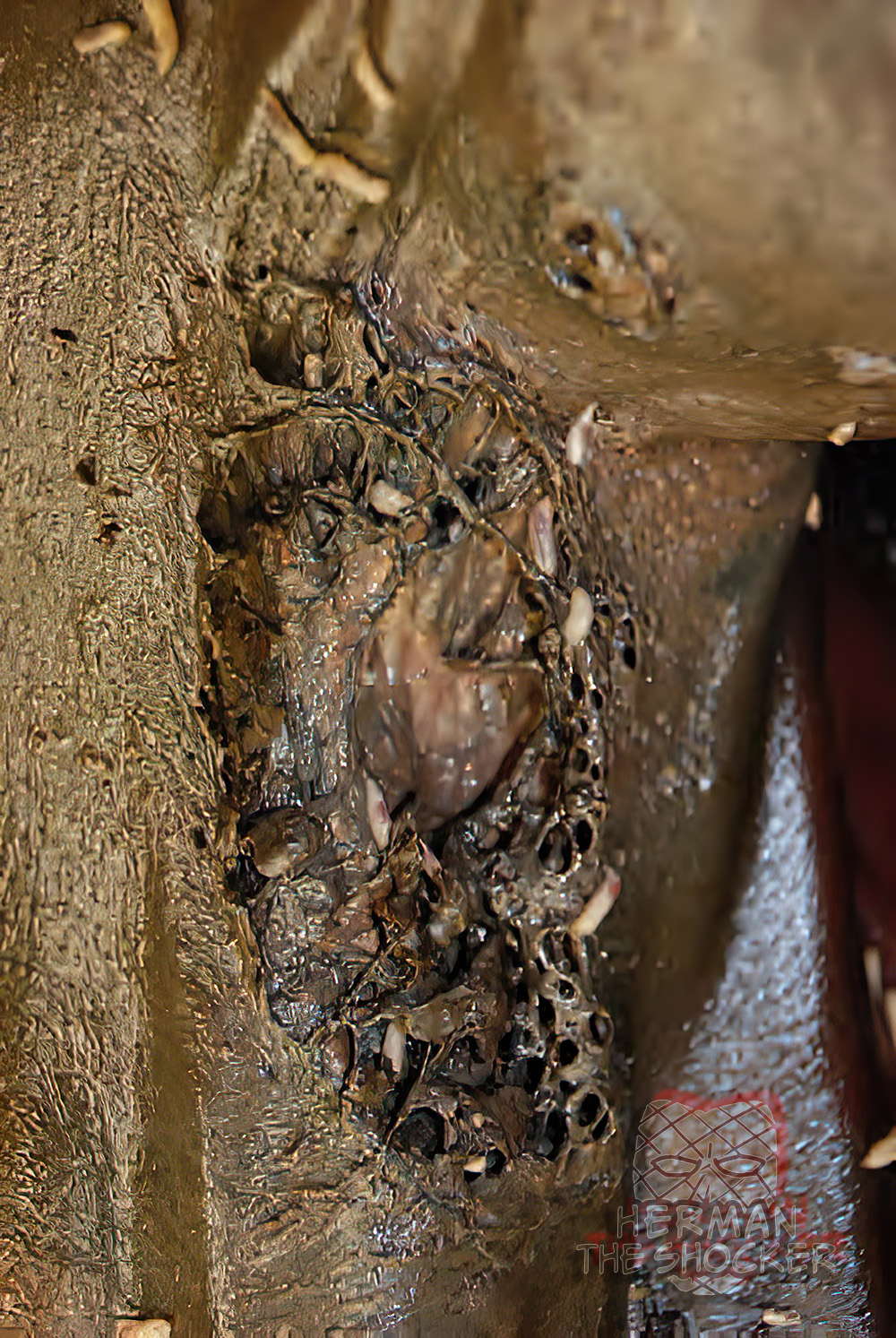 Fig6.2 Marked putrefactive change with dark brown discoloration and maggot feeding. 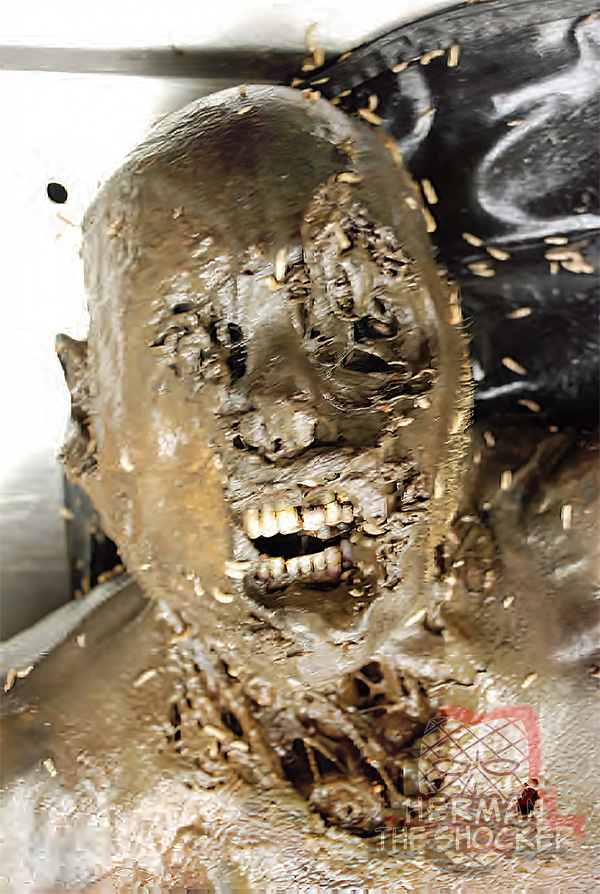 Fig6.3 Putrefactive change and maggot feeding. Marked putrefactive change with dark brown discoloration and maggot feeding. Note the small circular perforations caused by maggots tunneling through skin and soft tissue. Maggots cause most of the body's decomposition because the maggot will do the majority of the eating. Maggots have powerful proteolytic enzymes that aid the dissolution of tissues and facilitate penetration. The maggots are voracious and energetic, first exploring the natural passages, such as mouth and nostrils, then burrowing into the tissues. They secrete digestive fluids with proteolytic enzymes that help soften the tissues, burrowing beneath the skin, and making tunnels and sinuses that hasten putrefaction by admitting air and access to external micro-organisms. Successive waves of eggs are laid, producing new generations of maggots. Eventually, loss of tissue and drying makes the host cadaver unattractive to egg-laying insects, and the later stages of decomposition become free from maggots. - Case 7 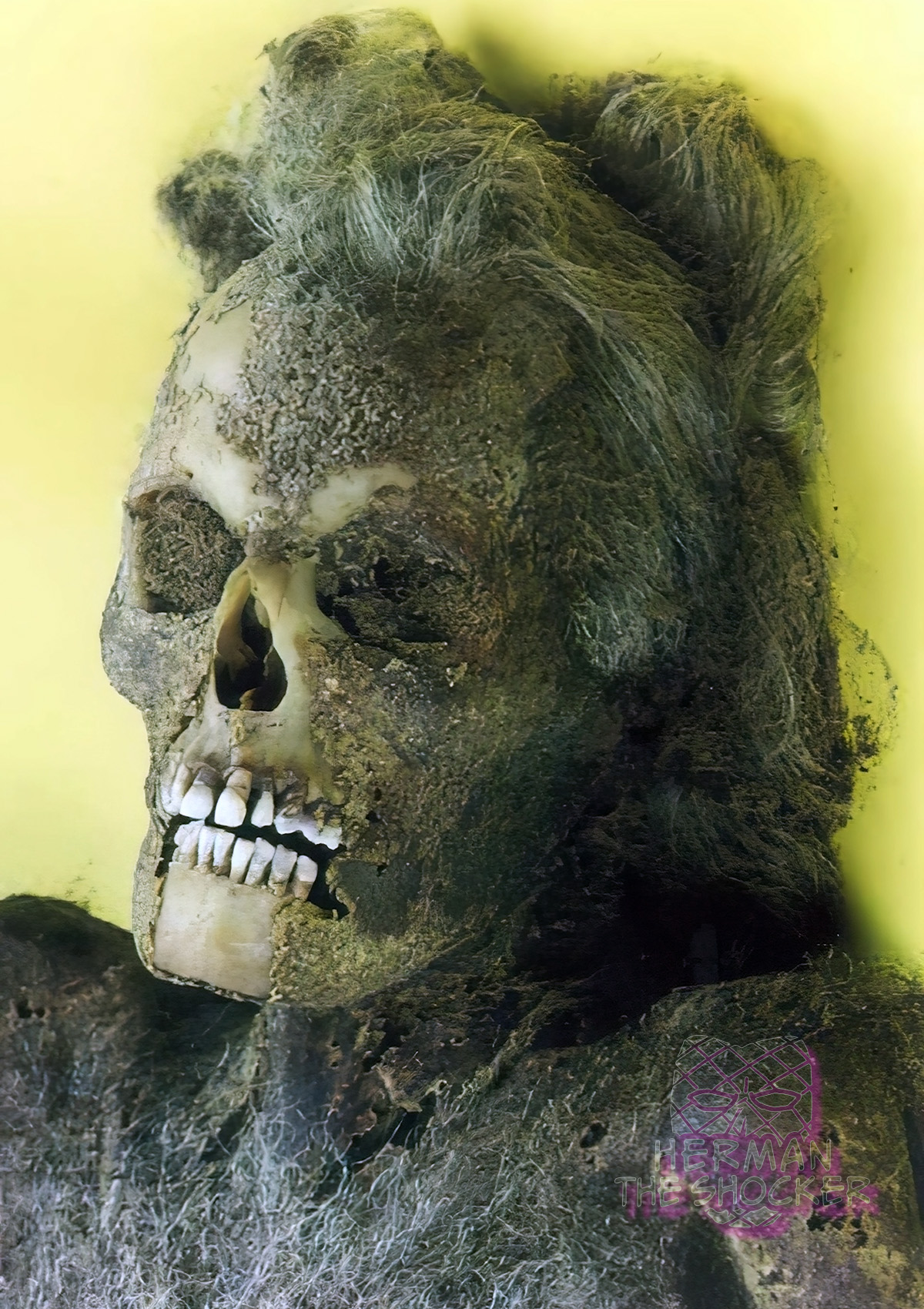 Fig7.1 Co-occurrence of skeletonization and mummification. Skeletonization is the total or partial loss of soft tissue (complete or incomplete skeletonization, respectively) with resultant exposure of bones. Incomplete skeletonization may proceed to complete skeletonization but this does not necessarily take place since only discrete portions of the body may be exposed to the proper environmental conditions. The length of the postmortem interval needed for skeletonization of a body or parts of it is highly variable and mainly depends on the ambient temperature, insect colonization of the body, and scavenger activity. Under warm to hot environmental conditions, and increasingly under the influence of moisture, aerobic bacterial activity from the outside is accelerated with resultant advanced manifestation of odor of the body, attracting insects and scavengers to the body. Skeletonization and mummification often occur together in different or identical parts of the body. Usually all skin, soft tissue, and muscles are lost before a skeleton becomes disarticulated. Disarticulation of bones in skeletonized bodies is more often seen to take place from the head downward and from central to peripheral than in the reverse way. - This post is for educational purposes only and is nonprofit. Under Section 107 of the US Copyright Act of 1976; Allowance is made for "Fair Use" for purposes such as criticism, comment, news reporting, teaching, scholarship, and research. OP is not a medical expert. No copyright infringement intended. This post does not encourage or glorify violence/harassment. Images might have been upscaled and enhanced. Text might have been shortened and simplified/reorganized for online view. |
|
#2
●
08-24-2021, 06:11 PM
|
 Für Immer Verloren Poster Rank:50 Boredom + Despair Join Date: Sep 2017 Posts: 30,197
Contributions: 743
30,197Posts 192,616Thanked 10,332Quoted 136Mentioned 743Contrib. |
|
Re: The Shocker's Mix 7
Excellent stuff, mate.
__________________ "I'd give the world for the chance just to see your face again. Still I pretend that you're still standing by." |
|
#3
●
08-24-2021, 07:29 PM
|
 ★ Legacy Member ★ Poster Rank:252 So many choices now Join Date: Jul 2015 Posts: 5,542 5,542Posts 19,786Thanked 2,120Quoted 15Mentioned 0Contrib. |
|
Re: The Shocker's Mix 7
Herman- *Respect.*  |
|
#4
●
08-24-2021, 07:39 PM
|
 My Rank: PRIVATE FIRST CLASS Poster Rank:3579 Male Man Join Date: May 2017 Posts: 97 97Posts 201Thanked 15Quoted 0Mentioned 0Contrib. |
|
Re: The Shocker's Mix 7
You never dissapoint with these posts man, good shit |
|
#5
●
08-24-2021, 08:53 PM
|
 My Rank: MASTER GUNNERY SERGEANT Poster Rank:362 Male Join Date: Mar 2017 Posts: 3,385 3,385Posts 8,735Thanked 1,843Quoted 10Mentioned 0Contrib. |
|
Re: The Shocker's Mix 7
Case 5 looks especially painful.
|
|
#7
●
08-25-2021, 11:11 AM
|
 My Rank: LANCE CORPORAL Poster Rank:1979 Join Date: Apr 2010 Posts: 255
Contributions: 2
255Posts 424Thanked 68Quoted 0Mentioned 2Contrib. |
|
Re: The Shocker's Mix 7
5.1, is that Uri Geller come back to bend more cutlery? Thanks Herman I loved the info you provided, very interesting. |
|
#10
●
08-28-2021, 08:44 PM
|
 My Rank: GUNNERY SERGEANT Poster Rank:606 Join Date: Aug 2017 Posts: 1,553 1,553Posts 2,803Thanked 276Quoted 0Mentioned 0Contrib. |
|
Re: The Shocker's Mix 7
I never knew that a fork could be deadly! Excellent work, Herman! |