|
#1
●
10-20-2021, 04:22 PM
|
 ♚ Legacy Gold Member ♚ Poster Rank:914 Join Date: Jul 2020 Posts: 820
Contributions: 13
820Posts 27,645Thanked 173Quoted 13Mentioned 13Contrib. |
|
The Shocker's Mix 11
Some of the stuff I work on doesn't make the cut so I thought about gathering them up in a single post. So basically it's images I have little or no info about or I've decided that they don't get their own thread, for example, because of low image/content quality, lack of backstory or additional info/knowledge, possibly uninteresting, only one image but not very special. I still do the usual image work including upscaling and color correction as needed, as I prefer to have my content high quality and educational. - - - Case 1 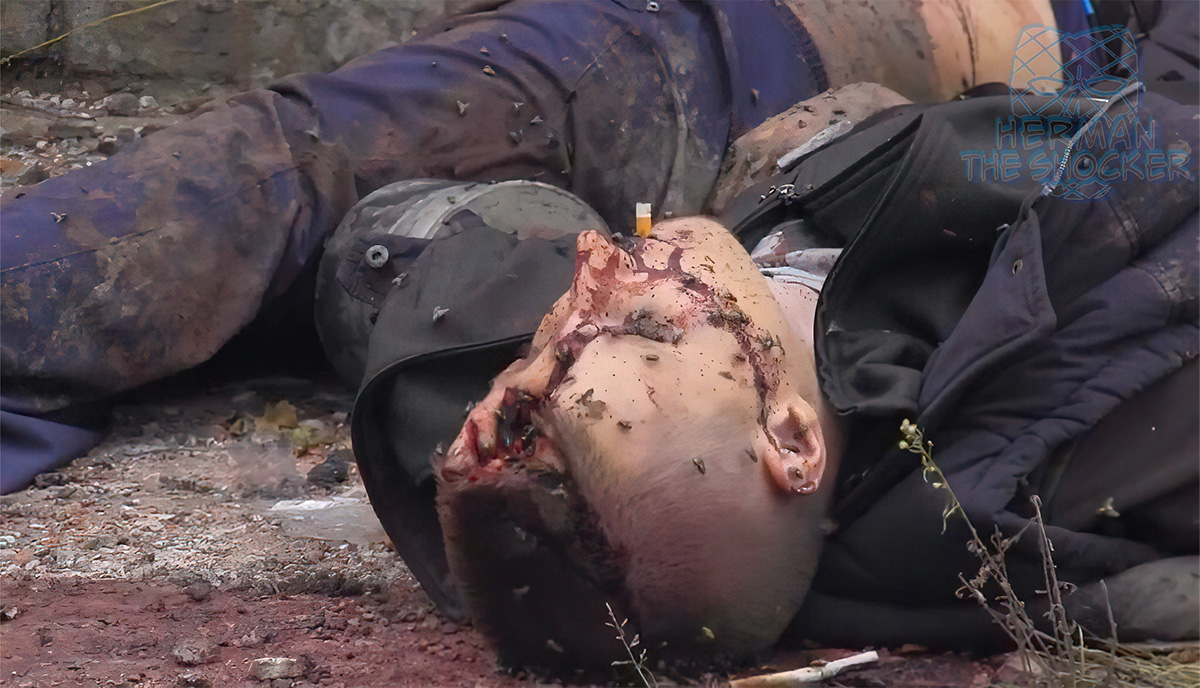 Fig1.1 Last smoke Donetsk airport and the war in Ukraine. - Case 2 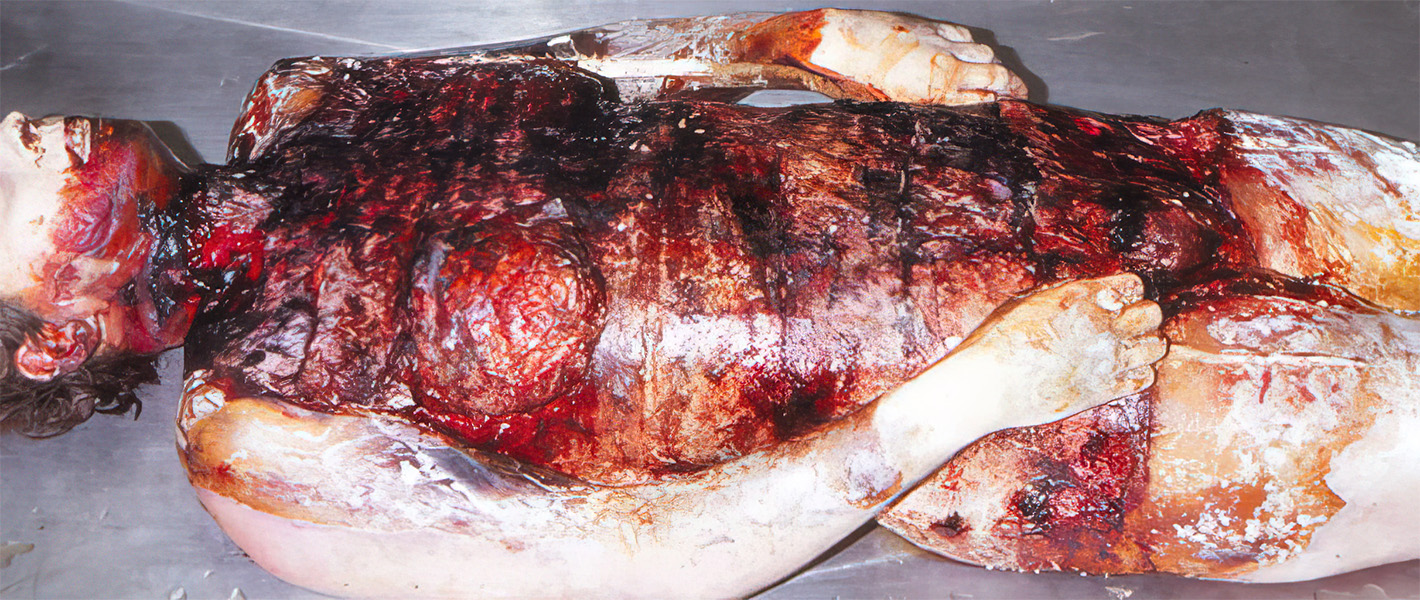 Fig2.1 Suicidal self-immolation injuries The victim douses herself with a flammable liquid, 60 % of the body surface area is burned, survival time was 12 days. No further info. Suicide by burning is a rare condition in the developed countries (0.06-1% of all suicides) but is more frequent in the developing countries (accounting for as many as 40.3% of all suicides). Self-burning (immolation) comprises between 0.37% and 40% of total burn center admissions around the world and approximately 80% of hospitalized self-immolation patients die. - Case 3 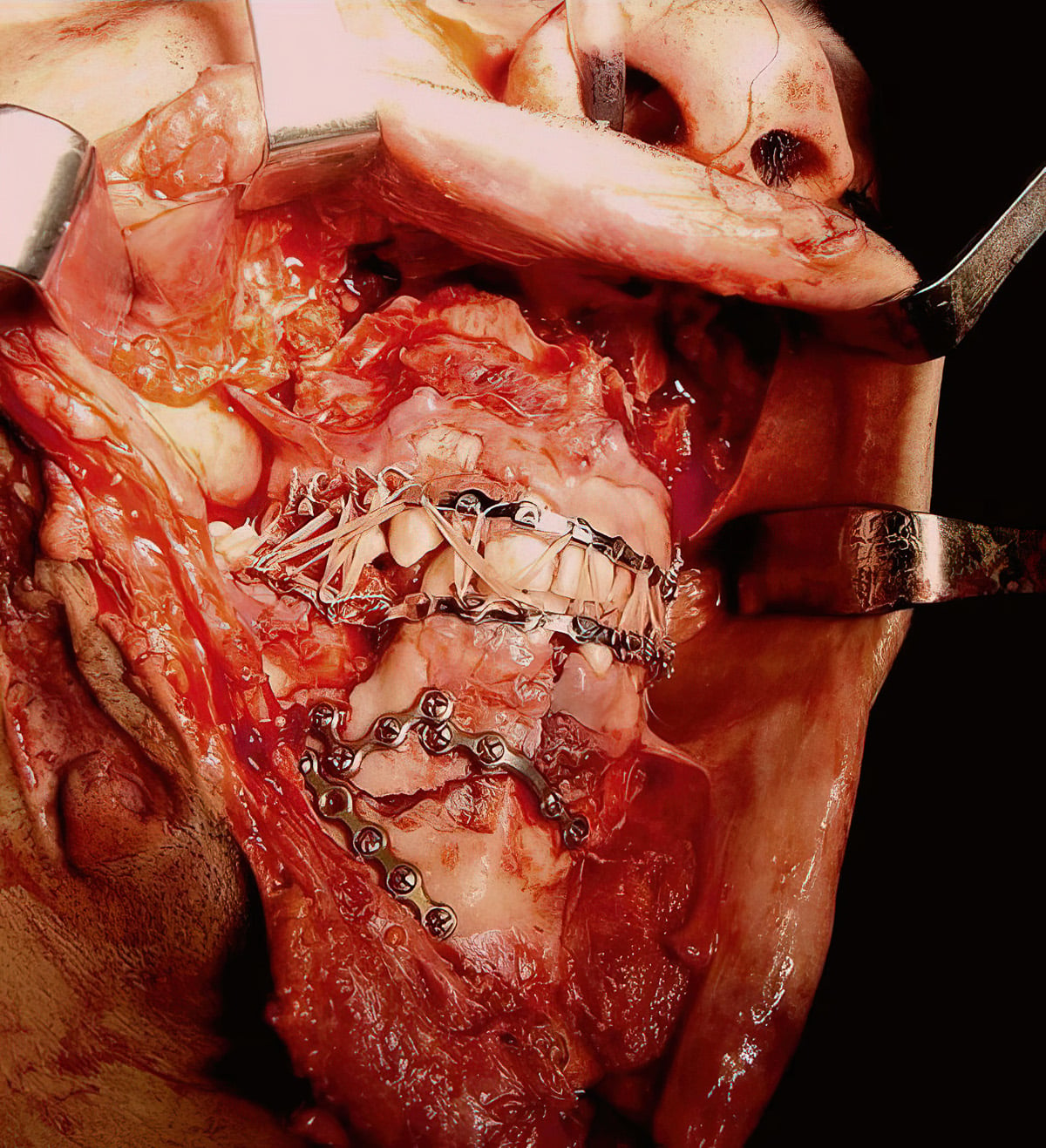 Fig3.1 Severe panfacial trauma Fig.1 Severe panfacial trauma. Midface fractures are treated following mandibular reduction and fixation. Traumatic panfacial fracture repair is one of the most complex and challenging reconstructive procedures to perform. Several principles permeate throughout literature regarding the repair of panfacial injuries in a stepwise fashion. The primary goal of management in most of these approaches is to restore the occlusal relationship at the beginning of sequential repair so that other structures can fall into alignment. Through proper positioning of the occlusion and the mandibular-maxillary unit with the skull base, the spatial relationships and stability of midface buttresses and pillars can then be re-established. Here, the authors outline the sequencing of panfacial fracture repair for the restoration of anatomical relationships and the optimization of functional and structural outcomes. The approach for the treatment of panfacial injuries may seem difficult at first, but if a stepwise approach is followed with an understanding of the principles of repair, the outcome can be optimized. There are several mechanisms of injury which exist that propagate along the zones of weakness within the midface and mandible to represent a common fracture pattern. Standard fracture patterns are classically described by LeFort; yet generally, there is a combination of various components of the LeFort fractures and other fractures. The components of the true panfacial fracture include the lower third, the middle third, and upper third of the face, but the involvement of the midface and mandible constitute the same principles of repair, as a true panfacial fracture would dictate. - Case 4 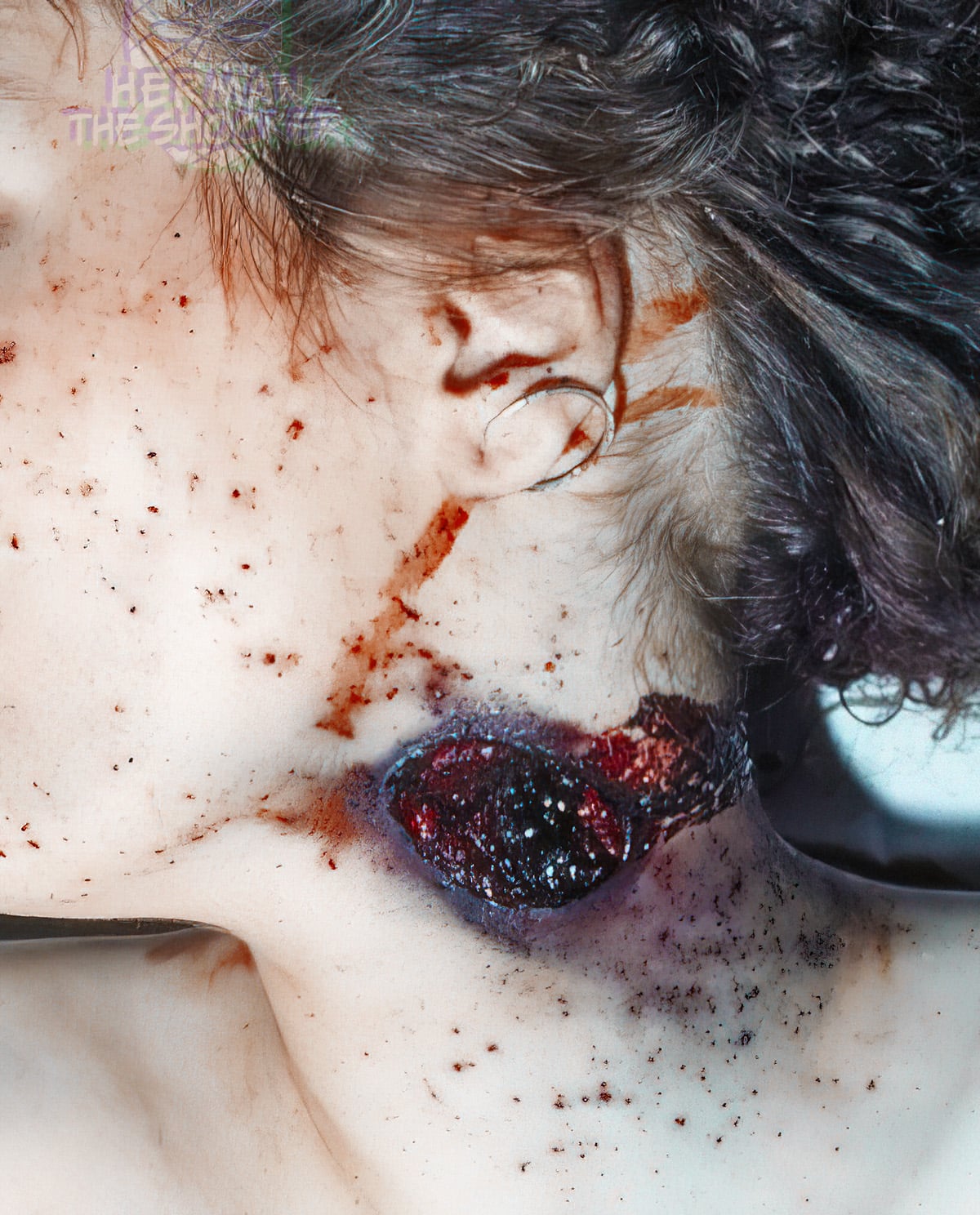 Fig4.1 Shotgun shot wound This individual has a shotgun shot wound. A large central defect is surrounded by smaller shotgun shot wounds in the skin, no further info. The head is the most common location for a suicidal shotgun wound (74%), followed by the chest (20%) and then the abdomen (6%). In head wounds, the most common location was intraoral (50%), followed by under the chin (19%); side of head, including parietal and temporal wounds (15%); and the face, including the forehead (13%). In the case of homicides, 59% occurred at a distant range, 21% occurred at an inter-mediate range, and 8% were at contact range. There was not a significant most common location for homicidal shotgun wounds, though the head, chest, and multiple locations all occurred about 25% of the time, representing the three most common locations. The most common locations of wounds to the head were face, including forehead (37%), and the side of the head, including parietal and temporal wounds (23%). Shotguns differ from rifles and handguns in construction, ammunition, ballistics, and use. Rifles and handguns fire a single projectile down a rifled barrel. Shotguns have a smooth bore. Although they can fire a single projectile, they are usually employed to fire multiple pellets. Rifled shotgun barrels, intended for use with slugs, are available. Shotguns may be autoloaders, pump (slide action), over/under, side-by-side, bolt action, or single shot. Some shotguns usually intended for military and/or police use convert from semiautomatic to pump action and back as the user desires. - Case 5 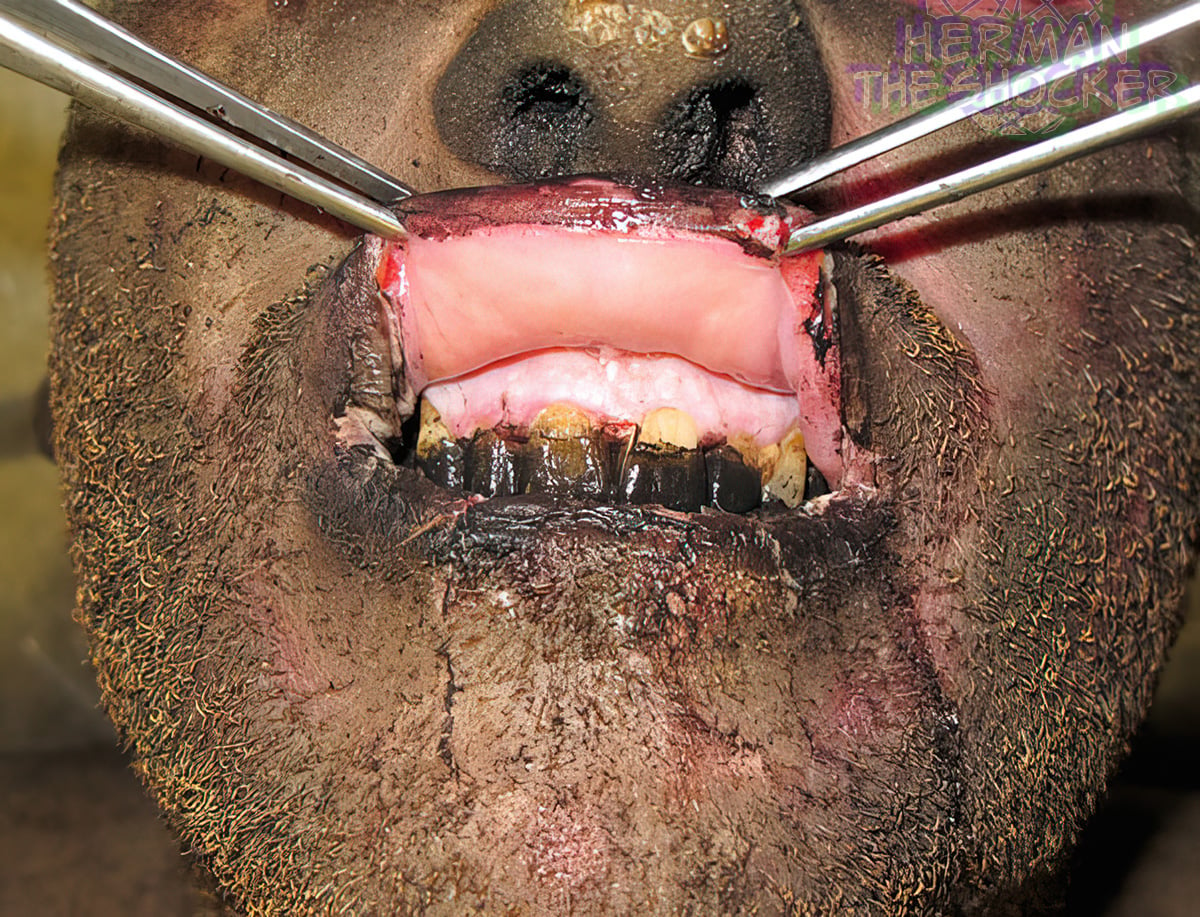 Fig5.1 Thermal damage to beard hair Hair singed by heat shows crinkling and grayish-yellowish discoloration at the tips. Changes in hair color or charring is seen on exposure to dry heat of increasing temperatures. In the image you can see singed, yellowed, and crinkled beard hair, soot in the nostrils, bright red oral mucosa, and soot deposits on the front of teeth due to slightly opened mouth in a victim who died in a fire. No further info. - Case 6 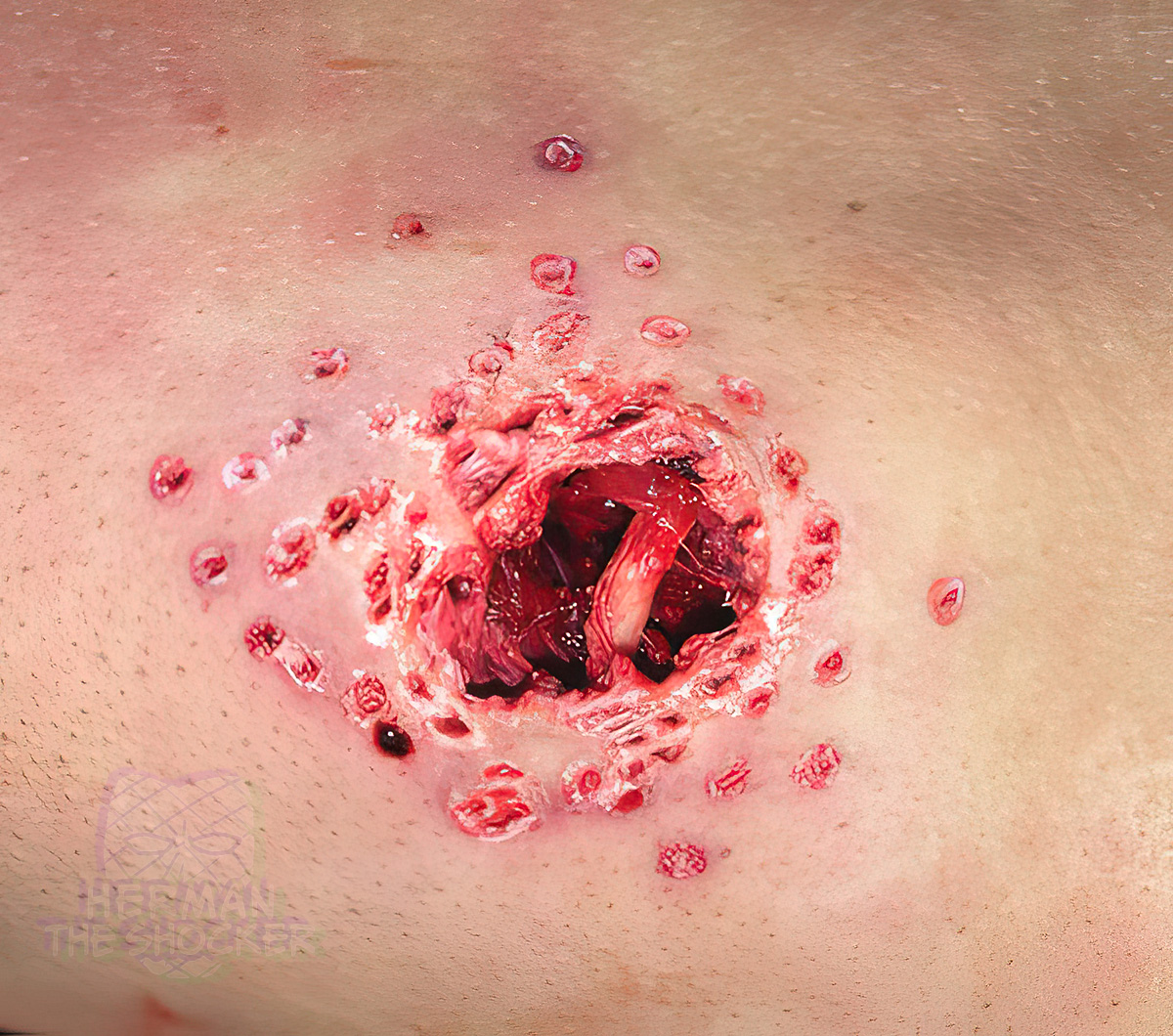 Fig6.1 Shotgun shell characteristic individual satellite injuries Shotgun shells contain multiple small "BBs," called shot. As the shot comes out of the barrel of the gun, it stays together for several feet, and then starts to separate. As individual shot break up and hit the skin, characteristic individual satellite shot injuries can be seen around the main hole. Shotguns differ from rifles and handguns in construction, ammunition, ballistics, and use. Rifles and handguns fire a single projectile down a rifled barrel. Shotguns have a smooth bore. Although they can fire a single projectile, they are usually employed to fire multiple pellets. Rifled shotgun barrels, intended for use with slugs, are available. Shotguns may be autoloaders, pump (slide action), over/under, side-by-side, bolt action, or single shot. Some shotguns usually intended for military and/or police use convert from semiautomatic to pump action and back as the user desires. - Case 7 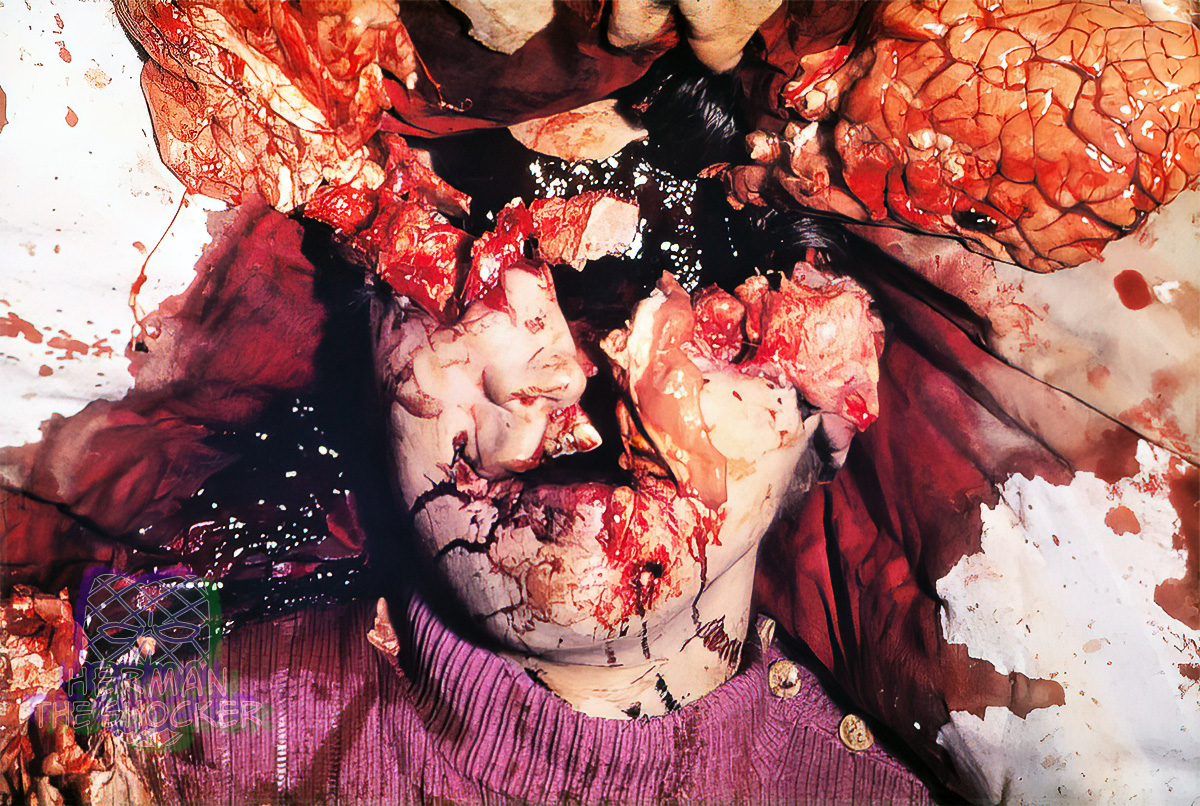 Fig7.1 Krönlein shot, complete evisceration of the brain Krönlein shot indicates a prolapse of an intact brain hemisphere or, more rarely, of both brain hemispheres in high-velocity missile injuries to the brain during close-range shooting. In cases of Krönlein shot, a gunshot wound to the skull with a high-velocity bullet, the skull is shattered by the temporary wound cavity and there is a complete evisceration of the brain. In the case of a high-powered firearm, the amount of gas generated by the blast is so large that a shot fired with the weapon in contact with the head causes extensive destruction. Discharge of a high-powered firearm into the mouth is associated with tremendous overexpansion of the soft tissues of the head and massive fractures of the skull. This causes vertical tears of the skin in front of the ears and along the creases on either side of the mouth and nose, as well as the inner angles of the eyes. In 1899, Rudolf Ulrich Krönlein, who was a Swiss surgeon, described evisceration of brain in a high-velocity gunshot wound to the head. - Case 8 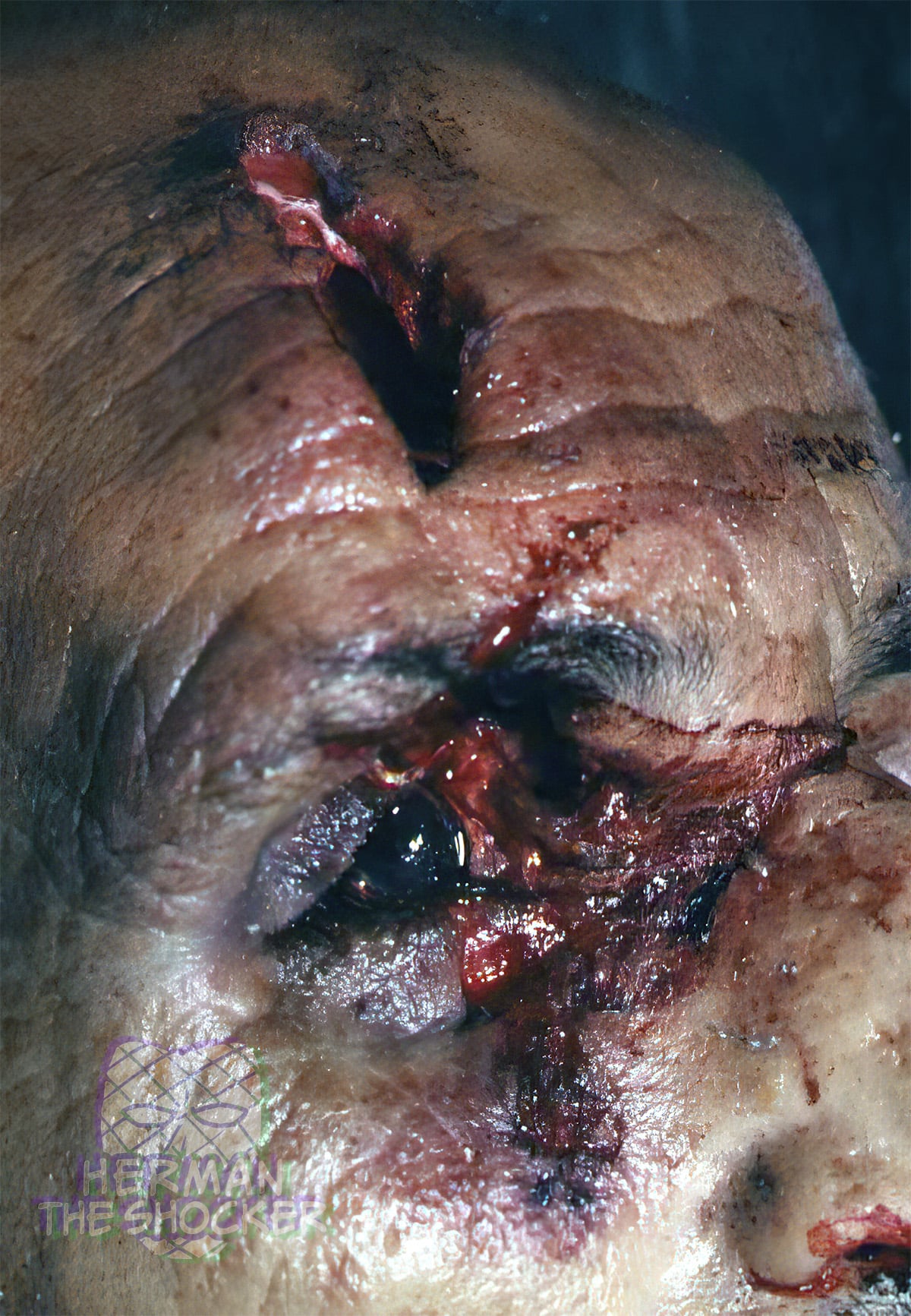 Fig8.1 Typical stellate shaped entry wound showing tattooing effect In contact gunshot wounds with bony tissue underlying the injury, the injuries are typically called a stellate wound, where the gases exit the barrel before the projectile. As a result, the gas collides with the bone tissue, resulting in the reflection of the gases. This gas causes the expansion of subcutaneous space and pressure, which results in an explosive injury, tearing, and lacerating the skin and subcutaneous tissue, resulting in the stellate wound. Additionally, the expanding gases also cause a back-splatter of soft-tissue and blood onto the firearm and fingers. ‘Tattooing’ is pathognomonic for an intermediate range gunshot wound. Tattooing is a term used to describe the punctate abrasions observed when epithelial tissue comes into contact with partially burned or unburned grains of gunpowder. These punctate abrasions cannot be wiped away and will remain visible on the skin for several days. Clothing, hair or other intermediate barriers may prevent the powder grains from making contact with the skin. - This post is for educational purposes only and is nonprofit. Under Section 107 of the US Copyright Act of 1976; Allowance is made for "Fair Use" for purposes such as criticism, comment, news reporting, teaching, scholarship, and research. OP is not a medical expert. No copyright infringement intended. This post does not encourage or glorify violence/harassment. Images might have been upscaled and enhanced. Text might have been shortened and simplified/reorganized for online view. |
|
#2
●
10-20-2021, 04:51 PM
|
 ♚ Legacy Gold Member ♚ Poster Rank:3124 M Join Date: Feb 2014 Posts: 123 123Posts 462Thanked 44Quoted 1Mentioned 0Contrib. |
|
Re: The Shocker's Mix 11
Very interesting as always, thanks a bunch. Really wonder what happened to the guy from case 3...  |
|
#3
●
10-20-2021, 06:56 PM
|
 My Rank: LANCE CORPORAL Poster Rank:2749 Female Join Date: Aug 2021 Posts: 150 150Posts 289Thanked 81Quoted 1Mentioned 0Contrib. |
|
Re: The Shocker's Mix 11
I learn more here than I ever did in biology class. Thank you
|
|
#4
●
10-20-2021, 08:07 PM
|
 ★ Legacy Member ★ Poster Rank:252 So many choices now Join Date: Jul 2015 Posts: 5,542 5,542Posts 19,786Thanked 2,120Quoted 15Mentioned 0Contrib. |
|
Re: The Shocker's Mix 11
Great selection as usual, Herman. Aside from your Marvel Comics alter ego, what is it that you actually do for a living, if ya don't mind my asking?  |
|
#6
●
10-21-2021, 06:49 AM
|
 My Rank: MAJOR Poster Rank:170 Gender Bender Join Date: Nov 2008 Posts: 9,321
Contributions: 2
9,321Posts 6,805Thanked 5,942Quoted 61Mentioned 2Contrib. |
|
Re: The Shocker's Mix 11
Suicide by burning - I have a distant relative who locked herself in the bathroom and set herself on fire in NZ. She died. Happened in the 90s I think  |
|
#8
●
10-21-2021, 09:35 AM
|
 ♚ Legacy Gold Member ♚ Poster Rank:199 Female Join Date: Nov 2009 Posts: 7,749 7,749Posts 11,993Thanked 709Quoted 5Mentioned 0Contrib. |
|
Re: The Shocker's Mix 11
Oops. Double post. Please delete. We used to be able to delete ourselves. |
|
#10
●
10-21-2021, 01:17 PM
|
| ★ Legacy Member ★ Poster Rank:252 So many choices now Join Date: Jul 2015 Posts: 5,542 5,542Posts 19,786Thanked 2,120Quoted 15Mentioned 0Contrib. |
|
Re: The Shocker's Mix 11
You're extremely good at it judging by your work here, but I think you missed your calling as a Medical Examiner.  |