JavaScript and Cookies are required to view this site. Please enable both in your browser settings.
The Place Where The Dead Live With The Living - Section 5

The Place Where The Dead Live With The Living 

Current Rating:

Unlimited Views No Ads No Algorithms Lifetime Account

Documenting Reality

Community Forum · Est. 2006

Join Now
Thread Tools
  #41  
04-01-2020, 07:21 PM
K53's Avatar
K53
Offline:
My Rank: MAJOR
Poster Rank:166
Join Date: Jul 2015
Posts: 9,310
 
Mentioned: 5 Post(s)
Quoted: 1583 Post(s)
Activity Longevity
2/20 11/20
Today Posts
1/11 sssss9310
Re: The Place Where The Dead Live With The Living

Would be a fantastic Halloween display
This User Says Thank You For This Post:
gimlet
▼ PROMO FROM DOCUMENTING REALITY
No surprises here
Join Now
Hidden for upgraded members.
  #42  
04-01-2020, 07:44 PM
Budd Dwyer's Avatar
Budd Dwyer
Offline:
My Rank: CAPTAIN
Poster Rank:208
Boob enthusiast
Join Date: Jul 2017
Posts: 7,249
 
Mentioned: 8 Post(s)
Quoted: 2713 Post(s)
Activity Longevity
0/20 9/20
Today Posts
0/11 sssss7249
Re: The Place Where The Dead Live With The Living

As much as i'm horrified, i can say this is the best thread/material i've ever seen in it's category.
Absolutely mind-blowing.
This User Says Thank You For This Post:
fauni45
  #43  
04-02-2020, 08:18 AM
Lyndsay's Avatar
Lyndsay
Offline:
★ Legacy Member ★
Poster Rank:569
Female last I looked
Join Date: May 2015
Posts: 1,700
 
Mentioned: 14 Post(s)
Quoted: 831 Post(s)
Activity Longevity
1/20 12/20
Today Posts
0/11 sssss1700
Re: The Place Where The Dead Live With The Living

According to Wiki bc I don’t feel like looking anywhere else right now:

In Toraja society, the funeral ritual is the most elaborate and expensive event. The richer and more powerful the individual, the more expensive is the funeral. In the aluk religion, only nobles have the right to have an extensive death feast.[26] The death feast of a nobleman is usually attended by thousands and lasts for several days. A ceremonial site, called rante, is usually prepared in a large, grassy field where shelters for audiences, rice barns, and other ceremonial funeral structures are specially made by the deceased's family. Flute music, funeral chants, songs and poems, and crying and wailing are traditional Toraja expressions of grief with the exceptions of funerals for young children, and poor, low-status adults.[27]

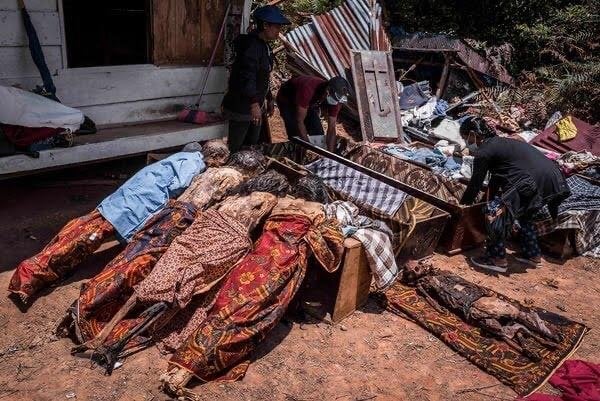
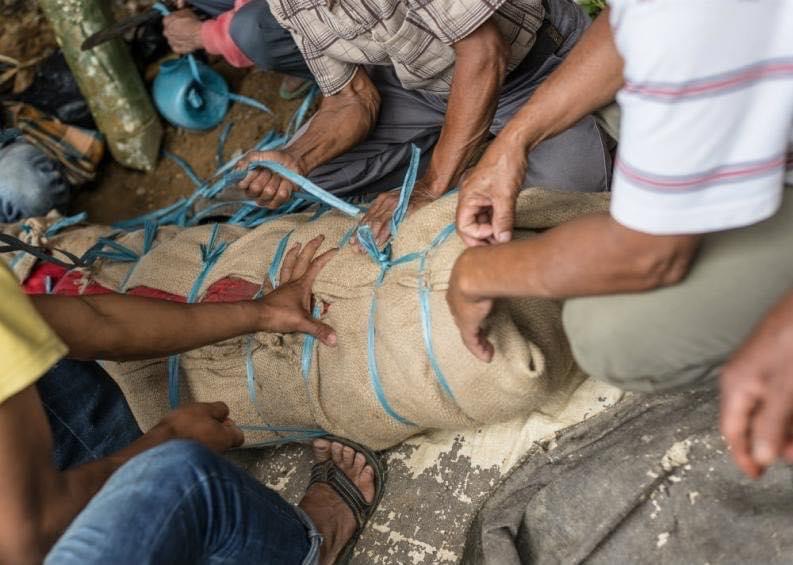
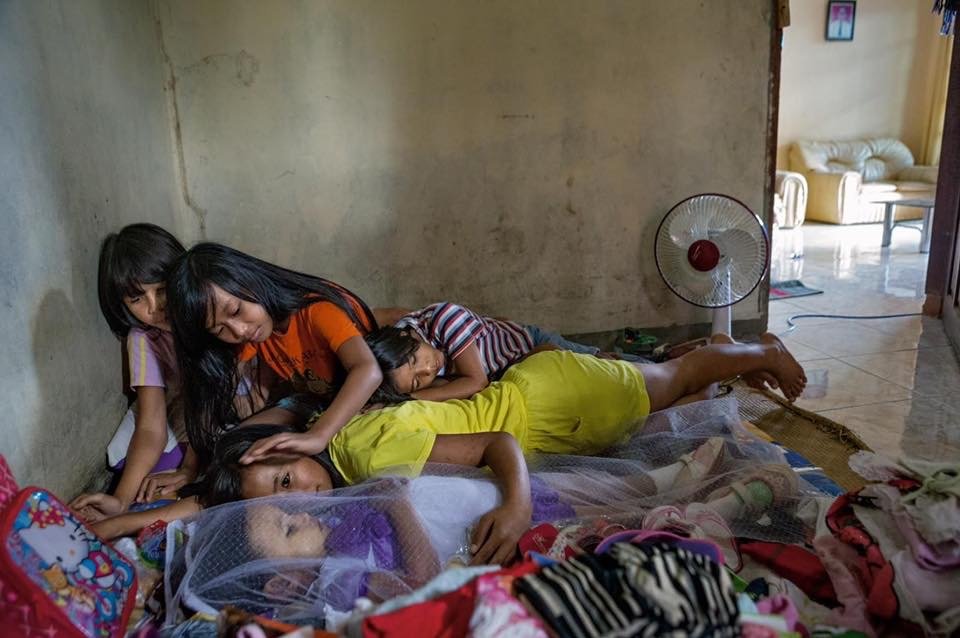
The ceremony is often held weeks, months, or years after the death so that the deceased's family can raise the significant funds needed to cover funeral expenses.[28] Torajans traditionally believe that death is not a sudden, abrupt event, but a gradual process toward Puya (the land of souls, or afterlife). During the waiting period, the body of the deceased is wrapped in several layers of cloth and kept under the tongkonan. The soul of the deceased is thought to linger around the village until the funeral ceremony is completed, after which it begins its journey to Puya.
Another component of the ritual is the slaughter of water buffalo. The more powerful the person who died, the more buffalo are slaughtered at the death feast. Buffalo carcasses, including their heads, are usually lined up on a field waiting for their owner, who is in the "sleeping stage". Torajans believe that the deceased will need the buffalo to make the journey and that they will be quicker to arrive at Puya if they have many buffalo. Slaughtering tens of water buffalo and hundreds of pigs using a machete is the climax of the elaborate death feast, with dancing and music and young boys who catch spurting blood in long bamboo tubes. Some of the slaughtered animals are given by guests as "gifts", which are carefully noted because they will be considered debts of the deceased's family.[30] However, a cockfight, known as bulangan londong, is an integral part of the ceremony. As with the sacrifice of the buffalo and the pigs, the cockfight is considered sacred because it involves the spilling of blood on the earth. In particular, the tradition requires the sacrifice of at least three chickens. However, it is common for at least 25 pairs of chickens to be set against each other in the context of the ceremony.

From another site:
However, unlike those from the hit TV series and despite viral rumors to the contrary, these corpses do stay dead. Located in the mountainous island of South Sulawesi, deep in the heart of the lush jungles of eastern Indonesia, Tana Toraja is known as the “Land of the Heavenly Kings.” There, Torajans are renowned worldwide for their beautiful tropical climate, harvesting delicious arabica coffee and cocoa beans…and their bizarre funerary rites.

The people of Toraja adhere to cultural guidelines that see their lives constantly revolving around death. Following in the traditions of their ancestors, funerals supersede in both expense and extravagance their marriages, birthdays, and—in a way—are ongoing year-round holidays.

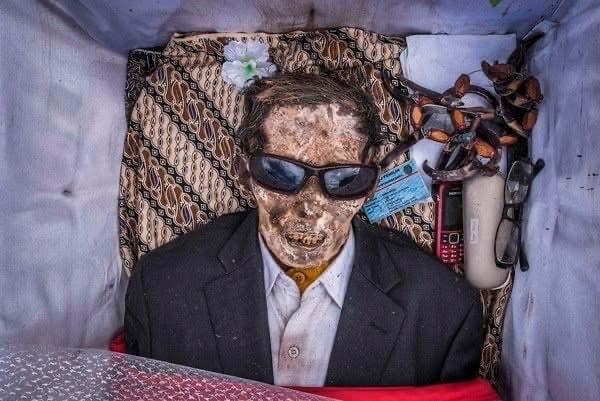
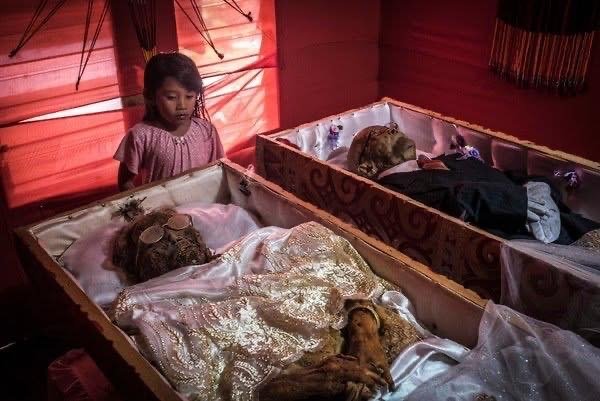
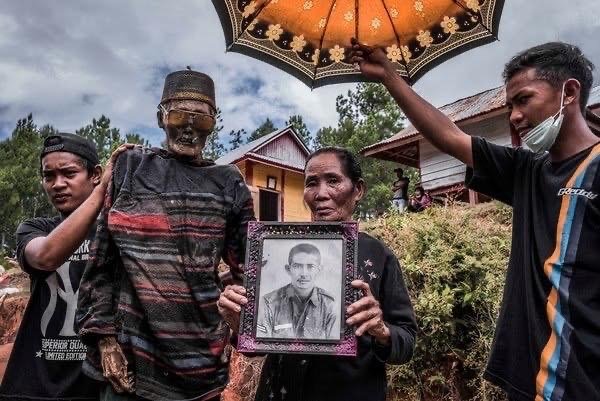
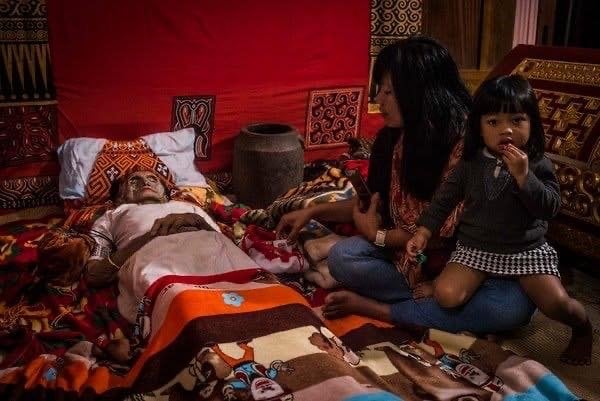
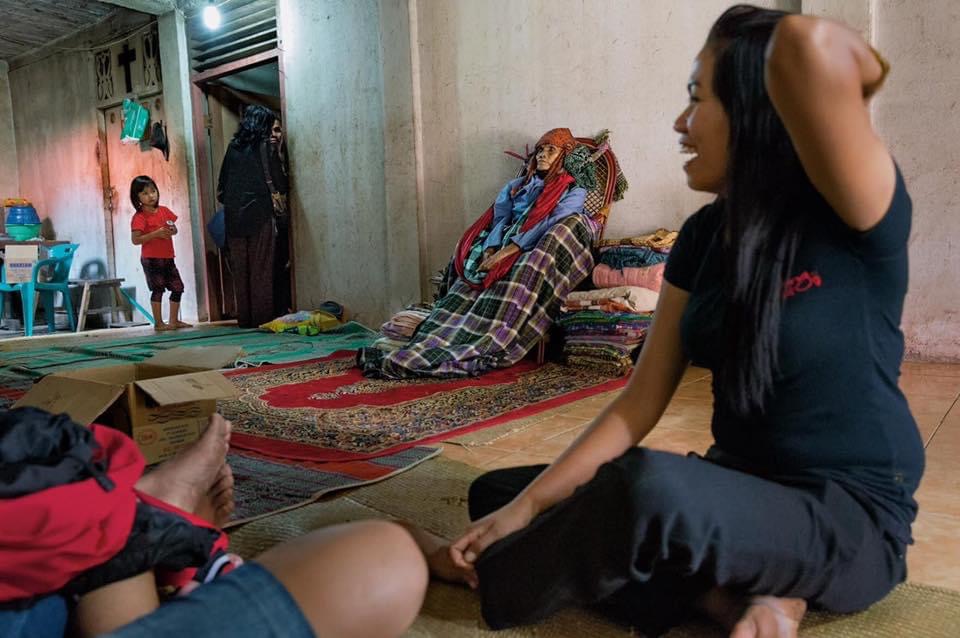
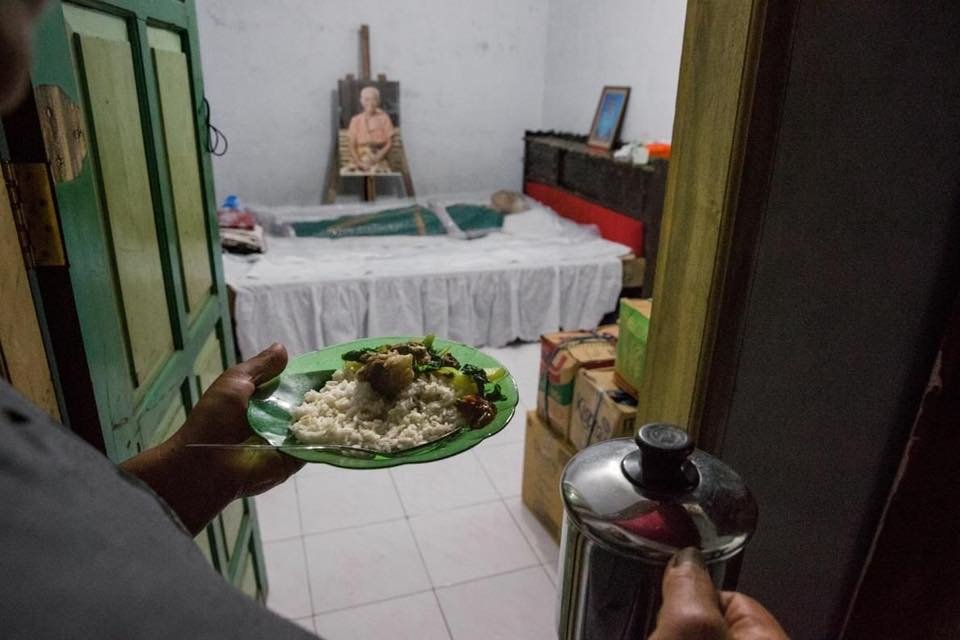
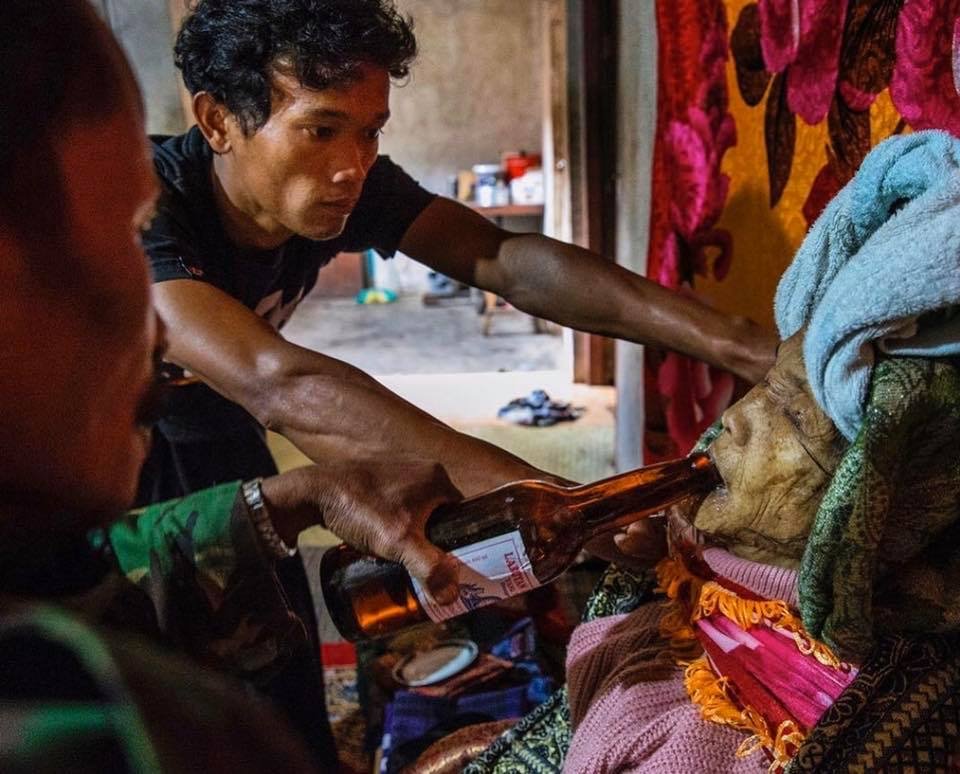
The Torajans see death not as an event to be mourned, but as a celebrated transition to their ancestral resting place, Puya. In fact, Torajans do not even view members of their community as being dead until their public funeral has been completed. Prior to this ceremony, once an individual’s sunga, or biological life, has ended, their body is mummified and kept in a special room within the tongkonan, the traditional Torajan home. There, the family continues to speak and interact with the decaying body, including symbolically feeding and caring for it.
During this time, the deceased is considered to be to makala or to mama, sick or asleep. The funeral service, aluk to mate, can occur years after death as the family saves money for the funeral, sometimes even at the expense of living in poverty.

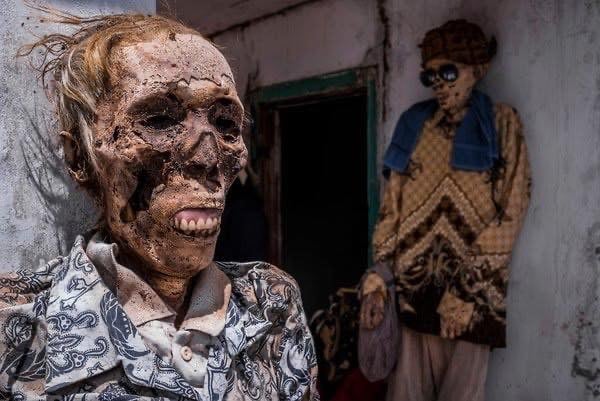
One of the most important aspects of the funeral is a painted bamboo or wooden effigy made in the exact likeness of the deceased, called a tau tau, which Torajans believe hosts part of the soul. The tau tau is carried alongside the body through the village in a colorful parade procession that can be upwards of a mile long and last for hours. *see pic of tau tau dolls*
All members of the community, up to thousands of people, may attend these joyous multi-day or even multi-week events. Rituals for those in attendance include joining hands in prayer, dancing and singing songs to celebrate the life of the deceased, and animal sacrifices—the meat of which is divided among the mourners. The most important sacrifice made during this ceremony is of the water buffalo, which the Torajan people believe transports the soul of the departed to the afterlife.

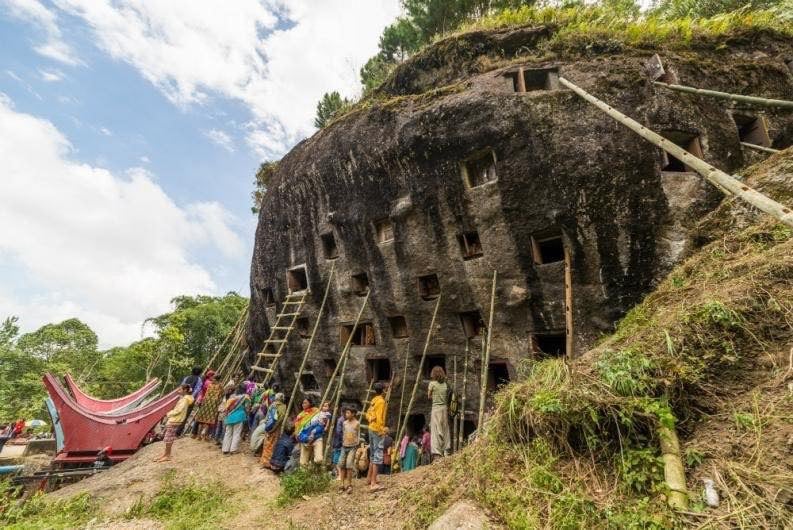
After the funeral has been completed, the body is rather interred within a mausoleum, a tomb built into the face of limestone cliff walls, carved into mammoth rocks, inside of a hollowed-out tree, or hanged from a mountain in a bamboo frame. Wherever it may be, the tau tau stands as a silent sentinel, watching over the final resting place and family of its subject. In exchange for its service, gifts, such as beer, candy, and money, are regularly left with the tau tau.

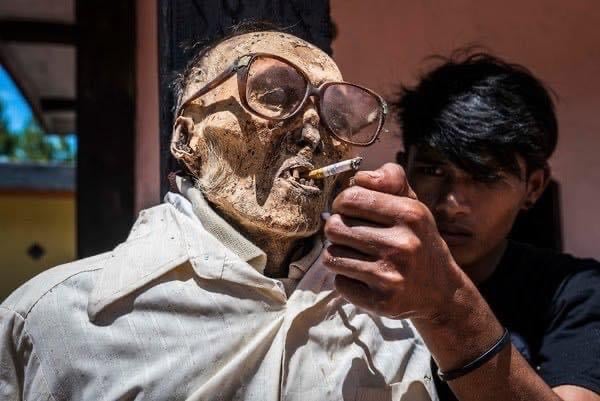
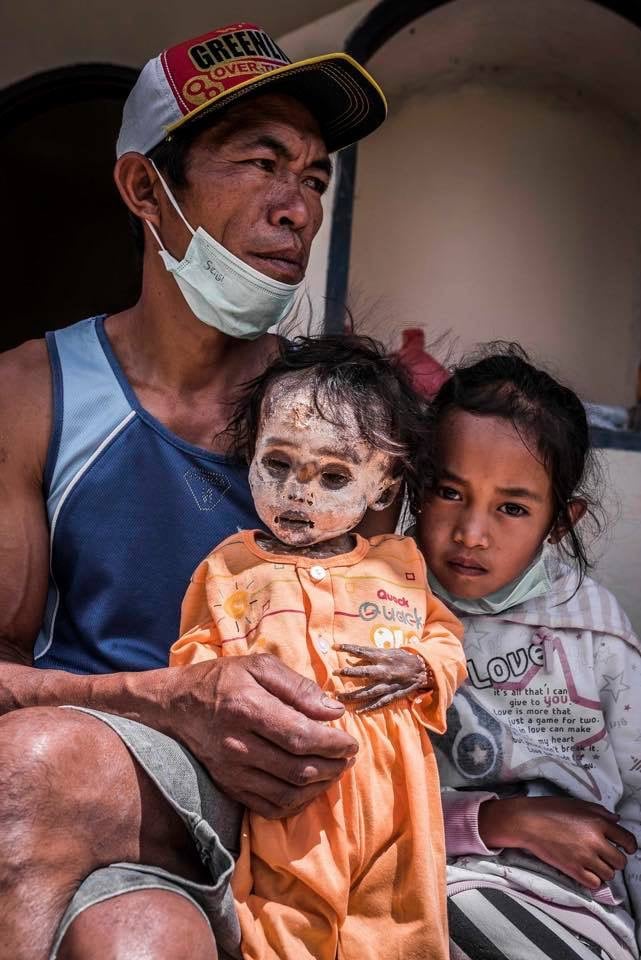
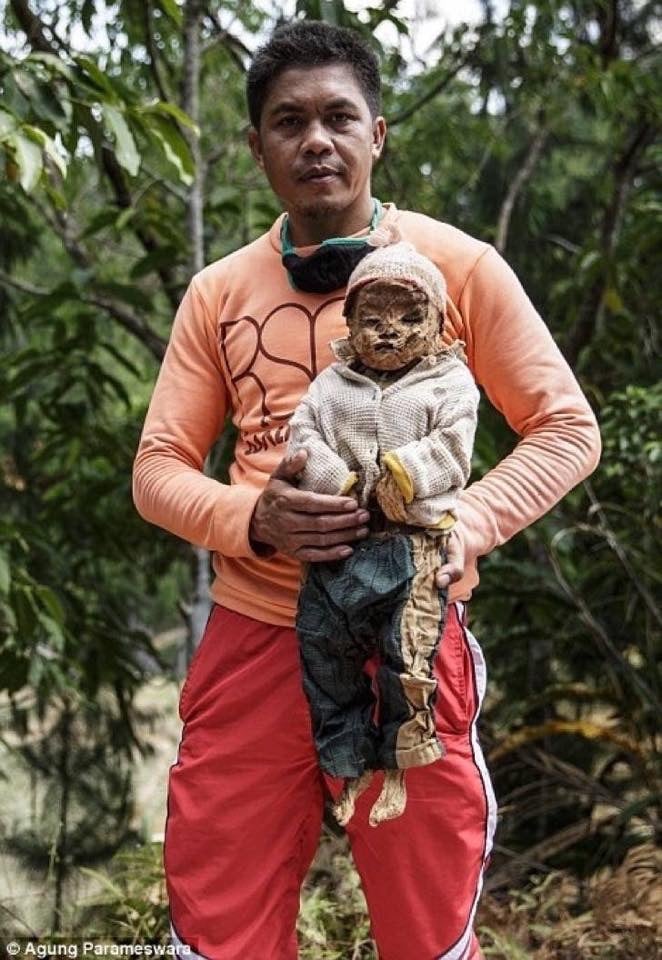
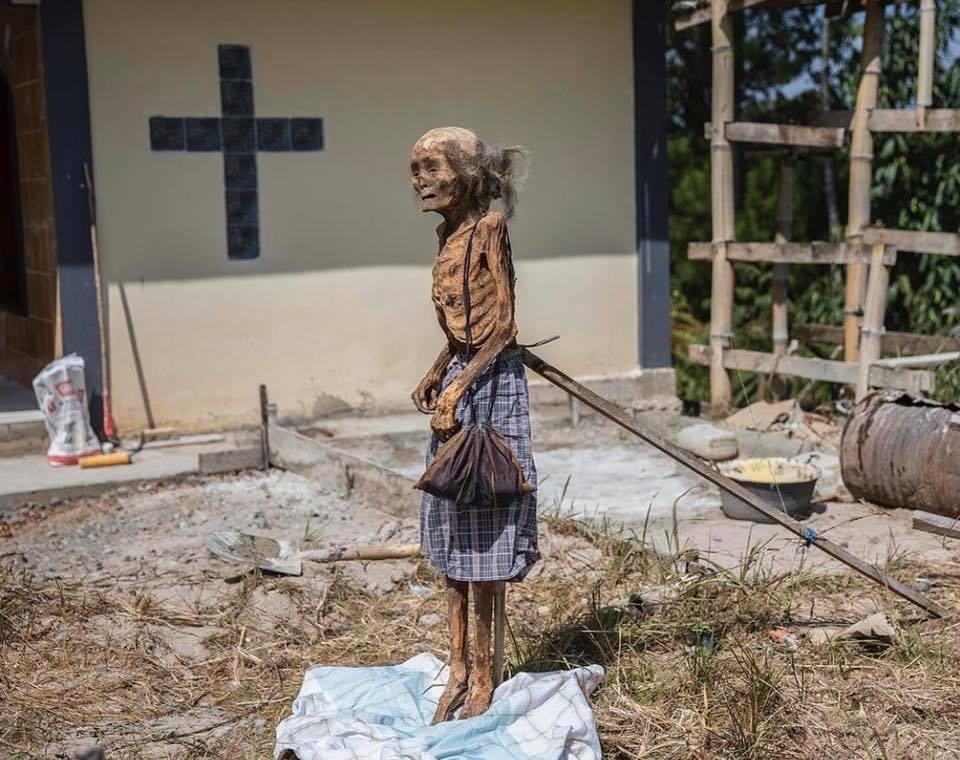
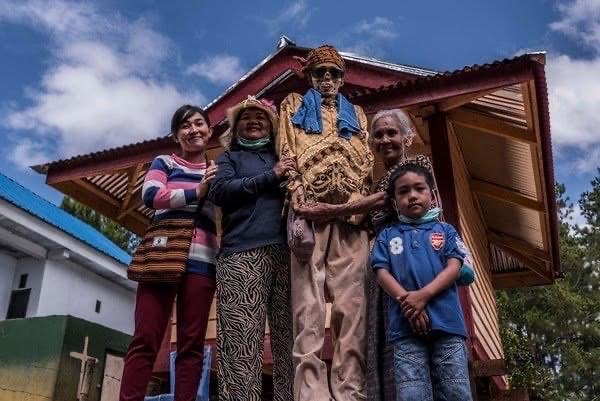
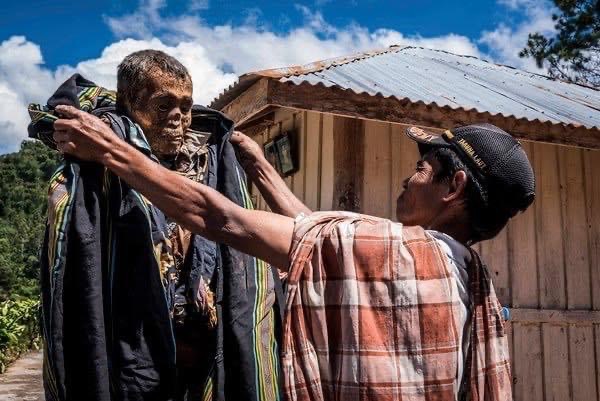
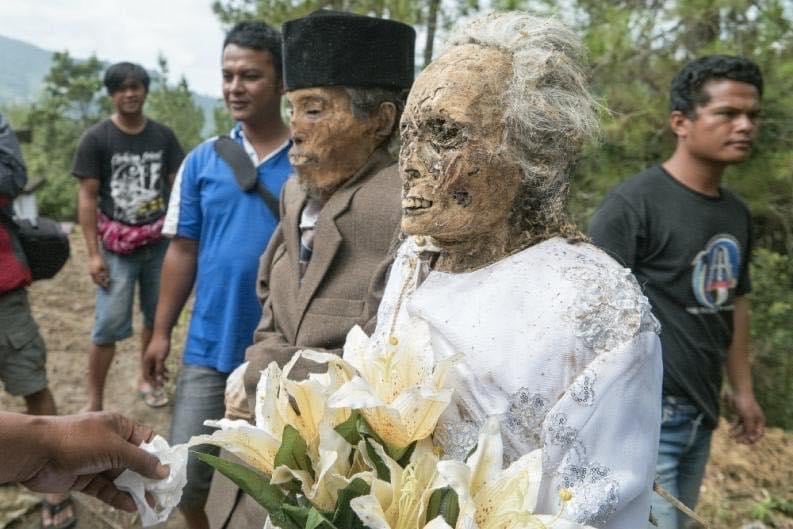
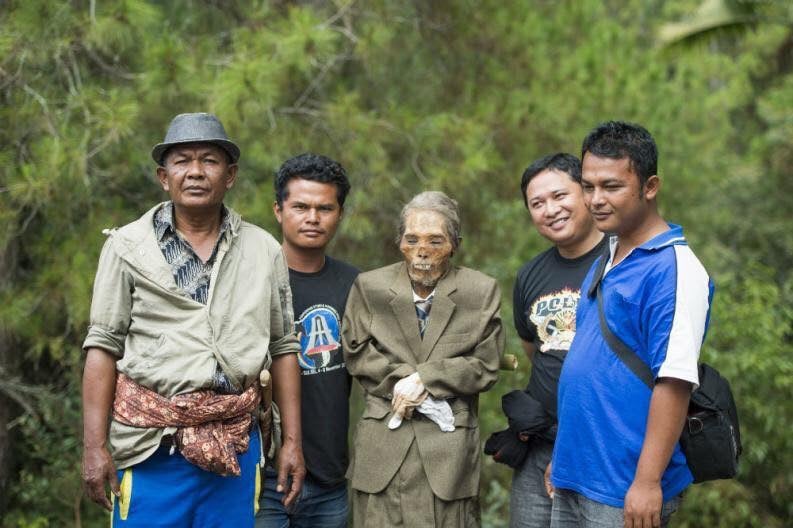
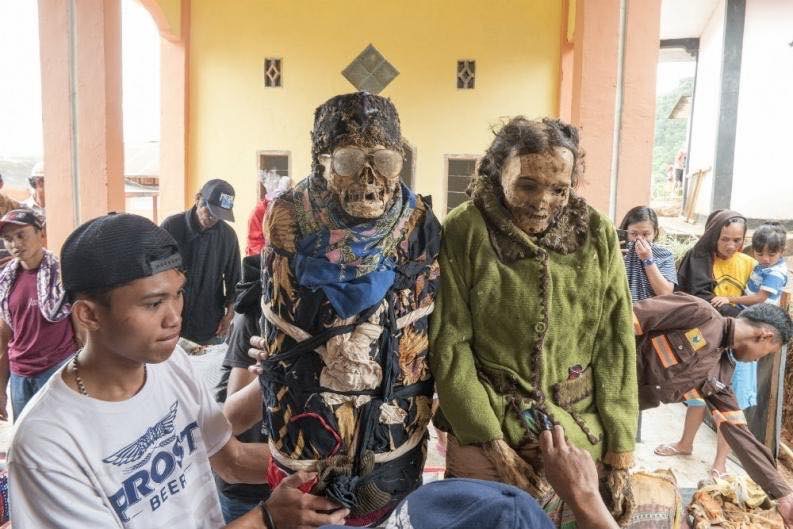
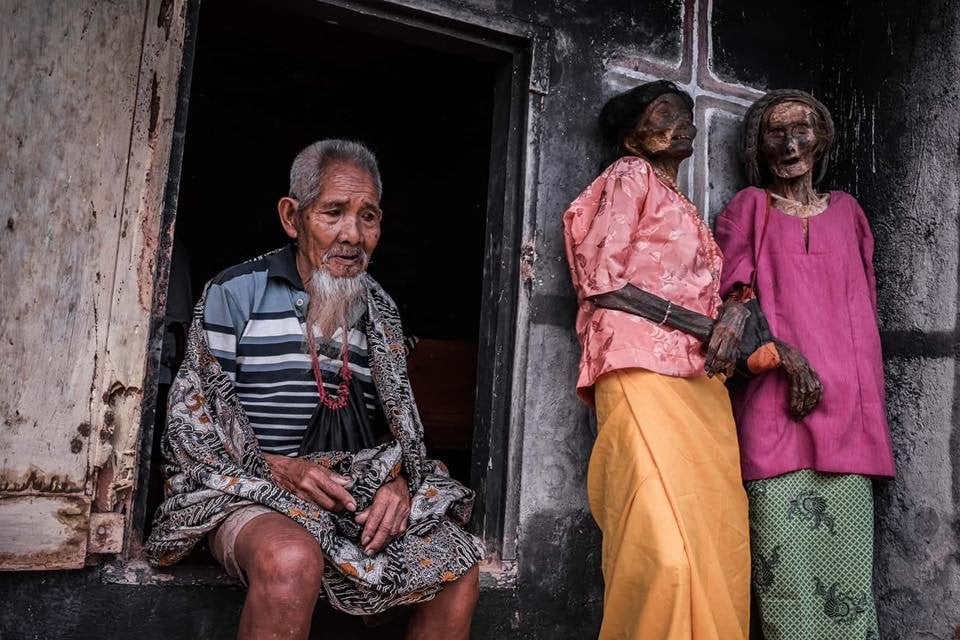
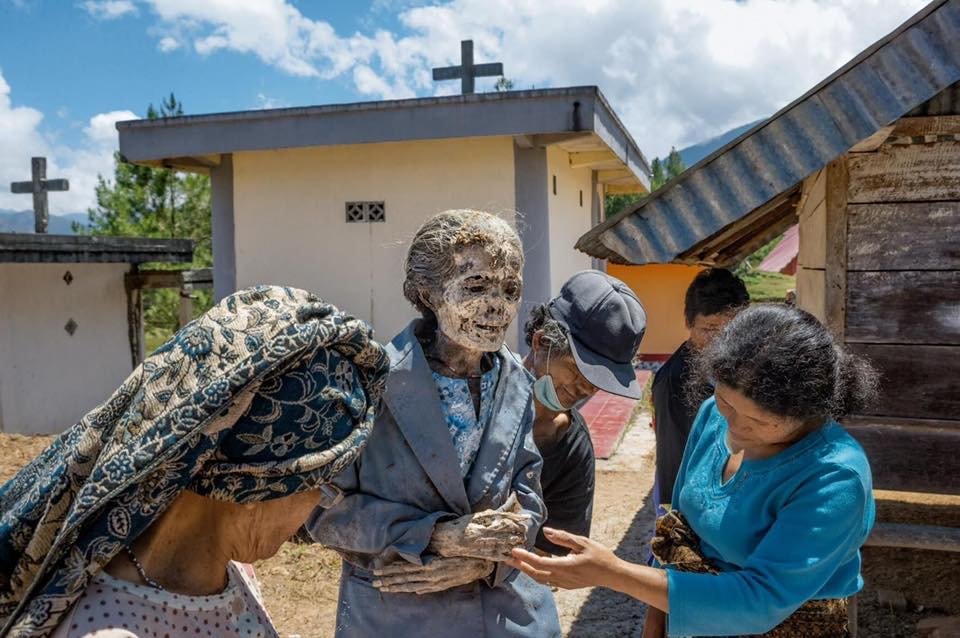
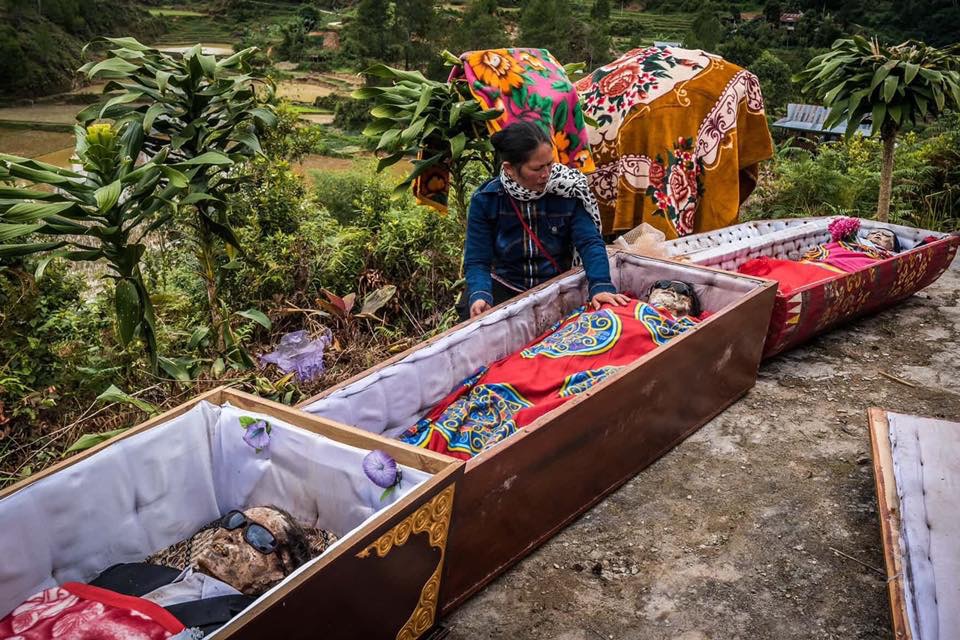
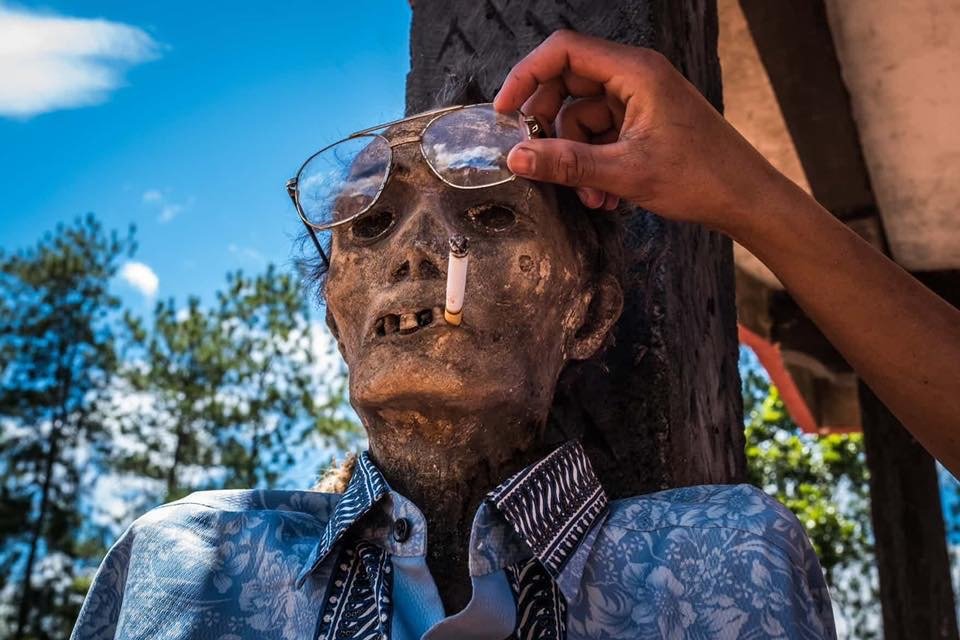
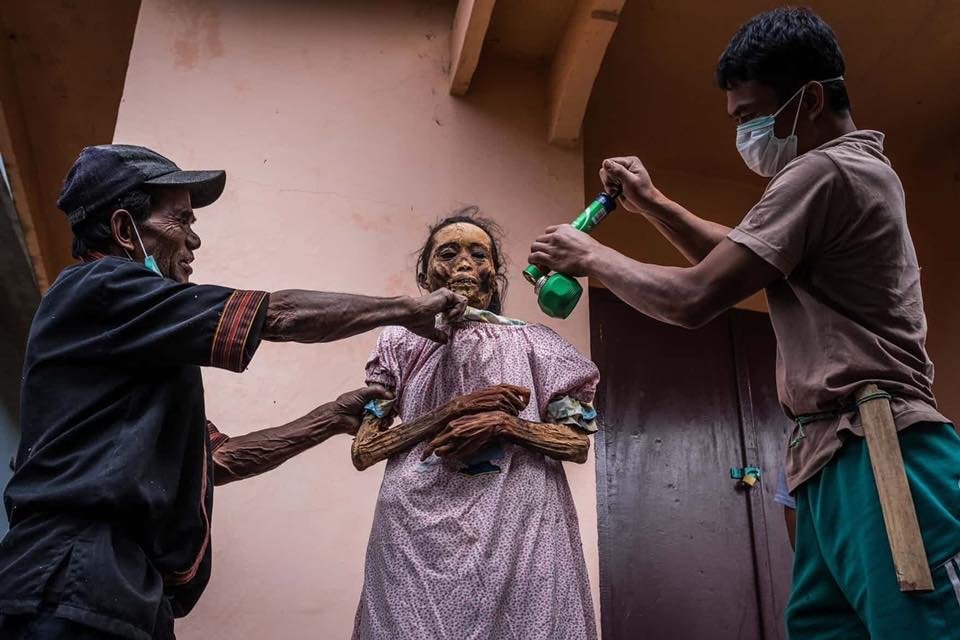
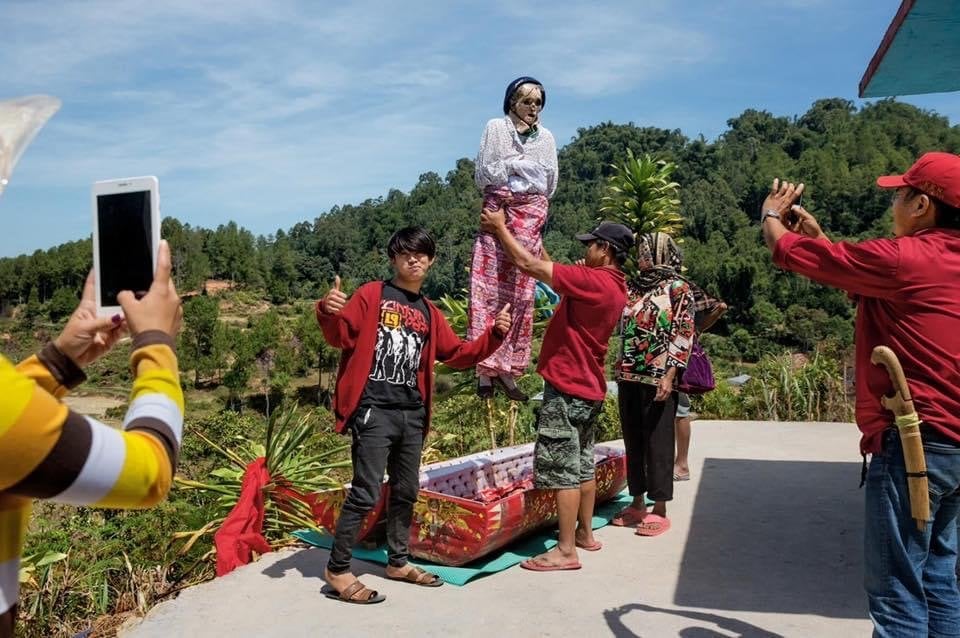
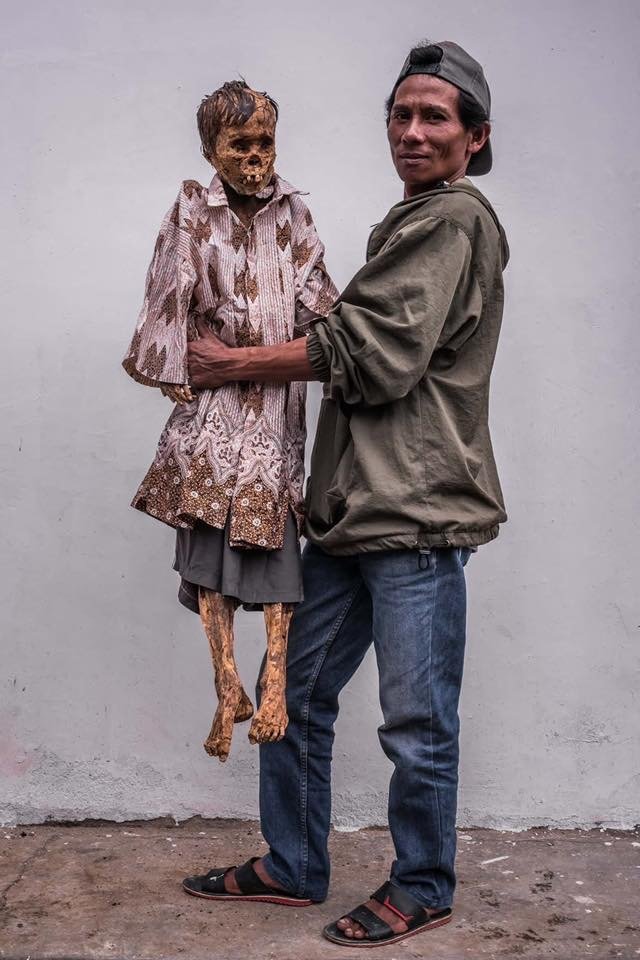
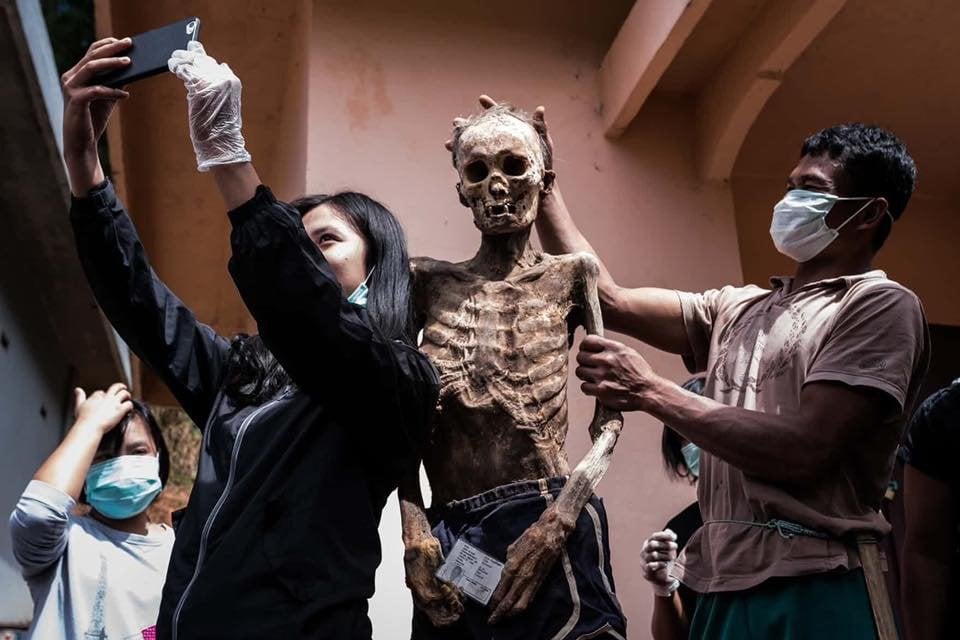
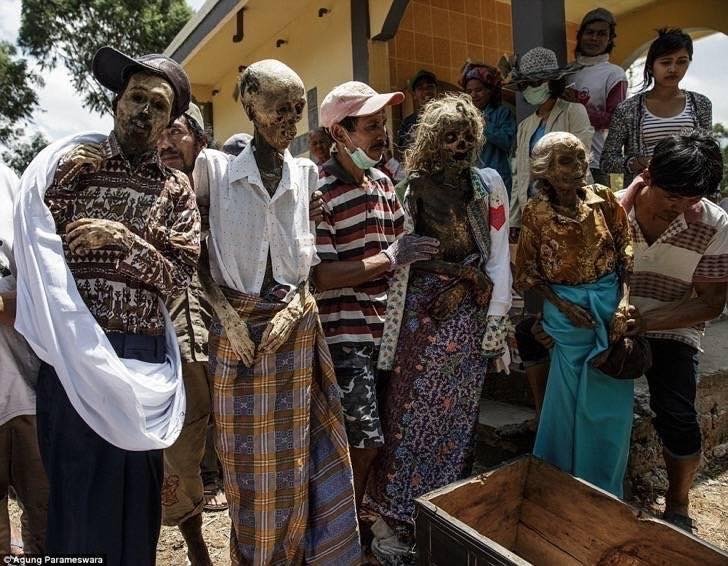
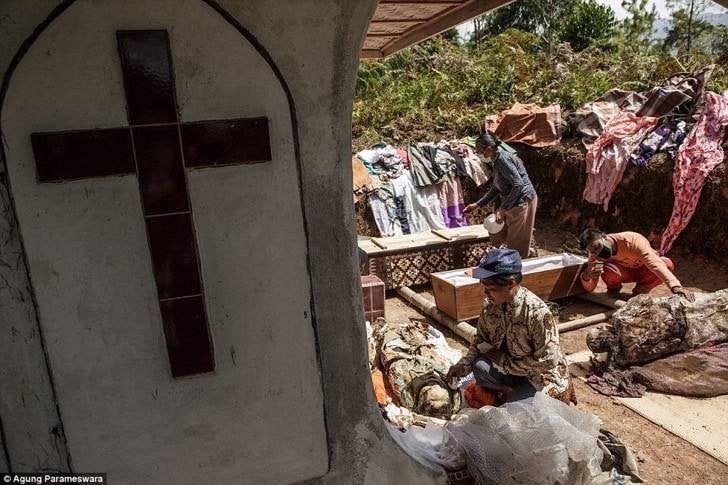
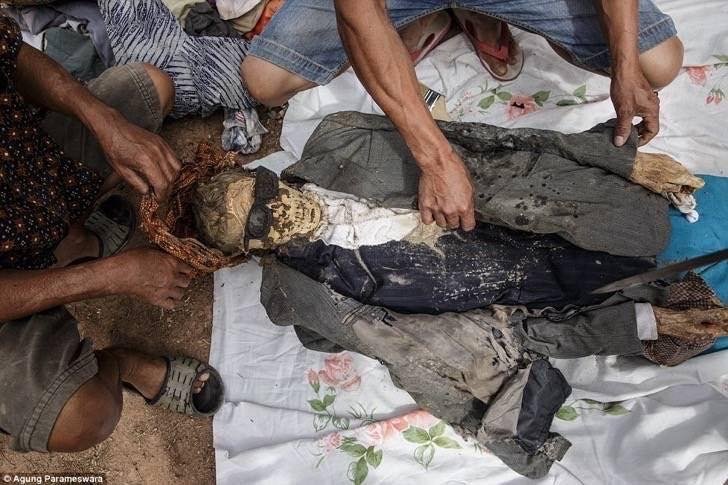
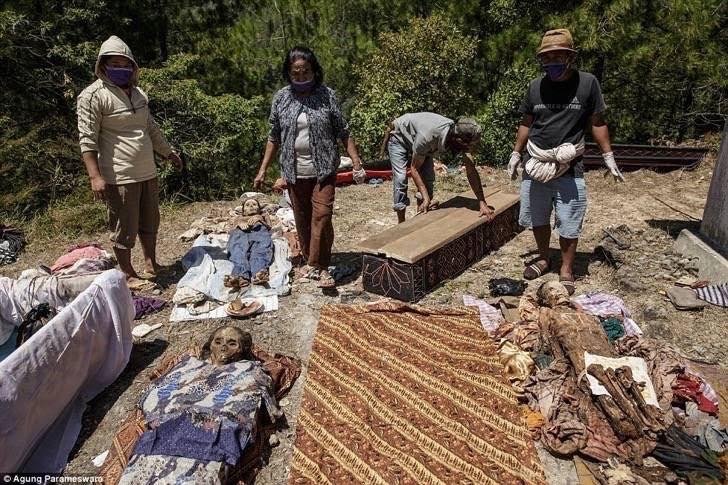
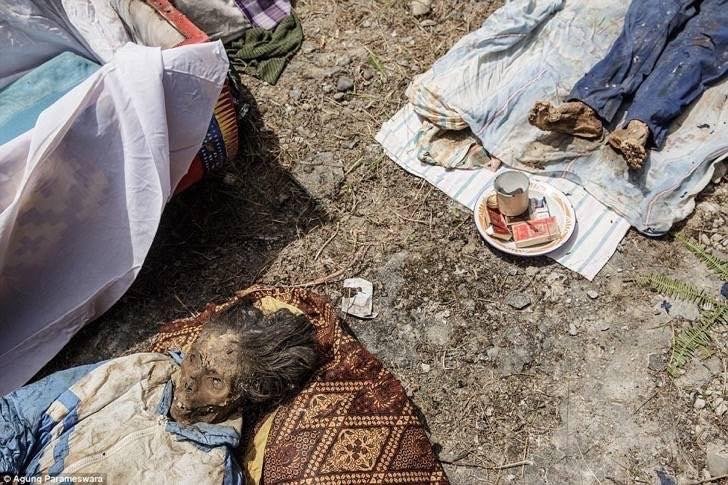
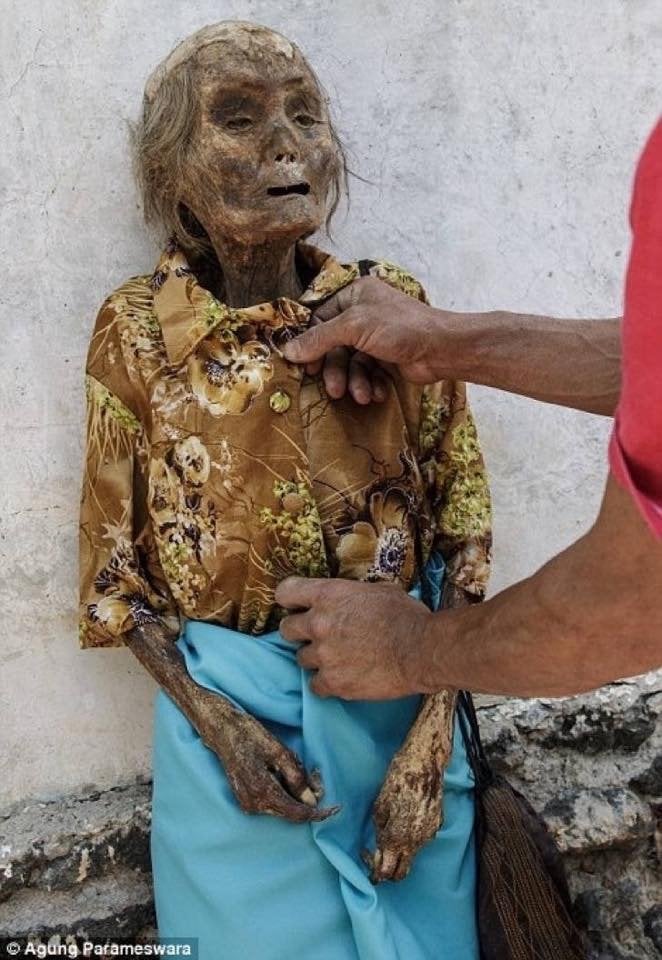
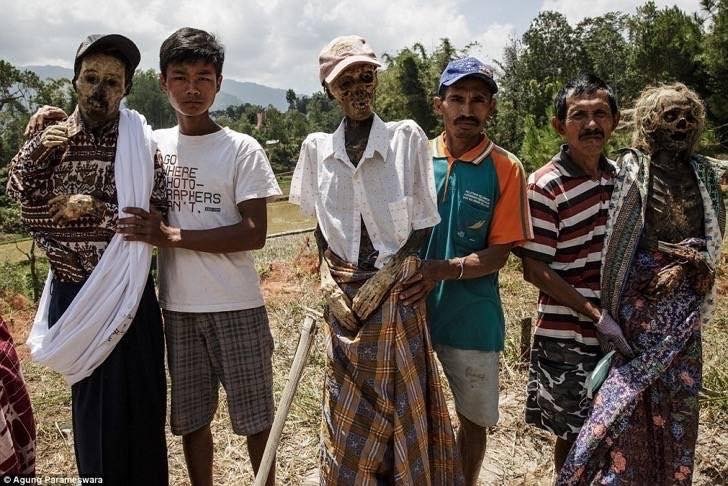
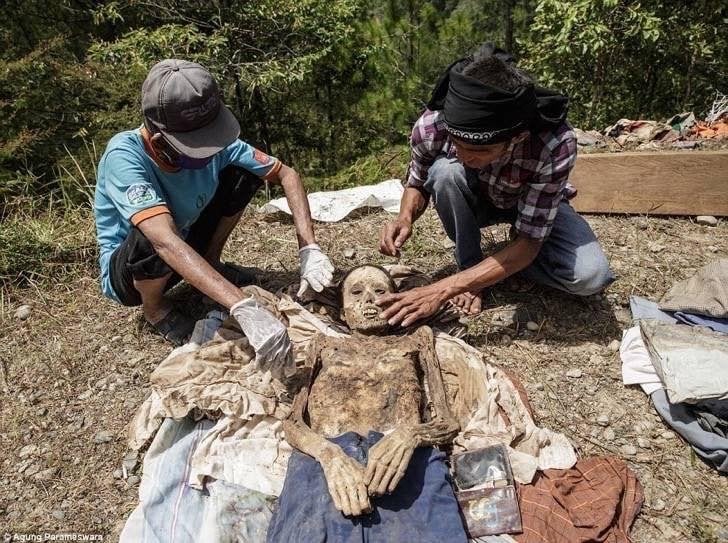
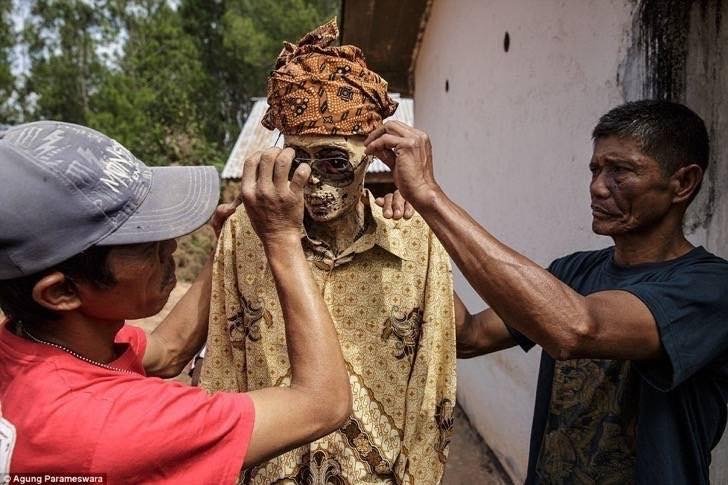
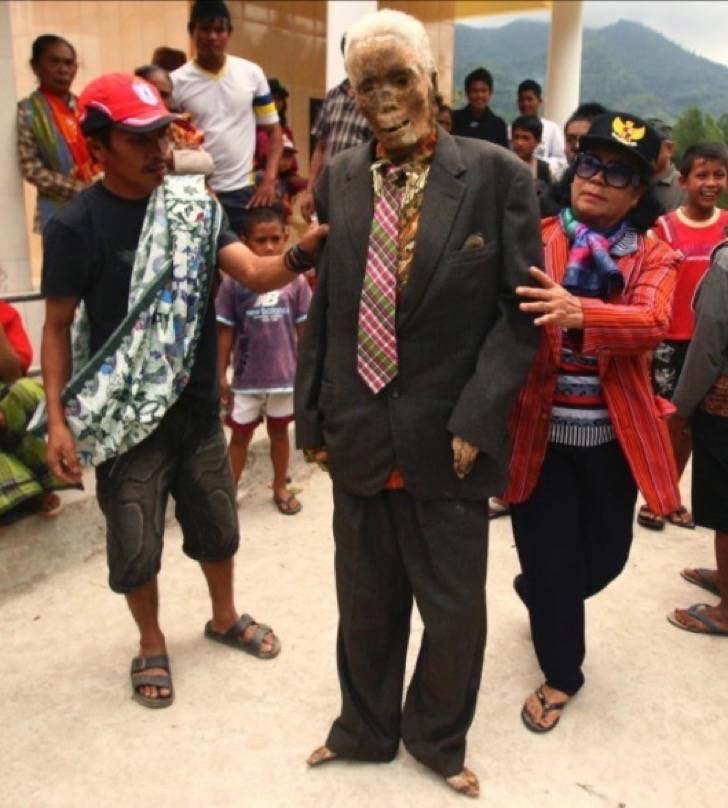
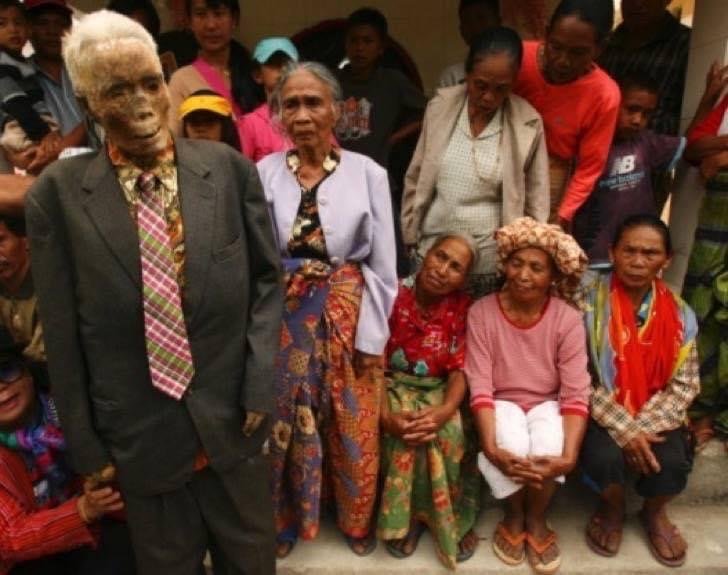
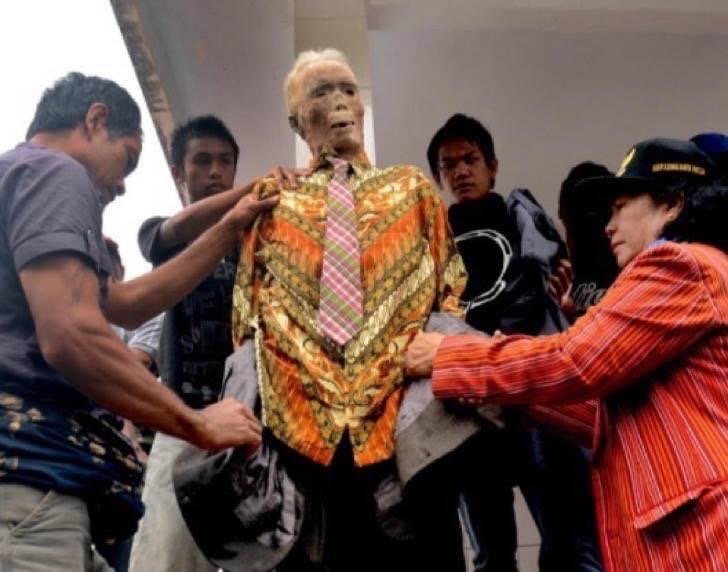
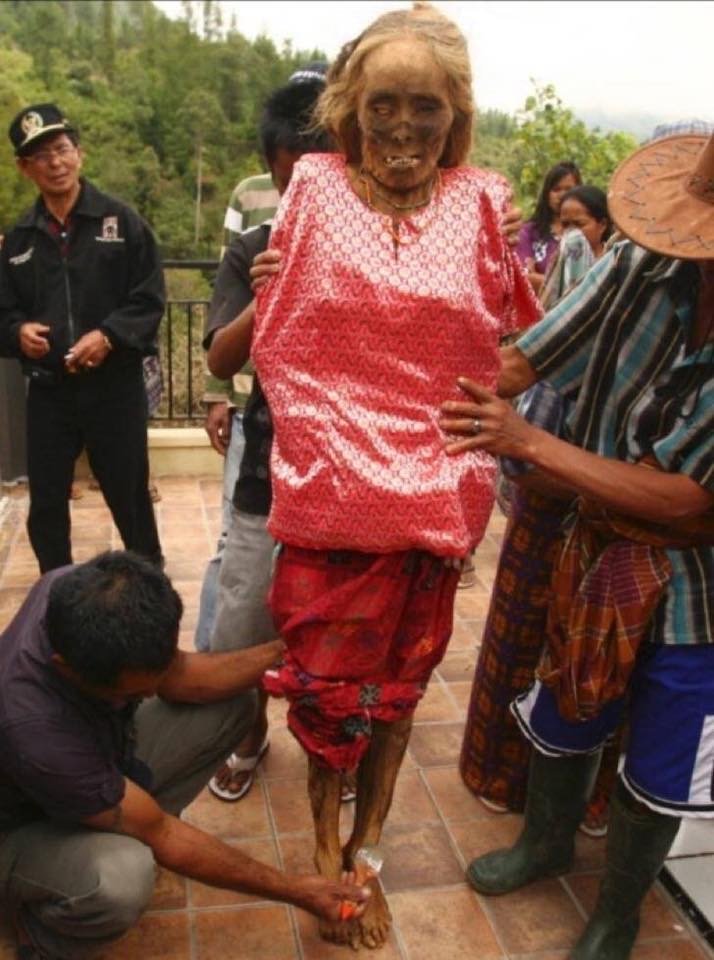
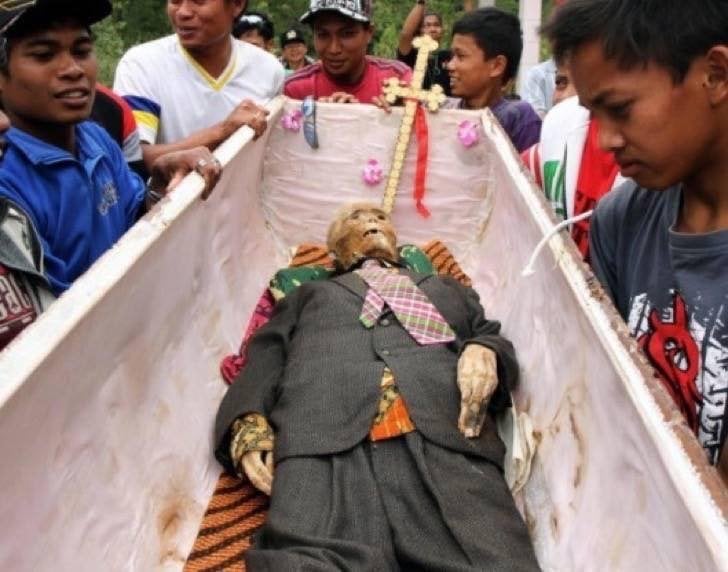
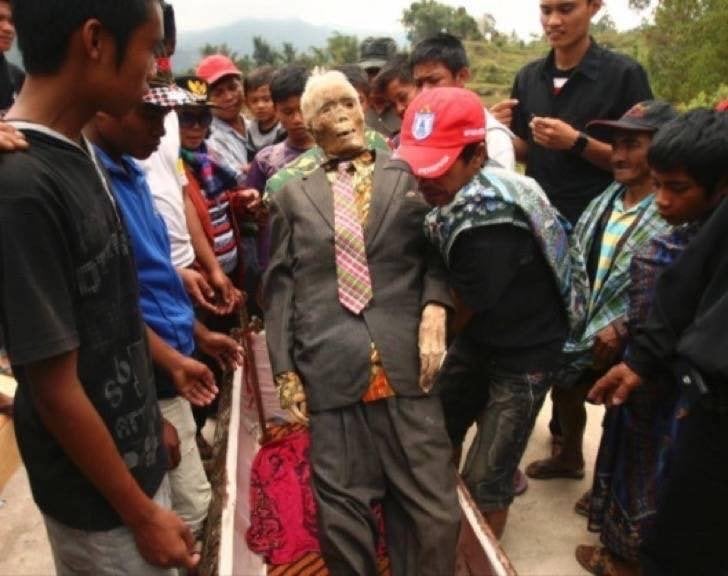
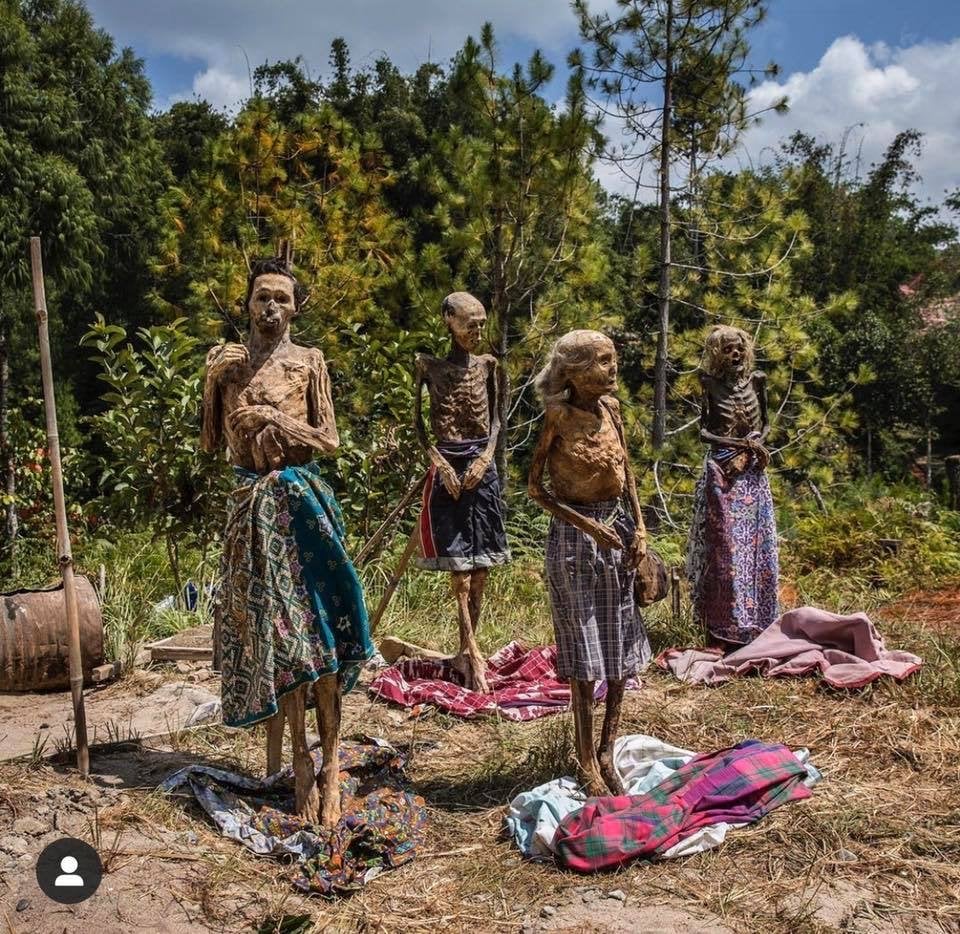
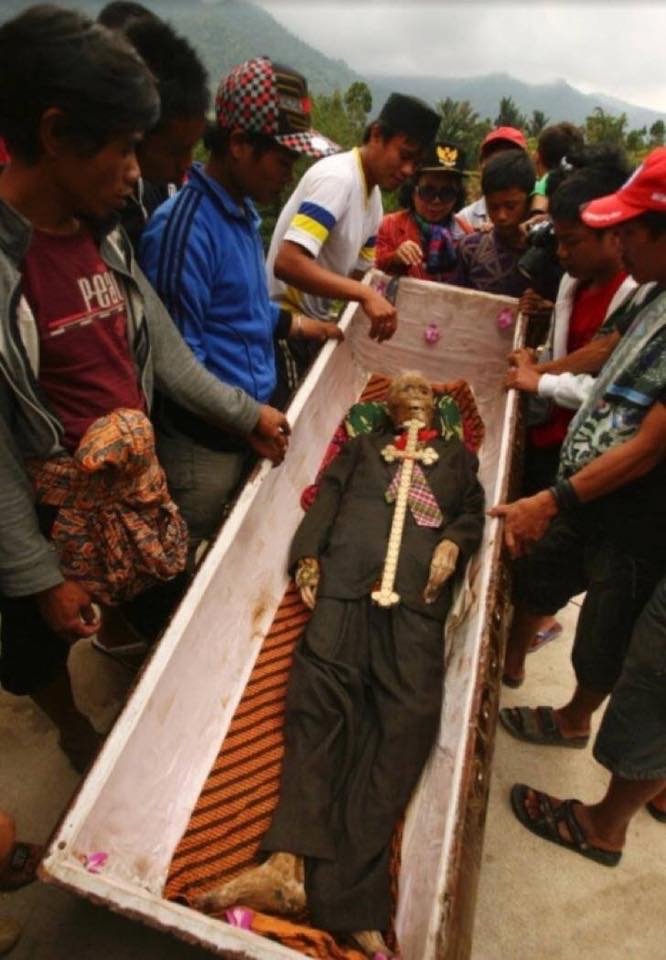
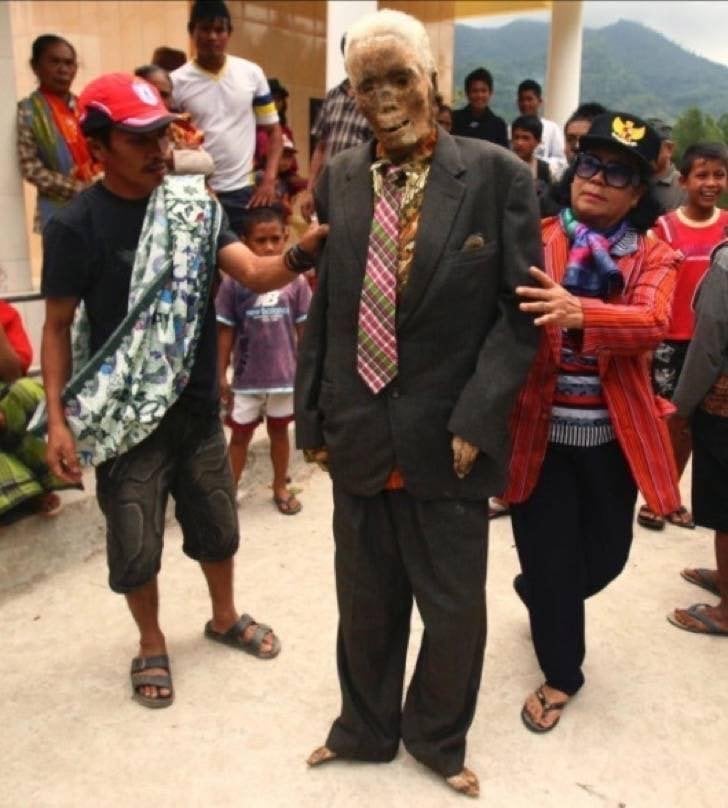
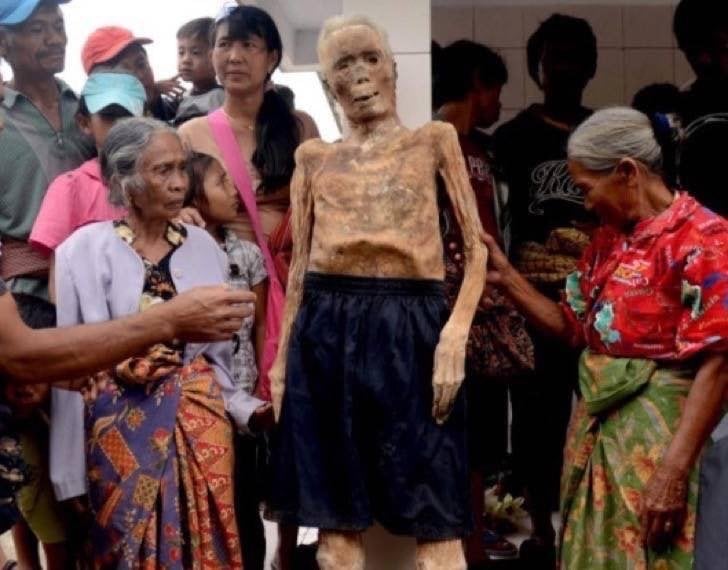
Arguably the strangest aspect of this culture is the ma’nene. During ma’nene, corpses are exhumed from the grave, cleaned, and dressed in new clothing. If needed, maintenance is conducted on their crypt, their casket repaired or replaced. The mummified remains, now freshened up, are paraded through town, where relatives can take pictures and videos with their family members who have passed. While some may see this practice as macabre or grotesque, the Torajans look at it as a powerfully devotional act of veneration and faith, a love which simply does not cease with death.
Pictures of this extraordinary spectacle first surfaced online in 2009 and caused an incredible stir—and it’s easy to see why. Online users were led to believe that, somehow, Torajan shamans possessed the power to bring the dead back to life as ro-lang, literally a “risen corpse.” Allegedly, these gaunt spectres would lead the funeral procession to their own grave as they walked a dirt path between the tongkonan houses on the beat of their “corpse road.” It was said that if these revenants were spoken to or interacted with by anyone other than their designated handler, they would crumble in a pillar of salt. Additionally, it was said that, after several years of internment, the dead would return on occasion to walk among the living. In the past, it was even alleged that there were civil wars in the area that were conducted entirely by armies of the undead!
B1FA03D1-1117-4219-9CB2-171576A25B1B.jpeg
87.3 KB ·64 views
1A93357F-9384-467F-8BD7-D4CC7671ECEE.jpeg
770.6 KB ·66 views
2A7248B1-0550-4A7F-9CB9-49C32DA2E0DC.jpeg
856.7 KB ·58 views
This User Says Thank You For This Post:
Budd Dwyer
  #44  
04-02-2020, 04:58 PM
FavaBeans's Avatar
FavaBeans
Offline:
My Rank: MAJOR
Poster Rank:173
Imma Girl=Wills Babygirl✿☠
Join Date: Dec 2009
Posts: 8,888
 
Mentioned: 7 Post(s)
Quoted: 775 Post(s)
Activity Longevity
0/20 17/20
Today Posts
0/11 sssss8888
Re: The Place Where The Dead Live With The Living

We bury them over here
3 Users Say Thank You For This Post:
Budd Dwyer, gimlet, soja
  #45  
04-02-2020, 05:15 PM
soja's Avatar
soja
Offline:
D.R.'s PM Casanova
Poster Rank:28
ҍɘҍɘn
Join Date: Feb 2017
Posts: 49,508
Contributions: 1
 
Mentioned: 149 Post(s)
Quoted: 30219 Post(s)
Activity Longevity
0/20 10/20
Today Posts
0/11 ssss49508
Re: The Place Where The Dead Live With The Living

....a cockfight, known as bulangan londong, is an integral part of the ceremony....In particular, the tradition requires the sacrifice of at least three chickens. However, it is common for at least 25 pairs of chickens to be set against each other in the context of the ceremony.

Nothing like a huge friday night chicken fight to honor grandma.

I'm not a huge fan of animal fights, but I think that would be cool as feck to have a large chicken fight tournament in my memory after I die. The champion chicken gets free chicken feed for life and her picture in the paper
This User Says Thank You For This Post:
Budd Dwyer


Powered by vBulletin Copyright 2000-2010 Jelsoft Enterprises Limited.

Search Engine Friendly URLs by vBSEO