|
#1
●
01-11-2021, 02:41 PM
|
 ♚ Legacy Gold Member ♚ Poster Rank:914 Join Date: Jul 2020 Posts: 820
Contributions: 13
820Posts 27,652Thanked 173Quoted 13Mentioned 13Contrib. |
|
A Mummified Human Corpse Found in an Apartment
2018 - Lower Silesia Province, Poland. The remains of a 60 year old man were discovered in his flat on 13 December 2018, it was estimated he died no later than the summer of 2018, but with a strong probability that death occurred even earlier, in 2016 or 2017. 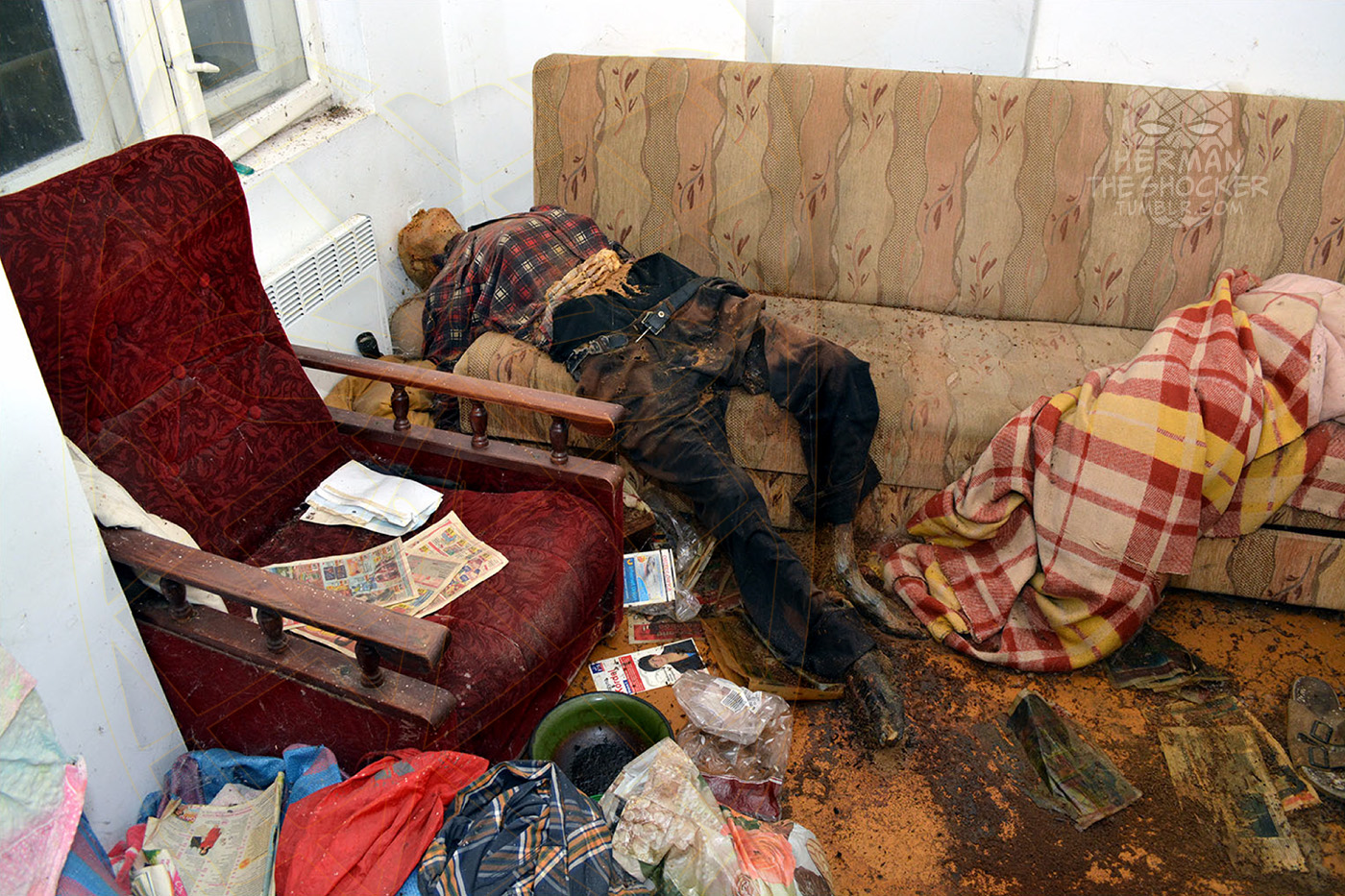 Fig1. View of the remains at the site of their discovery (dorso-lateral view). The 60 year old man lived in a municipal flat located on the fourth floor of an old pre-war block of flats in the centre of the city, maintaining no contacts with his neighbours. On 13 July 2015, the tenant testified, in documents he signed himself, that he was familiar with the rate of payment for the flat. In January 2016, he failed to pick up a letter from the manager. From June 2016 to October 2018, the manager of the block of flats carried out four local inquiries (asking neighbours), which failed to establish the tenant’s presence in the flat. Interviewed by the police, neighbours were unable to confirm clearly and precisely the last time they had seen the tenant or when they had last heard sounds indicating his presence in the flat. According to the block’s residents, as of May 2018, no one had been living in the flat in question for at least a year. One neighbour stated that in the summer of 2018, ‘insects that had not been there previously’ had appeared in her flat. On 13 December 2018, the manager of the block entered the flat in question, discovering human remains therein. The police were immediately notified of this discovery. 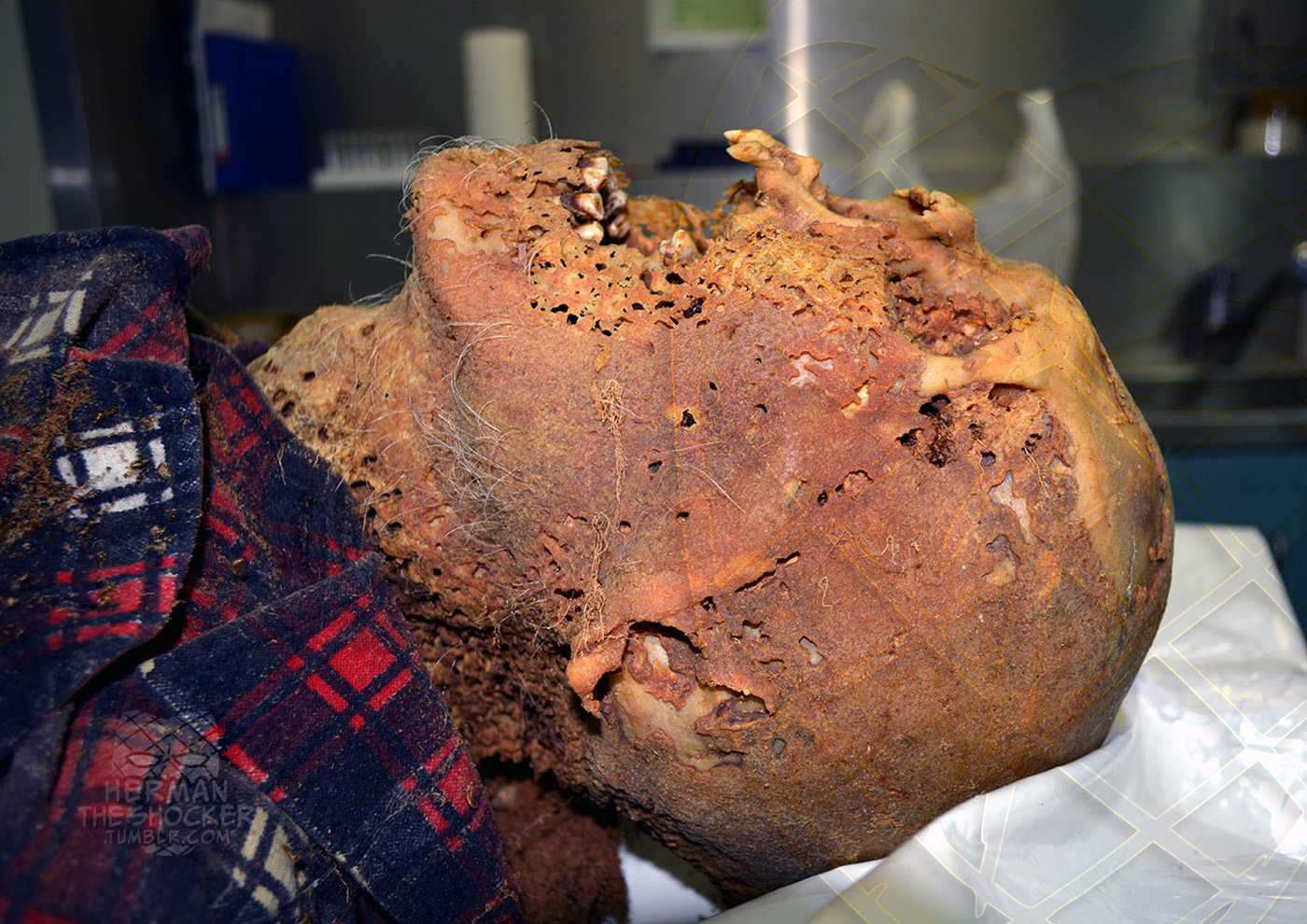 Fig2. The openings in the mummified skin of the head due to the feeding activity of Dermestidae (general view). The corpse lay on its back at one end of a couch, at an angle oblique to its long axis (Fig. 1). The middle and lower parts of the back, buttocks, and parts of the thighs were lying on the couch, while the lower limbs and feet rested on the floor. On the floor in the vicinity of the decedent’s legs, as well as on the couch in the vicinity of the remains, were irregular dried brown stains from purge fluid, numerous larval instars, and dead adult specimens (chiefly beetles and flies) as well as accumulated frass. On 21 December 2018, a detailed forensic-entomological inspection of the site was carried out with the participation of an expert forensic entomologist and forensic anthropologist. During the inspection, samples with entomological material were secured from the room in which the decedent was found. Entomological traces were taken from furniture, floors, window sills, and objects found in the room (mainly on the floor) such as blankets, books, footwear, plastic bags, and clothing. The remains had been significantly skeletalised and subjected to subsequent fixative changes, i.e. transformed posthumously and dried (mummified), with residually preserved and transformed soft tissues. Present on the remains was clothing, which had dried out and adhered to skin integument. Fragments of advertising flyers from the Biedronka supermarket chain, dating from 2013, were dried and stuck to the clothing. 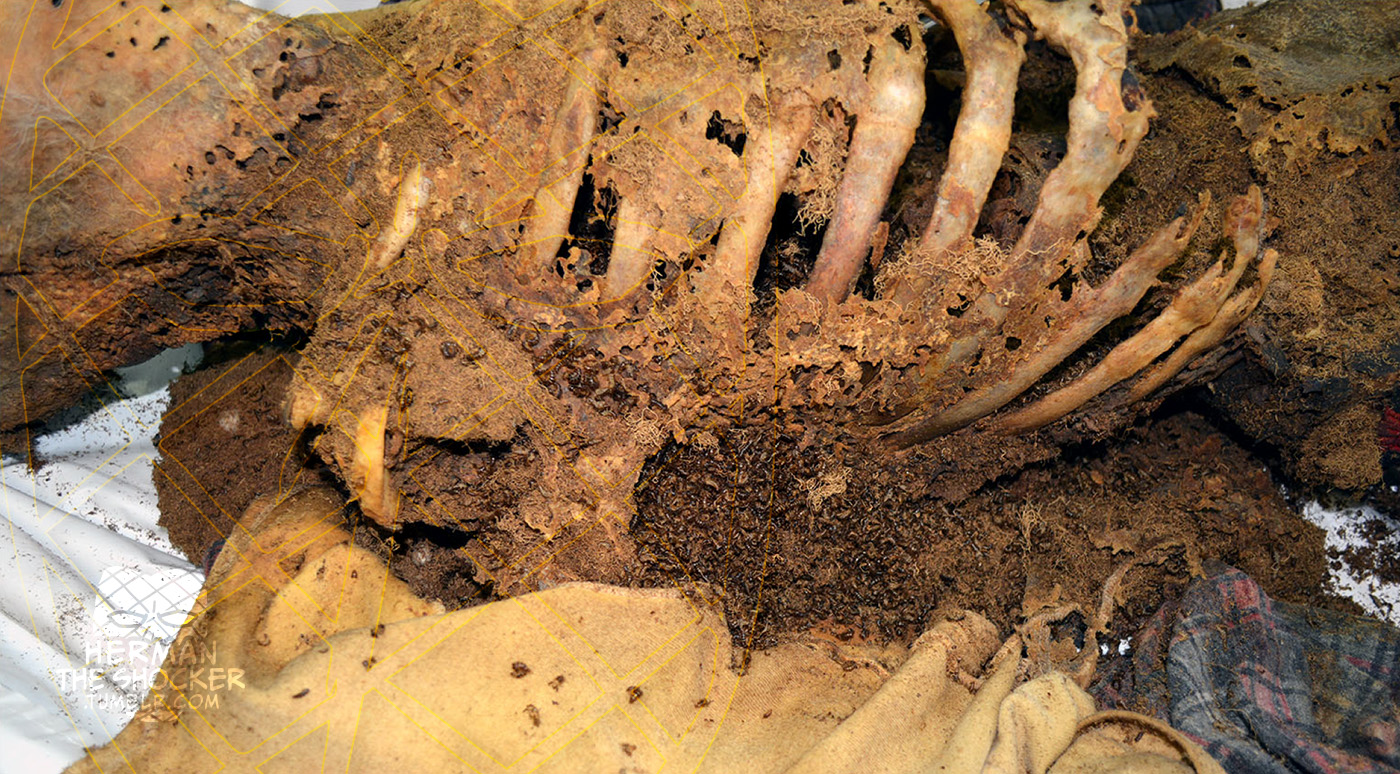 Fig3. The feeding activity of Dermestidae on the chest (general view). Virtually everywhere in the decedent’s flat—on the floor, on the couch, in the neighbourhood of the couch, on the window sills and in cabinets, and on the blanket—were insect pupae, larval instars and dead adult beetles. In addition, a live moth larvae was found, as well as dead adult butterflies. Represented in the greatest numbers were puparia of flies as well as larval instars and adults of skin beetles. Fourteen larvae of D. haemorrhoidalis were extricated from the interior of a prayer book, from which they had eaten out tunnels and pupal chambers (Fig. 4). Found in the decedent’s remains, as well as in his flat, were empty puparia of flies from the family Calliphoridae. This flies are among the first insects to appear on corpses, often literally within a few minutes to hours from the moment of death, and focus on consuming soft tissues and internal organs. 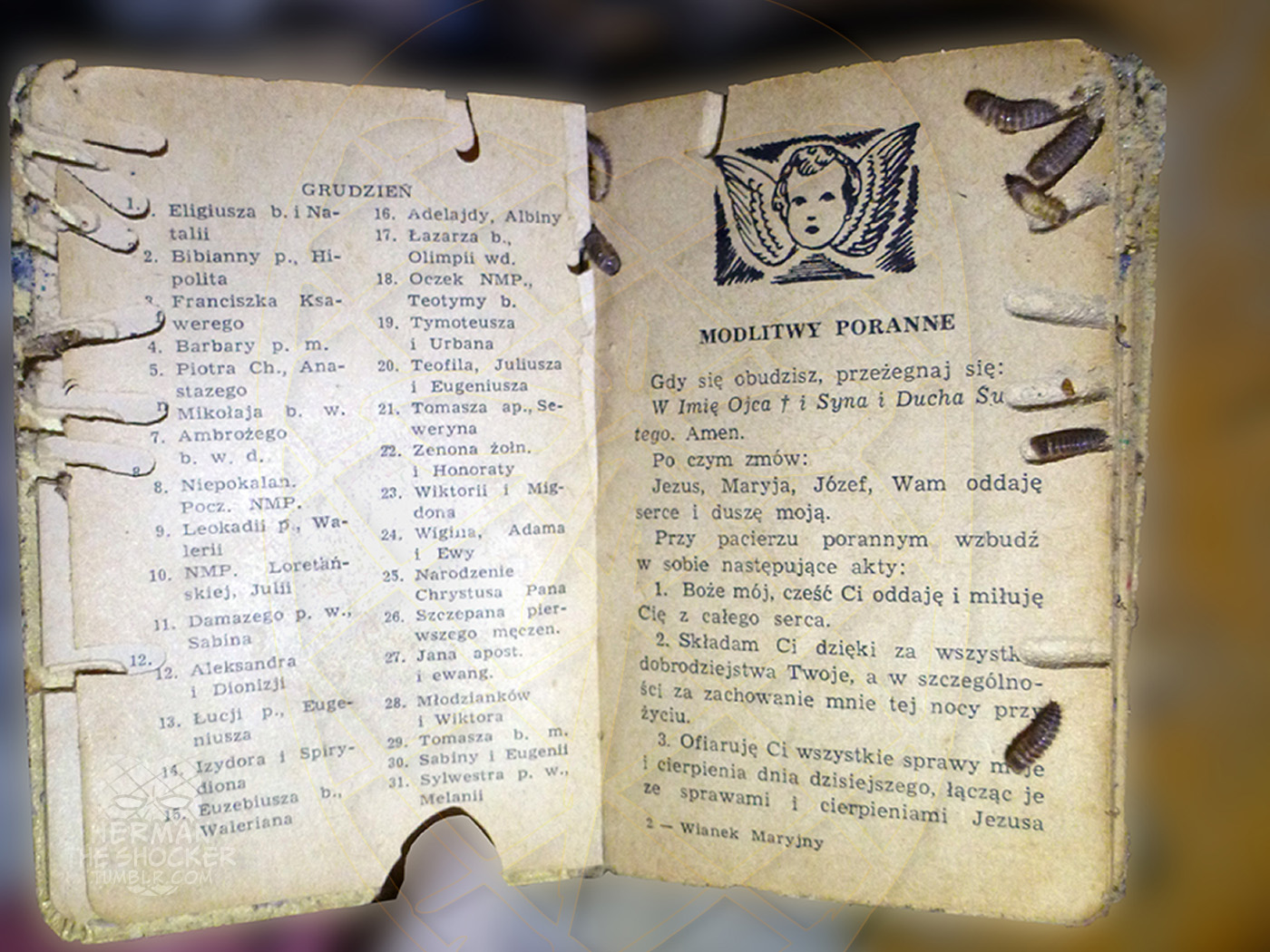 Fig4. The interior of a prayer book with larva, larval tunnels and pupal chambers of D. haemorrhoidalis (general view). Many openings were found in the decedent’s mummified skin due to the feeding activity of Dermestidae (Figs. 2, 3). The openings were present on the scalp, neck, chest, hands, and legs, including the soles of the feet and the skin of the back. Traces of feeding larvae, probably including moths, were present on the decedent’s clothing—T-shirt and shirt—along with visible damage. 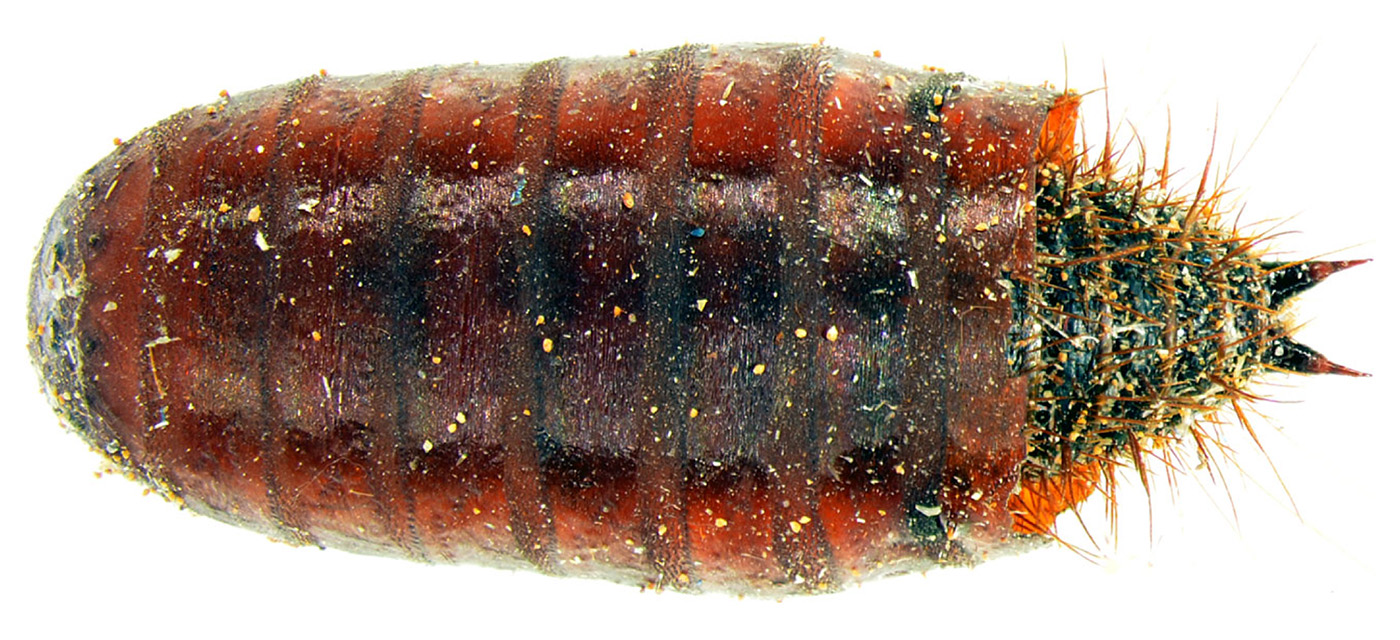 Fig5. Larva of Dermestes haemorrhoidalis in the interior cavity of puparium of Calliphora vicina (general view). It was concluded from the findings that the decedent, whose remains were discovered in the flat on 13 December 2018, died no later than the summer of 2018, with a strong probability that death occurred even earlier (2016 or 2017), as possibly indicated, inter alia, by the significant number of larval instars and by the damage to the surfaces of some of the collected empty fly puparia. 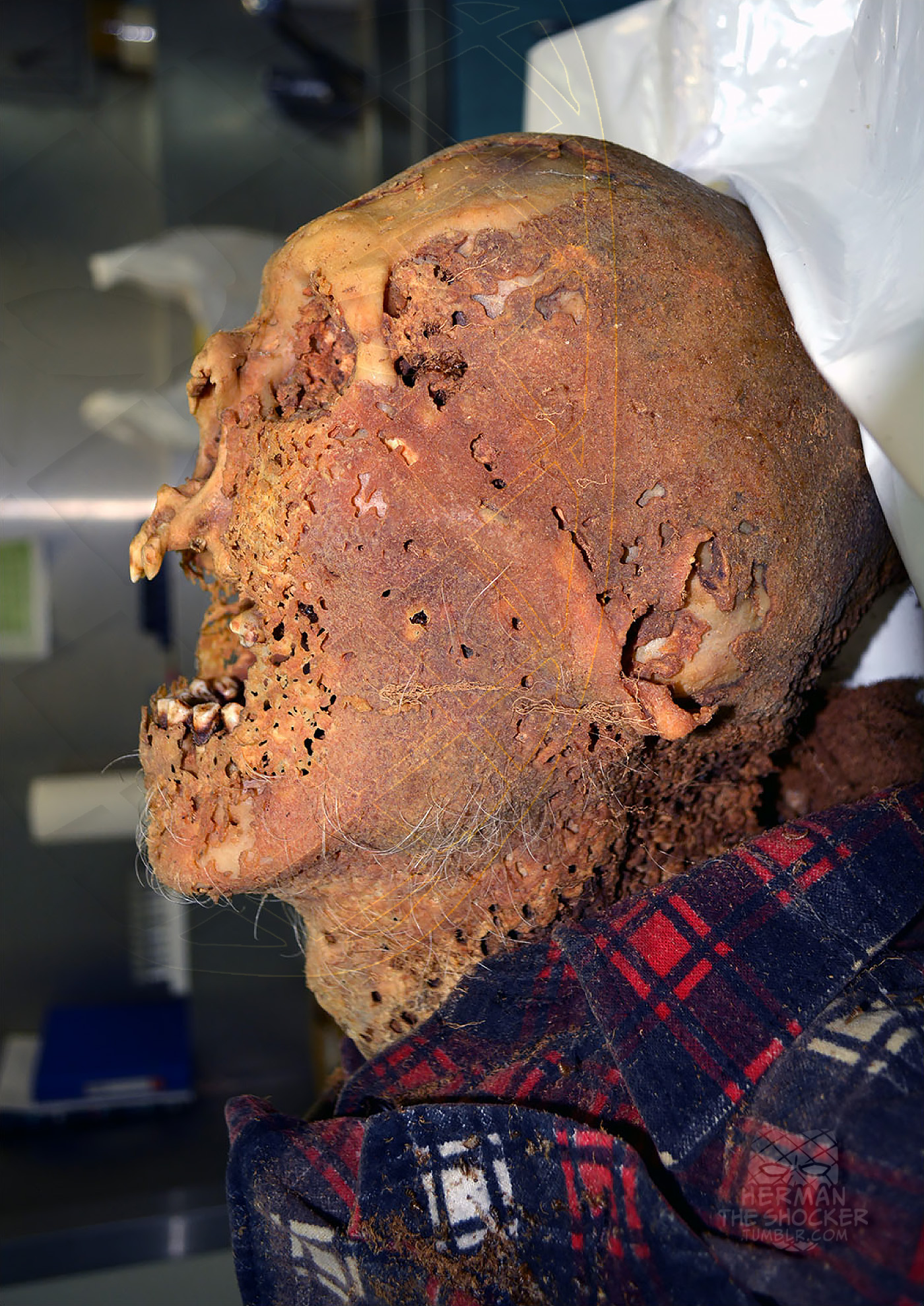 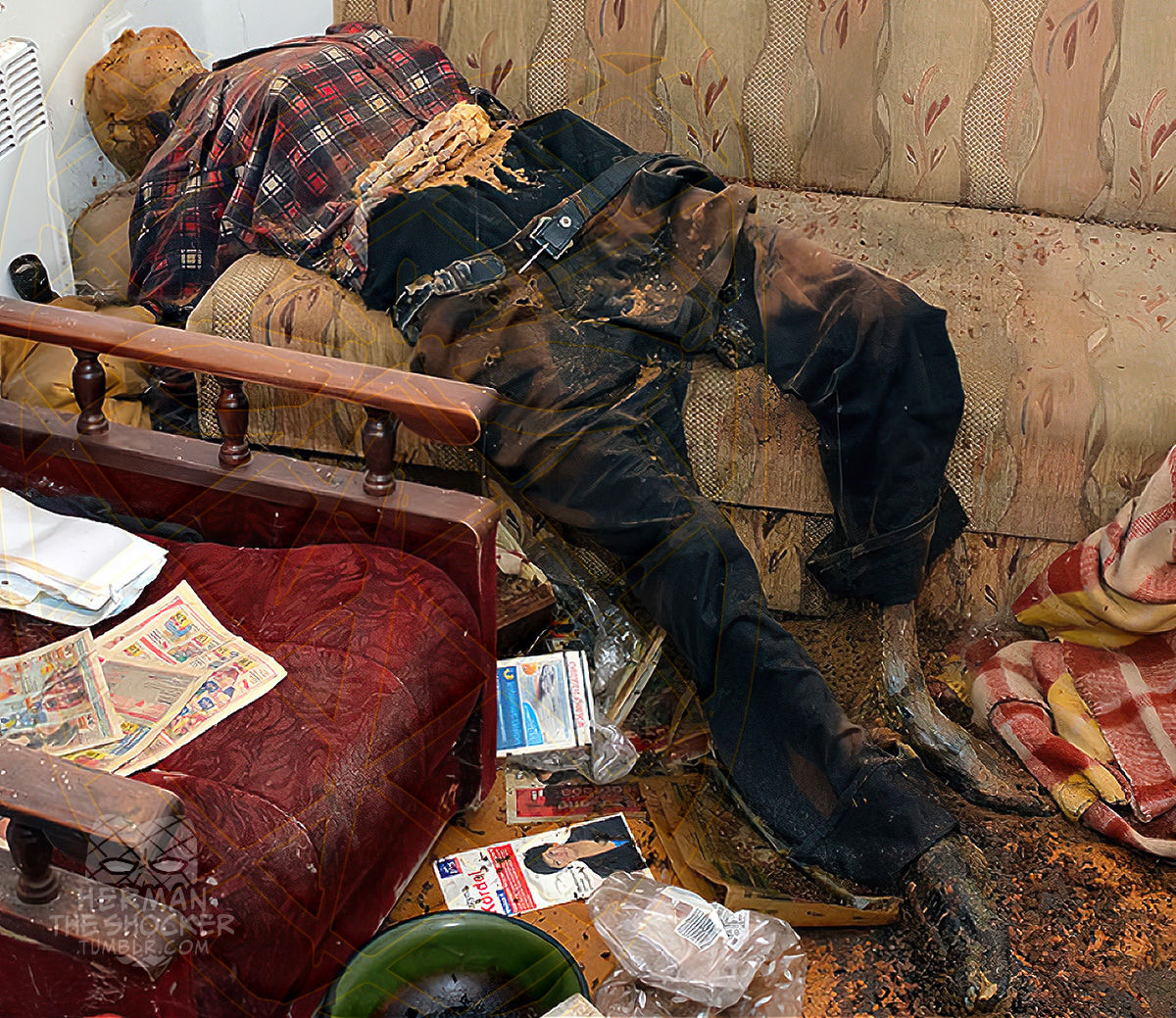 |
|
#2
●
01-11-2021, 02:51 PM
|
 Für Immer Verloren Poster Rank:50 Boredom + Despair Join Date: Sep 2017 Posts: 30,197
Contributions: 743
30,197Posts 192,619Thanked 10,332Quoted 136Mentioned 743Contrib. |
|
Re: A Mummified Human Corpse Found in an Apartment
Oh wow, cool as fuck! Brilliant thread, very interesting, thank you.
__________________ "I'd give the world for the chance just to see your face again. Still I pretend that you're still standing by." |
|
#3
●
01-11-2021, 04:36 PM
|
 My Rank: STAFF SERGEANT Poster Rank:858 Flesh and Blood Join Date: Apr 2012 Posts: 895 895Posts 4,588Thanked 352Quoted 3Mentioned 0Contrib. |
|
Re: A Mummified Human Corpse Found in an Apartment
Good stuff, very informative.
|
|
#8
●
01-11-2021, 07:34 PM
|
 My Rank: CAPTAIN Poster Rank:212 Boob enthusiast Join Date: Jul 2017 Posts: 7,247 7,247Posts 7,426Thanked 2,714Quoted 8Mentioned 0Contrib. |
|
Re: A Mummified Human Corpse Found in an Apartment
The one with the bible is eeerie as fuck. Artistic even I'd guess he is dead since at least 2016 January. Amazing that nobody missed him and his neighbours and the landlord didn't give a shit for years |