|
#1
●
04-26-2021, 11:27 AM
|
 ♚ Legacy Gold Member ♚ Poster Rank:914 Join Date: Jul 2020 Posts: 820
Contributions: 13
820Posts 27,652Thanked 173Quoted 13Mentioned 13Contrib. |
|
Fungal Growth on Corpses
Although putrefaction is a mainly anaerobic bacterial reduction process, decomposition is dominated by aerobic microbiological processes that may create pungent, rotten odours originating from the metabolic products of oxidation. Decomposition is a dry, acidic process on an oxidative basis, which leads to the splitting off of acids (carbonic acid, phosphoric acid, sulphuric acid). At the beginning of decomposition, large patches of fungus may form on the skin and mucous membranes. A 42-year-old woman was discovered dead, the body was covered with fungal plaques. She had been leading a solitary life and received long-term treatment for schizophrenia. The death incident happened in the first week of April in cold weather when her stove had been lighting. Upon declaration of her brother, she was last seen alive three days ago. When any news about her health could not be received, her relatives entered her home, and found her dead body. 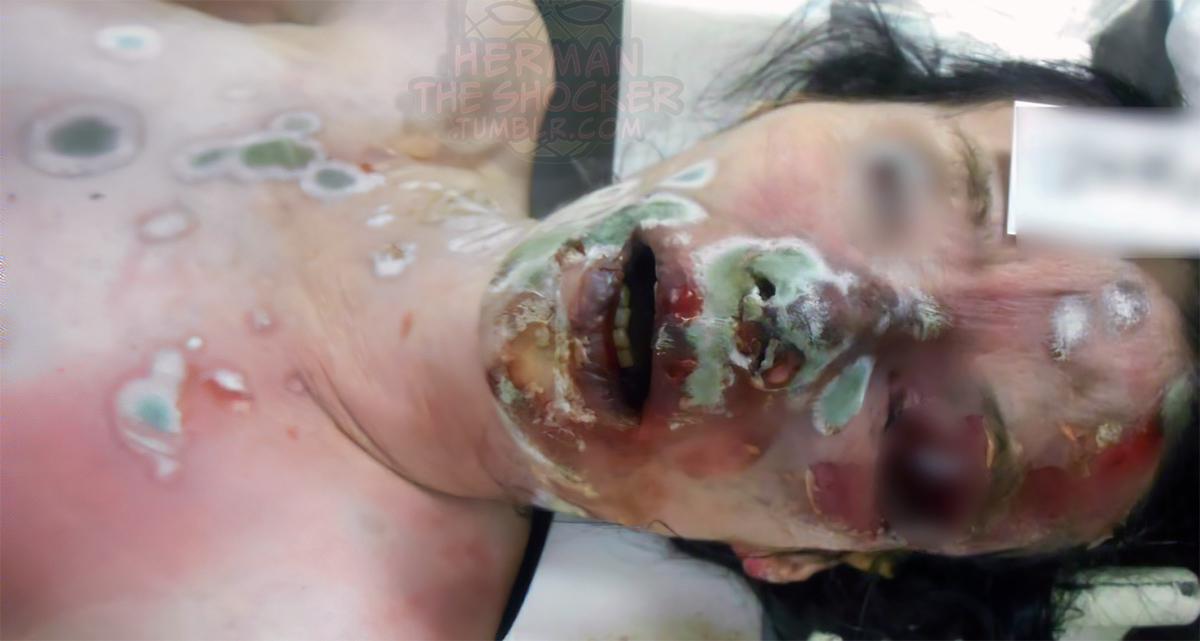 Fig.1 Greenish white molds on the forehead, perioral, and perinasal areas, and anterior chest wall. On the scene investigation, her dead body was found on the entrance of the alla turca toilet (Turkish toilet, or squat toilet), bending forward with her knees flexed, and her face resting on the toilet stone. Stove in the room was cold, and stove pipe was displaced. Inside the room a smoky smell was felt. 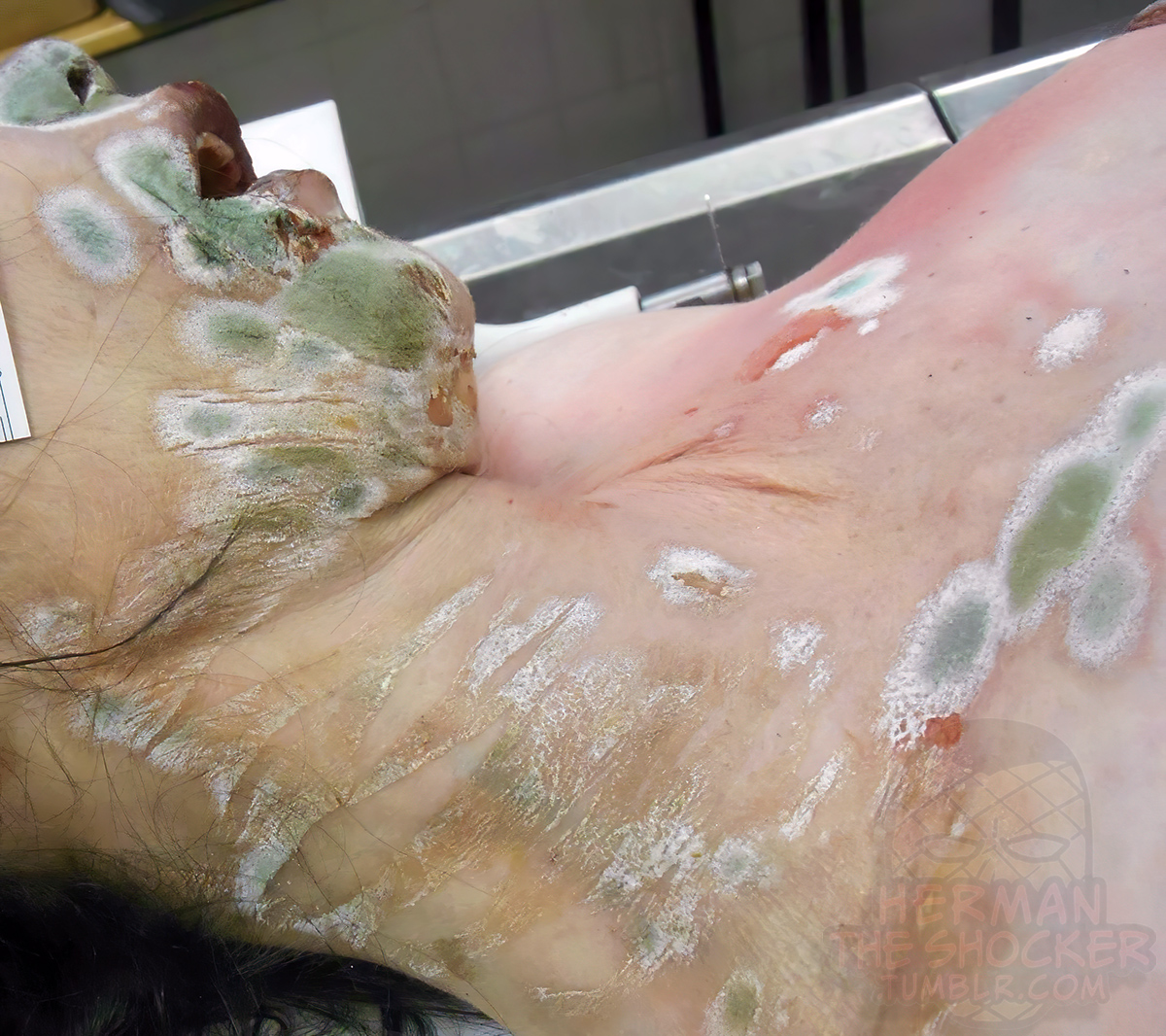 Fig.2 Greenish white molds on the right side of the cheek, anterior part of neck, and chest. At autopsy, her dead body was extremely cachectic. Decomposition, and cherry red postmortem lividity (livor mortis) were observed. Diffuse greenish white fungal mold plaques were seen around her mouth and nose, in nostrils, anterior surface of the chest, on the right, and left sides of the neck, chin region, right eye lid, at the middle, and left side of the forehead, and also mold plaques were observed on posterior surface of the left forearm, and, posterior, and anterior surfaces of the right forearm. 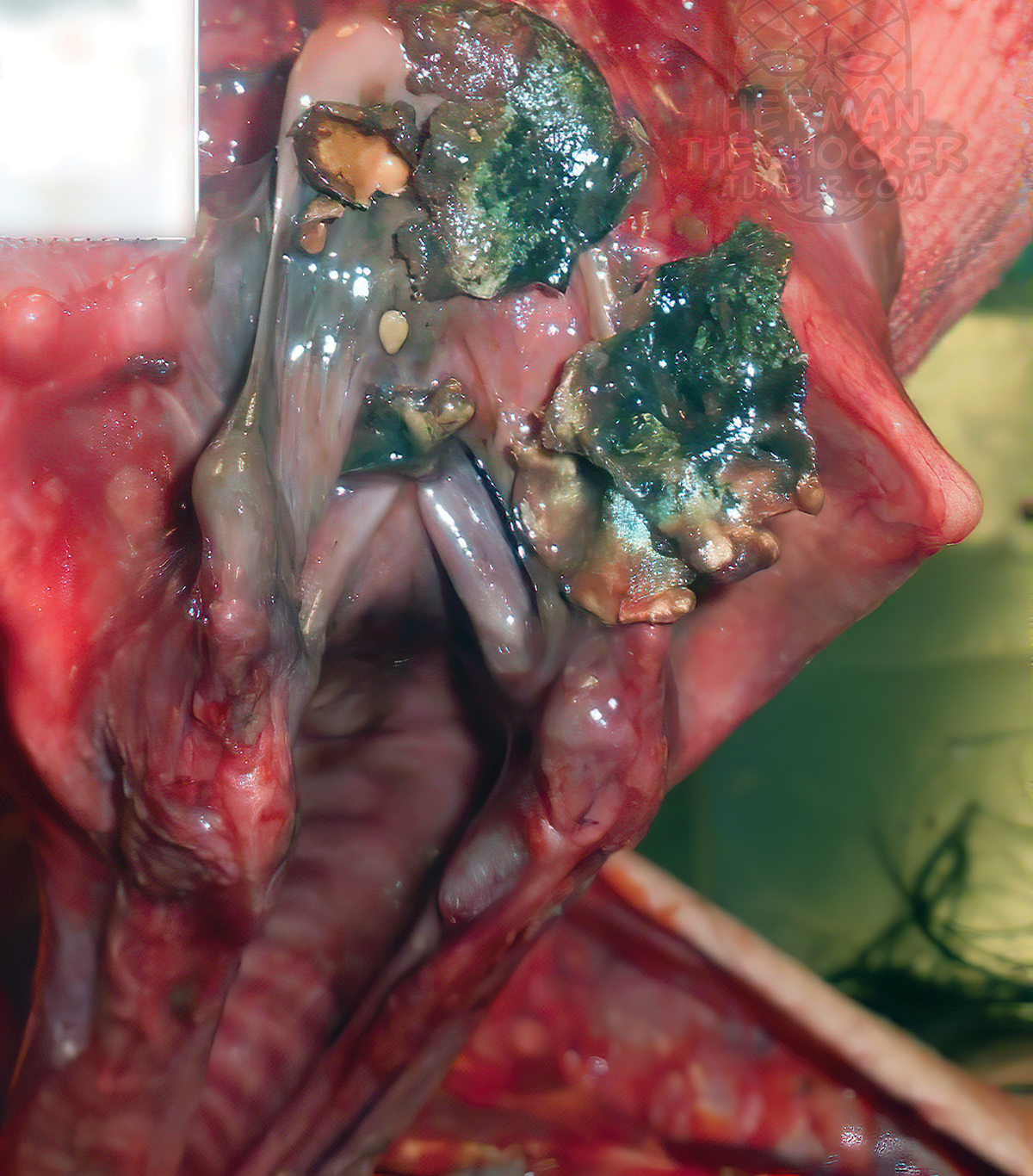 Fig.3 Greenish white molds on the periepiglottal region. Widespread green discoloration secondary to putrefaction was seen on the anterior surface of the abdomen. Internal examination revealed greenish white discoloration due to molding around the mouth, and greenish white molds on periepiglottal region. Internal organs assumed a light red color accompanied by manifestations of partial decomposition. As a striking feature, blood was light red. Toxicological analysis demonstrated the presence of 58.1% carboxyhemoglobin (HbCO) in blood samples. It was determined that the death was caused by carbon monoxide poisoning. Fungi can colonize decomposed bodies, forming distinctive mildew spots, ultimately converting bodies into moldy cadavers at the dry stage of decomposition. Heavily decomposed cadavers, in particular those that are highly mummified, often present visible fungal growth. Artificial cultivation has allowed for the morphological identification of the fungi that tend to colonize cadavers. Extra images from other cases. 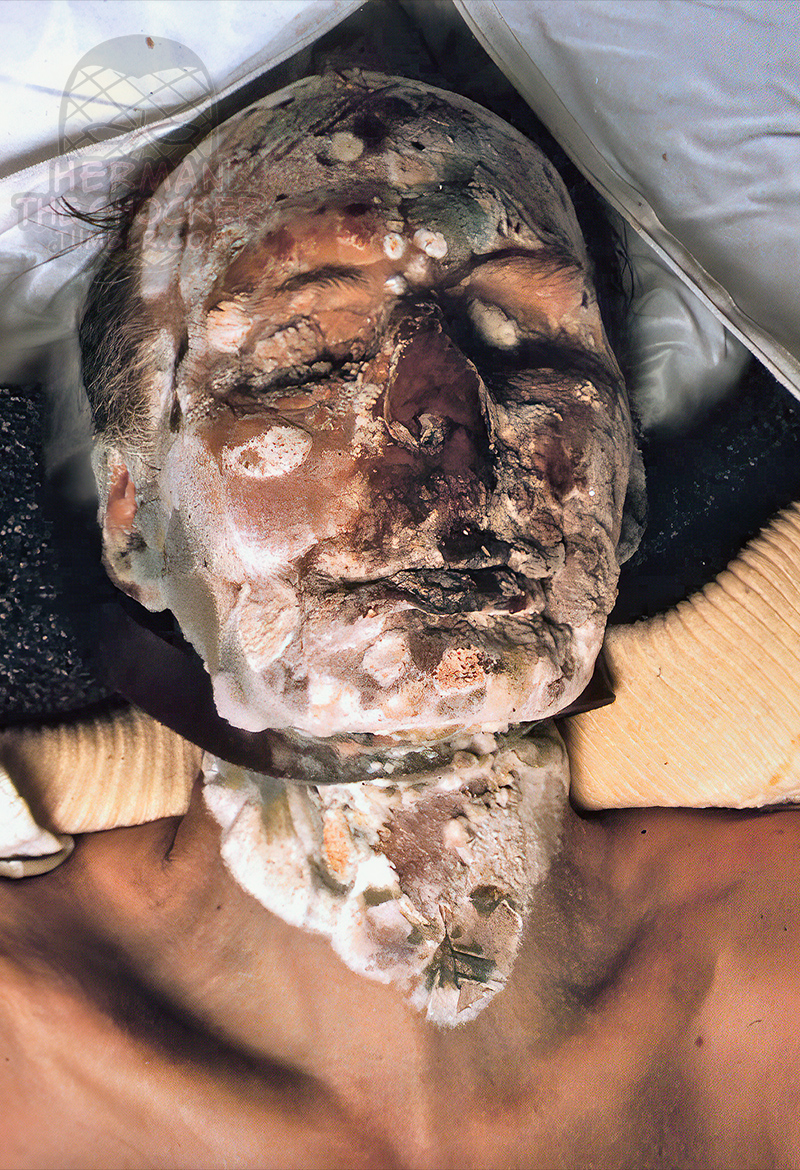 Extra image 1. Decomposition with patches of fungus on the face. No further info. 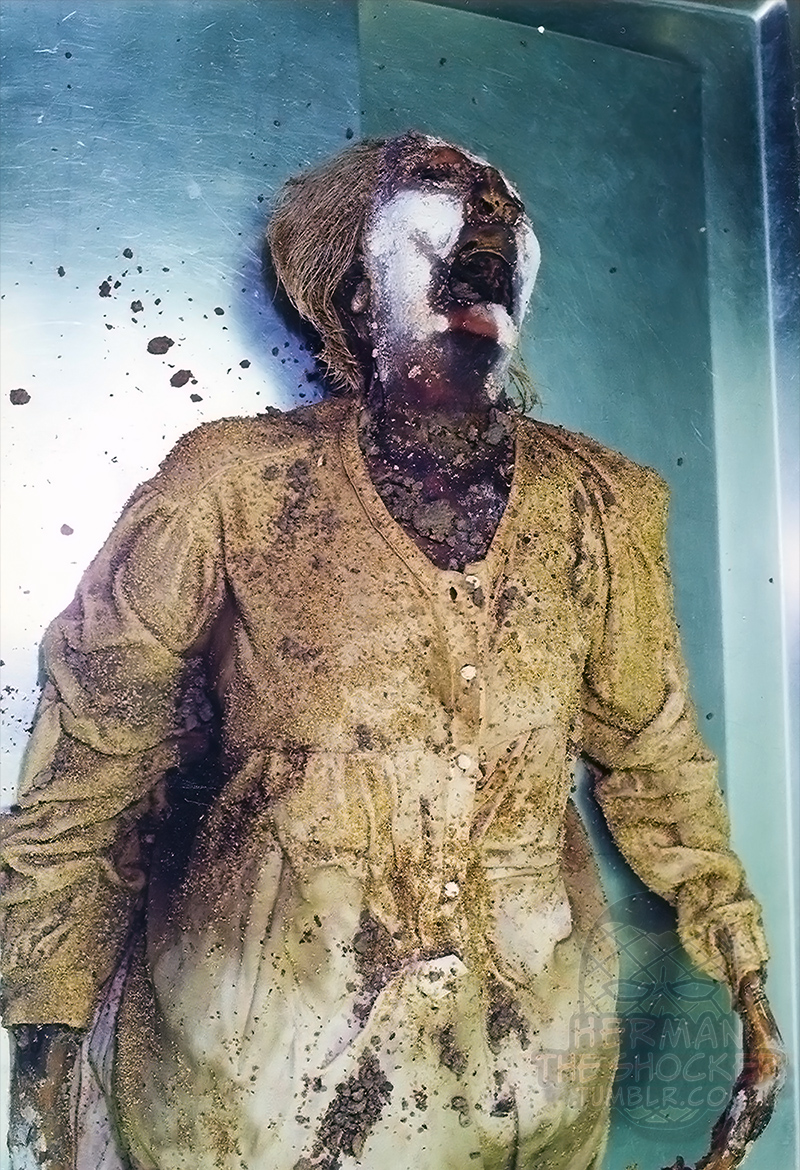 Extra image 2. Advanced decomposition after exhumation with fungus patches on the skin. No further info. - This post is for educational purposes only and is nonprofit. Under Section 107 of the Copyright Act of 1976; Allowance is made for "Fair Use" for purposes such as criticism, comment, satire, news reporting, teaching, scholarship, and research. No copyright infringement intended. Images have been upscaled and sharpened/enhanced. Some of the text might have been shortened and simplified, and/or reorganized for online view. Original case report by Erdem Hösükler E., Erkol Z., Petekkaya S., Gündoğdu V., Samurcu H. - Rom J Leg Med 2018. / Madea B. - CRC Press 2016. |
|
#2
●
04-26-2021, 01:03 PM
|
 My Rank: STAFF SERGEANT Poster Rank:858 Flesh and Blood Join Date: Apr 2012 Posts: 895 895Posts 4,588Thanked 352Quoted 3Mentioned 0Contrib. |
|
Re: Fungal Growth on Corpses
Interesting, thanks. Pretty disgusting  |
|
#3
●
04-26-2021, 01:07 PM
|
 ☾ Administrator ☽ Poster Rank:75 ஜᎻᎬᎩᎾᏦᎪஜ Join Date: Dec 2011 Posts: 20,090
Contributions: 46
20,090Posts 80,348Thanked 7,132Quoted 200Mentioned 46Contrib. |
|
Re: Fungal Growth on Corpses
Herman, as always.. informative and unique! Most of your posts are things I would never have imagined could happen! Thanks for all the work it takes to post these.
__________________ 💜🧿See Human | Be Human🧿💜 (War Section Hashtags) |
|
#6
●
04-26-2021, 03:56 PM
|
 My Rank: MAJOR Poster Rank:169 Join Date: Jul 2015 Posts: 9,325 9,325Posts 10,833Thanked 1,583Quoted 5Mentioned 0Contrib. |
|
Re: Fungal Growth on Corpses
Warning, don't view before dinner.  |
|
#9
●
04-26-2021, 07:54 PM
|
 My Rank: STAFF SERGEANT Poster Rank:726 male Join Date: Dec 2009 Posts: 1,140
Contributions: 18
1,140Posts 6,086Thanked 300Quoted 9Mentioned 18Contrib. |
|
Re: Fungal Growth on Corpses
Awesome, instead of becoming bloated after 3 days, she only got some fungal patches.
|