|
#1
●
06-14-2021, 04:07 PM
| ||||||||
 ♚ Legacy Gold Member ♚ Poster Rank:907 Join Date: Jul 2020 Posts: 821
Contributions: 10
Mentioned: 13 Post(s) Quoted: 173 Post(s)
| ||||||||
|
Fatal Dragging Deaths with Soft Tissue and Bone Grinding Injuries
Vehicle versus pedestrian collisions frequently result in skin injuries that can be described as “friction abrasions,” “brush burns,” or “road rash”. These injuries are often related to the victim making contact with a hard road surface. When the victim is overrun by a motor vehicle, the skin trauma may be related to contact with the roadway, the undersurface of the vehicle, or both. In such instances, the cutaneous injuries are typically severe, sometimes with associated underlying soft tissue or bone injuries. If a victim is dragged underneath the vehicle for a substantial distance, relatively characteristic “friction/grinding” injuries can be produced, involving skin, soft tissue, and sometimes bone. Death is a frequent outcome, and there are often many lethal injuries identified at autopsy, making the determination of whether or not the victim was conscious while being dragged under the vehicle difficult, if not impossible. Although classic friction abrasions are common in vehicle versus pedestrian incidents, extensive grinding injuries related to the victim being pinned and dragged under the vehicle are less common, typically because drivers usually stop before driving great distances. Case 1 A 45-year-old woman was attempting to intervene in an altercation at a bar parking lot when she stood in front of a vehicle as one of the participants in the altercation was attempting to flee. The driver intentionally ran over the woman, and she became pinned under the vehicle. Instead of stopping, the driver traveled 1.9 km (1.18 mile) along a roadway before the body finally became dislodged from underneath the vehicle. The victim was dead at the scene. The driver of the vehicle was apprehended by police. His blood alcohol content was 106 mg/dL. 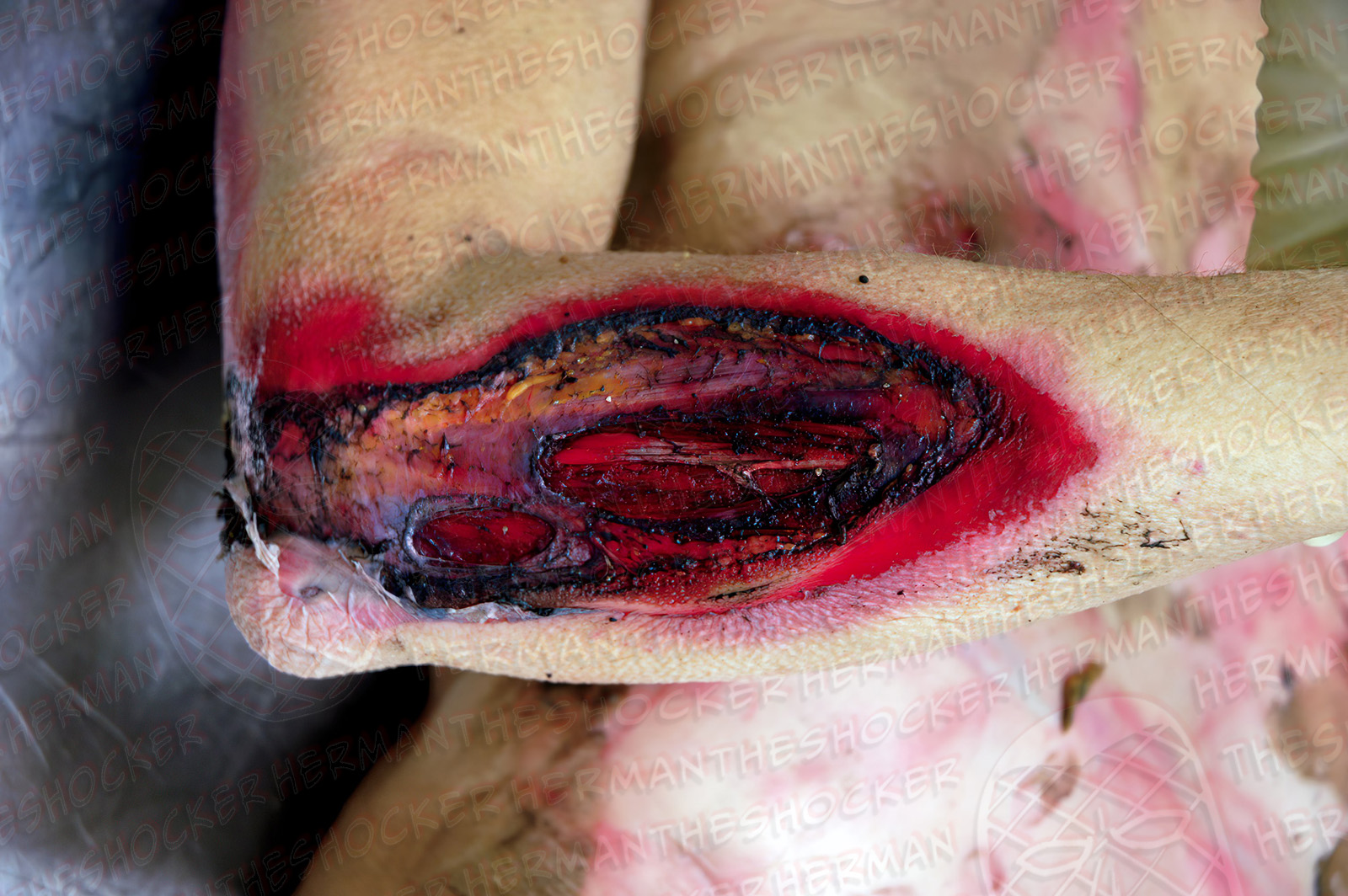 Fig.1 A dragging injury of the victim’s right upper extremity from Case 1. Note the target-like appearance of the wound. Note also the piled-up, loose skin/soft tissue tags near the elbow, indicating that the direction of applied force was from distal to proximal. 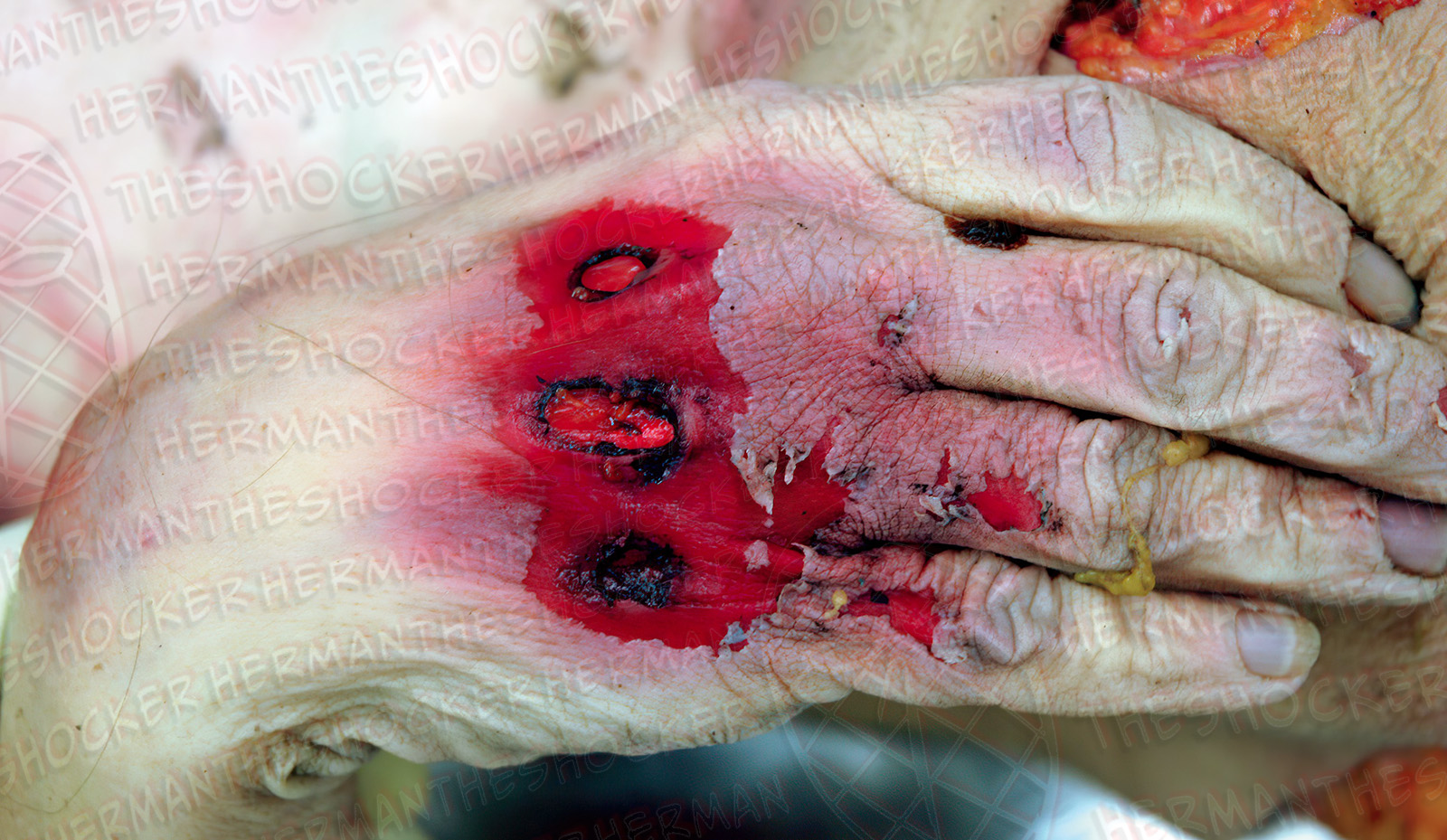 Fig.2 Another dragging injury complex involving the dorsal surface of the right hand in Case 1. Again, note the target-like appearance of the wounds. 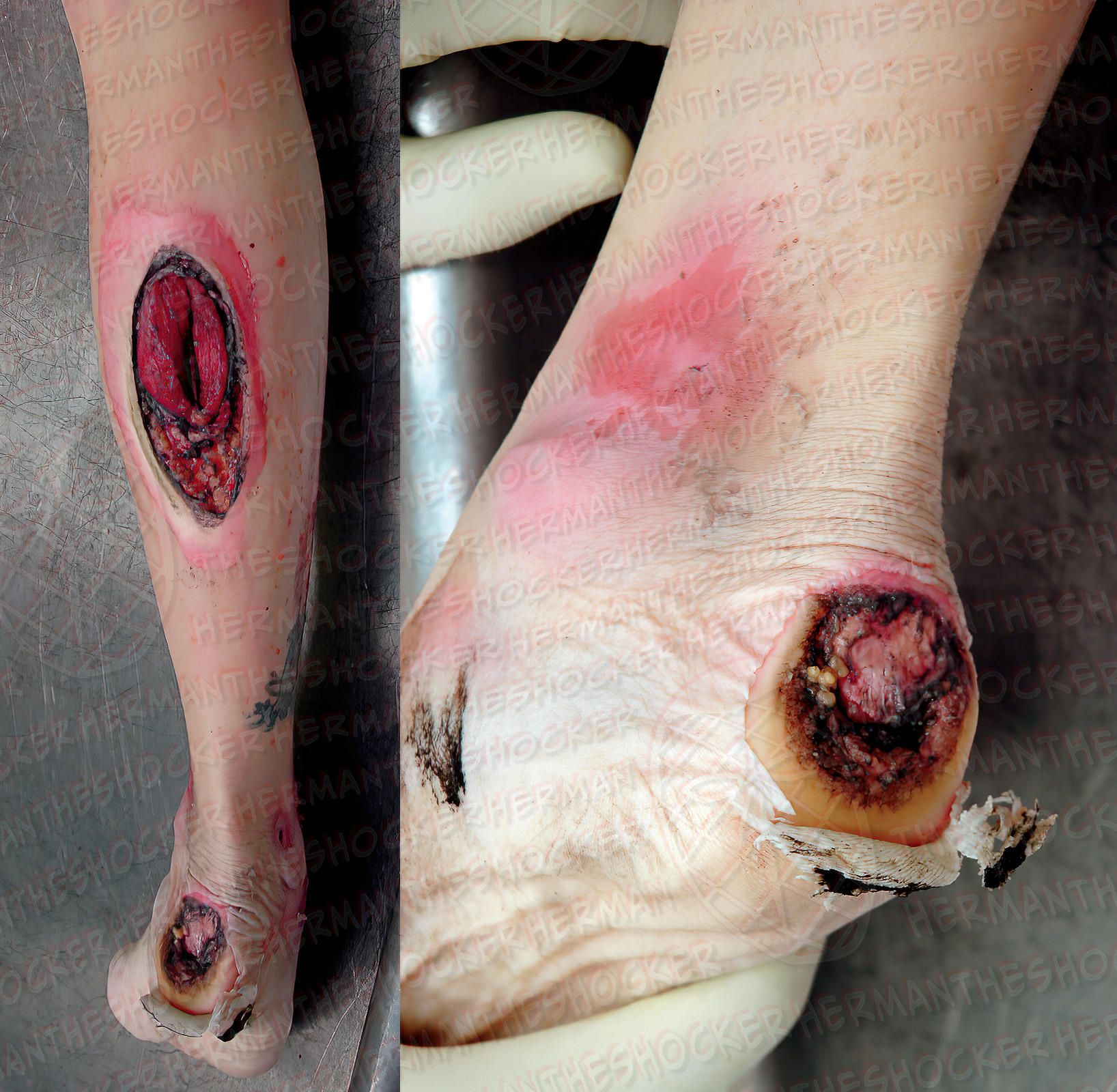 Fig.3 Left) Two separate dragging injuries on the back of the right lower extremity from Case 1. In addition to the target-like appearance of both wounds, note the bone grinding injuries of the heel, and the postmortem appearance of the calf wound margins. Right) A closer view of the heel injury. Note the partially avulsed skin remaining attached to the distal-most end of the wound, indicating that the direction of applied force was from proximal to distal. A full autopsy disclosed multiple severe injuries, including classic dragging/grinding injuries of the arms and hands, legs and feet, back, and head, where there was a grinding injury complex that extended through the entire skull and underlying dura, with exposure of the brain. Internal injuries consisted of craniocerebral trauma, with subdural hemorrhage, subarachnoid hemorrhage, brain contusions, and skull fractures, extensive rib/chest wall injuries, multiple pelvic fractures, and injuries of the lungs, heart, diaphragm, liver, and spleen. The cause of death was multiple severe injuries. The manner of death was homicide. The driver of the vehicle was charged on multiple counts and pled guilty to operating a vehicle while intoxicated causing death, and leaving the scene of an accident. He received a 20-year sentence. 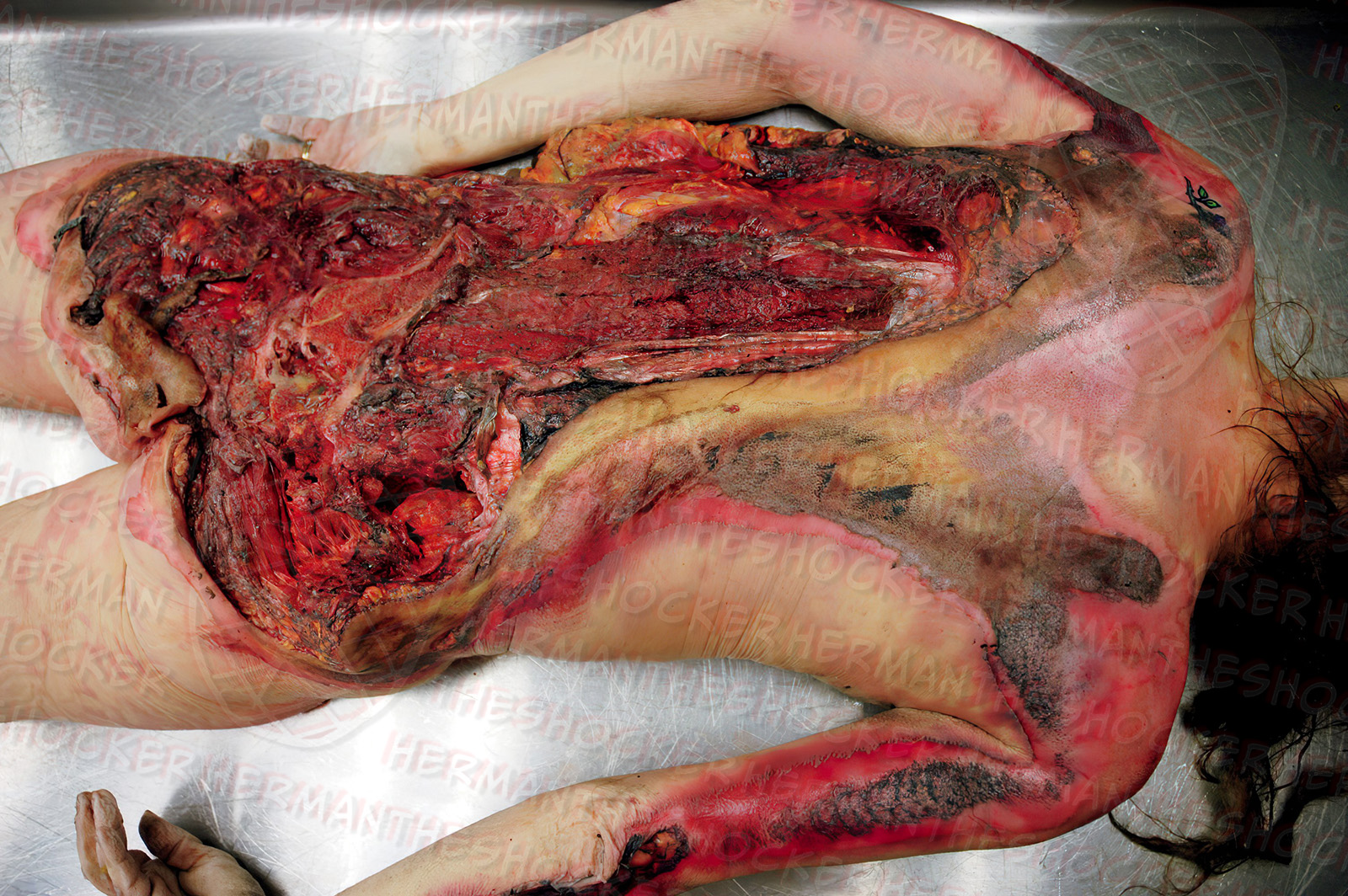 Fig.4 Extensive dragging injuries on the back of the victim in Case 1. Note that much of the skin surface is totally absent, and the presence of large areas demonstrating the classic dry, yellow postmortem appearance. Note also the posterior pelvis on the left, with extremely smooth, flat grinding injuries. 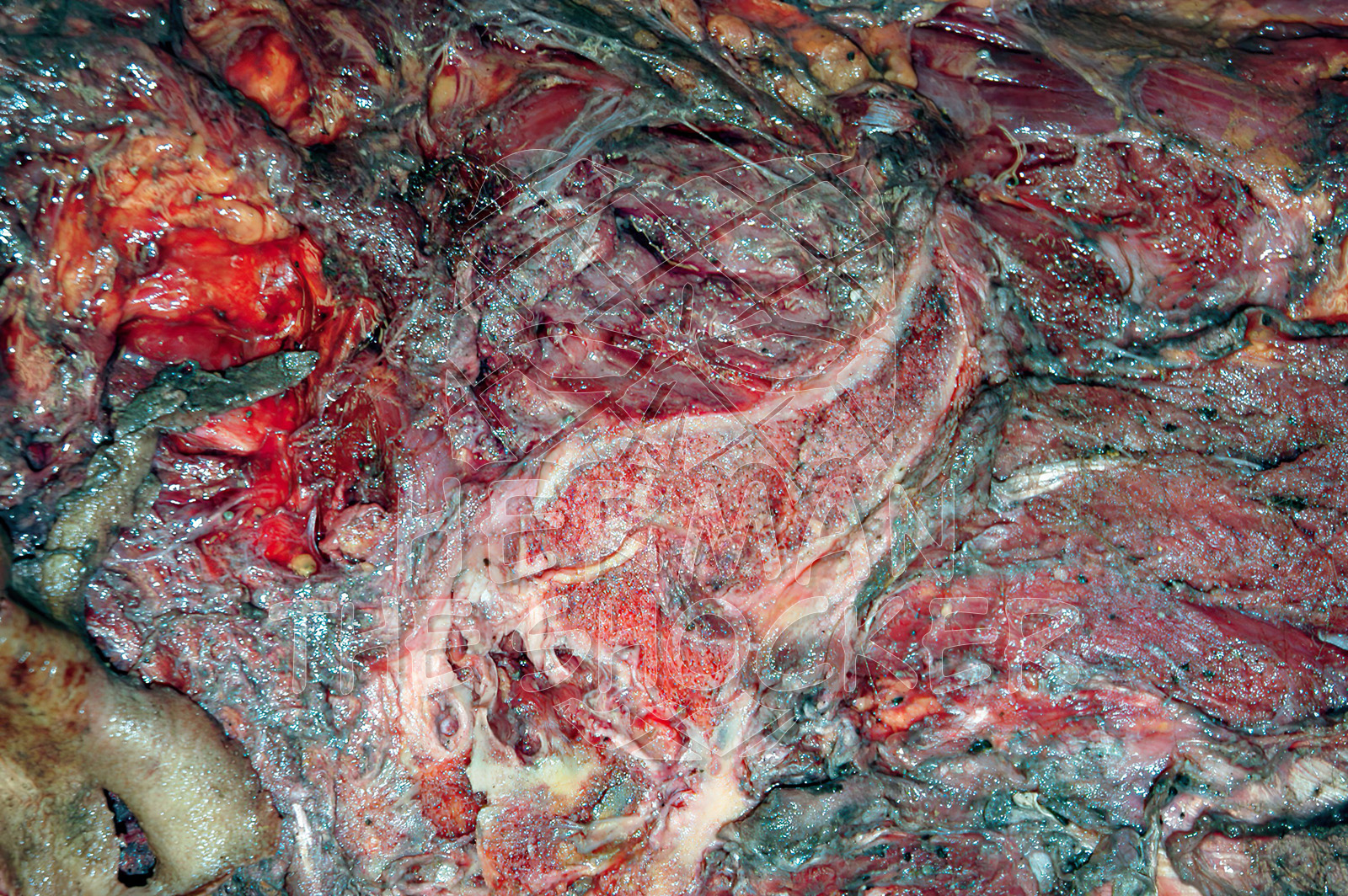 Fig.5 A close-up photograph of the pelvis grinding injury. 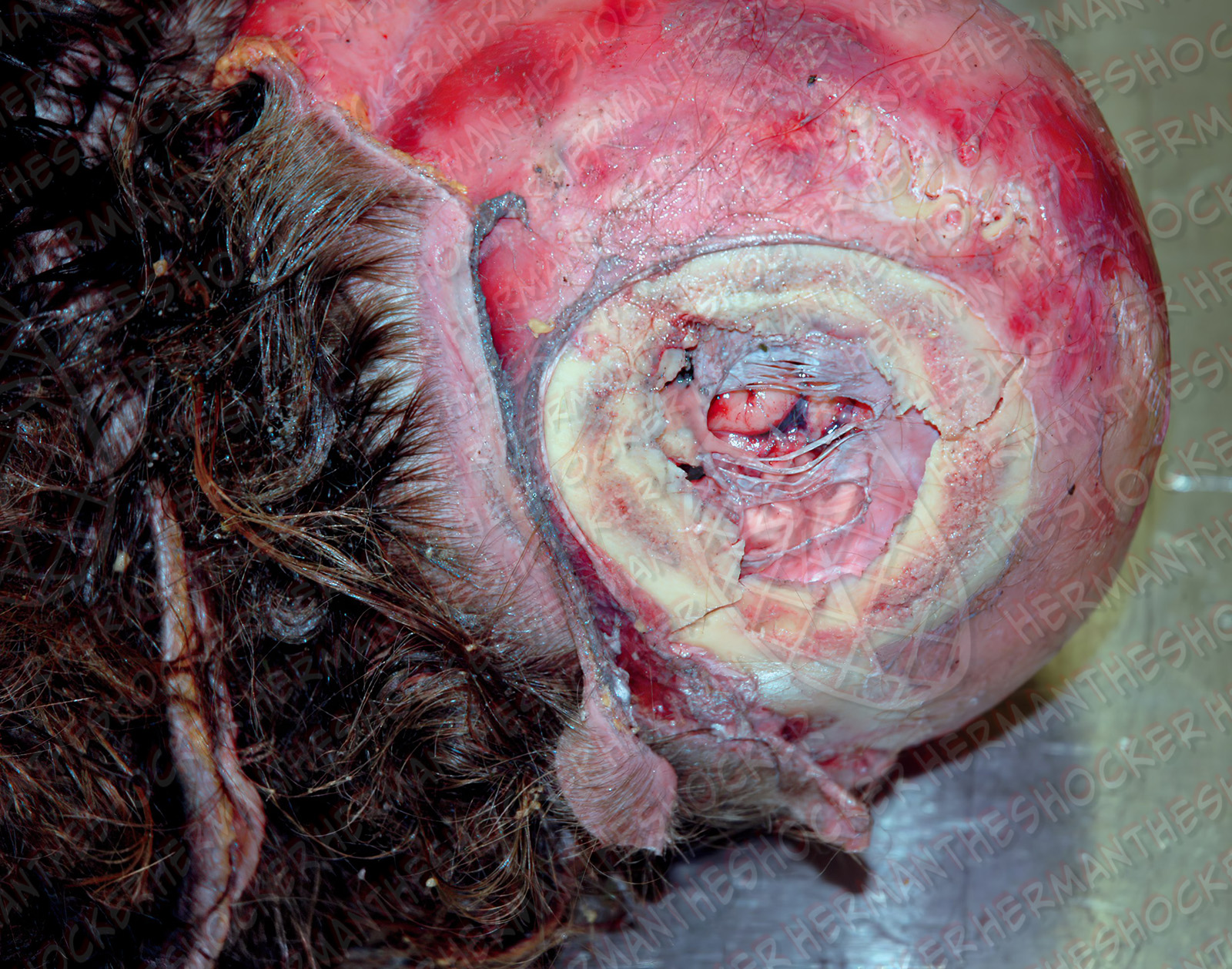 Fig.6 Note that much of the skin of the scalp is no longer present in the victim from Case 1, as it was avulsed during the infliction of trauma. Note the target-like appearance of the underlying skull, with full-thickness grinding injuries, with disruption of the dura, allowing visualization of the underlying brain. Case 2 A 53-year-old man was riding on a moped with his girlfriend when they were struck from behind by a pickup truck. Witnesses stated that the man remained conscious initially, and was screaming for help, as he was dragged on the roadway, underneath the pickup truck for over 500 m before his body was dislodged. He was pronounced dead at the scene. His girlfriend sustained severe injuries but survived. The driver of the truck did not stop and has not yet been apprehended. 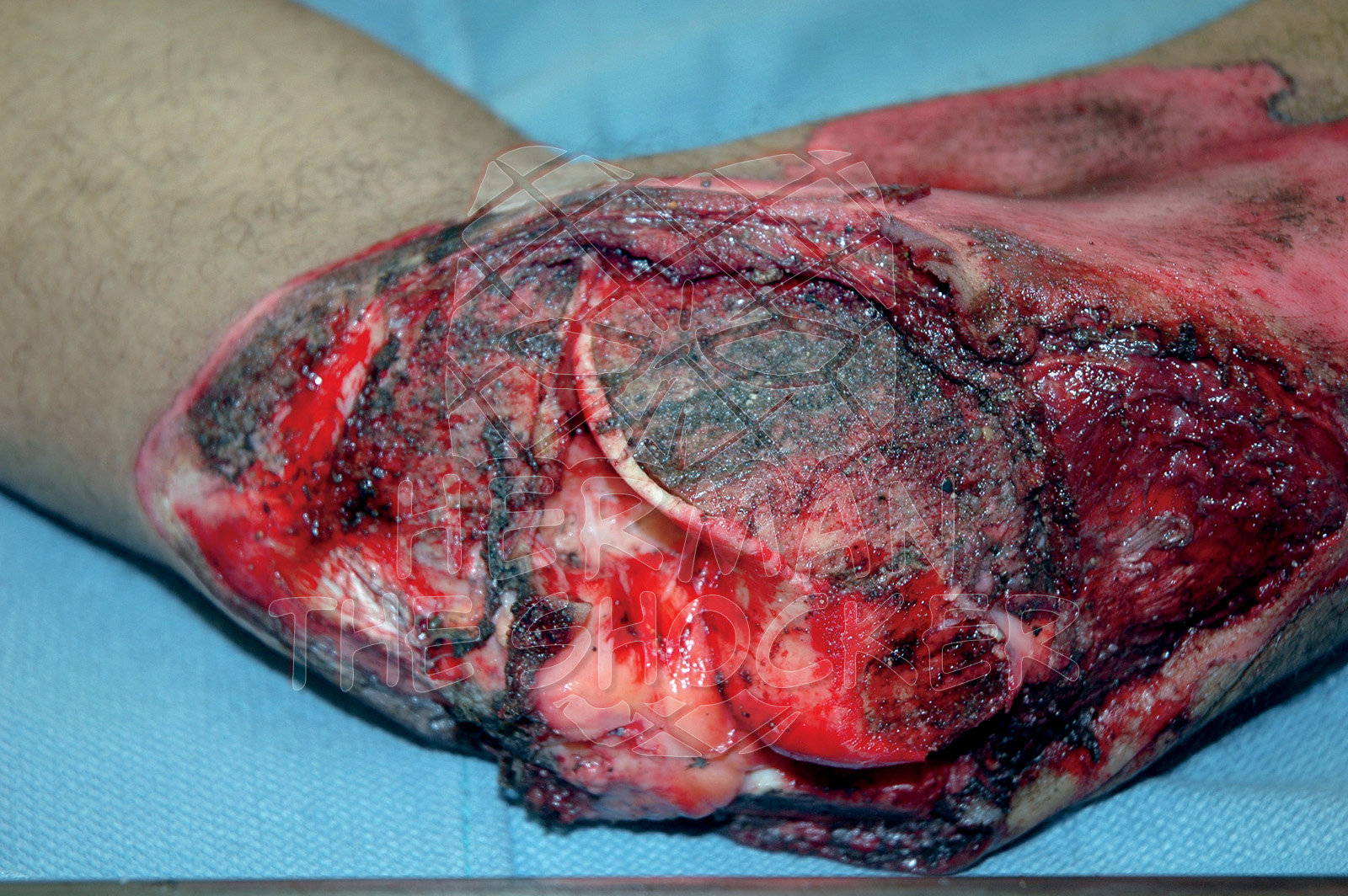 Fig.7 The left knee of the victim in Case 2. Note the relatively smooth, flat grinding injury of the distal femur. The target-like appearance is most evident on the thigh as opposed to the shin. 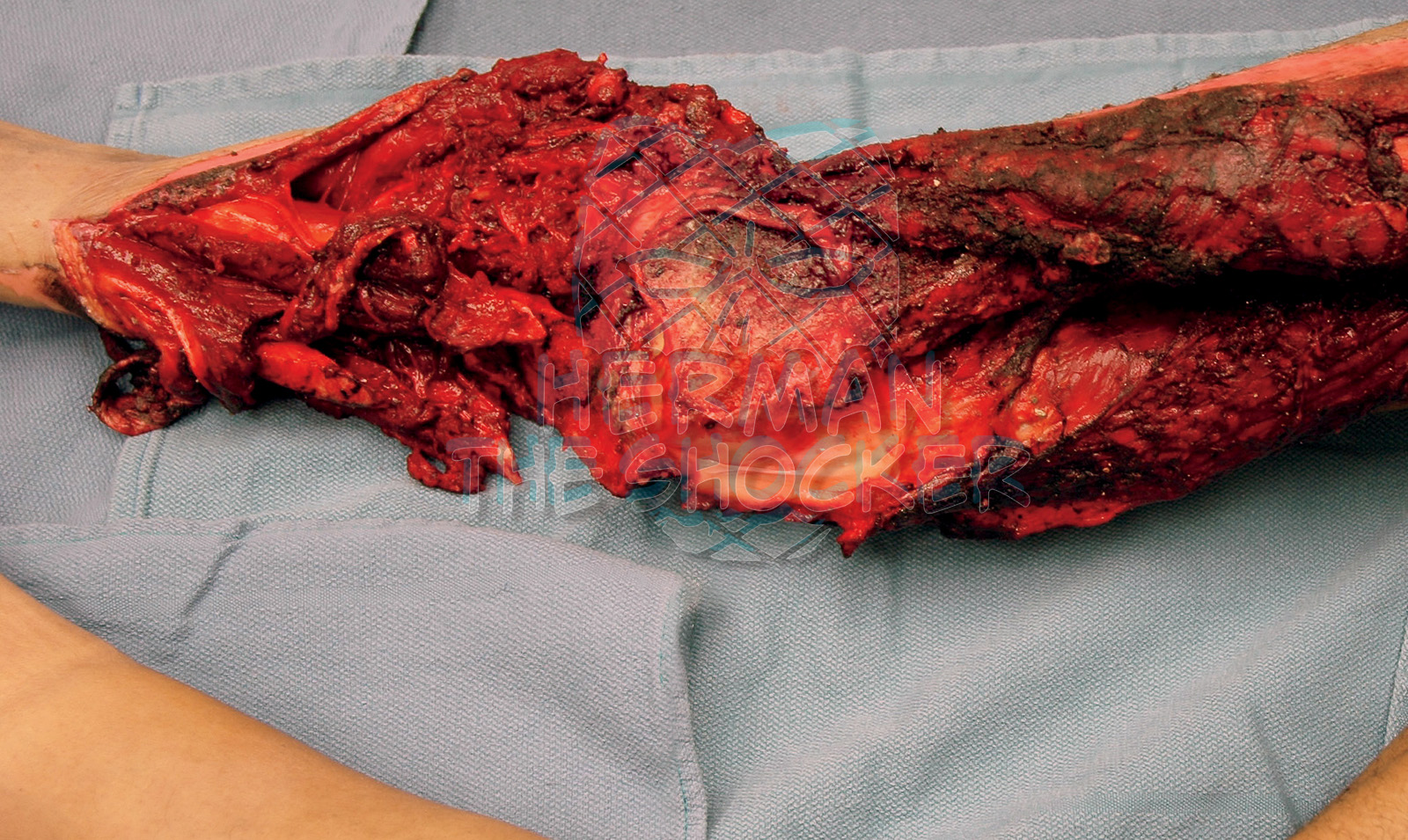 Fig.8 The right leg injury complex in Case 2, with massive injuries. Note the extensive grinding injury of the distal femur. A full autopsy was performed, which disclosed extensive injuries, including characteristic dragging-type grinding injuries of his legs, left elbow, and right toes, with underlying bone involvement. A comminuted fracture of the right lower leg was associated with extensive soft tissue injury. Internal examination revealed subdural hemorrhage, multiple right-sided rib fractures, right lung lacerations, and a right hemopneumothorax. Also noted were mild coronary artery atherosclerosis, emphysema, and hepatic cirrhosis. The cause of death was multiple blunt force injuries. A police investigation had not yet been completed at the time the final autopsy report was issued; consequently, the manner of death was undetermined. 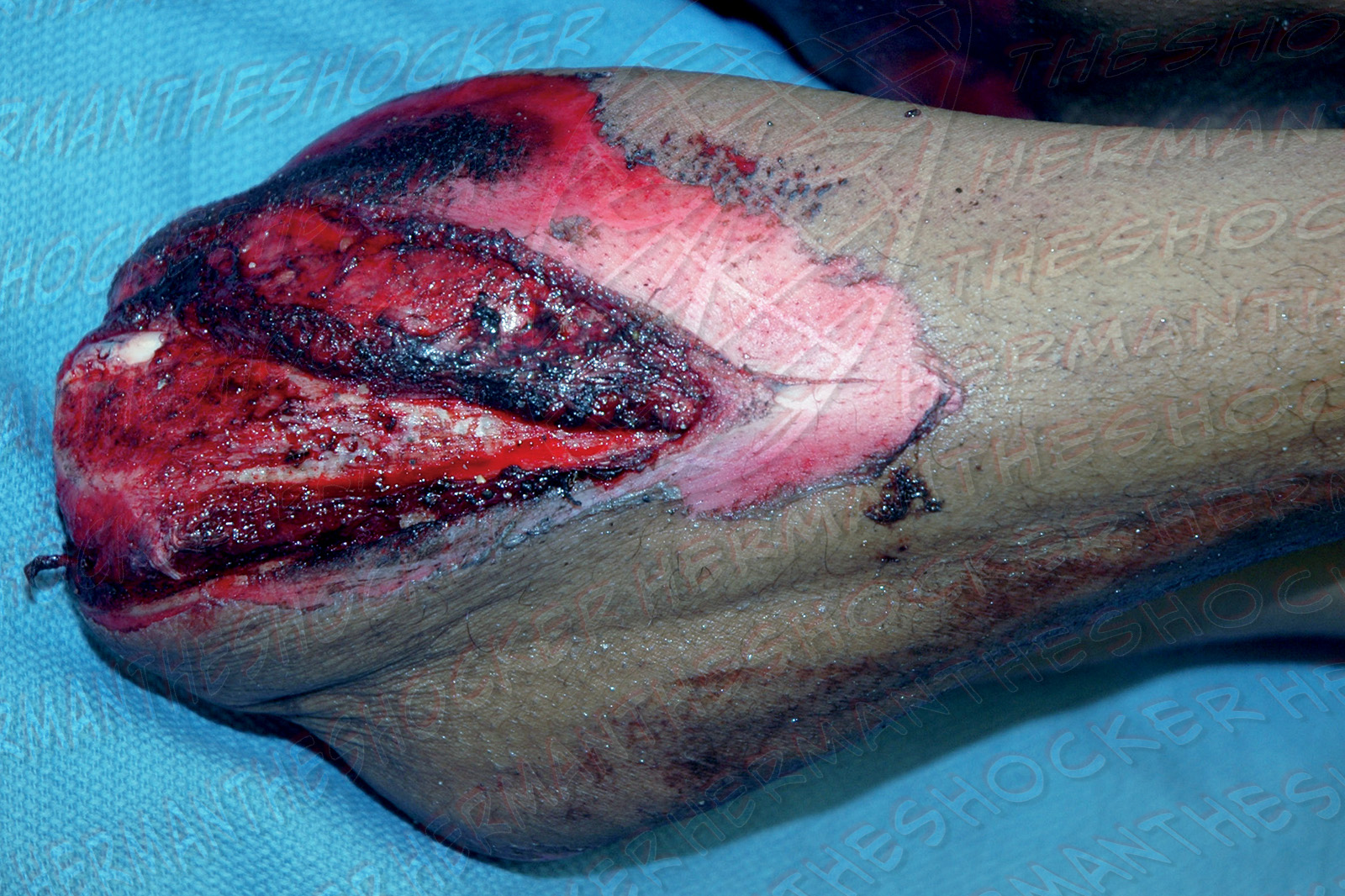 Fig.9 The target-like appearance of this relatively shallow dragging injury involving the left elbow of the victim in Case 2. 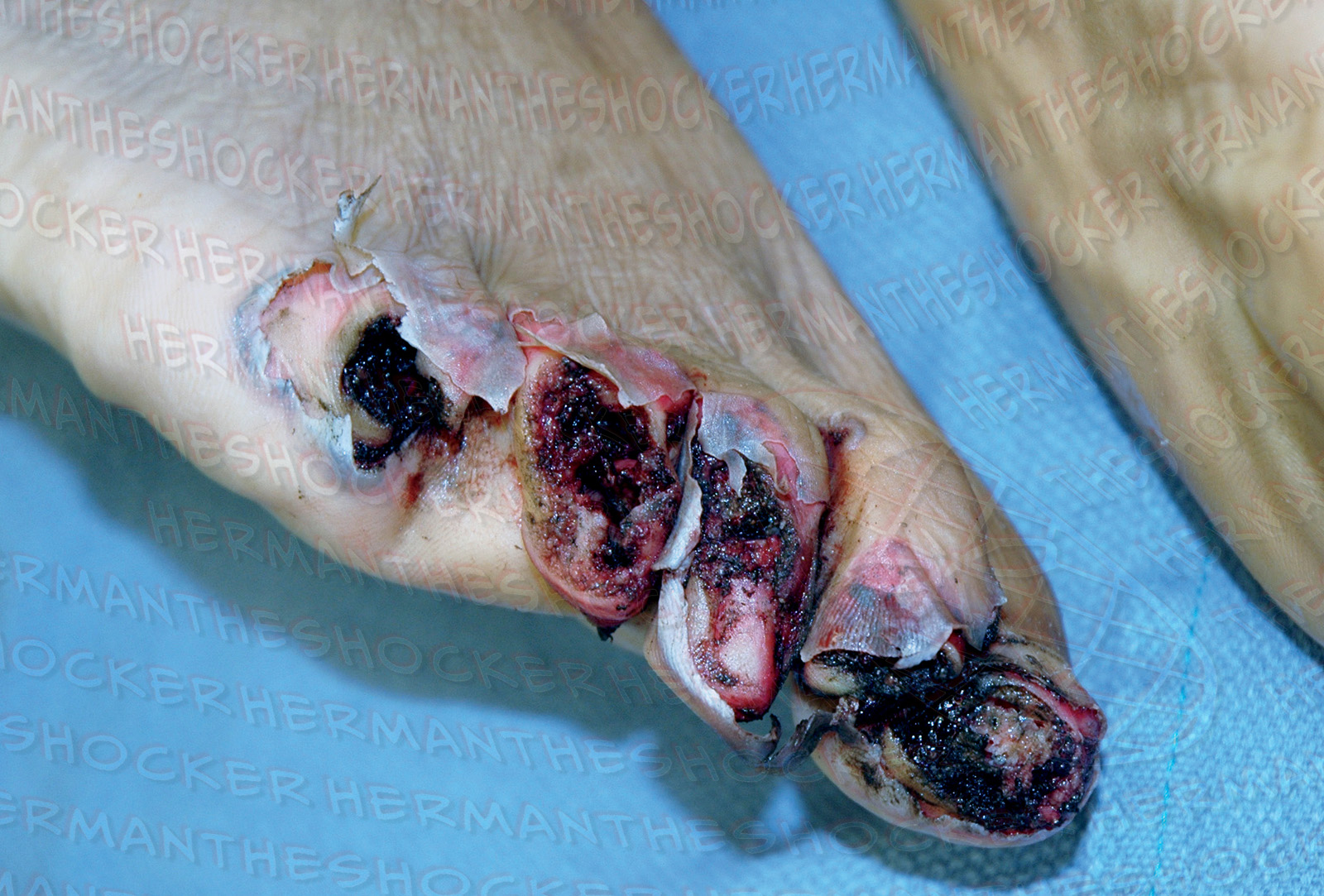 Fig.10 Dragging injuries of the right toes in Case 2, with associated bone grinding injuries. Discussion An important and logical question to be asked by the family and others regarding dragging deaths is whether or not the forensic autopsy can determine if the victim was dead on impact or if death was the sole result of the dragging/grinding injuries sustained from contact with the car and ground. Unfortunately, this determination is not typically able to be made through the forensic autopsy findings alone. Eyewitness accounts and corroborative evidence need to be considered. For example, in the second case presented, witnesses heard the victim yelling as he was being dragged to death. The fact that dragging/grinding injuries are typically very localized suggests that the victims were either physically unable to move the body part being dragged or were unconscious and therefore unable to voluntarily move the body part. The fact that many of these injuries display a postmortem appearance confirms that the victims were likely deceased during injury infliction, or at the very least, at the end of the period of injury infliction. In both of the cases presented, the motorists fled the scene after the victims’ bodies became dislodged from underneath their vehicles. It is important in such cases, as with all hit-and-run scenarios, for forensic pathologists to carefully examine the body and clothing of the victims for trace or other evidence that might be able to be linked back to the vehicle. Items such as vehicle parts and paint chips may provide valuable evidence for such a linkage. Victim clothing should be retained as evidence, as should exemplar samples of blood and hair for possible comparison to blood/hair found on a suspect vehicle. - This post is for educational purposes only and is nonprofit. Under Section 107 of the US Copyright Act of 1976; Allowance is made for "Fair Use" for purposes such as criticism, comment, news reporting, teaching, scholarship, and research. OP is not a medical expert. No copyright infringement intended. This post does not encourage or glorify violence/harassment. Images might have been upscaled and enhanced. Text might have been shortened and simplified/reorganized for online view. |
|
#2
●
06-14-2021, 07:38 PM
| ||||||||
 My Rank: PRIVATE FIRST CLASS Poster Rank:3630 female Join Date: May 2015 Posts: 94 Mentioned: 0 Post(s) Quoted: 20 Post(s)
| ||||||||
|
Re: Fatal Dragging Deaths with Soft Tissue and Bone Grinding Injuries
I can’t even IMAGINE the pain in such a death. Ugh.
|
|
#3
●
06-14-2021, 08:16 PM
| ||||||||
 My Rank: CORPORAL Poster Rank:1350 Male Join Date: Jun 2021 Posts: 448 Mentioned: 0 Post(s) Quoted: 90 Post(s)
| ||||||||
|
Re: Fatal Dragging Deaths with Soft Tissue and Bone Grinding Injuries
sometimes the complete disregard for human life is infuriating. that is not a good way to go. |
|
#5
●
06-15-2021, 12:37 AM
| ||||||||
 My Rank: CORPORAL Poster Rank:1341 Femme Fatale Join Date: Nov 2009 Posts: 452 Mentioned: 0 Post(s) Quoted: 64 Post(s)
| ||||||||
|
Re: Fatal Dragging Deaths with Soft Tissue and Bone Grinding Injuries
You guys... Anytime I hear something about someone being dragged by a car, I think of this story. It's the absolutely most heartbreaking story I believe I have ever seen on Oprah. His name was Jake Robel and oh my gosh it's so sad. Fair warning if you have kids you probably don't want to see this.  |
|
#6
●
06-15-2021, 05:53 AM
| ||||||||
| My Rank: PRIVATE Poster Rank:5238 Join Date: Feb 2009 Posts: 49 Mentioned: 0 Post(s) Quoted: 7 Post(s)
| ||||||||
|
Re: Fatal Dragging Deaths with Soft Tissue and Bone Grinding Injuries
I remember seeing many years ago on rotton.com a young man being dragged miles under a truck,cant find the pics ,but dude had the most severe road rash. |
|
#7
●
01-09-2024, 01:28 AM
| ||||||||
 My Rank: PRIVATE FIRST CLASS Poster Rank:3873 Female Join Date: May 2020 Posts: 84 Mentioned: 0 Post(s) Quoted: 18 Post(s)
| ||||||||
|
Re: Fatal Dragging Deaths with Soft Tissue and Bone Grinding Injuries
I can't believe the murderer from Case 1 only got 20 years. Wtf! Should have been life or better yet, drag his sorry ass a mile on the road.
|
|
#9
●
01-11-2024, 06:02 PM
| ||||||||
 My Rank: GUNNERY SERGEANT Poster Rank:595 Join Date: Feb 2012 Posts: 1,570 Mentioned: 3 Post(s) Quoted: 111 Post(s)
| ||||||||
|
Re: Fatal Dragging Deaths with Soft Tissue and Bone Grinding Injuries
Fuck that must have been excruciatingly painful  |