|
#1
●
07-06-2017, 03:15 PM
|
| My Rank: PRIVATE Poster Rank:7755 Join Date: Nov 2012 Posts: 24 24Posts 441Thanked 3Quoted 0Mentioned 0Contrib. |
|
Exhumed Bodies/embalmer's Work Years Later
Okay, I have another post here of some rare pictures of this genre. These pictures were taken as part of a study of an old family cemetery that was moved during a road construction project in either Tennessee or western Virginia back around 2005. It had been neglcted for many years and many of the tombstones were either missing or had fallen down; some graves dated back to the Civil War period, though most were from around 1890-1940--the most recent burial was in 1972. Any graves moved where a concrete vault was fully intact, was not opened. However, a number of old vaults had rusted or cracked, and thus the remains had to be removed and put in new coffins/vaults. The soil in this area was acidic and thus for graves where the body had been buried in a wood coffin directly in the ground, without a vault, there was little to no tangible remains. Non-vault internment as recent as the 1940s contained no bones, just coffin hardware, buttons, sometimes teeth. However, of burials within vaults, even ones that had leaked, preservation was sometimes far beyond what may be expected. The length of time in the ground was not a good predictor as to condition when inside a vault. Here are a few: 1-3: The first one was a man buried in 1945, in a cloth-covered wood coffin, within a ferrous metal vault. While the vault was still dry, it was corroded to the point it was felt its structural integrity was compromised, so it was opened and the remains transferred to a new casket and vault. Despite the fact this man had been buried 61 years in a fairly cheap wooden casket and average steel vault, his embalmed body was well preserved. 4-6: This man was buried in by far the most expensive casket in the cemetery: a solid copper casket, within a high-grade steel vault. He died in 1942. The copper casket was still in very good shape, but water had leaked into the vault and thus the body had decomposed considerably. Mold was covering the bones and most of the interior had disintegrated. He was little more than bones. pics 7&8: The best preserved body found, of those opened, was among one of the oldest. This young boy had died from some kind of influenza or pneumonia in 1920. He was embalmed and buried in an expensive wooden coffin, within a high grade steel vault. Some water vapor had made its way into the vault, though the remains were intact. The vault had to be cut open with a cutting torch as the side panel opening had corroded shut. The coffin was intact, though fragile. The body itself had some mold, as might be expected, though for 84 years interred, he was in great shape. pic 9 shows remains found in a grave from c.1900: a woman buried in a wooden coffin with no vault. The wet, acid soil had disolved essentially all bones, leaving just dentures and a hair piece. This was a common find in many of the pre-1920s era buried where no vault was used. Some graves had no tangible remains at all. 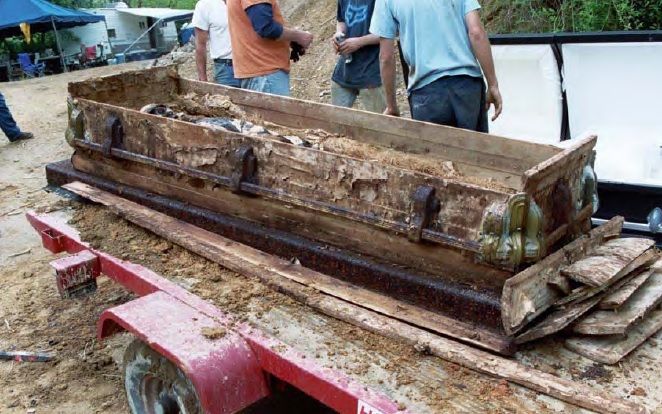 · 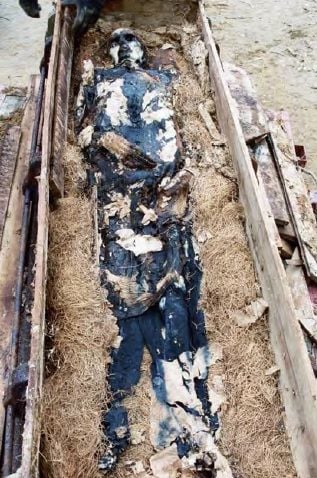 · 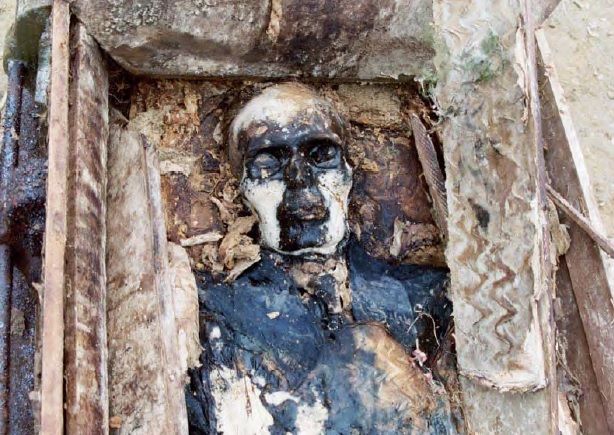 · 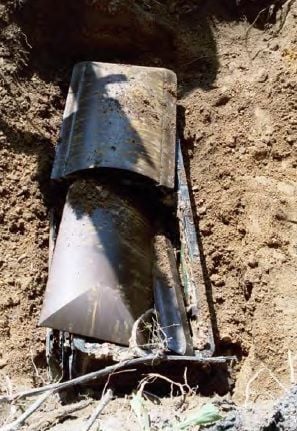 · 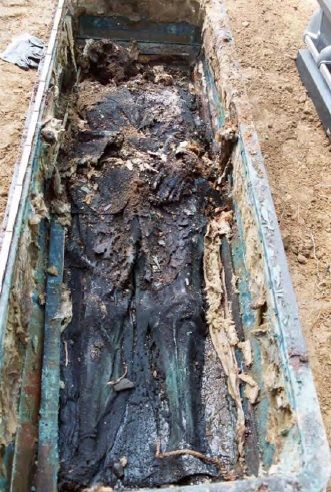 · 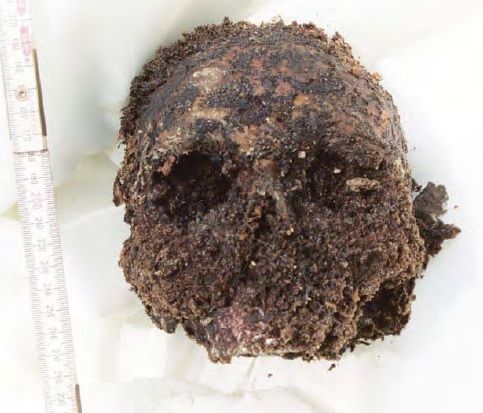 · 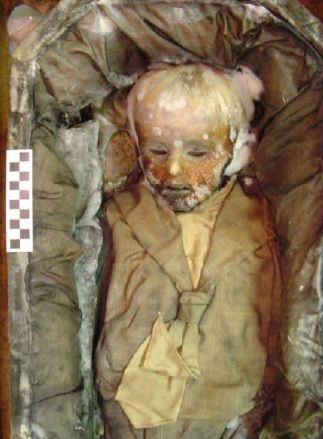 · 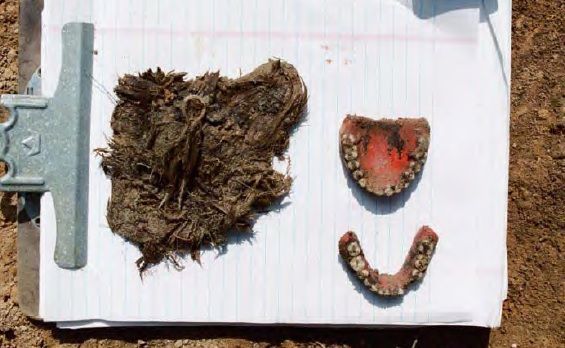 · 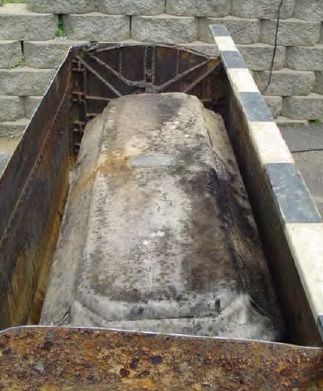 · |
|
#2
●
07-06-2017, 03:21 PM
|
 ♚ Legacy Gold Member ♚ Poster Rank:199 Female Join Date: Nov 2009 Posts: 7,749 7,749Posts 11,991Thanked 709Quoted 5Mentioned 0Contrib. |
|
Re: Exhumed Bodies/embalmer's Work Years Later
Love stuff like this! Thanks.  |
|
#4
●
07-06-2017, 07:22 PM
|
 My Rank: LANCE CORPORAL Poster Rank:2187 Join Date: May 2009 Posts: 216 216Posts 119Thanked 13Quoted 0Mentioned 0Contrib. |
|
Re: Exhumed Bodies/embalmer's Work Years Later
this is why i'm going to be cremated
|
|
#6
●
07-06-2017, 08:17 PM
|
 My Rank: CORPORAL Poster Rank:1554 Male Join Date: Jun 2017 Posts: 365 365Posts 399Thanked 53Quoted 0Mentioned 0Contrib. |
|
Re: Exhumed Bodies/embalmer's Work Years Later
This
|
|
#10
●
07-10-2017, 12:51 AM
|
 Emperor of Uranus Poster Rank:30 I identify as kitchen ware Join Date: Jan 2017 Posts: 49,606 49,606Posts 76,255Thanked 24,331Quoted 28Mentioned 0Contrib. |
|
Re: Exhumed Bodies/embalmer's Work Years Later
The clothing on that kid is quite interesting.
|