|
#1
●
06-02-2021, 03:12 PM
| ||||||||
 ♚ Legacy Gold Member ♚ Poster Rank:912 Join Date: Jul 2020 Posts: 822
Contributions: 10
Mentioned: 13 Post(s) Quoted: 173 Post(s)
| ||||||||
|
Defleshing the Head Allows for Better Visualization of Skull Injuries
When attempting to identify the remains of an unknown decomposed individual, it may be necessary to deflesh the skull. This man was assaulted by unknown means. He was found in a state of mild decomposition (Fig.1) which became more advanced by the next morning, even with refrigeration (Fig.2). At autopsy, epidural and subdural hematomas, as well as acute and healing skull fractures and remote craniotomies were found (Fig.3a). In figure 3b, note the large composite calvarial graft in the left frontal, temporal, and parietal regions. Defleshing of the skull provided for a more accurate and detailed recording of identifying features. When necessary, fractured or fragmented cranial remains can be repaired with glue to provide better visualization of injuries.  Fig.1 This man was assaulted by unknown means. He was found in a state of mild decomposition. 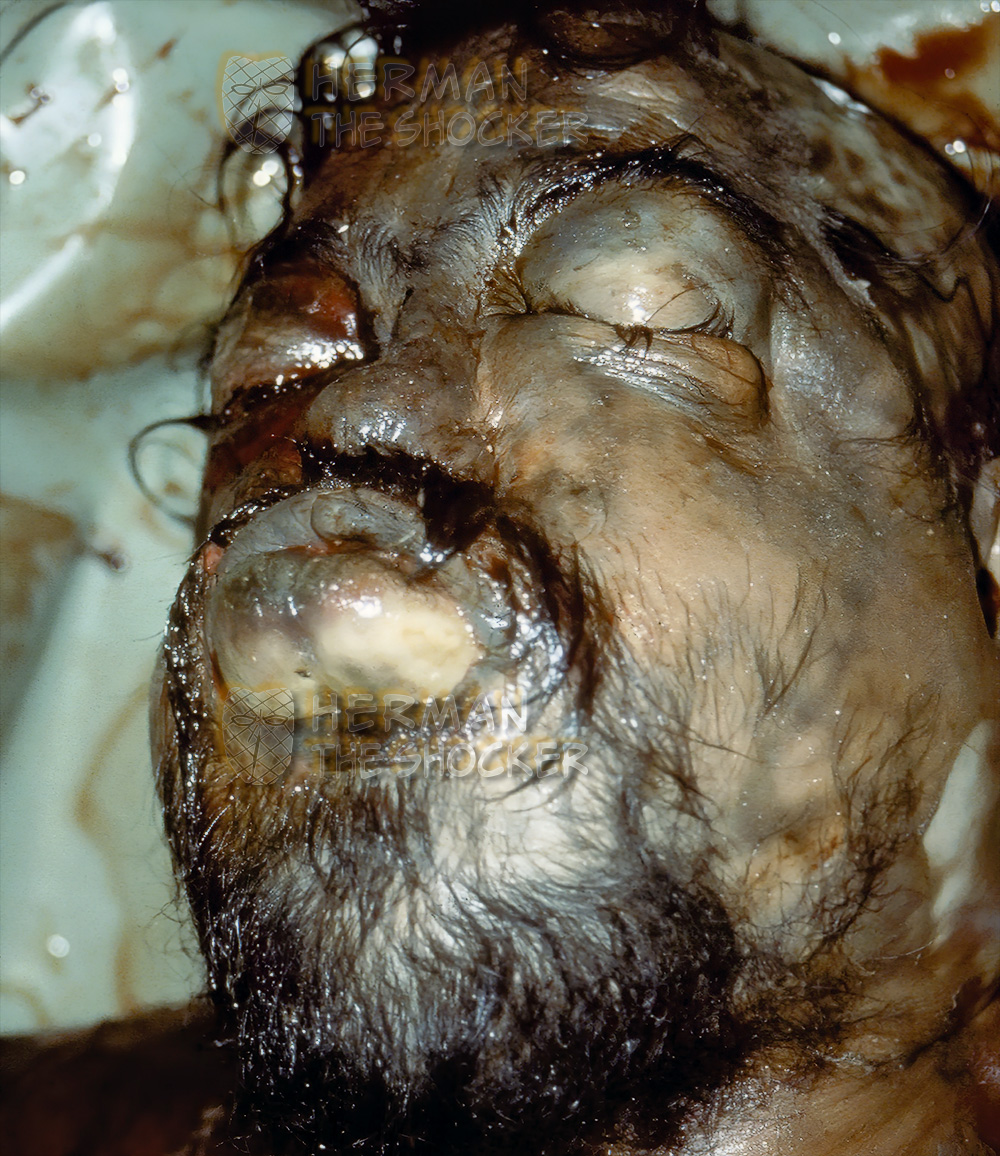 Fig.2 Decomposition became more advanced by the next morning, even with refrigeration. Medical examiners and forensic anthropologists are often faced with the difficult task of removing soft tissue from the human skeleton without damaging the bones, teeth, and, in some cases, cartilage. The most commonly used forensic methods for removing human soft tissue from remains include simmering in hot water, dish detergent with or without enzymes, diluted household bleach under a vented fume hood, or dermestid beetles (family Dermestidae). 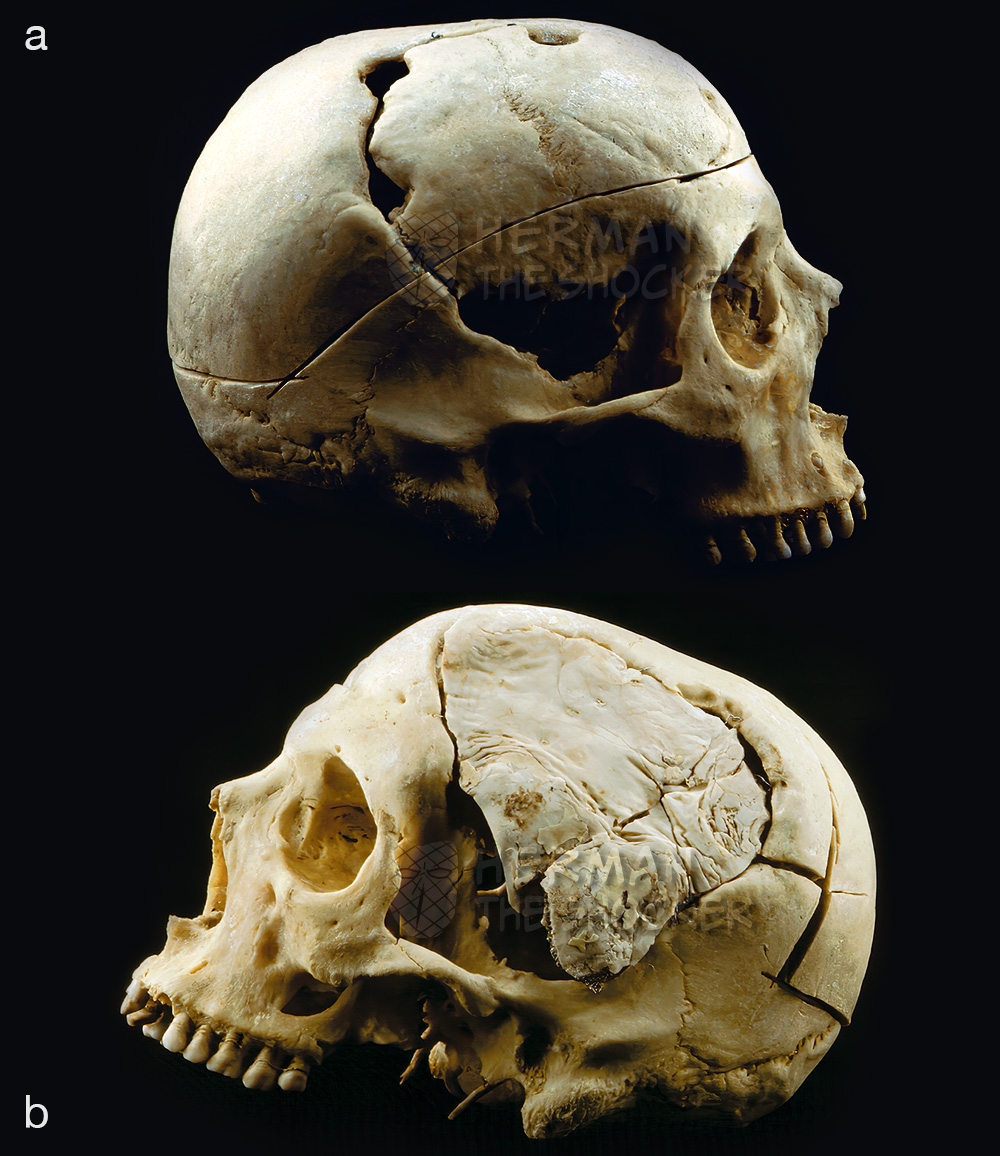 Fig.3 a Acute and healing skull fractures and remote craniotomies. b large composite calvarial graft in the left frontal, temporal, and parietal regions. Tissue can be removed by soaking/macerating in large water-filled containers for weeks or months or manually removed with a knife, scissors, or scalpel. Remains may also be allowed to decompose/putrefy naturally (e.g., the “Body Farm” at the University of Tennessee, Knoxville). A combination of one or more of these methods may be used, or the remains may be soaked in household bleach straight from the bottle (3–6% sodium hypochlorite). While the method of choice depends on many variables, including the extent of bodily decomposition, and time constraints associated with the case (police and medical examiner), whether to use bleach or not is a controversial topic among practitioners because it can potentially damage bone and inhibit DNA extraction. - This post is for educational purposes only and is nonprofit. Under Section 107 of the US Copyright Act of 1976; Allowance is made for "Fair Use" for purposes such as criticism, comment, news reporting, teaching, scholarship, and research. OP is not a medical expert. No copyright infringement intended. This post does not encourage or glorify violence/harassment. Images might have been upscaled and enhanced. Text might have been shortened and simplified/reorganized for online view. |
|
#2
●
06-02-2021, 03:55 PM
| ||||||||
 ♚ Legacy Gold Member ♚ Poster Rank:198 Female Join Date: Nov 2009 Posts: 7,766 Mentioned: 5 Post(s) Quoted: 709 Post(s)
| ||||||||
|
Re: Defleshing the Head Allows for Better Visualization of Skull Injuries
I commented and it disappeared so here goes again. The extent of decomp even after refrigeration is amazing.  Love your posts HS. Thank you.  |
|
#3
●
06-02-2021, 05:00 PM
| ||||||||
| So Fucking Banned Poster Rank:302 Join Date: Mar 2010 Posts: 4,324
Contributions: 1
Mentioned: 2 Post(s) Quoted: 1445 Post(s)
| ||||||||
|
Re: Defleshing the Head Allows for Better Visualization of Skull Injuries
Thanks again for another interesting post.
|
|
#4
●
06-03-2021, 11:53 AM
| ||||||||
 My Rank: FIRST SERGEANT Poster Rank:480 Male Join Date: Dec 2009 Posts: 2,258 Mentioned: 0 Post(s) Quoted: 293 Post(s)
| ||||||||
|
Re: Defleshing the Head Allows for Better Visualization of Skull Injuries
Man, that poor dude had a rough life and didn't go easily into the dark night. Super interesting post. The ability of the skull to heal, even after extensive damage, is truly incredible.
|
|
#5
●
06-03-2021, 03:59 PM
| ||||||||
 ♚ Legacy Gold Member ♚ Poster Rank:913 Join Date: Oct 2020 Posts: 822 Mentioned: 0 Post(s) Quoted: 119 Post(s)
| ||||||||
|
Re: Defleshing the Head Allows for Better Visualization of Skull Injuries
Great post, love seeing the healed areas of skull. Of course, one has to ask why he had so many holes in the first place
|
|
#7
●
06-04-2021, 11:43 AM
| ||||||||
| ♚ Legacy Gold Member ♚ Poster Rank:912 Join Date: Jul 2020 Posts: 822
Contributions: 10
Mentioned: 13 Post(s) Quoted: 173 Post(s)
| ||||||||
|
Re: Defleshing the Head Allows for Better Visualization of Skull Injuries
Putrefaction follows a predetermined timetable in nature and after the first 36 hours the neck, the abdomen, the shoulders and the head begin to turn a discoloured green. This is then followed by bloating – an accumulation of gas that is produced by bacteria toiling away within the deceased. This bloating is most visible around the face where the eyes and the tongue protrude as the gas inside pushes them forward.
|