|
#1
●
10-09-2017, 03:40 PM
|
 NOT THE BOSS Poster Rank:32 ᴀᴅᴍɪɴɪᴤᴛʀᴀᴛᴏʀ Join Date: May 2013 Posts: 47,730
Contributions: 107
47,730Posts 56,449Thanked 4,195Quoted 19Mentioned 107Contrib. |
|
The Curious Case of Colonel James Sabow
The Homicide of United States Marine Corps Colonel, James E. Sabow: A Forensic Analysis Submitted to the United States Congress Received date: November 22, 2016; Accepted date: January 05, 2017; Published date: January 09, 2017 The official position of the United States Government is Marine Corps Colonel James E. Sabow committed suicide. He allegedly died by an intraoral shotgun discharge in the backyard of his quarters on the El Toro Marine Corps Air Station, Orange County, California, USA in 1991. However, questions have persisted since the Colonel’s death whether he died by homicide. The two scenarios on the manner of death, suicide and homicide, were evaluated as to the gunshot residue (GSR) and back spatter residue (BSR) on the Colonel’s clothing, the bloodstains on and off the body and the position of the body at the death scene. The shotgun, when test fired, was shown to leak GSR from its breech and trigger housing. Samples from the Colonel’s clothing were analysed by scanning electron microscopy/energy dispersive X-ray analysis show there are no concentrations of GSR or BSR on the clothing that should be present if the Colonel committed suicide. Bloodstains on and away from the body and the position of the body do not support the suicide scenario, The Colonel’s body was staged to appear he committed suicide. There is no evidence of suicide. The Colonel’s death was a homicide. On January 22, 1991, Marine Corps Colonel James E. Sabow was found dead in the backyard of his quarters at the United States Marine Corps Air Station, El Toro, California, USA. He was on his right side dressed in a white terrycloth bathrobe, white undershirt, light blue pajama bottom, white socks and black slippers (Figure 1). The death certificate issued the next day by the Orange County Coroner, California, USA, concluded the Colonel had died by suicide [1]. The death was alleged to be by an intraoral shotgun discharge. The close proximity of the victim’s shotgun (Ithaca 12 gauge double barrel shotgun) to his body (Figure 1) as well as a patio chair on top of him supported a suicide scenario at first impression. However, bloodstains away from the body, the autopsy report and photographs and the death scene photographs indicate homicide. This article will examine the evidence and reconstruct the manner death of the Colonel. In 2003 United States Congressman Duncan Hunter, Chairman of the Armed Services Committee, was apprised of the controversy regarding the manner of the Colonel’s death. In response, Congressman Hunter amended the United States Defense Authorization Bill for 2004 to include instruction to the Department of Defense for a reinvestigation of the death. The Department of Defense chose Dr. Jon Nordby to conduct the mandated investigation which resulted in a report [2] submitted to the Department of Defense and the Congress. That report concluded the Colonel committed suicide. The present article, an alternative forensic report to Nordby’s report, was financed in part by the Sabow family and submitted in 2006 to Congressman Hunter who left office in 2007 without comment on the conclusions of this report. The Congressman has refused any comment since on the manner of the Colonel’s death despite being presented with irrefutable evidence of homicide. In 2012 one of the autopsy photographs released by the United States Department of Defense was discovered to be fraudulent [3]. This fraudulent photograph was generated from the Department of Defense for use in a civil case in United States Federal Court in 1994. A second version of the fraudulent photograph [3] was used by Nordby in his report to the Department of Defense and the US Congress [2] to support his conclusion the Colonel committed suicide. Nordby generate two reports [2,4] in this case. Both were seriously flawed in most other aspects of his analysis. Suicide The Colonel committed suicide with his Ithaca 12 gauge double barrel shotgun by sitting in a chair placing the shotgun in his mouth. The shotgun muzzle was held at his mouth with his left hand and he pushed the trigger with a finger or the thumb of his right hand (Figure 2A). The position of the body (Figures 1 and 3) suggests consistent with this scenario, the shotgun was held outside his right leg and after the shot, he somehow fell backward from the chair and onto his right side causing the patio chair to upset and land on top of him. This is the theory promulgated by Nordby [2,4]. The death scene is illustrated in Figure 3 which also shows the suicide interpretation of the Colonel’s death. Homicide The Colonel received a blow to the back of his head, which rendered a fatal injury. While the he was lying on the ground, the assailant inserted the victim’s 12 gauge double barreled shotgun into his mouth and fired the left barrel. This part of the scenario is reenacted in Figure 2B. The shotgun was positioned by the assailant under the Colonel’s legs and a patio chair placed on the body (Figure 1) in order to generate the appearance of suicide. The Nordby reports [2,4], both of which concluded suicide, were not convincing due to many flaws which will be discussed. The author conducted an independent study with the assistance of Dr. David Sabow, the brother of the Colonel and a forensic neurologist, which resulted in this report to Congressman Duncan Hunter. The gunshot residue (GSR), backspatter residue (BSR), bloodstain examination and crime scene observations are presented here. MacLachlan [6] examined the pathology. Revealed in his study was evidence of a depressed right occipital skull fracture which was shown to have occurred prior to the intraoral shotgun discharge. The Colonel had received a strong blow by a club to the back of his head prior to the intraoral shotgun blast. The study presented here examines the GSR and BSR by scanning electron microscopy, the bloodstains on and around the body and the positions of the body and clothing. Gunshot and Back Spatter Residues Two general particle types involved in this case can be detected by scanning electron microscopy (SEM)/energy dispersive X-ray spectroscopy (EDS): Gunshot residue (GSR) These particles, produced by the firing of a gun, are usually composed of lead, antimony and barium in various combinations and originate from the primer of the cartridge. Other elements often associated with GSR are aluminium, silicon, sulphur, chlorine, potassium, calcium and iron. In addition, bullet-origin particles composed of copper, zinc and nickel are often associated with the primer-origin particles. Unjacketed bullet and some jacketed bullets will produce large amounts of lead particles [7] in GSR from both the breech and muzzle. For a shotgun, lead shot ablation coupled with heat would generate lead particles as they travel down the bore. Back spatter residue (BSR) These are particles produced by a contact or near contact shot to the head included in blowback. The interaction of the bullet, or in this case, lead shotgun pellets and hot gases with bone (calcium and phosphorus) will produce characteristic particles of lead-calcium-phosphorus and particles composed of bone [8]. Gunshot residue particles would also be associated with BSR. Leakage of GSR-laden gases from the shotgun, if it occurs, would be from the breech area and perhaps the trigger housing of the Ithaca shotgun (Figure 4). There appear to be no published reports on breech GSR leakage of side-by-side double barrel shotguns. Once it is established that the shotgun has breech leakage of GSR-laden gas, the major part of the particle burden study is the examination of samplers taken from the Colonel’s bathrobe and pajama bottom analyzed by SEM/EDS. More information can be found here, here and here.  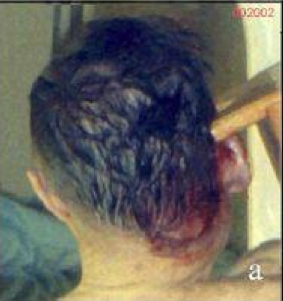 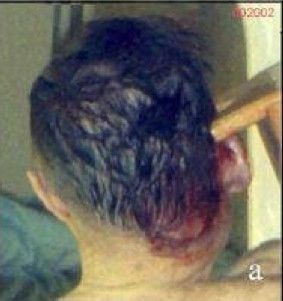 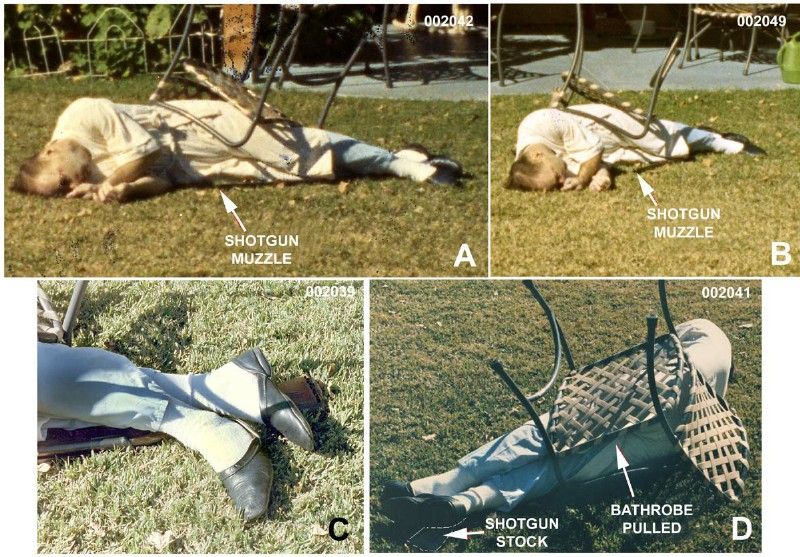 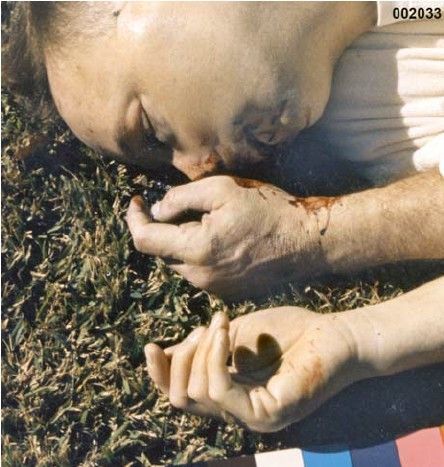 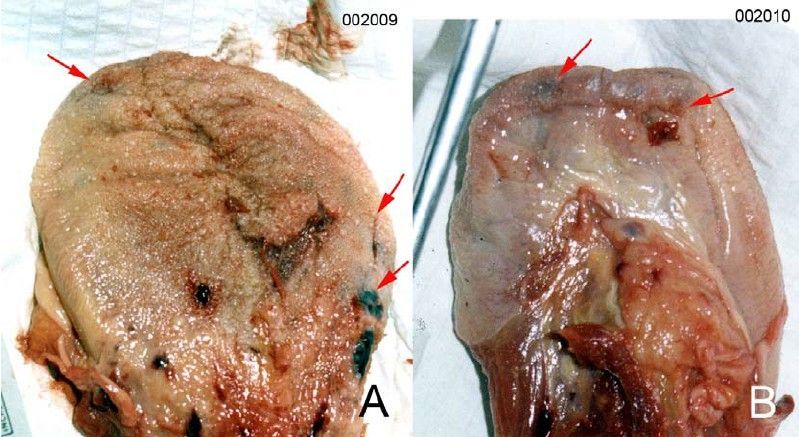 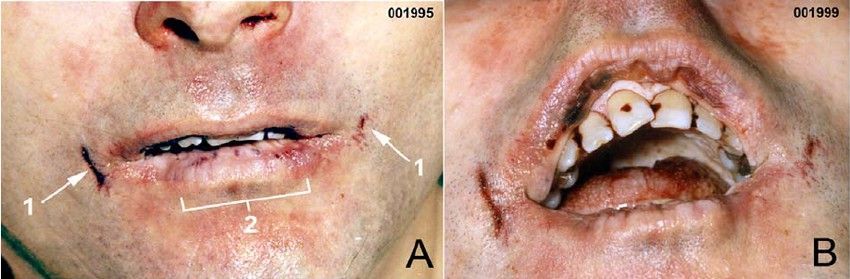 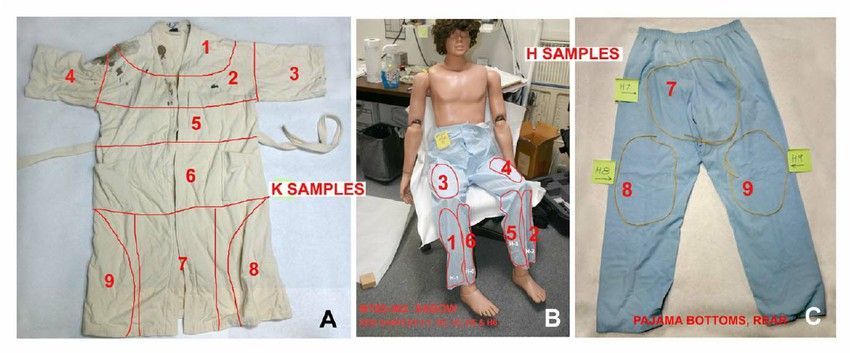 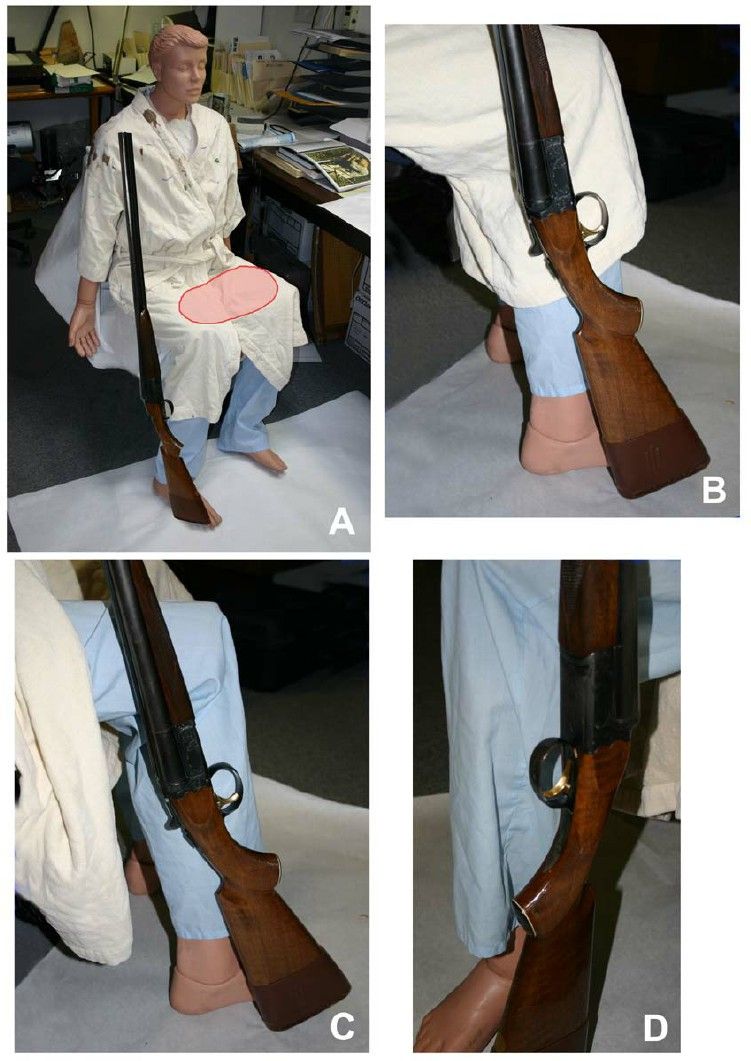 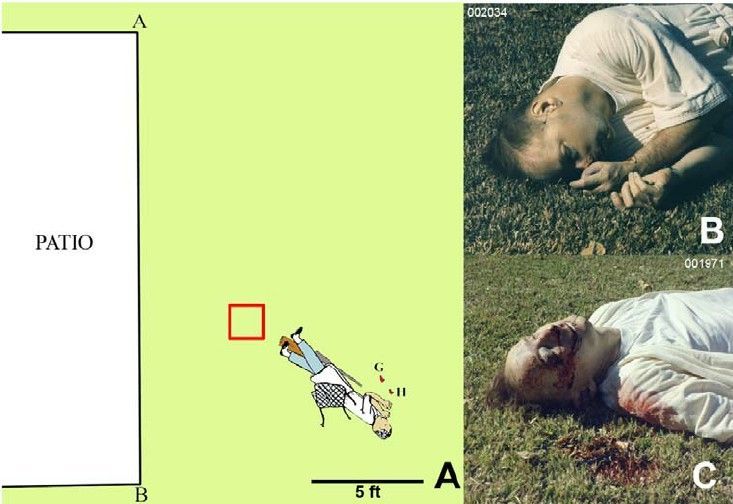 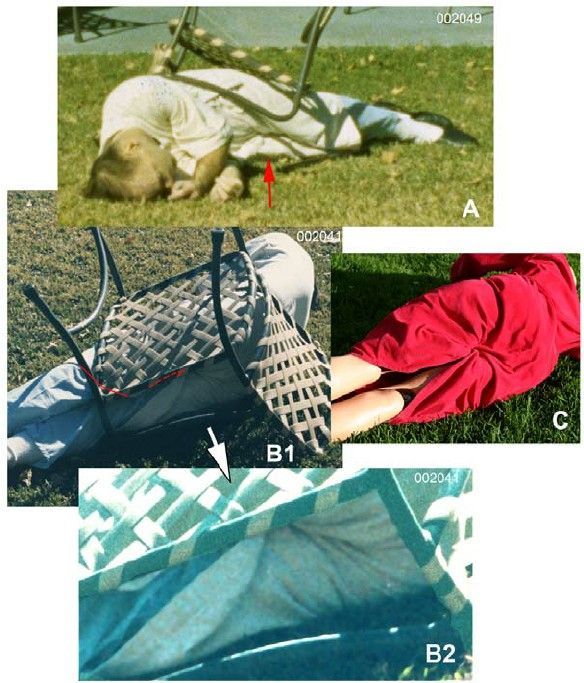 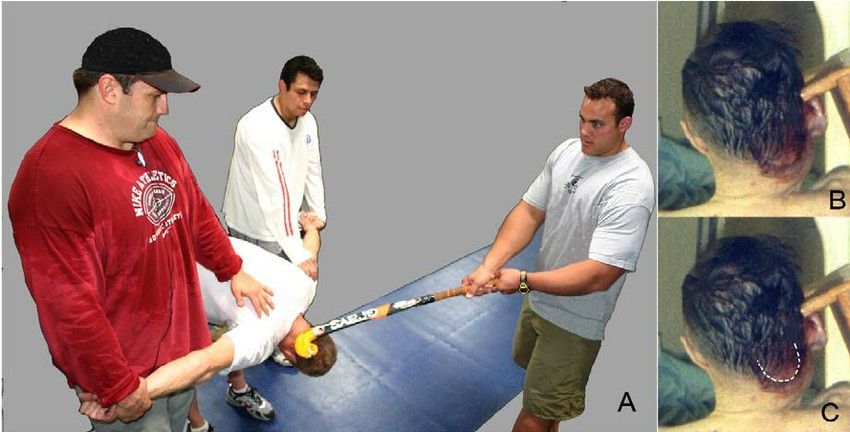 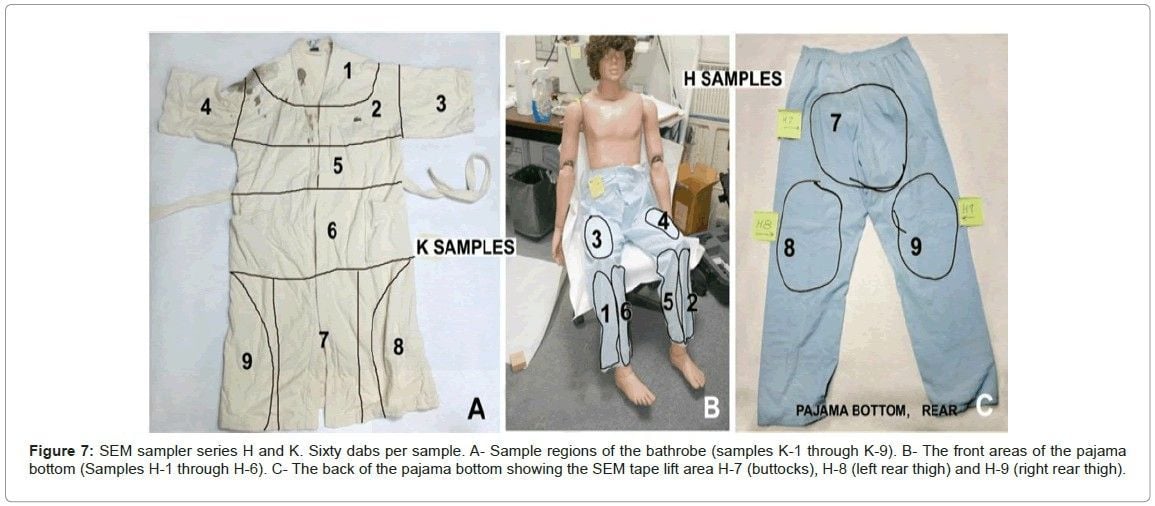 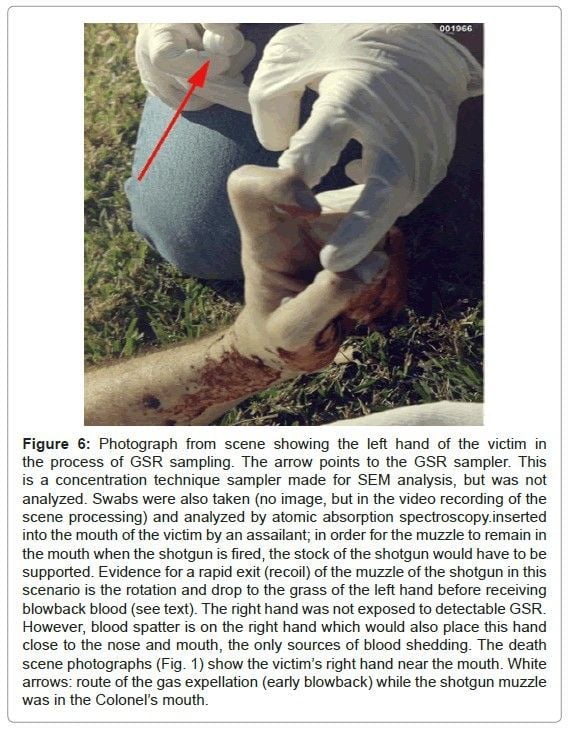 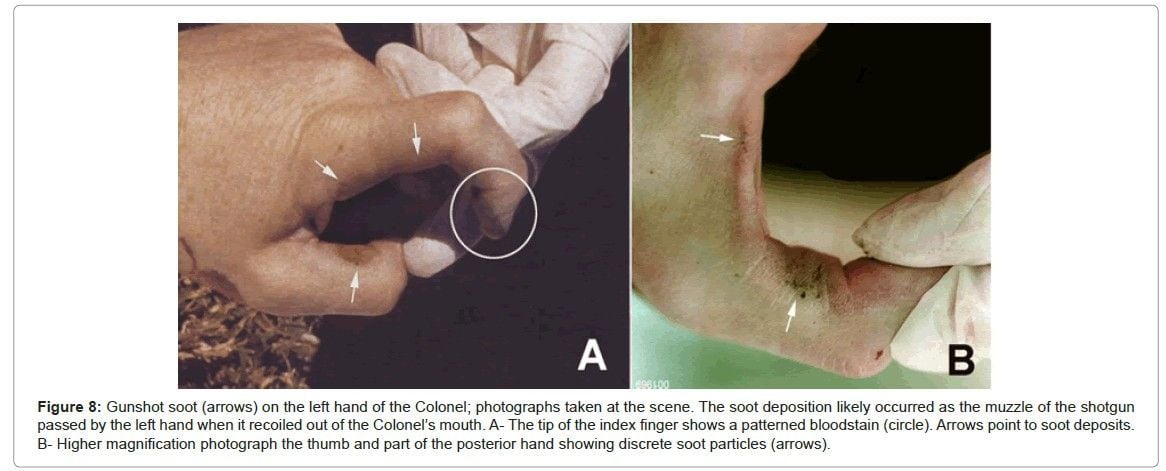 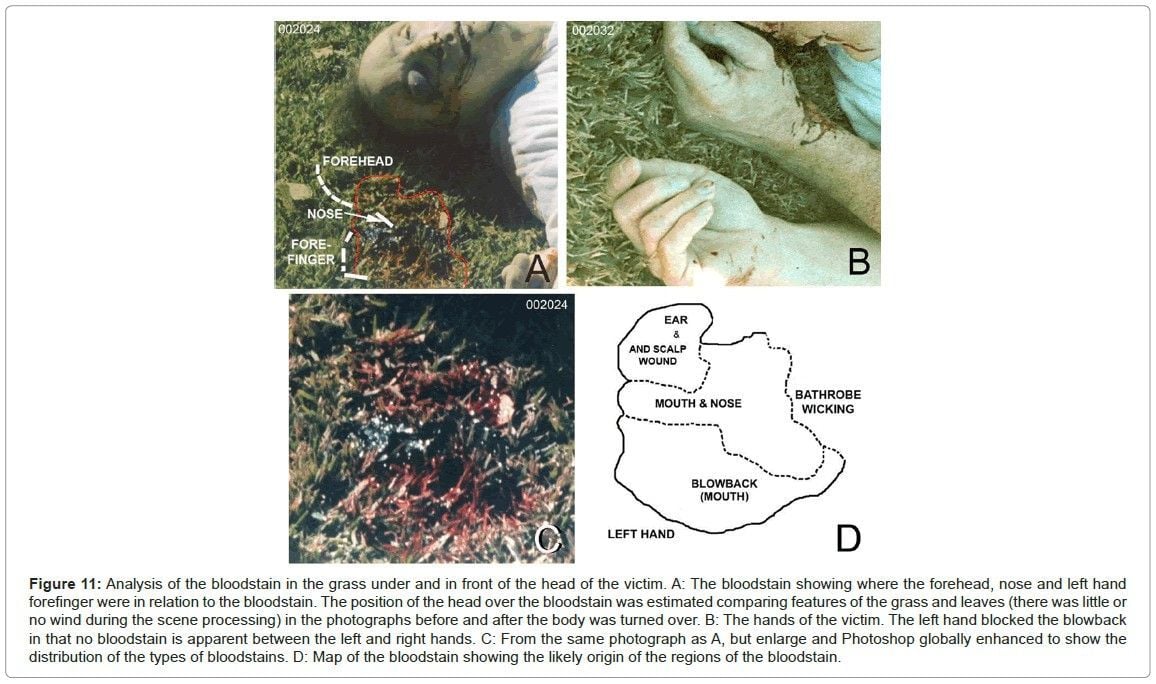 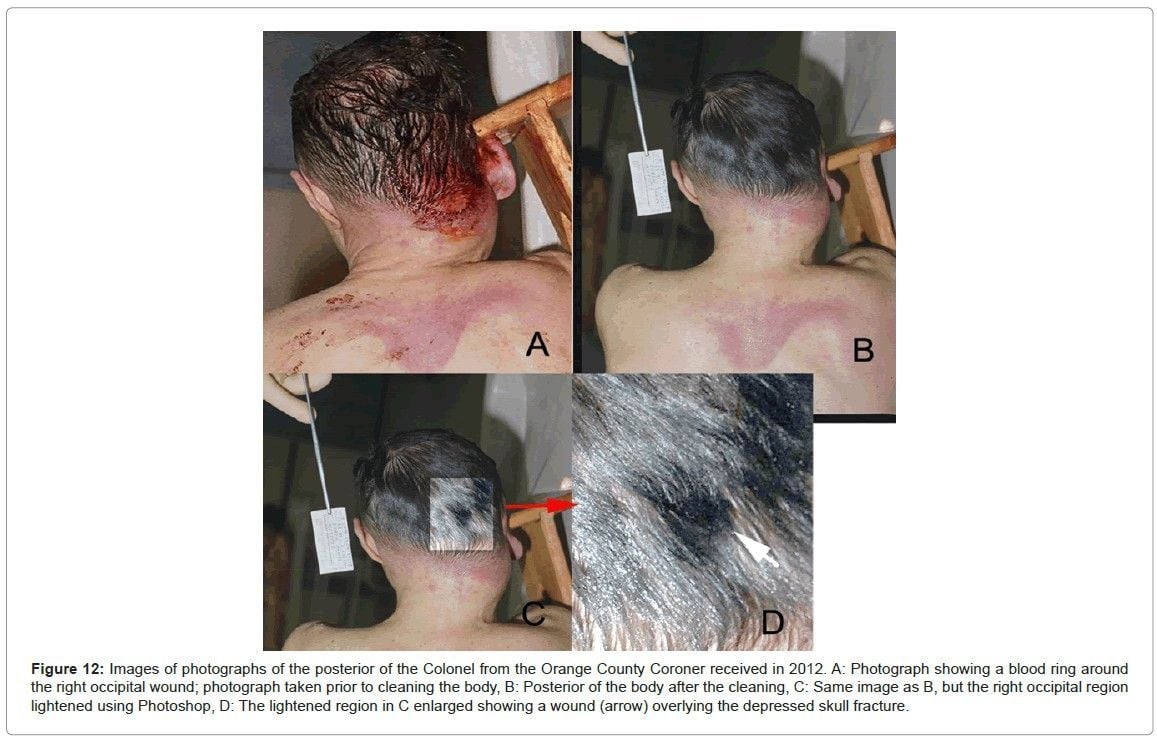 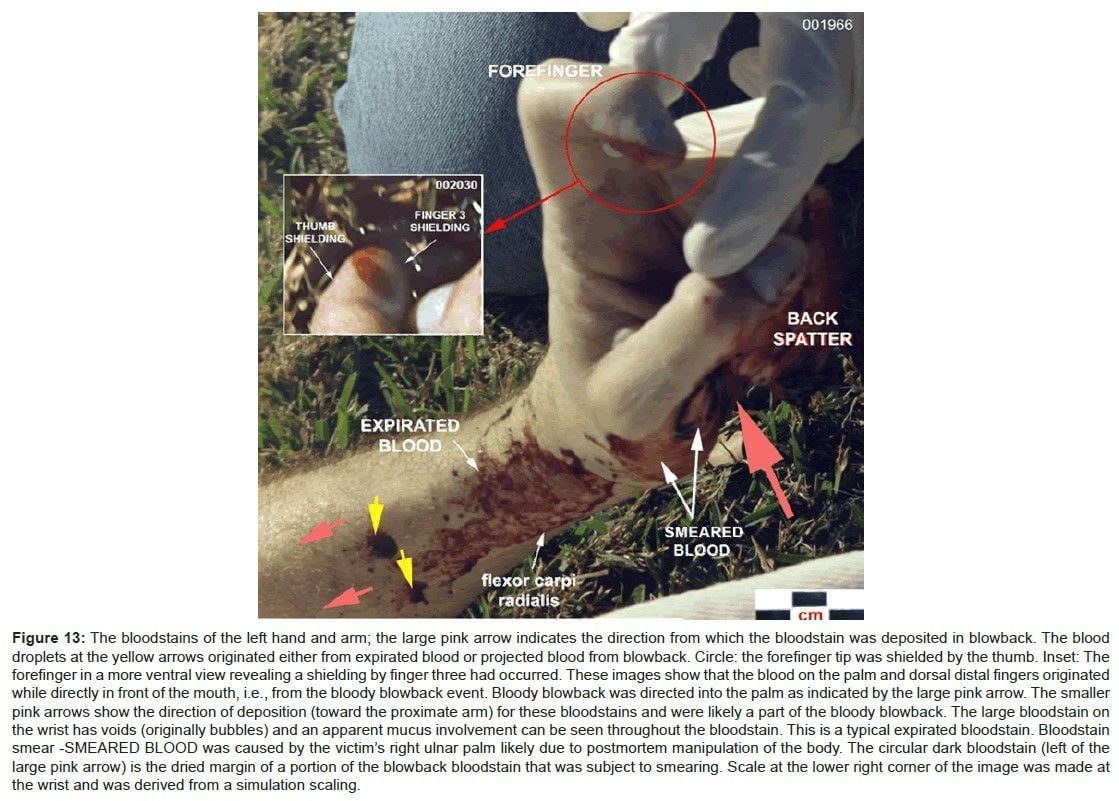 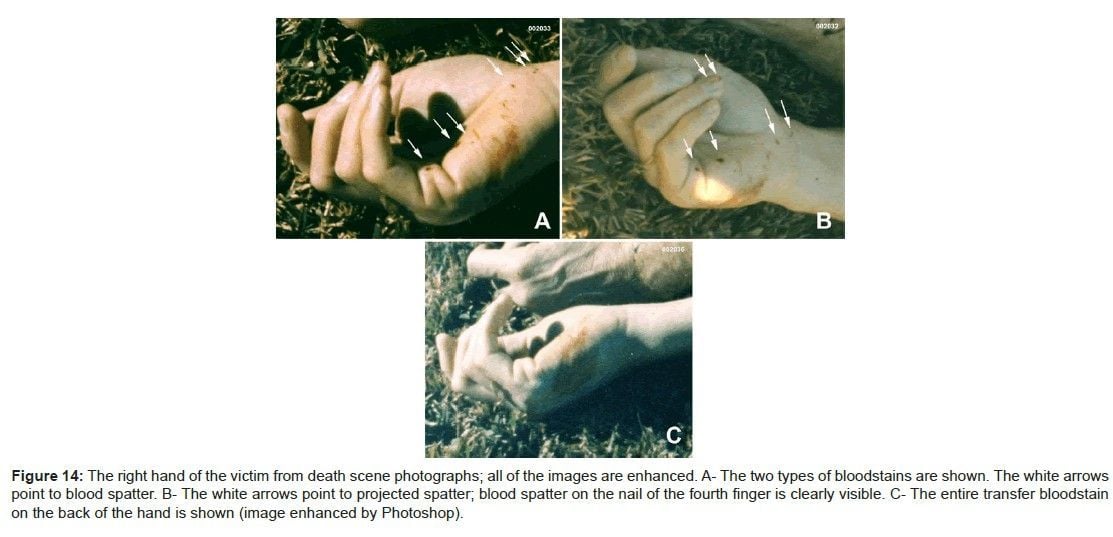 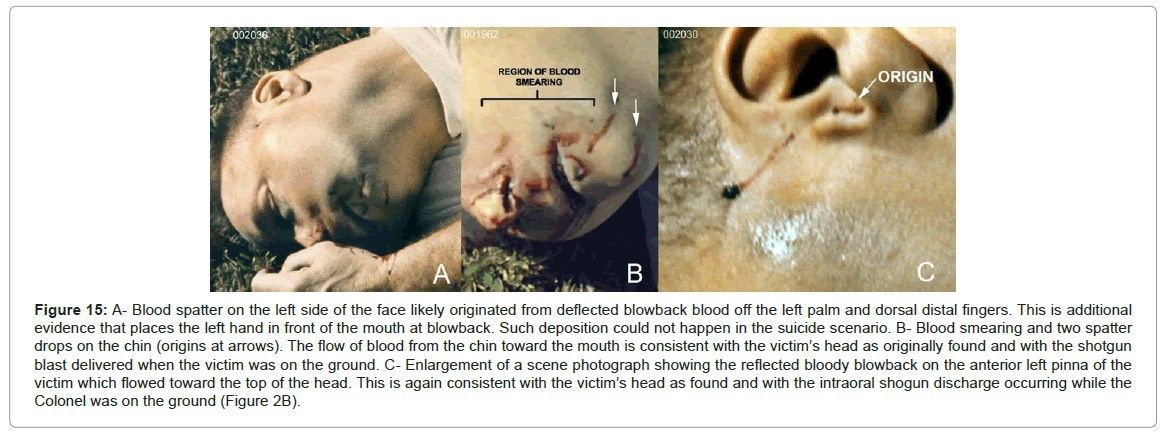 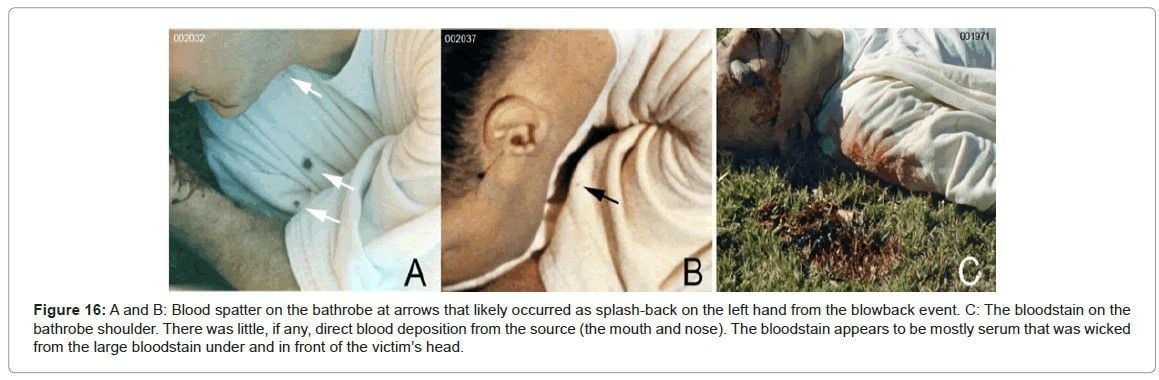 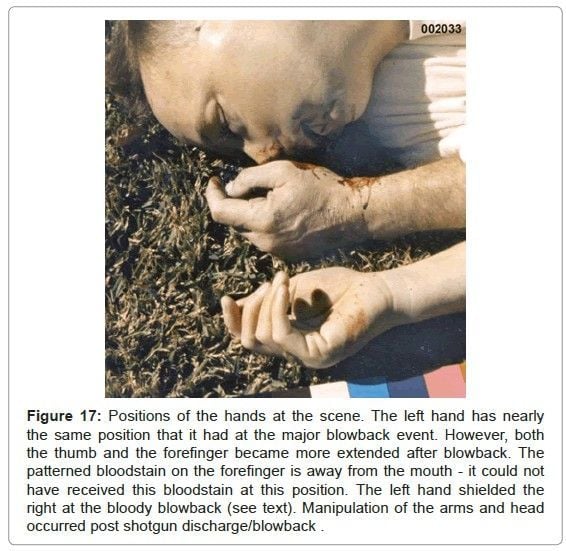 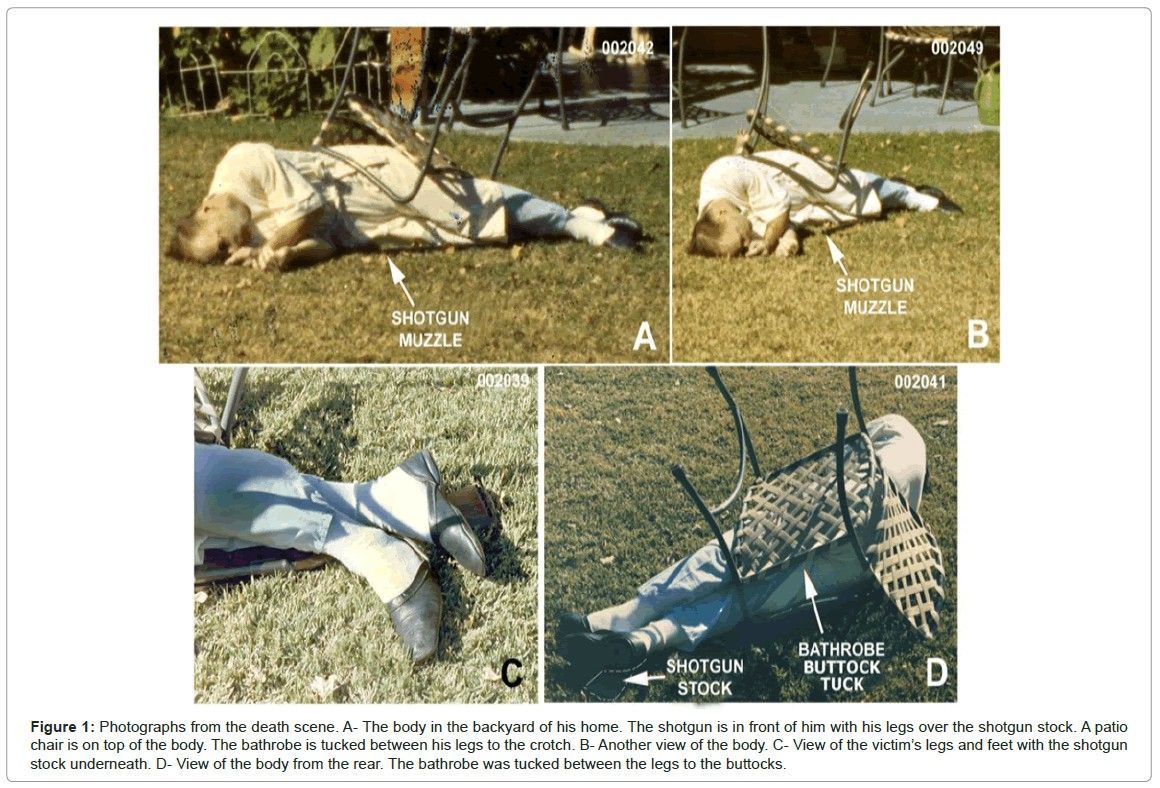 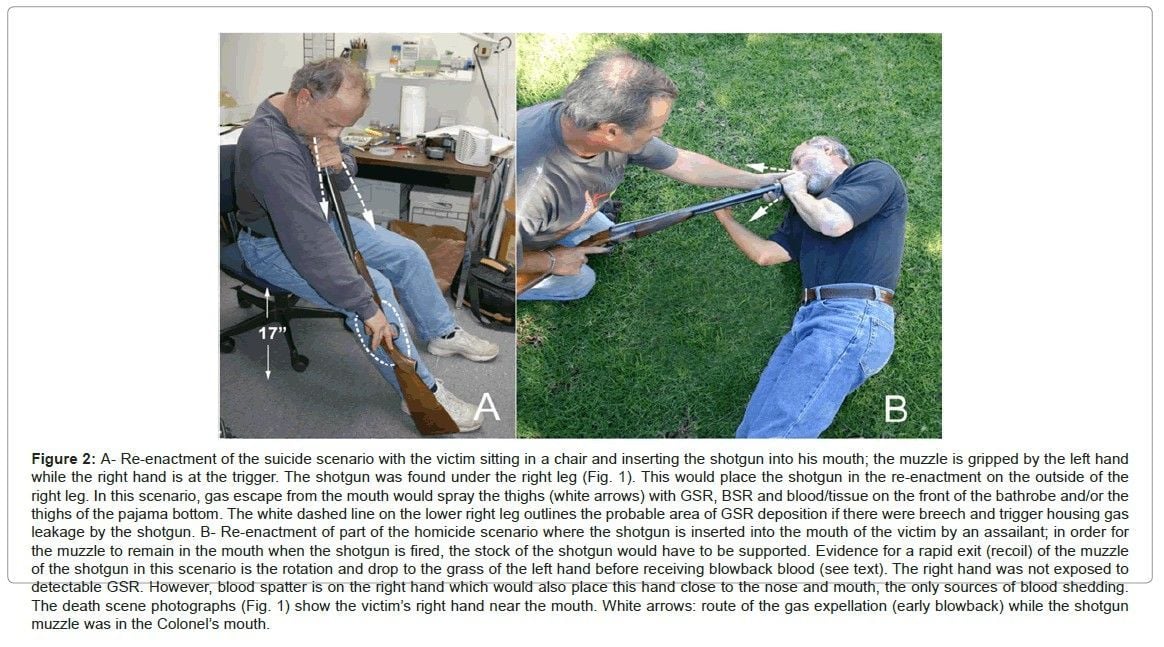 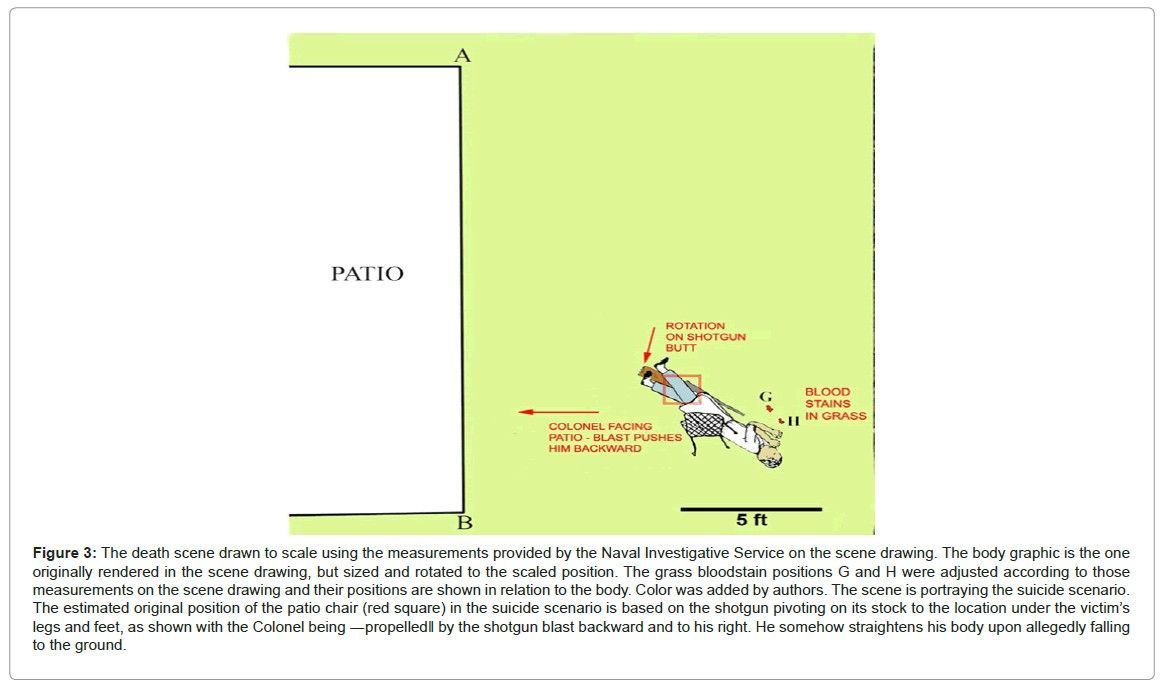 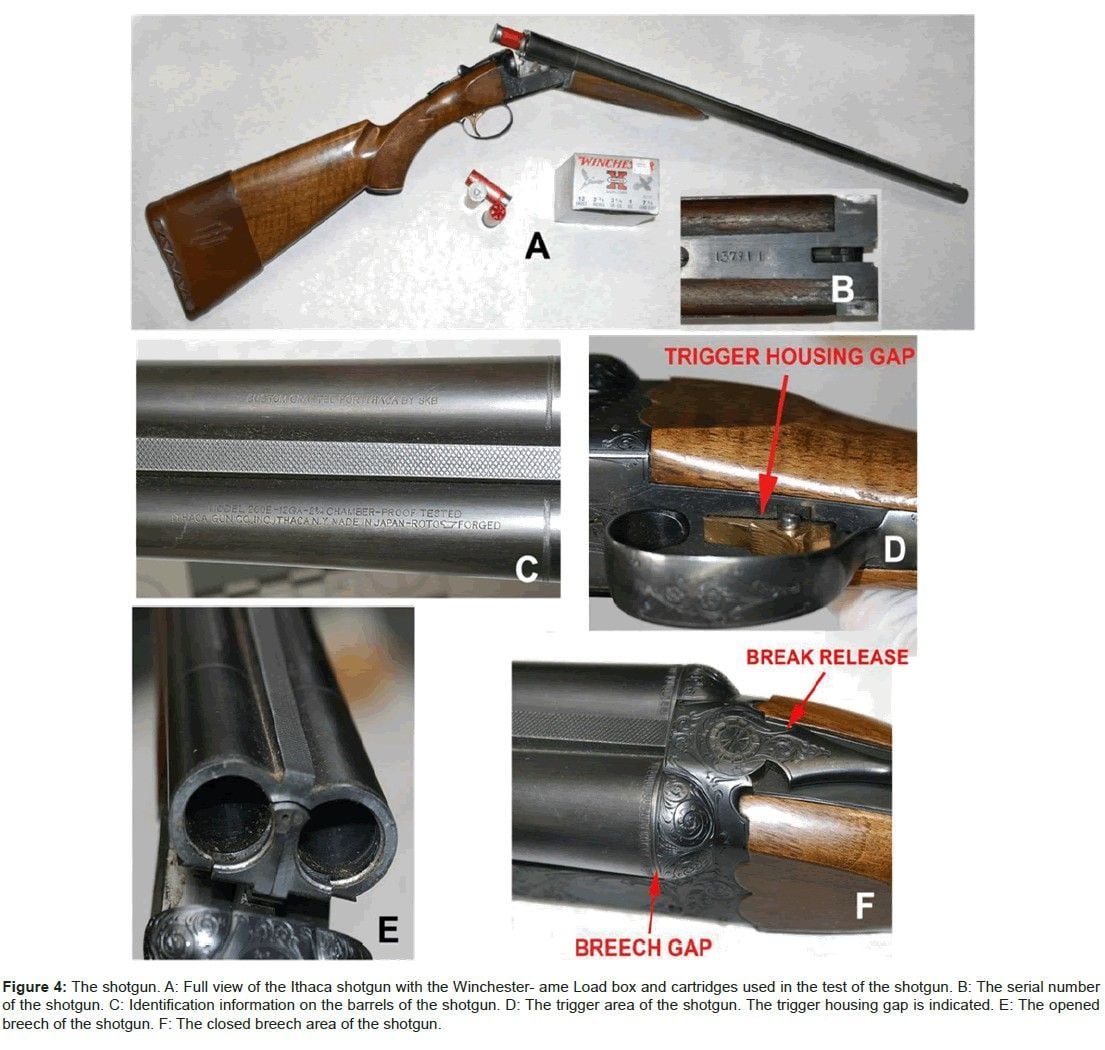 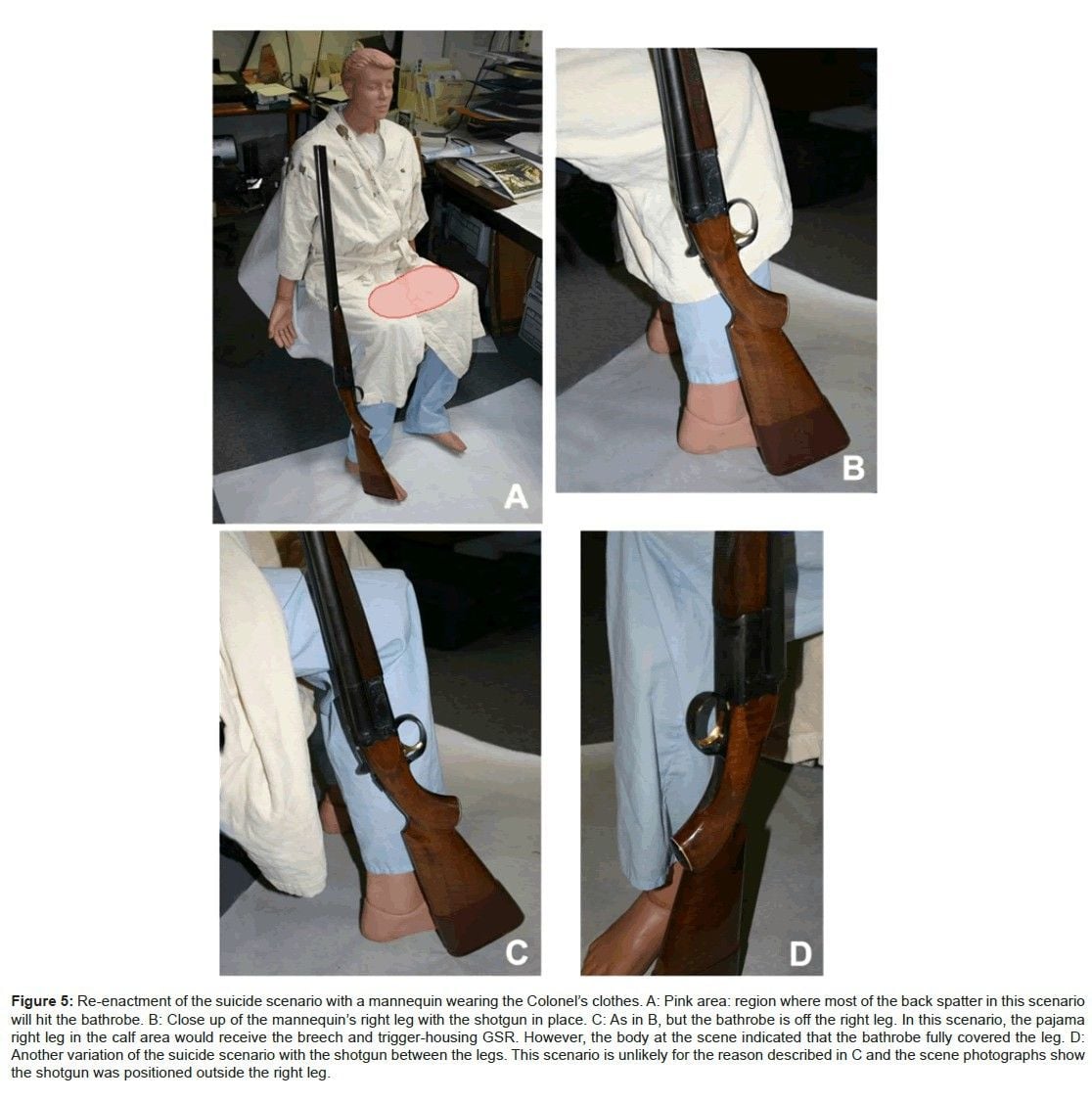 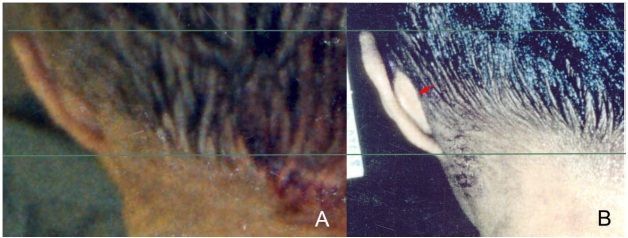 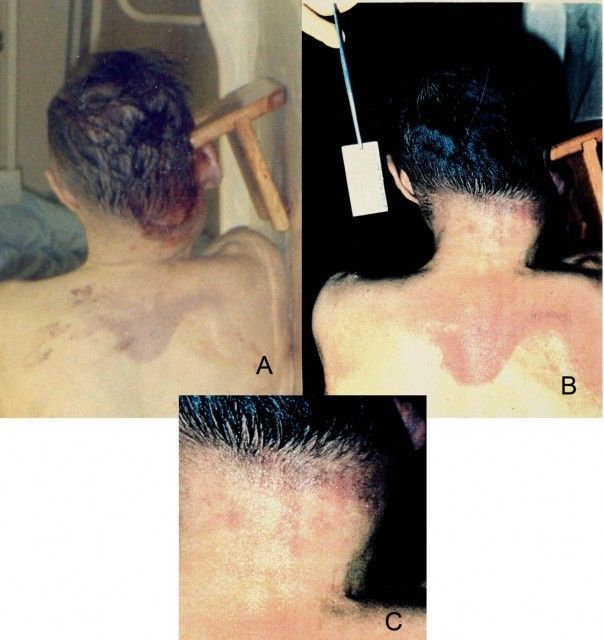 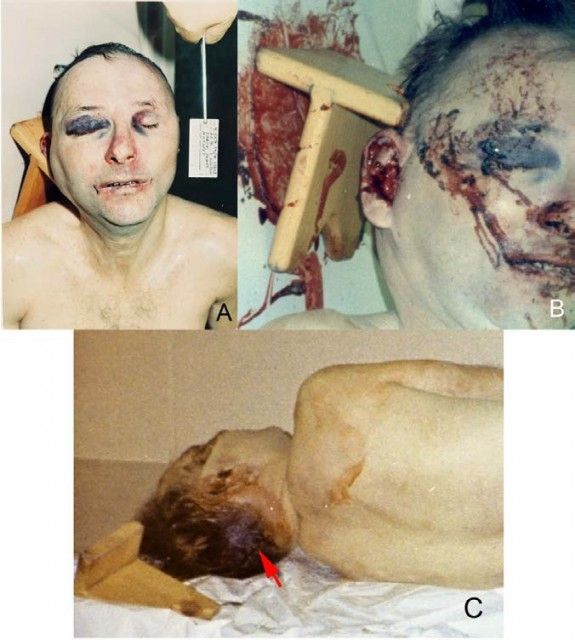 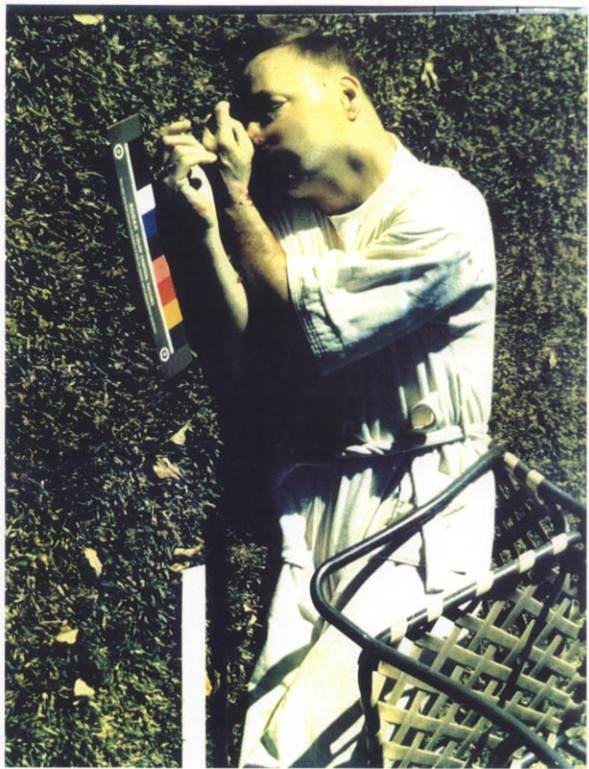 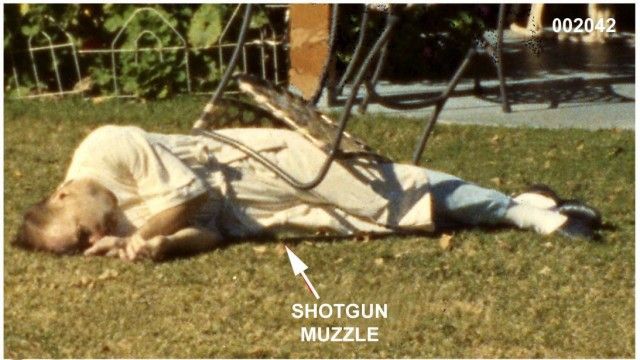 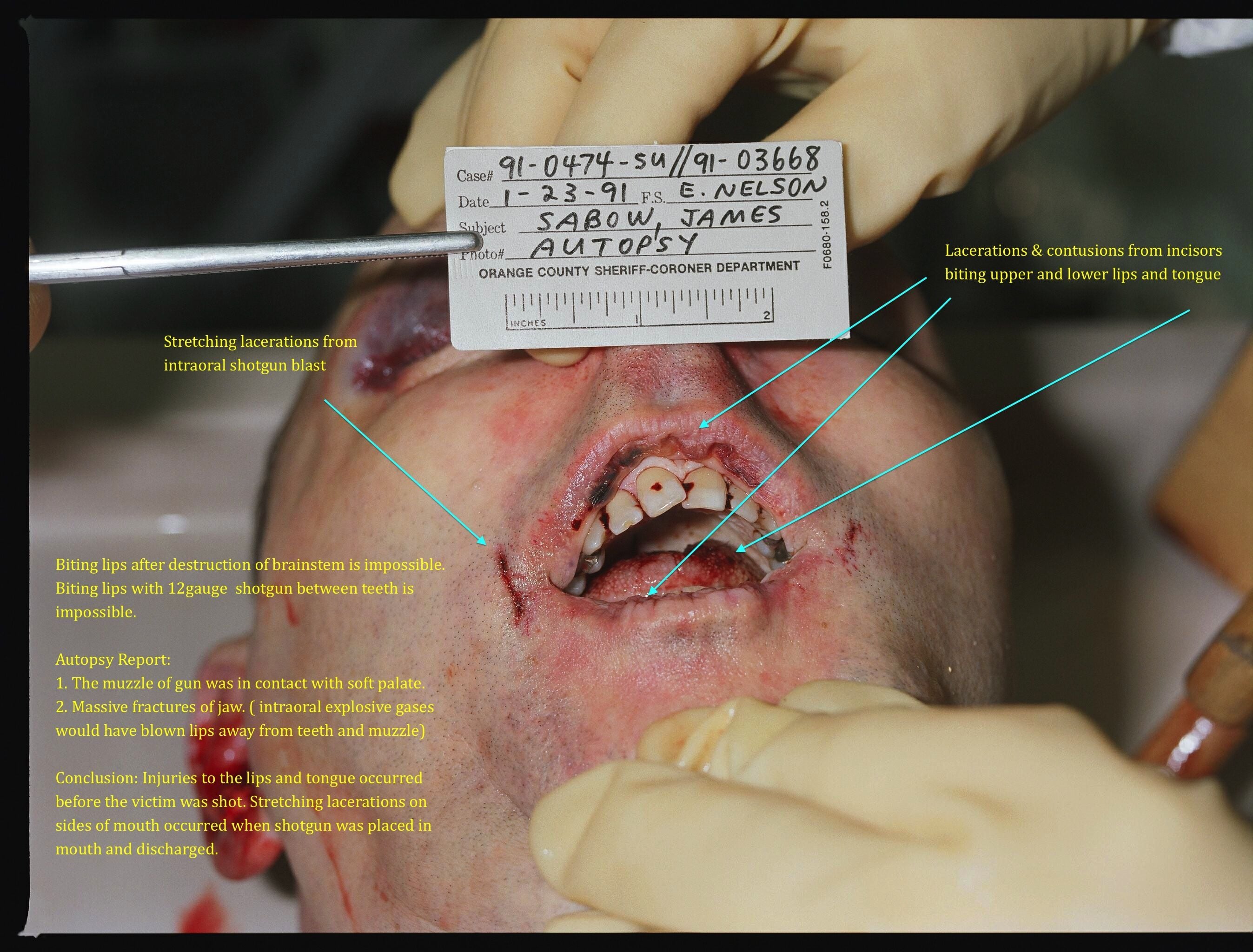 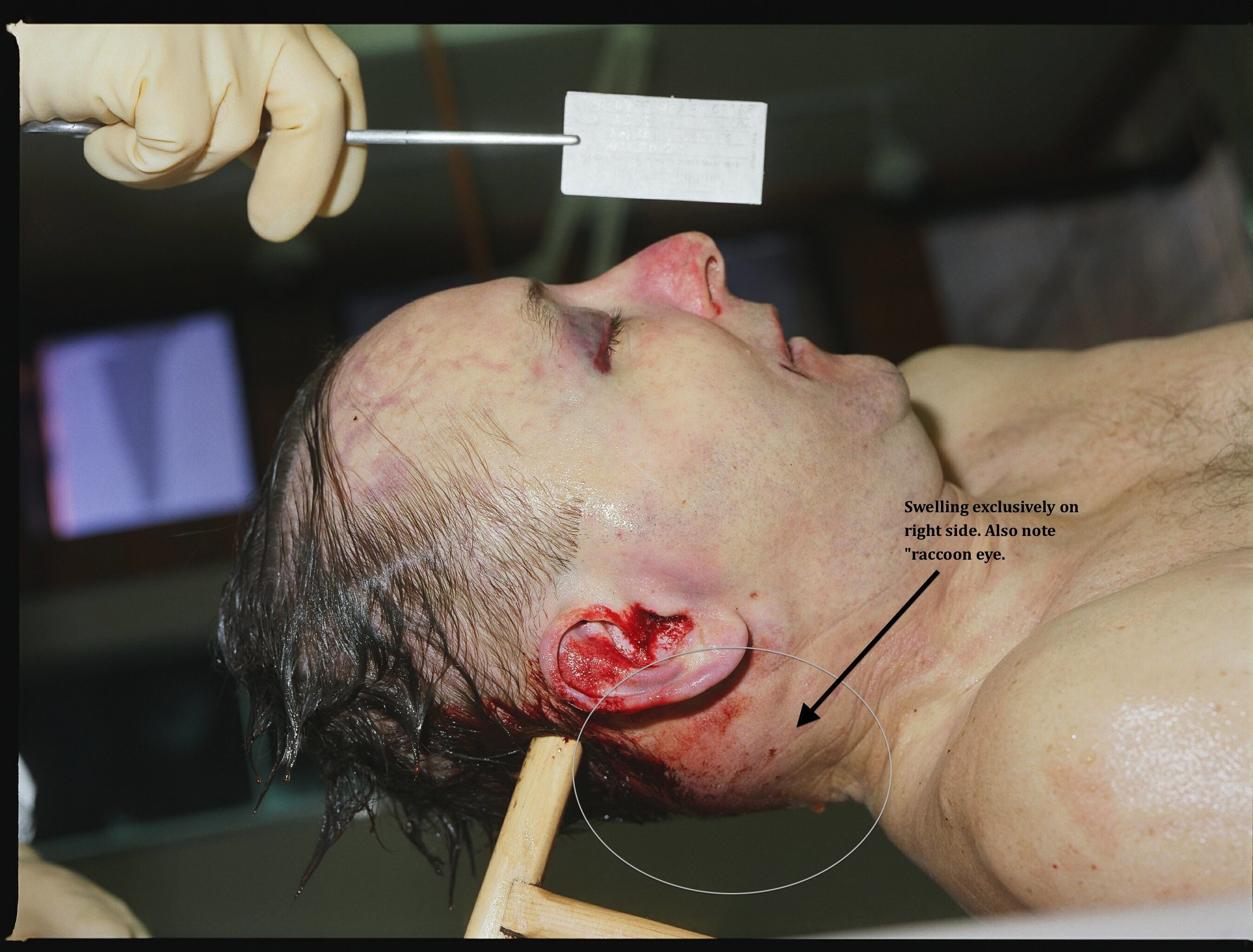 |
|
#2
●
10-09-2017, 03:42 PM
|
 My Rank: MASTER GUNNERY SERGEANT Poster Rank:362 Male Join Date: Mar 2017 Posts: 3,385 3,385Posts 8,732Thanked 1,843Quoted 10Mentioned 0Contrib. |
|
Re: The Curious Case of Colonel James Sabow
I think this was posted here before
|
|
#3
●
10-09-2017, 03:44 PM
|
| NOT THE BOSS Poster Rank:32 ᴀᴅᴍɪɴɪᴤᴛʀᴀᴛᴏʀ Join Date: May 2013 Posts: 47,730
Contributions: 107
47,730Posts 56,449Thanked 4,195Quoted 19Mentioned 107Contrib. |
|
Re: The Curious Case of Colonel James Sabow
I searched but couldn't find it.....
|
|
#4
●
10-09-2017, 03:46 PM
|
| My Rank: MASTER GUNNERY SERGEANT Poster Rank:362 Male Join Date: Mar 2017 Posts: 3,385 3,385Posts 8,732Thanked 1,843Quoted 10Mentioned 0Contrib. |
|
Re: The Curious Case of Colonel James Sabow
I wasn't antagonizing you over it. Good find anyways, bro |
|
#5
●
10-09-2017, 06:51 PM
|
 ★ Legacy Member ★ Poster Rank:119 Join Date: Jan 2010 Posts: 13,708 13,708Posts 8,492Thanked 345Quoted 64Mentioned 0Contrib. |
|
Re: The Curious Case of Colonel James Sabow
good read and info...  |
|
#6
●
10-09-2017, 07:35 PM
|
 My Rank: STAFF SERGEANT Poster Rank:826 Female Join Date: Jan 2016 Posts: 945 945Posts 4,241Thanked 356Quoted 0Mentioned 0Contrib. |
|
Re: The Curious Case of Colonel James Sabow
Definitely murder. His shoes though...what are those?! |
|
#8
●
10-09-2017, 10:22 PM
|
 ★ Legacy Member ★ Poster Rank:181 USA haters! Keep sucking the big Orange Dick! Join Date: Mar 2010 Posts: 8,549 8,549Posts 27,916Thanked 2,774Quoted 9Mentioned 0Contrib. |
|
Re: The Curious Case of Colonel James Sabow
from Wikipedia: "On January 22, 1991, Marine Corps Colonel James Sabow apparently committed suicide amid allegations of base corruption, specifically using military aircraft for personal use. His family and friends, denied he committed suicide, despite having no direct evidence to suggest the colonel was murdered, but pointed out that Col. Sabow had pledged to fight the charges against him just minutes before his death in phone conversations with other officers.[20] According to a 1996 lawsuit, Sabow was murdered because he threatened to expose an authorized covert operation at El Toro involving some of his fellow officers, CIA-sponsored airlifts to Central and South America, running arms and drugs.[21] A forensic analysis conducted appeared to indicate the death was homicide and that evidence had been altered |
|
#9
●
10-10-2017, 12:33 AM
|
 My Rank: SERGEANT Poster Rank:1041 Male Join Date: Feb 2010 Posts: 660 660Posts 179Thanked 14Quoted 0Mentioned 0Contrib. |
|
Re: The Curious Case of Colonel James Sabow
|