|
#1
●
06-30-2011, 05:56 AM
|
 My Rank: CORPORAL Poster Rank:1399 male Join Date: Oct 2009 Posts: 425 425Posts 302Thanked 1Quoted 0Mentioned 0Contrib. |
|
Burned Bodies From the 2010 Jos Sectarian Massacres, Plateau State
Photographs circulated under a March 2010 Jos massacre label, depicting burned bodies piled together after sectarian violence near Jos, Plateau State, Nigeria, that year. The label could refer to either of two massacres: on January 19, 2010, assailants killed at least 174 Muslim residents of Kuru Karama, south of Jos, with many burned alive in houses and a mosque; on March 7, 2010, armed men struck the mostly Christian villages of Dogo Nahawa, Zot and Ratsat, killing more than 200 people, attacking fleeing residents and burning homes. Human Rights Watch documented both incidents, and Nigeria charged dozens of suspects in connection with the March attack. It was never established which event the photographs depicted, and at least one image was acknowledged not to be part of the set. 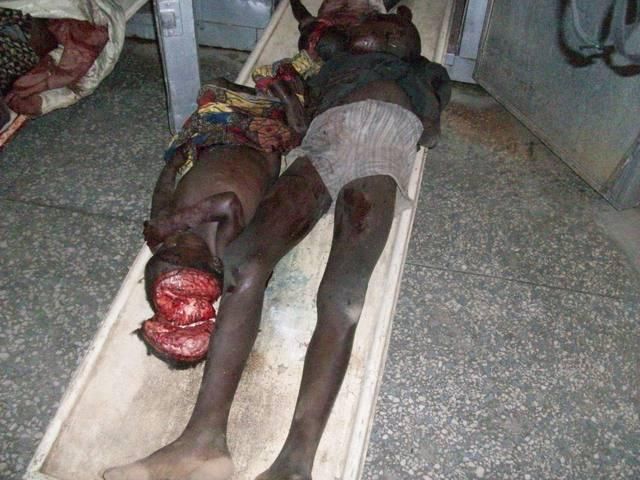 · 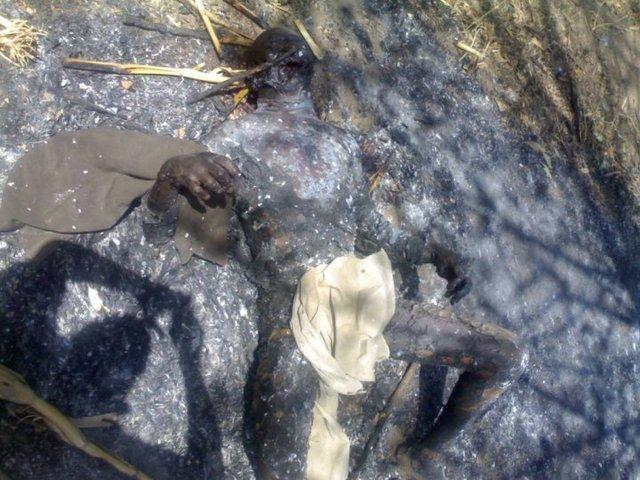 · 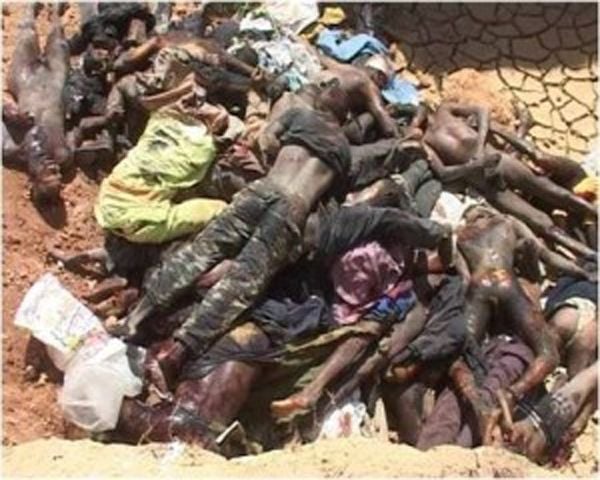 · 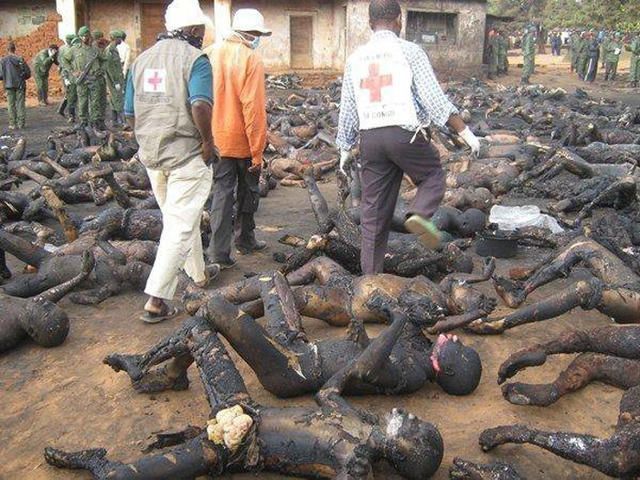 · |
|
#2
●
06-30-2011, 05:57 AM
|
| My Rank: CORPORAL Poster Rank:1399 male Join Date: Oct 2009 Posts: 425 425Posts 302Thanked 1Quoted 0Mentioned 0Contrib. |
|
Re: Burned Bodies From the 2010 Jos Sectarian Massacres, Plateau State
Sorry top picture not rellavent  |
|
#7
●
06-30-2011, 07:39 AM
|
 My Rank: CORPORAL Poster Rank:1621 Female Join Date: Sep 2009 Posts: 344 344Posts 185Thanked 10Quoted 0Mentioned 0Contrib. |
|
Re: Burned Bodies From the 2010 Jos Sectarian Massacres, Plateau State
hey, this reminds me of what went on at my grandfather's sapphire mine when it was 'nationalised' in the late 80's in NGR!
|
|
#8
●
06-30-2011, 08:20 AM
|
 My Rank: LANCE CORPORAL Poster Rank:2193 Join Date: Jan 2010 Posts: 216 216Posts 583Thanked 2Quoted 0Mentioned 0Contrib. |
|
Re: Burned Bodies From the 2010 Jos Sectarian Massacres, Plateau State
This is in Congo: A tanker truck driver was plowing it down a dirt road through a village of Sange, 20 miles north of Uvira, where people gathered to watch the World Cup and lost control of his truck trying to pass a minibus. The overturn resulted in a fireball that incinerated everything in relative closeness, including 220 people. The Red Cross officials said there were 61 children and 36 women among the dead. Some witnesses confirmed that prior to the explosion, many villagers went to take advantage of the overturned truck and rushed towards it to fill up their jerry-cans with what would have been free gasoline. And then BUM went the dynamite! The driver of the truck was injured in the crash, but got away to seek medical assistance before the explosion. Villagers, blinded by greed, disregarded potential dangers and continued helping themselves to free gas. Witnesses said that even government soldiers station in the troubled area to protect the civilians from militants were stealing the gas and paid for it with their lives. The village of Sange, is located between the town of Uvira, which is on the northern tip of Lake Tanganyika near the border with Burundi, and the Congolese provincial capital of Bukavu. |