|
#1
●
10-06-2021, 09:25 AM
|
 ♚ Legacy Gold Member ♚ Poster Rank:914 Join Date: Jul 2020 Posts: 820
Contributions: 13
820Posts 27,652Thanked 173Quoted 13Mentioned 13Contrib. |
|
Brain Tissue in the Ear from Fatal Crushing Injury
A 40-year-old male was fatally injured in an occupational accident. His head was squeezed between a concrete pipe and a concrete ground slab. External examination revealed the presence of brain tissue in the right auditory canal (Fig. 1). Autopsy findings comprised multiple head fractures (including the petrous part of the temporal bone – hinge fracture) (Fig. 2), dura lacerations, rare brain contusions, and laceration of the right temporal lobe (Fig. 3) with detached brain tissue in the external auditory canal (Fig. 4). 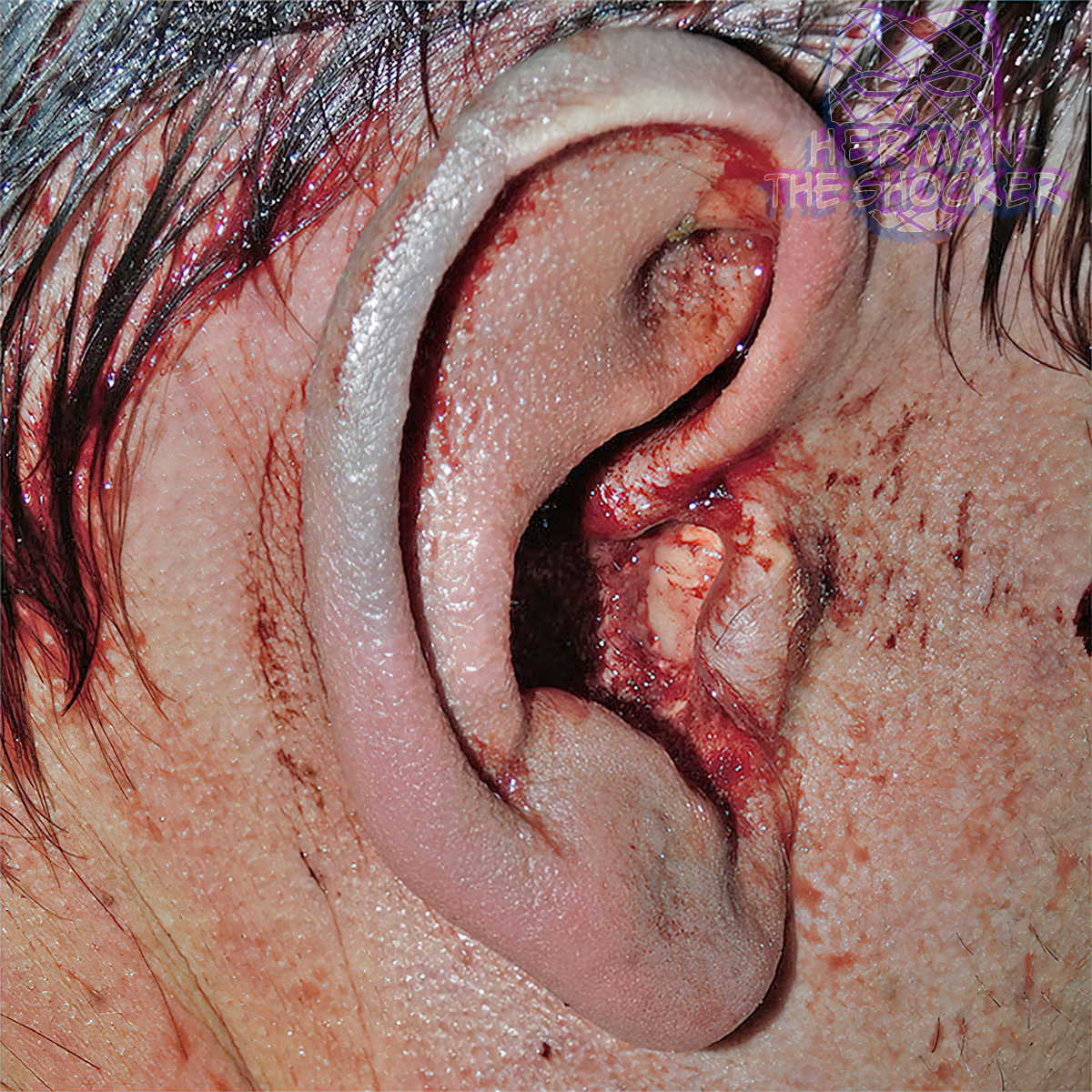 Fig.1 Fragments of brain tissue in the right auditory canal. 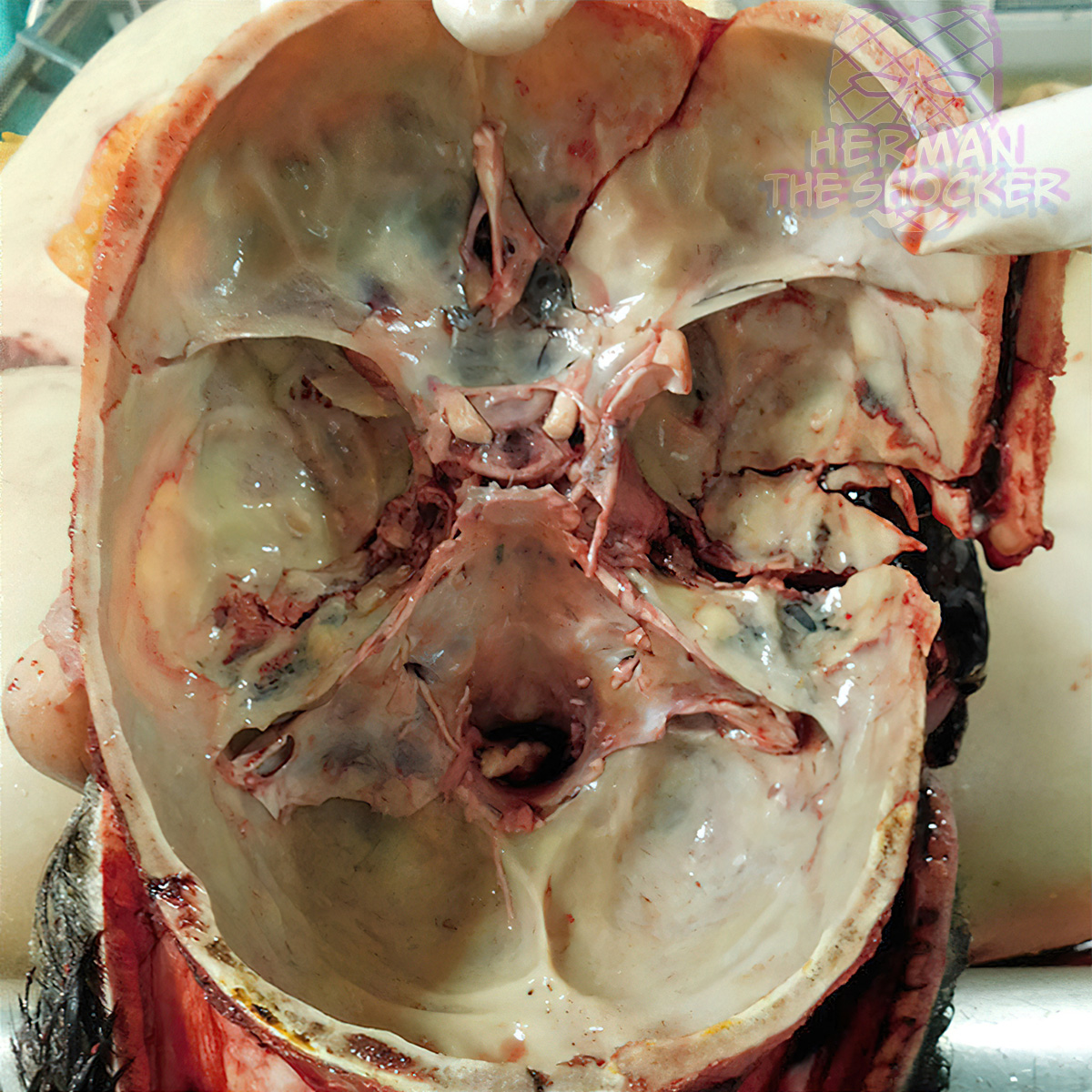 Fig.2 Fracture of the petrous part of the right and partially left temporal bone with fractured sella turcica (hinge fracture). Dura was removed. Bleeding from the ears, nose, or mouth following a closed-head injury suggests a fracture of the base of the skull. Brain tissue could be expelled through these apertures, even in the absence of external evidence of an injury. The presence of brain tissue in the external auditory canal is a relatively uncommon phenomenon, but one that could be expected in side-to-side head compression. In those cases, the force applied to the head is considerable, resulting in excessive pressure and kinetic energy being transferred to the brain tissue. One of the mechanisms of the hinge fracture is also side-to-side head compression. Many basilar skull fractures originate from impacts at the roughly same level as the skull base and the fracture lines follow predictable routes through the skull base. A hinge fracture refers to a fracture that runs from side to side, across the floor of the middle cranial fossa, passing through the pituitary fossa in the midline. This injury is common in road accidents and is sometimes called the “motorcyclist’s fracture”. 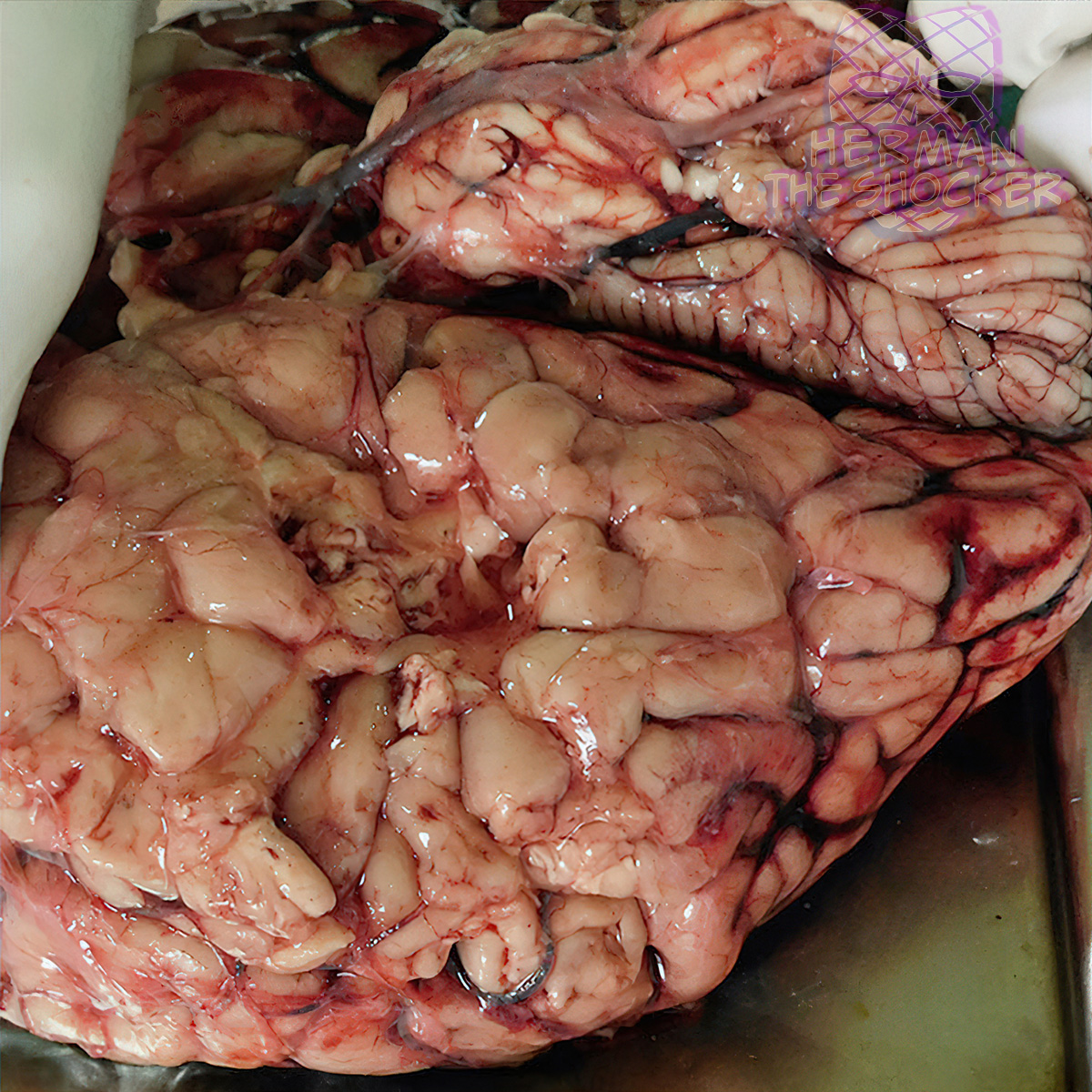 Fig.3 Laceration of brain tissue at the ventral side of the right temporal lobe. From the site of applied force, which is usually bitemporal (latero-lateral), fracture lines lead to the separation of the petrous part of the temporal bone from the greater wing of the sphenoid and the squamous temporal bone, splitting the base of the skull into two. Any considerable pressure applied to the head pushes brain tissue equally in all directions, due to its incompressibility. Brain tissue then passes through the lacerated dura into the fractured petrous part of the temporal bones, finally reaching the middle ear cavity. Since this must cause a rupture in the tympanic membrane, the blood and brain tissue ends up in the external auditory canal which is why they can easily be detected at external examination (as seen in this case). 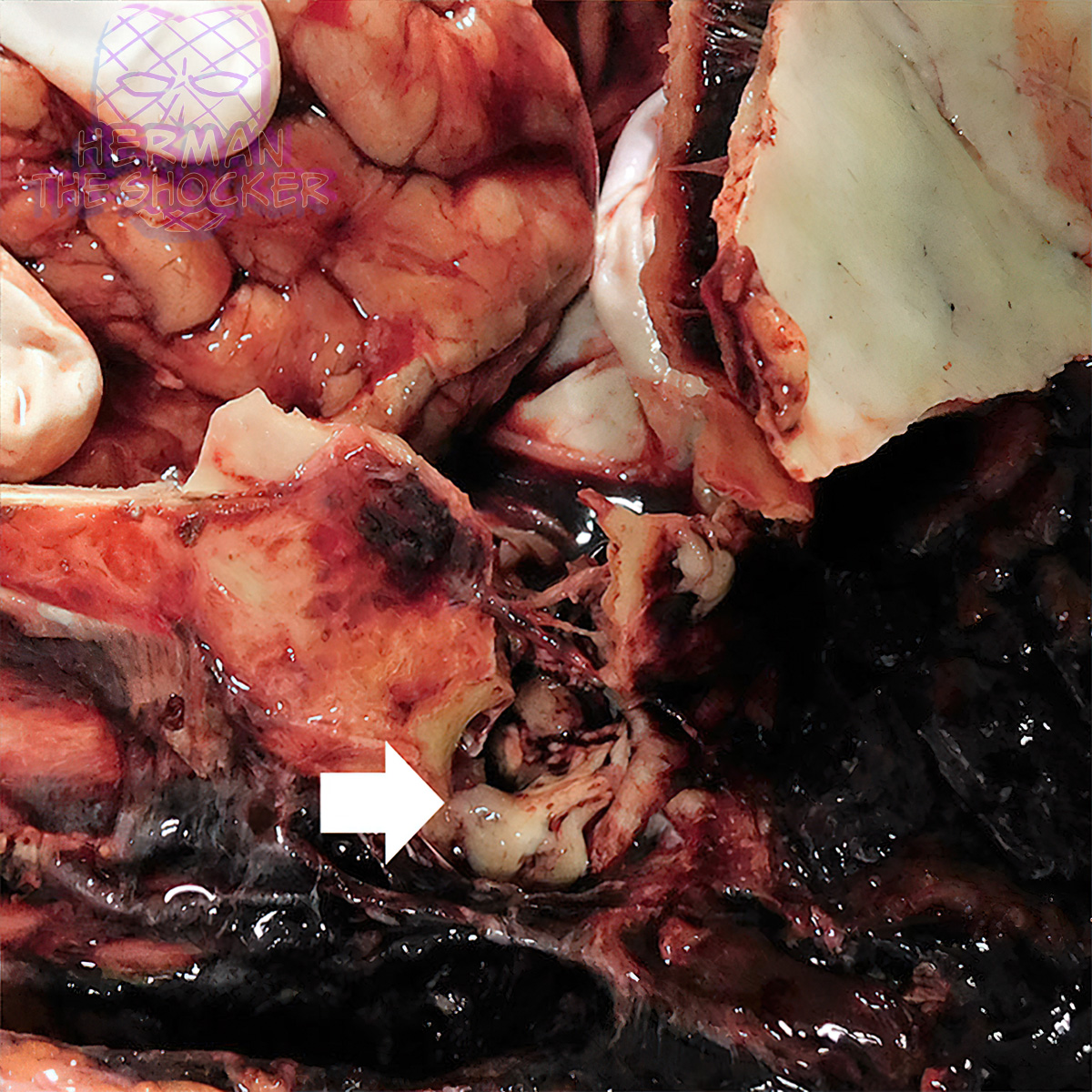 Fig.4 Closer view of the right external auditory canal with the brain tissue visible (arrow). The tissue follows the path of least resistance, thus being literally “thrust into the ears” as the result of the high pressure applied on the head. This could be easily demonstrated by using a simple autopsy technique, the so-called” water test “– water poured in an upwardly facing ear result in drainage from the nose and opposite ear, thus demonstrating transcranial passage. The mechanism of injury could be squeezing or compression of the head, either between two solid objects or as the result of being run over by a vehicle. If the pressure to the head is considerable and the body of the sphenoid bone is crushed, the pieces of detached brain tissue can reach the nasopharynx, larynx, and even trachea. In these cases, the presence of brain tissue in the trachea should be considered a purely mechanical phenomenon (the tissue is forcefully pushed), which means that it was not a vital reaction, i.e. brain aspiration. - This post is for educational purposes only and is nonprofit. Under Section 107 of the US Copyright Act of 1976; Allowance is made for "Fair Use" for purposes such as criticism, comment, news reporting, teaching, scholarship, and research. OP is not a medical expert. No copyright infringement intended. This post does not encourage or glorify violence/harassment. Images might have been upscaled and enhanced. Text might have been shortened and simplified/reorganized for online view. |
|
#2
●
10-06-2021, 12:29 PM
|
| So Fucking Banned Poster Rank:390 Join Date: Nov 2016 Posts: 3,078 3,078Posts 2,631Thanked 1,583Quoted 9Mentioned 0Contrib. |
|
Re: Brain Tissue in the Ear from Fatal Crushing Injury
if spiders can hear with their legs, humans should be able to think with their ears |
|
#3
●
10-06-2021, 07:13 PM
|
 My Rank: MAJOR Poster Rank:55 "G," for Gentleman. Join Date: Jun 2016 Posts: 27,056
Contributions: 24
27,056Posts 18,591Thanked 6,748Quoted 74Mentioned 24Contrib. |
|
Re: Brain Tissue in the Ear from Fatal Crushing Injury
Don't die (☛゚∇゚)☛ hermantheshocker, and keep these high quality posts coming! Thank you  |