|
#1
●
06-21-2015, 06:57 AM
| ||||||||
 ★ ********* ★ Poster Rank:247 Male Join Date: Jul 2009 Posts: 5,564
Contributions: 368
Mentioned: 66 Post(s) Quoted: 932 Post(s)
| ||||||||
|
Blunt Force Injury Deaths | Part # II
See also: http://www.documentingreality.com/fo...part-i-155547/ 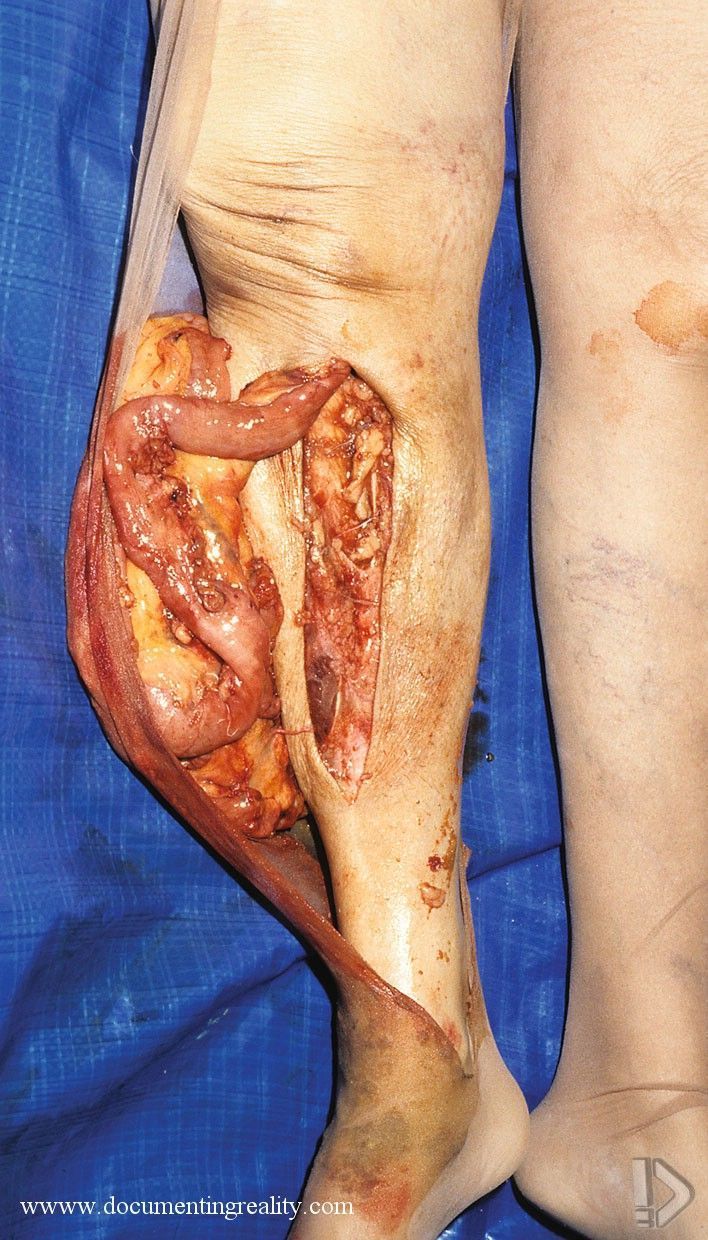 Fig. 12.34 Laceration of the lower leg due to an increase in intra-abdominal pressure following a truck run over. Loops of intestine have herniated through the defect 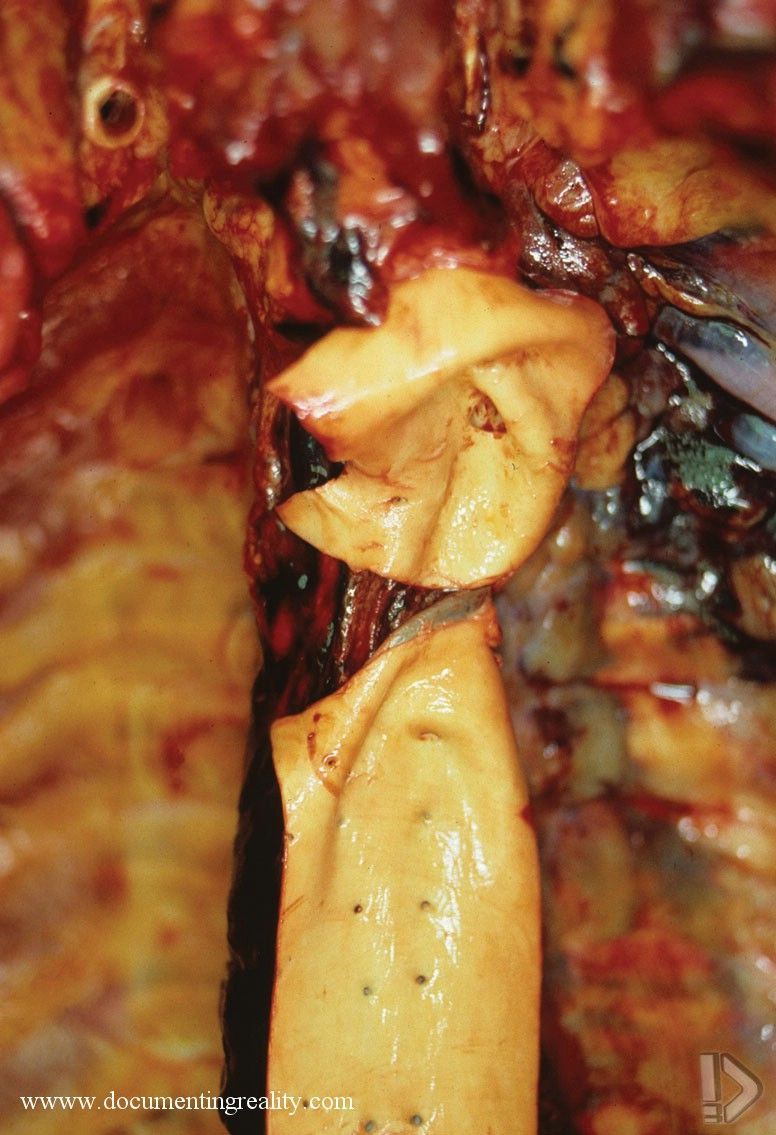 Fig. 12.35 An almost complete aortic laceration sustained in a sudden deceleration/blunt impact incident (motor vehicle collision) 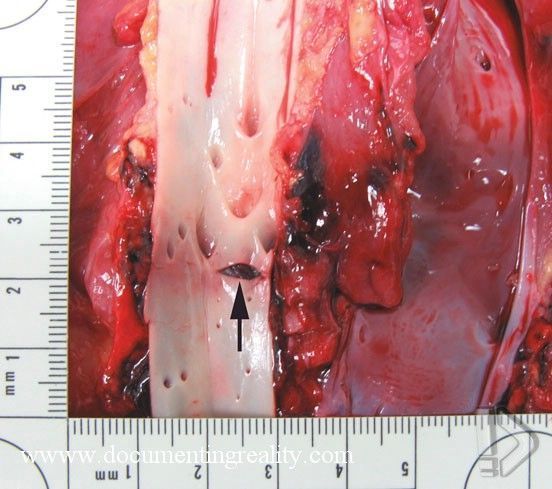 Fig. 12.36 A small full thickness laceration of the aorta following marked deceleration in a vehicle crash 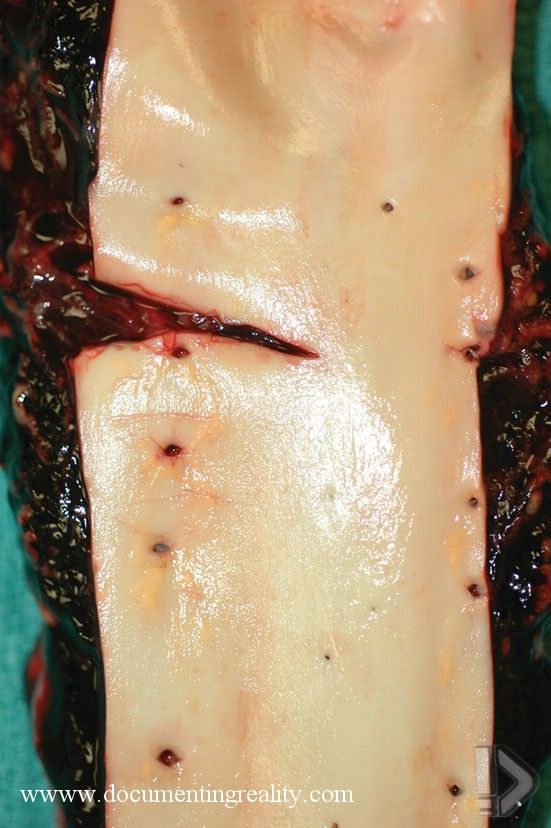 Fig. 12.37 A larger partial but full thickness aortic laceration 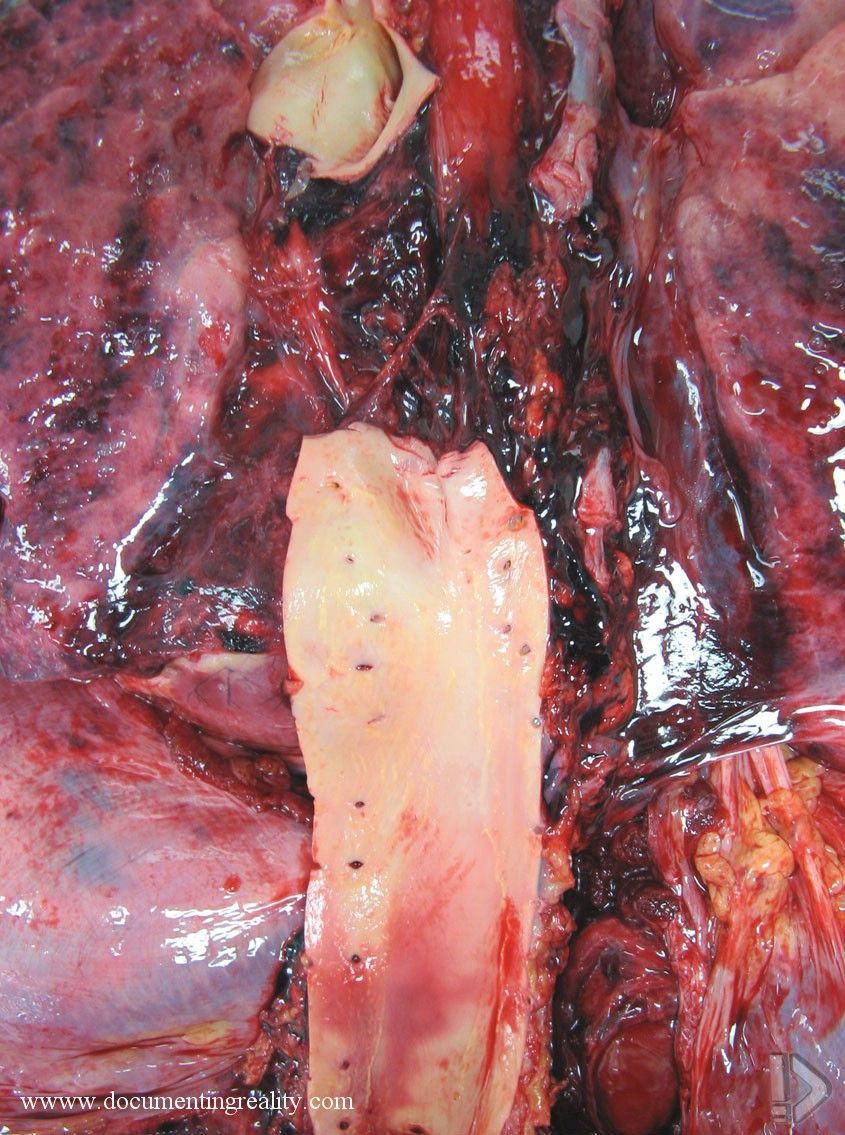 Fig. 12.38 Complete laceration of the aorta following marked deceleration in a vehicle crash 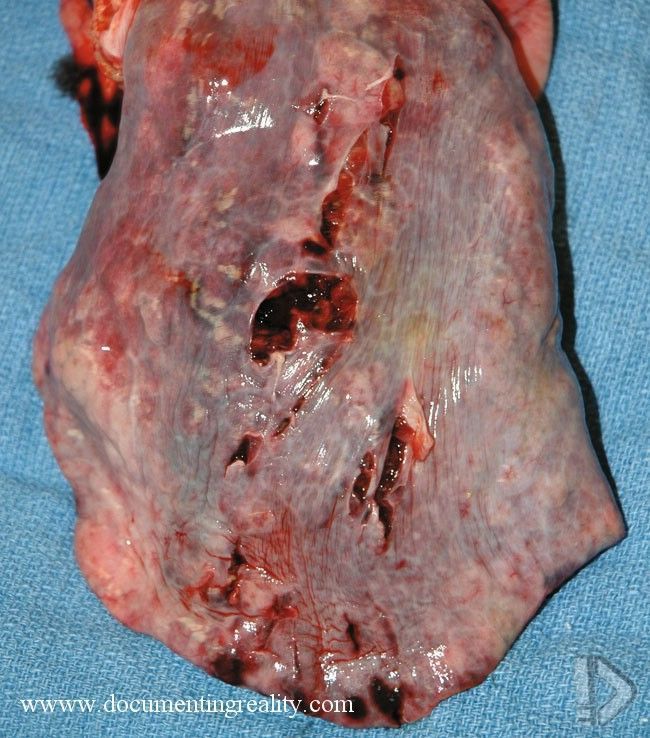 Fig. 12.39 Multiple lung lacerations due to impact from displaced fractured rib ends  Fig. 12.40 Multiple liver lacerations 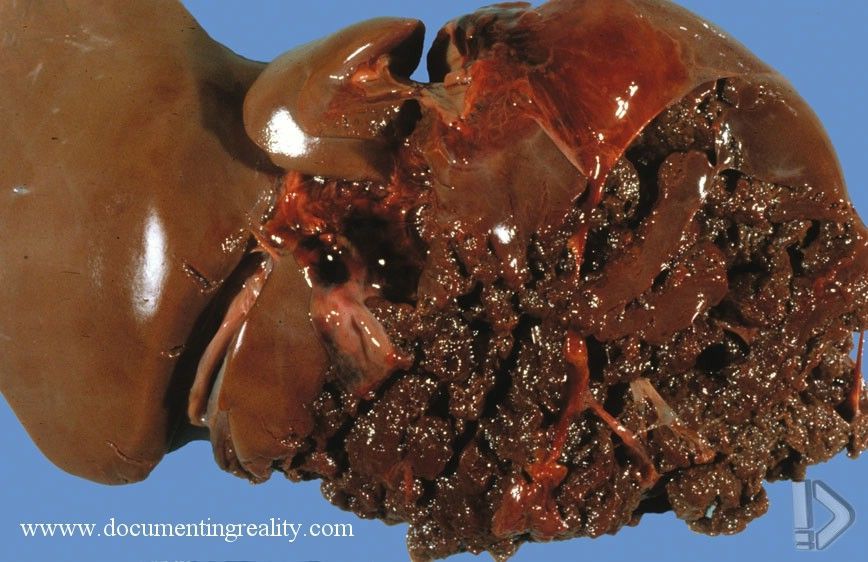 Fig. 12.41 Extensive liver lacerations with marked disruption 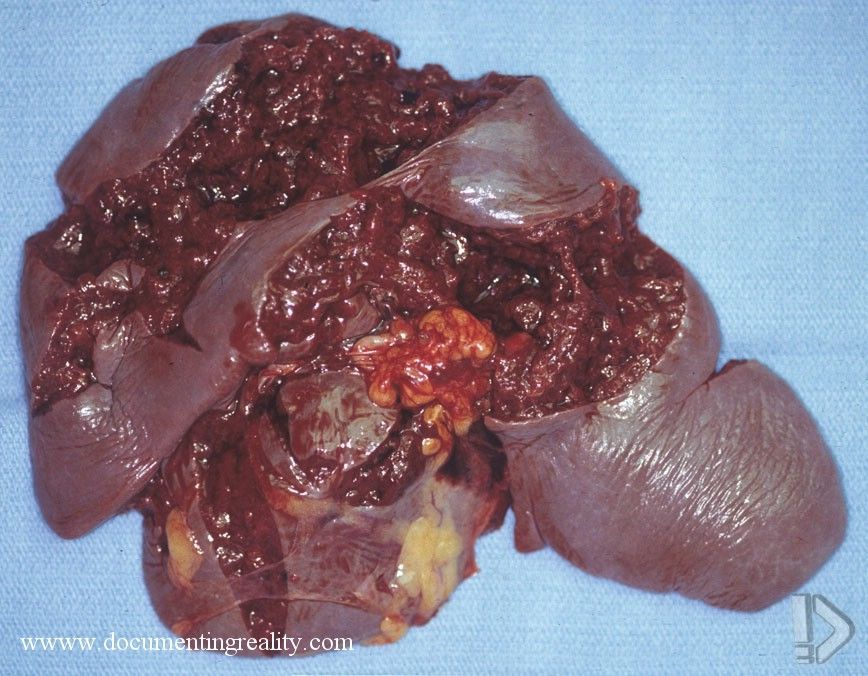 Fig. 12.42 Multiple splenic lacerations with organ disruption associated with significant hemorrhage into the abdominal cavity 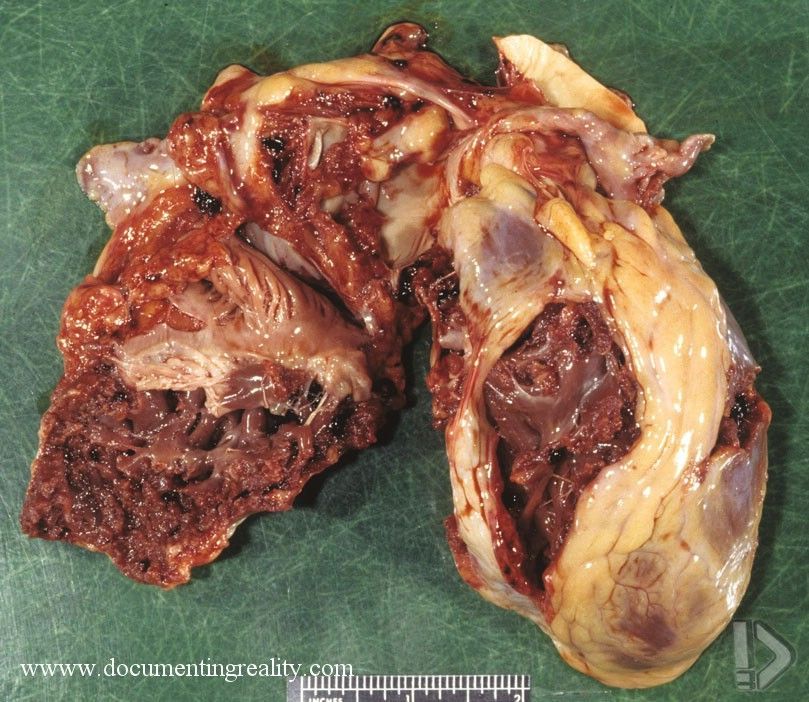 Fig. 12.43 Extensive heart lacerations sustained in a high-speed motor vehicle collision  Fig. 12.44 A closed humerus (upper arm bone) fracture 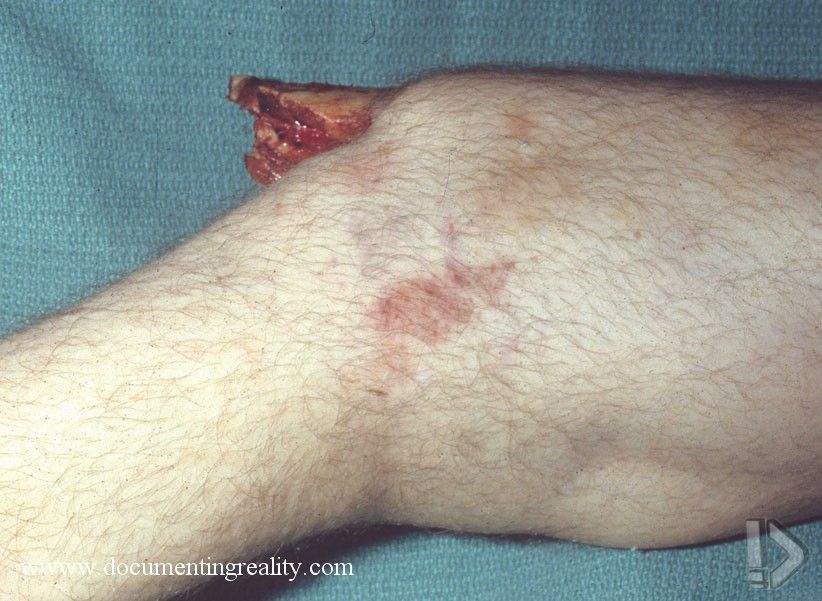 Fig. 12.45 An open (compound) fracture of the tibia (shin bone) 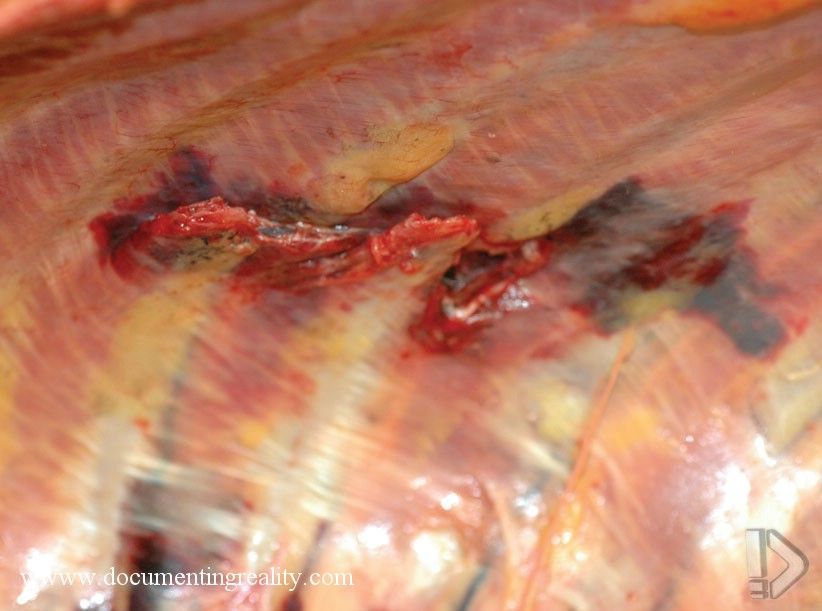 Fig. 12.46 Multiple acute rib fractures with displacement of the broken ends 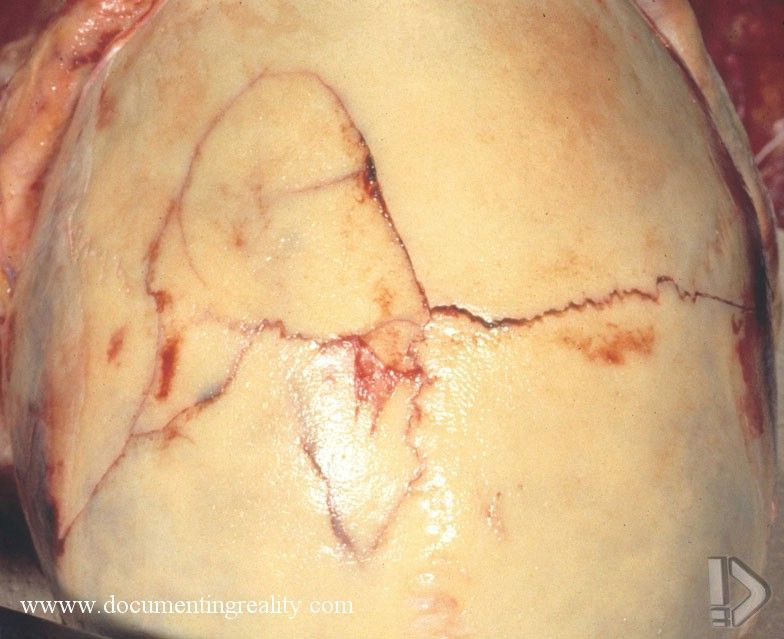 Fig. 12.47 Multiple linear and curvilinear skull fractures 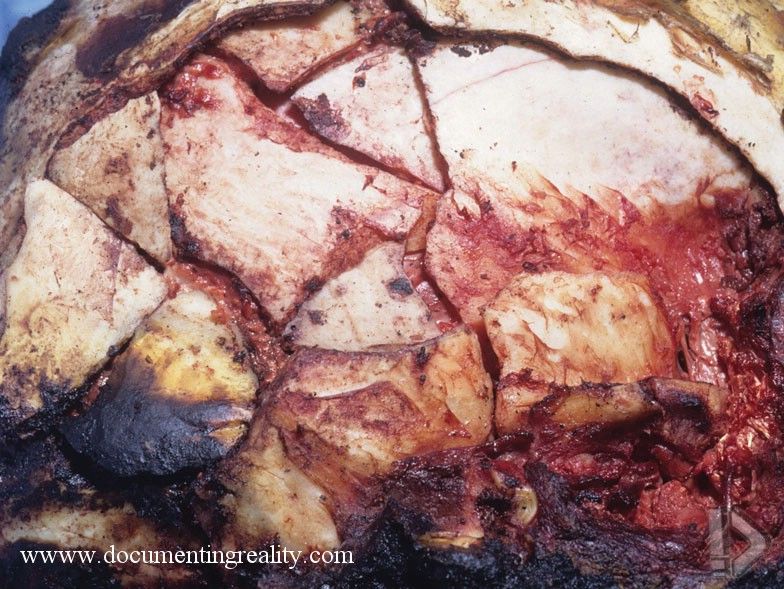 Fig. 12.48 Multiple comminuted skull fractures 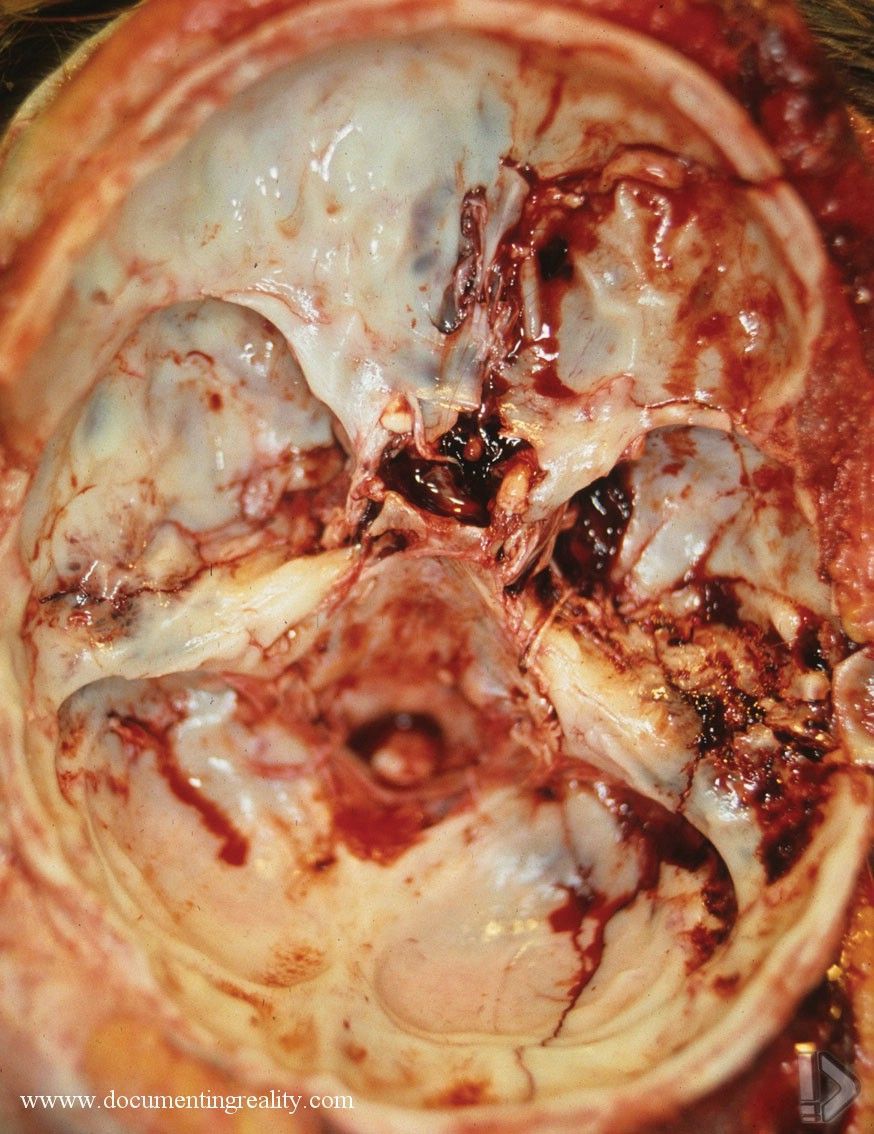 Fig. 12.49 Multiple basilar skull fractures, predominantly on the right side 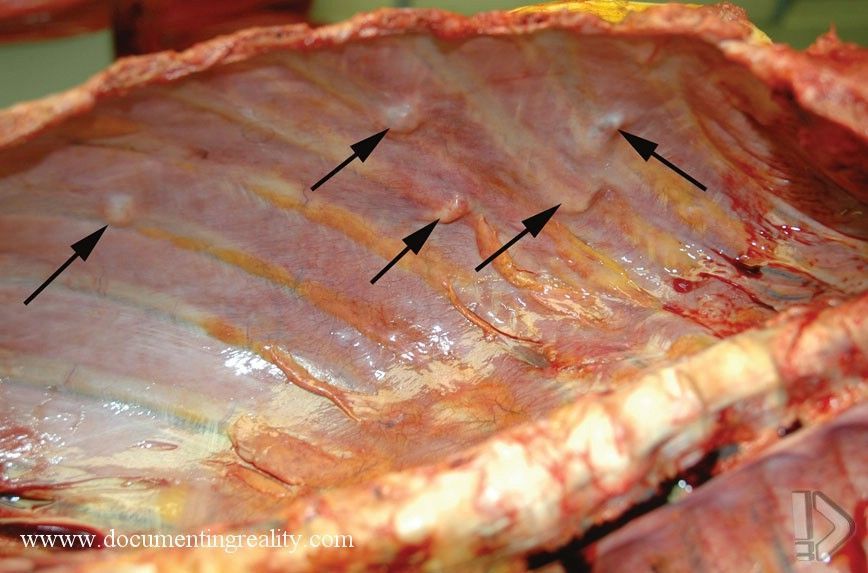 Fig. 12.50 Multiple healing rib fractures (arrows) with thickening at the site of fracture and repair, so-called ‘‘callus’’ formation  Fig. 12.51 An avulsion injury of the skin of the face, sustained in a pedestrian versus motor vehicle collision 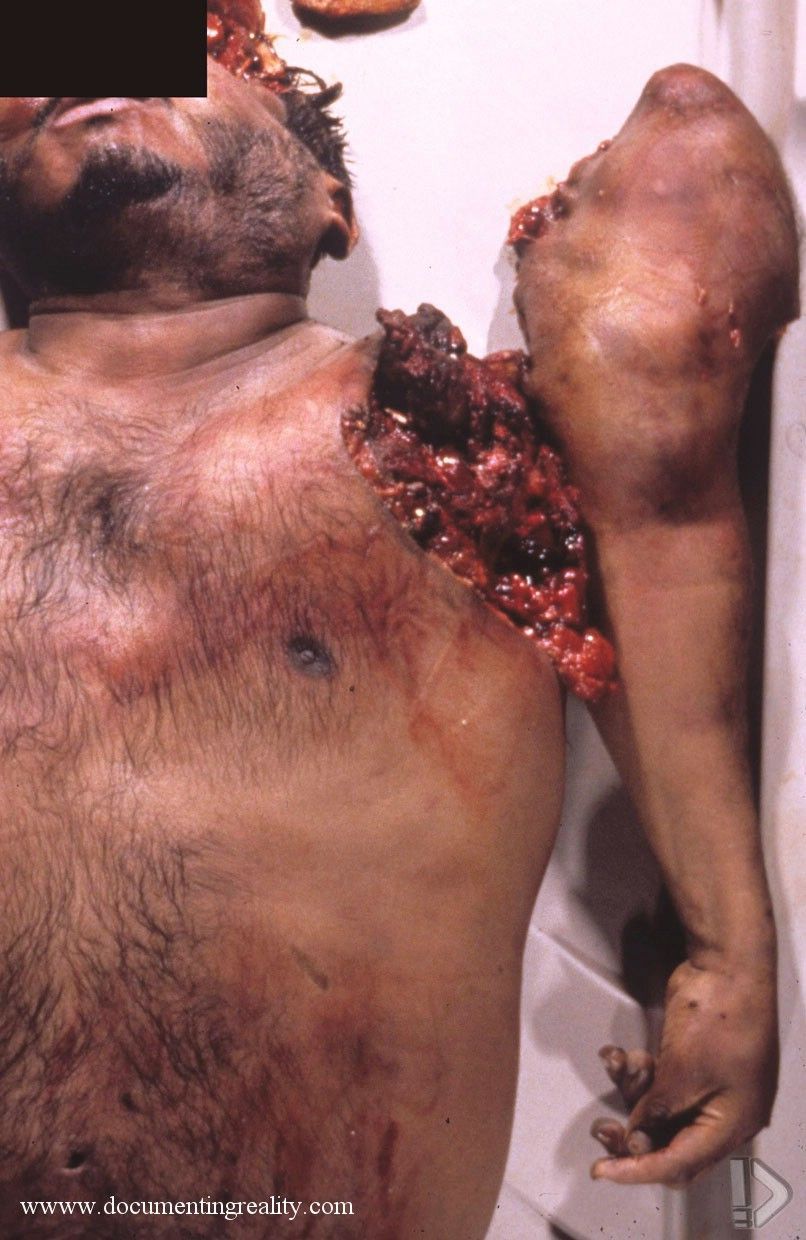 Fig. 12.52 An amputation injury sustained in a farming accident. Accidents on farms are often associated with very severe and mutilating injuries 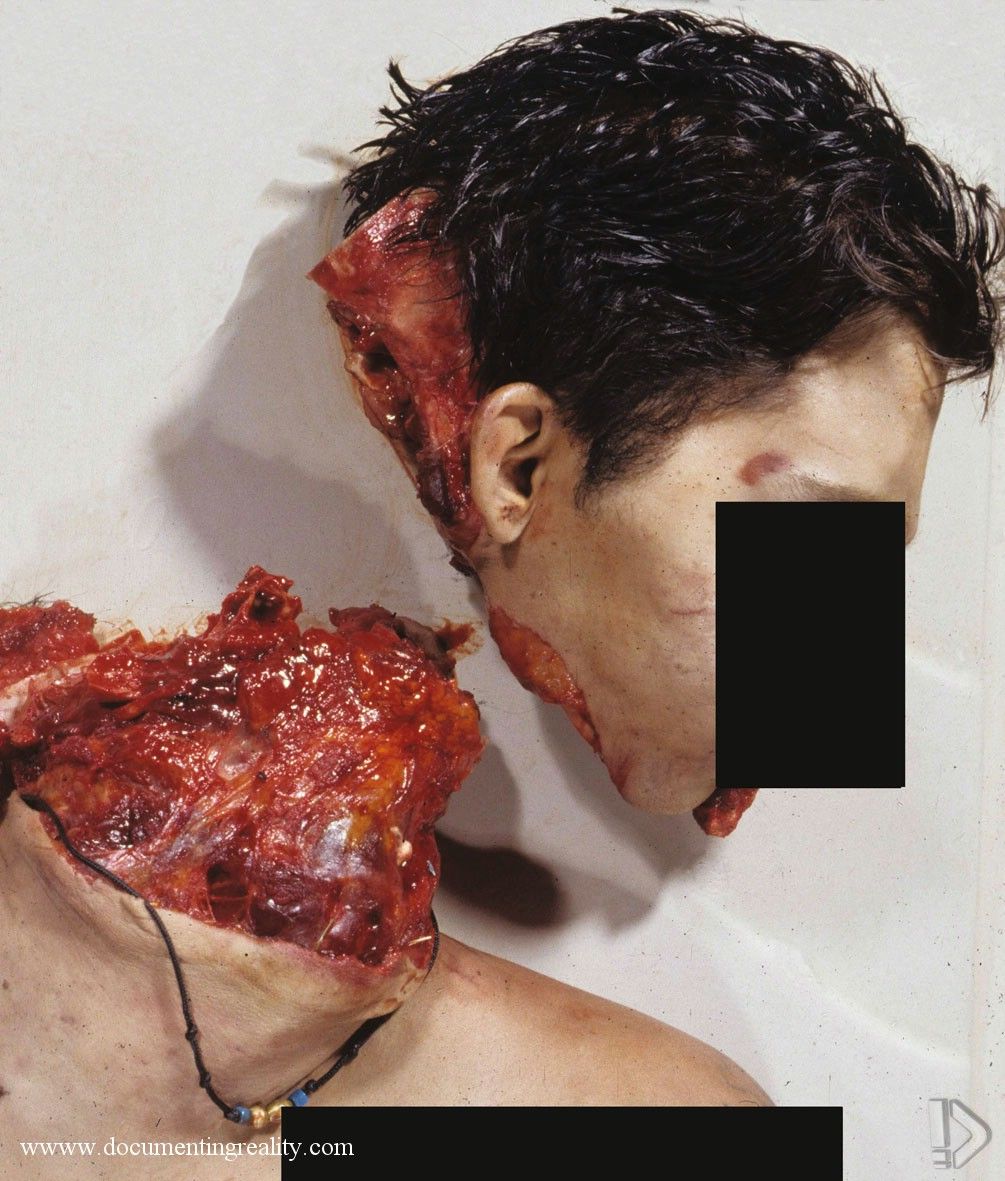 Fig. 12.53 A decapitation injury sustained in a motorcycle versus fixed-object collision 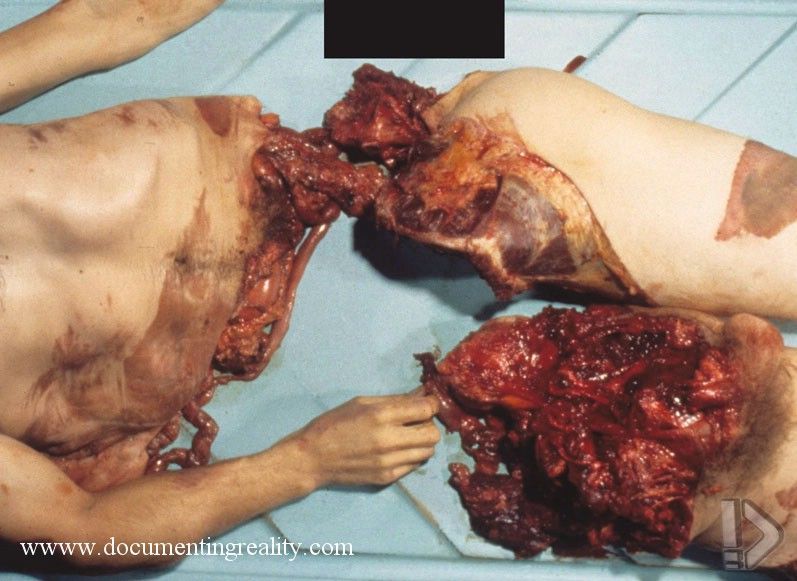 Fig. 12.54 Body transection occurring in a motorcycle accident  Fig. 12.55 An example of body transection involving a motorcycle rider with separation of the thorax from the abdomen 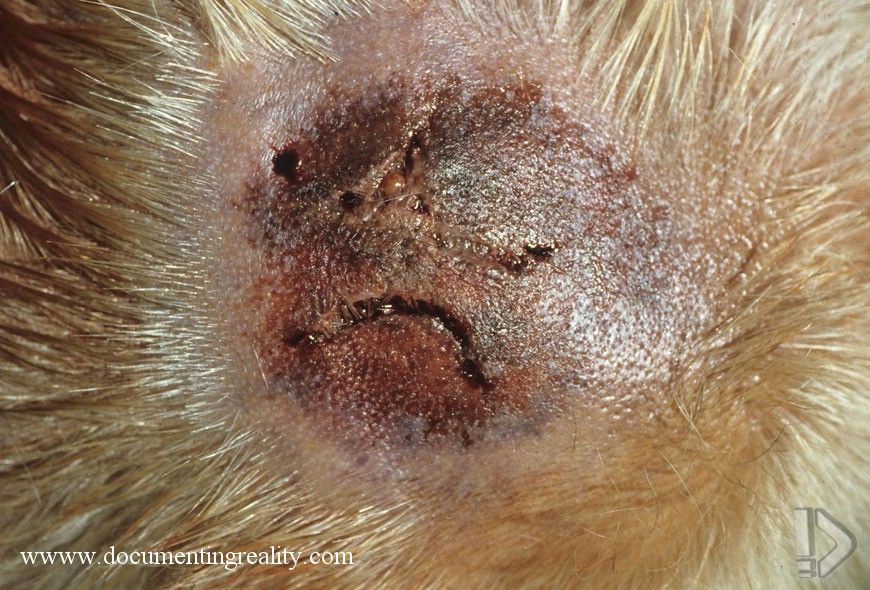 Fig. 12.56 The hair overlying this blunt force head injury has been shaved in order to better visualize the wound. Note the presence of abrasion,contusion, and multiple lacerations 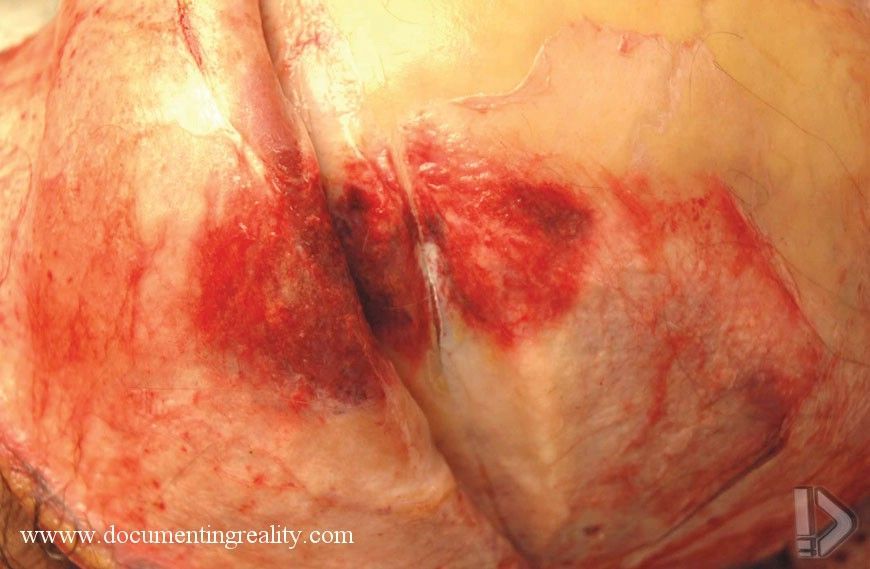 Fig. 12.57 A focal area of hemorrhage under the scalp (subgaleal), indicating a site of head impact 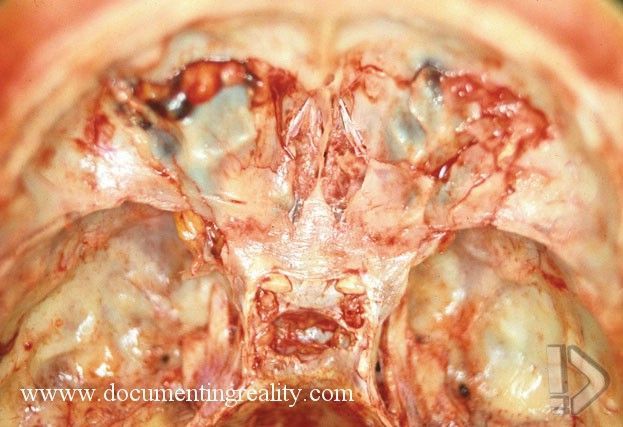 Fig. 12.58 Orbital plate (anterior cranial basilar skull) fractures 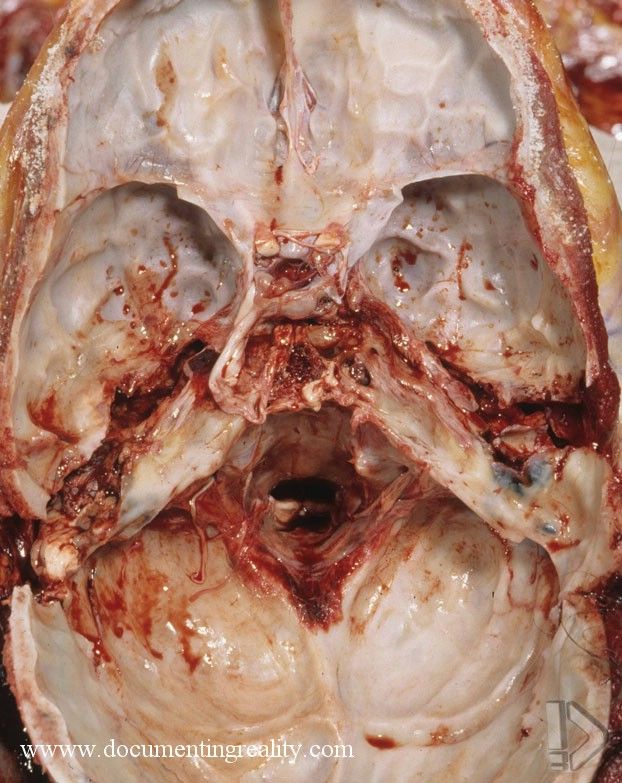 Fig. 12.59 A ‘‘hinge fracture’’ of the base of the skull going from one side to the other, resulting from a side impact 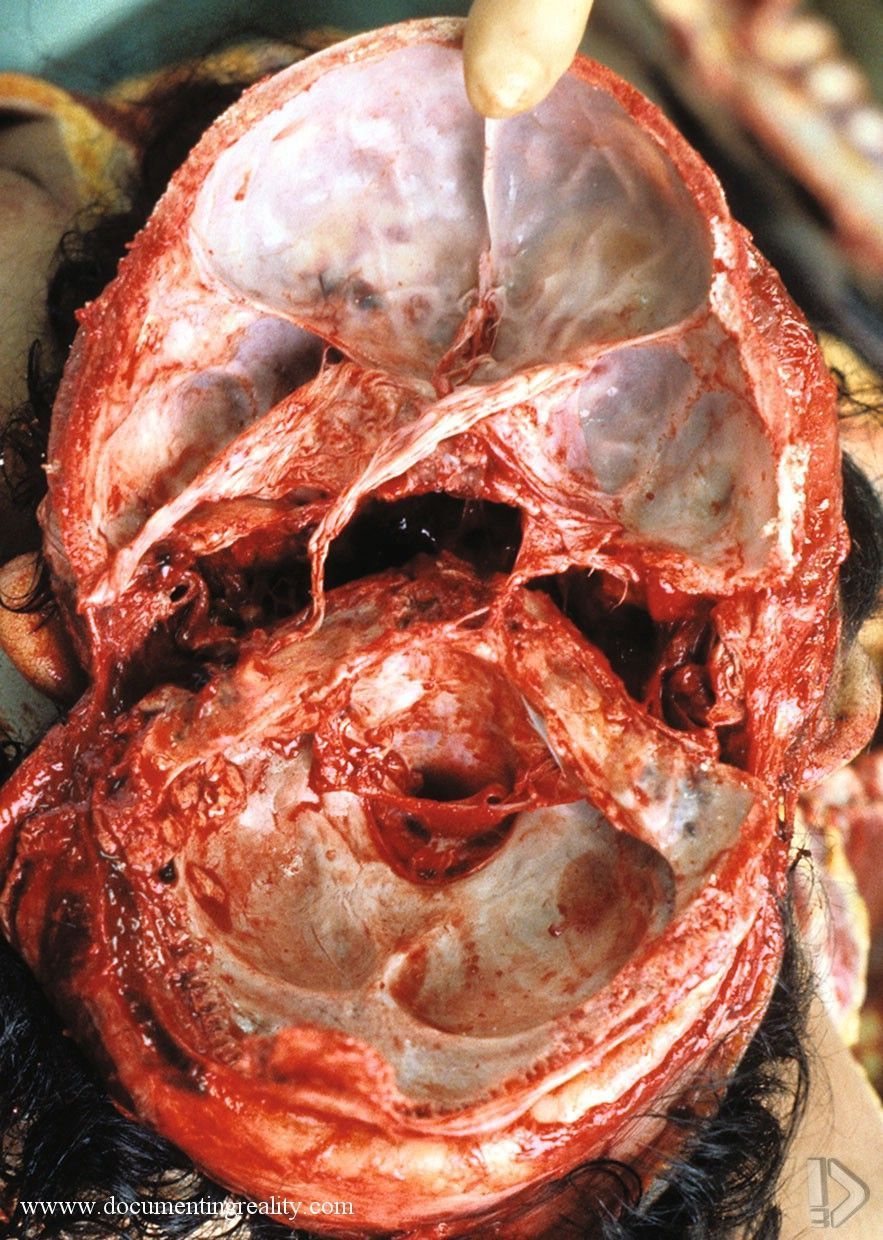 Fig. 12.60 Another hinge fracture of the skull sustained in a vehicle crash 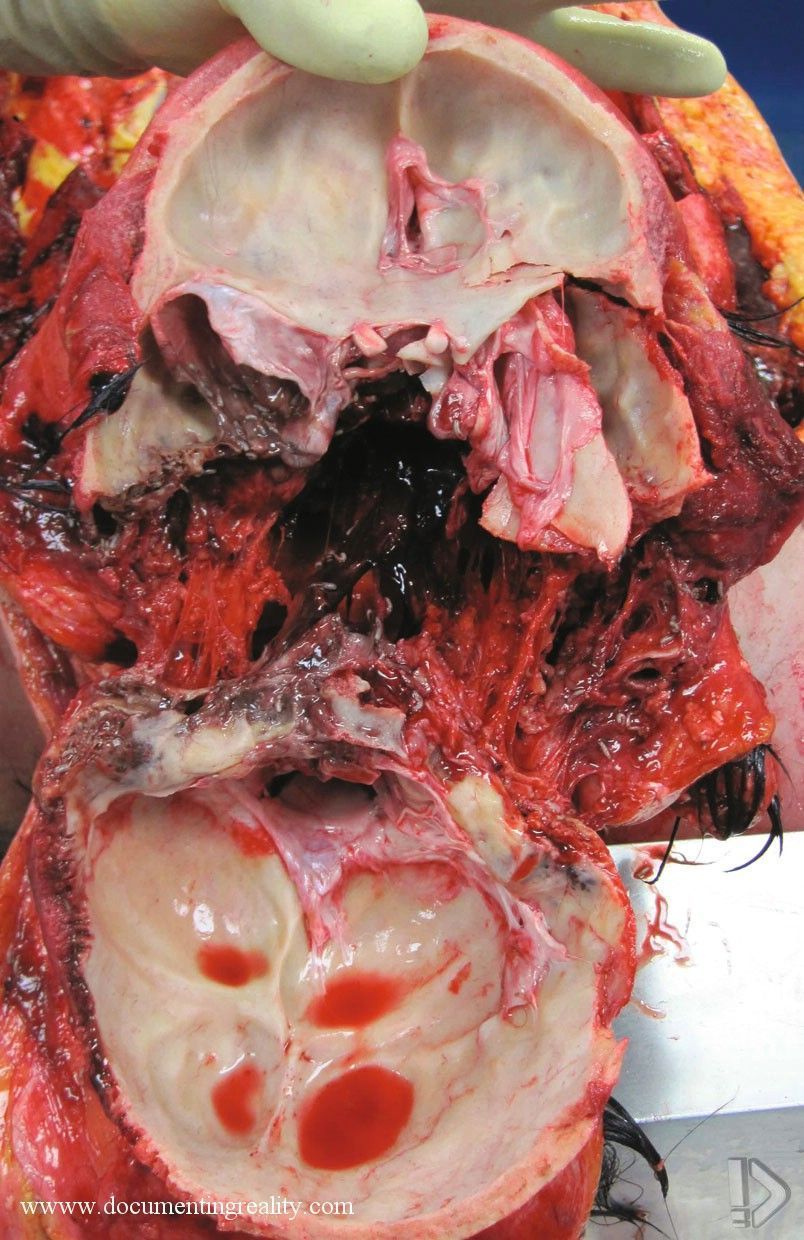 Fig. 12.61 An extreme example of hinge fracture with complete separation of the front and back parts of the skull 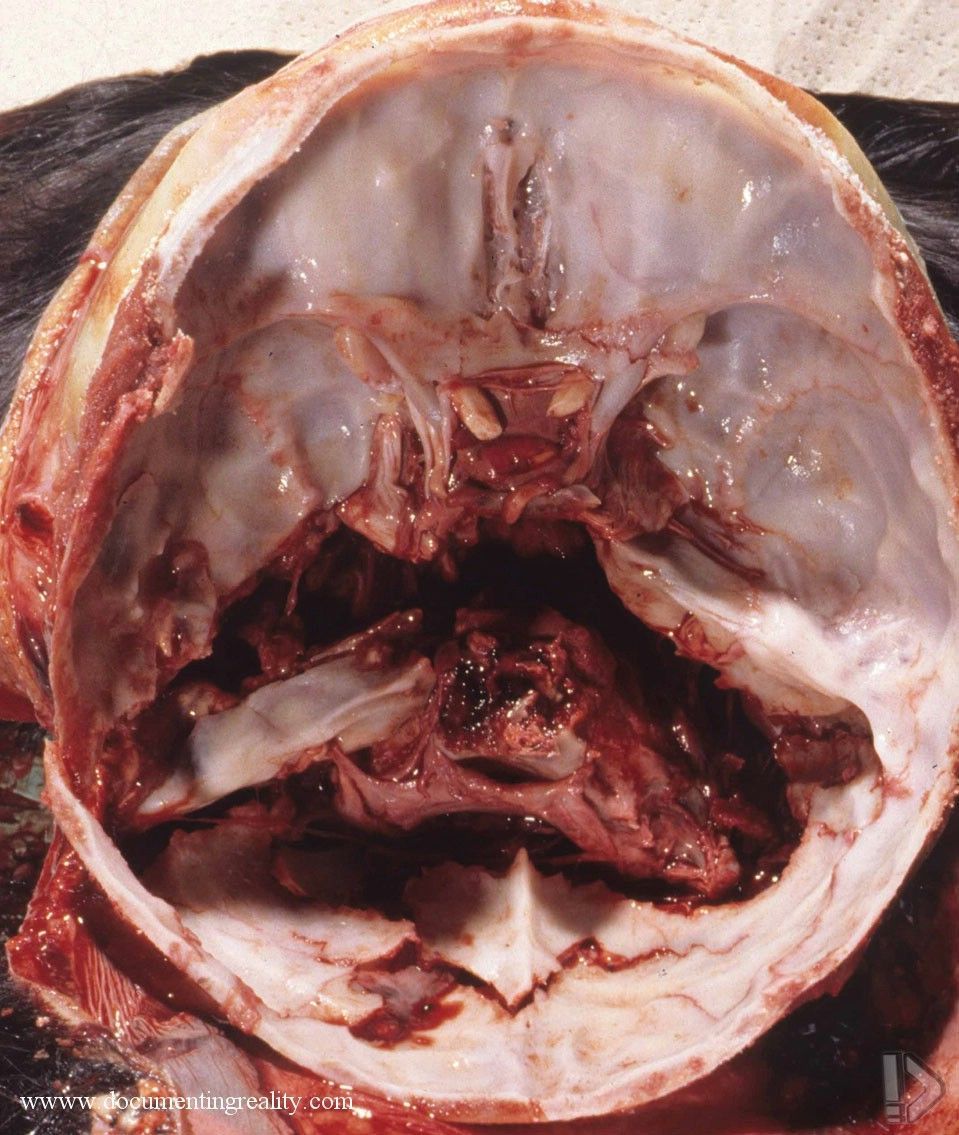 Fig. 12.62 A ‘‘ring fracture’’ involving the base of the skull around the foramen magnum where the spinal cord joins the base of the brain. Such fractures may occur with falls from heights, with impact on the top of the head or bottom of the feet 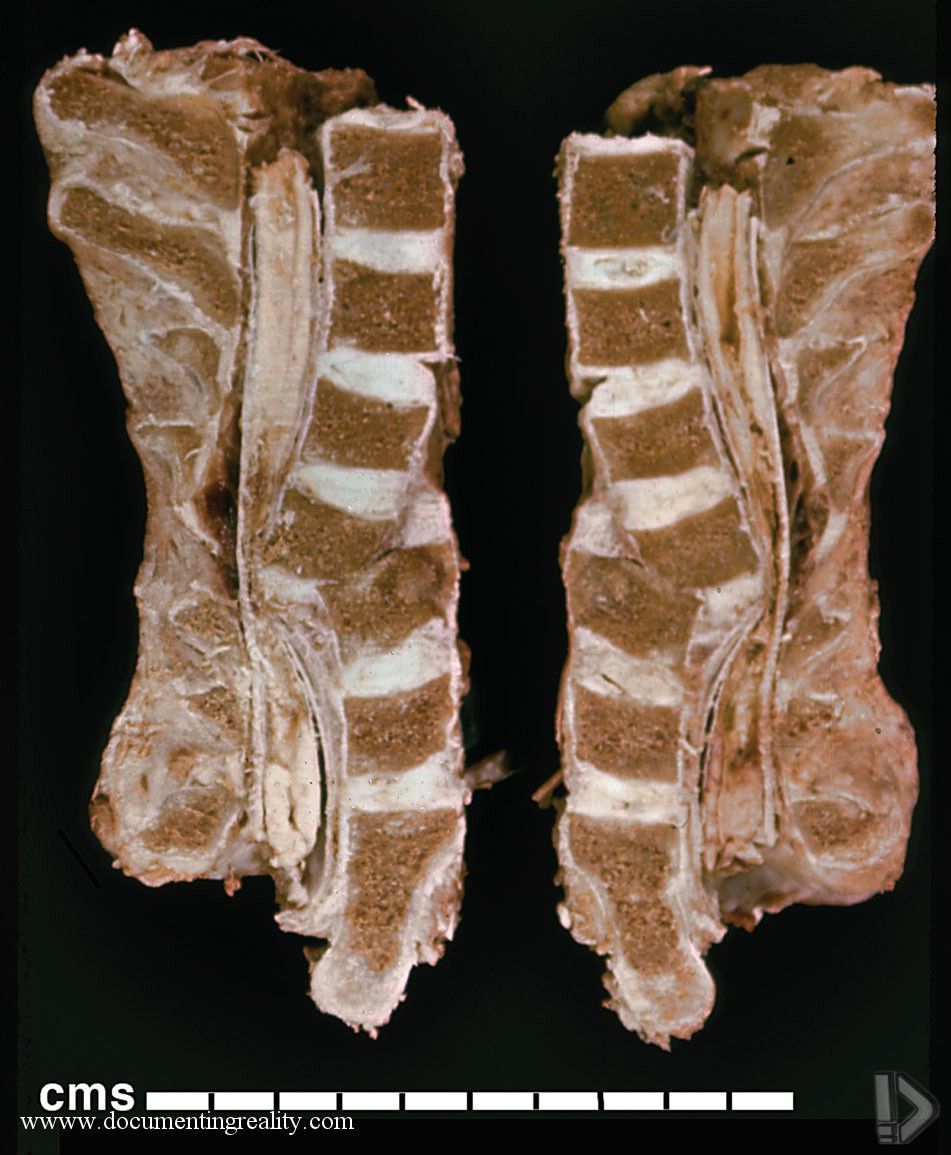 Fig. 12.63 A recent fracture of the cervical spine with compression of the adjacent spinal cord 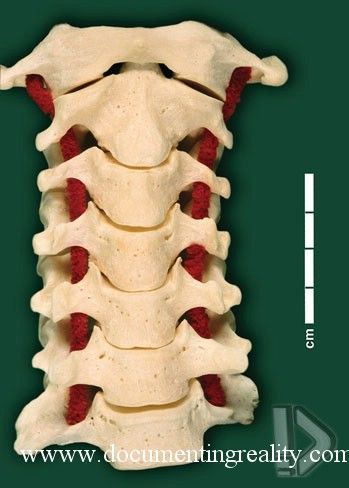 Fig. 12.64 Red tubing marks the course of the vertebral arteries through the transverse processes of the cervical spine. Injury to the spine in this area may lacerate the artery  Fig. 12.65 The vertebral artery lying within the transverse processes of the cervical spine may tear if there is blunt trauma to the side of the neck. This may result in a dissection. The microscope slide shows such a dissection with blood tracking within the wall of the artery 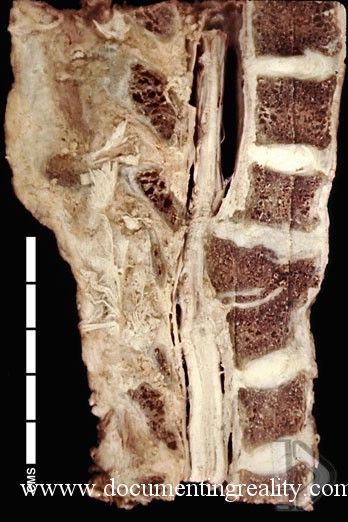 Fig. 12.66 An old fracture of the thoracic spine with bony fusion in an individual who was rendered quadriplegic by the accident References Burke MP. Forensic medical investigation of motor vehicle incidents. Boca Raton: CRC Press; 2007. Byard RW, Bhatia K, Reilly P, Vink R. How rapidly does cerebral swelling follow trauma? Observations using an animal model and possible implications in infancy. Leg Med. 2009;11S1:S128–S131. Byard RW, Gilbert J, James R, Lipsett J. Pathological features of farm and tractor – related fatalities in children. Am J Forensic Med Pathol. 1999;20:73–77. Byard RW, Tsokos M. Avulsion of the distal tibial shaft in aircraft crashes. A pathological feature of extreme decelerative injury. Am J Forensic Med Pathol. 2006;27:337–339. Byard RW, Vink R. The second impact syndrome. Forensic Sci Med Pathol. 2009;1:36–38. Byard RW, Wick R, Gilbert JD, Donald T. Histologic dating of bruises in moribund infants and young children. Forensic Sci Med Pathol. 2008;4:187–192. Dix J, Graham M, Hanzlick R. Investigation of road traffic fatalities – an atlas. Boca Raton, FL: CRC Press; 2000. Ehrlich E, Maxeiner H. External injury marks (wounds) on the head in different types of blunt trauma in an autopsy series. Med Law. 2002;21:773–782. Ingham AI, Langlois NEI, Byard RW. Bruises as a marker of other injuries at autopsy. Arch Dis Child. 2011; 96:218–220. Langlois NEI. The science behind the quest to determine the age of bruises – a review of the English language literature. Forensic Sci Med Pathol. 2007;3:241–251. Marshall DT, Gilbert JD, Byard RW. The spectrum of findings in cases of sudden death due to blunt cardiac trauma – ‘commotio cordis. Am J Forensic Med Pathol. 2008;29(1):1–4. Murphy GK. Beaten to death. An autopsy series of homicidal blunt force injuries. Am J Forensic Med Pathol. 1991;12:98–101. Pearl GS. Traumatic neuropathology. Clin Lab Med. 1998;18:39–64. Teresinski F, Madro R. Evidential value of injuries useful for reconstruction of the pedestrian-vehicle location at the moment of collision. Forensic Sci Int. 2002;128:127–135. Toro K, Szlavik N, Meszaros A, Dunay G, Soos M, Keller E. Jumping and falling death in children, adolescents, and young adults. J Clin Forensic Med. 2006;13:129–134. Turk EE, Tsokos M. Pathologic features of fatal falls from height. Am J Forensic Med Pathol. 2004;25:194–199. Turk E, Tsang Y-W, Champenari A, Pueschel K, Byard RW. Cardiac injuries in car occupants in fatal motor vehicle collisions – an autopsy based study. J Forensic Leg Med. 2010;17:339–343. Zivot U, DiMaio VJ. Motor vehicle-pedestrian accidents in adults. Relationship between impact speed, injuries, and distance thrown. Am J Forensic Med Pathol. 1993;14:185–186. Zugibe FT, Costello JT. Identification of the murder weapon by intricate patterned injury measurements. J Forensic Sci. 1986;31:773–777. 486 12 Blunt Force Injury Deaths Source: The Atlas of Forensic Pathology for Police, Forensic Scientists, Attorneys and Death Investigators  |
|
#2
●
06-21-2015, 07:41 AM
| ||||||||
 ✝Mudderator from Hell✝ Poster Rank:11 e-mail Join Date: Oct 2006 Posts: 96,324
Contributions: 817
Mentioned: 476 Post(s) Quoted: 10306 Post(s)
| ||||||||
|
Re: Blunt Force Injury Deaths | Part # II
Some nice detailed inside view pics and info.  that spleen really is fucked up.  |
|
#3
●
06-21-2015, 08:29 AM
| ||||||||
 ★ Legacy Member ★ Poster Rank:1252 Join Date: Jul 2012 Posts: 497
Contributions: 3
Mentioned: 0 Post(s) Quoted: 28 Post(s)
| ||||||||
|
Re: Blunt Force Injury Deaths | Part # II
Nice post, gatagato! |
|
#6
●
06-21-2015, 03:17 PM
| ||||||||
 ♚ Legacy Gold Member ♚ Poster Rank:34 Female Join Date: Nov 2008 Posts: 43,396
Contributions: 204
Mentioned: 95 Post(s) Quoted: 2282 Post(s)
| ||||||||
|
Re: Blunt Force Injury Deaths | Part # II
Absolutely brilliant thread |
|
#7
●
06-21-2015, 04:08 PM
| ||||||||
 ♚ Legacy Gold Member ♚ Poster Rank:195 Female Join Date: Nov 2009 Posts: 7,765 Mentioned: 5 Post(s) Quoted: 709 Post(s)
| ||||||||
|
Re: Blunt Force Injury Deaths | Part # II
Agreed. Brilliant thread. Good job Gatagato, |
|
#9
●
06-22-2015, 12:29 AM
| ||||||||
| My Rank: PRIVATE FIRST CLASS Poster Rank:3660 Join Date: Feb 2010 Posts: 92 Mentioned: 0 Post(s) Quoted: 23 Post(s)
| ||||||||
|
Re: Blunt Force Injury Deaths | Part # II
Intestine ejected from the knee. There are many strange and wondrous things in this world |