|
#1
●
05-29-2015, 09:46 AM
| ||||||||
 ★ ********* ★ Poster Rank:247 Male Join Date: Jul 2009 Posts: 5,564
Contributions: 368
Mentioned: 66 Post(s) Quoted: 932 Post(s)
| ||||||||
|
Blunt Force Injury Deaths | Part # I
One of the most commonly encountered types of trauma resulting in serious injury or in traumatic death is blunt force injury. Blunt force injury is defined as injury resulting from impact with a blunt object, i.e., one that does not possess any sharp edges. Examples of blunt objects include hammers, baseball bats, fists, the interior surfaces of vehicles, roads, trees, floors, walls, furniture, and even fluid objects such as bodies of water (if the speed of impact is sufficiently high). Blunt force injuries are made up of five subgroups, each representing a different response to the transfer of force from a blunt object onto or into the body. Many blunt force injury cases, such as those that occur in vehicle collisions and following falls or jumps from heights, involve forces that are associated with sudden deceleration (or acceleration in certain motor vehicle–related cases) which may significantly contribute to the overall injuries. Thus, the term ‘‘blunt force injury’’ should also encompass acceleration/deceleration forces in some situations. Abrasions Abrasions are also known as scrapes, scratches, or grazes. They result from a blunt object impacting the surface of the skin with disruption and loss of superficial layers. Abrasions are only found at the actual site of impact with a blunt object but do not always occur with blunt impact; for example, if the impact site is protected by heavy clothing. The size and shape of abrasions varies greatly depending on the force of impact and the amount of skin surface involved. Theymay reflect the direction of the impact andmay not bleed if they are very superficial and do not involve the dermis. Contusions Contusions or bruises occur when a blunt force has caused disruption of blood vessels with escape of red blood cells into the surrounding tissues. A bruise may occur in isolation or it may be associated with abrasions and lacerations. It may show the outline of the impacting object, which may resemble tram tracks if the object is linear. A contusion may not appear immediately if the area of bleeding is deep within the dermis or subcutaneous tissues. Unlike abrasions, contusions may occur at sites of impact, as well as at sites distant from the impact site due to tracking of blood through the tissues. The aging of bruises is notoriously difficult despite the ‘‘standard’’ color changes described in a number of older textbooks. Dating of bruises from photographs should not be attempted. Lacerations A laceration refers to splitting of tissues from blunt force or acceleration/deceleration injuries. It is not found with sharp force injuries. A laceration of the skin may be linear, jagged, irregularly shaped, or occasionally patterned and may be associated with abrasions and contusions. Lacerations typically have irregular tissue bridges crossing from one side to the other, a feature that is not found with an incised wound from a sharp object, where all tissues are neatly divided. Lacerations most often occur at the site of blunt force impact; however, they may also be found at sites distant to the impact due to stretching of tissues. Lacerations from blunt force and acceleration/deceleration also commonly involve internal organs and tissues. Fractures Fractures refer to the breaking of a bone (or cartilage) and usually result from significant blunt force. Fractures are classified in a variety of ways. If a fracture near the skin surface is covered by intact skin it is classified as ‘‘closed’’, compared to the case when there is a laceration of the overlying skin with communication between the fracture and skin surface, which is classified as an ‘‘open’’ or ‘‘compound’’ fracture. These fractures are more susceptible to infection. Alternatively, a ‘‘simple’’ or ‘‘complete’’ fracture refers to a linear (straight line) fracture that runs across the bone shaft, involving both sides (cortices) of the bone. An ‘‘incomplete’’ fracture involves only one side of the bone shaft. ‘‘Greenstick’’ fractures are specific to childhood where the bone bends rather than breaking. A ‘‘buckle’’ fracture is an incomplete fracture where one cortex collapses or buckles. A ‘‘spiral’’ fracture occurs in long bones from a rotational force. It has a helical shape, twisting around the long-axis of the bone shaft. A ‘‘comminuted’’ fracture is one that has many separate fragments of bone. Avulsions An avulsion injury occurs when a blunt force has resulted in separation of an organ or body part from the rest of the body. An example involving the limbs is an amputation injury where an entire extremity or portion thereof is severed from the body. Decapitation represents the most extreme example of an avulsion injury, where the head is separated from the body. Not all avulsion injuries are the result of blunt force, as similar injuries may occur with sharp force, e.g., decapitation by a guillotine. However, a significant number of these types of injuries are related to severe blunt force/deceleration force that may be seen with pedestrian verses train, or motorcycle verses tree accidents. In these cases, total body transection may be observed. Avulsion of internal organs may also occur with cases of severe blunt force/deceleration. Head Injuries Many deaths due to blunt force trauma are caused by head and brain injuries. Craniocerebral trauma can be used as a collective term to describe injuries to the head, including the skull, and the brain. If there are no skull fractures, brain injuries are sometimes referred to as ‘‘closed head injuries.’’ If there are significant neck and upper spinal cord injuries, the terms craniocerebral and cervical trauma can be applied. Blunt trauma injuries to the head may involve the following (commencing with the outermost layers): skin, subcutaneous and subgaleal tissues, skull (cranium) and facial bones, dura, subdural space, subarachnoid space, and, finally, the brain. Neck, Spinal Cord, and Vertebral Artery Injuries The neck is vulnerable to blunt trauma which may compromise blood flow to the brain or damage the integrity of the spinal cord. A broken neck may result from blunt force injury with fracture of the cervical vertebral column, causing contusion, laceration, or transaction of the cord. Disruption of the atlanto-occipital joint, where the occiput, or base of the skull, connects to the first cervical vertebrae, may result in similar injuries. A blow to the side of the head or face, with abrupt twisting or sideways flexion of the neck, may cause laceration of the vertebral artery with resultant lethal basilar subarachnoid hemorrhage. 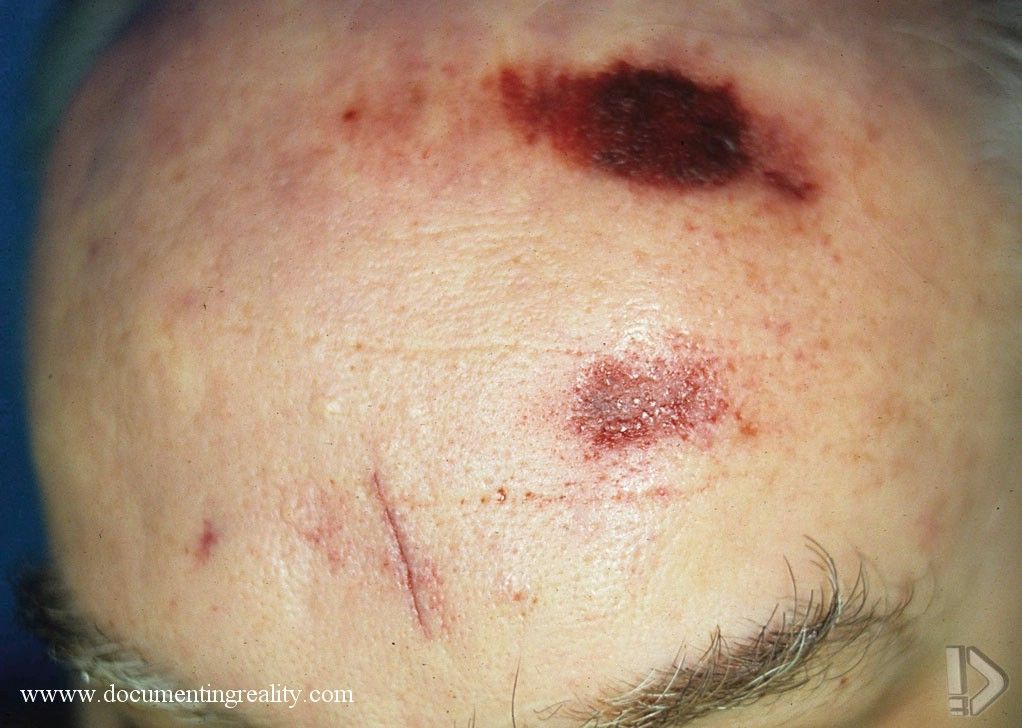 Fig. 12.1 An example of many different types of abrasions, including linear and rounded  Fig. 12.2 Multiple abrasions of various sizes and shapes 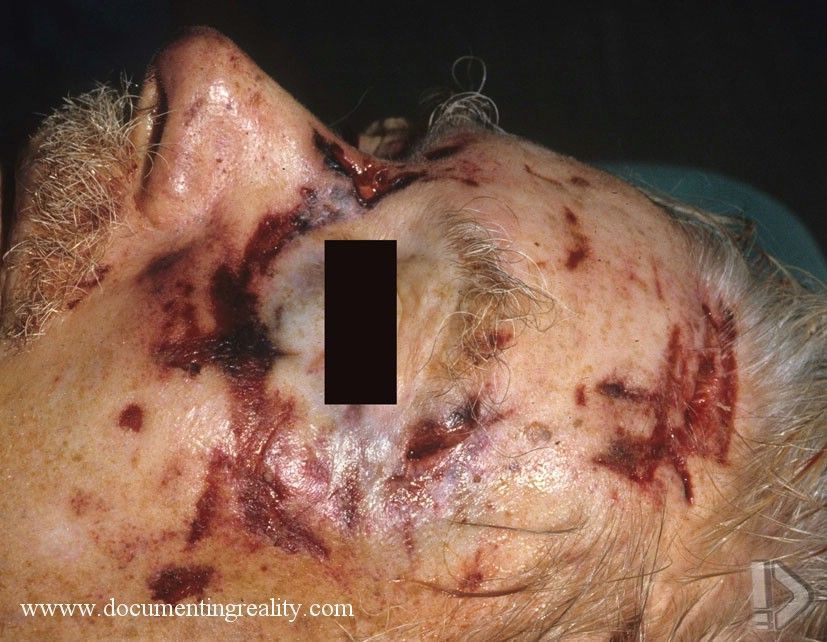 Fig. 12.3 Linear parallel abrasions resulting from striking an automobile windshield 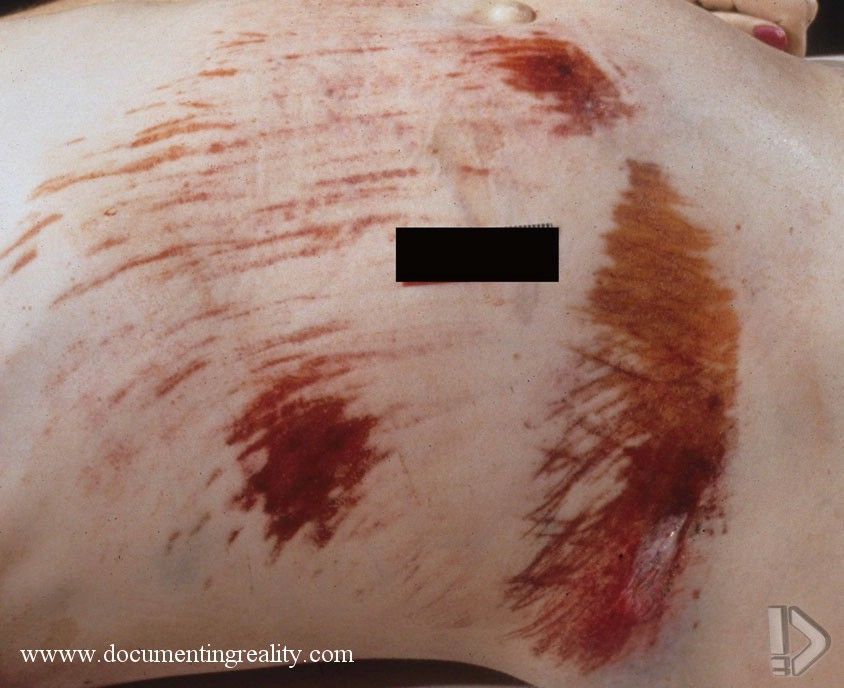 Fig. 12.4 Multiple linear and confluent abrasions on a murder victim’s abdomen, produced when her body was moved (dragged). Note the yellow discoloration, indicating peri- or postmortem occurrence 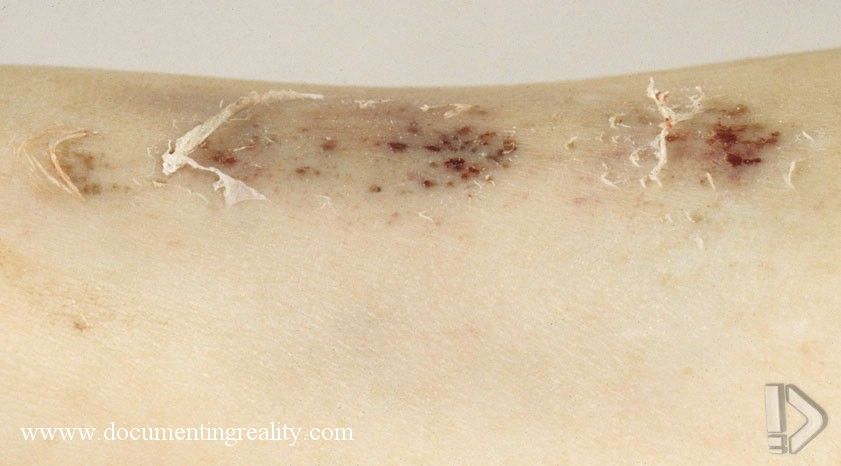 Fig. 12.5 An abrasion with peeled-up superficial layers of the epidermis. Their location toward the left of the abrasions shows that the direction of force was from right to left in the photograph 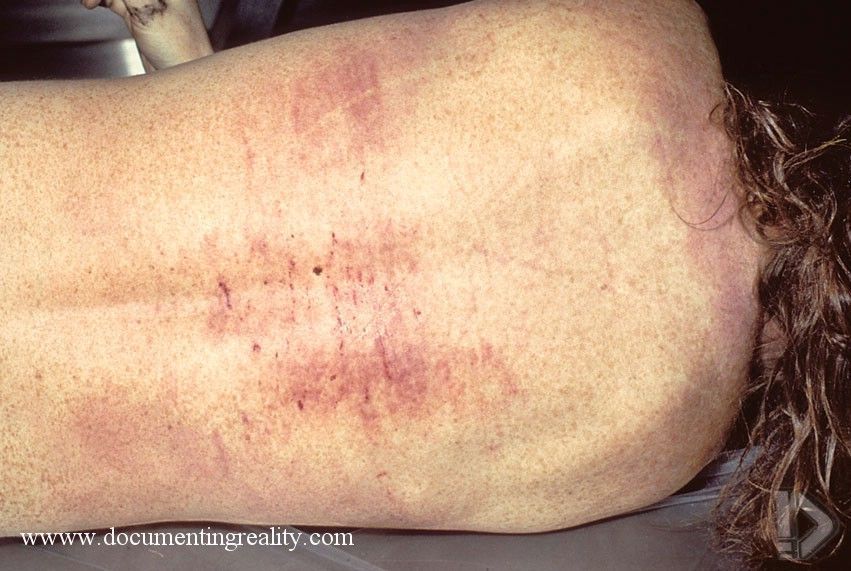 Fig. 12.6 Linear abrasions from contact with a road surface 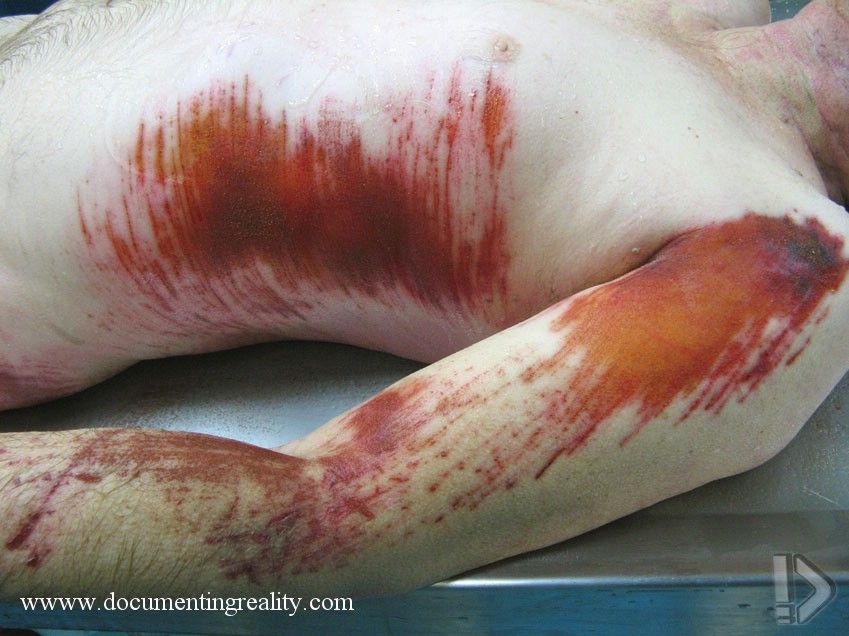 Fig. 12.7 Parallel abrasions on the flank and arm from dragging along a road surface (so-called ‘‘brush’’ abrasions). The yellow discoloration indicates that there was little blood flow to the skin injuries when the abrasions occurred 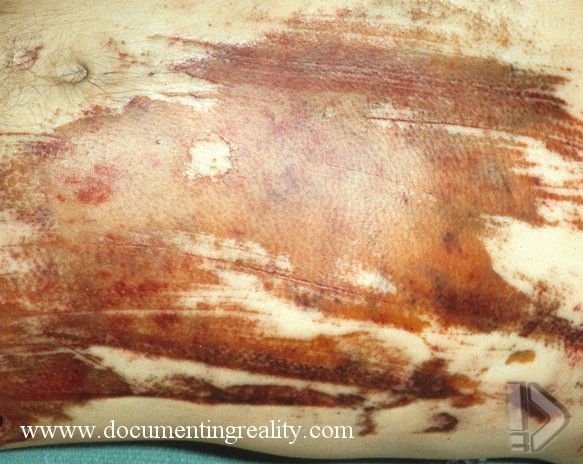 Fig. 12.8 An example of more extensive confluent and dried abrasions on the trunk of a pedestrian, sometimes referred to as ‘‘road rash’’ or ‘‘brush’’ abrasions 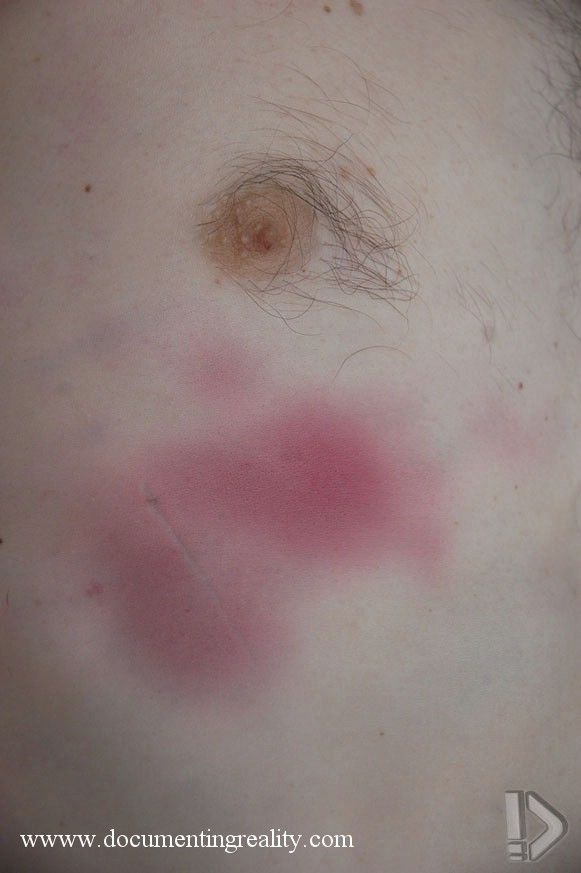 Fig. 12.9 An impact contusion of the chest 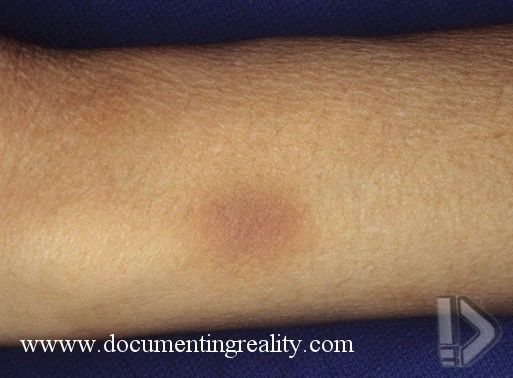 Fig. 12.10 A relatively small impact contusion of the arm 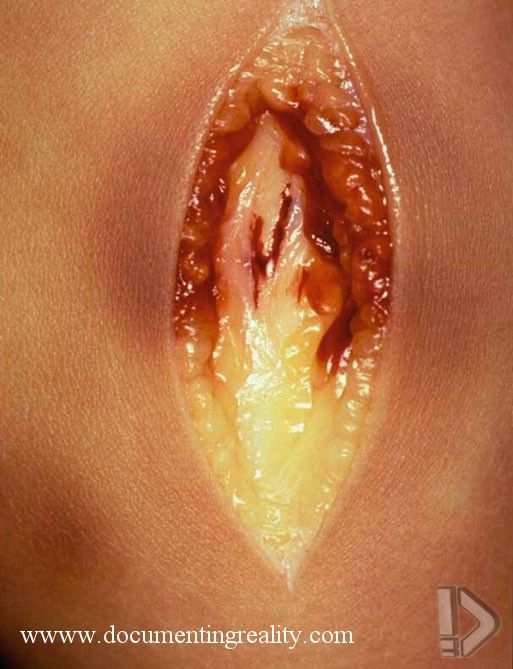 Fig. 12.11 A scalpel incision of a contusion at autopsy, allowing visualization and documentation of the hemorrhage within the subcutaneous fat 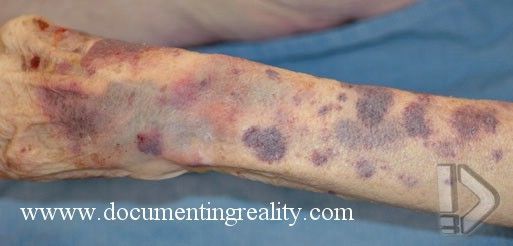 Fig. 12.12 An example of senile ecchymosis or easy bruising of the arms of the elderly associated with fragile skin and subcutaneous tissues 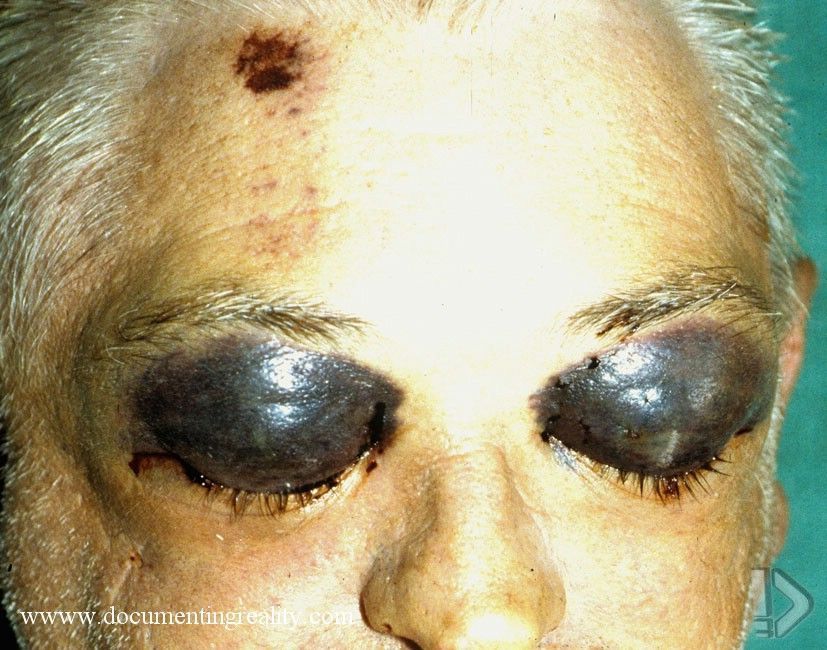 Fig. 12.13 Bilateral periorbital ecchymoses (raccoon’s eyes), resulting from basilar skull fractures sustained in a fall  Fig. 12.14 An example of Battle’s sign, or bruising behind the ear due to basal skull fractures  Fig. 12.15 Grey-Turner’s sign, bruising of the flanks, indicating extensive internal (retroperitoneal) hemorrhage 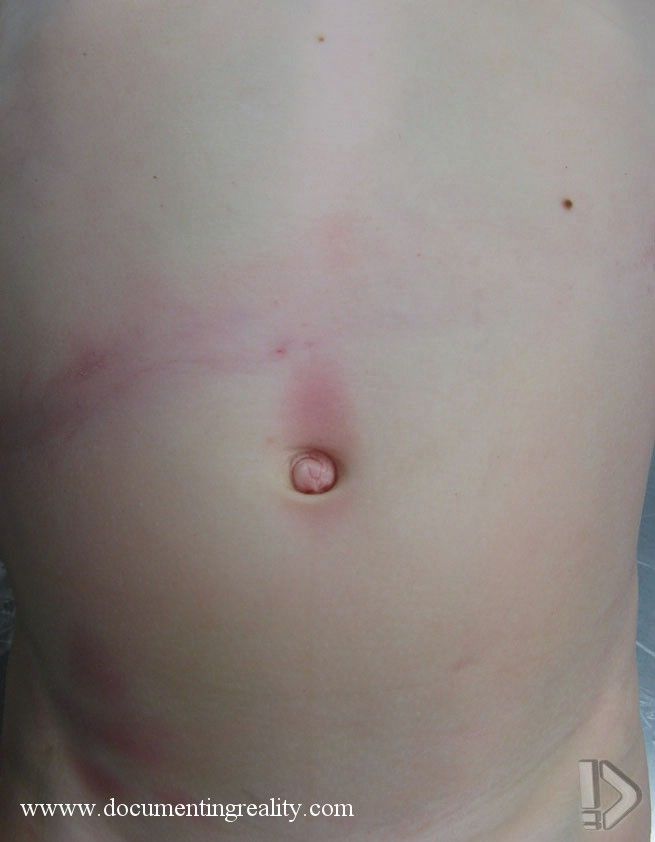 Fig. 12.16 An area of red bruising around the umbilicus, so-called Cullen’s sign, associated with intraand retroperitoneal hemorrhage 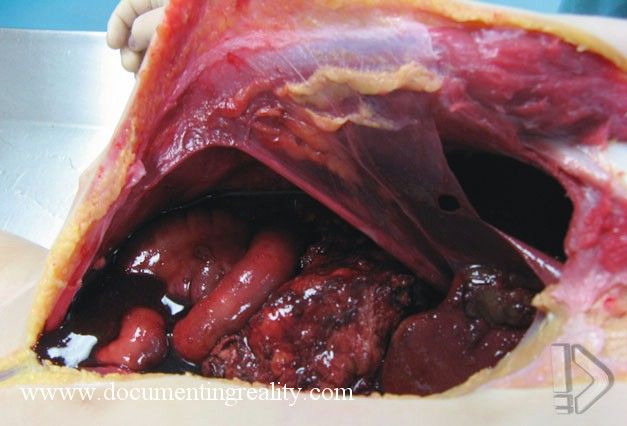 Fig. 12.17 Opening of the abdomen in the previous case with a positive Cullen’s sign (>Fig. 12.16), revealing extensive intraperitoneal hemorrhage from a lacerated liver 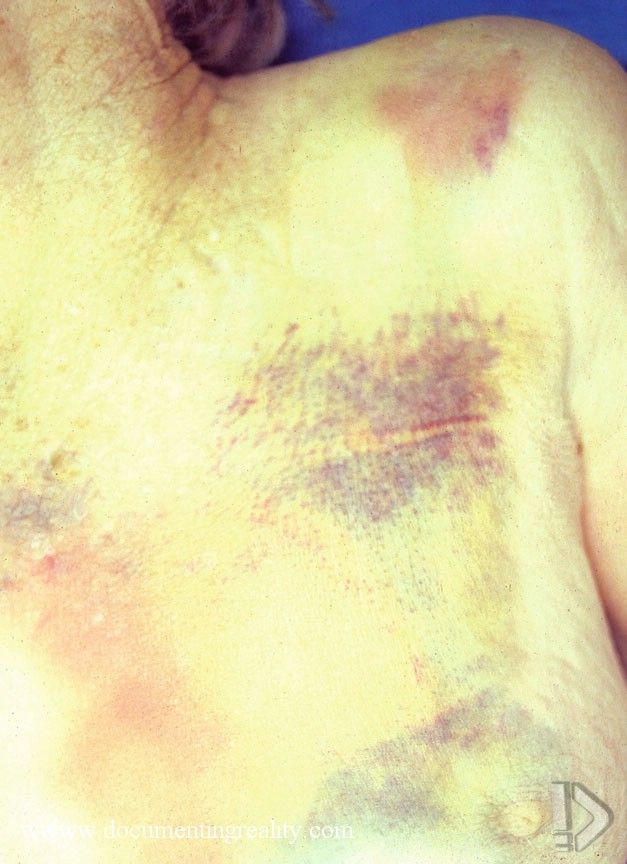 Fig. 12.18 A multicolored bruise known to have occurred 7 days prior to death 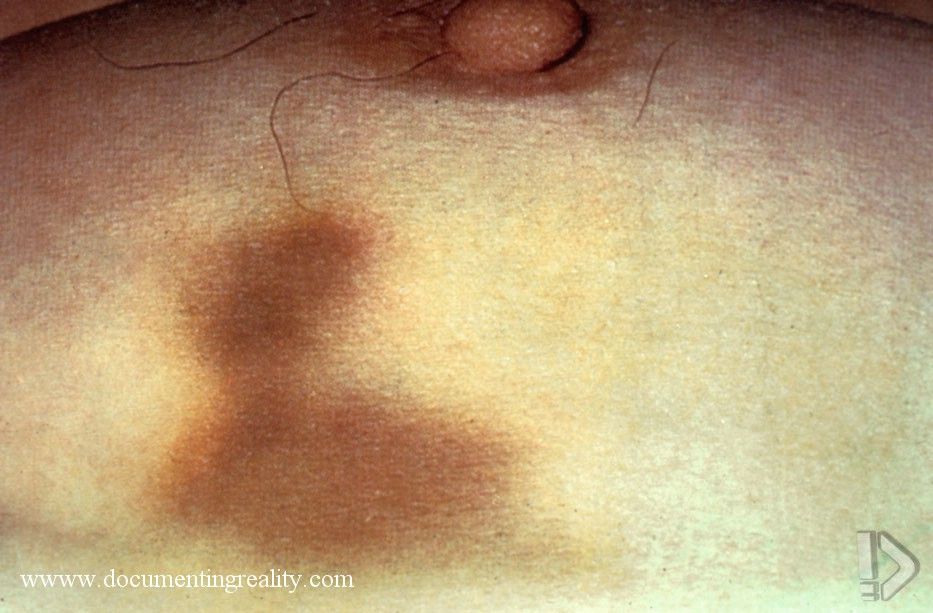 Fig. 12.19 A 6-day-old bruise showing brown discoloration 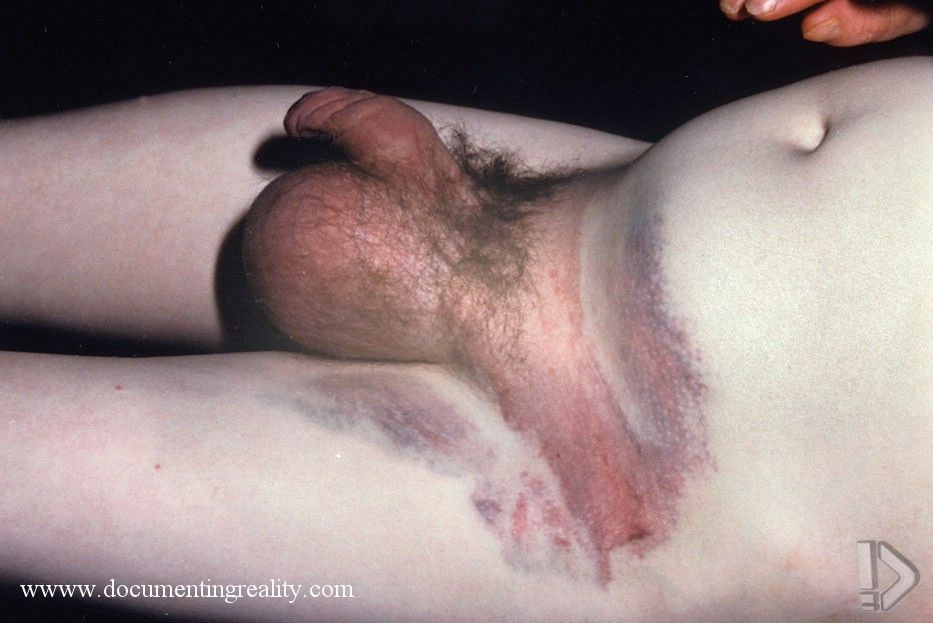 Fig. 12.20 Purple-blue bruising with swelling of the scrotum in a patient in a mental institution. The perpetrator was a male nurse 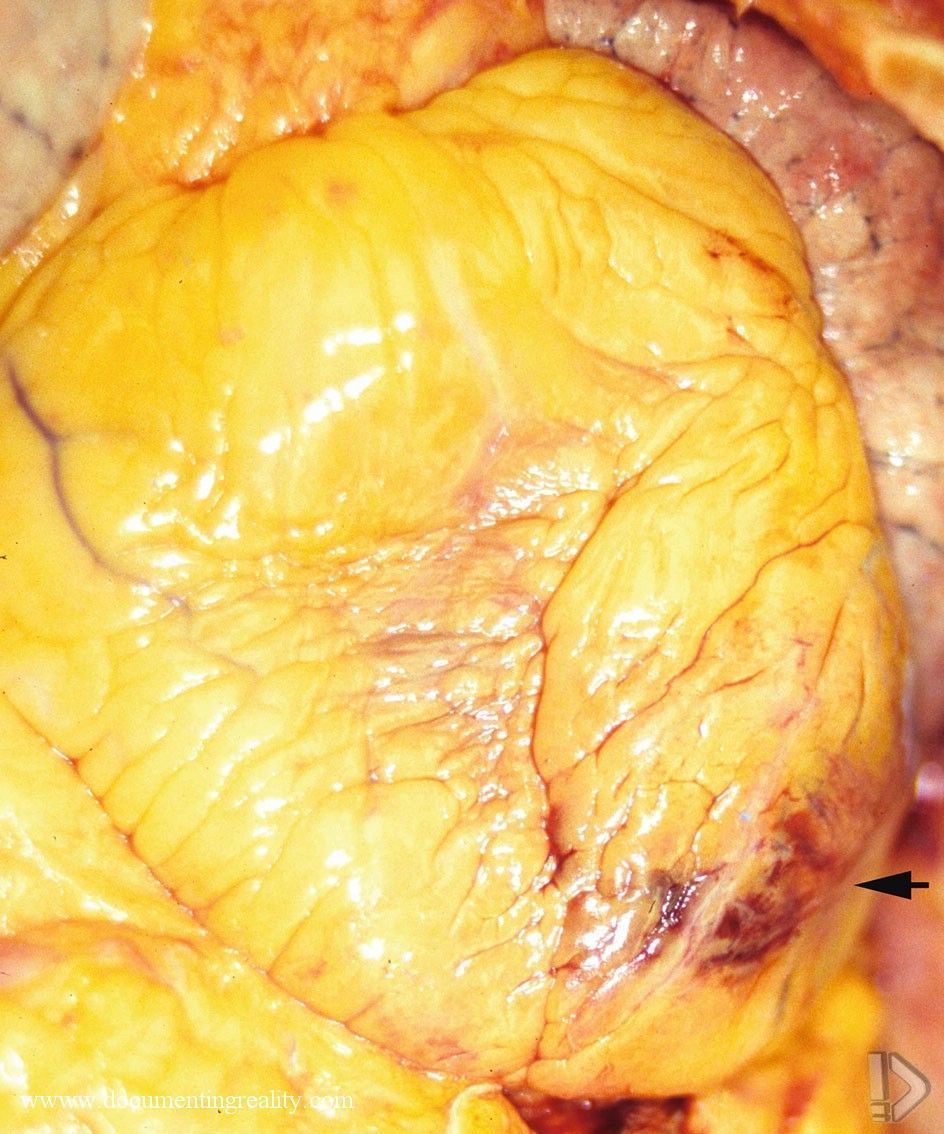 Fig. 12.21 A contusion of a heart from blunt chest trauma. The heart also has a large amount of epicardial fat 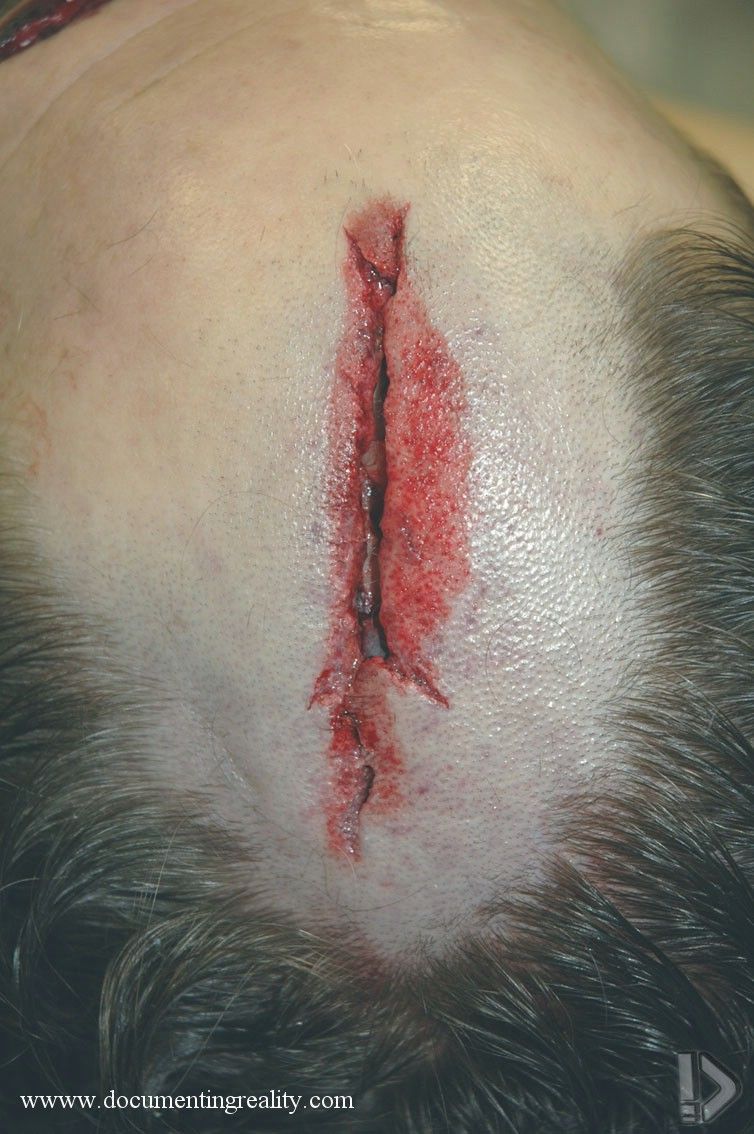 Fig. 12.22 A laceration of the scalp. Note the somewhat jagged appearance, as well as the marginal abrasions. The hair has been shaved to demonstrate the full extent and nature of the wound 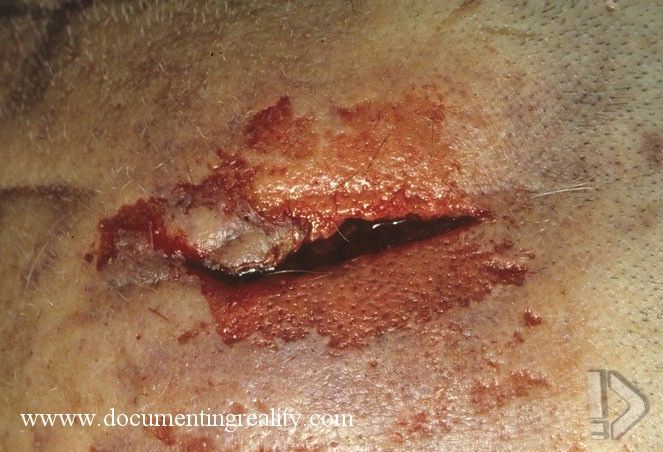 Fig. 12.23 A laceration with extensive associated abrasions 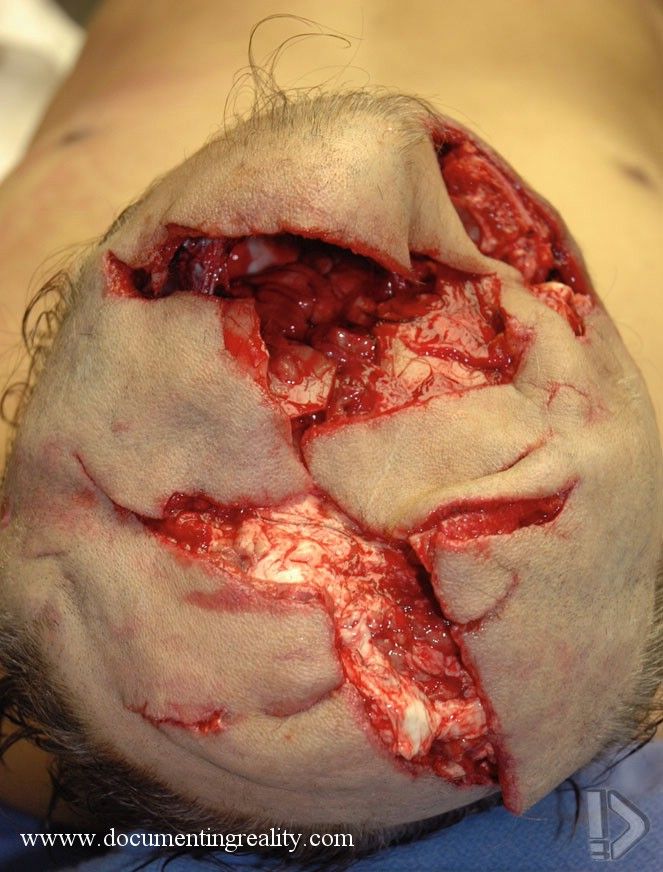 Fig. 12.24 Extensive lacerations of the scalpwithminimal associated abrasions 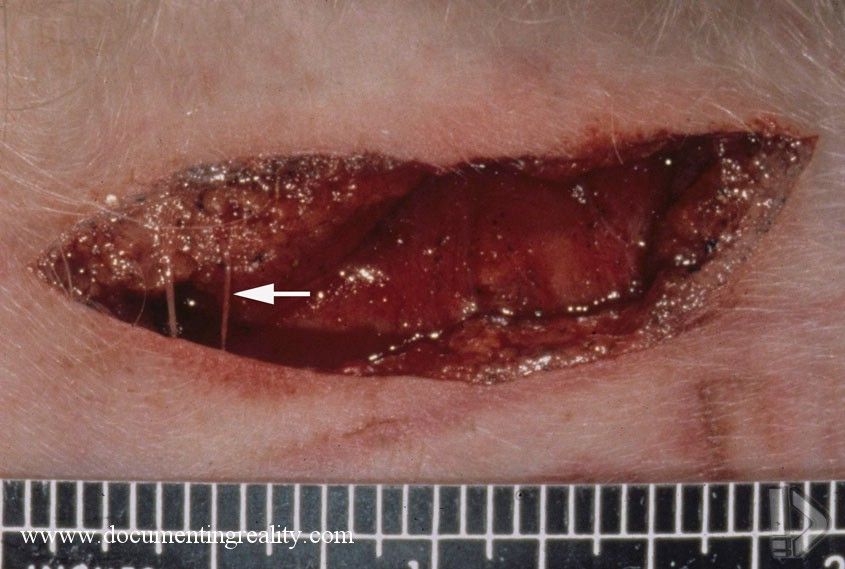 Fig. 12.25 A scalp laceration with minimal marginal abrasions but with tissue bridging toward the left end (arrow) 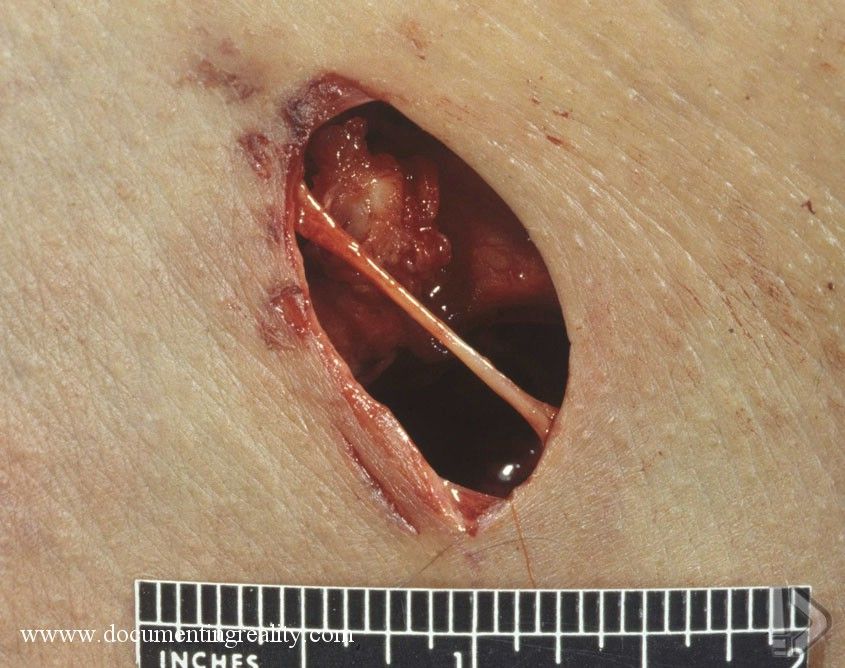 Fig. 12.26 A laceration with prominent tissue bridging 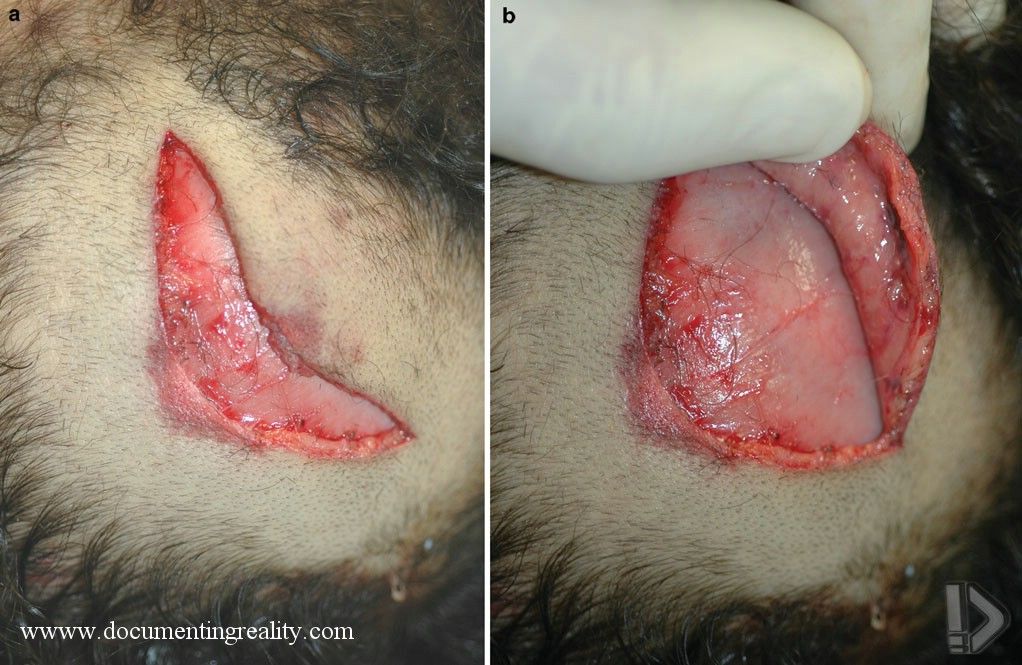 Fig. 12.27 Scalp laceration (a) with prominent undermining (b) 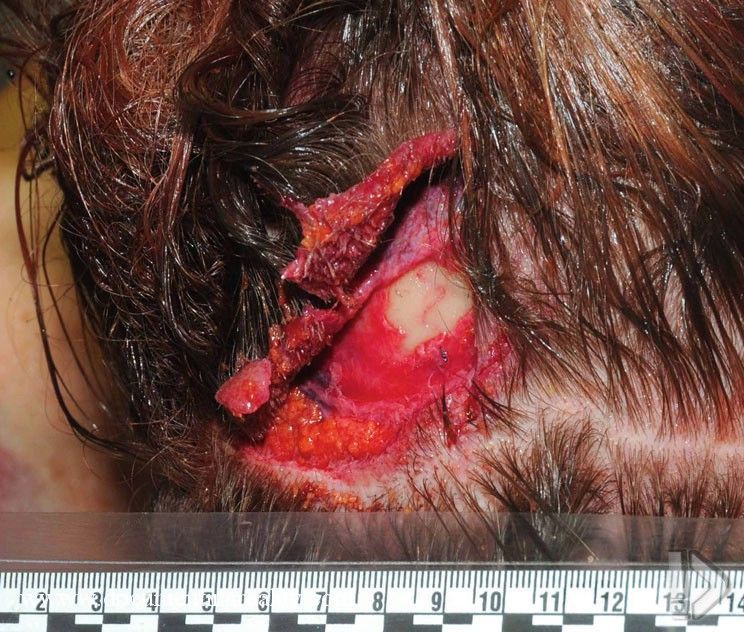 Fig. 12.28 Linear and curved lacerations of the scalp revealed by shaving the hair of a homicide victim who died from blunt craniocerebral trauma 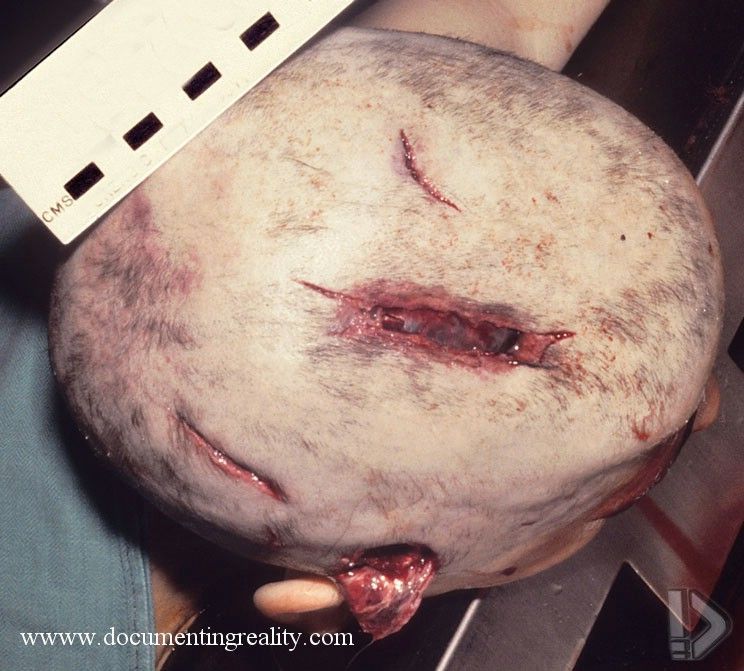 Fig. 12.29 A characteristic laceration from blunt trauma to the head extending through to the surface of the skull 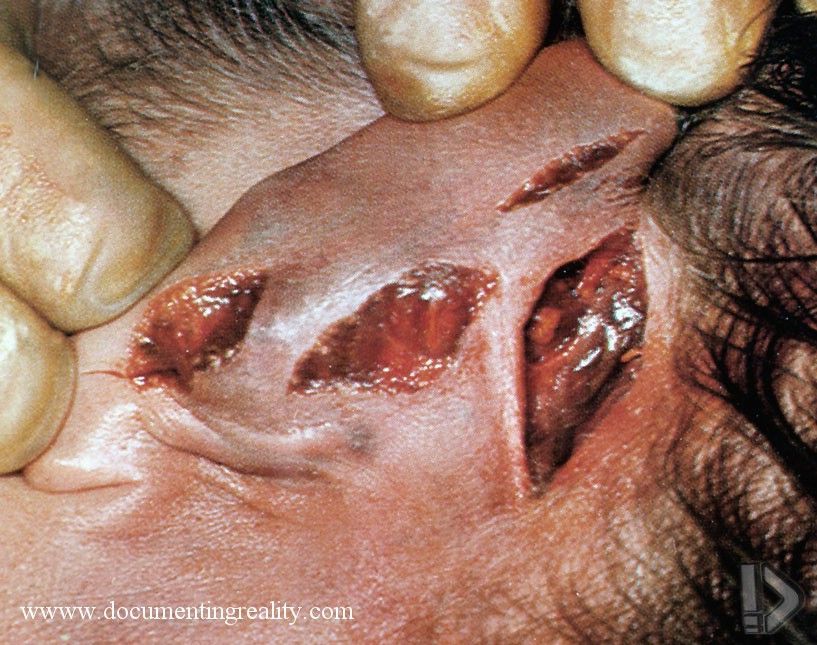 Fig. 12.30 A series of linear lacerations behind the ear from kicking 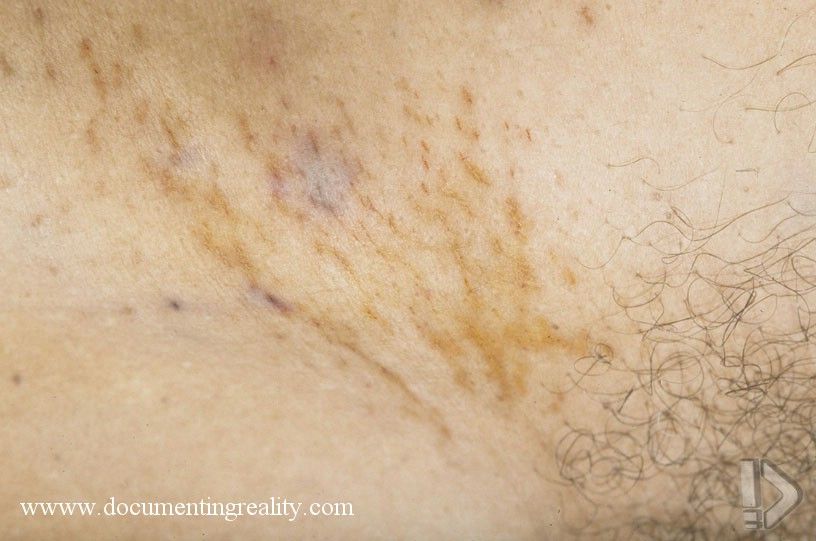 Fig. 12.31 Numerous stretch lacerations of the inguinal (groin) region in a pedestrian struck from behind. These lacerations are yellow with minimal hemorrhage, indicating that the blood pressure most likely immediately dropped on impact (due to severe internal injuries) 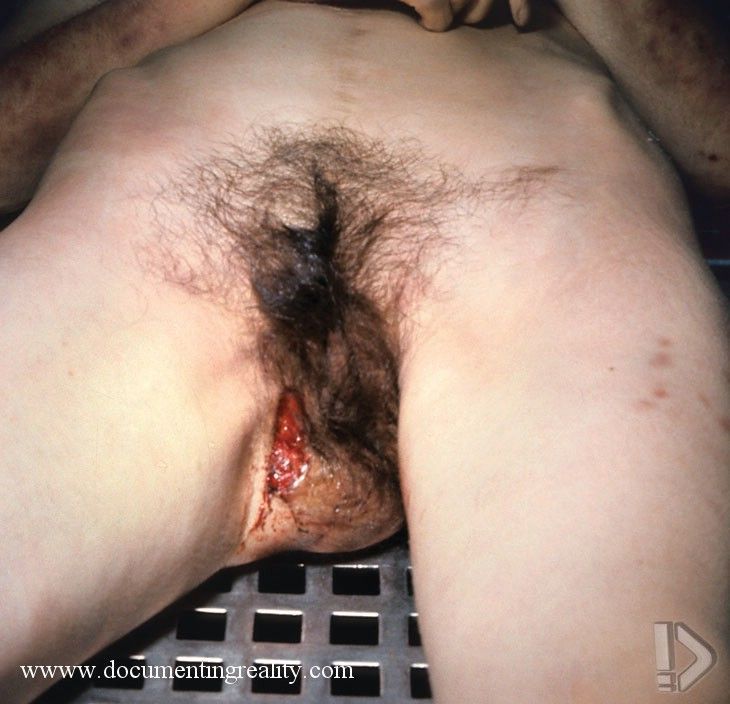 Fig. 12.32 Laceration of the perineum following blunt abdominal trauma in a vehicle accident  Fig. 12.33 Extrusion of small intestine through a lacerated perineum following blunt abdominal trauma from impact with a vehicle References Burke MP. Forensic medical investigation of motor vehicle incidents. Boca Raton: CRC Press; 2007. Byard RW, Bhatia K, Reilly P, Vink R. How rapidly does cerebral swelling follow trauma? Observations using an animal model and possible implications in infancy. Leg Med. 2009;11S1:S128–S131. Byard RW, Gilbert J, James R, Lipsett J. Pathological features of farm and tractor – related fatalities in children. Am J Forensic Med Pathol. 1999;20:73–77. Byard RW, Tsokos M. Avulsion of the distal tibial shaft in aircraft crashes. A pathological feature of extreme decelerative injury. Am J Forensic Med Pathol. 2006;27:337–339. Byard RW, Vink R. The second impact syndrome. Forensic Sci Med Pathol. 2009;1:36–38. Byard RW, Wick R, Gilbert JD, Donald T. Histologic dating of bruises in moribund infants and young children. Forensic Sci Med Pathol. 2008;4:187–192. Dix J, Graham M, Hanzlick R. Investigation of road traffic fatalities – an atlas. Boca Raton, FL: CRC Press; 2000. Ehrlich E, Maxeiner H. External injury marks (wounds) on the head in different types of blunt trauma in an autopsy series. Med Law. 2002;21:773–782. Ingham AI, Langlois NEI, Byard RW. Bruises as a marker of other injuries at autopsy. Arch Dis Child. 2011; 96:218–220. Langlois NEI. The science behind the quest to determine the age of bruises – a review of the English language literature. Forensic Sci Med Pathol. 2007;3:241–251. Marshall DT, Gilbert JD, Byard RW. The spectrum of findings in cases of sudden death due to blunt cardiac trauma – ‘commotio cordis. Am J Forensic Med Pathol. 2008;29(1):1–4. Murphy GK. Beaten to death. An autopsy series of homicidal blunt force injuries. Am J Forensic Med Pathol. 1991;12:98–101. Pearl GS. Traumatic neuropathology. Clin Lab Med. 1998;18:39–64. Teresinski F, Madro R. Evidential value of injuries useful for reconstruction of the pedestrian-vehicle location at the moment of collision. Forensic Sci Int. 2002;128:127–135. Toro K, Szlavik N, Meszaros A, Dunay G, Soos M, Keller E. Jumping and falling death in children, adolescents, and young adults. J Clin Forensic Med. 2006;13:129–134. Turk EE, Tsokos M. Pathologic features of fatal falls from height. Am J Forensic Med Pathol. 2004;25:194–199. Turk E, Tsang Y-W, Champenari A, Pueschel K, Byard RW. Cardiac injuries in car occupants in fatal motor vehicle collisions – an autopsy based study. J Forensic Leg Med. 2010;17:339–343. Zivot U, DiMaio VJ. Motor vehicle-pedestrian accidents in adults. Relationship between impact speed, injuries, and distance thrown. Am J Forensic Med Pathol. 1993;14:185–186. Zugibe FT, Costello JT. Identification of the murder weapon by intricate patterned injury measurements. J Forensic Sci. 1986;31:773–777. 486 12 Blunt Force Injury Deaths The Atlas of Forensic Pathology for Police, Forensic Scientists, Attorneys and Death Investigators (2012) |
|
#3
●
05-29-2015, 11:29 AM
| ||||||||
| So Fucking Banned Poster Rank:559 Join Date: Jul 2014 Posts: 1,762
Contributions: 123
Mentioned: 4 Post(s) Quoted: 722 Post(s)
| ||||||||
|
Re: Blunt Force Injury Deaths | Part # I
wow ultra amazing post ! thanks a lot, great pics, great captions  |
|
#6
●
05-29-2015, 07:26 PM
| ||||||||
 ★ Legacy Member ★ Poster Rank:571 Female last I looked Join Date: May 2015 Posts: 1,709 Mentioned: 14 Post(s) Quoted: 832 Post(s)
| ||||||||
|
Re: Blunt Force Injury Deaths | Part # I
its not the fall that kills you, its the sudden stop. |
|
#7
●
05-29-2015, 09:02 PM
| ||||||||
 My Rank: MAJOR Poster Rank:94 Male Join Date: Aug 2009 Posts: 16,999 Mentioned: 9 Post(s) Quoted: 1899 Post(s)
| ||||||||
|
Re: Blunt Force Injury Deaths | Part # I
That was one serious hairy snatch.
|
|
#9
●
05-30-2015, 01:29 AM
| ||||||||
 ✝Mudderator from Hell✝ Poster Rank:11 e-mail Join Date: Oct 2006 Posts: 96,324
Contributions: 817
Mentioned: 476 Post(s) Quoted: 10306 Post(s)
| ||||||||
|
Re: Blunt Force Injury Deaths | Part # I
great post and info never knew they called it raccoon's eyes |
|
#10
●
05-30-2015, 02:25 AM
| ||||||||
 ★ Legacy Member ★ Poster Rank:52 Join Date: Mar 2013 Posts: 28,076
Contributions: 37
Mentioned: 175 Post(s) Quoted: 11875 Post(s)
| ||||||||
|
Re: Blunt Force Injury Deaths | Part # I
Awesome post!! That last one...  it makes my lady parts cringe. OUCH. it makes my lady parts cringe. OUCH.  |