
|
#1
●
05-22-2021, 10:07 AM
| ||||||||
 ♚ Legacy Gold Member ♚ Poster Rank:907 Join Date: Jul 2020 Posts: 820
Contributions: 10
Mentioned: 13 Post(s) Quoted: 173 Post(s)
| ||||||||
|
Anesthetized by Chloroform Before Hanging
TL;DR A 31-year-old male was found deceased hanging from a tree in a dense thicket, with his lower limbs in contact with the ground (partial suspension). There was an apparatus similar to a facial mask placed around his nose and mouth. A strong chemical smell was emanating from the apparatus, which was identified as chloroform. A ligature with a soft cloth beneath it was around his neck. A ligature mark was present around the neck. The decedent’s blood alcohol levels were 112 mg/dl. The blood and stomach contents were negative for chloroform. A complete death investigation, including scene investigation and complete autopsy examination, confirmed the cause of death as hanging. The manner of death was suicide. The deceased had used several methods whilst committing suicide to minimize pain, including the inhalation of chloroform, which would have also resulted in the inability to engage in protective actions during the act. 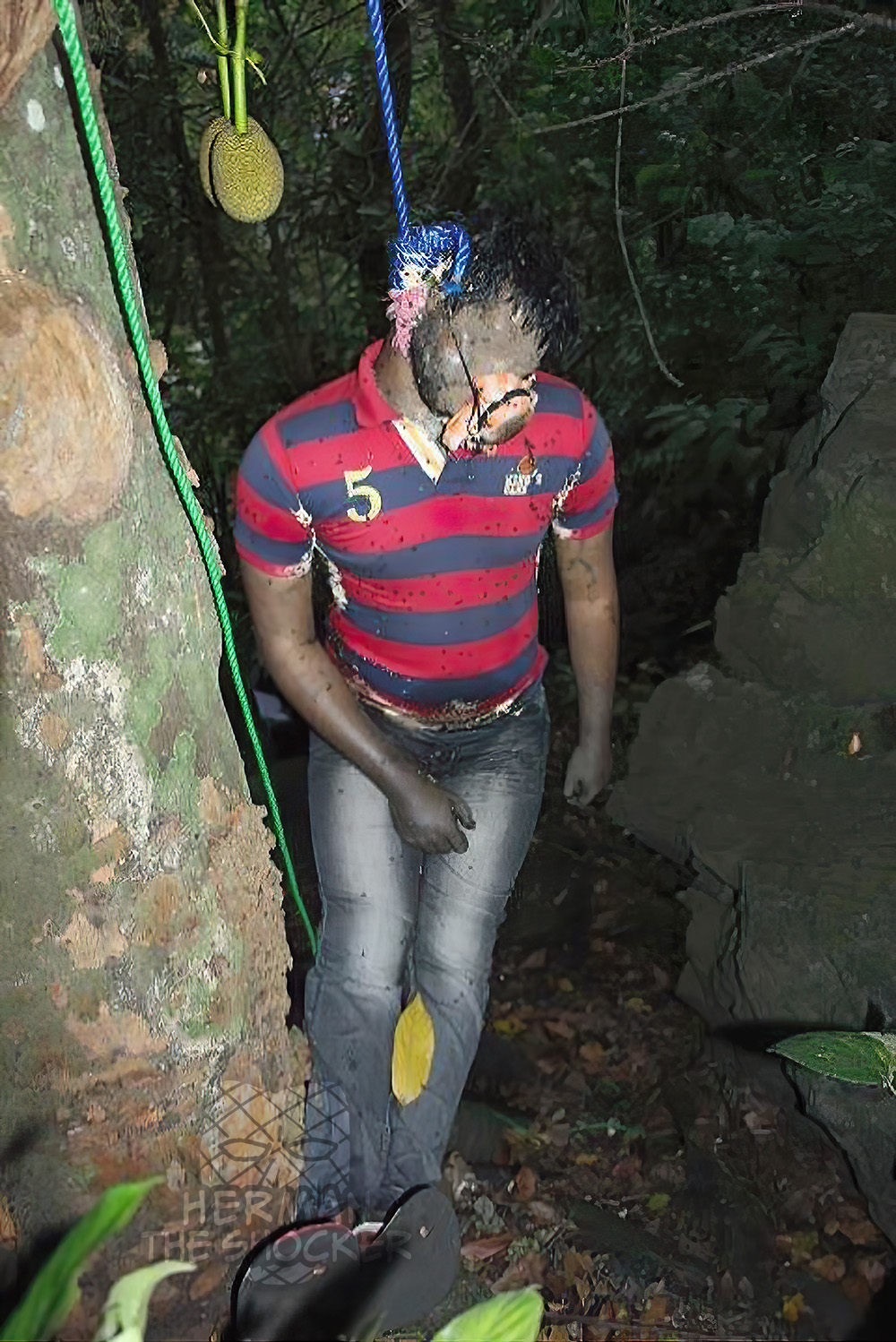 Fig.1 Partial hanging/suspension with nylon rope with evidence of putrefaction and maggot infestation. The legs were touching the ground and the right leg was in contact with the jack tree. An apparatus used to inhale chloroform and cloth were present underneath the nylon rope. Case report The deceased body of a 31-year-old male, in the early stages of putrefaction, was brought by the police, as directed by the magistrate, to the unit of forensic pathology Teaching Hospital in Kandy, Sri Lanka. An autopsy examination was conducted as the death was unexpected and the circumstances were suspicious. The deceased was found hanging by a nylon rope from the branch of a jack tree, in a dense thicket approximately 2 km (1.24 mi) from his residence. Both legs were partially flexed at the hip and touching the ground. Two nylon ropes, which had been tied together, encircled the neck and a running noose had been placed directly under the right mastoid area (Fig. 1). A cloth was also noted under the cord (Fig. 2). The end of the rope was tied to the branch of a jack tree. There was a mask-like apparatus placed around the nose and mouth which was tied at the back of the head with black cotton cords (Fig. 1). This mask-like apparatus was identified as a plastic cup. The base of the plastic cup had been replaced by a piece of cloth. A “V” shaped incision was made on the rim of the cup to accommodate the root of the nose, which ensured an almost air-tight area (Fig. 3). There was a strong chemical odor resembling chloroform emanating from the cup. Maggots and larvae were seen predominantly on the face, neck, and front chest. There was no evidence to indicate violence or a struggle at the scene. 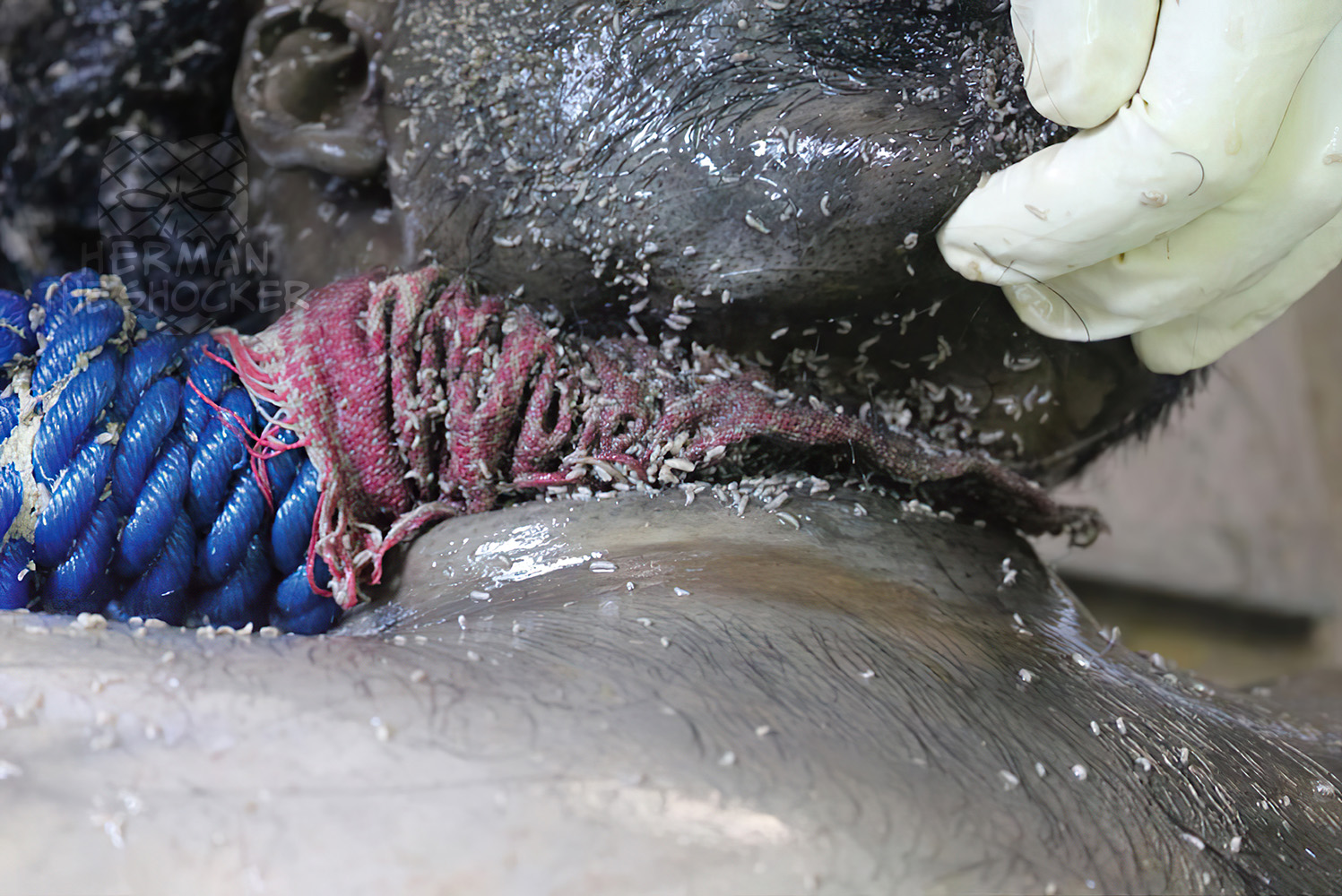 Fig.2 Cloth was present between the nylon rope and the neck, acting as padding for a “cushion effect”. The victim was married with two children. He was a timber trader and could climb trees. He had no history of any illnesses including psychological/psychiatric illness that had required medical attention. He was known to consume alcohol regularly for the past 10 years. He was also a known gambler and owed money to friends and money lenders. There was no past history of attempted suicide. The victim was last seen 3 days prior to the discovery of his body, by family members, when he had stated that he was going to purchase trees for felling and would be back in four to 5 days. The autopsy revealed no evidence of physical or congenital deformities. The deceased was clad in a short-sleeved red-blue T-shirt and black denim trousers. There were no tears on the clothes. His hands and legs were free of injuries and stains. The face and neck above the impression of the ligature were congested. Both eyes were partly protruding and eaten by maggots. A bag was recovered at the scene close to the body, which the family members identified as belonging to the deceased. It contained an empty bottle of alcohol (arrack), a few letters written by the deceased about suicidal ideation and reasons for suicide, a pair of scissors, a small sliding knife, shreds of bed linen, a plastic tube, a funnel, etc. A partially empty bottle of chloroform was found on the ground close to the deceased. His mobile phone and wallet were recovered from both back pockets of the black denim trousers. No other traumatic lesions or defensive wounds were seen on the body. 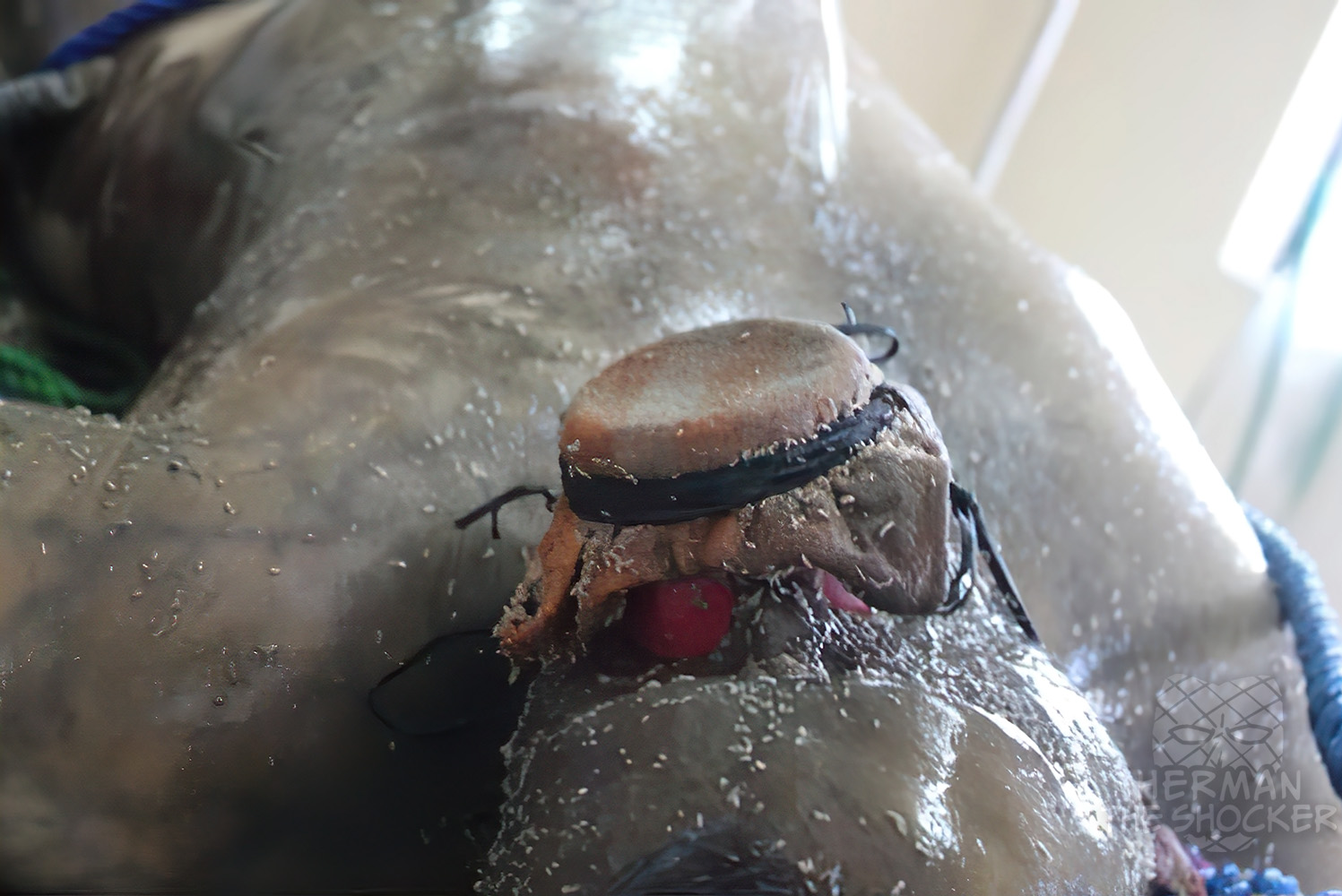 Fig.3 The face of the deceased showing the apparatus used to inhale chloroform. A cloth tightly covered the opened part of the cup where the deceased had poured chloroform. The toxicology report revealed a blood alcohol level of 112 mg/dl. There were no toxic substances, including common therapeutic or illicit drugs (including chloroform), in the stomach contents, liver, kidney, or blood. The paraphernalia, the face, and the liquid in the bottle revealed the presence of chloroform (Formyl trichloride/CHCl3). Inhalation of chloroform causes depression of the central nervous system, leading to an anesthetic effect with higher doses. In this case, the deceased inhaled chloroform from a cup that was tightly fixed around his nose and mouth to facilitate inhalation. Examination of this device revealed that it did not completely seal off the nose and the mouth and the deceased could breathe through it comfortably. Therefore it could be speculated that the deceased poured chloroform into the open end of the cup before he initiated the final act of hanging. This would have resulted in death with minimum pain, due to the anesthetic-like effect. 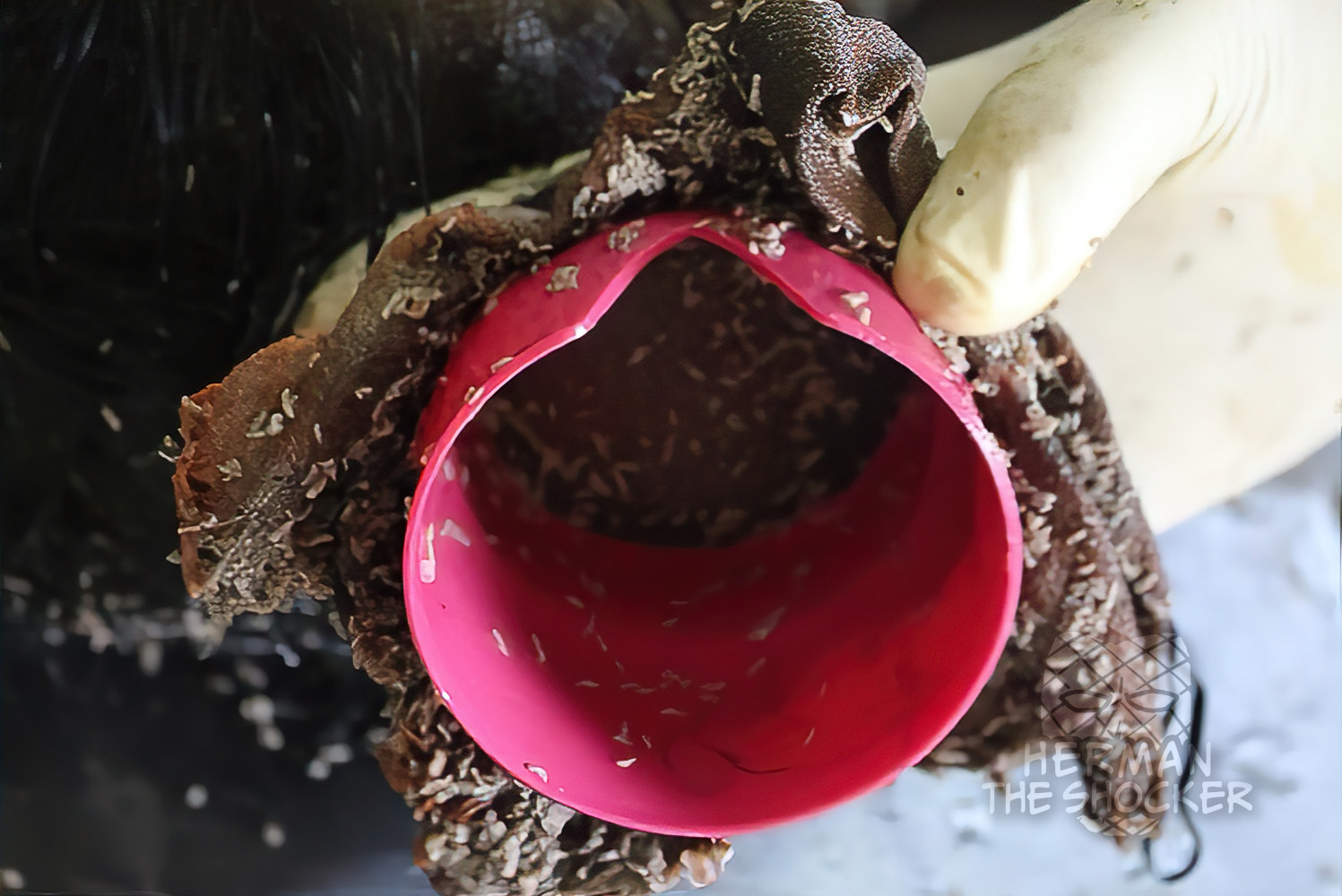 Fig.4 The V shaped incision was held tightly over the base of the nose. In this case, there was no evidence of contact with chloroform at the macroscopic or microscopic level or even in toxicological specimens. It is suggested that the victim was exposed to the chloroform for a brief period, which lead to an unconscious state and subsequent paralysis of the body. His neck was then compressed with the nylon cord, due to the dragging force derived from the weight of his body, which was dropping in a paralytic state. In this case, the method of suicide points towards asphyxiation facilitated by chloroform, rather than primary combined suicide. Chemical analysis revealed the presence of chloroform only in the inhalation device and in the partly empty bottle, which was found close to the body. This supports the suggestion that chloroform did not directly contribute to death. It may have caused suppression of any protective actions against the hanging due to its anesthetic effect, given both lower limbs were touching the ground. Subsequent to medico-legal death investigation, including full autopsy examination, the cause of death was concluded to be hanging with the manner of death as suicide. - This post is for educational purposes only and is nonprofit. Under Section 107 of the US Copyright Act of 1976; Allowance is made for "Fair Use" for purposes such as criticism, comment, news reporting, teaching, scholarship, and research. OP is not a medical expert. No copyright infringement intended. This post does not encourage or glorify violence/harassment. Images might have been upscaled and enhanced. Text might have been shortened and simplified/reorganized for online view. Original case report by Vadysinghe A.N., Sivasubramanium M. - Forensic Science, Medicine and Pathology 2018. |
|
#2
●
05-22-2021, 10:14 AM
| ||||||||
 My Rank: CAPTAIN Poster Rank:208 Boob enthusiast Join Date: Jul 2017 Posts: 7,249 Mentioned: 8 Post(s) Quoted: 2713 Post(s)
| ||||||||
|
Re: Anesthetized by Chloroform Before Hanging
Where are his eyes nose and mouth?  |
|
#3
●
05-23-2021, 01:30 AM
| ||||||||
 My Rank: FIRST SERGEANT Poster Rank:399 MALE Join Date: May 2010 Posts: 3,013 Mentioned: 5 Post(s) Quoted: 959 Post(s)
| ||||||||
|
Re: Anesthetized by Chloroform Before Hanging
As much as I do have compassion for the pain that causes people to commit suicide—I could never understand how a man could possibly abandon his dick. I could never cause the death of my dick—no matter how much suffering I might go through. Only a selfish dickhead would kill their own glory. Stupid pricks.  |
|
#4
●
05-23-2021, 05:21 AM
| ||||||||
 ★ Legacy Member ★ Poster Rank:771 I'm not A bitch.... I'm THE bitch. Join Date: Jul 2012 Posts: 1,033 Mentioned: 4 Post(s) Quoted: 174 Post(s)
| ||||||||
|
Re: Anesthetized by Chloroform Before Hanging
MY GOD.............look at the size of the fruit on that tree!!!!! Oh, yeah, the dead body too.......
|
|
#5
●
05-23-2021, 11:21 AM
| ||||||||
| ♚ Legacy Gold Member ♚ Poster Rank:346 "IT"-Species; Genus-genius Join Date: Jan 2013 Posts: 3,612 Mentioned: 0 Post(s) Quoted: 615 Post(s)
| ||||||||
|
Re: Anesthetized by Chloroform Before Hanging
Juicy fruit and very ripe. Thanks, Entomologist Shocker. |
|
#7
●
05-24-2021, 07:22 AM
| ||||||||
 ♚ Legacy Gold Member ♚ Poster Rank:26 ㅤㅤ真 Join Date: Apr 2021 Posts: 52,938 Mentioned: 372 Post(s) Quoted: 41097 Post(s)
| ||||||||
|
Re: Anesthetized by Chloroform Before Hanging
I've always wanted to be chloroformed... without any element of surprise, that is. always been so curious about it. |





 arried?

