|
#1
●
06-27-2014, 07:41 PM
| ||||||||
 ✖ The Antique Christ ✖ Poster Rank:105 Gonzo Punk Join Date: Jan 2009 Posts: 15,488
Contributions: 58
Mentioned: 23 Post(s) Quoted: 2046 Post(s)
| ||||||||
|
Traumatic Angioedema
A 33 year old caucasian female presented to the emergency department following minor trauma to her upper lip. She sustained the injury whilst bending down to pick up a bag and struck her right upper lip against a metal pole. Although initially painful, there was no sign of external trauma, laceration or ecchymosis. Shortly following the trauma she noticed that the lip was markedly swollen, spreading from the right side of the lip to involve the whole of her upper lip. Over the subsequent 2 hours the swelling increased and extended to the right cheek and submental region despite conservative management with ice and pressure. She denied any recent insect bites; consumption of food precipitants (bananas, shrimp, peas, grapes, etc); illicit drug use; herbal medications; and food or drug allergies. She is not an atopic individual and has never suffered from hives, urticaria or angioedema previously. Her past medical history included rheumatoid arthritis [controlled with methotrexate and a reducing course of steroids] and well controlled hypertension [treated with captopril (ACEI)] Physical examination: Physical examination was unremarkable with no evidence of respiratory compromise [HR 70, BP 115/64, RR 14, sO2 98% temp 97.4F]. Her oropharynx was clear and revealed no edema of the tongue or soft palate and there were no tonsillar exudates or ulcerations. Her lungs were clear to auscultation and without wheezing or stridor. She did not have a rash or any other signs of systemic allergic reaction. There was marked tense oedema of the upper lip extending to the lower portion of the nose and obliterating the contour of the nasolabial fold on the right and extending to the right maxilla. The lower lip was normal in appearance. Management: •The patient was treated with 0.5mL [1:1000] adrenaline IM and 50mg prednisolone PO •Her captopril was discontinued and she was admitted to the medical ward for observation and monitoring •The swelling subsided within 36 hours and she was discharged home with BP 126/75 following cessation of ACEi and commencement of beta-blockers Most likely diagonosis: •Angioedema due to ACEi without airway compromise with direct local trauma as the inciting event. •The local release of bradykinin from trauma, in combination with decreased bradykinin catabolism secondary to ACE inhibitor therapy, resulted in angioedema predominantly in the upper lip. The angioedema resolved with discontinuation of the ACE inhibitor. Definition: •Angioedema is defined as a subcutaneous extension of urticaria resulting in swelling of the deeper layers of the skin or submucosal tissues. •It usually presents as episodic attacks of swelling of the face, lips, tongue and airways, although it may also involve visceral tissues. 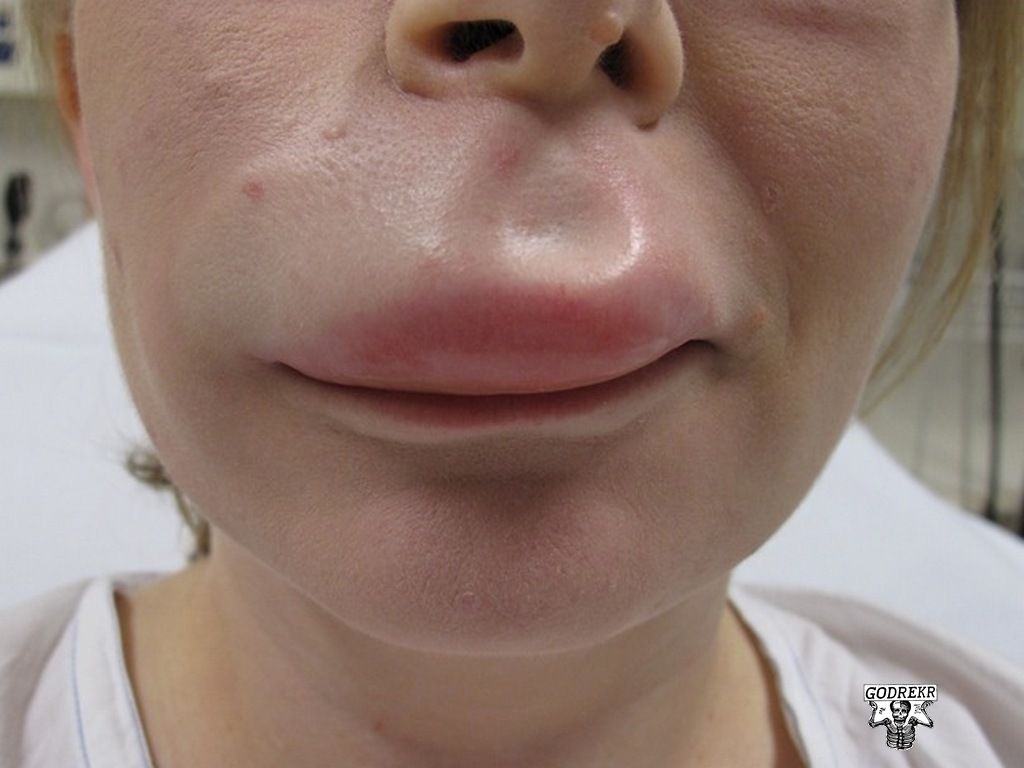 · 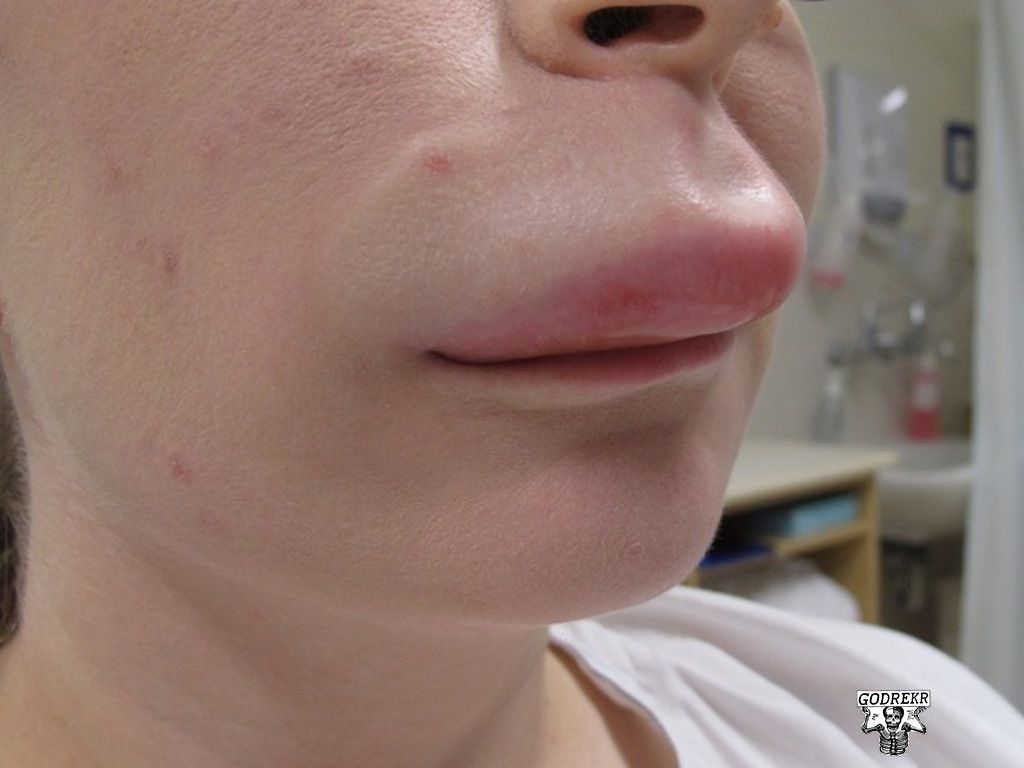 · 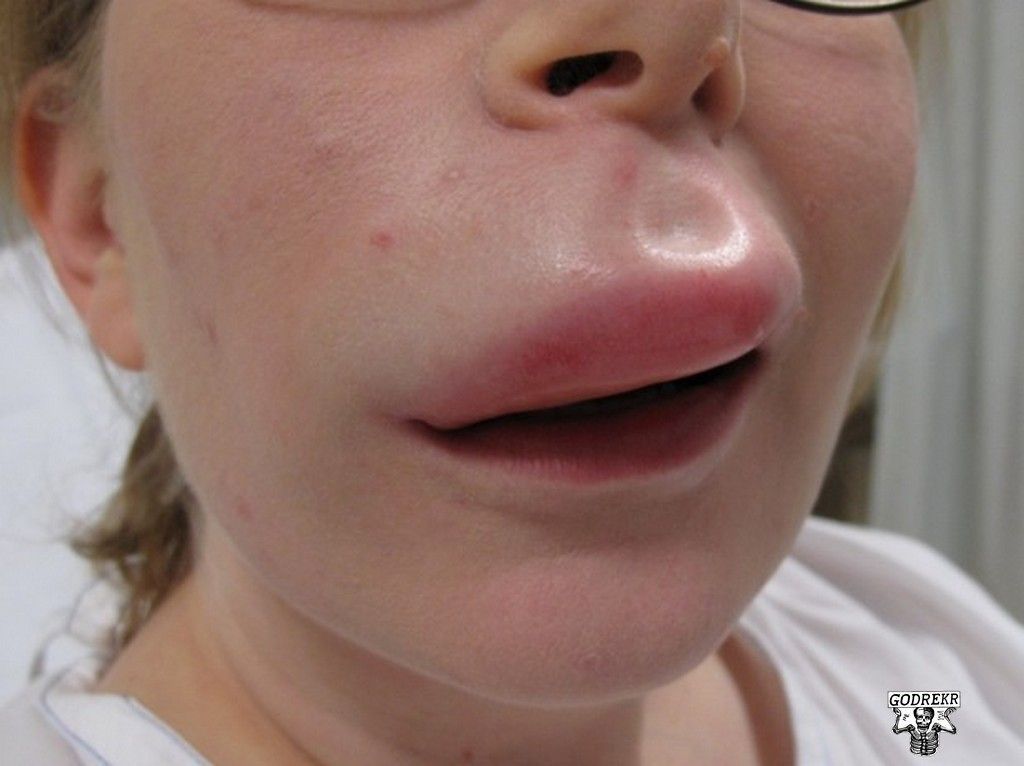 · |
|
#3
●
06-27-2014, 11:30 PM
| ||||||||
 My Rank: FIRST SERGEANT Poster Rank:434 Comrade Join Date: Aug 2013 Posts: 2,636 Mentioned: 14 Post(s) Quoted: 1167 Post(s)
| ||||||||
|
Re: Traumatic Angioedema
She looks like one of the Simpsons.
|