|
Community Forum · Est. 2006
|
#1
●
09-06-2021, 08:27 AM
| ||||||||
 ♚ Legacy Gold Member ♚ Poster Rank:908 Join Date: Jul 2020 Posts: 820
Contributions: 10
Mentioned: 13 Post(s) Quoted: 173 Post(s)
| ||||||||
|
Man Burned to Death While Driving when a LPG Gas Cylinder in the Car Ignited
This male individual was driving when an LPG gas cylinder, which was in the front passenger side of the vehicle, ignited causing a fire. The case is suspected to be a suicide. The individual was located in the driver’s seat. There was extensive fire damage to much of the body and extensive loss of soft tissues of the head. 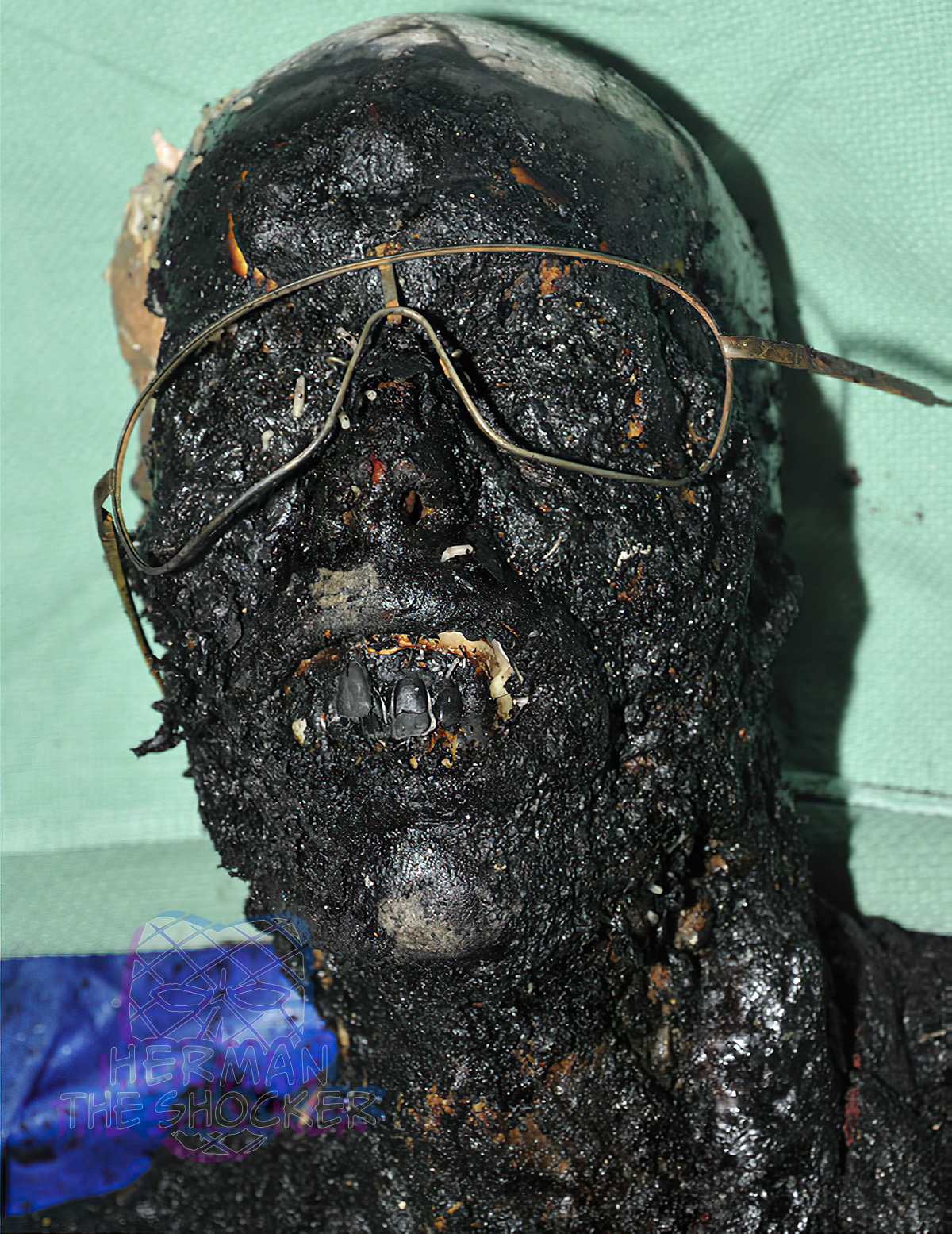 Fig.1 Anterior view of the head showing extensive loss of soft tissues of the head and exposure of the teeth and mandible. NB: the frames of glasses are still in situ. 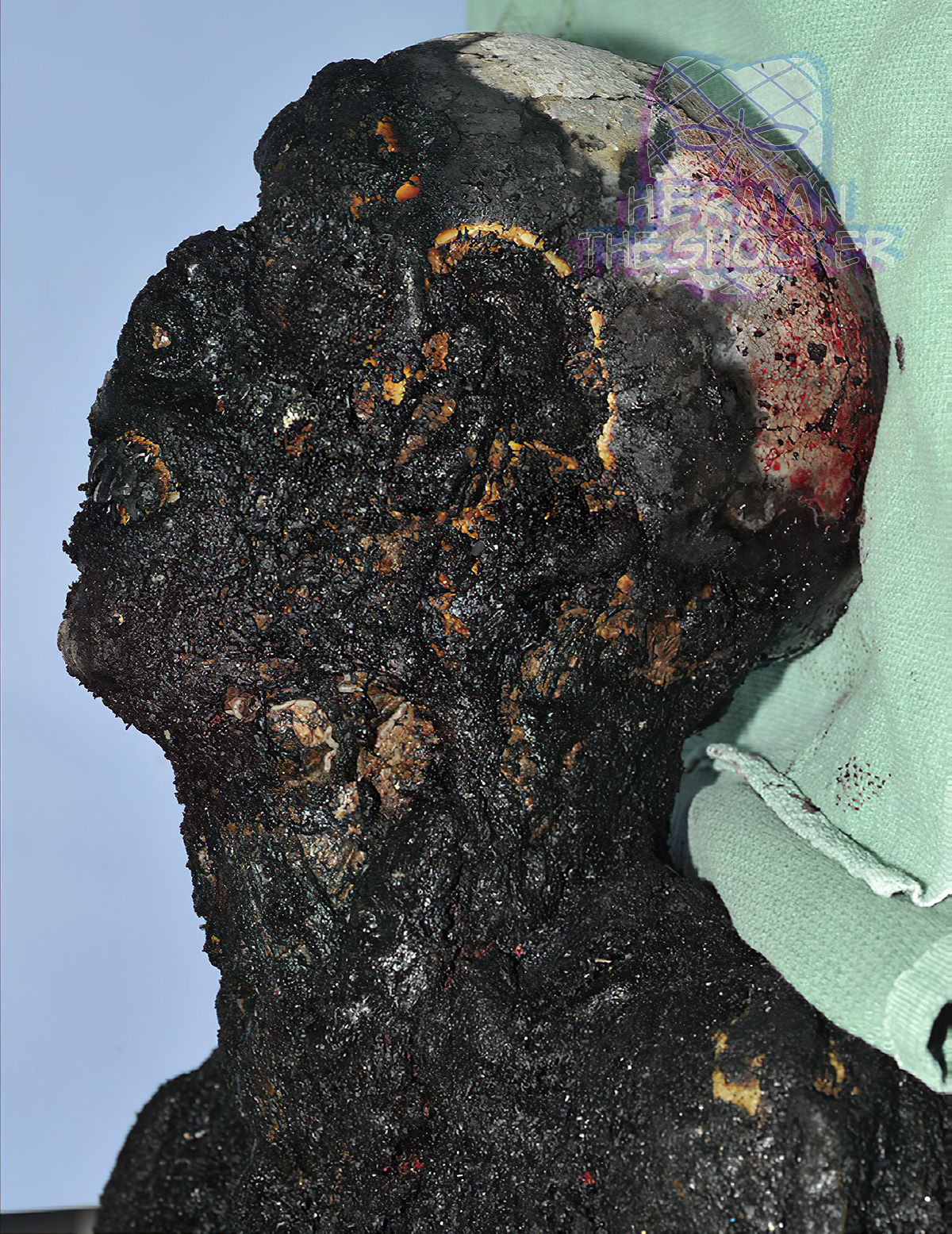 Fig.2 Left lateral view of the head showing extensive loss of soft tissues of the head and exposure of the teeth and mandible. 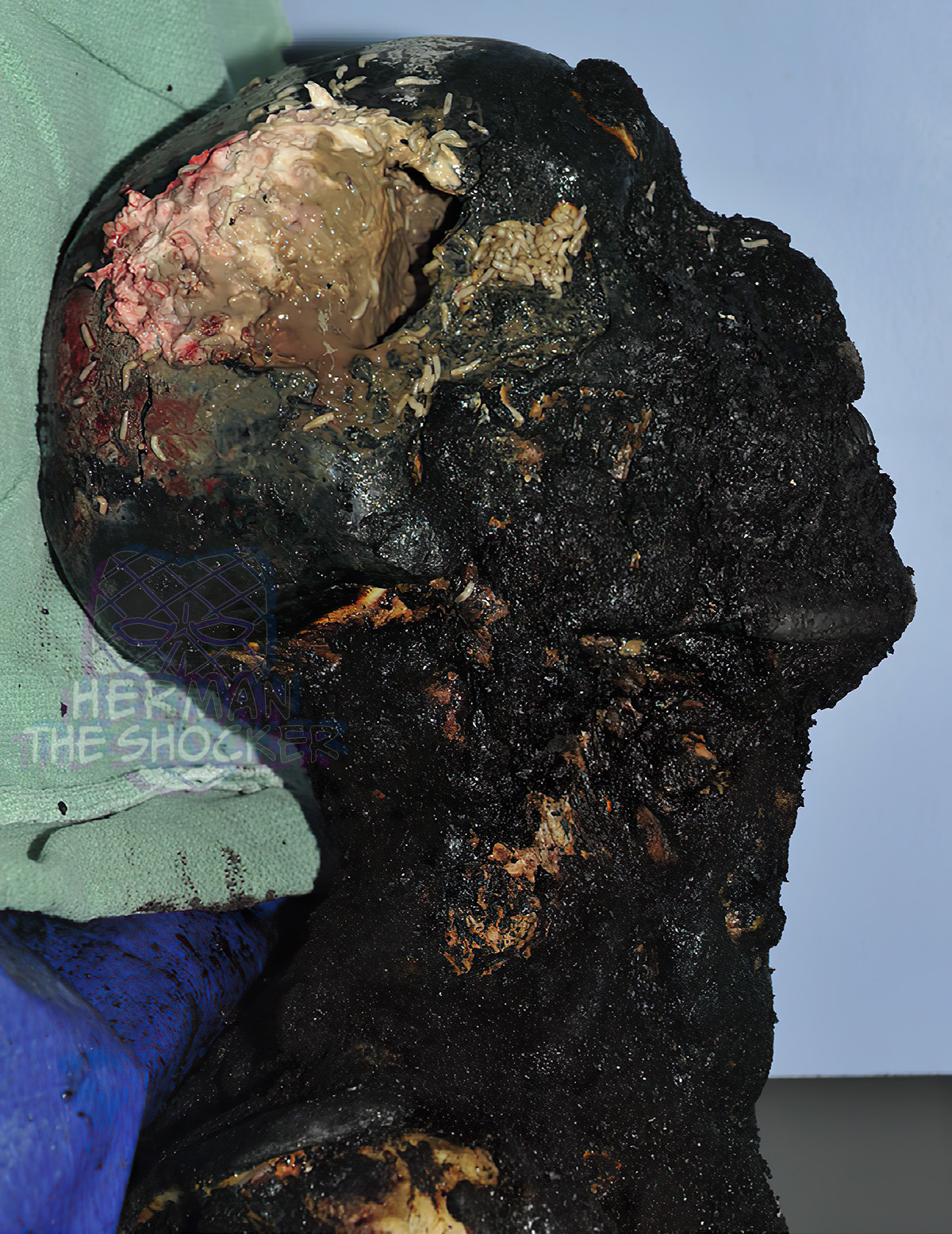 Fig.3 Right lateral view of the head showing extensive loss of soft tissues of the head and cracking of the skull with brain material. 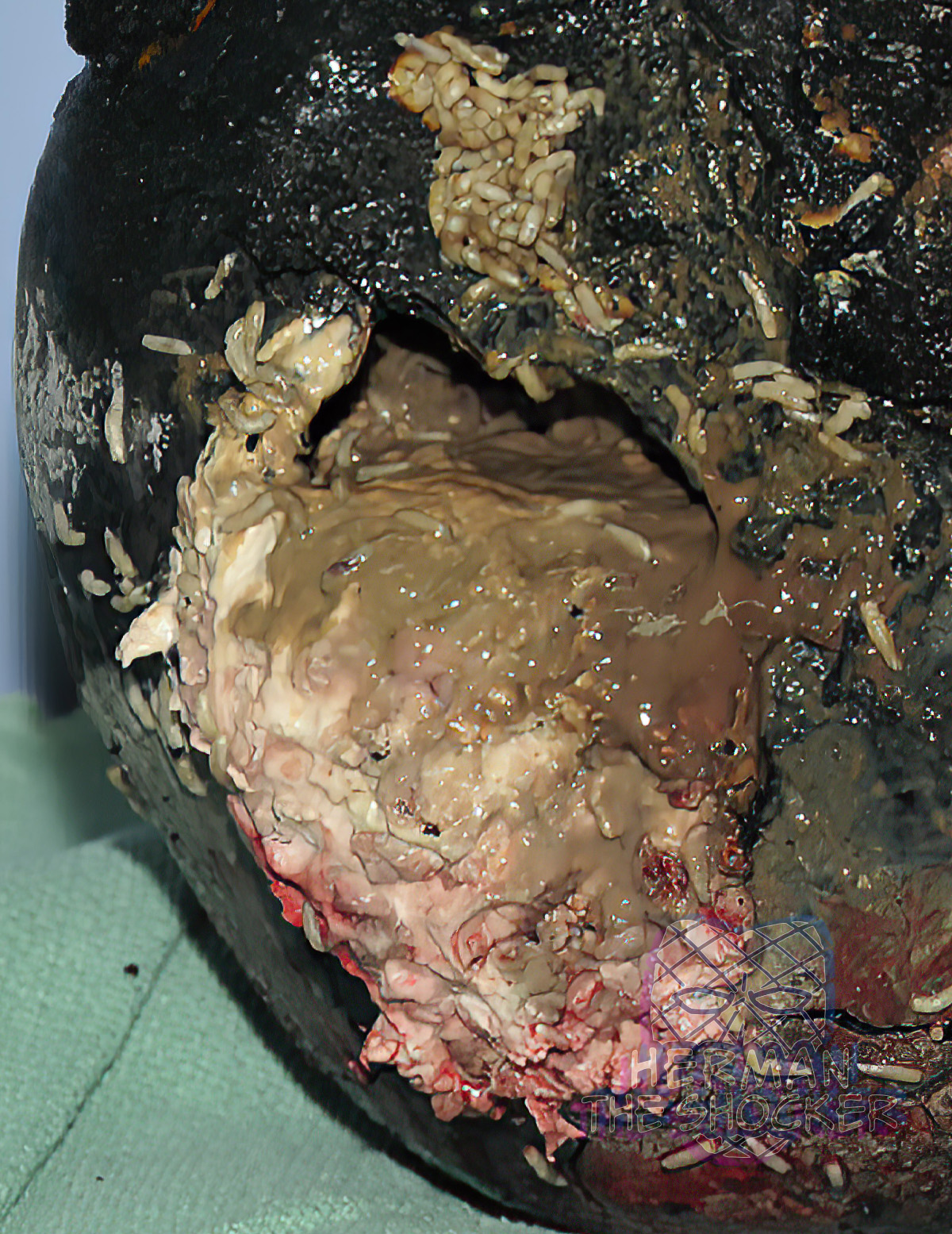 Fig.4 Cracking of the skull from the heat showing brain material and maggot activity. The teeth and mandible were exposed. The ribs were visible and there were defects in the intercostal muscles, with the internal organs visible through the defects. The right shoulder was dislocated and there were fractures of the distal right radius and ulna. 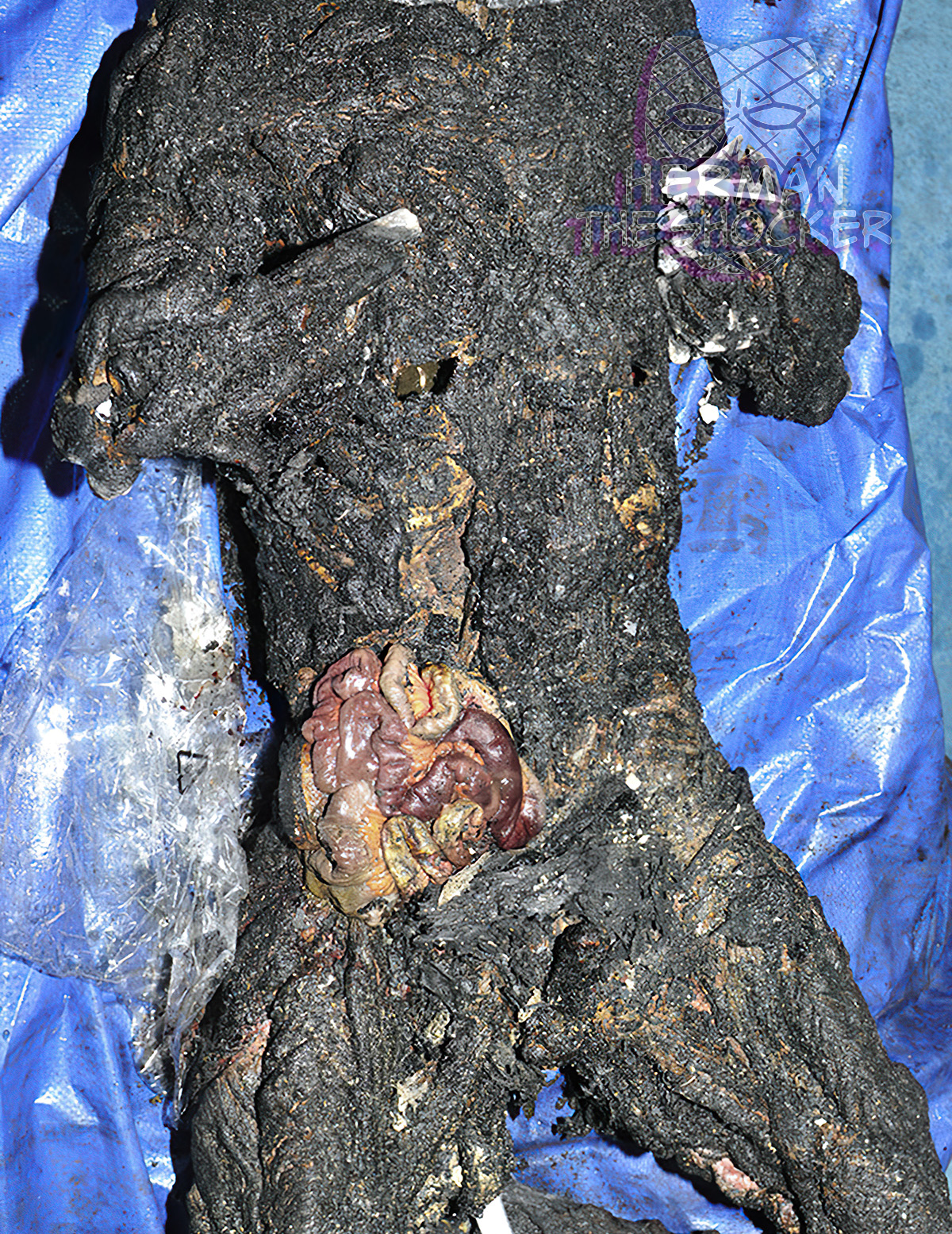 Fig.5 Anterior view of the body showing extensive fire damage. 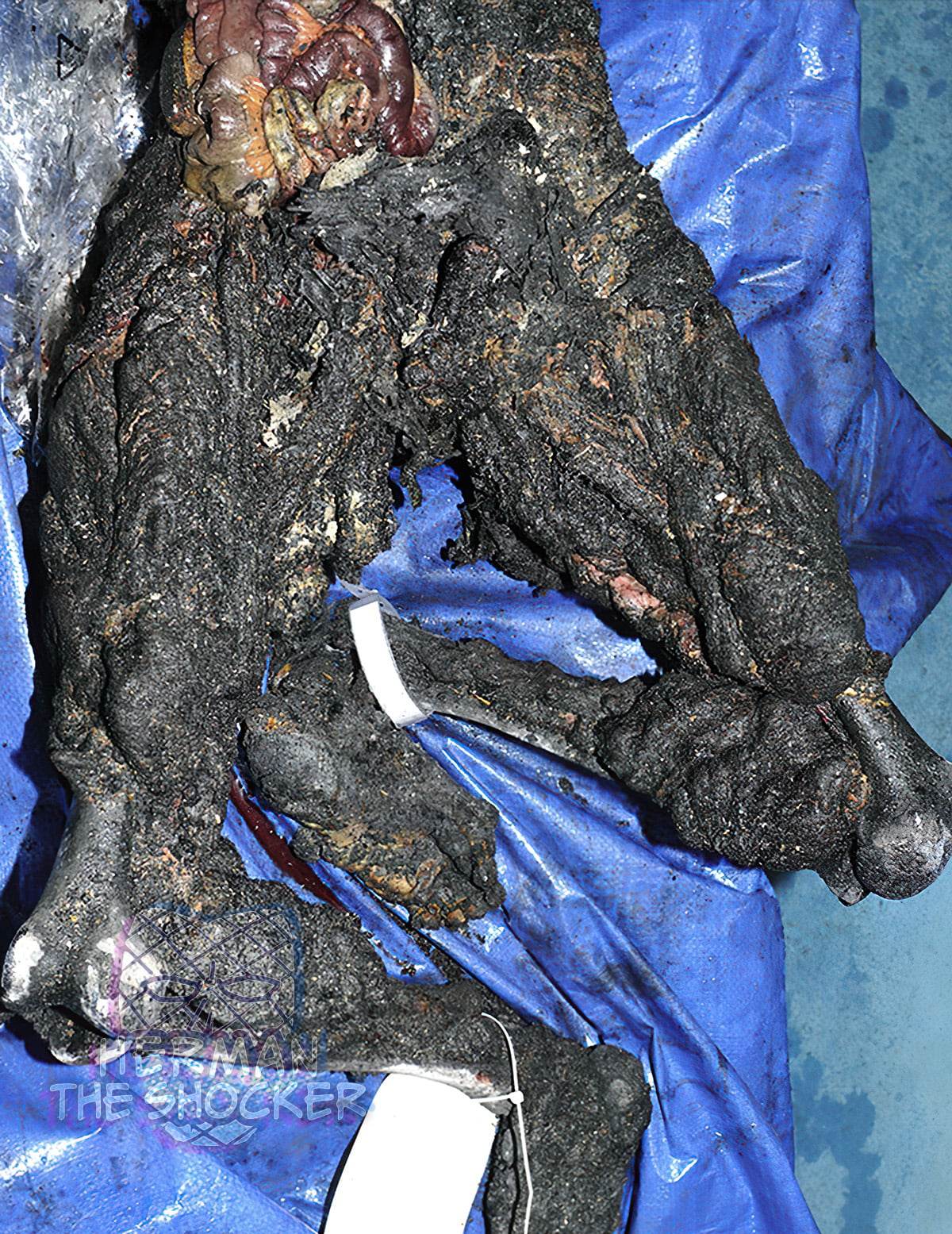 Fig.6 Anterior view of the body showing extensive fire damage. The metacarpals of the left and right hand were exposed and brittle. Postmortem toxicological analysis detected hydrogen cyanide in the blood. Carbon monoxide and volatile compounds were not detected. Postmortem CT highlighted a number of heat-related fractures of the cranium and mandible and upper limbs. There was a fragment of bone lost on the right parietal bone as a result of the fire. The typical flexion of the knees and arms was a result of the fire. Associated with this flexion were heat-related fractures of the distal radii and ulna (relatively thin bones), whereas the thicker distal tibiae and fibulae were not fractured. 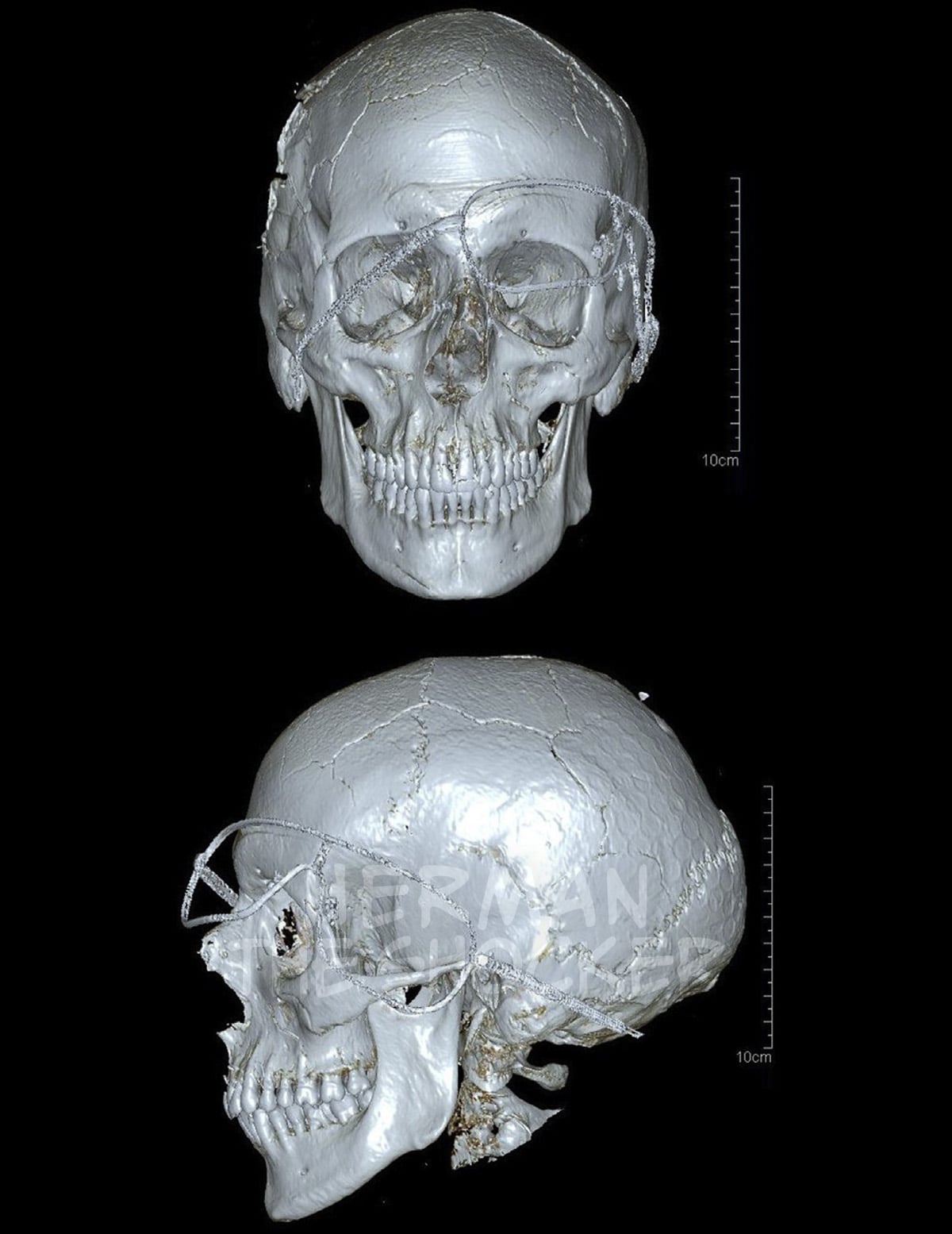 Fig.7 VR images of the skull showing heat-related fractures of the cranium. NB: the frames of glasses are still in situ. 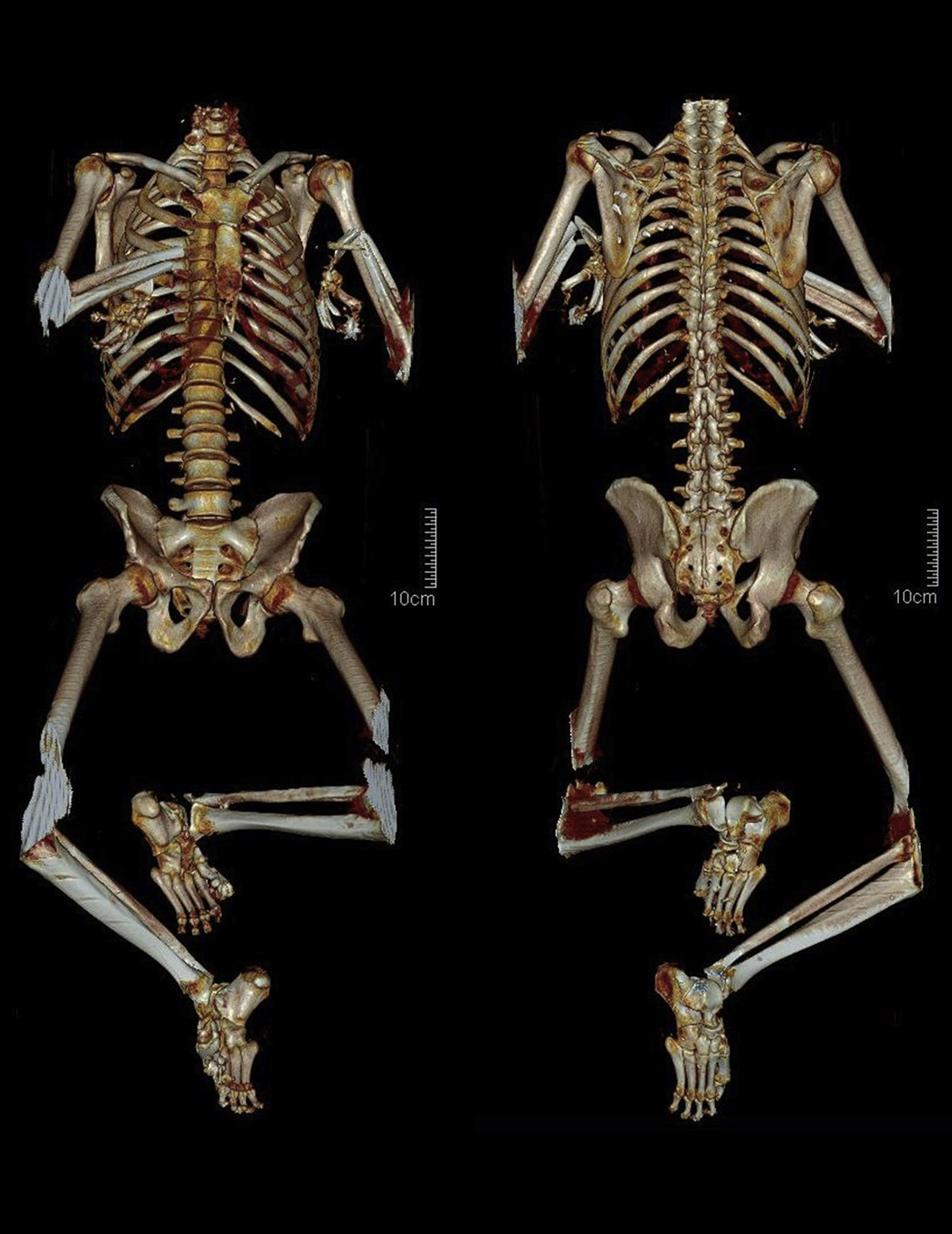 Fig.8 VR images of the anterior and posterior post-cranial skeleton showing typical flexion of the knees and arms as a result of the fire. The presence of hydrogen cyanide in the blood indicated that the individual was alive at the start of the fire. Hydrogen cyanide is a gas produced by combustion of organic fuels and plastic products. - This post is for educational purposes only and is nonprofit. Under Section 107 of the US Copyright Act of 1976; Allowance is made for "Fair Use" for purposes such as criticism, comment, news reporting, teaching, scholarship, and research. OP is not a medical expert. No copyright infringement intended. This post does not encourage or glorify violence/harassment. Images might have been upscaled and enhanced. Text might have been shortened and simplified/reorganized for online view. |
|
#2
●
09-06-2021, 09:30 AM
| ||||||||
 ★ Legacy Member ★ Poster Rank:248 So many choices now Join Date: Jul 2015 Posts: 5,548 Mentioned: 15 Post(s) Quoted: 2120 Post(s)
| ||||||||
|
Re: Man Burned to Death While Driving when a LPG Gas Cylinder in the Car Ignited
Another winner, thank you Herman! The glasses are a nice touch. Brings a bit of humanity back into picture. |
|
#3
●
09-06-2021, 09:40 AM
| ||||||||
 ♚ Legacy Gold Member ♚ Poster Rank:26 ㅤㅤ真 Join Date: Apr 2021 Posts: 52,944 Mentioned: 372 Post(s) Quoted: 41105 Post(s)
| ||||||||
|
Re: Man Burned to Death While Driving when a LPG Gas Cylinder in the Car Ignited
covid is making my throat feel just as crispy as that guy is. super cool, Herman. |
|
#4
●
09-06-2021, 10:22 AM
| ||||||||
 My Rank: SERGEANT Poster Rank:1197 Erase the Sixth Commandment Join Date: May 2015 Posts: 527 Mentioned: 0 Post(s) Quoted: 204 Post(s)
| ||||||||
|
Re: Man Burned to Death While Driving when a LPG Gas Cylinder in the Car Ignited
Those frames in the first pic make him look like Sean “P. Diddy” Combs  |
|
#5
●
09-06-2021, 02:34 PM
| ||||||||
| My Rank: LANCE CORPORAL Poster Rank:2353 Female Join Date: Nov 2014 Posts: 194 Mentioned: 0 Post(s) Quoted: 57 Post(s)
| ||||||||
|
Re: Man Burned to Death While Driving when a LPG Gas Cylinder in the Car Ignited
How come maggots were in his brain so quickly. Was he left for awhile?
|
|
#6
●
09-06-2021, 02:37 PM
| ||||||||
| ★ Legacy Member ★ Poster Rank:248 So many choices now Join Date: Jul 2015 Posts: 5,548 Mentioned: 15 Post(s) Quoted: 2120 Post(s)
| ||||||||
|
Re: Man Burned to Death While Driving when a LPG Gas Cylinder in the Car Ignited
Not trying to hijack, but I hope covid doesn't take you down, Vixenn.
|
|
#7
●
09-06-2021, 04:25 PM
| ||||||||
 My Rank: STAFF SERGEANT Poster Rank:817 Female Join Date: Jan 2016 Posts: 948 Mentioned: 0 Post(s) Quoted: 356 Post(s)
| ||||||||
|
Re: Man Burned to Death While Driving when a LPG Gas Cylinder in the Car Ignited
The maggotty brain close-up is suitably disgusting.
|
|
#8
●
09-06-2021, 04:32 PM
| ||||||||
| ♚ Legacy Gold Member ♚ Poster Rank:908 Join Date: Jul 2020 Posts: 820
Contributions: 10
Mentioned: 13 Post(s) Quoted: 173 Post(s)
| ||||||||
|
Re: Man Burned to Death While Driving when a LPG Gas Cylinder in the Car Ignited
I'm not sure but could be some 3rd world country or where refrigeration is not working, it just takes 8-20hrs for a fly egg to hatch as maggot stage 1, I think I'm right on that.
|
|
#9
●
09-06-2021, 09:33 PM
| ||||||||
 My Rank: LANCE CORPORAL Poster Rank:1980 XX Join Date: Jun 2017 Posts: 253 Mentioned: 0 Post(s) Quoted: 30 Post(s)
| ||||||||
|
Re: Man Burned to Death While Driving when a LPG Gas Cylinder in the Car Ignited
Fig. 4 looks like a maggots dream dinner
|
|
#10
●
09-06-2021, 09:52 PM
| ||||||||
 ♚ Legacy Gold Member ♚ Poster Rank:202 Iceman Join Date: Aug 2017 Posts: 7,505 Mentioned: 19 Post(s) Quoted: 3630 Post(s)
| ||||||||
|
Re: Man Burned to Death While Driving when a LPG Gas Cylinder in the Car Ignited
Looks like he has literal shit for brains
|