
|
#1
●
12-20-2021, 02:38 PM
| ||||||||
 ♚ Legacy Gold Member ♚ Poster Rank:908 Join Date: Jul 2020 Posts: 820
Contributions: 10
Mentioned: 13 Post(s) Quoted: 173 Post(s)
| ||||||||
|
The Affects of Clothing on Human Decomposition
This is from a study done in 2001-2002. Several studies at the Anthropology Research Facility located at The University of Tennessee, Knoxville, longitudinally examine the process of human decomposition. Recent research demonstrates results regarding the affect of clothing on decomposition. Some authors conclude that clothing accelerates decomposition, while others maintain that it retards the process. 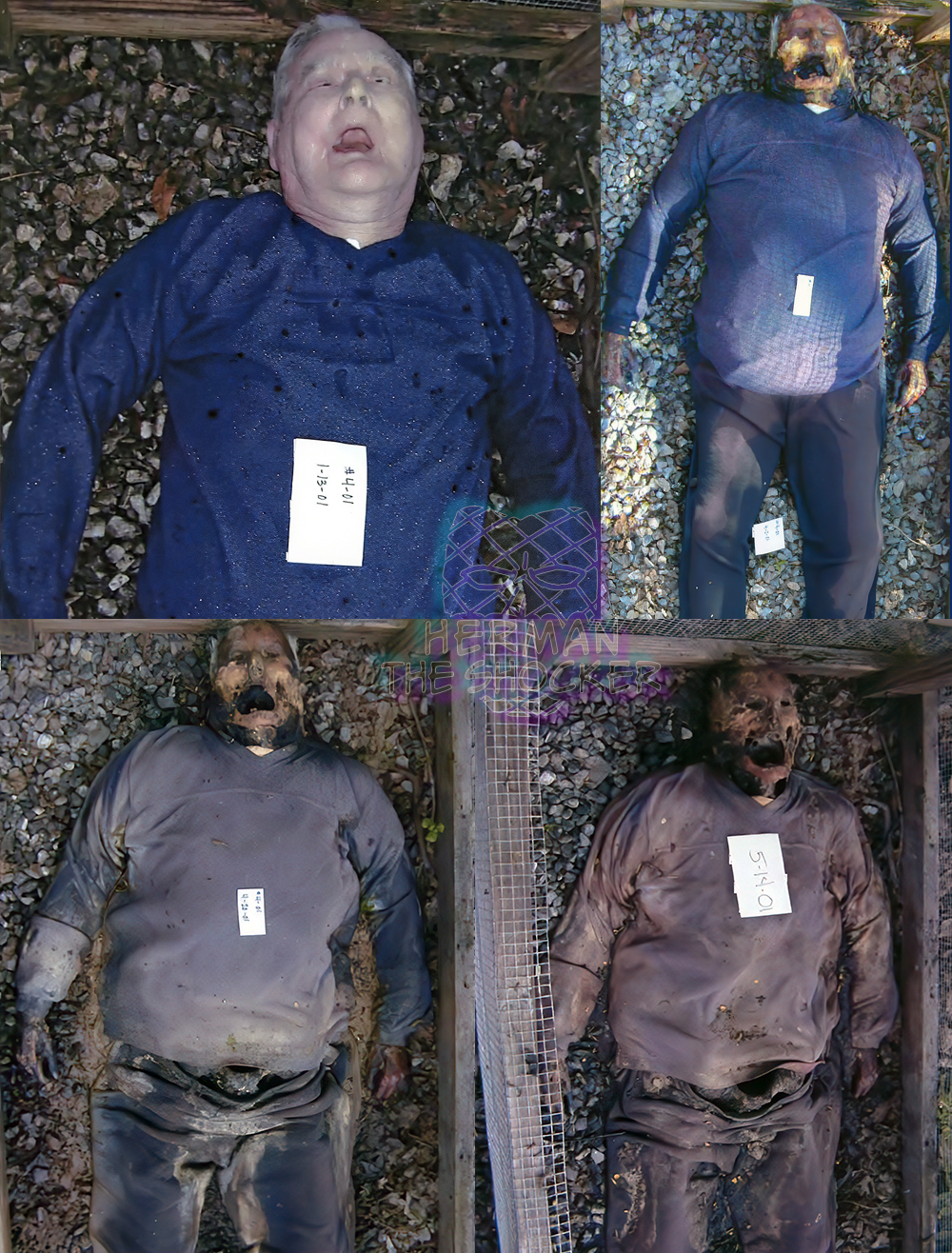 Fig.1 Elderly white male outfitted in a t-shirt, sweatpants and a sweatshirt. Over the course of one year, the cadavers of six unembalmed, unautopsied individuals were dressed in clothing and placed at the Anthropology Research Facility to decompose naturally. Subjects were observed and scored on a decomposition staging scale of I to IV. Accumulated degree days were then calculated and compared against values obtained from previous research utilizing nude cadavers. It was determined that clothing retards the process of decomposition in the spring and summer. Clothing was not a significant variable in the winter and no comparison was possible for cadavers used in the fall. The study demonstrates that the presence or absence of clothing must be appreciated and compensated for when making an estimate of time since death. 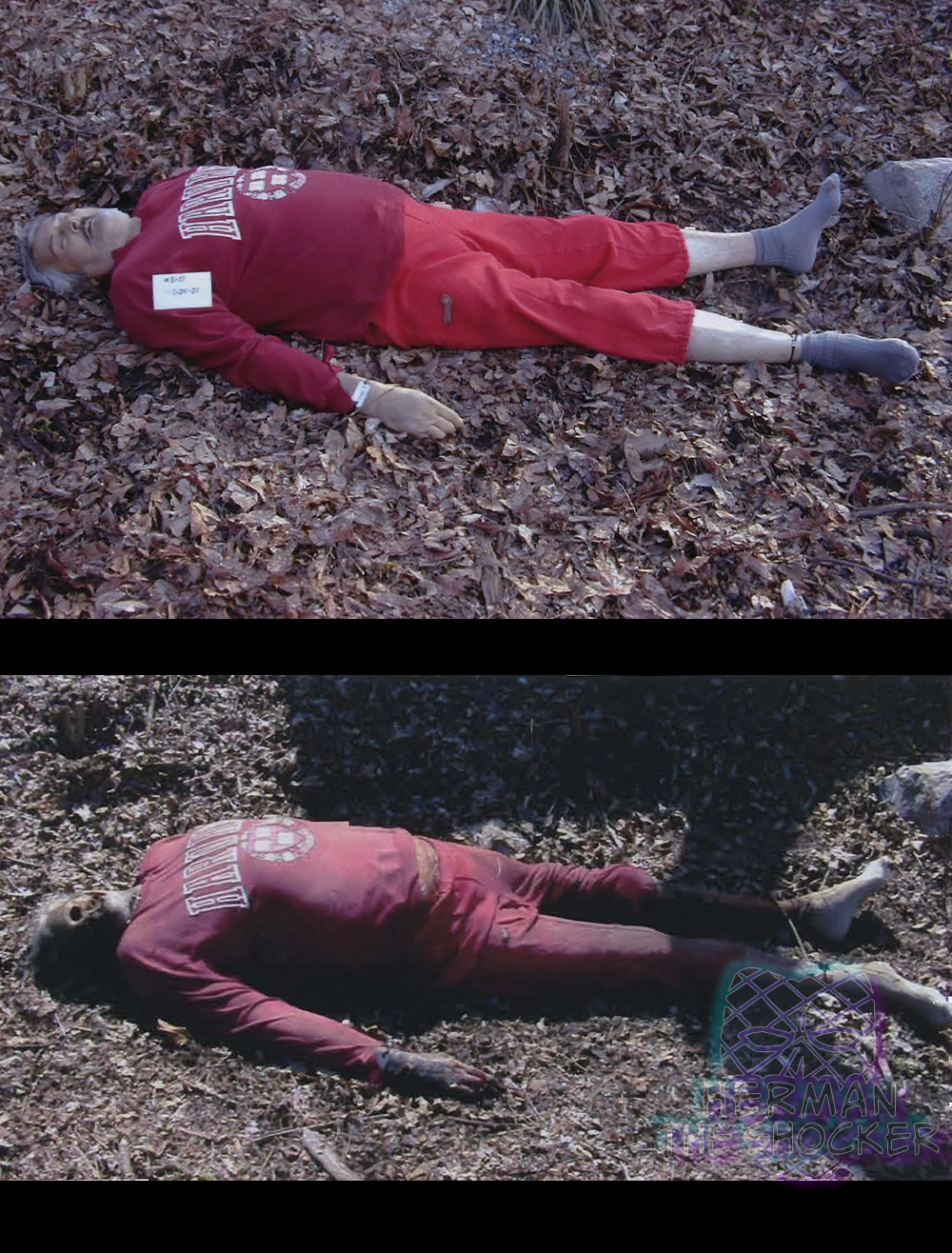 Fig.2 60 to 70 year-old white male outfitted in at-shirt, sweatpants and sweatshirt. 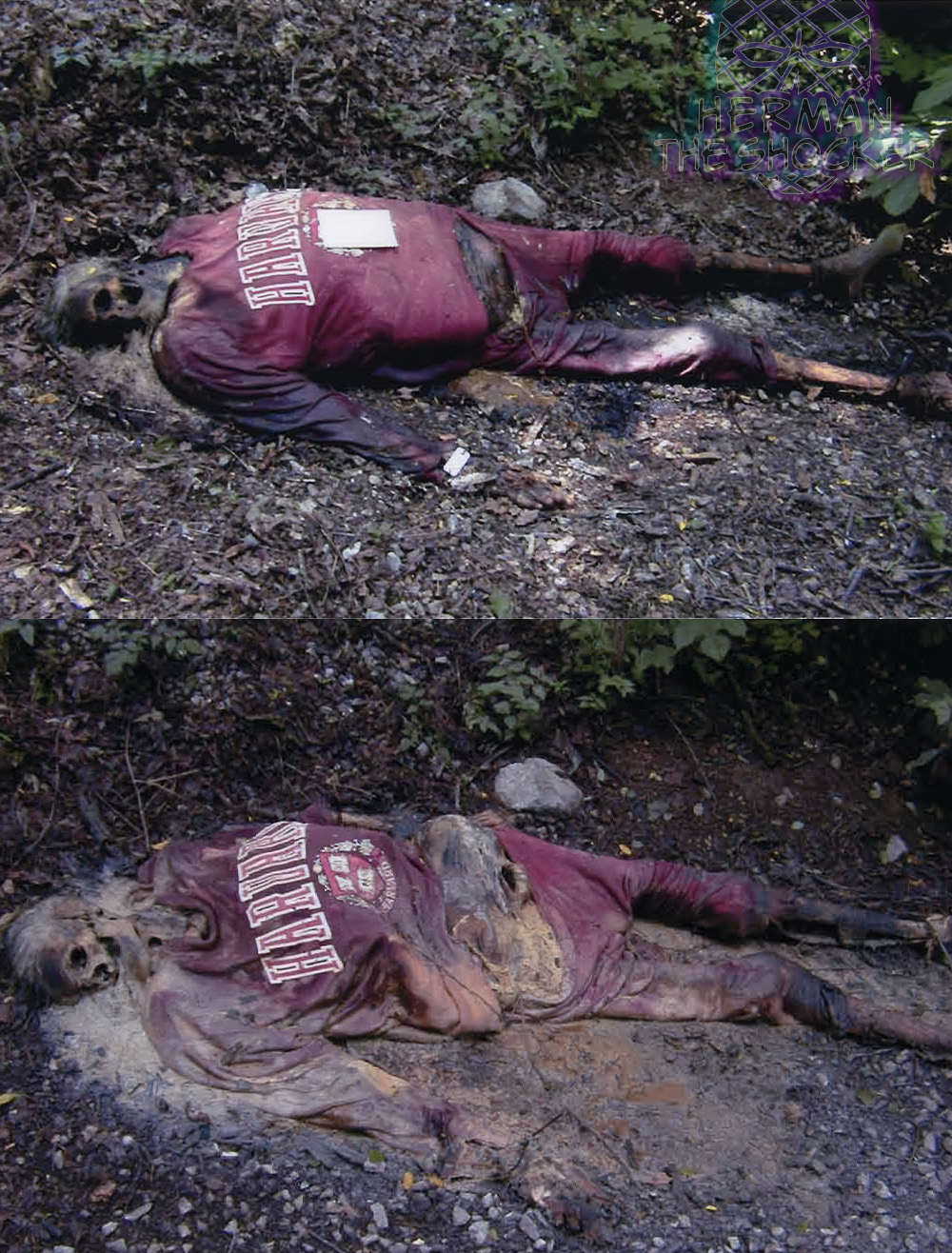 Fig.3 Notice the removal of tissue from the legs by carnivores and the dissipation of bloating. 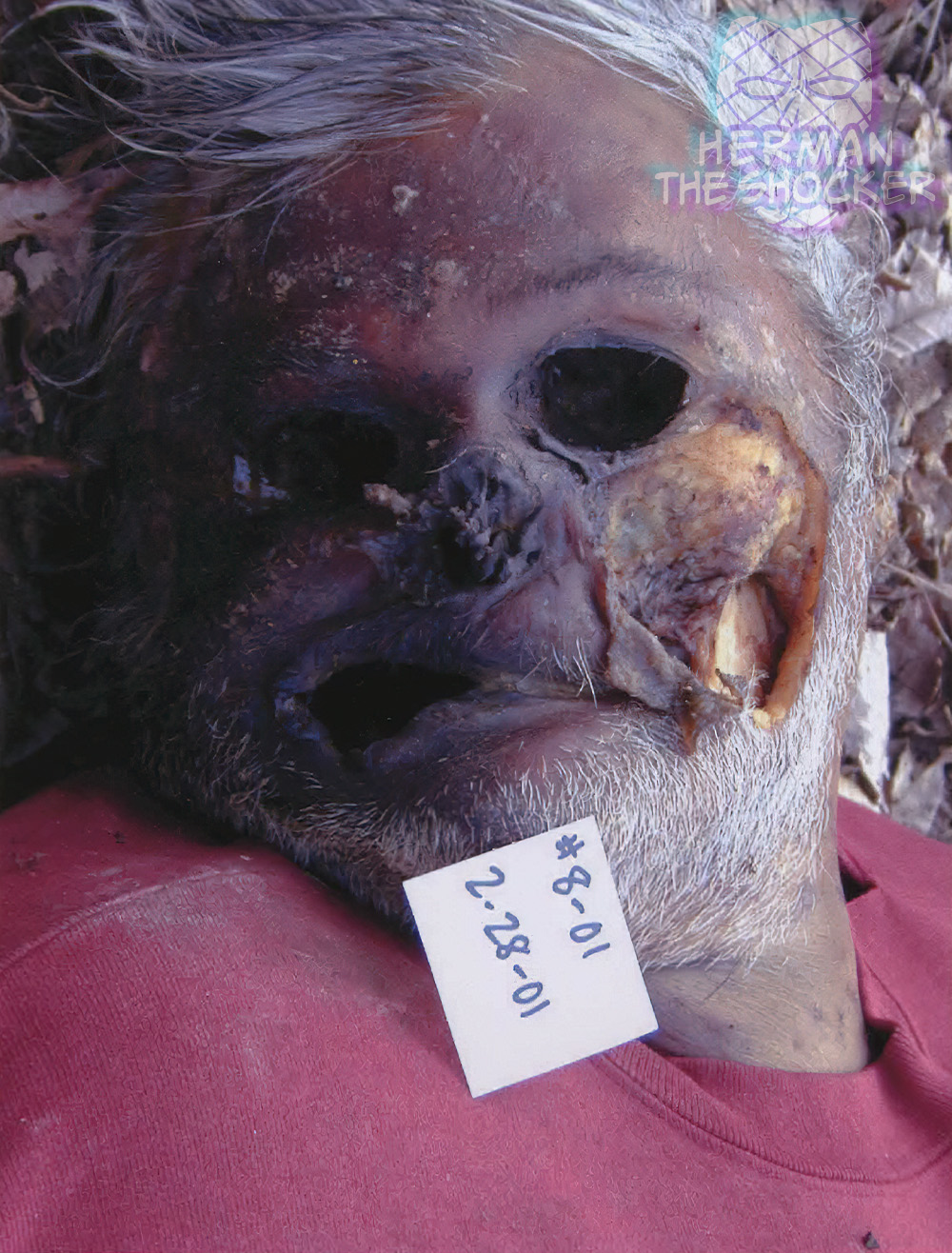 Fig.4 Vultures have plucked out the eyes and picked at the flesh on the face. 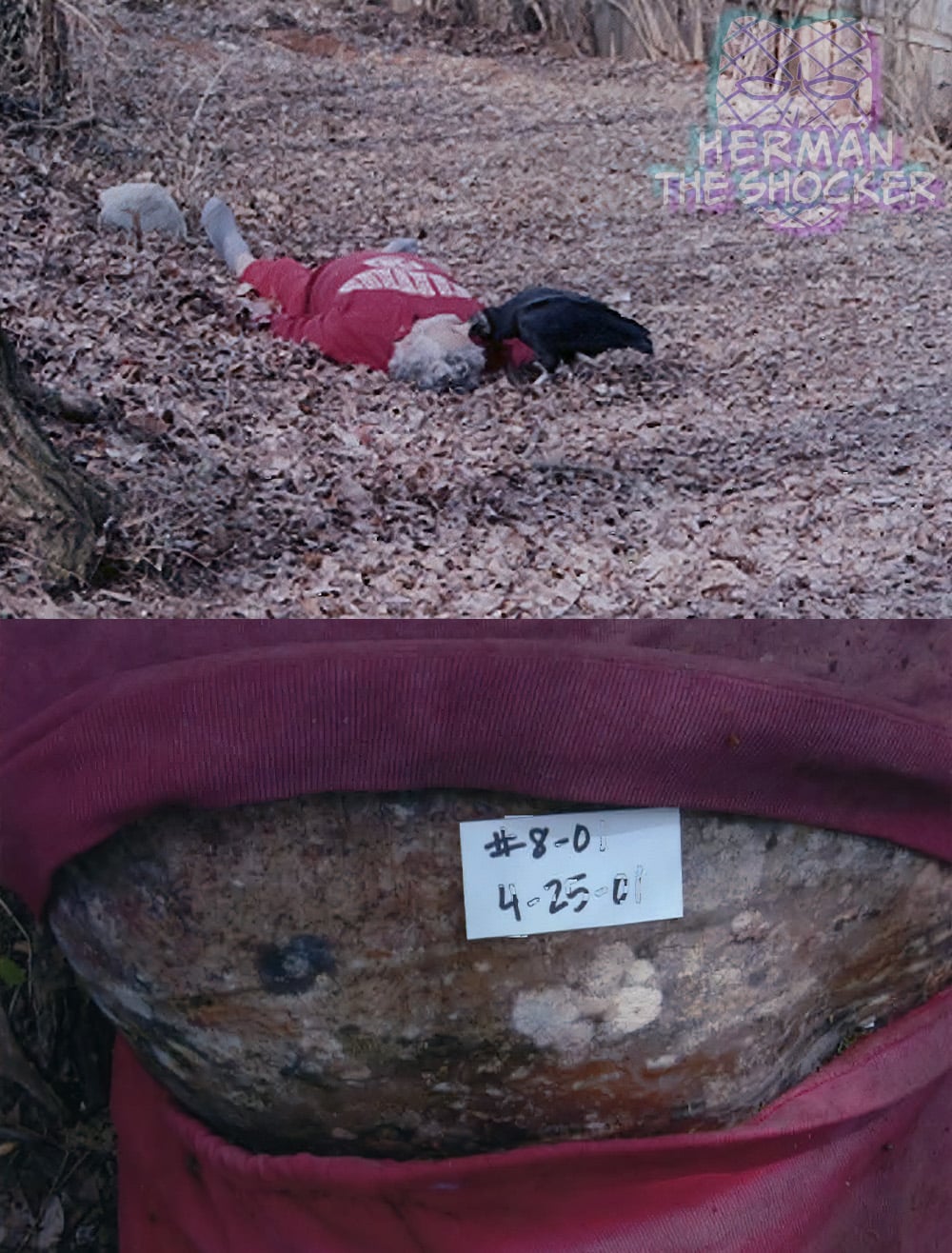 Fig.5 A vulture visiting the subjects. The exposed area of the abdomen has dried and mold has formed. Forensic anthropology is the branch of physical anthropology that deals with, among other things, the identification of human skeletal remains. Analysis begins with the determination of human versus animal remains. Once remains are identified as human, the forensic anthropologist undertakes [the process] to provide opinions regarding sex, age, race, stature, and such other characteristics of each individual involved as may lead to his or her recognition. Aside from dealing with skeletal remains, forensic anthropologists are also consulted in soft tissue cases where an individual is unrecognizable, making a visual positive identification impossible due to the advanced state of decomposition. Assessment of skeletal trauma is also often performed. Furthermore, forensic anthropologists are frequently asked to make estimations of time since death. 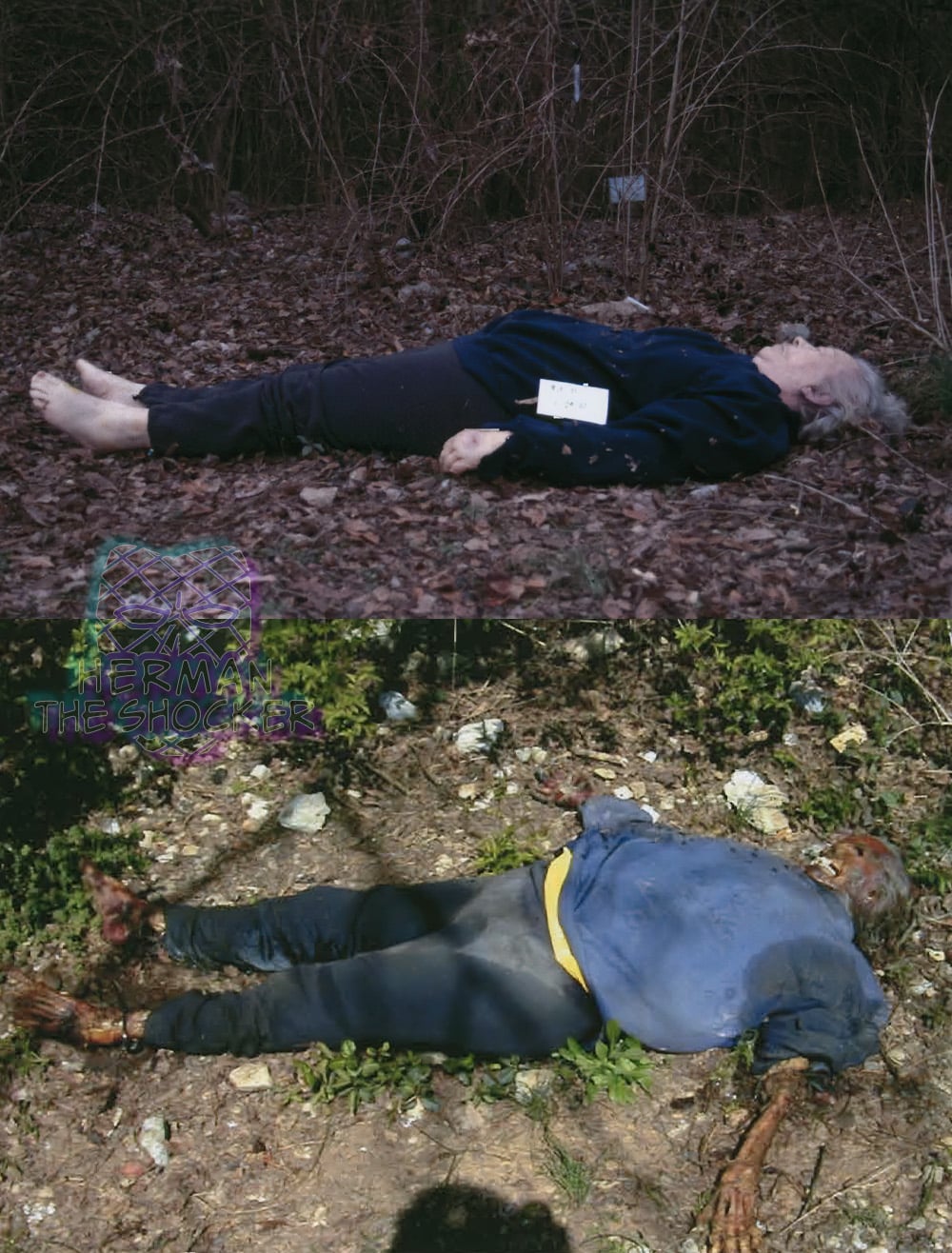 Fig.6 Female in her mid seventies outfitted in a t-shirt, sweatpants and a sweatshirt. 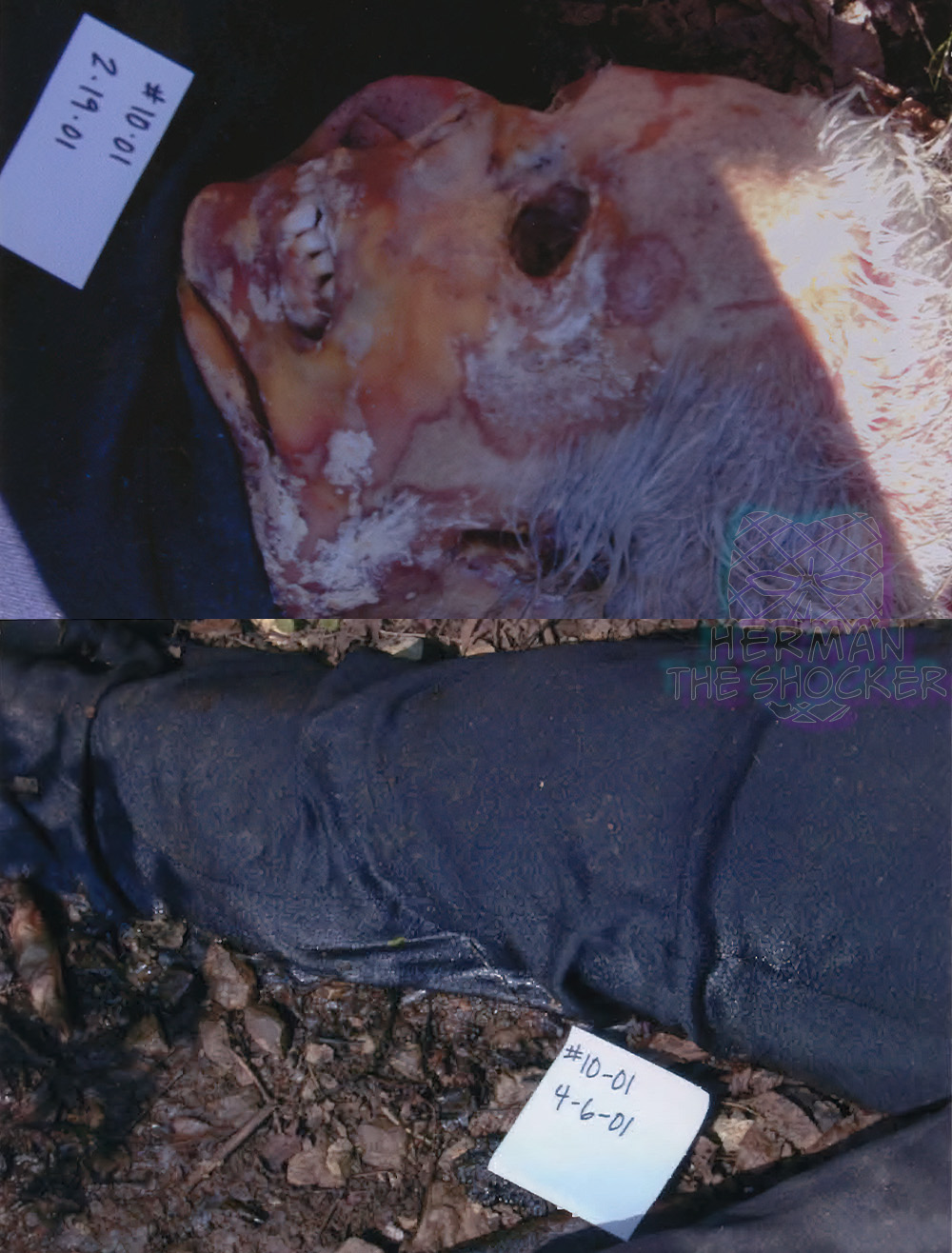 Fig.7 Vultures have plucked out the eyes and consumed the nose and lips. Fluids being released in the lower extremities. 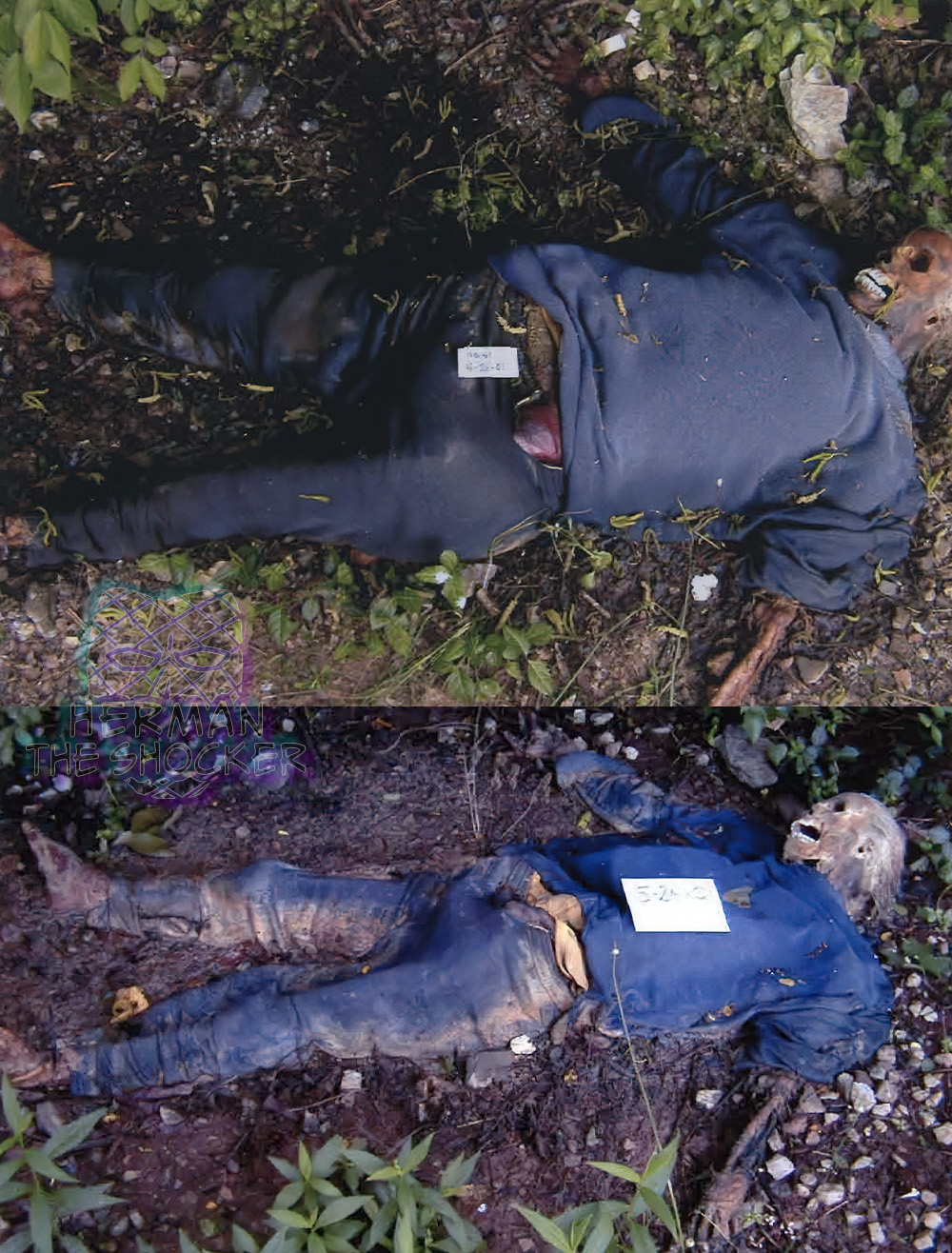 Fig.8 Notice the substantial purging of fluids and the sagging abdominal cavity. Dried tissue remains on the body. The estimation of time since death (TSD) is an enigma that has plagued law enforcement, medical examiners, and forensic anthropologists for years. An accurate estimate is often needed and may be required for registration purposes by a medical examiner or coroner. In fact, the legal basis of the English coroner's jurisdiction is to inquire where, when and by what means a person came to his death. An accurate estimate of time since death is often used in an alibi defense. It can act as a preliminary screening tool to eliminate putative killers who may or may not have had access to the body. More than half of the cases performed by The Forensic Anthropology Center at The University of Tennessee Knoxville require time since death estimates. Additionally, the success or failure of a criminal investigation may hinge directly upon an accurate estimation of time since death. 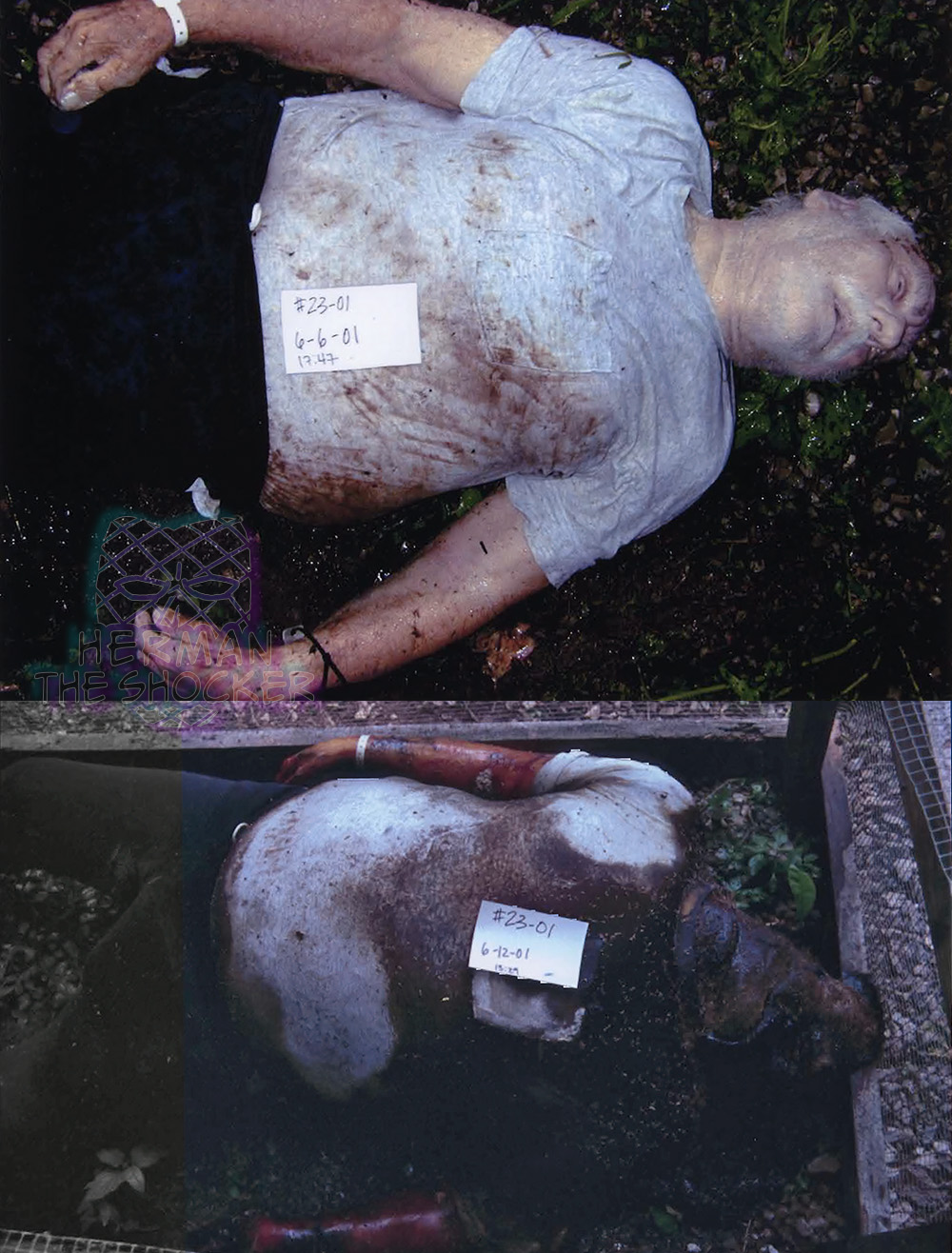 Fig.9 80 year-old white male outfitted in a t-shirt and sweatpants. 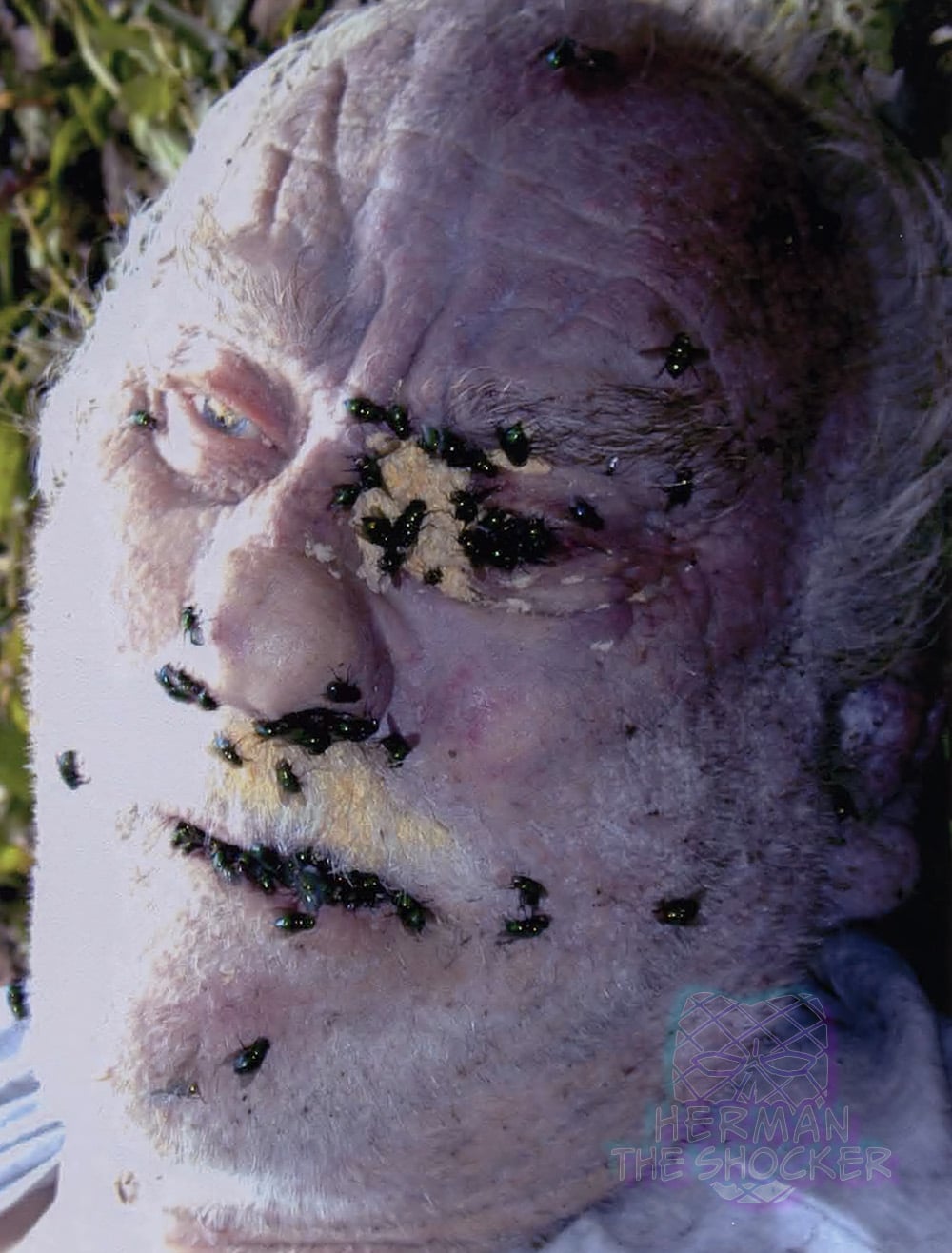 Fig.10 Notice the egg masses in the eyes and nose and the large number of blowflies on the face. 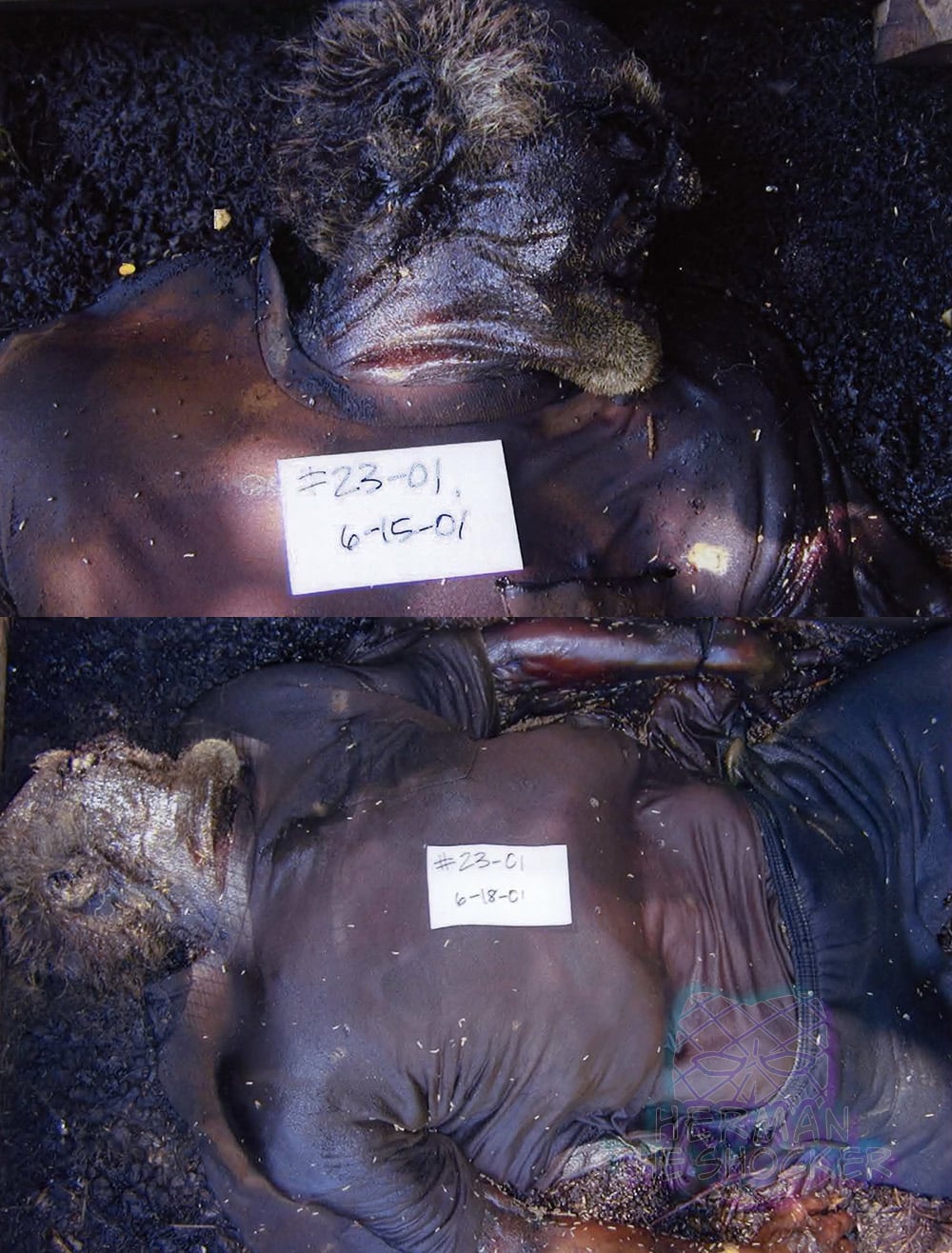 Fig.11 Drying putrefied flesh is visible surrounding the head, and the skin is discolored. The abdomen has caved in and fluids are being released. 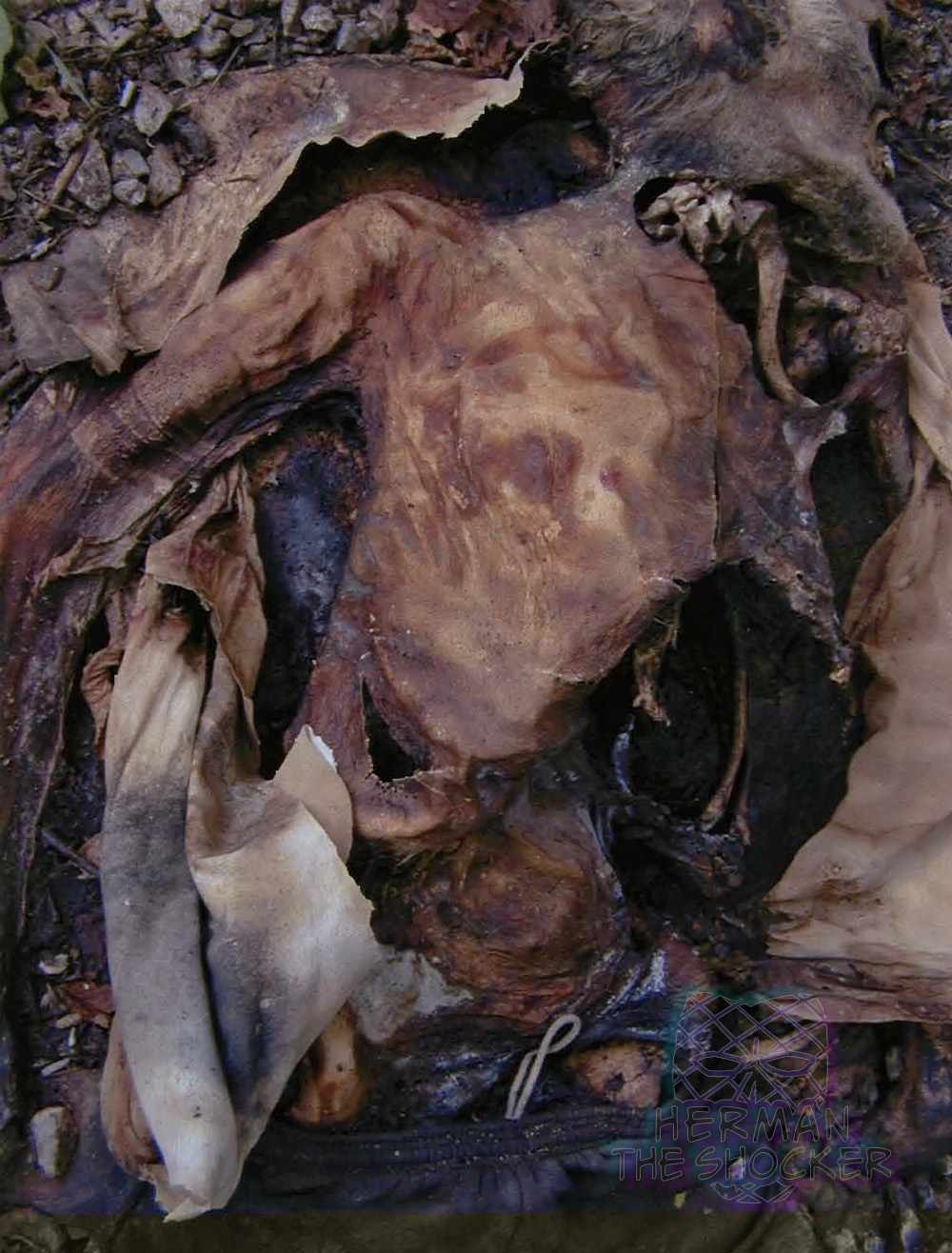 Fig.12 After clothing was cut open. The skin is mummified and dry bones are visible. Clothing is a highly variable factor in most crime scenes, with the victim's state ranging from nude victims to multiple layers of clothing and wrapping. Half of all forensic cases consist of clothed individuals, making clothing an important and overlooked variable that has yet to be properly explored. The cadavers of six unembalmed, unautopsied adult humans were used in this study: four white males, one white female, and one black male. All cadavers were of normal body composition for their height and were donated to The University of Tennessee, Department of Anthropology for scientific research purposes. Upon arrival, information concerning height, weight, age, sex, ancestry, date, and cause of death was recorded for each individual and entered into the William M. Bass Donated Skeletal Collection database. Each body was photographed before being dressed. 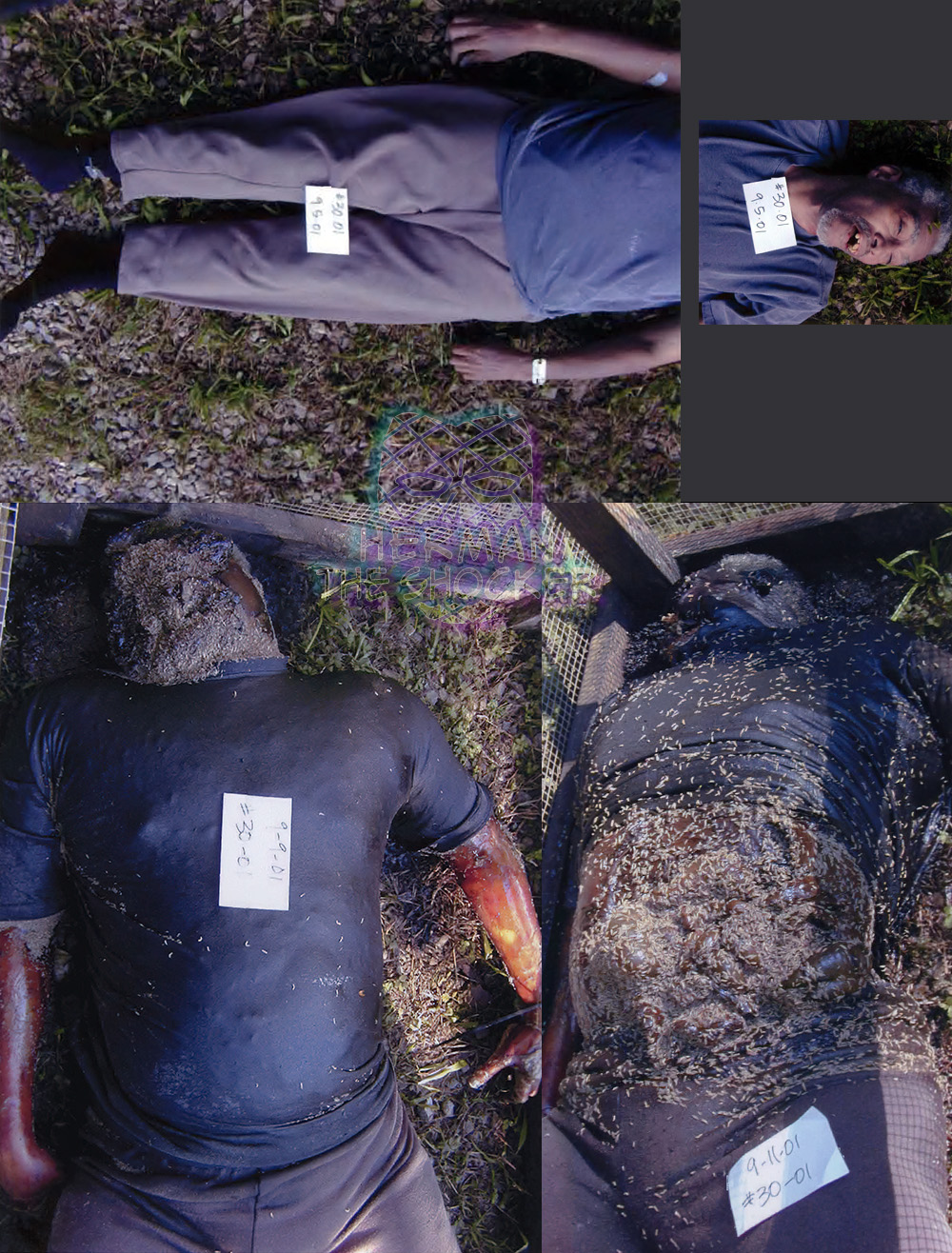 Fig.13 60-70 year-old black male outfitted in a t- shirt and sweatpants. Extensive maggot activity, bloating and skin slippage on extremities. 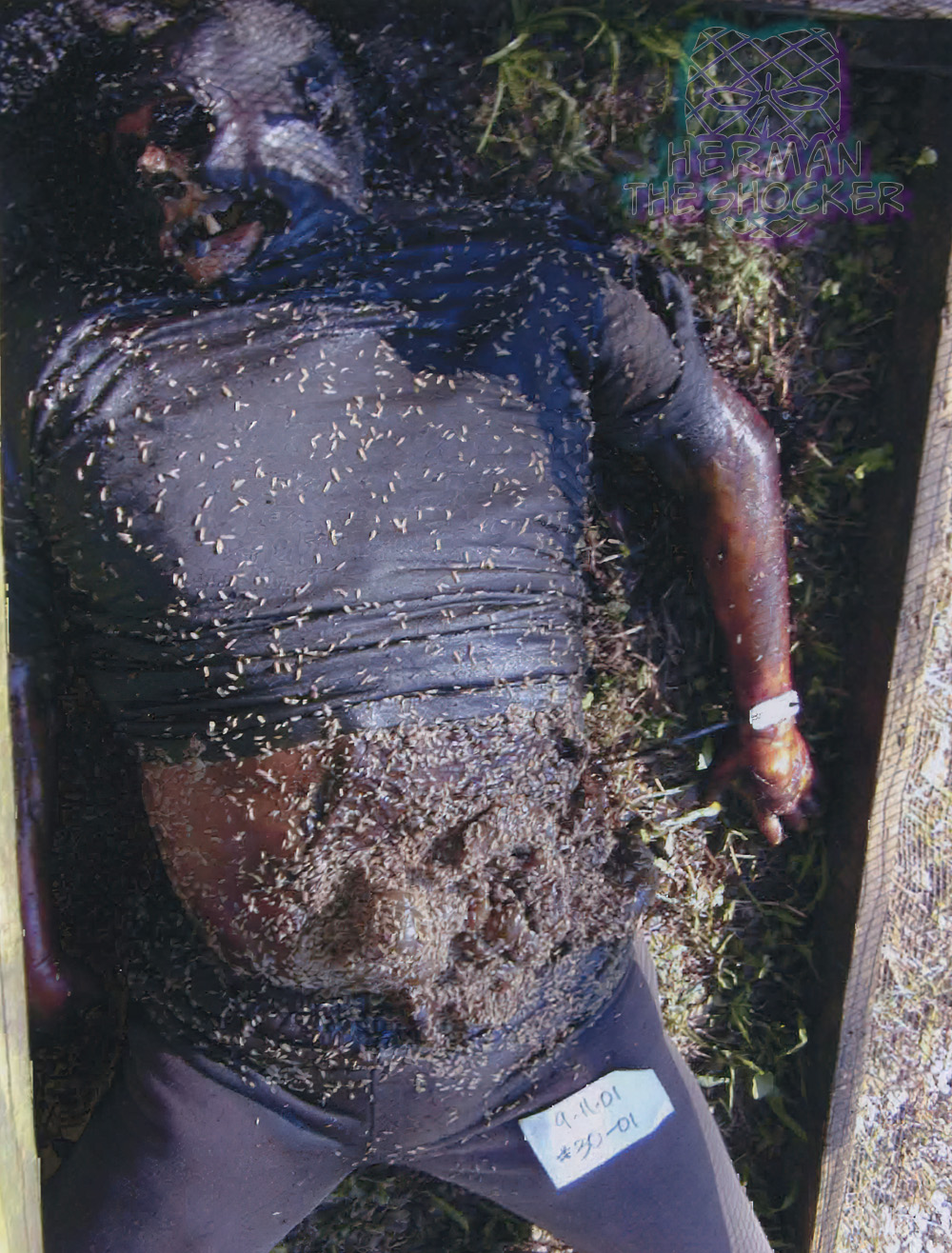 Fig.14 Abdominal cavity has burst, exposing intestines. Extensive maggot activity all over the body. Notice the skeletonized facial region. 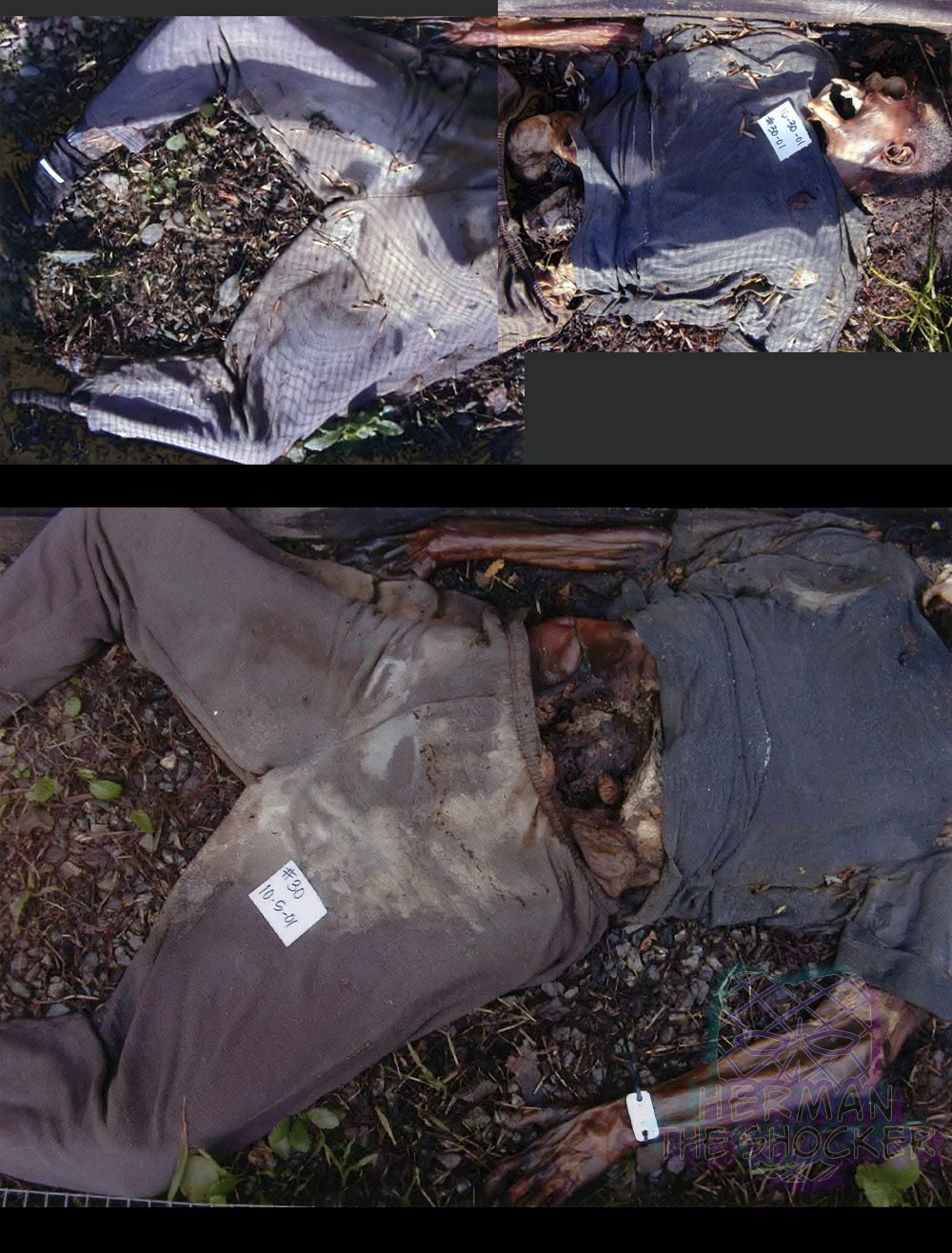 Fig.15 Desiccated skin remains on the face and limbs, though the facial region shows some dry bone. Subjects used in cooler months were outfitted in a t-shirt, sweatpants and a sweatshirt. Subjects used in warmer months were outfitted in a t-shirt and sweatpants only. This variation was done in order to mimic actual clothing that might be found on a decedent, correlating with the time of year. Each cadaver was then placed in a supine position. At every observation session, body decomposition, carnivore, and insect activity were noted. During the warmer spring and summer months, observations were made daily. In the cooler months of the fall and winter, observations were made daily, or every few days due to the slowed nature of decomposition. Photographs were taken as observations noted considerable change. Bodies initially exposed at the facility in the cooler months were more affected by animal activity than those exposed in warmer months. Animal activity at the facility was greater overall during this time as well. Raccoons were observed frequenting the facility, as well as vultures and short tail shrews. Two raccoons were subsequently trapped and released at another location. This concurs with current literature that animal activity is amplified in the winter months. 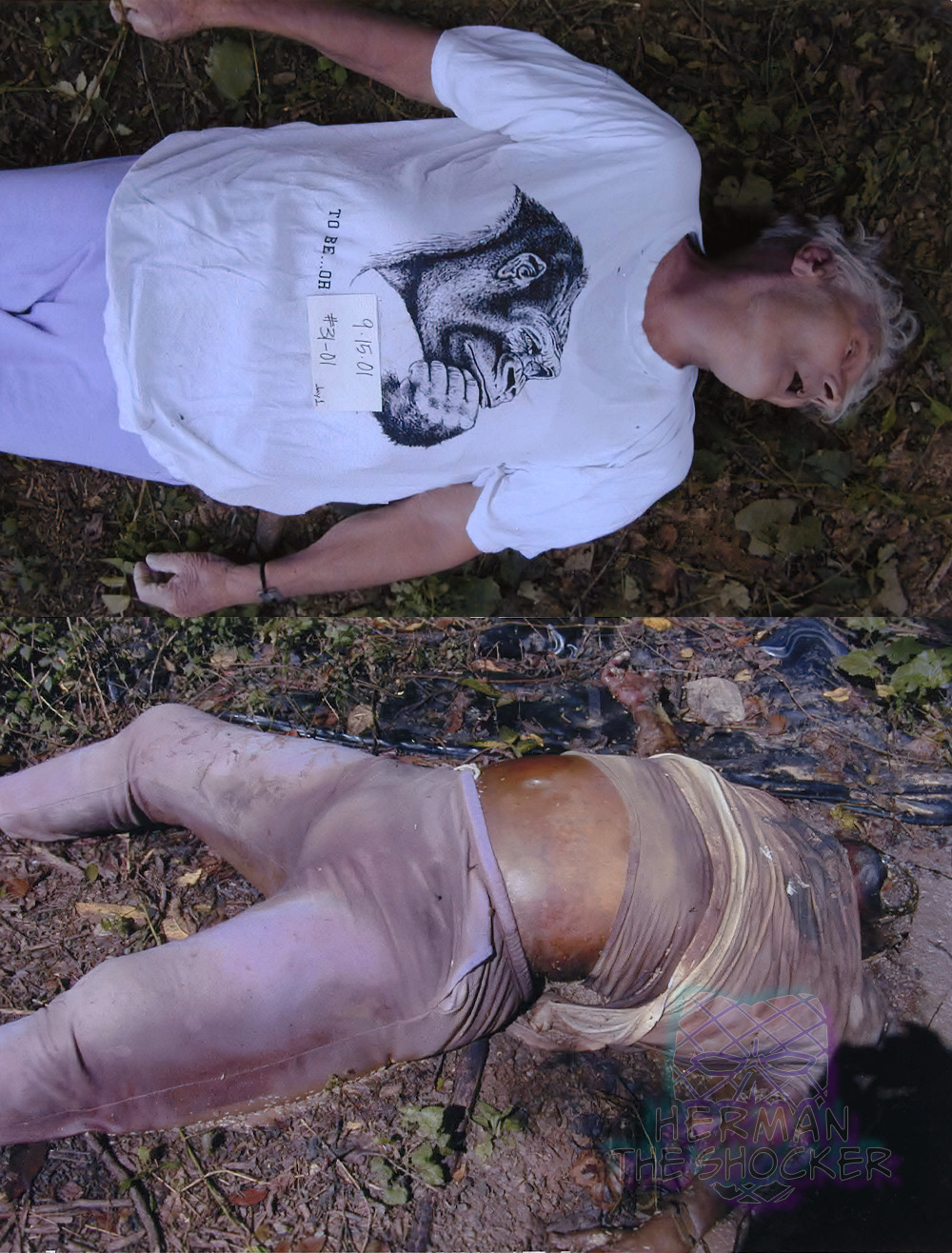 Fig.16 White male in his mid-seventies outfitted in a t-shirt and sweatpants. The shirt has been raised on the abdomen due to bloating. 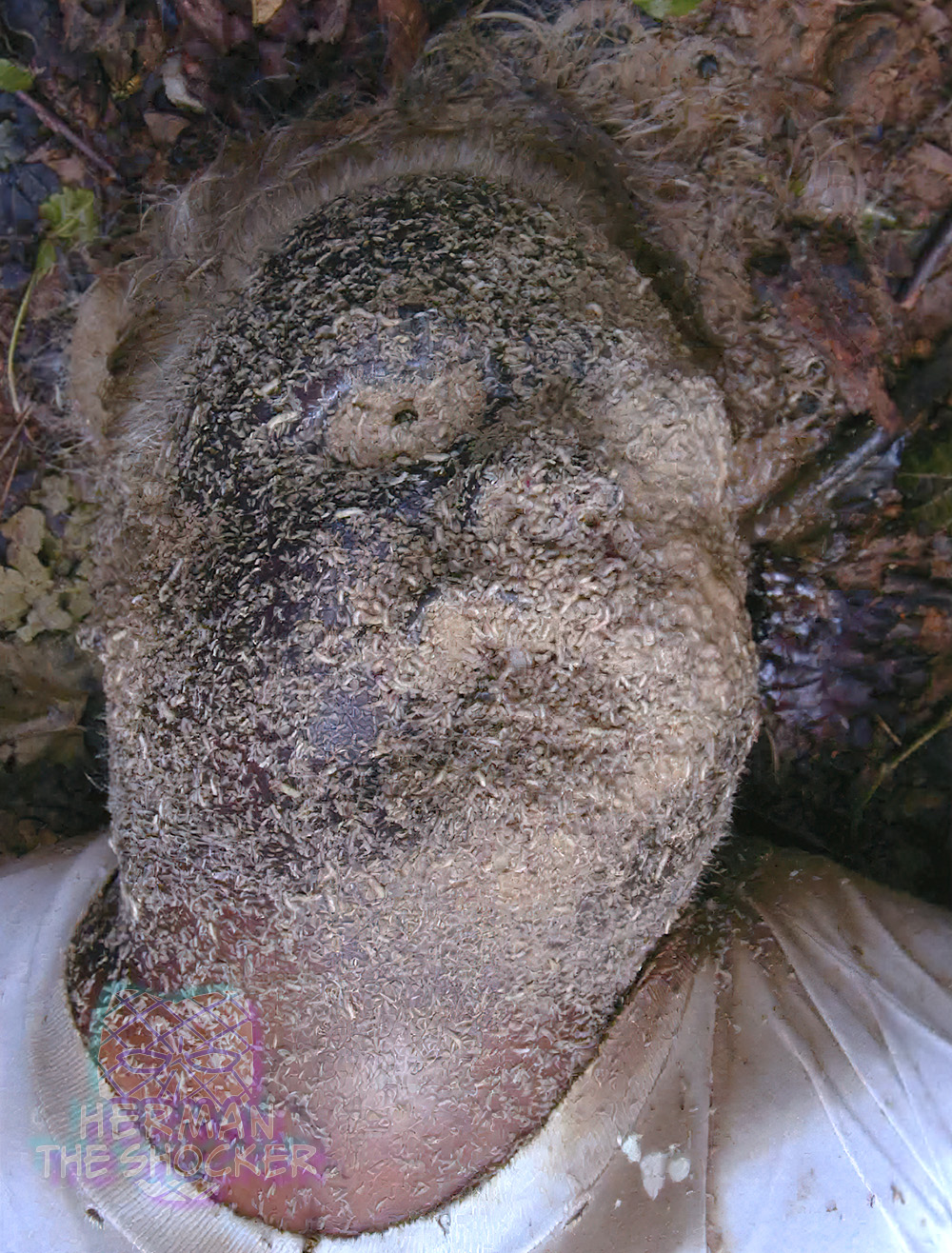 Fig.17 Maggots entirely cover the face and hair is starting to fall off. 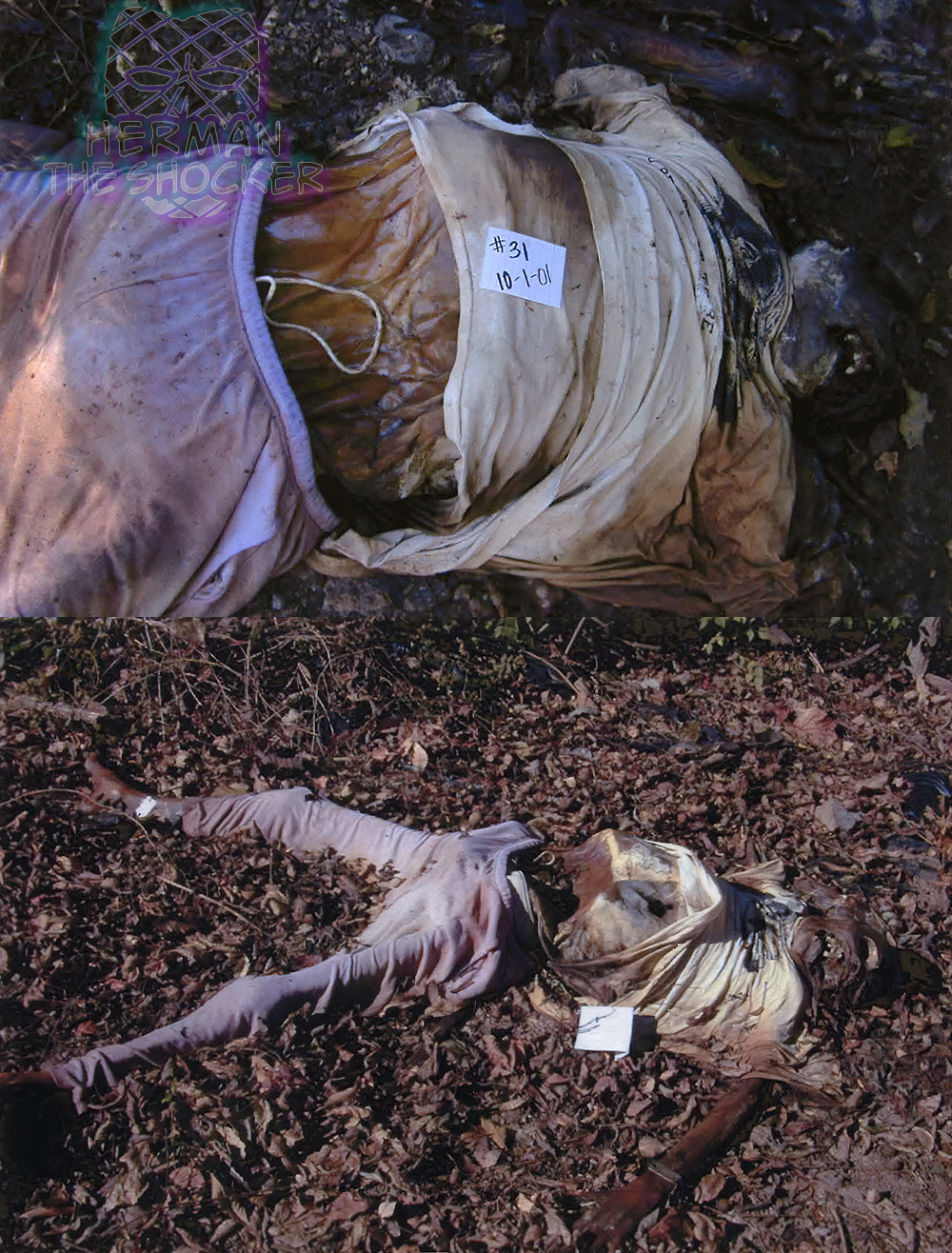 Fig.18 The abdomen is sagging and tissue on the arms and face is dry. All exposed tissue is dry and hard. 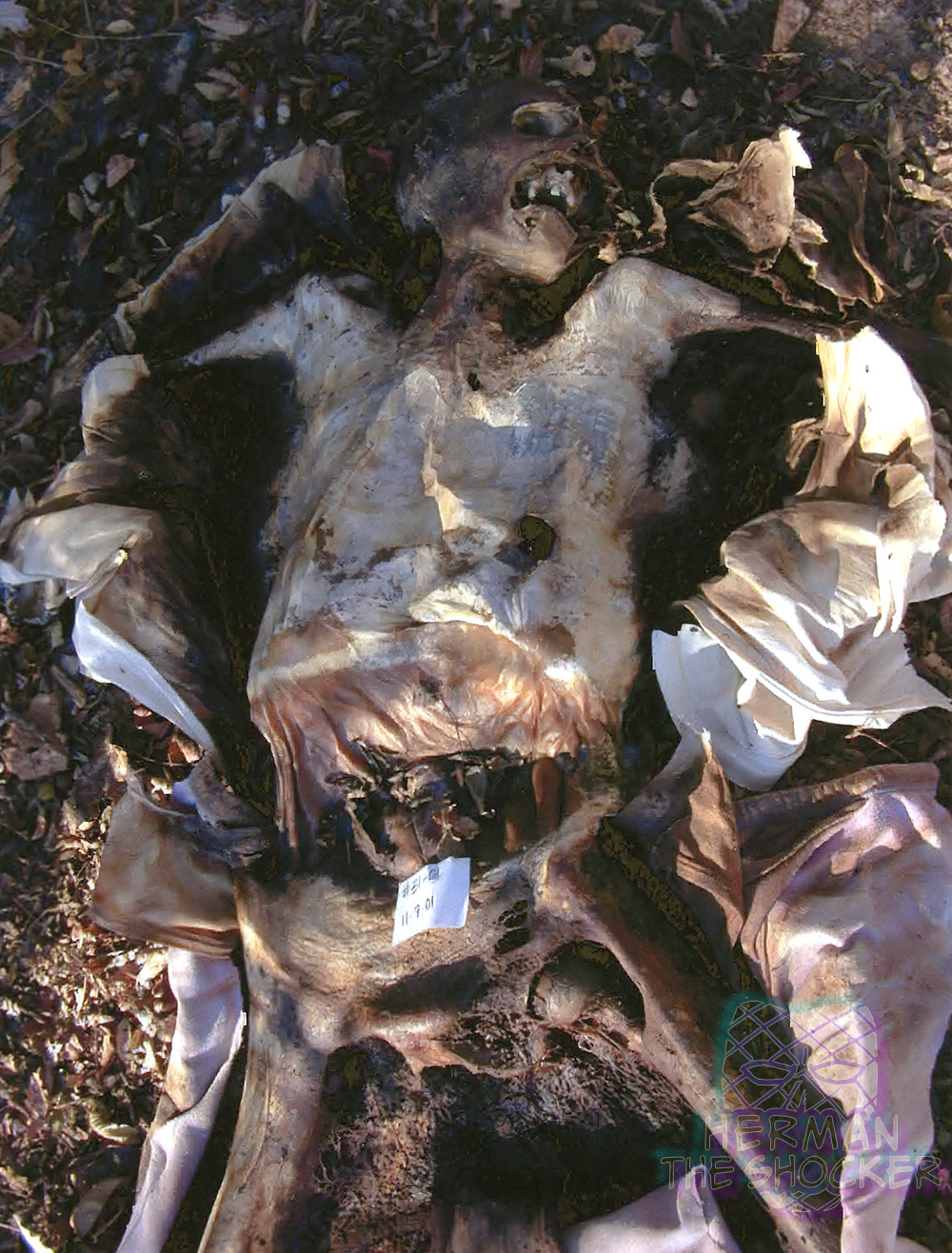 Fig.19 After clothing was cut open. There has been somewhat of a debate in the literature as to whether clothing accelerates or retards decomposition. Results of the study show that the presence of clothing prevents decomposition of the dermis and instead, accelerates desiccation, leading to mummification. Furthermore, the affect of clothing on the rate of decomposition is greater in the spring and summer than it is in the winter. A clothed body takes approximately 1.7 times longer in the spring and twice as long in the summer to decompose than a nude cadaver. However, the rate of decomposition is relatively the same for nude and clothed cadavers in the winter. It is unknown whether clothing is a significant variable in the decomposition process in the fall as there was no basis for comparison. Clothing has a noticeable, though not statistically significant, affect on human decomposition and is a variable that must be considered when making an estimate of time since death. Forensic professionals who are called upon to make such an estimate are urged to take clothing and seasonality into account. However, more research on this topic needs to be performed. A study that directly compares the decomposition of bodies of equal mass and stature should be conducted with nude and clothed cadavers. However, these circumstances are very difficult to arrange due to the nature of subject procurement. The Anthropology Research Facility relies on donations of bodies from individuals, and such donations cannot be orchestrated. - This post is for educational purposes only and is nonprofit. Under Section 107 of the US Copyright Act of 1976; Allowance is made for "Fair Use" for purposes such as criticism, comment, news reporting, teaching, scholarship, and research. OP is not a medical expert. No copyright infringement intended. This post does not encourage or glorify violence/harassment. Images might have been upscaled and enhanced. Text might have been shortened and simplified/reorganized for online view.
__________________ ⭐️ hermantheshocker.com ⭐️ |
|
#2
●
12-20-2021, 03:37 PM
| ||||||||
 My Rank: MASTER SERGEANT Poster Rank:483 male Join Date: Feb 2010 Posts: 2,163 Mentioned: 0 Post(s) Quoted: 286 Post(s)
| ||||||||
|
Re: The Affects of Clothing on Human Decomposition
Fascinating stuff thank you Herman  |
|
#3
●
12-20-2021, 04:46 PM
| ||||||||
 My Rank: STAFF SERGEANT Poster Rank:727 male Join Date: Dec 2009 Posts: 1,132
Contributions: 18
Mentioned: 9 Post(s) Quoted: 298 Post(s)
| ||||||||
|
Re: The Affects of Clothing on Human Decomposition
Awesome post as always, Herman. I remember that there was a low-quality timelapse vidoe of Fig. 16 somewhere here in the video section. If I remember correctly, it was from around 2013 or much earlier.
|
|
#4
●
12-20-2021, 05:17 PM
| ||||||||
 ♚ Legacy Gold Member ♚ Poster Rank:905 Join Date: Oct 2020 Posts: 822 Mentioned: 0 Post(s) Quoted: 119 Post(s)
| ||||||||
|
Re: The Affects of Clothing on Human Decomposition
Excellent job HTS! Thank you. I'm donating my body to this place.
|
|
#5
●
12-20-2021, 06:29 PM
| ||||||||
| ♚ Legacy Gold Member ♚ Poster Rank:98 Male Join Date: Nov 2009 Posts: 16,755 Mentioned: 7 Post(s) Quoted: 4607 Post(s)
| ||||||||
|
Re: The Affects of Clothing on Human Decomposition
Excellent job, HTS!! Thank you!! I'm headed off to this place to climb over the fence!
|
|
#6
●
12-21-2021, 09:03 AM
| ||||||||
 My Rank: FIRST SERGEANT Poster Rank:475 Male Join Date: Dec 2009 Posts: 2,258 Mentioned: 0 Post(s) Quoted: 293 Post(s)
| ||||||||
|
Re: The Affects of Clothing on Human Decomposition
I'm sure this facility has a great reputation among the local vultures.
|
|
#8
●
12-21-2021, 08:56 PM
| ||||||||
| My Rank: LANCE CORPORAL Poster Rank:2160 Join Date: Aug 2017 Posts: 220
Contributions: 14
Mentioned: 2 Post(s) Quoted: 60 Post(s)
| ||||||||
|
Re: The Affects of Clothing on Human Decomposition
I am curious how stockings or pantyhose affects the decomposition process.
|
|
#10
●
12-22-2021, 10:26 AM
| ||||||||
| My Rank: LANCE CORPORAL Poster Rank:3007 Join Date: Feb 2015 Posts: 131 Mentioned: 0 Post(s) Quoted: 32 Post(s)
| ||||||||
|
Re: The Affects of Clothing on Human Decomposition
I like how it appears they're just tossed out in the backyard
|





 LMAO!!!!
