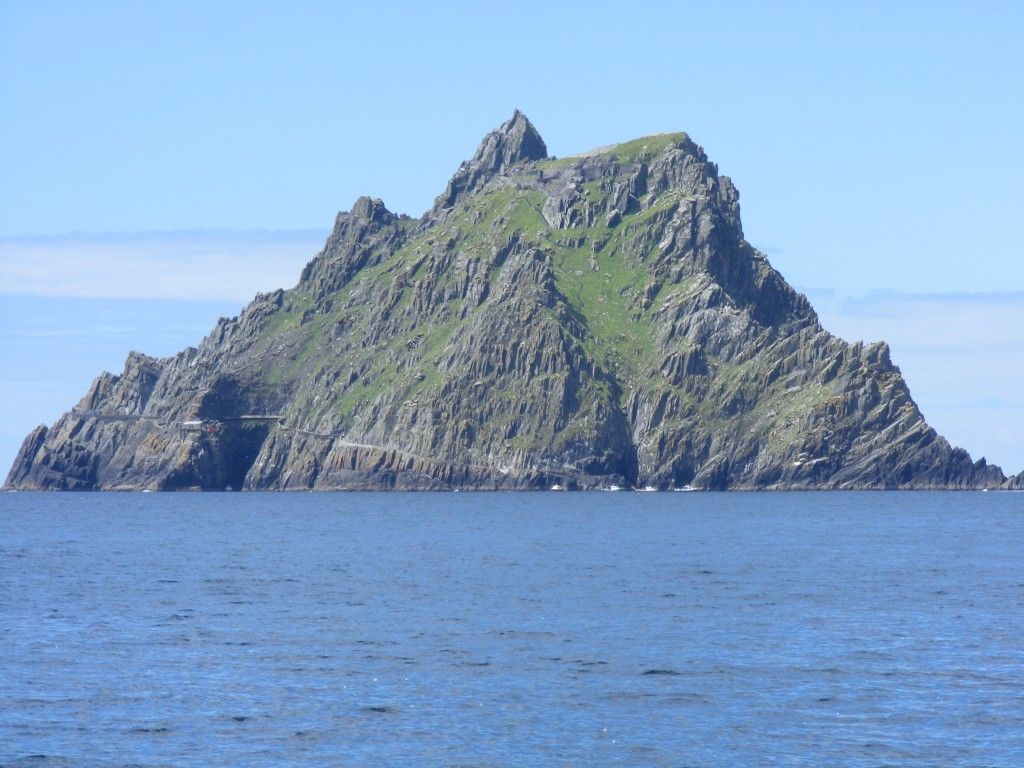
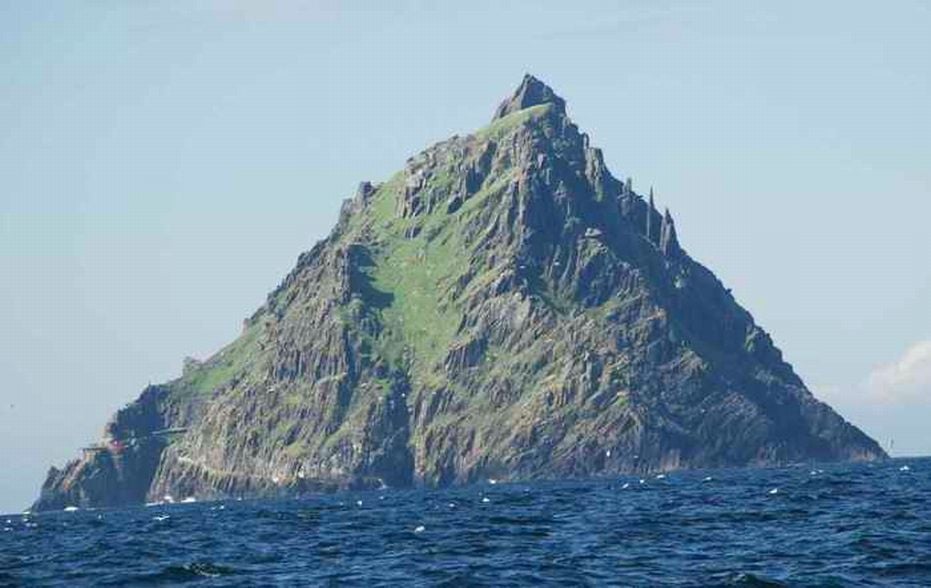
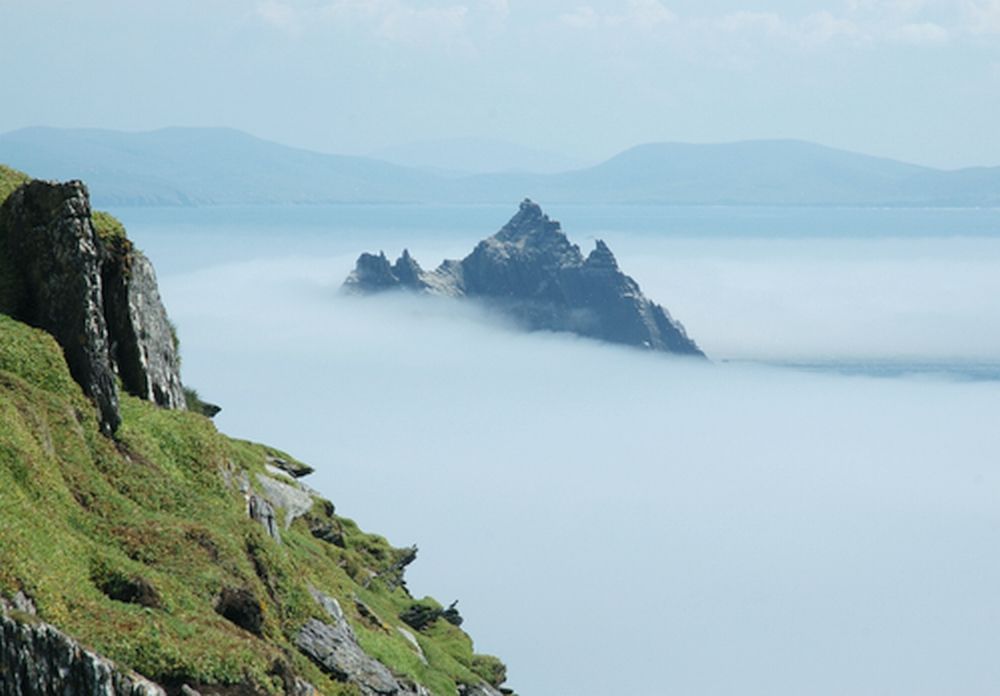
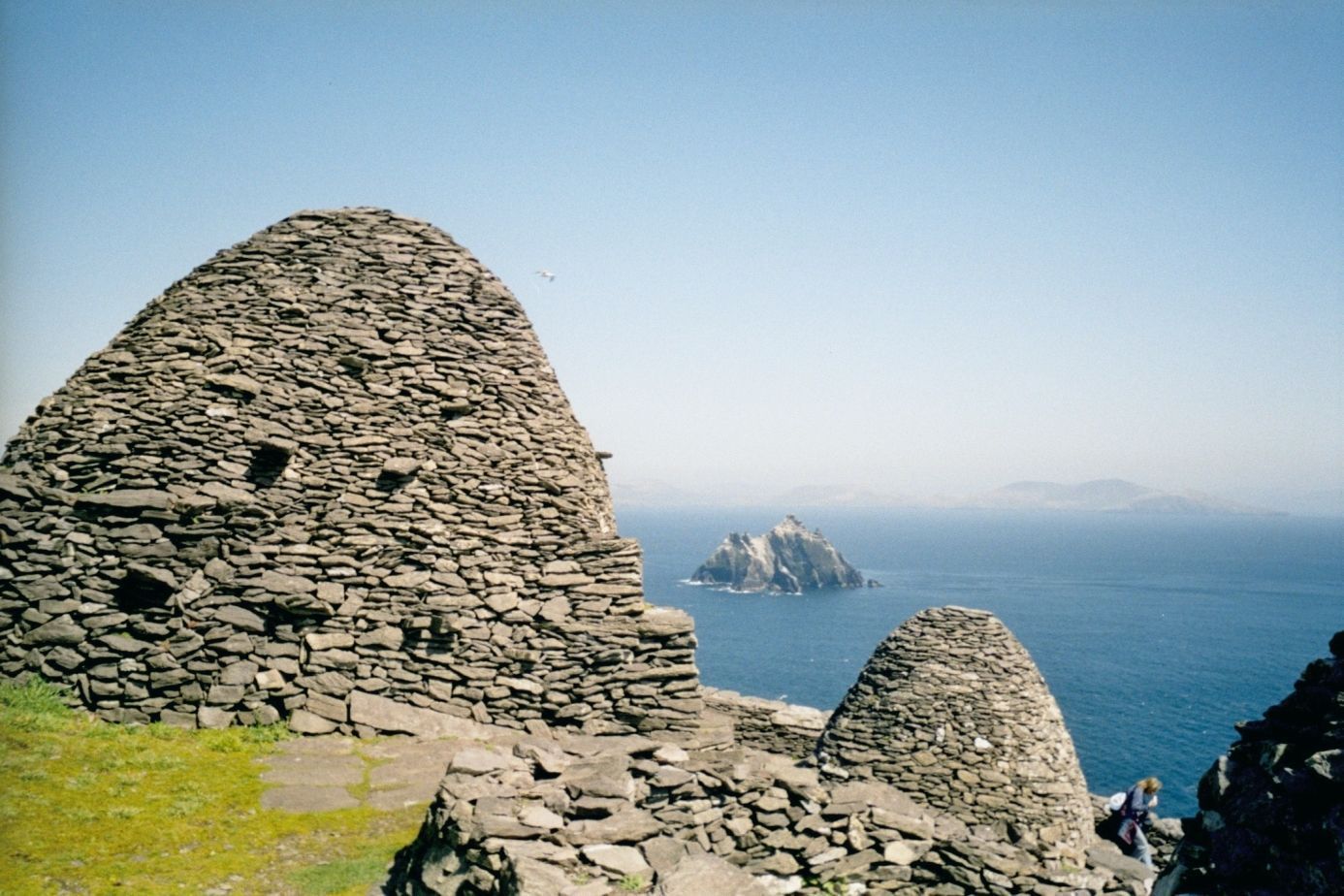
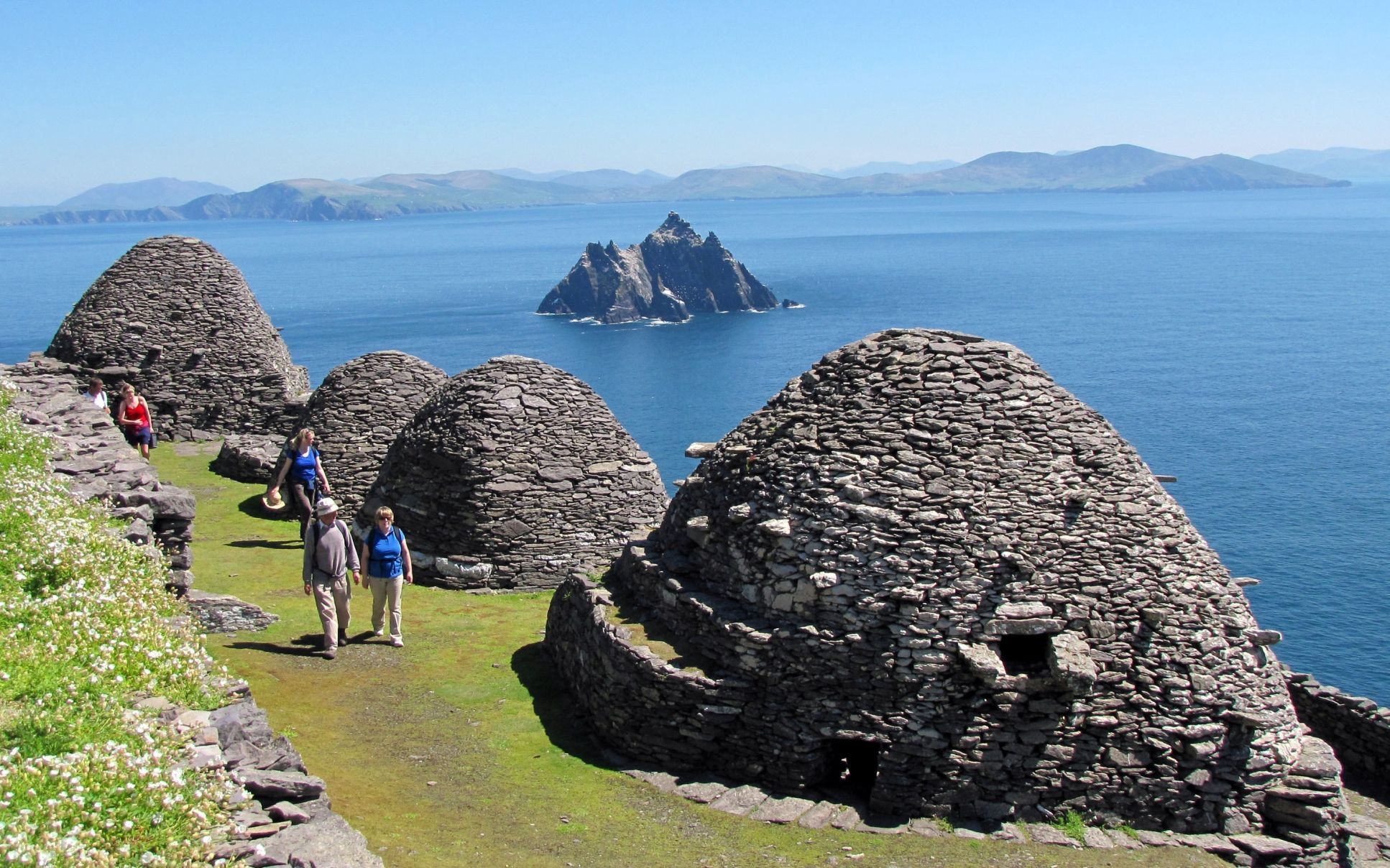
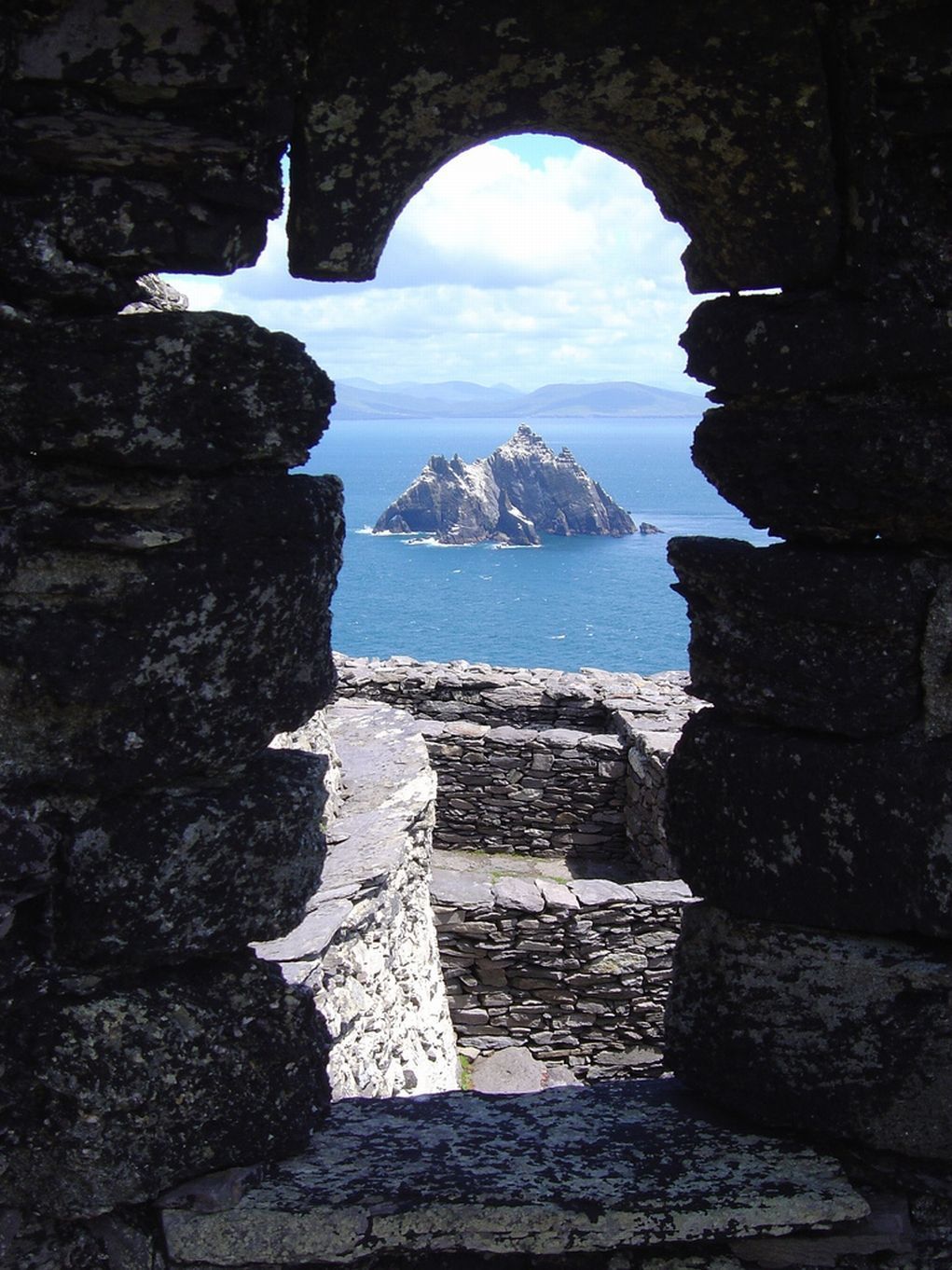
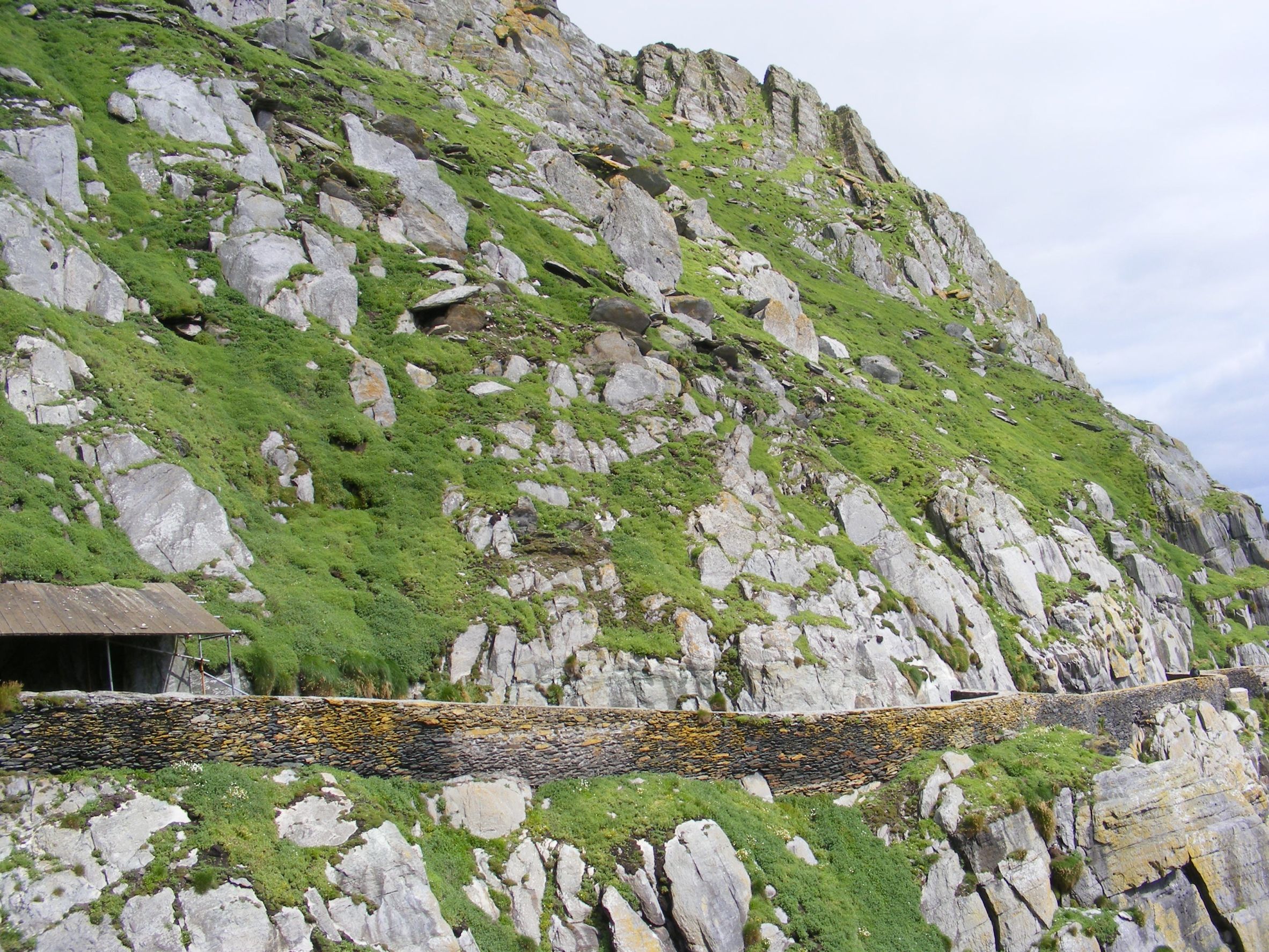
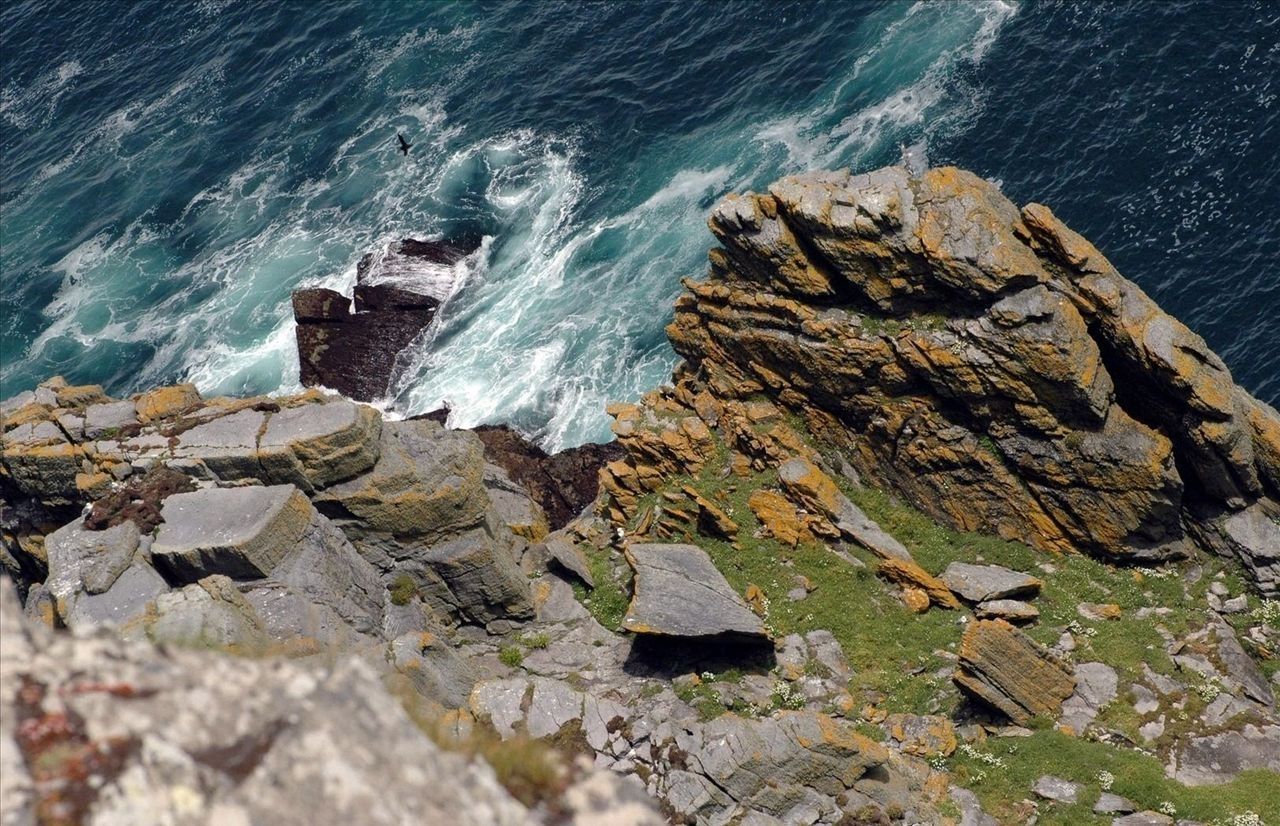
Skellig Michael is an island (the larger of the 2 Skellig Islands) in the Atlantic Ocean, 11.6 km west of the Iveragh Peninsula in County Kerry, Ireland.
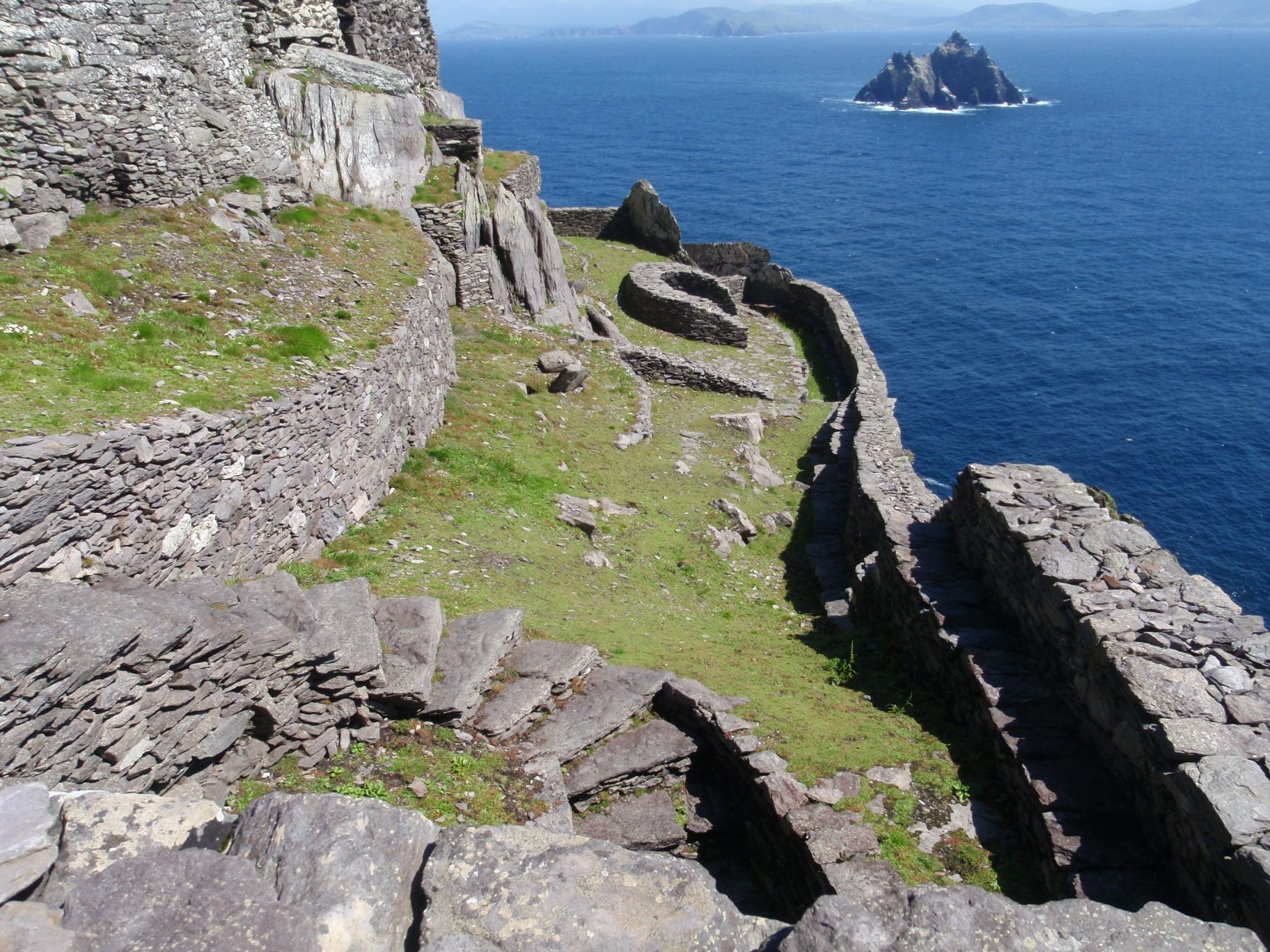
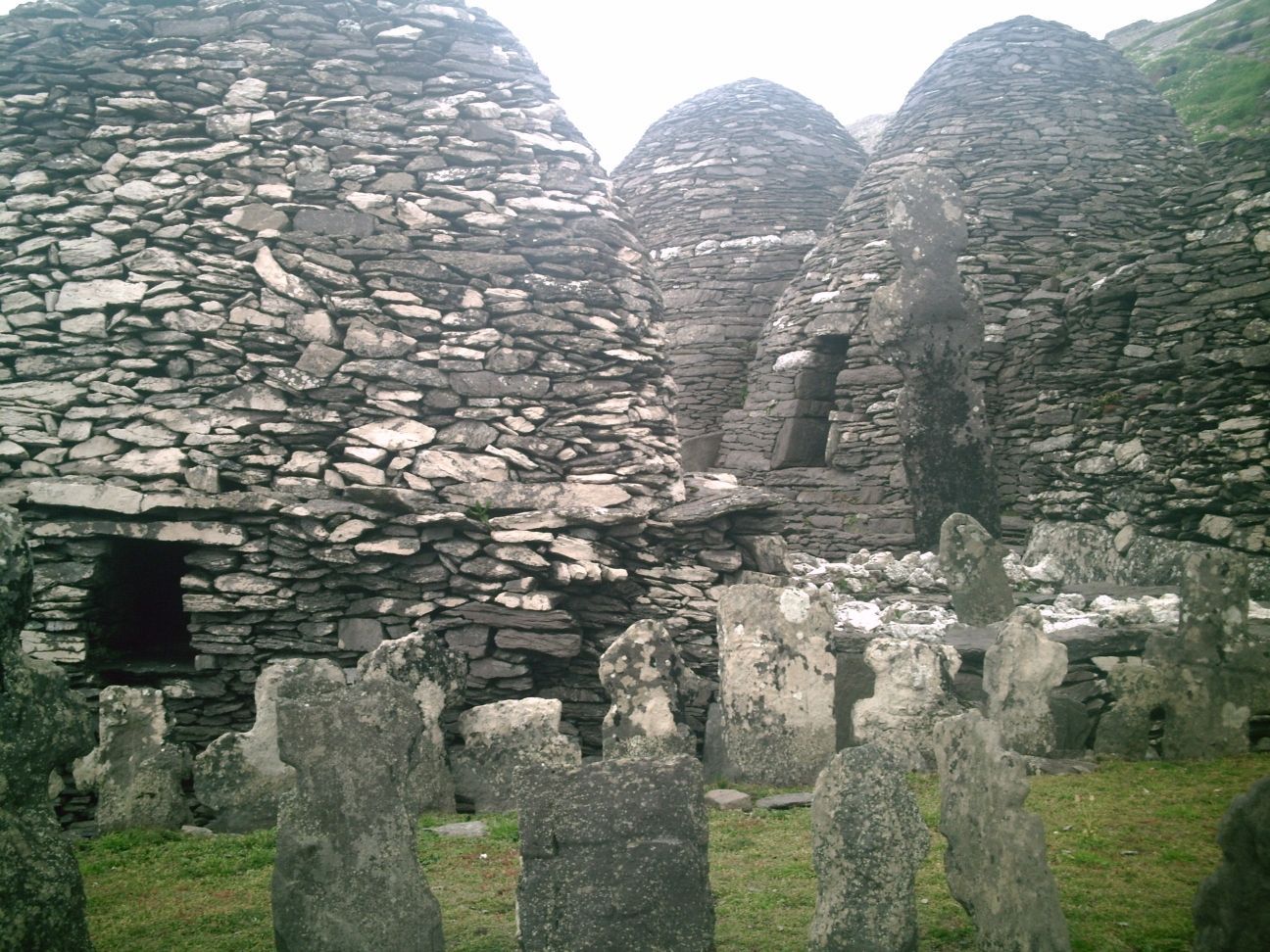
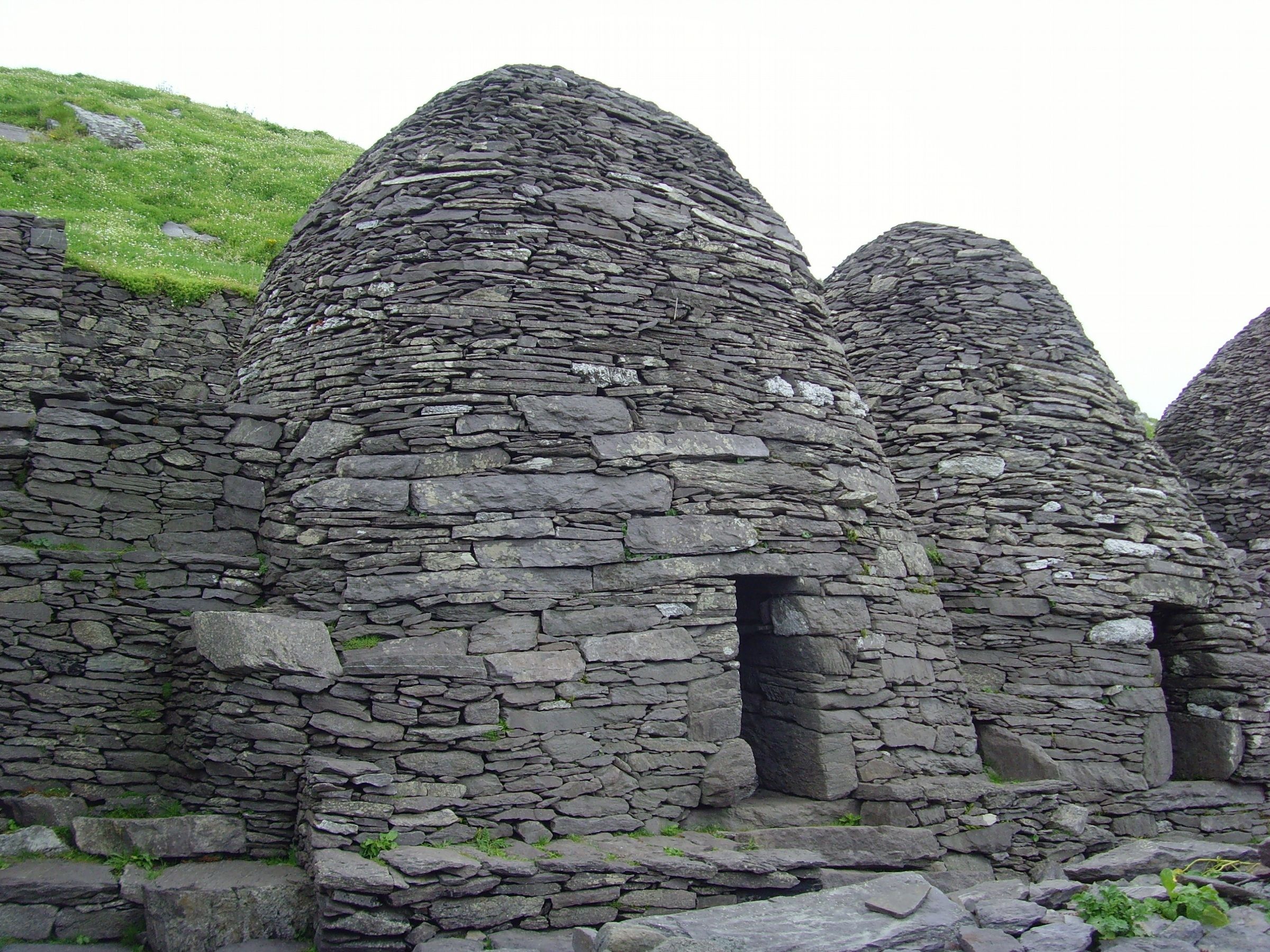
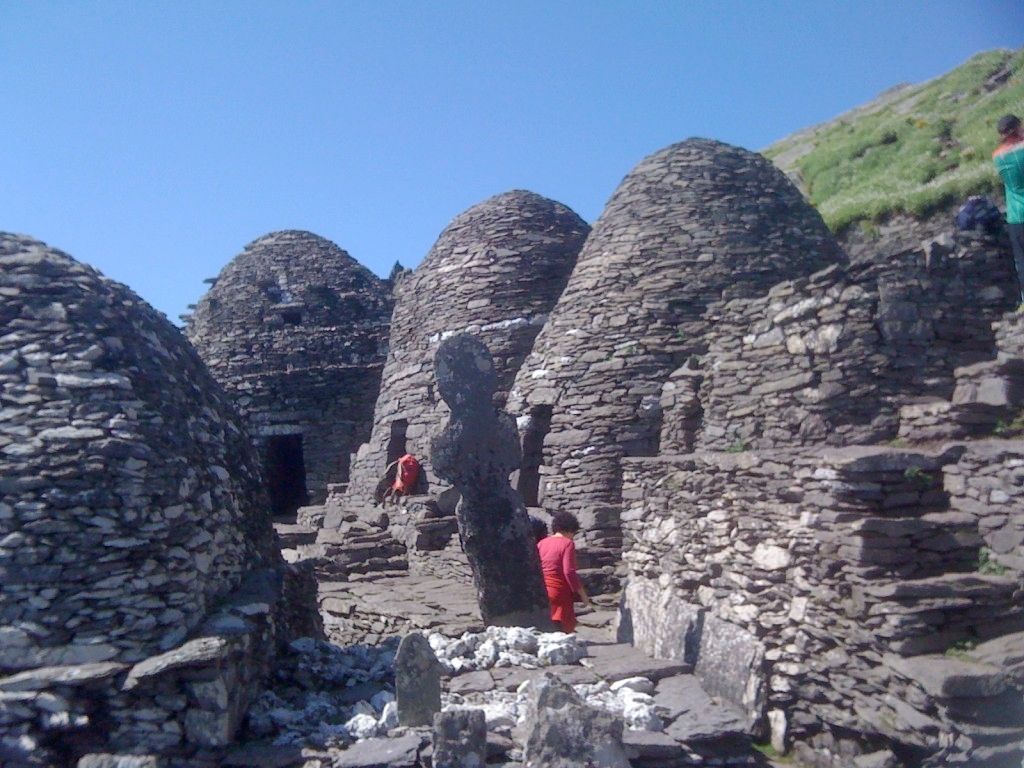
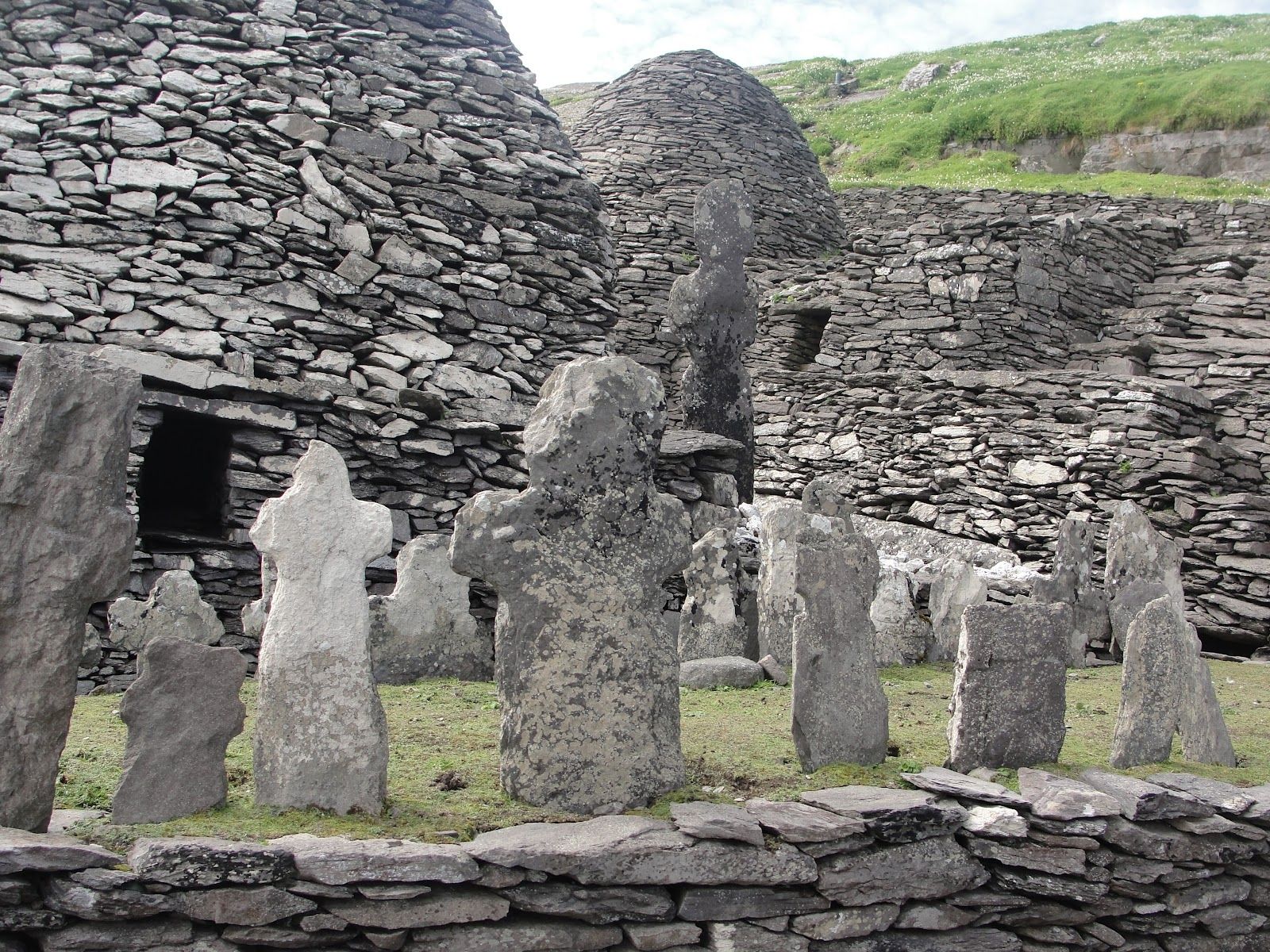
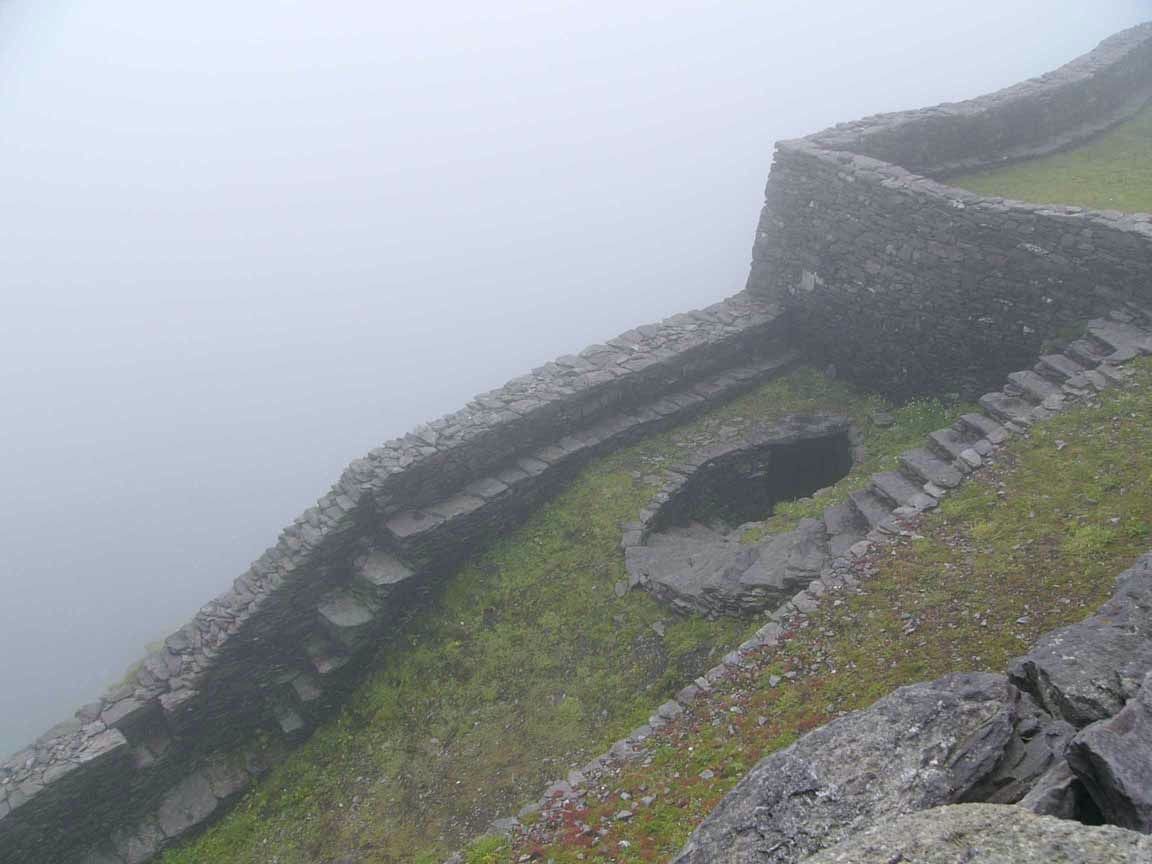
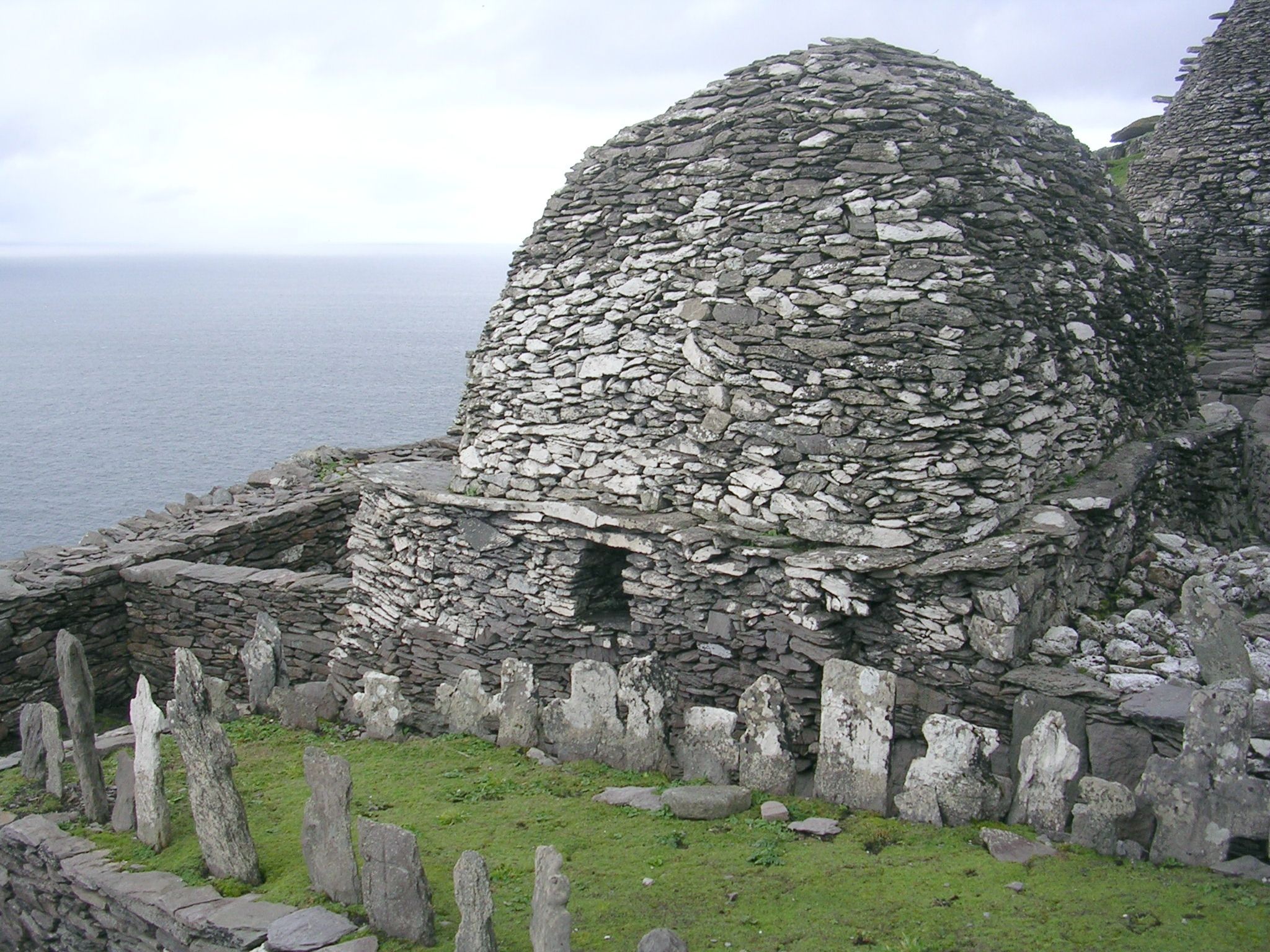
A Christian monastery was founded on the island at some point between the 6th and 8th century, and was continuously occupied until its abandonment in the late 12th century.
Pre-Monastic Skellig Michael was uninhabited prior to the foundation of its monastery.
Folklore holds that Ir, son of Milesius, was buried on the island, and a text from the 8th or 9th century states that Duagh, King of West Munster, fled to "Scellecc" after a feud with the Kings of Cashel, although it is not known whether these events actually took place.
The monastery's exact date of foundation is not known.
The first definite reference to monastic activity on the island is a record of the death of "Suibhini of Skelig" dating from the 8th century, however Saint Fionán is claimed to have founded the monastery in the 6th century.
The site had been dedicated to Saint Michael by at least 1044 (when the death of "Aedh of Scelic-Mhichí" is recorded), however this dedication may have occurred as early as 950, around which time a new church was added to the monastery (typically done to celebrate a consecration) which was called Saint Michael's Church.
The monastery remained continuously occupied until the 12th or 13th century.
During this time, the climate around Skellig Michael became colder and more prone to storms, and this, along with changes to the structure of the Irish Church, prompted the community to abandon the island and move to the abbey in Ballinskelligs.
Post-Monastic Skellig Michael remained in the possession of the Order of St. Augustine until the dissolution of the Ballinskelligs abbey by Elizabeth I in 1578.
Ownership was then passed to the Butler family with whom it stayed until the early 1820s, when the Corporation for Preserving and Improving the Port of Dublin (the predecessor to the Commissioners of Irish Lights) purchased the island from John Butler of Waterville in a compulsory purchase order.
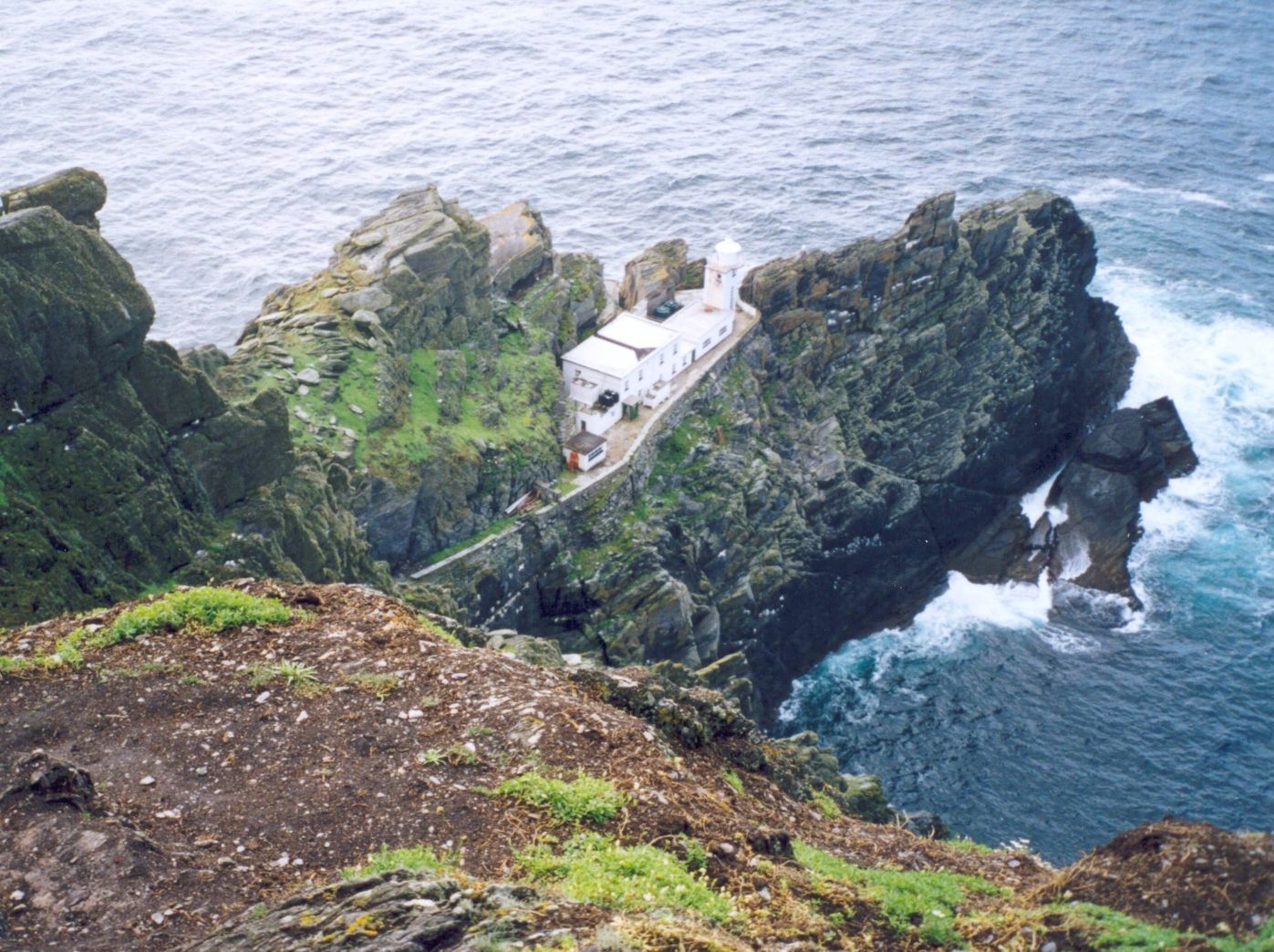
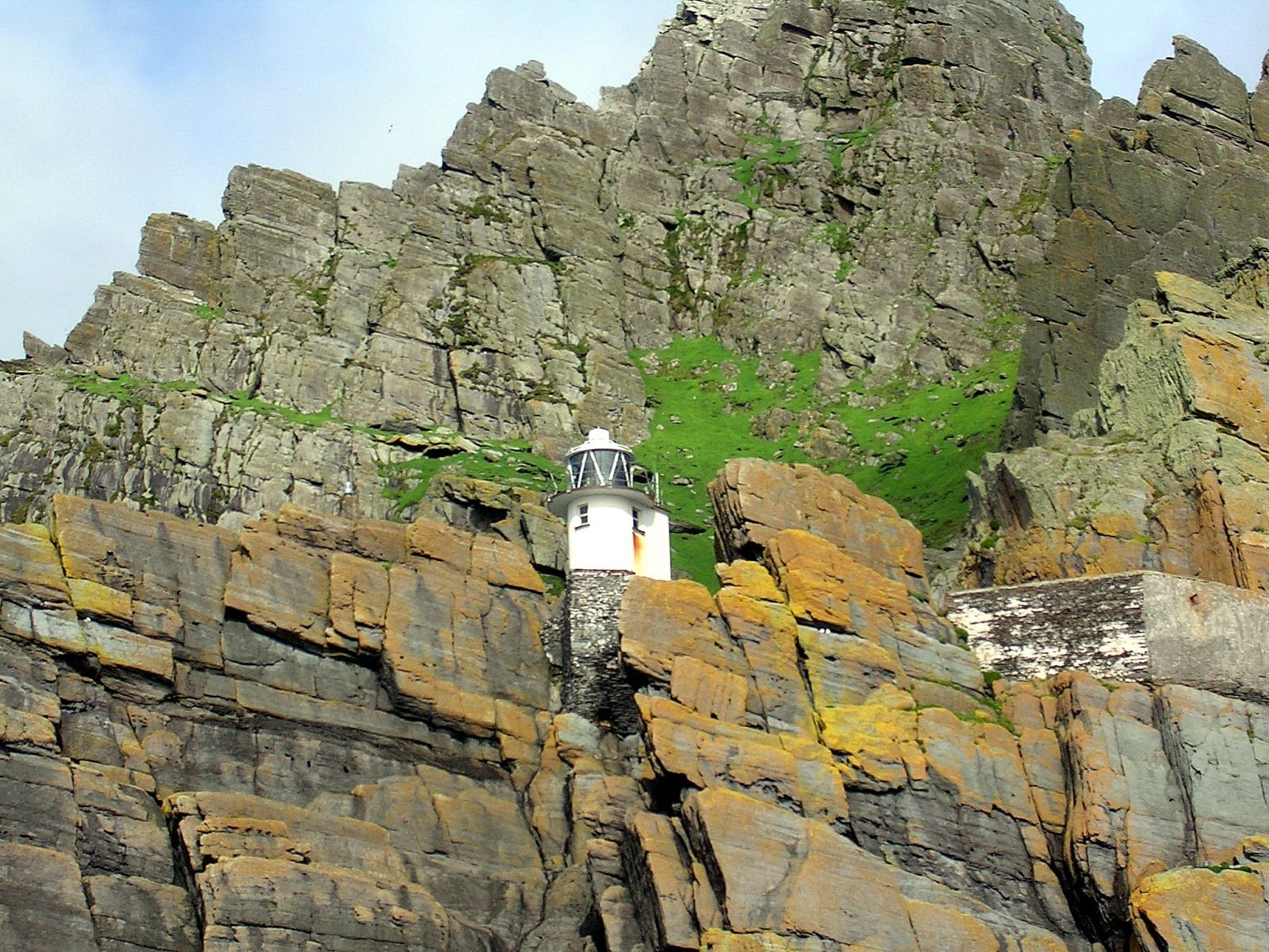
The Corporation constructed two lighthouses on the Atlantic side of the island, as well as associated living quarters, all of which was completed by 1826.
The Office of Public Works took the remains of the monastery into guardianship in 1880, and repaired certain collapsed structures, before purchasing the island (with the exception of the lighthouses and associated structures) from the Commissioners of Irish Lights.
Skellig Michael was inscribed on the World Heritage List in 1996, at the 20th Session of the World Heritage Committee in Mérida, Mexico.
The Committee approved this recommendation, describing Skellig Michael as of "exceptional universal value", and a "unique example of an early religious settlement", while also noting the site's preservation as a result of its "remarkable environment", and its ability to illustrate "as no other site can, the extremes of a Christian monasticism characterizing much of North Africa, the Near East and Europe".
Each year 13 boat licenses are granted to tour operators who each run a single trip to Skellig Michael each day during the summer season (April to October, inclusive), weather permitting.
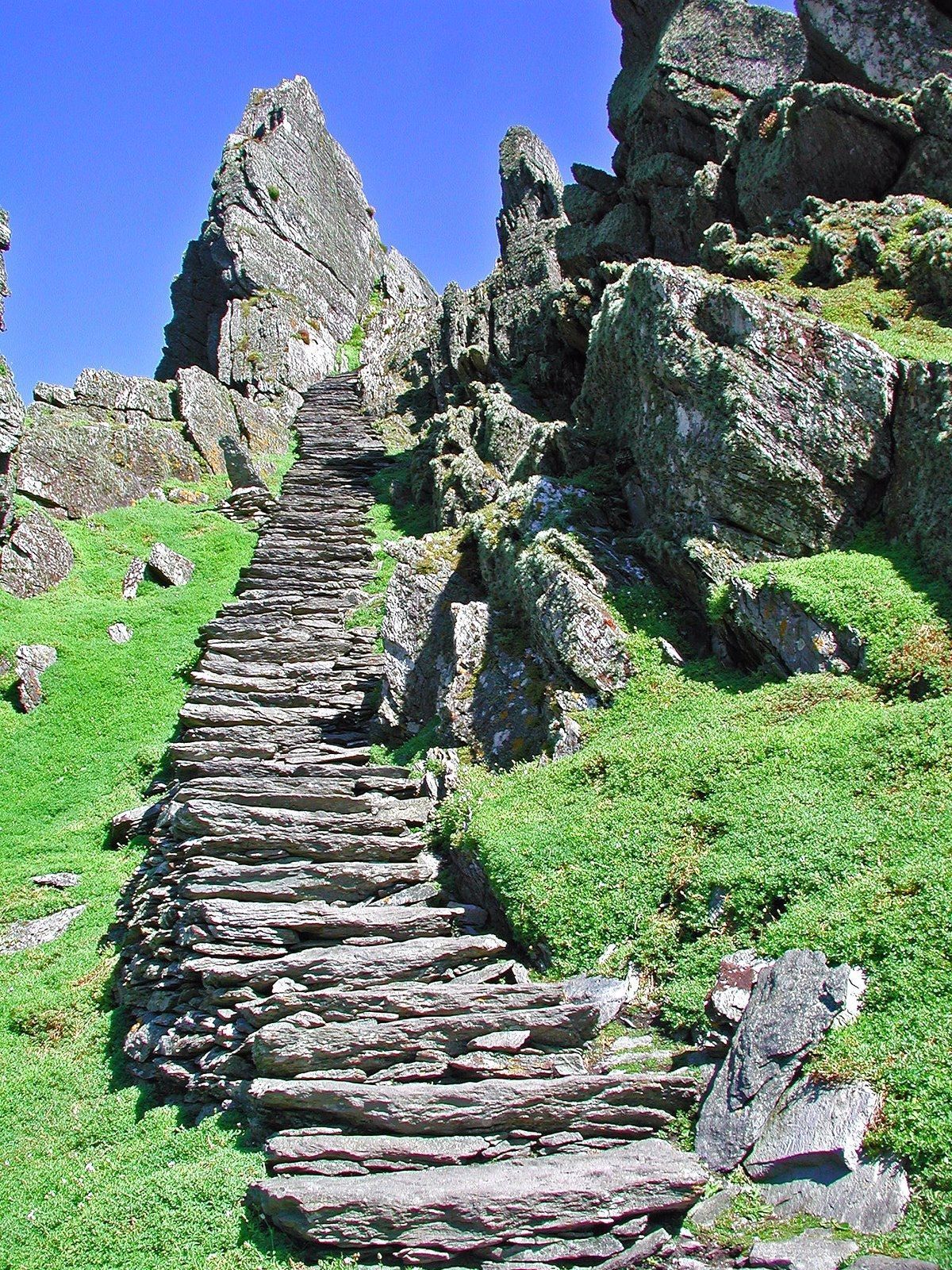
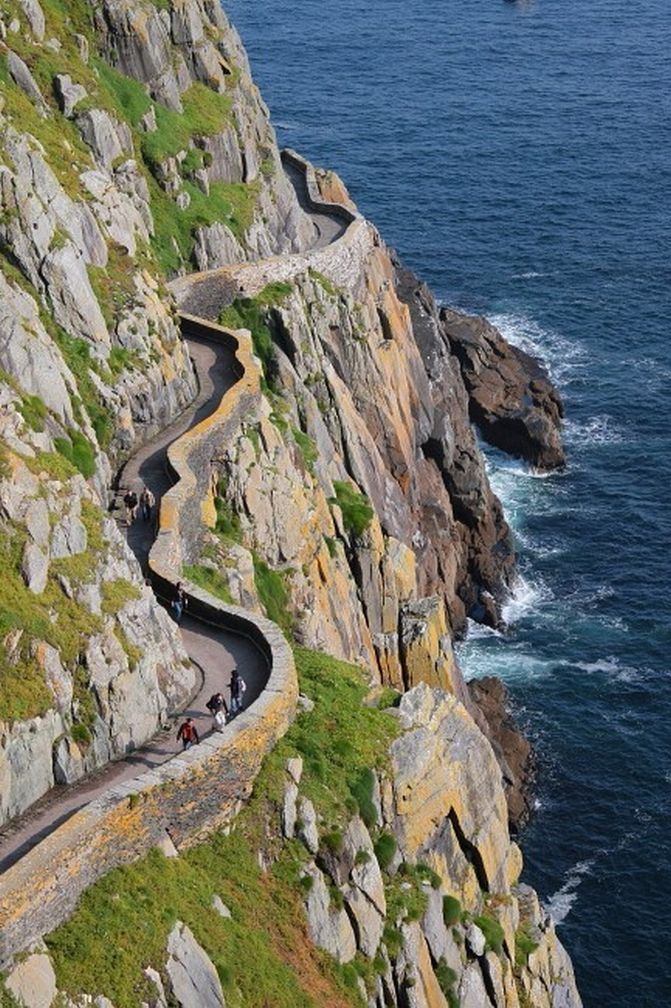
For safety reasons, because the steps up to the monastery are rock, steep, and old, climbs are not permitted during very wet or windy weather.
There are also dive sites immediately around the rock.


 would love to backpack and do some shrooms for a week there.