|
#1
●
08-31-2008, 10:11 PM
| ||||||||
 My Rank: PRIVATE FIRST CLASS Poster Rank:3956 Join Date: Aug 2008 Posts: 80 Mentioned: 2 Post(s) Quoted: 0 Post(s)
| ||||||||
|
John Linley Frazier
John Linley Frazier B38808 Mule Creek State Prison P.O. Box 409099 Ione, CA 95640 On the evening of October 19, 1970, two patrol officers noticed thick smoke in the Soquel hills around 8:10 P.M. so they called the Live Oak Fire Department. Those who responded went to 999 Rodeo Gulch Road, where a fire raced through the upscale home of eye surgeon Victor M. Ohta. The first arriving firefighters spotted a red Rolls Royce and a gold and black Lincoln Continental parked across the front and rear driveways, locked and blocking their way. They could see that the mansion's roof was already ablaze, so they smashed the Lincoln 's window to move the car. The men would have to work fast to try to put out the multiple blazes. There was no sign of the inhabitants, so they assumed that when the fire started no one had been home. Hoping to use the lagoon-shaped, in-ground pool as additional water source, Chief Ted Pound went looking for a fire hydrant that he knew had been specially installed in the yard for that purpose. It appeared to be hidden within the oriental shrubbery, so he got out a flashlight to search around for it. His beam cut through the night air over the dark water and illuminated the face of a young boy floating in the pool. Clearly he was dead. Perhaps he'd been burned and had run outside to douse himself, but had died in the process. The chief stepped closer and thought he saw more dark shapes in the water. His gut told him this crime scene was no mere arson.According to the reports the next day in the Santa Cruz Sentinel, Pound sealed off the area, called for assistance, and they soon located five bodies. One had been floating, a news photographer reported, while the others lay at the bottom near one end of the pool. There was blood on the deck at the edge of the pool and a five-inch stream of blood across the water. All of the victims were incongruously bound and blindfolded with colorful silk scarves. When the police and firefighters pulled the victims out of the water, they were quickly identified by those acquainted with them. Among the dead were homeowner Victor Ohta, 46; his wife, Virginia, 43; his two sons, Derrick, 12, and Taggert, 11; and his secretary, Dorothy Cadwallader, 38. Each person, it turned out, had been shot from behind with a small caliber gun. Yet no shell casings were found around the area. The bodies were quickly removed.The burning home was now a homicide scene and would have to be searched carefully for clues. In the meantime, state arson experts arrived and found clear evidence that the fire had been deliberately set. The main part of the expensive home, with an estimated worth of $250,000 to $300,000, was gutted, and driving rain during the early morning hours had ruined the crime scene outside. Sheriff-coroner Doug James had determined that the victims' hands had been bound with scarves found in the home, and Mrs. Ohta had been gagged with one as well. The autopsy reports indicated that Dr. Ohta had been shot twice in the back and once under the arm with a .38-caliber pistol, while each of the others had suffered a single wound to the back of the neck. Another gun, a .22, had been used on them. There was evidence from water present in the lungs that some of the victims might still have been alive when pushed into the pool and had then drowned. In a news conference, the sheriff indicated that there was likely more than one perpetrator. He believed the killers had set the fire to attract attention to the murders. Hoping they did not have a Tate-LaBianca type of assault here, the police searched for scrawled messages and told reporters they had found nothing of the kind. They also found no evidence of burglary, but until they consulted with relatives of the slain, they could not be certain of that. When pressed as to whether they had found any messages, Sheriff Doug James simply said, "No comment." He did issue an appeal to anyone who had seen anything on Rodeo Gulch Road that day or who knew anything about the victims' movements on that afternoon to contact his office It soon came to light that Virginia Ohta's dark green 1968 Oldsmobile station wagon was missing. An all-points alert had been sent out to patrol officers to be on the lookout for it, but it was clear that the thief-murderer had quite a head start. Investigators looked around for likely suspects. Santa Cruz was not far from the hippie capital, Haight-Ashbury in San Francisco, from where Manson had drawn his motley crew. In addition to that, it was an oceanfront beach town that attracted a range of people, including unsavory types. By the next day, county officials were debating over offering a reward of $25,000 for information about the perpetrator of this crime. But then things happened fast. "The grisly murder of five people has set a fuse burning on long smoldering tensions in this Oceanside city." That was the opening to an article in the Sentinel directly after the discovery of the massacre. Longtime residents, who did not appreciate the recent influx into the community of young people sporting unkempt beards and long hair, blamed hippies for the incident, and in their turn the "longhairs" were fearful of vigilantes seeking retribution. One unnamed young man who sported the hippie look vowed that if the killer turned out to be a hippie, he would shave and get a haircut. Santa Cruz Mayor Ernest Wicklund issued a plea for people to remain calm. He'd been requested to declare a state of martial law—"or else!"--but he thought the measure too drastic. He asked people to be reasonable and to allow the law enforcement agencies to carry out their work. Jack Cadwallader, husband of Ohta's murdered secretary, spent the night after hearing about his wife's death with a loaded gun, guarding his two children. He would not allow the newspaper to publish his address. "I don't want any crazies coming around here," he was quoted as saying. He believed this was the work of a Manson-like cult in the area. Others shared his fears. Whoever the killers were, they appeared not to be motivated by robbery, so it seemed to many residents that the incident could only have been inspired by the same mindless urge to kill that had triggered Manson's followers. In fact, someone told reporters that Ohta had been bothered by hippies dropping into his secluded home. At one time, someone said, Dr. Ohta had chased six such vagabonds off his porch. Cadwallader denied speculation that his wife had gone to the home to baby-sit the boys while the Ohtas went to a dinner that evening. All he knew was that his wife, who had worked for Dr. Ohta for eight years, had not come home on Monday night from the office. She did not work at Ohta's home, so he had no idea why she had been there. The Ohtas also had two daughters. Taura, 18, had left on Monday to return to school in New York, apparently just escaping being a victim herself. Her younger sister, Lark Elizabeth, 15, was away at boarding school. Both were called immediately to come to Santa Cruz to meet with relatives to prepare for the funerals. Then late on Tuesday afternoon, Virginia Ohta's car turned up. A slow-moving switch engine had smashed into it around 4:45 inside the Rincon tunnel of the Southern Pacific Railroad, near Henry Cowell State Park Whoever had stolen it had driven it about 150 feet into the tunnel, set fire to the seats, and then fled. The damaged car was empty but the motor was still warm, an indication that the car thieves were not far away. More than 200 police and firefighters were called in to help. Some fanned out into the redwood forest near the tunnel to look for the people who had escaped, while others sealed off the ends of the seven-mile-long gorge of the San Lorenzo River, hoping to trap the suspects. Crime scene technicians began working on the car, hoping for fingerprints or other evidence that would lead them to the suspects. Reportedly, a woman had seen three people in the vicinity of the stolen car earlier that day, and three sets of footprints, including one set made by bare feet, led from the tunnel to the river. Reporters learned that a woman had called the police on Tuesday afternoon to report the car parked in Bonny Doon. She had spotted a woman and two men nearby. They appeared to be in their early 20s, all had long hair, and one carried an orange backpack. Police arrived quickly, but the car had already been moved. Nearby were the remains of a campsite. Then a call had come in that the car was seen heading toward Highway 9, but before anyone could respond, the police learned about the train accident. No more than half an hour had elapsed between the first and last reports. They felt sure they could catch the perpetrators, who could not be far away. As police searched the San Lorenzo valley, residents huddled behind locked doors, ready to "shoot anything that walks." Deputies checked dozens of people throughout the night, but when it got too dark to see in the rugged valley, the search was called off. The three mystery "hippies" were not caught. Around the area, gun sales had jumped that day—one store reported a 500% rise. With rampaging hippies on the loose who might be anywhere, perhaps planning yet another massacre, residents were being careful. A white van, which had been spotted on Rodeo Gulch Drive around the time of the fire, was impounded to search for evidence. Then the media learned via a press release that a typewritten note had been found on the night of the murders under the windshield wiper blade of Ohta's Rolls Royce. Its contents reinforced the fear that this was yet another "hippie" attack. One reporter, Cliff Johnson, took the release into the "hip" community Wednesday evening to ask questions. His enterprising act turned out to be fortuitous, and even as the note was appearing for the first time in the press, the police were on to a productive lead. Three men from a local hard rock hangout on Front Street known as The Catalyst (which had been threatened several times with a bombing) had conferred with a private investigator after reading the press release and decided to come forward with what they knew. District attorney Peter Chang met with them during the early morning hours on Thursday, and that same day, October 22, the Sentinel published the press release with the contents of the note that had been found on Dr. Ohta's car. It said: Halloween . . . 1970 today world war 3 will begin as brought to you by the people of the free universe. From this day forward any one and ?/or company of persons who misuses the natural environment or destroys same will suffer the penalty of death by the people of the free universe. I and my comrades from this day forth will fight until death or freedom, against anything or anyone who does not support natural life on this planet, materialisum must die or man-kind will. KNIGHT OF WANDS KNIGHT OF CUPS KNIGHT OF PENTICLES KNIGHT OF SWORDS Those who knew the tarot deck understood, according to Jason Shultz of the Sentinel, that the knights symbolized elemental power. Schultz quoted "Will Ma of Sacred Grove"—apparently a New Age establishment in Santa Cruz--to the effect that the Knight of Wands represented acting out to transform the world; the Knight of Cups was about acting in a heartfelt manner; the Knight of Pentacles referred to being methodical in one's quest; and the Knight of Swords "represents air and means using intelligence and logic in a cerebral fashion, sometimes combative The murder/arson incident appeared to have been planned. The three men who met with Chang told him that they were acquainted with someone who had expressed sentiments consistent with those in this note. During hikes, he'd often talked about "ripping off materialists" and he'd seemed rather zealous. They hadn't taken him seriously, but when they had read the note the evening before, one man reportedly had paled and said, "This is right on." Yet they were afraid that giving his name would bring his wrath against them, since he was a loner and might not have revealed his ideas to other people. These informants were also hesitant to turn in a "brother." Still, they believed they had to do something. In recent weeks, they said, this man had "dropped a lot of revolutionary talk on our heads." Finally they gave in. Their friend's name, they revealed, was John Linley Frazier, 24, a.k.a. John Linley Pascal, and he lived in a shack downhill and not far from the Ohta property. His mother, Pat Pascal, a rabbit breeder, owned the property and rented out some of the dilapidated buildings there to college students and hippies. Frazier was a vegetarian who collected guns and did drugs, and whose personality seemed to have changed in recent weeks. The informants described him as having long blondish hair, a full beard, a short stature, and a medium build. The last known sighting of Frazier had been on October 14, walking away from the Ohta property. At that time he'd been wearing a beige straw hat with red, white, and blue hatband, dark trousers and a green coat. He also had on moccasins, though he often went barefoot The police did not tell the press whether Frazier was one of the three young people sought in connection with the stolen Oldsmobile, although two persons were reportedly found in the search area who did fit that description. Whatever became of questioning them is unclear. On Thursday morning, the police went looking for Frazier at his shack off Cornwell Road. They found that he had rigged a cable-and-plank drawbridge over a steep ravine, to make it difficult for anyone to visit. He was not at home. While the outside of the six-by-six-foot shack looked decrepit, inside was carpeted, clean and more presentable. It was a bare half mile from the Ohta residence, and from his place, Levin and Fox write, it was clear that Frazier could look up through the trees and see the mansion. Posting men to wait (two deputies waited there for 20 hours), the police had the suspect in custody by dawn on Friday, October 25. Apparently he had slipped past them during the night and gone inside to sleep. As the sun came up, they went in and found him in bed. He did not resist arrest (although a San Jose reporter wrote erroneously that a gun battle had ensued, with more than a dozen shots fired), and his only words upon being taken into custody were to ask for a glass of water. Nevertheless, the police had not given up on their suspicion that more than one person had been involved in the massacre. It seemed unlikely that one lone gunman could have subdued five people, so they were still actively looking for others. At 1 that day, Frazier was placed in a line-up. One witness who identified him had seen him driving Mrs. Ohta's station wagon toward Felton on Tuesday morning. Three others identified Frazier as the person they had seen. Two others claimed that he'd been driving so erratically that he'd nearly run them off the road. John Linley Frazier was arraigned before Municipal Court Judge Donald O. May on October 25 on five counts of murder. He stood with his hands tightly jammed into his denim coveralls, clearly agitated. On Frazier's behalf, Deputy Public Defender James Jackson, of Britton and Jackson Law Firm, entered a plea of not guilty, and looked into getting a psychiatric assessment. The police had lifted fingerprints from the Rolls Royce and from a beer can still intact in the incinerated house, and they were able to match those to Frazier. They also said they had his fingerprints on a typewriter inside the home. He was the only person against whom they did have proof, and the local paper printed a statement to the effect that the reports of three young, long-haired people being in the green car had proven to be false. Yet that reporter also pointed out that the police had not explained the mystery of the three sets of footprints leading from the train tunnel to the river. Then more information was forthcoming. A check on the boys' schools revealed that Mrs. Ohta had not picked them up as usual on October 19 and the schools had called Dr. Ohta. He and Mrs. Cadwallader had left his office at different times to retrieve the boys from their respective schools. That meant they had arrived at the family home at different times. The lone gunman theory was beginning to make more sense, especially if Mrs. Ohta had been alone at home when the killer arrived. With a gun, he could have subdued one person, and then two at a time. A close friend of Frazier's, who remained anonymous, told reporters that he "seemed like the last person who would do something like that. He must have played at two different lives." He talked about Frazier as a reliable auto mechanic and a family man with a wife and 5-year-old child, but said that he'd lately adopted a hippie lifestyle and sometimes talked in ways that made no sense. "All of a sudden he seemed like just another wired-up hippie." He wore a strange symbol around his neck on a chain and often went without shoes and even without a last name. He wanted to be left alone. Reporters fanned out to ask former school chums about the alleged killer and heard conflicting reports, from "never a problem" to "rebellious" to "tough guy." Frazier's estranged wife, Dolores, who lived in the area, offered some information to police about his movements during the days before the crime. She had helped him clean out his shack on Saturday night and he had spent that night with her, leaving on Sunday afternoon with a loaded pistol, a pair of binoculars, and an orange backpack loaded with supplies. He'd left behind his driver's license and a book on his favorite subject, the Tarot, saying he would not need them any longer. Dolores also told authorities that the stolen green car had been left in an area where Frazier often went to swim and hike. DA Chang quickly enlisted her assistance for his case. The Catalyst continued to receive bomb threats, with notes to the effect that "the only good hippies are dead hippies," so the three men who had given the police the critical information about Frazier issued a statement in the Sentinel in which they expressed the sentiments of the "hip" community. "We are all citizens of Santa Cruz County, and we are all concerned about what happened here this week, and what might happen if hatred and hostility continue to grow between straights and longhairs - it is foolishness to mistrust each other now." High-intensity lights were installed around the sheriff's office to protect the prisoner from vigilantes, and the police maintained strict surveillance. The community tensions were palpable. Although the authorities were sure they finally had their man, they were puzzled as to why Frazier would have acted as he had. From reports offered by his acquaintances, he clearly had planned the murders and had targeted October 19 as the date when "big things would be happening." What was that about? Why that date? Why such blatant slaughter? They tossed around theories, but no one was certain. In the meantime, as court dates approached, mental health experts were already at work to unlock the secrets of this apparently deranged killer. On October 26, one week after the murders, Frazier's court-appointed attorney, James Jackson, announced that Frazier was not sane, and that his act may have come as the result of head injuries he had received in an auto accident six months earlier. Jackson had been in contact with a psychologist, Dr. David Marlowe, for the purpose of assessment, and Marlowe had seen Frazier on four separate occasions. He reported that Frazier did not think or act normally. Without commenting on whether this might be due to taking drugs, Jackson said he would hold a plea of not guilty by reason of insanity in reserve. However, he would begin his defense with an innocent plea, based strictly on the facts. He believed that Peter Chang had a shaky case and he claimed that Frazier denied being involved in the murders. At the moment, an insanity defense was not in Frazier's best interests. Jackson told reporters that he had learned that on Sunday, private investigators hired by his firm had turned up evidence that raised several questions. In a shed near where Frazier had lived they found an orange backpack loaded with supplies and a .45-caliber pistol. This was not the weapon that had been used to shoot the victims. In addition, the original statement made by the DA's office that they had found Frazier's fingerprints on a typewriter in the Ohta home was unfounded and no evidence had turned up in Mrs. Ohta's stolen car that incriminated his client. As far as he could see, the prosecutors did not have much to go on. Nevertheless, Chang intended to go to the grand jury Tuesday to get an indictment. He said he had as many as 25 witnesses, but he ran into a glitch when Dolores Frazier balked at testifying against her estranged husband. Frazier was brought in for his preliminary hearing, which was continued for two days to give the grand jury time to consider the case. Chang went ahead without Mrs. Frazier. Dolores was escorted to court by the defense's private investigator, to sit in the spectators section. Frazier turned to smile at her. She returned his smile. He seemed to reporters to be relaxed, contrary to his previous demeanor in court. At one point he called out to his wife and said, "It's all right, baby." Jackson asked for bail; the judge denied it and ordered Frazier to remain in the county jail. On October 28, the grand jury returned a true bill, indicting Frazier on five counts of murder. The next day he entered his plea of innocent. The judge imposed a gag order to prevent information from leaking to the media. A trial date was set for January 25, 1971. That proved to be highly optimistic. On January 9 in jail, Frazier slashed his arm with a razor and was taken to hospital for stitches. Ten days later, Jackson announced that he would modify Frazier's plea from not guilty to not guilty by reason of insanity. The judge appointed two psychiatrists to provide a sanity assessment for the court, and the trial date was postponed. Jackson petitioned for a change in venue, even as the county worried about the costs of the trial in light of what was going on in L.A. with the Manson gang. The judge ordered the proceedings to take place closer to San Francisco, in Redwood City. Judge Charles Franich presided over the trial, which began in October 1971, with a four-man and eight-woman jury. Due to the gag order, and the lack of newspaper documentation during this time, the records are sporadic. What follows are the highlights, as described in the Santa Cruz Sentinel. The prosecutors made their case with witnesses who knew Frazier, with documentation about the Ohtas. For example, Frazier had told someone that he'd been inside the Ohta home and had taken some binoculars. One of the Ohta daughters testified that a pair of binoculars was missing from the home. There was also physical evidence that tied Frazier to the crime scene. Besides the fingerprints in the stolen car and on a beer can, they had an expert testify that a metallic substance found on Frazier's knife was consistent with the wire cords that had been cut inside the Ohta home. Four weeks into the trial, jurors were taken by bus to visit the partially reconstructed Ohta residence (where bloodstains were still present), the place where the train had hit the abandoned car, and the drawbridge and shack where Frazier had been apprehended. He followed the jury under heavy armed guard, and at one point near his former home, he stopped to play with a puppy. Then he suddenly kicked at a rusty car. During the last days of November, the jury convicted Frazier of the five murders. Then came a second phase, in which Frazier's sanity became an issue. Dr. David Marlowe offered testimony for the defense. He had spoken with Frazier 35 to 40 times over the past year, and had heard three different versions of what Frazier claimed he had been doing on October 19. In late November 1970, Frazier apparently told Marlowe how the murders had been done. It was all right to state this in court, since they were attempting to show that Frazier had been psychotic at the time of the offense. Apparently, "voices from God" had commanded him to "seek vengeance on those who rape the environment." That afternoon, he went to the Ohta residence and found only Virginia Ohta at home. He had a .38 revolver, which he held on her as he used scarves that he found in the home to tie her hands together at the wrists. He told her she was evil. Looking around, he found a .22 pistol. As Mrs. Ohta remained bound, Frazier waited for the rest of the family to return. He was quite upset to see animal skins inside the home—a terrible violation of nature. He planned to kill each person who arrived. Then Dorothy Cadwallader drove up, bringing home Taggert. They walked right into a trap, and Frazier soon had them tied up as well. It wasn't long before Victor Ohta brought home his other son, Derrick, from school. They, too, fell victim. (Had they all arrived at once, Frazier probably could not have carried out his plan.) Frazier took them outside to the edge of the pool (or he took Ohta outside and then later brought the others), where he said he lectured Ohta about materialism and how it had a negative effect on the environment. He accused Ohta of ruining the Santa Cruz Mountains. He reported that Ohta began to argue with him and to bribe him with material goods. Annoyed, Frazier suggested they burn down the house together with everything inside. Ohta grew angry and began to argue, so to shut him up, Frazier shoved him, still bound, into the pool. As the man tried to get out of the water, Frazier shot him three times. The others were horrified. He asked each one of they believed in God and they said yes, so he told them they had nothing to be afraid of. He walked behind each of his helpless victims and shot them at the base of the neck, killing the two women first, and then the two boys. (In another version, he brought the women out separately and killed them outside. Then he went inside to kill the boys and carried them out to the pool. He also said that he'd arrived that day with three other people, and also that he'd met up with two other people later. It's difficult to know the full truth about the events that evening.) No matter how he ended up shooting them, Frazier pushed or dropped each victim into the pool. Then he went into the house to type the note that he left on Ohta's car. Afterward, he went about setting fires around the mansion and fled in the green Oldsmobile. Marlowe ended his account by saying that Frazier's stories were mostly disjointed and that he was insane and dangerous. He had gross disturbances in his thoughts and feelings. He also had visual and auditory hallucinations, with excessive religiosity, as seen by his underlining in a Bible he carried. Frazier considered himself John from the Bible, to whom the Book of Revelations was addressed, and he had developed a complex system of beliefs based in occult number systems, astrology, reincarnation, and themes of immortality. On cross-examination, Chang suggested that Frazier had hoodwinked Marlowe with his delusions, indicating that it was all a lie. Marlowe said that evasion was more his style than outright lying. He did not budge from his diagnosis. Donald T. Lunde was one of three forensic psychiatrists who testified (referred to in the newspaper as alienists). He had visited Frazier on November 17, 1970, and then had interviewed Frazier's wife, relatives and friends. He contended that Frazier was a paranoid schizophrenic who at the time of the murders was incapable of knowing that what he was doing was wrong. Frazier had told him, Lunde testified, that he was a special agent sent from God to save the earth. His wife had heard these delusions as well during the summers of 1969 and 1970. Apparently he had grown increasingly more paranoid until he finally broke away from her and their child to go live in the woods. He trusted no one. Under his delusional system, Lunde said, the killing of certain people was necessary and thus not wrong. "He's crazy," Lunde had stated in court. He then amended that to, "He is unable to appreciate society's standards." On December 3, Frazier arrived with half of his head and face shaved, including one eyebrow. Marlowe explained that Frazier did this so the jury would think he was faking insanity and would find him sane and send him to the gas chamber. He did not want to end up at a mental institution—a "fascist head factory." Marlowe said this was another indication of how distorted his thinking was. Chang had his own expert testify as well, who had interviewed Frazier for two hours. During the second week of December, psychiatrist John Peschau from Agnews State Hospital said that Frazier suffered from a personality disorder, not psychosis. He was a sociopath, not schizophrenic, and he did appreciate what he had done and that it was wrong. Thus, he was not legally insane. Not only that, he would not learn from what he had done and was therefore a danger to society. "I considered him intolerant, crafty, and arrogant," Dr. Peschau said. "He sets his own rules - he disregards the feelings of others." On December 16, as the final phase of the trial was underway, Frazier showed up completely bald—no eyebrows, hair, mustache or beard. Then as the judge instructed the jury, he sat reading George Orwell's novel, 1984. Earlier he had been reading a book on mental disorders. Ultimately, the jury found Frazier guilty and sentenced him to death. However, when the Supreme Court declared capital punishment unconstitutional in 1976, Frazier's sentence was commuted to life in prison at San Quentin. In Human Monsters, David Everitt writes that Frazier's life was fairly normal. He dropped out of high school to work as an auto mechanic and he appeared to be a steady worker. He married and fathered a child, but when he began to take drugs in early 1970, the marriage broke up. He soon became a zealot about ecology, and adopting the attitudes of the "drop out" counterculture, he quit his job to avoid "contributing to the death cycle of the planet." He left his wife on July 4, 1970. He then became fascinated with tarot cards and their mystical meaning. He grew increasingly paranoid and even his hippie friends, with all their emphasis on peace, love and tolerance began to avoid him. He went off by himself and became something of a hermit. He lived on his mother's property in the Soquel hills in a small shack in the woods (Lunde refers to it as a ramshackle cow shed). She herself sometimes occupied a house trailer there, according to reports in the Sentinel, although she had a residence elsewhere. Frazier thought nothing of breaking into the homes of neighbors and taking what he wanted. He'd even gone into the Ohta home at one point and walked out with a pair of binoculars, which he claimed he used to watch for enemies. (People did see him in the hills, using them.) He talked about the Ohta residence with friends, claiming that family was "too materialistic." For that sin, he had decided they should be "snuffed out." In Murder and Madness, which Lunde wrote after examining Frazier and then being involved with assessments of the next two multiple murderers from Santa Cruz (Herbert Mullin and Edward Kemper), he provides a slightly more comprehensive account of Frazier's early life history and his developing psychosis. Frazier's parents had separated when he was 2 years old. His mother could not afford to care for him, so when he was 5, she placed him in foster care. He ran away, got into trouble in school, was arrested for theft, and ended up in a series of juvenile detention facilities. He had a history of bedwetting, sleepwalking, and terrible nightmares. Eventually he was reunited with his mother, got married, and worked at a steady job. After his automobile accident in 1970, he told his wife that he'd received a message from God to stop driving or he would die. Then he decided he had been reincarnated with a mission to save the earth from materialism and to interpret the Book of Revelations for the rest of humanity. He believed the end of the world was at hand and there would be a revolution (much like Charles Manson). To him, the Ohta home represented all that was evil. It had to be destroyed and its occupants murdered. That was the only way to restore the natural beauty of the hillside. Lunde points out that while the juvenile facility records make no indication that Frazier had needed treatment, the symptoms of schizophrenia often set in during the late teens or early adulthood. Frazier's evolving obsessions and attempt to convert people into disciples was consistent with this. On the day he left his wife to go to the Ohta estate, he talked about the approaching revolution and the need for some materialists to die. (Lunde points out that it's typical for paranoid schizophrenics to adopt current controversial issues as part of their delusional system.) Dolores had tried over the past few months, without success, to get him into treatment, so she had watched helplessly once again as he left on his "mission." He went about it with a single-minded intent, taking a weapon and using it without hesitation to kill five complete strangers. Despite the jury's verdict, Lunde insists that the case of John Linley Frazier presents a clear example of a murder committed within a state of psychosis. Had people not been so frightened about Mansonesque cults during that time, they might have been able to better appreciate the influence on Frazier of his untreated mental illness. * * * * The Ohta mansion, with its surrounding 10 acres, was finally restored, as reported on August 24, 1972, and put on the market by the Wells Fargo Bank for $185,000—not its full worth. There was no account in the Santa Cruz Public Library records as to when it sold or to whom According to a publication for Santa Cruz County that reviewed events there over the span of the twentieth century, Frazier has sought hearings to persuade the authorities that he is fit to go back into society. At some point in the near future (no date given), he will come before the state parole board.  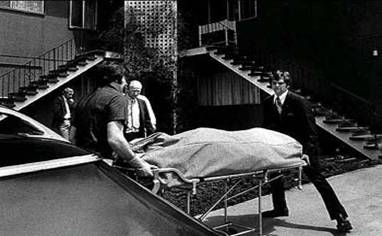 · 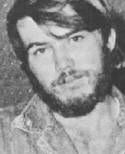 · 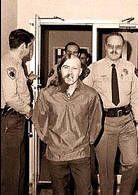 · |
|
#2
●
08-31-2008, 10:31 PM
| ||||||||
 ★ ★ GENERAL ★ ★ Poster Rank:42 male Join Date: Oct 2006 Posts: 34,456
Contributions: 35
Mentioned: 2168 Post(s) Quoted: 20747 Post(s)
| ||||||||
|
Re: John Linley Frazier
Great post man. I fixed the spelling of his last name and added some pics. I think I am one of these people who reads these things and just has to see a picture of the sick fuck. I have no idea why though lol
__________________ Support the site and our continued existance by upgrading to a Green Name |