Whatever it is, it's freakin' gross!
Sarcomas account for just around 1% of all mammary tumors. They tend to be relatively large in size, characterized by a knobbly appearance, and have a tendency to ulcerate the overlying skin.
The recent discovery of a malignant fibrous histiocytoma within a sizable phyllodes cystosarcoma in a 50-year-old woman has prompted us to delve into the existing literature on this subject.
Given the rarity of this neoplasm, there is no consensus regarding its treatment, the actual incidence of various histotypes, the optimal therapeutic approach, or survival rates.
Clinical Case:
In December 1997, a 50-year-old white woman presented to our attention with a lesion in her right breast.
The patient mentioned that she had noticed a small lump in her breast for approximately 14 years but had not sought medical attention due to modesty. However, over the course of a month before her admission, the lump grew rapidly, causing significant pain and local redness. She did not experience fever or nipple discharge.
She had no family history of breast disease and had not taken estroprogestinics. She was multiparous, had regular menstrual cycles, and experienced menarche at the age of 13.
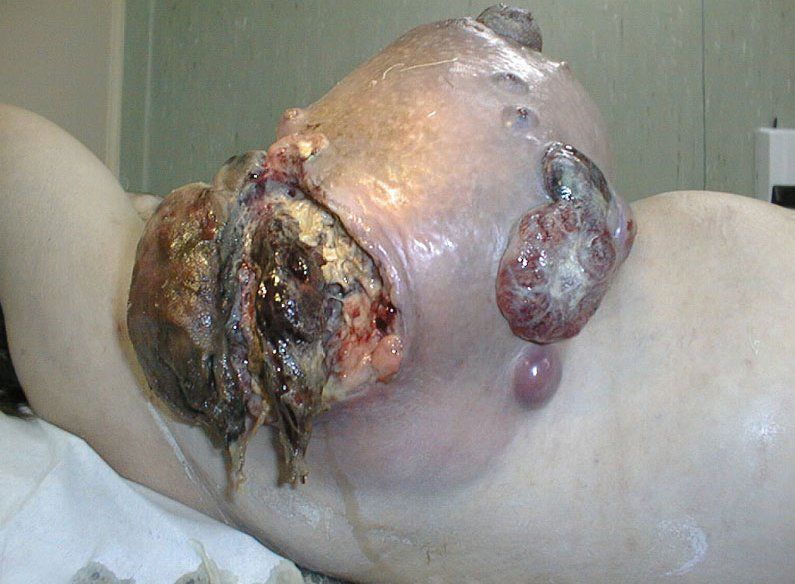
The woman was slightly overweight. Upon clinical examination, the right breast appeared significantly distorted, hard, swollen, and with intense redness, along with knobbly ulcerated nodules. The neoplasm also appeared to involve the adjacent armpit, while the contralateral armpit showed no clinical signs of injury.
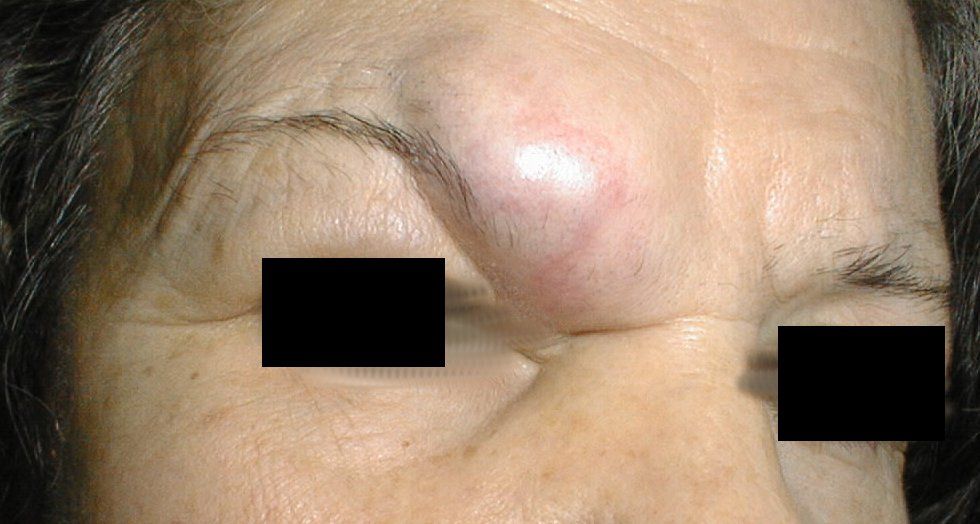
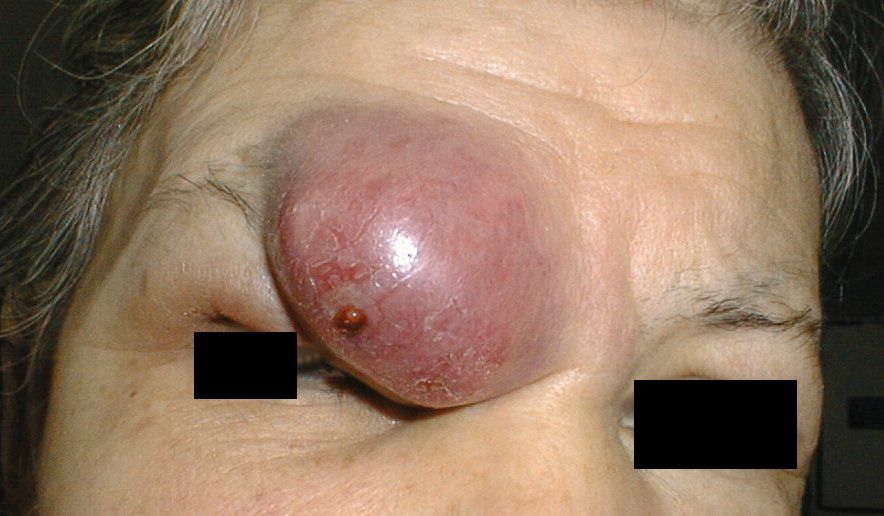
Apart from the breast condition, the only other notable observation was a 1.5 cm swelling above her eyebrow, which she attributed to a domestic accident the previous month.
We conducted a series of diagnostic tests to assess the nature and operability of the disease, including breast ultrasonography and mammography, chest x-ray, total body scintiscanning, liver ultrasonography, and a biopsy of the lesion. These tests revealed no secondary metastases, and the histological analysis of the biopsy specimen confirmed the suspicion of mammary sarcoma.
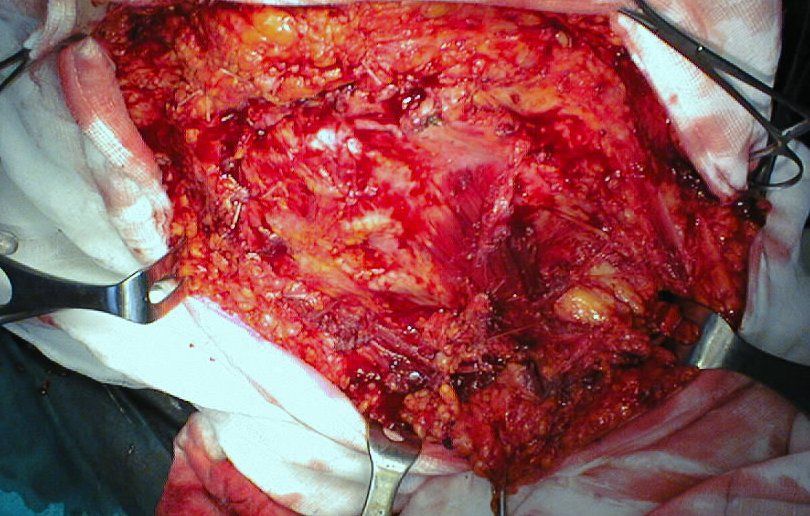
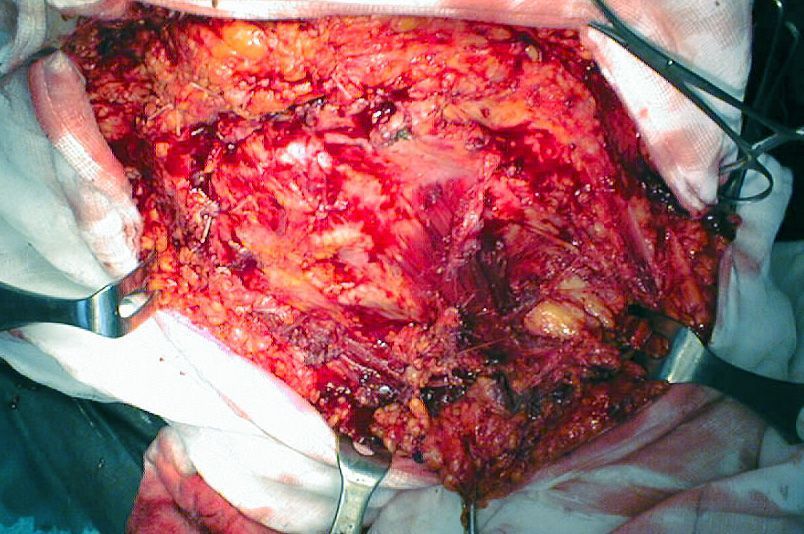
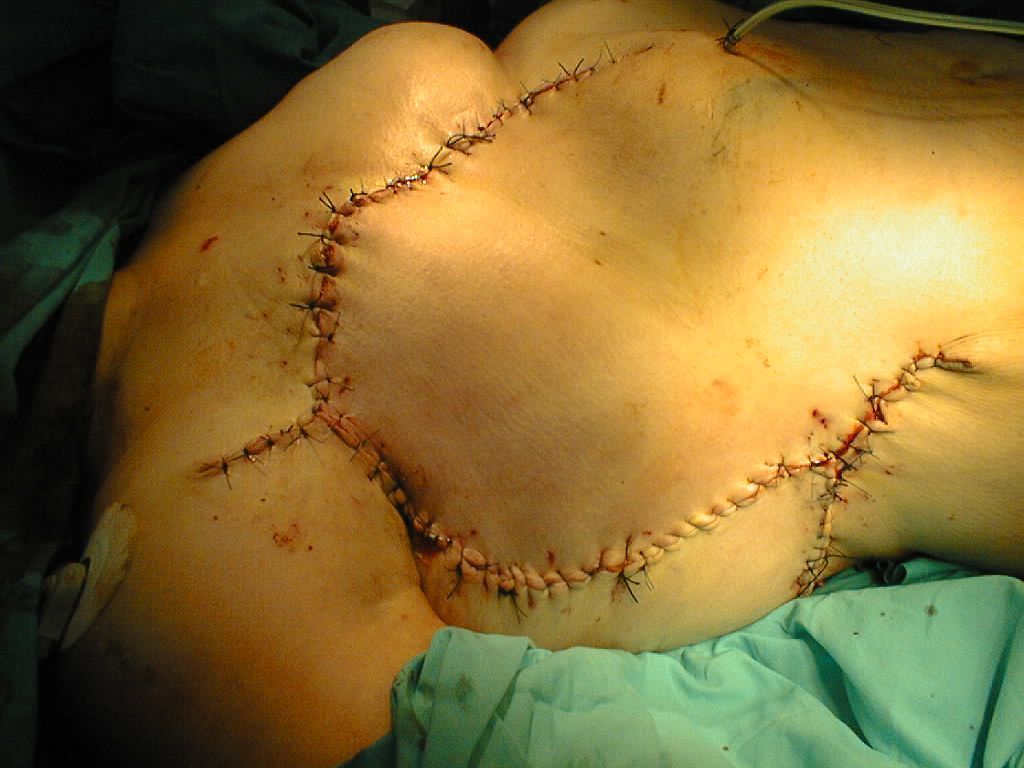
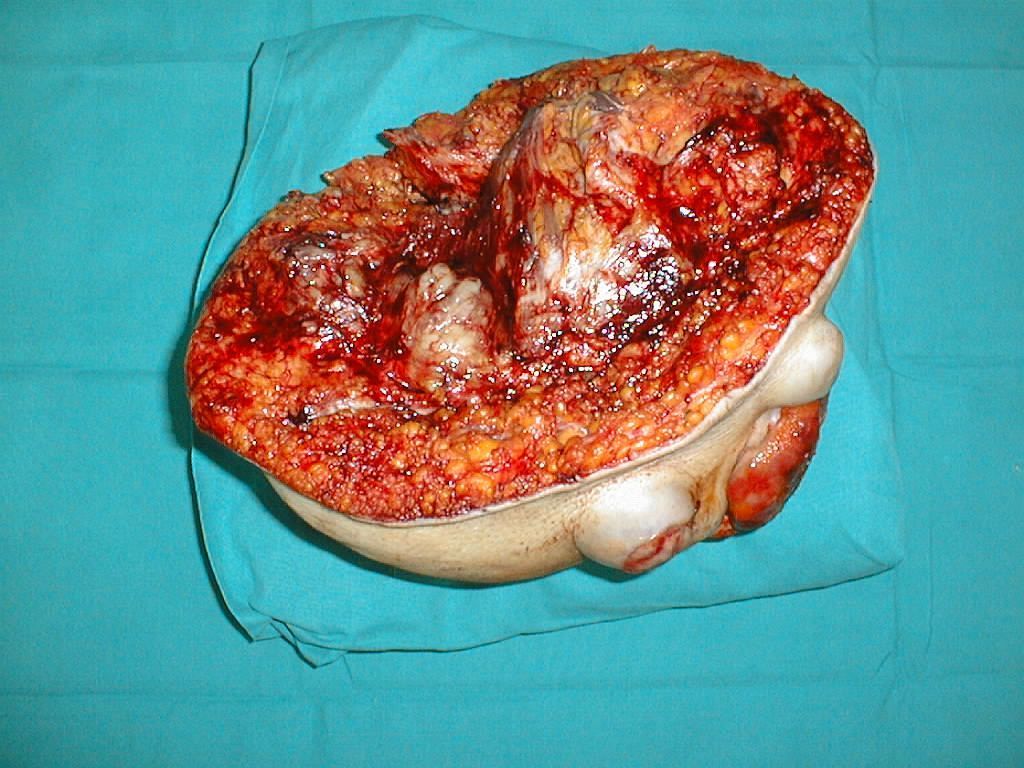
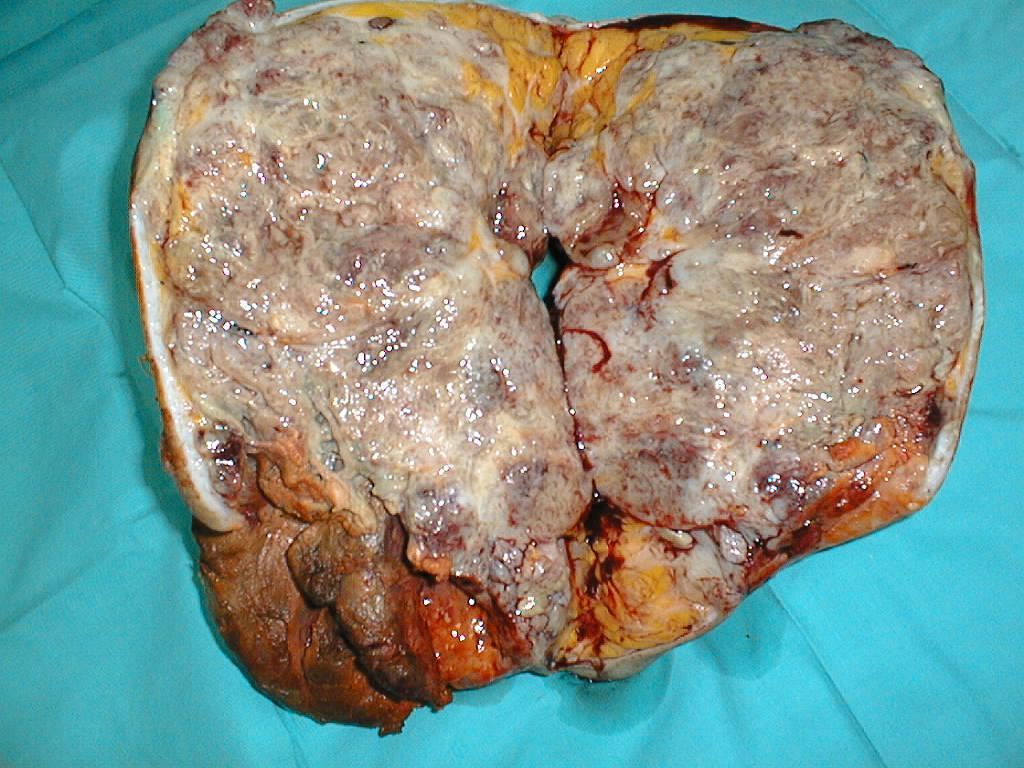
Subsequently, the patient underwent a Halsted's radical mastectomy followed by the reconstruction of the substantial wound using two cutaneous rotation flaps. The weight of the neoplasm was an astonishing 4.1 kilograms, with a diameter of 21 centimeters. The pathologist classified it as a phyllodes cystosarcoma with a stromal component resembling a malignant fibrous histiocytoma. Furthermore, the tumor had infiltrated the major and minor pectoral muscles, while the axillary lymph nodes showed only hyperplasia.
During the post-operative period, we observed a gradual increase in the swelling above the eyebrow (as seen in the last image), prompting us to perform a fine-needle aspiration biopsy (FNAB). The results revealed the presence of cellular nests with nuclear atypias among epithelial elements.
The patient was discharged on the 16th day, having recovered from surgery, and was referred to an oncologist for further care.
Mammary sarcomas, first described by Chelius in 1928, constitute approximately 1% of all malignant breast tumors and 5% of malignant connective tissue neoplasms.
The true incidence and the various histotypes are challenging to ascertain due to the multiple synonyms proposed in the literature. These factors, coupled with the limited available research, contribute to the existing disparities, particularly regarding prognostic factors and treatment.
It is well-known that benign phyllodes tumors can progress to become phyllodes cystosarcomas. Breast sarcomas exhibit rapid growth, infiltrating the glandular parenchyma, and often ulcerating the skin. While their typical dimensions range between 4 and 10 centimeters, they can occasionally grow much larger, sometimes presenting a knobbly appearance, with reported sarcomas weighing up to 3.5 kilograms.